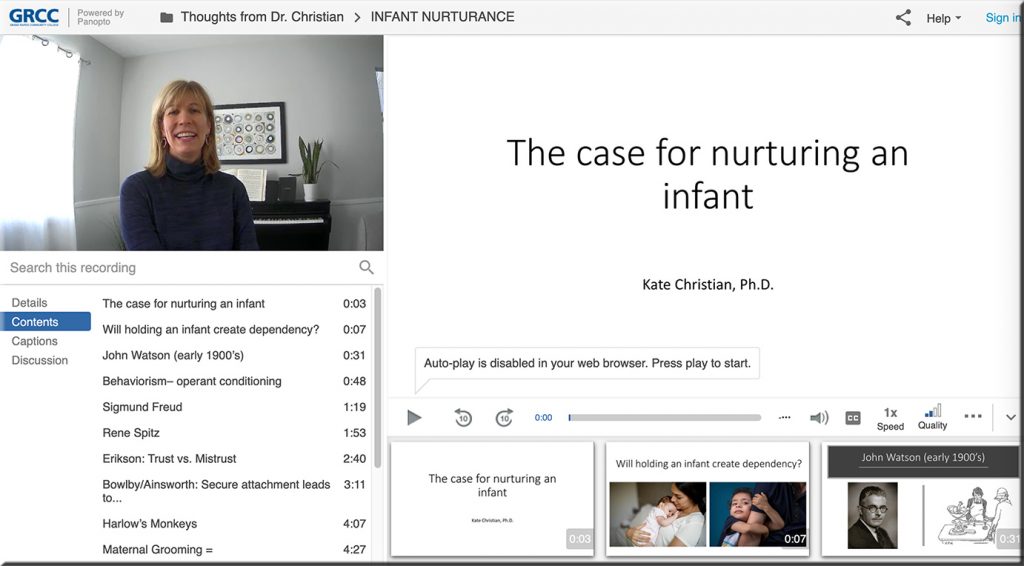
The case for nurturing an infant -- a recording by Dr. Kate Christian

The case for nurturing an infant — from grcc.hosted.panopto.com by Dr. Kate Christian

Yes, Kate is one of my wonderful, talented, intelligent, and compassionate sisters! She is a Professor of Psychology at the Grand Rapids Community College.

Notes:

TITLE/THEME:   The relationship between infant nurturance and the developing brain, and implications for long term physical and mental health

Question: How much time should you spend in direct interaction with your infant? 

  1. CONCERNS: Many people are concerned that paying too much attention to an infant will have negative consequences. (Words like “spoiled”, “dependent”, “mama’s boy”, etc.) 
    1. John Watson (1878-1958) wrote “The Psychological Care of Infant and Child” in 1928, arguing that infants and children should be treated like young adults, and that too much love and affection were damaging—children should not be kissed, hugged, or touched. Ideas such as strict feeding schedules (withholding nourishment if not on schedule) for infants were not uncommon during the first half of the twentieth century. 
    2. Behaviorist views emphasize rewards and punishment in shaping behavior. Today few behaviorists would argue for limiting affection. However, some may argue to let an infant “cry it out”, citing research that indicates infants can learn to self-soothe by about 7 months.
  2. HOWEVER, a wealth of evidence (theoretical, observations, animal studies, and neuroscience research) shows that nurturing an infant provides long term physical and mental health benefits. 
    1. PSYCHOANALYTIC theory:
      1. Sigmund Freud (1836-1959) coined the term “schizophrenogenic mothers”, claiming that especially for male infants, a failure of attachment to the mother could lead to schizophrenia, and that the mother’s lack of sensitive, caring behavior was the cause of attachment failure.
      2. Erik Erikson (1902-1994) established the idea of a psychosocial “crisis” during infancy in which the infant either learns to develop a sense of trust in the world (due to sensitive caregiving) or mistrust (due to unreliable, unpredictable or abusive care). 
      3. John Bowlby (1907-1990) is the founder of Attachment Theory, which maintains that caregiving in the first year of life sets up an unconscious, internal working model of relationships that shapes behavior and thoughts later in life. (Mary Ainsworth (1913-1999) came up with a measurement tool.) Secure attachment develops from sensitive, responsive caregiving, according to Ainsworth and Bowlby.Support for attachment theory varies, and many developmental psychologists today believe that early attachment is moderately predictive of later outcomes. (Things like divorce or death of a parent change the internal working model, or therapy, etc.) But infants with a secure attachment are more likely to explore their environment and be INDEPENDENT!!
    2. OBSERVATIONS: Rene Spitz (1887-1974) compared infants raised in orphanages to infants whose mothers were with them but in prison (in the 1940’s), the primary difference being maternal vs. professional nurse care. When the infants were first placed in the orphanage, Spitz found that for the 1st two months of separation, the infant would weep, scream, and/or be unapproachable. After 3 months, the infant would often become listless, lethargic, and demonstrated bizarre finger movements, and couldn’t sit or talk. 38% of the infants in the orphanage developed marasmus and died within 2 years, whereas all of the infants raised in prison with their moms were alive at follow up (age 5).  You can see video Click Here of infants who appeared dull and listless, or engaged in rocking back and forth or beating their heads on the crib. The infants were well fed and diapers changed, etc, but they had negligible physical touch or affection.Infants in institutions are less likely to play and interact with toys in the environment: Click here for video examples
      .
    3. ANIMAL STUDIES:
    1. Rat pups   The amount of licking given to rat pups by maternal dams has predicted the level of anxiousness (vs. relaxation) in the rat, as well as inhibitory (vs. exploratory) behavior on a maze. Research has shown there are changes in neurobiology (such as hormones and brain receptors in the amygdala) that impact how the rats react to stress. In other words, the more the mother rat licks/grooms the pup, the more she sets up that rat to stay calm and resilient in the face of stress, and to feel confident to explore the environment.  nih.gov
    2. Harlow’s monkeys Monkeys in Harry Harlow’s experiment chose to spend nearly 23 hours a day in close contact with an artificial monkey that was covered in soft cloth and had big eyes (vs. a wire mother than administered food and drink). 
    3. Rhesus monkeys: Neuroscientists have found changes in the basic architecture of the amygdala and areas in the limbic system among rhesus monkeys deprived of touch, eye contact, and adult nurturing during infancy. (p. 129 Marian Diamond, Ph.D.) 
  3. NEUROSCIENCE:
    1. Face-to-face interaction between infant and caregiver help wire the infant brain (use-dependent) and set up the basic architecture of the brain. Infants who experience positive interactions have a neurophysiological response (being smiled at calms the brain!) and neural connections that interact with biological hormones and systems regarding stress regulation get established in a positive way. This leads the infant to grow up better able to handle stress and adversity. 

Research using the ACE scale (adverse childhood experiences) found that children who face a great deal of adversity but are in relationally healthy, nurturing environments will show few long term negative effects (and the reverse is true—a child with even one ACE in an emotionally deprived environment will show significant poor outcomes).   (From Bruce Perry lecture) 

This infant nurturance also shapes the brain’s reward centers. Dr. Bruce Perry argues that infants deprived of nurturance grow up to feel dysregulated, and seek rewards in unhealthy behaviors (overeating/poor diet, substance use, thrill seeking, etc.) 

    1. Example: kangaroo care is the practice of holding an infant skin to skin, and it has been shown to increase weight gain among premature infants. 
    2. What about CELL PHONES?
      • Using a cell phone while caring for an infant has been shown to increase the risk of infant injury by 10%.
      • It also interferes with the face-to-face interaction needed for the neurobiological positive effects to occur!!
    3. Again… how much time to spend in direct interaction with an infant?
      • It doesn’t have to be 24/7, but most infants are not getting enough time. (Hunter gather—spend nearly all day in close proximity to adults, infant child care centers,  4:1 ratio)
      • Hold, sign, rock, touch, play together!
    4. But can’t you overdo it? Are you SURE you won’t spoil the infant or make him/her dependent?
      • There is virtually NO evidence to suggest that “too much” attention in the first year of life is harmful. (Again, you don’t have to spend every minute together… both you and the infant need breaks!) But this cultural perception that it is possible to “over nurture” an infant has got to change!!
    5. What about Co-Sleeping?
      • Worldwide, some form of co-sleeping is the norm.
      • A study found that in the U.S., infants who co-sleep grow up to be MORE independent (secure attachment) than those who don’t.
      • However, there are physical concerns, such as studies finding higher SIDS rates among infants who co-sleep. Also, if a parent is a deep sleeper, is drunk, or sleeps in a chair, if space between wall, etc, these are hazards.
BOTTOM LINE…. HOLD THAT BABY!!!


10 things you didn’t know you could do with Google Arts and Culture — from ditchthattextbook.com

Excerpt:

Google Arts and Culture is a massive collection of videos and images of cultural artifacts from over 2,000 museums around the world. But virtually visiting art exhibits is just one of the many things you can do with Google Arts and Culture. From virtually displaying life-sized art inside your house to playing in a blob opera, Google Arts and Culture runs an impressive gamut of ways to explore culture from your own home or classroom.


Students first in K-12: A conversation with Paul LeBlanc — from michaelbhorn.com

Speakers:

  • Paul LeBlanc, President, Southern New Hampshire University and Author, Student First
  • Lisa Hite-McIntyre, Vice President, Learning Innovation (Moderator)
  • Michael Horn, Founder, Clayton Christensen Institute
  • Dennis Littky, Co-Founder, Big Picture Learning
  • Lisa Scruggs, Partner, Duane Morris LLC

From DSC:
I wish there were more collaborations and/or discussions like this — i.e., those that involve leaders/administrators, teachers/faculty, instructional designers, curriculum planners, etc. from both K-12 and higher education.

Then, on the other side of the fence, it would be good to have these same folks within K-12 and within higher education talk with leaders in the corporate and vocational worlds — as we need better alignment. 


The metaverse: three legal issues we need to address — from theconversation.com by Pin Lean Lau

Excerpt:

The “metaverse” seems to be the latest buzzword in tech. In general terms, the metaverse can be viewed as a form of cyberspace. Like the internet, it’s a world – or reality, even – beyond our physical world on Earth.

The difference is that the metaverse allows us to immerse a version of ourselves as avatars in its environment, usually through augmented reality (AR) or virtual reality (VR), which people are and will increasingly be able to access using tools like VR goggles.

While it all seems very exciting, a curious lawyer like me is inclined to ask: who or what governs the metaverse? The way I see it, there are three key areas which, at this stage, are legally murky.

From DSC:
There are a lot more than three legal issues to be addressed with the metaverse, especially as it further develops. That said, I posted this in the hopes of raising the level of awareness within the legal arena on this particular area of emerging technologies. 


Matthew 11:28-30 (NIV) — from biblegateway.com

28 “Come to me, all you who are weary and burdened, and I will give you rest. 29 Take my yoke upon you and learn from me, for I am gentle and humble in heart, and you will find rest for your souls. 30 For my yoke is easy and my burden is light.”


How Schools and Families Can Work Together to Strengthen Students’ Social-Emotional Health — from blog.edmentum.com by Nicole Plegge

Excerpts:

While it took a worldwide health crisis for the general public to embrace the importance of devoting resources to nurturing the mental health of our youth, educators were already integrating social-emotional learning (SEL) into their classrooms to support whole child development. By continuing to proactively promote positive mental health—even in the best of times—schools help students better comprehend their emotions, build necessary skills to cope with adversity, and form positive relationships with others.

To strengthen students’ resiliency and confidence, schools, teachers, and parents must work together as an unwavering support system. Here are six ways that districts can get all stakeholders on board to provide a solid foundation moving forward.


Universities can combat misinformation by sharing research with the public — from edsurge.com by Avery M. D. Davis

Here’s my New Year’s resolution for higher education: extend the reach of research to the people.

Avery M. D. Davis

Excerpt:

It’s part of a growing recognition that research really belongs to the people. Even as the postsecondary industry opened its doors to become a more-accessible system for students, it locked up the research conducted by its faculty and staff. But it’s often individuals from outside of academia who construct topical questions of interest for scholars, serve as study participants, and fund organizations producing such work.

And yet, open science ambitions have cautions worth noting, such as the challenges of interpreting research publicly and the potential political misuse of study findings. To address this, higher education must revisit its roots in educating citizens, preparing both students for society and society for itself.

From DSC:
Yet another benefit/reason for faculty members to write for a public audience! I wish citizens could tap into more faculty/staff-driven streams of content.

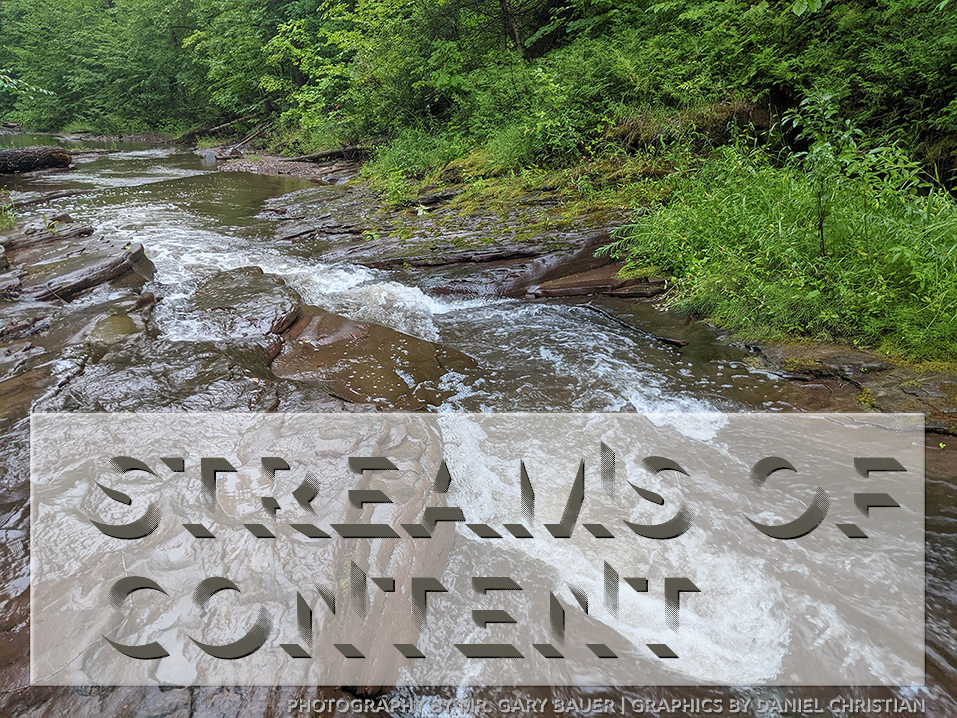
streams of content are ever flowing by -- we need to tap into them and contribute to them


Several sharp photos out at 500px.com


Rethinking the Faculty Role in Students’ Career Readiness — from insidehighered.com by Rachel Toor; with thanks to Ryan Craig for this solid, well-written resource
It’s time for all of us on campuses, not just the people in career services, to step up and help offer the competencies employers say they’re looking for, Rachel Toor writes.

Excerpts:

Career centers on campuses can offer students coaching, resources and connections. But, as Angle points out, they tend to be a just-in-time service. They are also, he says, “scary places for a lot of students.” Many young people don’t want to face the reality of life after graduation. Often, it’s a case of too little, too late.

Instead, they come to people they know—professors like me—for help with cover letters and résumés. And while I can comment on language, until recently I had no idea about how most résumés are read first by a version of R2-D2 and his little robot friends who make up automated tracking systems. If an applicant doesn’t include the right keywords in a résumé or cover letter, into the trash bin they go.

The truth is, I have not applied for a job in 15 years; for many of my colleagues it’s been even longer, and some of them have never worked outside academe. It’s not surprising that employers are seeing recent college grads—smart students, hard workers—who don’t know how to present themselves as potential employees.


From DSC:
I can relate to that part about R2-D2 reading the resumes first (i.e., trying to get by the Applicant Tracking Systems before one’s resume ever makes it in front of the eyes of a fellow human being). Many faculty/staff members and members of administrations haven’t been out interviewing in a long while. So it can be a rude awakening when they/we need to do that.

Also, I wanted to say that it’s not fair to assess the learners coming out of higher education using a different set of learning objectives:

  • That is, faculty members within higher ed have one set of learning objectives and their students work hard to learn and meet those learning objectives. Unfortunately, those students did what was asked of them, and then they…
  • …come to find out that the corporate/business/legal/etc. worlds have different ideas about what they should know and be able to do. That is, these other organizations and communities of practice are assessing them on different sets of learning objectives that these same students didn’t cover. Some (many?) of these graduates leave their interviews discouraged and think, “Well, it must be me.” Or they can leave frustrated and angry at their former institutions who didn’t prepare them for this new assessment.

As I’ve said on this blog before, this disconnect is not fair to the students/graduates. We need more mechanisms by which faculty and staff members within higher ed can work more collaboratively with those within the corporate world to better align the learning objectives and the curriculum being covered. If this doesn’t occur more frequently, the constant appearance and growth of new alternatives will likely continue to build further momentum (as they should, given the incredibly steep price of obtaining a degree these days!).

P.S. This disconnect of learning objectives can also be found in what happens with legal education — including having to pass today’s Bar Exams — and then these graduates get out into the real world to find employers who are frustrated that these graduates don’t have the “right”/necessary skills.

“The incentive structure is for law schools to teach students how to pass the bar exam, not necessarily to do the things that employers expect,” Gallini said.

A quote from this article, which I also
want to thank Ryan Craig for.


Rapid DNA Sequencing Promises Timely Diagnosis for Thousands of Rare Diseases — from innotechtoday.com

Excerpt:

In just 7 hours, 18 minutes, a team of researchers at Stanford Medicine went from collecting a blood sample to offering a disease diagnosis. This unprecedented turnaround time is the result of ultra-rapid DNA sequencing technology paired with massive cloud storage and computing. This improved method of diagnosing diseases allows researchers to discover previously undocumented sources of genetic diseases, shining new light on the 6 billion letters in the human genome.


How to manage slow-working students in your classroom — from blog.neolms.com by Diana Z

Excerpt:

If you have slow-working students in your classroom and want to help them catch up and reach milestones, you should first make sure to rule out any possible psychological barriers that could affect their processing speed or other cognitive issues.

Next, you should devise an intervention scheme that is structured on the three A’s principle:

  • Accepting means that the students need to feel accepted in the learning environment and teachers can provide them a safe place for growth;
  • Accommodating refers to the due diligence a teacher has to exercise to provide a suitable learning environment for all students;
  • Advocating implies the support teachers offer slow-working students throughout their learning journey. It also involves other stakeholders, such as parents and the community, who can also support students.

From DSC:
This is an important topic, because not everyone can work with the (often) fast pace of the current train. One of our daughters has experienced this first hand, and I continue to learn from/through her experience.

K-12 education in America is a like a quickly moving train that stops for no one.


Turning Girls Loose to Build in STEM — from innotechtoday.com by Katherine Rieder

Excerpt:

To elementary-school science teachers and nostalgic postsecondary STEM students, it sounds like a dream. Yet the refrain resounding through the room is one of “this isn’t fair,” or “it’s too hard,” often accompanied by low grumbles and furrowed brows. This reaction to a relatively unstructured learning activity where the learning process takes priority over finding a concrete and “correct” answer is, in fact, typical with this age group and gender.

It results from the mutually reinforcing combination of girls’ decreasing confidence in their innate intellectual ability and the fixed mindset many develop as they move through the early years of their formal education. These same factors are incredibly detrimental to a young woman’s engagement with STEM and a future career in the field.


The US is testing robot patrol dogs on its borders. Should we worry? — from interestingengineering.com by Loukia Papadopoulos
Bow-wow just got darker.

However, we can’t shake the feeling that their deployment is creating a dystopian future, one we are not sure is a completely safe one especially if the dogs are trained to operate autonomously. That is a capability we are not sure the robots yet have. Will this be the next stop for border control? If so, how can we trust machines with rifles? Time will tell how this situation evolves.
 
© 2025 | Daniel Christian