From DSC:
There are many things that are not right here — especially historically speaking. But this is one WE who are currently living can work on resolving.

*******

The Cost of Connection — from chronicle.com by Katherine Mangan
The internet is a lifeline for students on far-flung tribal campuses. Too often, they’re priced out of learning.

Excerpt:

Affordable and reliable broadband access can be a lifeline for tribal colleges, usually located on or near Native American reservations, often in remote, rural areas across the Southwest and Midwest. Chartered by their respective tribal governments, the country’s 35 accredited tribal colleges operate in more than 75 campus sites across 16 states, serving more than 160,000 American Indians and Alaska Natives each year. They emphasize and help sustain the culture, languages, and traditions of their tribal communities and are often the only higher-education option available for Native students in some of the nation’s poorest rural regions.

Also relevant/see:

Tribal Colleges Will Continue Online, Despite Challenges — from chronicle.com by Taylor Swaak
Other institutions could learn from their calculus.

Excerpt:

Two years after tribal colleges shuttered alongside institutions nationwide, many remain largely, if not fully, online, catering to students who’ve historically faced barriers to attending in person. Adult learners — especially single mothers who may struggle to find child care, or those helping to support multigenerational households — make up the majority of students at more than half of the 32 federally recognized institutions in the Tribal Colleges and Universities Program. These colleges are also often located in low-income, rural areas, where hours of daily commute time (and the cost of gas) can prove untenable for students simultaneously working part- or full-time jobs.

Also relevant/see:

Why Tribal Colleges Struggle to Get Reliable Internet Service — from chronicle.com by Katherine Mangan and Jacquelyn Elias
For tribal colleges across the country, the pandemic magnified internet-access inequities. Often located on far-flung tribal lands, their campuses are overwhelmingly in areas with few broadband service providers, sometimes leaving them with slow speeds and spotty coverage.

“You can be driving from a nearby town, and as soon as you hit the reservation, the internet and cellphone signals drop off,” said Cheryl Crazy Bull, president of the American Indian College Fund and a member of the Sicangu Lakota Nation. “Students would be in the middle of class and their Wi-Fi access dropped off.”

Worsening matters, many students have been limited by outdated equipment. “We had students who were trying to take classes on their flip phones,” Crazy Bull said. Such stories were cropping up throughout Indian territory.


 

Kalamazoo Valley Museum’s newest exhibit teaches community about media literacy — from mmlive.com by Gabi Broekema along with one of our sisters Sue Ellen Christian

Excerpt:

The 14-element interactive exhibit is scattered across two floors of the museum and invites visitors to learn about media literacy through fun games and stories.

This project is the brainchild of presidential innovation professor in communication at Western Michigan University, Sue Ellen Christian. A few years back, Christian wrote the book, “Everyday Media Literacy: An Analog Guide for Your Digital Life,” to teach media literacy to the classes she taught full of students from different majors across the university.


2022 Outlook: 6 Legal Trends and Predictions to Have on Your Radar — from jdsupra.com by Vivian Susko

Excerpt:

In January, 2020, we made some bold predictions about what would lie ahead for legal operations in the new decade. Let’s dive back into some of our top forecasts, survey our new landscape, and see which legal trends are currently impacting the industry in 2022. Mitratech expert, Justin Silverman, weighs in on what you can expect to see on the horizon for legal ops.

Points on a radar screen


Also from Eva Keiffenheim (on Medium.com, on Twitter), see:

What Most People Get Dangerously Wrong About Building a Second Brain
And how to fix it.

Also relevant/see:

Analysis: 6 Brain-Based Learning Strategies and Study Skills That Help Teens Learn — from the74million.org by Hank Pellissier

Excerpt:

Teens zoning out during Euclidean geometry or citing TikTok influencers in an expository paper doesn’t always mean they are bored or lazy, argues neurologist and teacher Judy Willis, co-author of Research-Based Strategies to Ignite Student Learning: Insights from Neuroscience and the Classroom. “The demands on students are squishing their natural curiosity and joy of learning,” Willis says.

Brain scientists suggest that students absorb information best if they work in what’s known as the flow state. This mindset is reached when their consciousness is fully “in the zone,” entirely focused on activities they find so pleasurable that time flies and all distractions disappear. Try these brain-based learning strategies and study skills that can help teens enter this open state of more productive and enjoyable learning.


Why gamified learning works so well for gifted children — from raisinglifelonglearners.com by Colleen Kessler

Excerpt:

The gamification of learning can be critical for gifted children in particular, who often struggle to stay focused, engaged, and challenged in a traditional educational environment. Gamification can be so effective in gifted education because the learner forgets they are “working” and instead feels they are “playing.” It allows the gifted brain to relax into the “flow” of learning, and more effectively use their intellect for problem solving and creativity.

Also see:

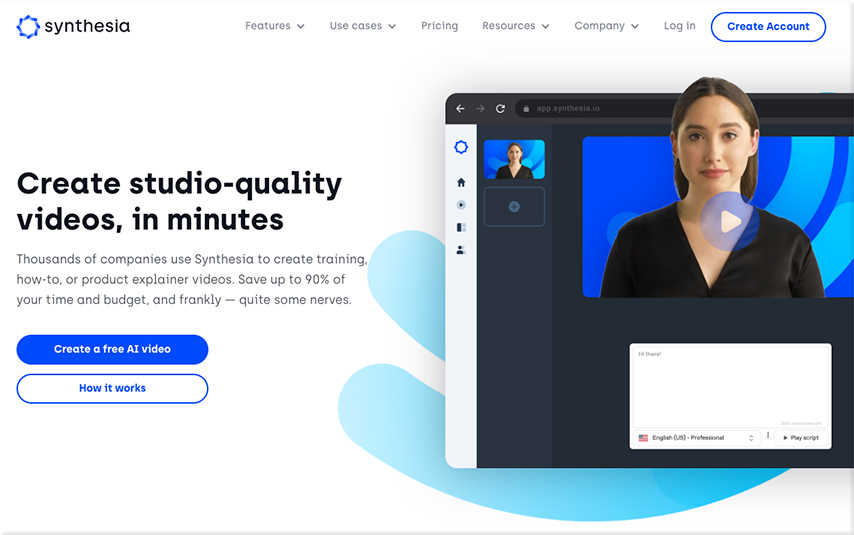
Synthesis dot com


Addendum on 4/27/22:

Homeschooling our gifted children: The power of artful questions — from raisinglifelonglearners.com by Colleen Kessler

Examples of artful questions for learning:

  • Why do you think that might have happened?
  • What would you have done differently?
  • What did you notice about that?
  • What would you suggest we do instead?
  • That’s a good point. How can you reconcile these two things?
  • Do you have an idea for how we could make this better?

From DSC:
Perhaps we should post those types of questions up on the walls of many board rooms and conference rooms around the nation…or have it be a slide in a presentation…or…


Web3 Security: Attack Types and Lessons Learned — from a16z.com by Riyaz Faizullabhoy and Matt Gleason

Excerpt:

A good deal of web3 security rests on blockchains’ special ability to make commitments and to be resilient to human intervention. But the related feature of finality – where transactions are generally irreversible – makes these software-controlled networks a tempting target for attackers. Indeed, as blockchains – the distributed computer networks that are the foundation of web3 – and their accompanying technologies and applications accrue value, they become increasingly coveted targets for attackers.

Despite web3’s differences from earlier iterations of the internet, we’ve observed commonalities with previous software security trends. In many cases, the biggest problems remain the same as ever. By studying these areas, defenders – whether builders, security teams, or everyday crypto users – can better guard themselves, their projects, and their wallets against would-be thieves. Below we present some common themes and projections based on our experience.


The Pros and Cons of Developing AI-Powered Corporate Training Videos with Synthesia — from blog.commlabindia.com by Saritha Esaboyuna
Synthesia is a game-changing invention that uses AI (Artificial Intelligence) to generate videos from text inputs. It enables designers to not only natively localise content but also to create and update existing films.

Excerpt:

You don’t need an editing studio, expensive equipment, or a high-end video editing program to design a video. All you need is Synthesia. Actors, cameras, and microphones are no longer required! You can produce high quality AI-enabled videos in over 50 languages just by adding text with Synthesia.


Also see:

From DSC:
Teachers and faculty members might want to try this out as well — especially if you have multiple languages being spoken in your classroom. And/or perhaps IT Departments and Help Desks could look at this as well.


As Teen Mental Health Worsens, Schools Learn How to Help — from pewtrusts.org by Christine Vestal

Excerpt:

If you or anyone you know is struggling with thoughts of self-harm or suicide, you can get help by calling the confidential National Suicide Prevention Lifeline at 800-273-TALK.

Teen mental health already was deteriorating before the coronavirus pandemic. In the two years since, the isolation, grief and anxiety created by school closures, deaths and loss of family income have led to even steeper declines in children’s mental health, experts say.

Along the lines of major issues to tackle, see:


Homeschooling surge continues despite schools reopening — from apnews.com by Carolyn Thompson

Excerpt:

BUFFALO, N.Y. (AP) — The coronavirus pandemic ushered in what may be the most rapid rise in homeschooling the U.S. has ever seen. Two years later, even after schools reopened and vaccines became widely available, many parents have chosen to continue directing their children’s educations themselves.

Homeschooling numbers this year dipped from last year’s all-time high, but are still significantly above pre-pandemic levels, according to data obtained and analyzed by The Associated Press.


Why One University Is Moving Toward a Subscription Model — a podcast from edsurge.com by Jeffrey R. Young

Excerpts:

One big theme in education-innovation circles is that the professional world is changing faster than ever, and so schools and colleges must adjust how they teach to meet those needs.

One college in St. Louis, Maryville University, is embracing that argument in a big way by revamping its curriculum and even changing its business model to include options like a subscription model—with the goal of helping its students get good jobs after graduation.

“By the end of this decade or before, students should pay for higher ed the way they pay for Netflix or their cell phone bill,” Lombardi says.

From DSC:
I thought this was an interesting conversation and I agreed with much of what Mark Lombardi, President of Maryville University, had to say. 

I appreciated Jeff’s attempts at trying to get Mark to hear that “learning styles” aren’t supported by the research. I wish Mark would have used the word “preferences” instead…as I do think learners have preferences when it comes to them learning about new topics.


8 Principles for Supporting Students with ADHD — from cultofpedagogy.com by Jennifer Gonzalez

Excerpt:

Regardless of the subject area or age you teach, you’re likely to have at least a few students with ADHD in your classroom every school year, so a good working knowledge of it should be part of any teacher’s professional training.

This slim book is not meant to be comprehensive or in-depth. Barkley states outright that he’s not going to spend time on narrative prose and extensive research citations; his goal is to simply explain ADHD so that busy teachers can understand it, and tell them what they can do to help students who have it. His message is “Trust me, I know this stuff. Do this, not that.” And while this obviously leaves him open to criticism, the book certainly delivers on its promises, and it’s a great starting point for any teacher who wants a crash course on ADHD.


Can you truly own anything in the metaverse? A law professor explains how blockchains and NFTs don’t protect virtual property — from theconversation.com by João Marinotti

Excerpt:

Despite these claims, the legal status of virtual “owners” is significantly more complicated. In fact, the current ownership of metaverse assets is not governed by property law at all, but rather by contract law. As a legal scholar who studies property law, tech policy and legal ownership, I believe that what many companies are calling “ownership” in the metaverse is not the same as ownership in the physical world, and consumers are at risk of being swindled.


Weighing the best strategies for reading intervention — from hechingerreport.org by Caralee Adams
Some schools are overhauling reading instruction and trying a variety of approaches to address the pandemic’s impact on learning

Excerpt:

But, some experts say, schools should also invest in deeper changes that tackle the root of the problem: Many teachers aren’t well versed in the science of reading and the best ways to teach to the widening range of abilities they are seeing in students.

Teachers need training on the science of reading research, guidance on leveraging data and ongoing support to help them target instruction.


Hot Economy, Rising Inflation: The Fed Has Never Successfully Fixed a Problem Like This — from wsj.com on 4/18/22 by Jon Hilsenrath and Nick Timiraos; behind a paywall
Central bank says it is possible, but many factors are out of its control; ‘they are strikingly behind’

Excerpt:

The Federal Reserve is setting out to do something it has never accomplished before: reduce inflation a lot without significantly raising unemployment.

Nasdaq slides 2%, Dow falls more than 350 points in sharp reversal as rising rates weigh on stocks — from cnbc.com on 4/20/22 by Fred Imbert Tanaya Macheel Hannah Miao

Excerpt:

The 10-year started the year near 1.5% and has shot up as the Federal Reserve tightens monetary policy to get a hold of soaring prices in the U.S.

“Although we expect inflation to peak very soon, if it hasn’t already done so, continued supply chain disruptions and a slow increase in labor force participation due to retirements and continued concerns over Covid, could easily keep the inflation rate more than double the Fed’s 2% target,” wrote Joseph Kalish, chief global macro strategist at Ned Davis Research.

 
© 2025 | Daniel Christian