How to Learn about Learning Science — from christytuckerlearning.com by Christy Tucker
How do you learn about learning science? Recommendations for people to follow, books to read, and other resources.

Excerpt:

I have written before about how research informs my work. As instructional designers, LXDs, and other L&D professionals, I think it’s important for us to learn how to design more effective learning experiences. Our work should be informed by research and evidence. But, how do you learn about learning science, especially if you don’t have a graduate degree in instructional design? These are my recommendations for people to follow, books to read, and other resources.


Conduct Your Own Virtual Orchestra In Maestro VR — from vrscout.com by Kyle Melnick

Niantic moves beyond games with Lightship AR platform and a social network — from theverge.com by Alex Heath
The maker of Pokémon Go is releasing its AR map for other apps and a location-based social network called Campfire

Excerpt:

Niantic made a name for itself in the mobile gaming industry through the enduring success of Pokémon Go. Now the company is hoping to become something else: a platform for other developers to build location-aware AR apps on top of.

disguise launches Metaverse Solutions division enabling next-level extended reality experiences — from etnow.com

Excerpt:

UK – disguise, the visual storytelling platform and market leader for extended reality (xR) solutions has launched its Metaverse Solutions division to enable the next generation of extraordinary live, virtual production and audiovisual location-based experiences for the metaverse.

The recent rise of real-time 3D graphics rendering capabilities in gaming platforms means that today’s audiences are craving richer, more immersive experiences that are delivered via the metaverse. While the metaverse is already defined as an $8 trillion dollar opportunity by Goldman Sachs, companies are still finding it challenging to navigate the technical elements needed to start building metaverse experiences.

On this item, also see:

disguise.one

disguise launches Metaverse Solutions division — from televisual.com by

Excerpt:

“Our xR technology combines key metaverse building blocks including real-time 3D graphics, spatial technologies and advanced display interfaces – all to deliver a one-of-a-kind gateway to the metaverse,” says disguise CXO and head of Metaverse Solutions Alex Wills.


Every month Essentials publish an Industry Trend Report on AI in general and the following related topics:

  • AI Research
  • AI Applied Use Cases
  • AI Ethics
  • AI Robotics
  • AI Marketing
  • AI Cybersecurity
  • AI Healthcare

The Race to Hide Your Voice — from wired.com by Matt Burgess
Voice recognition—and data collection—have boomed in recent years. Researchers are figuring out how to protect your privacy.

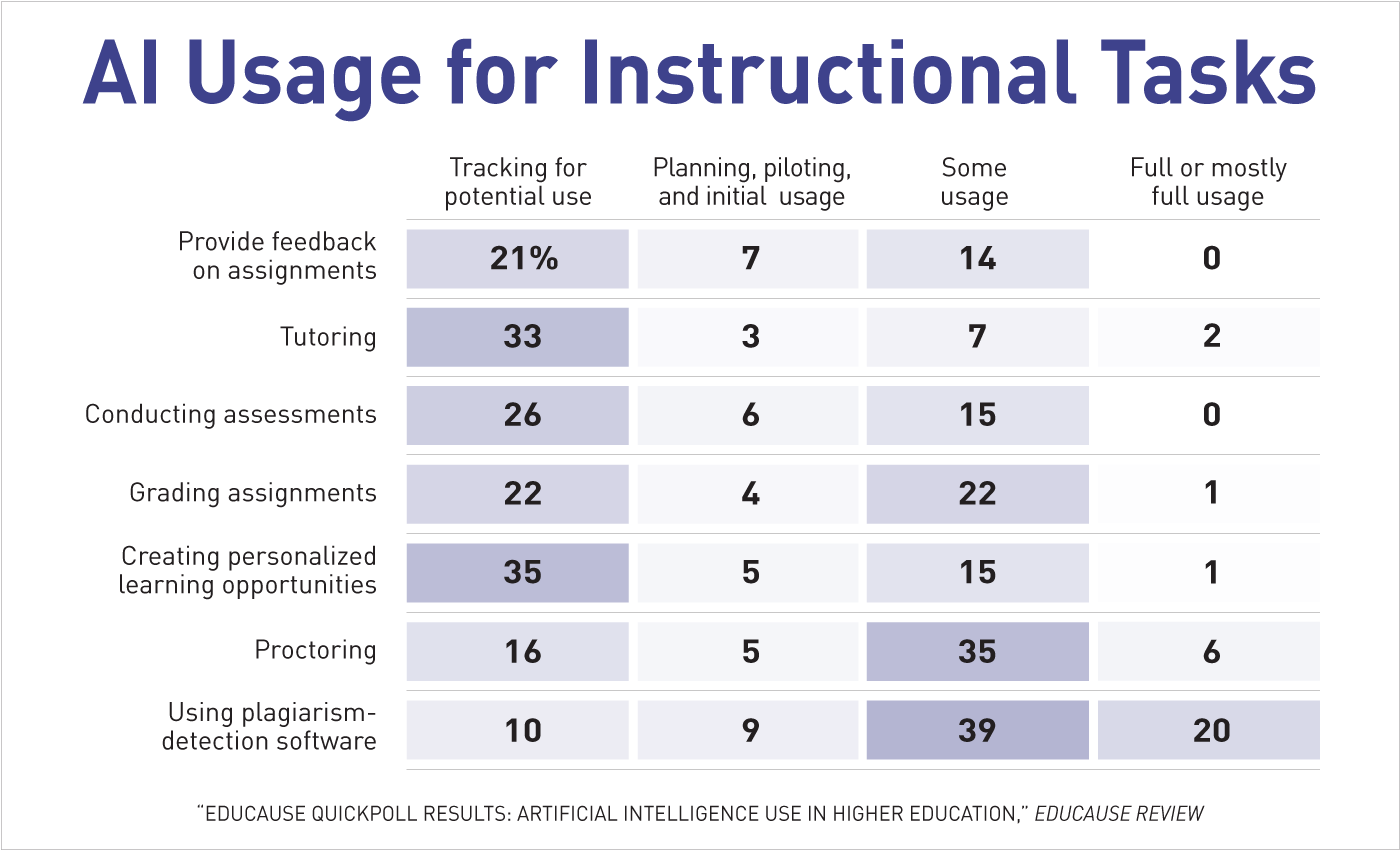
AI: Where are we now? — from educause.edu by EDUCAUSE
Is the use of AI in higher education today invisible? dynamic? perilous? Maybe it’s all three.

What is artificial intelligence and how is it used? — from europart.europa.eu; with thanks to Tom Barrett for this resource


Shifting Skills, Moving Targets, and Remaking the Workforce — from bcg.com by Matt Sigelman, Bledi Taska, Layla O’Kane, Julia Nitschke, Rainer Strack, Jens Baier, Frank Breitling, and Ádám Kotsis; with thanks to Ryan Craig for this resource
Our analysis of more than 15 million job postings reveals the future of work.

Excerpt (emphasis DSC):

Jobs do come and go, but even more significantly, jobs change. Day by day, skill by skill, the basic building blocks of a job are repositioned, until the role looks much different than it did just five years ago. Yet the job title—and the worker in the job—may remain the same.

But even company leaders may not realize how profoundly and rapidly the jobs throughout their business and industry are evolving. A comprehensive look at job listings from 2016 through 2021 reveals significant changes in requested skills, with new skills appearing, some existing skills disappearing, and other existing skills shifting in importance.

The challenge for employers and employees alike is to keep up—or, better yet, to get ahead of the trends.

Four Big Trends
We see four big trends in skill change:

    • Digital skills, like technical fluency and abilities including data analysis, digital marketing, and networking, aren’t limited to jobs in IT.
    • Soft skills, like verbal communication, listening, and relationship building, are needed in digital occupations.
    • Visual communication has become increasingly important even outside of traditional data occupations. Experience with tools such as Tableau, MS Power BI, and Adobe Analytics is in high demand.
    • Social media skills, such as experience with Facebook, LinkedIn, and Adobe Photoshop, are in demand in the current media climate.

Also from Ryan Craig, see:

How to Really Fix Higher Ed — from theatlantic.com by Ben Sasse
Rather than wiping the slate clean on student debt, Washington should take a hard look at reforming a broken system.

Excerpts:

Most young Americans never earn a college degree, and far too many of those who do are poorly served by sclerotic institutions that offer regularly overpriced degrees producing too little life transformation, too little knowledge transmission, and too little pragmatic, real-world value.

Far too often, higher education equates value with exclusivity, and not with outcomes. The paradigmatic schools that dominate higher-ed discussions in the pages of The New York Times, The Wall Street Journal, and The Washington Post measure themselves by how many high-school seniors they reject, rather than by how many they successfully launch, by how much they bolster the moral and intellectual development of the underprivileged, or even by a crude utilitarian calculus such as the average earnings of their recent graduates.

Each of these changes will depend on breaking up the accreditation cartels. College presidents tell me that the accrediting system, which theoretically aims to ensure quality and to prevent scammers from tapping into federal education dollars, actually stifles programmatic innovation inside extant colleges and universities aiming to serve struggling and underprepared students in new ways. 


One last item here:

Learning Should Be Like Cooking — from linkedin.com by Cali Koerner Morrison

Excerpt:

We need systems of record that are learner-owned, verifiable and travel across all types of learning recognition. 1EdTech is making great strides in this direction with the comprehensive learner record and the T3 Innovation Network with the LEROpen Skills Network and Credential Engine are making great strides to level the playing field on defining all elements of skills-based learning and credentialing. We need pathways that help guide learner-earners through their career progression so they are in a constant swirl of learning and earning, leveling up with each new achievement – from a microcredenial to a master’s degree.


What I Learned When Visiting a Colleague’s Hybrid Class — from edsurge.com by Bonni Stachowiak (Columnist)

Excerpt:

Though I usually use this space to offer answers to teaching advice questions from professors, I wanted to try something different. So for my next few installments, I’m writing letters to people who have exemplified what it means to be an effective teacher. This column, the first in the series, is to my friend and colleague, Elizabeth Powell. Her discipline is psychology and she invited me to come observe one of her final classes at our university.


4 Trends to Watch in Education — from caitlintucker.com by Caitlin Tucker

Excerpt:

Last month, I delivered a keynote on the future of education. It’s a vast topic, so I focused on four trends likely to impact our work as educators.

  1. Continued growth in blended and online learning.
  2. Districts confront record-high teacher turnover.
  3. Students continue to struggle with trauma and learning loss.
  4. Increased concerns about equity and access.

As school leaders prepare for the 2022-2023 school year, these four trends can help them identify district priorities and create a strategic plan for the year ahead.

Also see:

What is “unschooling”? My Reflection Matters believes “it takes a village” — from ctpublic.org (Connecticut) by Katie Pellico and Luch Nalpathanchil

Excerpt:

Families are asked to log their “exit” from public school with the state agency. There were 550 exits reported in 2019, and that number rose to “around 3,500 in 2020.” By 2021, that number was at 2,300, though the Department of Education notes “students who have not returned to school by October 1 could still have returned to school any day after that for the remainder of the year.”

14 QUICK WAYS TO TECH-UP YOUR CLASSROOM — from thetechedvocate.org by Matthew Lynch

Excerpt:

With technology becoming a more significant part of the classroom, you might feel that incorporating tech-enabled tools into your classroom is a difficult job, but it doesn’t have to be. There are plenty of useful and fun apps out there that can help you bring technology into your classroom in a way that’s both entertaining and engaging.

Young learners are always surrounded by and exposed to technology, and it’s something that they have a natural affinity for. That’s why technology can be a useful educational tool to boost learner engagement and content retention.

Here are 14 easy ways that you can incorporate tech into your class…

5 Tips for Tackling Classroom Redesigns — from techlearning.com by Ellen Ullman
Creating learning spaces that are accessible for students with specific needs almost always leads to positive outcomes for all learners


How has your legal service delivery model changed as we look forward to post-pandemic life? — from legal.thomsonreuters.com

Excerpt:

The rise of the self-service delivery model
Self-service for legal clients was already a trend before COVID, a trend that accelerated during the shutdowns. Clients now expect to be able to find answers themselves to many of their basic legal questions. Call it the Google-fication of legal service delivery. Clients also want to be able to see their matter statuses without having to take the time to call their lawyers, possibly incurring a charge.

Below are some other legal-related items:

Law Schools Are Changing Thanks To Legal Tech — from lawyer-monthly.com
New digital skills courses are rapidly being added to undergraduate law degrees in the UK. While the first students are currently studying the digital skills course, it’s expected that further students will take part over the coming months. Here, we explore what digital skills courses in law schools are covering.

Pioneers and Pathfinders: Bob Ambrogi — from seyfarth.com by J. StephenPoor

Description of podcast:

For anyone following the rapidly evolving area of legal technology, today’s guest will be a familiar voice. Bob Ambrogi—lawyer, journalist, media consultant, and blogger—has been working at the intersection of law, media, and technology for 40 years. He is known internationally for his expertise in legal technology, legal practice, and legal ethics. He’s won numerous awards for his blog and his leading role on the cutting edge of change in the industry, including being named to Fastcase 50 and Legal Rebels Trailblazers. Before entering the blogosphere, Bob was an editor at a number of mainstream legal publications.

In today’s conversation, we talk about Bob’s journey as a journalist, his views on the current state of mainstream media, the potential of regulatory reform to further disrupt the industry, and the growing diversity of the legal technology industry.

***

Founders Forum invests in fintech-focused virtual law startup Chronos Law — from globallegalpost.com by Ben Edwards
Chronos will be rebranded Founders Law as part of the deal

Bohills said: “Most tech businesses require flexible legal services that don’t fit the traditional law firm model. I designed the firm to scale with the ambitious startups we support. This new investment will enable us to further recruit and satisfy the growing demand from the tech sector and its need for a new way to access legal advice. 


Apple Starts Connecting the Dots for Its Next Big Thing — from nytimes.com by Tripp Mickle and Brian X. Chen
The company has enlisted Hollywood directors like Jon Favreau to help its effort to create products that blend the physical and virtual worlds.

Excerpt:

Nearly 15 years after the iPhone set off the smartphone revolution, Apple is assembling the pieces for what it hopes will become its next business-altering device: a headset that blends the digital world with the real one.

The company has enlisted Hollywood directors such as Jon Favreau to develop video content for a headset that it is expected to ship next year, according to three people familiar with that work. Mr. Favreau, an executive producer of “Prehistoric Planet” on Apple TV+, is working to bring that show’s dinosaurs to life on the headset, which looks like a pair of ski goggles and aims to offer virtual- and augmented-reality experiences, these people said.

Speaking of the future, here’s another item regarding what’s coming down the pike:


From DSC:
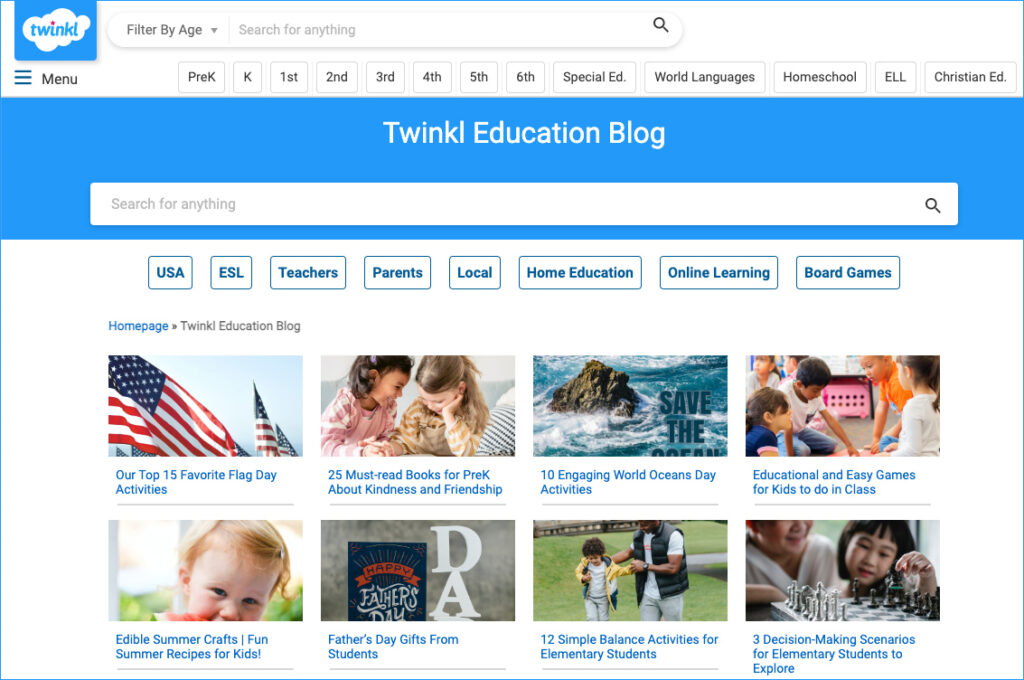
This looks like an interesting set of educational resources!

This is a screenshot of the Twinkl Education Blog


From DSC:
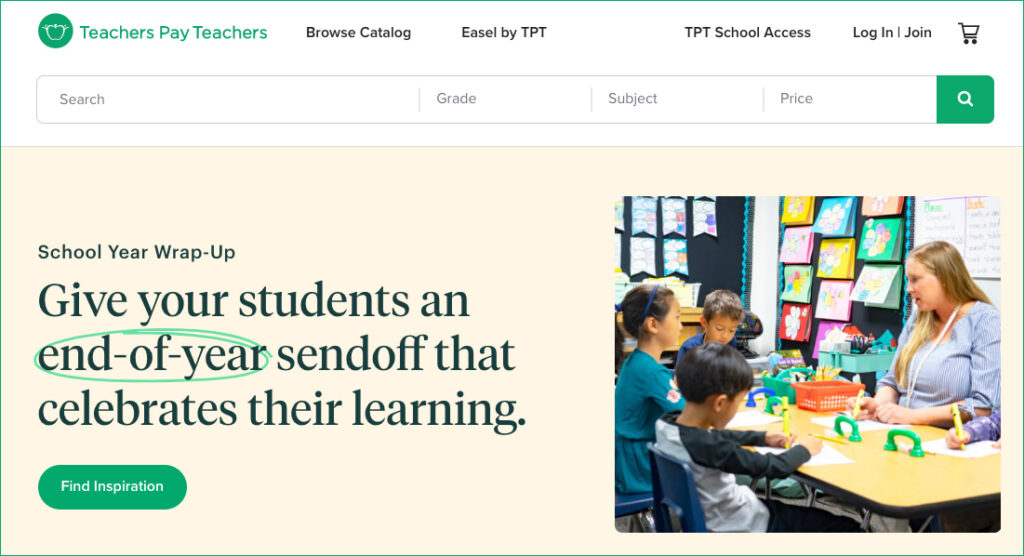
One of our daughters — the one who is going to be teaching third graders next year — said that the above siteand resources reminded her of Teachers Pay Teachers. So I thought I’d include that here as well.

This is a screenshot of the Teachers Pay Teachers website


What Is the Metaverse? A Beginner’s Guide to Tech’s Latest Obsession — from singularityhub.com by Aaron Frank; with thanks to Jack Aldrich for this resource
The metaverse is the internet, but it’s also a spatial (and often 3D), game-engine-driven collection of virtual environments.

Excerpts:

A couple months ago, friends and business contacts started asking me for a crash course on my professional research studying virtual environments. Their interest reflects an explosion—which you’ve probably noticed—of noise and hype surrounding something called the “metaverse.”

This article is an introduction for a complete or almost beginner. There’s plenty of mainstream coverage on the topic, but it often conflates concepts: virtual reality is not the metaverse (though it’s related), and crypto/Web3 by itself is not the metaverse (though also related). Confusing, I know. Whether you’re a businessperson or bystander, this is my best effort to lay everything out.

So if the metaverse is just the internet—what about the internet is about to change? To answer that question, I’ve broken this article into four parts:

    1. Spatial Computing (What is that?)
    2. Game Engines (What are those?)
    3. Virtual Environments (Is that the metaverse? …sort of)
    4. Virtual Economies (Please don’t tell me I have to learn about NFTs…you might)

Also see:


Small Business Website Accessibility Tips — from boia.org

Excerpt:

Many small business owners think of digital accessibility as a series of technical, complicated rules. If you have limited resources for web design and development, accessibility can seem like an expensive extra — but fortunately, that’s not the case.

Website accessibility is achievable on any budget, and it’s a savvy investment regardless of the size of your business. Even if you can’t afford professional testing and remediation, you can take immediate steps to remove barriers that affect people with disabilities. Here are a few tips for getting started.

Also relevant from boia.org, see:

One last accessibility-related item from equalentry.com:


7 best photography lighting kits for camera geeks — from by Atharva Gosavi
Setup the paradise for capturing the perfectness.


GreenLight Means Go: Where Learner and Employment Records Are Headed — from gettingsmart.com by Getting Smart Staff

Excerpt:

New solutions present a unique solution to these challenges by providing a user-controlled technology to store, share, search, and match acquired competency with opportunity. One of the key players in this space is GreenLight Credentials, a frictionless, user-controlled talent search and credential-communicator that addresses these issues. On the outbound side, institutions and their learners can store any type of verified record including transcripts, credentials, badges, or other documentation of learning. These learning experiences are then translated into data – competencies, skills, interests, and accomplishments that are then matched with scholarship, university and employment opportunities. Universities and employers can join the network to discover and connect with prospective students or employees.

The vast majority of students who graduate from high school in the United States typically have their learning diluted to a single one-page transcript that lists courses and grades – and often a GPA.

What young people need now are repetitions in design thinking – to repeatedly find, frame, address complex problems and deliver value to a community.

— Getting Smart Staff

Also relevant/see from Getting Smart:

Innovating Together: the Geopolitical and Educational Path Forward — by Tom Vander Ark

Key Points

  • The new mission of school is cultivating curiosity, purpose and problem solving by inviting learners into real world challenges in diverse teams using smart tools.
  • The path forward is innovating together.

The VUCA world (volatile, uncertain, complex, and ambiguous) is now hyper-connected (VUCAH).

Also relevant/see:


ED and ISTE Launch Initiative to Improve Tech Proficiency of New Teachers to Increase Digital Equity — from thejournal.com by Kristal Kuykendall

Excerpt:

The International Society for Technology in Education and the U.S. Department of Education today launched an initiative to help educator preparation programs update their curriculum and methods to ensure new teachers enter the workforce with the digital learning skills needed to lead equitable learning in modern tech-enabled classrooms, according to a news release.


© 2025 | Daniel Christian