5 Fantastic Ideas for Collaboration Projects — from cultofpedagogy.com by Jennifer Gonzalez

Excerpt:

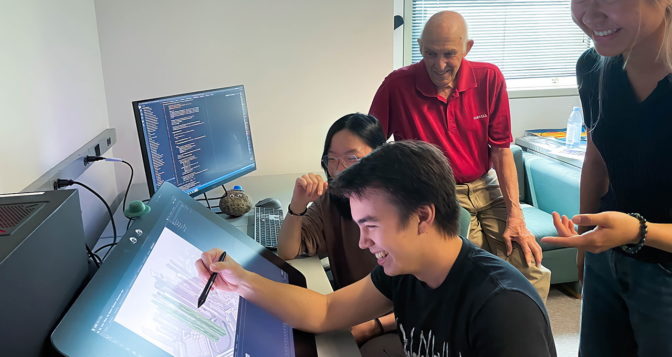
One challenge teachers face in creating these opportunities is thinking up ideas for good projects. So I sent out a tweet asking for teacher-tested projects that went well and got students actually collaborating, not just dividing up the work. From those responses I chose five examples, and I’m presenting them here as broader project concepts — the goal is to give you five different options that you can customize for your content area. For each one, I’ve also offered a quick description of the technology the teachers in the examples used to facilitate their work.

The examples offered here may or may not contain equal amounts of criticality and agency; they were not submitted with those ideas in mind. I’m adding this challenge not as a commentary on the examples, but rather a nudge to get you thinking along those lines for your own projects.

Along the lines of ideas and pedagogies, also see:

Promoting Student Choice & Voice Through Meaningful Assessments — from rdene915.com by Rachelle Dene Poth

Excerpt (emphasis DSC):

Student choice and voice in learning are essential. It is important that we provide a variety of opportunities for our students to develop skills in ways that meet their specific interests and needs. We need activities and tools that will help students to develop content-area knowledge and skills, while also developing essential social-emotional learning (SEL) skills to best prepare them for their future.

From DSC:
I agree! 

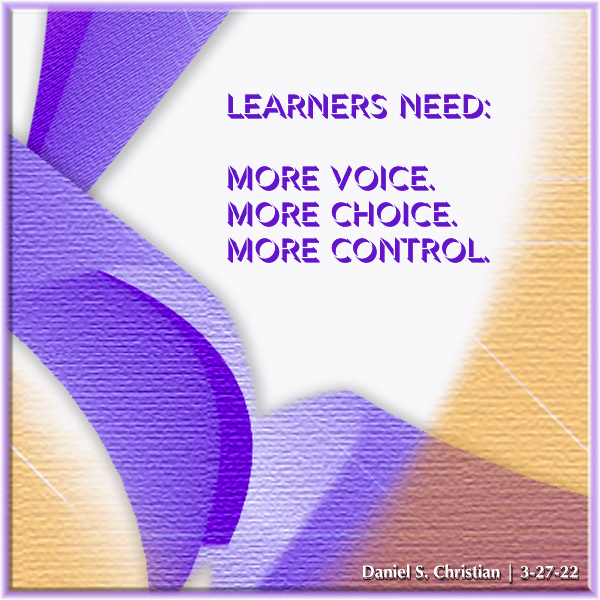
Learners need: More voice. More choice. More control. -- this image was created by Daniel Christian


3 in 5 higher education employees feel unheard at work, survey says — from highereddive.com by Laura Spitalniak

Excerpt from Dive Brief:

  • More than half of higher education employees, 59%, reported feeling unheard at work, according to a new survey from consultant Grant Thornton. Only 17% of respondents said they are actively looking for a new job, but 49% would consider a switch if a new opportunity presented itself.
  • Faculty and staff also expressed discontent about their pay and compensation. Just 37% said their pay allows them to live the lifestyle they choose. That’s compared to 46% of respondents from Grant Thornton’s cross-sector State of Work in America survey.
 

Dive Into AI, Avatars and the Metaverse With NVIDIA at SIGGRAPH — from blogs.nvidia.com

Excerpt:

Innovative technologies in AI, virtual worlds and digital humans are shaping the future of design and content creation across every industry. Experience the latest advances from NVIDIA in all these areas at SIGGRAPH, the world’s largest gathering of computer graphics experts, [which ran from Aug. 8-11].

At SIGGRAPH, NVIDIA CEO Jensen Huang Illuminates Three Forces Sparking Graphics Revolution — from blogs.nvidia.com by Rick Merritt
NVIDIA unveils new products and research to transform industries with AI, the metaverse and digital humans.

NVIDIA AI Makes Performance Capture Possible With Any Camera — from blogs.nvidia.com by Isha Salian
Derivative, Notch, Pixotope and others use NVIDIA Vid2Vid Cameo and 3D body-pose estimation tools to drive performances in real time.

How to Start a Career in AI — from blogs.nvidia.com by Brian Caulfield
Four most important steps to starting a career in AI, seven big questions answered.

As Far as the AI Can See: ILM Uses Omniverse DeepSearch to Create the Perfect Sky — from blogs.nvidia.com by Richard Kerris
Omniverse AI-enabled search tool lets legendary studio sift through massive database of 3D scenes.

Future of Creativity on Display ‘In the NVIDIA Studio’ During SIGGRAPH Special Address — from blogs.nvidia.com by Gerardo Degaldo
Major NVIDIA Omniverse updates power 3D virtual worlds, digital twins and avatars, reliably boosted by August NVIDIA Studio Driver; #MadeInMachinima contest winner revealed.

What Is Direct and Indirect Lighting? — from blogs.nvidia.com by JJ Kim
In computer graphics, the right balance between direct and indirect lighting elevates the photorealism of a scene.

NVIDIA Studio Laptops Offer Students AI, Creative Capabilities That Are Best in… Class — from blogs.nvidia.com by Gerardo Degaldo
Designed for creativity and speed, Studio laptops are the ultimate creative tool for aspiring 3D artists, video editors, designers and photographers.

Design in the Age of Digital Twins: A Conversation With Graphics Pioneer Donald Greenberg — from blogs.nvidia.com by Rick Merritt
From his Cornell office, home to a career of 54 years and counting, he shares with SIGGRAPH attendees his latest works in progress.


Here Are Some Dos And Don’ts Of Disability Language — from forbes.com by Andrew Pulrang

Excerpt:

Is there a way for anyone to navigate disability language clearly, safely, and respectfully?

Obviously, it’s impossible to satisfy everyone. But that doesn’t mean there are no useful guidelines. Here are a few tips to sort through the competing schools of thought on disability language, and ride the various waves of popularity and revision that disability language goes through.

1. Recognize obviously insulting terms and stop using or tolerating them.
2. Aim to be factual, descriptive, and simple, not condescending, sentimental, or awkward.
3. Respect disabled people’s actual language preferences.

Disability Language Style Guide — from National Center on Disaplity and Journalism (ncdj.org)

Disability and Health Overview  — from cdc.gov

Research Center | ALICE in focus studies:
Financial Hardship Among People With Disabilities

Excerpt:

According to the outdated Federal Poverty Level, 18% of people with disabilities in the U.S. lived in poverty in 2019. Yet United For ALICE data shows that another 34% were also struggling, in households that earned above the FPL but less than what it costs to afford the basics. These households are ALICE: Asset Limited, Income Constrained, Employed.

Disability & Socioeconomic Status — from the American Psychological Association (apa.org)

Excerpt:

Socioeconomic status (SES) encompasses not just income but also educational attainment, financial security, and subjective perceptions of social status and social class. Socioeconomic status can encompass quality of life attributes as well as the opportunities and privileges afforded to people within society. Poverty, specifically, is not a single factor but rather is characterized by multiple physical and psychosocial stressors. Further, SES is a consistent and reliable predictor of a vast array of outcomes across the life span, including physical and psychological health. Thus, SES is relevant to all realms of behavioral and social science, including research, practice, education and advocacy.

Those with Disabilities Earn 37% Less on Average; Gap is Even Wider in Some States — air.org

Subminimum Wage and Sheltered Workshops — from United Way of South Central Michigan

Congress enacted the Fair Labor Standards Act in 1938 as part of the New Deal; one of the Act’s provisions, Section 14 (c), grants special certificates allowing for the employment of workers with disabilities below the federal minimum wage.

Many employers operating under 14(c) have historically employed people with disabilities in segregated work centers commonly referred to as sheltered workshops. This creates a situation where the employer profits from paying sub-minimum wages to their employees with disabilities. Some states have prohibited the practice of subminimum wages and sheltered workshops altogether; however as of 2020, 46 states and the District of Columbia continue to allow 14(c) certificates. The U.S. Commission on Civil Rights revealed that in 2017 and 2018, the average wage of a person with a disability working under a 14(c) certificate was $3.34 per hour and the average number of hours worked was 16 hours per week, making the average wage just $53.44 per week.

Employment First is a state and national movement to help individuals with disabilities realize their fullest employment potential through the achievement of individual, competitive, and integrated employment outcomes. Employment First in Michigan has established guidelines to help move the state to community-based and integrated employment by using executive orders and passing legislation.


College Rankings Are ‘a Joke,’ Education Secretary Says Brianna Hatch

Excerpt (emphasis DSC):

Education Secretary Miguel A. Cardona called college rankings “a joke,” and took aim at selective colleges’ obsession with them, as he made a broader push on Thursday for closing stubborn equity gaps in the nation’s college-graduation rates.

“Many institutions spend enormous time and money chasing rankings they feel carry prestige, but in truth do little more than Xerox privilege,” Cardona said, attributing the phrase to the president of a historically Black college.

There’s a “whole science behind climbing up the rankings” that leads to misplaced priorities, Cardona said. The best-resourced colleges are playing a prestige game instead of centering “measures that truly count,” he said. “That system of ranking is a joke.”

Cardona called for a “culture change” in higher ed so that institutions would value inclusivity, use data to help students before they dropped out, and create more-accessible pathways for adult learners, rural students, and first-generation students.

“Let’s confer prestige on colleges’ breaking cycles of poverty. Let’s raise the profiles of institutions delivering real upward mobility, like all of you,” Cardona told attendees, echoing an essay he wrote for The Chronicle on Thursday. “Let’s turn the universities that walk the walk on equity into household names.”

From DSC:
The above item re: culture change caught my eye. Coming out of college, I didn’t think about the culture of an organization. It didn’t mean anything to me.

But as the years went by — and especially as I was working for Kraft Foods at the time when it got acquired by Philip Morris — I began understanding the power and influence of the culture of an organization. That power and influence could be positive and helpful or it could be negative and could stunt the growth of the organization.

I personally question whether many of the existing cultures within our colleges and universities have the ability to change. Time will tell. But the culture of places where I’ve worked had a (sometimes strong) distaste for the corporate world. They didn’t want to be called a “business.” I put that word business in quotes purposefully — as the term was spoken with disdain. The higher calling of higher education could not be considered a business…yeh right. Looking at things these last few years, one can certainly not claim that any longer.

The cultures of our traditional institutions of higher education may be the biggest challenge to their survival. Perhaps some tips in this article may help — though it has to go waaaaay beyond the IT Department.


Increasing Access to Justice — from law.upenn.edu

Excerpt:

By his second year of law school, Willis had created the idea for the Fellowship and, with the support of several key partners, was able to launch the program and begin to pursue the mission of connecting people dedicated to using innovative ideas to expand access to the justice system.

To ensure that the program remained truly inclusive and diverse, Willis has prioritized building relationships with law student affinity groups at different schools across the country. Having personally served on the board for the National Black Law Students Association, Willis knows the value of those personal connections and prioritizes promoting equity within the access to justice technology space.

“The goal really is to try to build community around this group of innovators who will address these structural issues within our legal system to really improve services for the most vulnerable populations and communities,” Willis said. “There’s always more work to be done, but I’m really proud of the changemakers who have come through the program and who are really making a name for themselves and working on important impact work.”

Also relevant/see:

As States Toy With Reform, Legal Tech Cos. Fill Justice Gap — from law360.com by Sarah Martinson; with thanks to Penn Law Future of the Profession Initiative

Excerpt:

More than 100 legal technology companies have formed in the last 10 years to provide legal assistance to millions of Americans who can’t afford an attorney, helping to bridge a gap in access to justice, while less than a handful of states have taken action to expand the practice of law.

According to the Legal Services Corporation’s 2022 Justice Gap Study, low-income Americans do not get adequate legal help for 92% of their substantial civil legal problems and the cost of legal assistance is a barrier.


How higher education lost its shine — from hechingerreport.org by Jon Marcus
Americans are rejecting college in record numbers, but the reasons may not be what you think

Excerpt:

“With the exception of wartime, the United States has never been through a period of declining educational attainment like this,” said Michael Hicks, director of the Center for Business and Economic Research at Ball State University’s Miller College of Business.

There has been a significant and steady drop nationwide in the proportion of high school graduates enrolling in college in the fall after they finish high school — from a high of 70 percent in 2016 to 63 percent in 2020, the most recent year for which the figure is available, according to the National Center for Education Statistics.

Myriad focus groups and public opinion surveys point to other reasons for the dramatic downward trend. These include widespread and fast-growing skepticism about the value of a degree, impatience with the time it takes to get one and costs that have finally exceeded many people’s ability or willingness to pay.


From DSC:
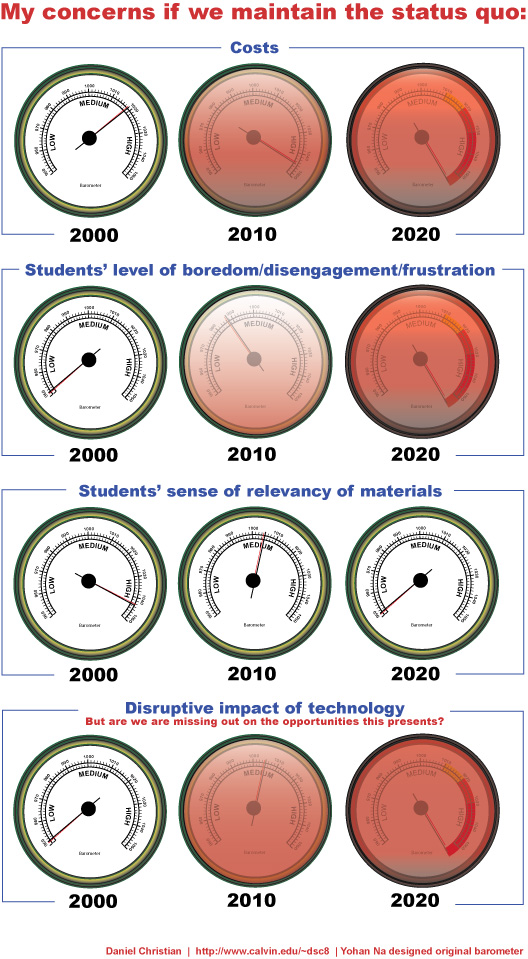
This again reminds me of my concerns captured in this graphic I created with Mr. Yohan Na back in 2009:
.


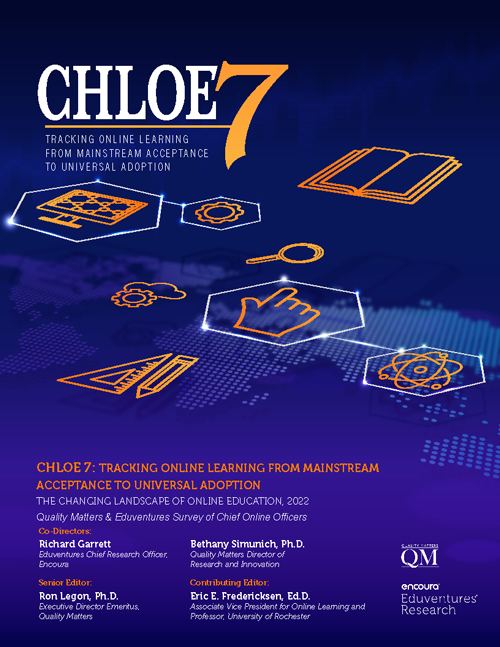
2022 CHLOE 7 Report (Changing Landscape of Online Education) — from qualitymatters.org

The seventh installment of the Changing Landscape of Online Education (CHLOE) report, produced by Quality MattersTM and Eduventures®, offers an overview of the current state of online learning in higher education as well as insights into its future development.

The seventh installment of the Changing Landscape of Online Education (CHLOE) report, produced by Quality MattersTM and Eduventures®, offers an overview of the current state of online learning in higher education as well as insights into its future development. The report was compiled by surveying chief online officers (COOs) at two- and four-year colleges and universities — the professionals best situated to assess the current state of this ever-developing field.

Also relevant/see:

Online Education Is Booming, but Colleges Risk Lapses in Quality, Report Says — from chronicle.com by Taylor Swaak

Excerpt:

A survey of more than 300 officials at American colleges shows many are planning for long-term growth in online education, but few are consistently evaluating the quality of their mushrooming course lists.

According to a newly released report on the survey’s findings — by the nonprofit group Quality Matters and Encoura’s Eduventures, a higher-education-market research firm — more than 90 percent of the “chief online officers” surveyed said they expect the typical traditional-age undergraduates on their campus would be taking courses in some kind of hybrid format by 2025. That’s a stark departure from just three years ago, before the pandemic, when 20 percent of such undergrads took hybrid courses.

Is Higher Ed Really Ready to Embrace Hybrid Learning? — from edsurge.com by Rebecca Koenig
New study shows colleges may need to hire more digital experts and better prepare students to learn online.

Excerpt:

The future of higher education will bring more hybrid learning models—but colleges may not yet have the staff and systems they need to scale up high-quality programs that blend in-person and online experiences.

So believe chief online officers at U.S. colleges, according to a new survey of more than 300 such leaders published today by Quality Matters and Encoura Eduventures Research. It’s the seventh edition of the Changing Landscape of Online Education (CHLOE) report.


Nvidia launches new metaverse efforts at SIGGRAPH — from inside.com

Excerpt:

There is an increasing overlap between computer graphics, the metaverse and AI and that overlap is exactly what is on display this week at the SIGGRAPH 2022 conference, where Nvidia is revealing its latest set of software innovations for computer graphics.

[On 8/11/22] at the conference, Nvidia announced a series of technology innovations that bring the metaverse and AI closer together than ever before. Among the announcements is the Nvidia Omniverse Avatar Cloud Engine, which is a set of tools and services designed to create AI-powered virtual assistants.

Also relevant/see:

Nvidia Sees a Metaverse Populated With Lifelike Chatbot Avatars
— from cnet.com by Stephen Shankland

Excerpt:

What’s happening
Nvidia announced technology to let metaverse developers create lifelike avatars that can give an animated human face to the computers that people will interact with online.

Why it matters
The metaverse needs new computing tools if it’s to live up to its potential of new 3D realms for working, learning, socializing and goofing off, and Nvidia’s technology could also eventually give humans a new look online, not just bots.


Learning Management Systems Are Getting Smarter — from campustechnology.com by Mary Grush and John Baker

Excerpt (emphasis DSC):

Grush: Why do you at D2L present a ‘common learning platform’?

Baker: The common learning platform is a critical part of our strategy for educators and learners alike. We decided years ago that we did not want to build multiple different platforms for K12, higher education, or the workplace — we found it better to focus on one platform that met different use cases.

One great example of how this single platform across markets helps is what we’re doing with D2L Wave — where we match employees in the workforce to our academic clients. This takes the friction out of all the steps required to enroll in micro-credentials and other programs, and it helps an employee with career progression. D2L Wave makes it easy to connect learners with the right education to help them take the next step in their career or to support them to get better at their craft — this is key for upskilling the workforce.


Augmented Books Are On The Way According To Researchers — from vrscout.com by Kyle Melnick

Excerpt:

Imagine this. You’re several chapters into a captivating novel when a character from an earlier book makes a surprise appearance. You swipe your finger across their name on the page at which point their entire backstory is displayed on a nearby smartphone, allowing you to refresh your memory before moving forward.

This may sound like science fiction, but researchers at the University of Surrey in England say that the technology described above is already here in the form of “a-books” (augmented reality books).

The potential use-cases for such a technology are virtually endless. As previously mentioned, a-books could be used to deliver character details and plot points for a variety of fictional works. The same technology could also be applied to textbooks, allowing students to display helpful information on their smartphones, tablets, and smart TVs with the swipe of a finger.

From DSC:

  • How might instructional designers use this capability?
  • How about those in theatre/drama?
  • Educational gaming?
  • Digital storytelling?
  • Interaction design?
  • Interface design?
  • User experience design?

Also see:


A Best-Selling Textbook Is Now Free — from insidehighered.com by Liam Knox
A popular chemistry book’s jump from a publishing titan to an OER pioneer could be pivotal for the open access movement. For the author, it’s also a fitting tribute to his late son.

Excerpt:

John McMurry’s textbook Organic Chemistry has helped millions of students across the globe pass the infamous gauntlet of its namesake class — also known among stressed-out pre-med students as “orgo” — since the book was first printed in 1984.

For his bestseller’s 10th edition, McMurry has decided to part ways with his longtime publisher, the industry giant Cengage, which has published the book since the beginning. He recently sold the rights to OpenStax, a nonprofit based at Rice University that is dedicated to developing open education resources (OER), learning and research materials created and licensed to be free for the user.

From DSC:
From someone paying for a young adult to get through college, I hope this kind of thing happens more often! 🙂 But seriously, there are too many instances when students have been treated as cash cows, when we should have been bending over backward to help them get their educations.

For example, if I pay an invoice from our son’s university by credit card, I get a 3% charge — of the total invoice/$$ amount!!! — added to the bill. Are you kidding me? I have to pay several hundred dollars just for an electronic transaction?!

Can you imagine if the same thing happened to the rest of us at restaurants, hotels, grocery stores, etc. out there? Consumers would throw a fit! And I’d be right there with them.


Also related, see:

Millennials have money problems — from linkedin.com by Taylor Borden

Excerpt (emphasis DSC):

The average millennial is $117,000 in debt, but don’t blame avocado toast. According to new research, more than 70% of millennials have some form of non-mortgage debt, typically linked to student loans and credit cards.

Too Broke to Finish a Ph.D. Program? Tell Us About It — from the chronicle.com by Fernanda Zamudio-Suarez

Excerpt:

Doctoral programs can be long, trying, and expensive — even cost-prohibitive, depending on your circumstances.


Lawyers trying to strangle alternative legal advice — from calmatters.org by Dan Walters
“Scope of practice” conflicts are common in the California Legislature and one is a bill that would forbid the State Bar from exploring alternative legal services.

Excerpt:

There is, however, a darker side to California’s licensing system. It gives licensees monopolies over specific services defined by the Legislature.

Therefore, who is legally authorized to provide what service is ultimately as much a political issue as one of professional competency. No session of the Legislature is complete without at least one “scope of practice” battle.

Also relevant/see:

ABA Sides Against Opening Law Firms Up to New Competition — from news.bloomberglaw.com by Sam Skolnik

Excerpt (emphasis DSC):

The American Bar Association is pouring cold water on efforts to loosen restrictions on who can own law firms, including moves that could open firms up to new competition from corporations.

The group’s House of Delegates on Tuesday passed a non-binding resolution discouraging changes to state rules barring the sharing of legal fees with non-lawyers. But it also encouraged state bar groups to explore innovations designed to increase access to justice by making legal services more affordable.

“By reaffirming our core value of independence of the legal profession and the prohibition against nonlawyer ownership, the ABA House’s action today is a huge victory for all lawyers,” said Foley Hoag partner Stephen Younger, a previous president of the New York State Bar Association.

From DSC:
Yes…that emphasized part of the last paragraph seems to say it all. A victory for lawyers, but not a victory for the American people. Not for those who are trying to access the legal system. Not for those who are fighting to provide more access to justice.


Addendums on 8/13/22:

***

And it’s not just in the United States either:

***

How Did Legal Services Get So Unaffordable, and What Are We Going to Do About It? — from chicagobarfoundation.org

Excerpt:

Over the past 50 years, we gradually have gone from a time in our country where the average middle-class person or small business generally could find affordable legal services when they needed them to a time today where everyday people struggle to afford legal help and lawyers often joke that they could not afford their own services if the need arose.


Average Student Not on Track to Graduate in 5 Years — from insidehighered.com by Susan H. Greenberg

Excerpt:

The average full-time college student doesn’t even attempt to take enough credits to complete a bachelor’s degree within five years, according to a new Postsecondary Data Partnership Insights report by the National Student Clearinghouse Research Center.

The report evaluated the credit-completion ratio—the ratio of credits earned to those attempted—and the credit-accumulation rate of more than 900,000 first-time students at 342 postsecondary institutions during the 2019–20 school year.

College students average less than 22 credits in their first year, too few to graduate on time — from highereddive.com by Rick Seltzer

(Excerpt from Dive Brief)

  • Barely over half of a group of first-time, full-time students — 51% — earned 24 or more credits in their first year of college, meaning most aren’t on track to graduate in four or even five years, according to research released Tuesday by the National Student Clearinghouse.
  • The average full-time student took classes worth under 27 credit hours and earned fewer than 22. Just 28% of students earned 30 hours of credit or more in their first year, which is the annual pace typically required to graduate on time from four-year bachelor’s programs.

More High School Students Are Taking College Classes. But Not Everyone Gets the Chance. — from edsurge.com by Rebecca Koenig
Can better pathways help schools, colleges and students avoid “random acts of dual enrollment”?

Excerpt:

Dual-enrollment programs help nearly 1.4 million high school students take college courses each year. It’s an opportunity that offers lots of proven benefits, like enabling more people to graduate from college, saving families money on higher education and helping community colleges attract more students during an era of falling enrollments. It’s even popular across the political spectrum.

But as dual enrollment grows across the country, access to the option is not distributed equally, according to a new report produced by nearly two dozen higher ed researchers and experts, with funding from the Joyce Foundation.

College is increasingly out of reach for many students. What went wrong? — from npr.org by Terry Gross; with thanks to EdSurge.com for this resource

Excerpt:

Journalist Will Bunch says instead of opening the door to a better life, college leaves many students deep in debt and unable to find well-paying jobs. His new book is After the Ivory Tower Falls.

What’s working in community college baccalaureate degree programs — from ccdaily.com by Tabitha Whissemore

Excerpt:

A growing number of community colleges are offering baccalaureate degree programs.

According to a national inventory published in 2021 by the Community College Baccalaureate Association (CCBA) and New America, there are nearly 570 community college baccalaureate (CCB) programs in the United States, operating at 148 community and technical colleges across 25 states. Most of the programs focus on healthcare or business, though newer programs also are being offered in computer and information sciences, and other STEM fields, as well as education.

It’s Time to End Higher Ed’s Gimmicky Sales Tactics — from chronicle.com by Barmak Nassirian
Teaming up with online program managers comes at a steep reputational cost.

Excerpt:

 Initially trumpeted as an innovative model to expand access and drive down costs, the programs have seen a spate of recent media stories that paints a far less favorable picture: College-OPM partnerships are Faustian bargains that drive up tuition costs and reduce educational quality.

How did it come to this?

From DSC:
Though much of what Barmak is saying may be true, the gimmicks were going on long before OPM’s came into play. We should stop blaming everything on OPMs, or on the pandemic, or on online learning, or on this or that technology. The causes of higher education’s current issues go back a long way — such as approving standard/annual cost increases over the last several decades.

 
© 2025 | Daniel Christian