ChatGPT, Chatbots and Artificial Intelligence in Education — from ditchthattextbook.com by Matt Miller
AI just stormed into the classroom with the emergence of ChatGPT. How do we teach now that it exists? How can we use it? Here are some ideas.

Excerpt:
Now, we’re wondering …

  • What is ChatGPT? And, more broadly, what are chatbots and AI?
  • How is this going to impact education?
  • How can I teach tomorrow knowing that this exists?
  • Can I use this as a tool for teaching and learning?
  • Should we block it through the school internet filter — or try to ban it?
Also relevant/see:

We gave ChatGPT a college-level microbiology quiz. It blew the quiz away. — from bigthink.com by Dr. Alex Berezow
ChatGPT’s capabilities are astonishing.

Key takeaways:

  • The tech world is abuzz over ChatGPT, a chat bot that is said to be the most advanced ever made.
  • It can create poems, songs, and even computer code. It convincingly constructed a passage of text on how to remove a peanut butter sandwich from a VCR, in the voice of the King James Bible.
  • As a PhD microbiologist, I devised a 10-question quiz that would be appropriate as a final exam for college-level microbiology students. ChatGPT blew it away.

ChatGPT Is Dumber Than You Think — from theatlantic.com by Ian Bogost
Treat it like a toy, not a tool.

Excerpt:

On the one hand, yes, ChatGPT is capable of producing prose that looks convincing. But on the other hand, what it means to be convincing depends on context. The kind of prose you might find engaging and even startling in the context of a generative encounter with an AI suddenly seems just terrible in the context of a professional essay published in a magazine such as The Atlantic. And, as Warner’s comments clarify, the writing you might find persuasive as a teacher (or marketing manager or lawyer or journalist or whatever else) might have been so by virtue of position rather than meaning: The essay was extant and competent; the report was in your inbox on time; the newspaper article communicated apparent facts that you were able to accept or reject.

I Would Have Cheated in College Using ChatGPT — from eliterate.us by Michael Feldstein

Excerpt:

These lines of demarcation—the lines between when a tool can do all of a job, some of it, or none of it—are both constantly moving and critical to watch. Because they define knowledge work and point to the future of work. We need to be teaching people how to do the kinds of knowledge work that computers can’t do well and are not likely to be able to do well in the near future. Much has been written about the economic implications to the AI revolution, some of which are problematic for the employment market. But we can put too much emphasis on that part. Learning about artificial intelligence can be a means for exploring, appreciating, and refining natural intelligence. These tools are fun. I learn from using them. Those two statements are connected.

Google to Rival OpenAI’s ChatGPT? New AI Bot for Chats in 2023, CEO Claims to Use it for Search — from techtimes.com by Isaiah Richard
Google to expand its Search engine with AI for 2023, but not in a creepy way.

Excerpt:

Google is planning to create a new AI feature for its Search engine, one that would rival the recently released and controversial ChatGPT from OpenAI. The company revealed this after a recent Google executive meeting that involved the likes of its CEO Sundar Pichai and AI head, Jeff Dean, that talked about the technology that the internet company already has, soon for development.

Employees from the Mountain View giant were concerned that it was behind the current AI trends to the likes of OpenAI despite already having a similar technology laying around.


And more focused on the business/vocational/corporate training worlds:

Sana raises $34M for its AI-based knowledge management and learning platform for workplaces — from techcrunch.com by Ingrid Lunden

There are a lot of knowledge management, enterprise learning and enterprise search products on the market today, but what Sana believes it has struck on uniquely is a platform that combines all three to work together: a knowledge management-meets-enterprise-search-meets-e-learning platform.

Exclusive: ChatGPT owner OpenAI projects $1 billion in revenue by 2024 — from reuters.com by Jeffrey Dastin, Krystal Hu, and Paresh Dave

Excerpt:

Three sources briefed on OpenAI’s recent pitch to investors said the organization expects $200 million in revenue next year and $1 billion by 2024.

The forecast, first reported by Reuters, represents how some in Silicon Valley are betting the underlying technology will go far beyond splashy and sometimes flawed public demos.

“We’re going to see advances in 2023 that people two years ago would have expected in 2033. It’s going to be extremely important not just for Microsoft’s future, but for everyone’s future,” he said in an interview this week.


Addendum on 12/21/22:

ChatGPT and higher education: last week and this week — from bryanalexander.org by Bryan Alexander
 

The talent needed to adopt mobile AR in industry — from chieflearningofficer.com by Yao Huang Ph.D.

Excerpt:

Therefore, when adopting mobile AR to improve job performance, L&D professionals need to shift their mindset from offering training with AR alone to offering performance support with AR in the middle of the workflow.

The learning director from a supply chain industry pointed out that “70 percent of the information needed to build performance support systems already exists. The problem is it is all over the place and is available on different systems.”

It is the learning and development professional’s job to design a solution with the capability of the technology and present it in a way that most benefits the end users.

All participants revealed that mobile AR adoption in L&D is still new, but growing rapidly. L&D professionals face many opportunities and challenges. Understanding the benefits, challenges and opportunities of mobile AR used in the workplace is imperative.

A brief insert from DSC:
Augmented Reality (AR) is about to hit the mainstream in the next 1-3 years. It will connect the physical world with the digital world in powerful, helpful ways (and likely in negative ways as well). I think it will be far bigger and more commonly used than Virtual Reality (VR). (By the way, I’m also including Mixed Reality (MR) within the greater AR domain.) With Artificial Intelligence (AI) making strides in object recognition, AR could be huge.

Learning & Development groups should ask for funding soon — or develop proposals for future funding as the new hardware and software products mature — in order to upskill at least some members of their groups in the near future.

As within Teaching & Learning Centers within higher education, L&D groups need to practice what they preach — and be sure to train their own people as well.


From DSC:
Unless students see how the topics that you are introducing are relevant to *their futures*, it just develops a mindset of “how do I play the game/system?” and “what’s the least I can do to get an A?”

On a somewhat-related tangent:


14 charts this year that helped us better understand COVID’s impact on students, teachers, & schools — from the 74million.org by  Kevin Mahnken

Excerpt:

By the end of last year, a steady trickle of research had already begun to reveal the harm wrought by prolonged school closures and the transition to virtual instruction. But this fall brought the most definitive evidence yet of the scale of learning lost over more than two years of COVID-disrupted schooling: fresh testing data from the National Assessment of Educational Progress, sometimes called the Nation’s Report Card, pointing to severe declines in core subjects.

From DSC:
While not minimizing the impact of the “learning loss” that is often written about, I do wonder if maybe the types of learning going on during the pandemic weren’t captured on a standardized test. Maybe the types of learning that our youth and families learned about help set them up for our present VOCA (Volatility, Uncertainty, Complexity and Ambiguity) world. And for a future where change doesn’t seem to be slowing down anytime soon.

Some of the types of learning that might not show up on the standardized tests include:

  • Dealing with life’s challenges and tumultuous changes
  • Being flexible
  • Adapting
  • The importance of having sufficient Internet connections and the corresponding hardware and software to keep on learning remotely
  • Where or to whom does one go to for help?

Also, as has been said elsewhere, bashing online learning or virtual instruction is often unfair. The remote learning that teachers and faculty members were thrust into lacked appropriate instructional design. Many teachers and faculty members hadn’t yet been trained on how to put together solid online-based courses and/or to use the tools that are required to offer such courses. Also, many in society didn’t have Internet access (or insufficient access), a quiet place to study and/or participate in online-based learning.


Skills, Skills, Skills Now is the time. — from by Katelyn Donnelly and Eric Scott Lavin
Skills matter more than ever.

Excerpt:

For years, the importance of building demonstrable skills has been growing. The research is clear: skills acquired through work experience increase lifetime earnings. Yet, a massive shift in how learners, educators, and employers think about skills is just beginning.

Three subtrends set the stage for a massive inflection point in how we think about skills…

Learning will be the only constant throughout a career.  Success in the modern workforce is learning experiences to build skills, and the best way to build skills is to do real-world projects.

Below is a sampling of organizations and companies pushing the boundaries. Some of these are established players with mature businesses and tested business models.

Also relevant/see:

The Job Skills of 2023 — from Coursera

The job skills of 2023 -- from Coursera

Excerpt from the Executive Summary Section

  1. The fastest-growing skills are digital skills
    The top ten overall fastest-growing skills are digital skills. The ongoing evolution of technology means employers are regularly seeking new digital competencies from potential hires while also reskilling existing workers.
  2. The fastest-growing digital skills are changing more significantly than the fastest-growing human skills
    The top ten digital skills vary significantly from last year—only two have carried over year-on-year: data visualization and user experience. The human skills in demand remain steadier, suggesting an evergreen demand for skills like change management and communication.

The job skills of 2023 -- from Coursera


Luke 1:30-33 — from biblegateway.com

But the angel said to her, “Do not be afraid, Mary; you have found favor with God. You will conceive and give birth to a son, and you are to call him Jesus. He will be great and will be called the Son of the Most High. The Lord God will give him the throne of his father David, and he will reign over Jacob’s descendants forever; his kingdom will never end.”


“Tech predictions for 2023 and beyond” — from allthingsdistributed.com by Werner Vogels, Chief Technology Officer at Amazon

Excerpts:

  • Prediction 1: Cloud technologies will redefine sports as we know them
  • Prediction 2: Simulated worlds will reinvent the way we experiment
  • Prediction 3: A surge of innovation in smart energy
  • Prediction 4: The upcoming supply chain transformation
  • Prediction 5: Custom silicon goes mainstream
 

Edtech’s brightest are struggling to pass — from techcrunch.com by Natasha Mascarenhas

Excerpts:

In the last quarter of 2022, edtech layoffs have hit venture-backed businesses including but not limited to BloomTech, Vedantu, Teachmint, Reforge, Coursera, Unacademy, Byju’s, Udacity and Brainly. Executive shifts include Quizlet CEO stepping down, Degreed’s CEO stepping aside for the founder’s return, and Invact Metaversity’s co-founder leaving after irreconcilable differences with his co-founder.

Class, an edtech company that neared unicorn status only 10 months after launching its Zoom School alternative, also conducted layoffs this year. The company raised a total of $146 million in known venture funding to date, including a SoftBank Vision Fund II check. CEO and founder Michael Chasen did not respond to a request for comment

The e-mail sent to staff was even more direct. “The truth is the layoffs in our sector are widespread for a reason,” Amir Nathoo, the co-founder of edtech unicorn Outschool, wrote in an email sent to staff. “The funding atmosphere has been dramatically impacted by the anticipation of a recession, higher interest rates and an increased need to show [return on investment] to investors.”

Addendum on 12/15/22 — and focuses on India:

  • Will Edtech See a Paradigm Shift In 2023? — from entrepreneur.com by S. Shanthi
    Higher education, phygital models, vernacular learning, re-skilling, up-skilling are some of the trends that are expected to stay attractive
 
  • From DSC:
    I continue to think about the idea of wiping the slate completely clean. If we were to design a lifelong learning ecosystem, what would it look like? How could we apply Design Thinking to this new slate/canvas?

Perhaps we could start by purposefully creating more pathways to weave in and out of the various siloes — and then come back into the “silos” with new ideas, knowledge, and experiences:

  • PreK-12
  • Higher education
  • Vocational programs
  • Business and the corporate world
  • Government
  • Communities of practice
  • Other

Integrate apprenticeships, jobs, sabbaticals, rest, purpose, passions, intrinsic motivations, other into this lifelong learning ecosystem. Take one’s new learning back to one’s former silo(s) and improve things therein. Such a design would help keep curricula and learning/training environments up-to-date and relevant.

It would also allow people more pathways through their careers — and to keep learning while doing real-world projects. It would help people — and institutions— grow in many ways.


AI bot ChatGPT stuns academics with essay-writing skills and usability — from theguardian.com by Alex Hern
Latest chatbot from Elon Musk-founded OpenAI can identify incorrect premises and refuse to answer inappropriate requests

Excerpt:

Professors, programmers and journalists could all be out of a job in just a few years, after the latest chatbot from the Elon Musk-founded OpenAI foundation stunned onlookers with its writing ability, proficiency at complex tasks, and ease of use.

The system, called ChatGPT, is the latest evolution of the GPT family of text-generating AIs. Two years ago, the team’s previous AI, GPT3, was able to generate an opinion piece for the Guardian, and ChatGPT has significant further capabilities.

In the days since it was released, academics have generated responses to exam queries that they say would result in full marks if submitted by an undergraduate, and programmers have used the tool to solve coding challenges in obscure programming languages in a matter of seconds – before writing limericks explaining the functionality.


Also related/see:


AI and the future of undergraduate writing — from chronicle.com by Beth McMurtrie

Excerpts:

Is the college essay dead? Are hordes of students going to use artificial intelligence to cheat on their writing assignments? Has machine learning reached the point where auto-generated text looks like what a typical first-year student might produce?

And what does it mean for professors if the answer to those questions is “yes”?

Scholars of teaching, writing, and digital literacy say there’s no doubt that tools like ChatGPT will, in some shape or form, become part of everyday writing, the way calculators and computers have become integral to math and science. It is critical, they say, to begin conversations with students and colleagues about how to shape and harness these AI tools as an aide, rather than a substitute, for learning.

“Academia really has to look at itself in the mirror and decide what it’s going to be,” said Josh Eyler, director of the Center for Excellence in Teaching and Learning at the University of Mississippi, who has criticized the “moral panic” he has seen in response to ChatGPT. “Is it going to be more concerned with compliance and policing behaviors and trying to get out in front of cheating, without any evidence to support whether or not that’s actually going to happen? Or does it want to think about trust in students as its first reaction and building that trust into its response and its pedagogy?”


ChatGPT Could Be AI’s iPhone Moment — from bloomberg.com by Vlad Savov; with thanks to Dany DeGrave for his Tweet on this

Excerpt:

The thing is, a good toy has a huge advantage: People love to play with it, and the more they do, the quicker its designers can make it into something more. People are documenting their experiences with ChatGPT on Twitter, looking like giddy kids experimenting with something they’re not even sure they should be allowed to have. There’s humor, discovery and a game of figuring out the limitations of the system.


And on the legal side of things:


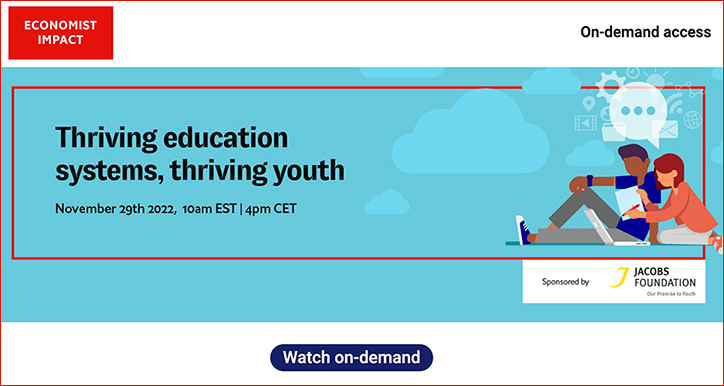
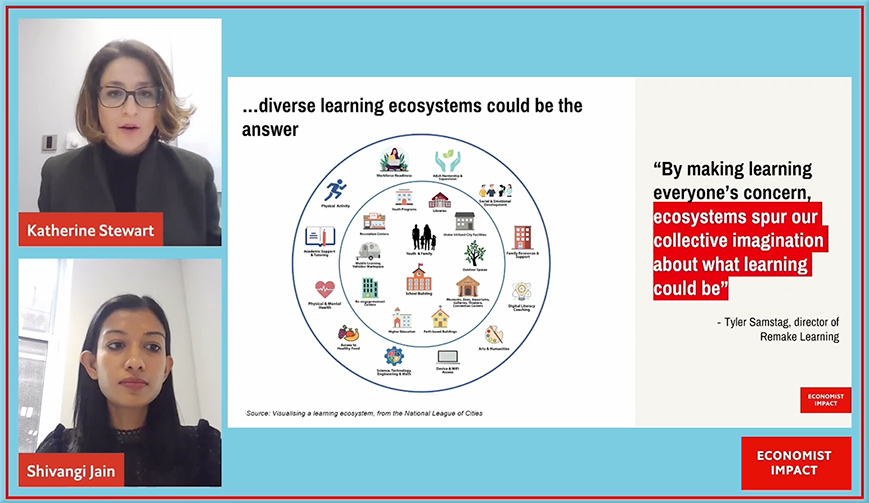
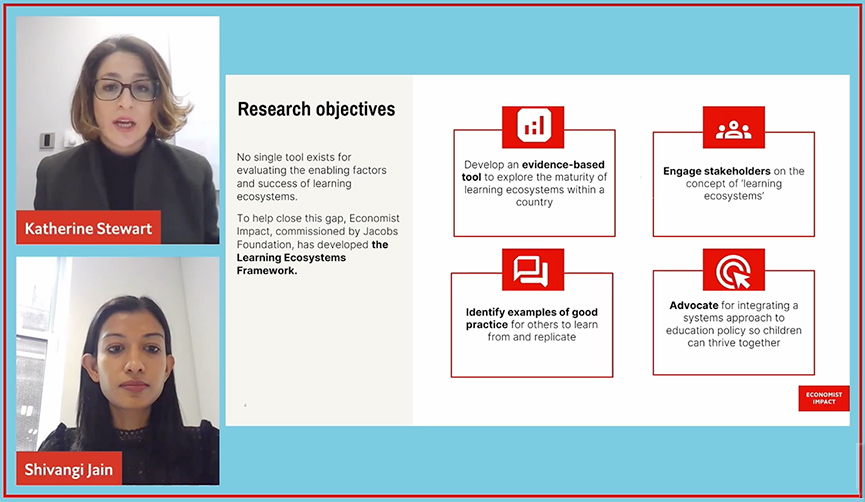
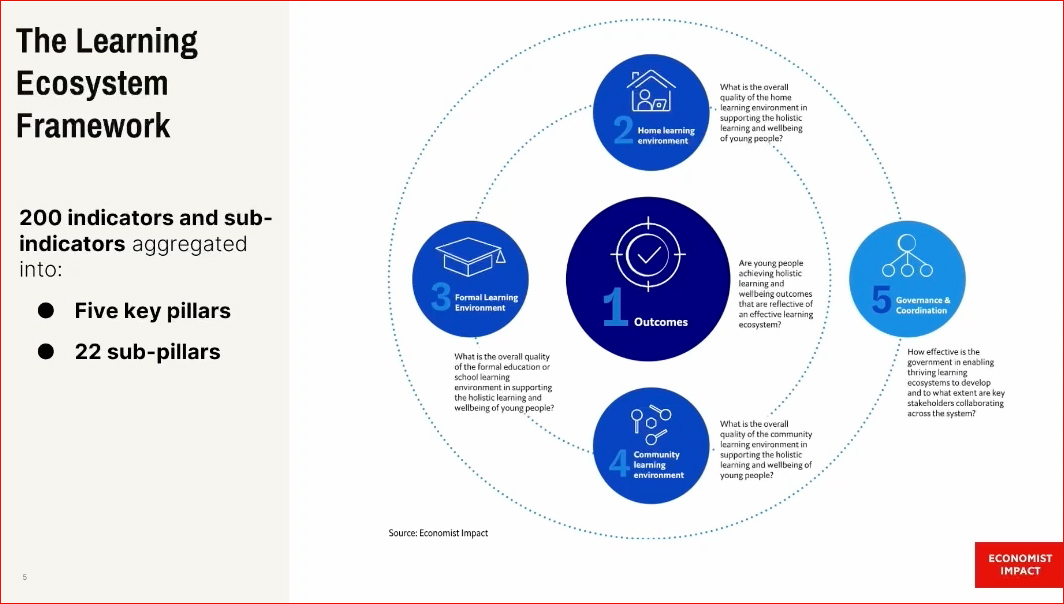
Thriving education systems, thriving youth — from events.economist.com by Economist Impact

Some of the key topics to be discussed include:

  • What are the challenges in how we measure learning outcomes today, and how does this need to transform?
  •  What is a learning ecosystem? What does a successful learning ecosystem look like?  
  • What factors enable the development of thriving learning ecosystems?  
  • Who are the key stakeholders that make up the learning ecosystem? How do different stakeholders see their role in the learning ecosystem?
  • Which national policies need to be in place to support effective education ecosystems?
  • What information and data do we need to assess how well learning ecosystems are performing?
  • What data do we need to collect so that we don’t perpetuate traditional approaches to defining and measuring success? 


From DSC:
How to retain talented staff members should be high on every administrator’s 2023 agenda.” This highlight from a recent email from The Chronicle of Higher Education linked to:

Unfortunately, this important item wasn’t high on the agenda in the majority of the years that I was working in higher education. I often thought that folks in higher education could have learned from the corporate world in this regard. Although even the corporate world hasn’t been doing a good job these days about treating their people well. But that wasn’t the case in my experience at Baxter Healthcare, Kraft Foods, and Wells Fargo from years ago.

Perhaps we should have more people “crossing over” between the silos that we seem to have established. That is, a person could work within higher education for 2-3 years, move over to a corporate environment/government/vocational space/other, and then works a few years there before coming back to higher education in a different capacity. Perhaps more pathways and tighter collaboration could exist in this manner.

Hmmm…design thinking…there’s got to be something here…


Radar Trends to Watch: December 2022 — from oreilly.com by Mike Loukides
Developments in Security, Cryptocurrency, Web, and More

Excerpt:

This month’s news has been overshadowed by the implosion of SBF’s TFX and the possible implosion of Elon Musk’s Twitter. All the noise doesn’t mean that important things aren’t happening. Many companies, organizations, and individuals are wrestling with the copyright implications of generative AI. Google is playing a long game: they believe that the goal isn’t to imitate art works, but to build better user interfaces for humans to collaborate with AI so they can create something new. Facebook’s AI for playing Diplomacy is an exciting new development. Diplomacy requires players to negotiate with other players, assess their mental state, and decide whether or not to honor their commitments. None of these are easy tasks for an AI. And IBM now has a 433 Qubit quantum chip–an important step towards making a useful quantum processor.


How to Receive Feedback With a Growth Mindset — from neuroleadership.com by the NeuroLeadership Institute

Excerpt:

A growth mindset can help us view feedback as a good thing, which ultimately makes performance reviews more effective. After all, we want to learn, grow, and improve our skills. People with a fixed mindset view criticism as an attack on their self-worth. Growth mindset, by contrast, leaves room for the possibility that we all have blind spots — and that your manager may have valuable insights on how you can hone your skills. Feedback, in other words, isn’t personal. A manager may critique our performance, but a growth mindset helps keep us from tying our performance to our identity.

The beauty of growth mindset is that it’s self-reinforcing. As you gain more confidence in your own ability to learn and grow, each feedback conversation becomes easier than the last. You become more capable of discussing high-stakes issues with honesty and transparency because neither side feels threatened.

 
© 2025 | Daniel Christian