From DSC:
The following article made me again wonder about the place of technology in the access to justice realm.


Legal Tech Startup Lexion Tasks GPT-3 to Help Draft Contracts in Microsoft Word — from voicebot.ai by Eric Hal Schwartz

Excerpt:

Lawyers can ask GPT-3 to help write contracts in Microsoft Word thanks to legal tech startup Lexion’s new AI Contract Assist Word plugin. The new tool offers assistance in drafting and negotiating terms, as well as summarizing the contract for those not versed in legal language and marks the growing interest in applying generative AI within the legal profession.

Lexion’s AI Contract Assistant is designed to compose, adjust, and explain contracts with an eye toward streamlining their creation and approval. Lawyers with the Word plugin can write a prompt describing the goal of a contract clause, and the AI will generate one with appropriate language. 


From DSC:
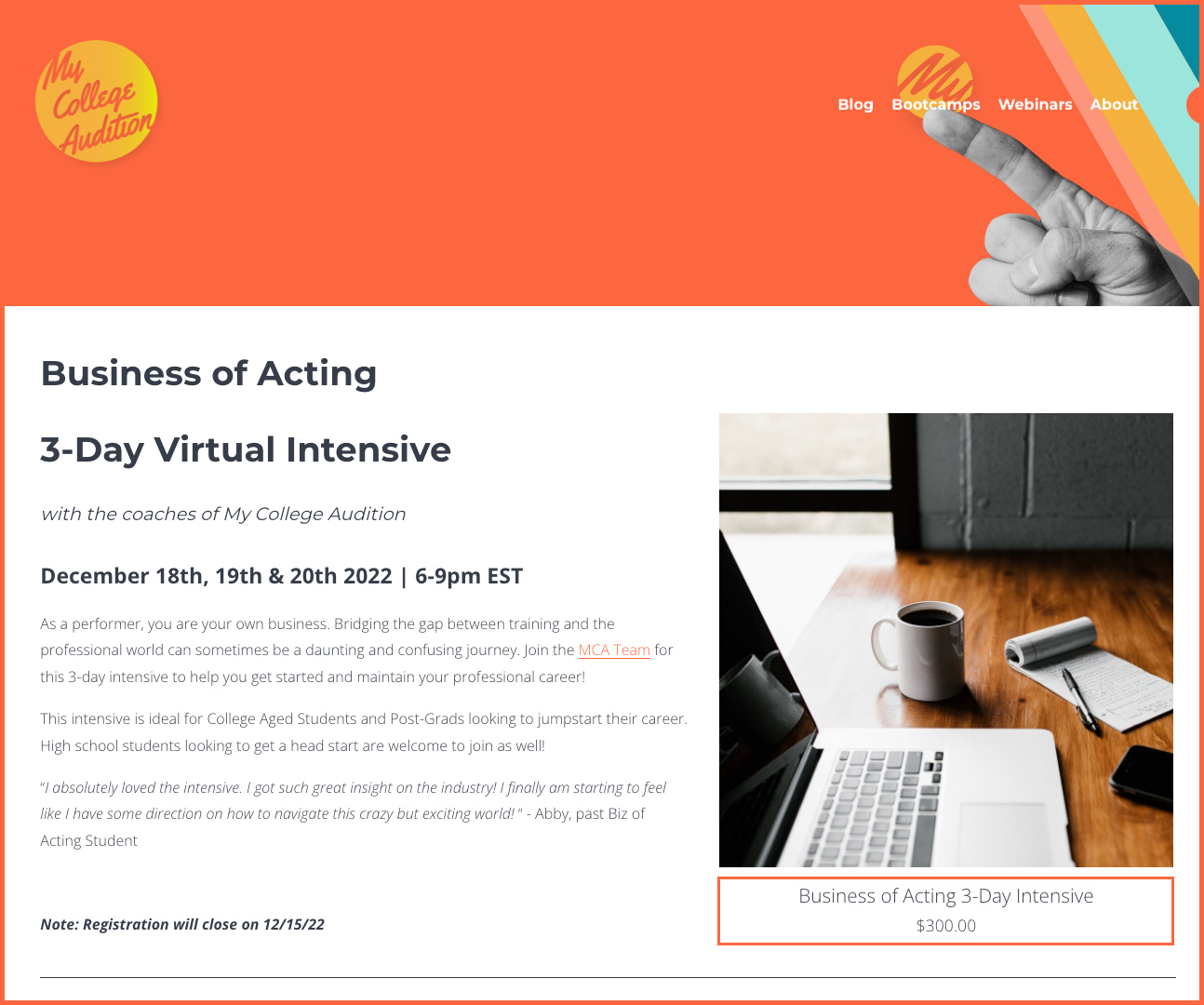
Our son recently took a 3-day intensive course on the Business of Acting. It was offered by the folks at “My College Audition” — and importantly, the course was not offered by the university where he is currently working on a BFA in Acting. By the way, aspiring performing arts students may find this site very beneficial/helpful as well. (Example blog posting here.)

mycollegeaudition.com/

The course was actually three hours of learning on a Sunday night, a Monday night, and a Tuesday night from 6-9pm.

The business of acting -- a 3-day virtual intensive course from mycollegeaudition.com

He learned things that he mentioned have not been taught in his undergrad program (at least not so far). When I asked him what he liked most about the course, he said:

  • These people are out there doing this (DSC insert: To me, this sounds like the use of adjunct faculty in higher ed)
  • There were 9 speakers in the 9 hours of classtime
  • They relayed plenty of resources that were very helpful and practical. He’s looking forward to pursuing these leads further.

He didn’t like that there were no discussion avenues/forums available. And as a paying parent, I didn’t like that we had to pay for yet another course and content that he wasn’t getting at his university. It may be that the university that he’s studying at will offer such a course later in the curriculum. But after two years of college experience, he hasn’t come across anything this practical and he is eagerly seeking out this type of practical/future-focused information. In fact, it’s critical to him staying with acting…or not. He needs this information sooner in his program.

It made me reflect on the place of adjunct faculty within higher education — folks who are out there “doing” what they are teaching about. They tend to be more up-to-date in their real-world knowledge. Sabbaticals are helpful in this regard for full-time faculty, but they don’t come around nearly enough to keep one’s practical, career-oriented knowledgebase up-to-date.

Again, this dilemma is to be expected, given our current higher education learning ecosystem. Faculties’ plates are full. They don’t have time to pursue this kind of endeavor in addition to their daily responsibilities. Staff aren’t able to be out there “doing” these things either.

This brings me back to design thinking. We’ve got to come up with better ways of offering student-centered education, programming, and content/resources.

My son walked away shaking his head a bit regarding his current university. At a time when students and families are questioning the return on their investments in traditional institutions of higher education, this issue needs to be taken very seriously. 


Also potentially relevant for some of the performing arts students out there:


Master of Lettering [Biernat]

Master of Lettering — from theawesomer.com by Tomasz Biernat

Also fun/see:

Everyday Situations Take an Amusing Turn in Toon Joosen’s Clever Collages — from thisiscolossal.com by Grace Ebert and Toon Joosen


For to us a child is born,
    to us a son is given,
    and the government will be on his shoulders.
And he will be called
    Wonderful Counselor, Mighty God,
    Everlasting Father, Prince of Peace.


Top challenges for L&D leaders in 2023 — from chieflearningofficer.com by Ken Blanchard

Excerpts:

From an HR perspective, survey respondents reported that the biggest challenges they expect as HR and L&D leaders in 2023, in ranked order, are:

  1. Capacity and resources
  2. Turnover and attrition
  3. Improving engagement and experience
  4. Adapting to a hybrid culture

From DSC:
I wonder if many in higher education might respond similarly…? Perhaps some even in the K-12 space as well.

Also see:

This posting from William Kennedy-Long (re: instructional design) out on LinkedIn:

Excerpt (emphasis DSC):

I read Clark Quinn’s outstanding article which I highly recommend reading, entitled Performance Focus For Deeper Learning Design.

Immediately, I was captivated by what it and he had to say, such that I wrote a short piece to follow up on it.

What are on-ramps? Here’s how to build them for all adult learners to reach their academic potential — from chieflearningofficer.com by Michelle Westfort

Excerpt:

This may come as a surprise — adult learners over 25 make up nearly 40 percent of today’s U.S. undergraduate population at colleges and universities. However, these learners often find themselves treated as outliers by institutions designed for traditional students, which leads to poorer learner outcomes and, as a result, barriers to social mobility.

To ensure adult learners can meaningfully participate in your workforce education program, organizations can build on-ramps capable of accommodating all learners.

On-ramps provide employees access to high-quality academic programs, enable them to continue their educational journey toward a degree or certification by meeting them where they are, and hold a key role in paving the way for successful learner outcomes.

Leveraging 2022’s future-forward lessons to improve L&D — from chieflearningofficer.com by Keith Keating

Excerpts:

Top 4 future-forward lessons from 2022:

  1. The world changes rapidly — prepare for it
  2. Anticipate trends, events and the skills you’ll need in the future
  3. Continuously adopt new capabilities and expand your knowledge
  4. Use tech to your advantage
 

Local private colleges slash tuition prices as enrollment declines — from news.yahoo.com by Jason Law

Excerpts:

“By reducing the published price, we certainly would hope that more people would apply,” Alexander said. “If they see a sticker price of $60,000 or more, there’s research out there that says 60% of them don’t take the next step to apply or figure out if they can afford it.”

One of the most frustrating aspects for consumers, the Hechinger Report found, is the difference between a school’s sticker price—its published tuition cost–and the actual price a student will pay after scholarships and institutional aid are subtracted.

“Many families are not aware that some students do not pay the full sticker price for college. Only 18% of college-bound families agree that the amount families actually pay is lower than the price advertised by the school,” a 2022 Sallie Mae College Confidence report found.

Student Loan Debt: 2022 Statistics and Outlook — from investopedia.com by Daniel Kurt, Thomas Brock, and Amanda Jackson; with thanks to Ray Schroeder for posting this on LinkedIn
The numbers are staggering—and still on the rise

KEY TAKEAWAYS

  • The total amount of outstanding student loan debt in the United States is $1.77 trillion.
  • Soaring college costs and pressure to compete in the job marketplace are big factors for student loan debt.
  • Student loans are the most common form of educational debt, followed by credit cards and other types of credit.
  • Delinquency statistics may be understated because of the relief provided to student loan borrowers by the White House.
  • Borrowers who don’t complete their degrees are more likely to default.

Congress to Boost Pell Grant by $500 — from insidehighered.com by Katherine Knott
While the draft spending plan for fiscal year 2023 provides more funding for several programs, higher education groups and advocates had hoped for higher increases.


Also see:

Redbridge | The future of lifelong learning — from redbridgesf.org and with thanks to Michael Horn for this resource

Excerpts from their home page:

  • Red Bridge is a school that teaches students to set goals, work together, reflect, and own their learning.
  • For families who value lifelong learning and share a sense of responsibility for their community.
  • Our vision is for all students to graduate with a sense of ownership over their learning and their lives – so that no matter what the future looks like, they have the capacity to adapt and flourish.


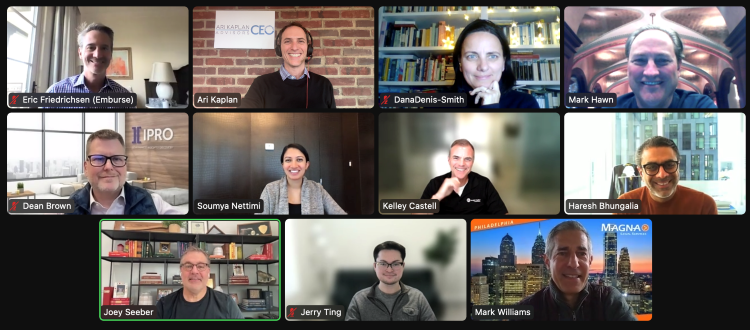
CEO Roundtable With Ari Kaplan: Legal services and legal tech CEOs reflect on 2022 and offer perspectives for 2023 — from abajournal.com by Ari Kaplan

CEO Roundtable With Ari Kaplan: Legal services and legal tech CEOs reflect on 2022 and offer perspectives for 2023

Also see:

Legal Services Corporation Awards $4.6 Million in Technology Grants to 29 Legal Aid Organizations — from lsc.gov

Excerpt:

WASHINGTON—The Legal Services Corporation (LSC) announced today that it is awarding 33 Technology Initiative Grants (TIG) to 29 legal services providers totaling $4,679,135. These organizations will use the funds to leverage technology in delivering high-quality legal assistance to low-income Americans.

Grant recipients have used this funding to enhance cybersecurity, build educational platforms, strengthen program capacity and support the work of pro bono attorneys. Successful TIG projects are often replicated by organizations around the country, creating wide-reaching impacts.

A Debate on Nonlawyer Participation Part II: Ralph Baxter Explores the State Bar Obligation to Improve Access to Justice — from legaltechmonitor.com by Natalie Anne Knowlton

Excerpt:

Stephen Younger argues against nonlawyer ownership on the grounds that it would threaten the independence of the legal profession and would not solve the access to justice crisis. In contrast, Ralph Baxter offers a pro-reform perspective, arguing that reforms are necessary to meaningfully address the access to justice crisis—and that state bar association inaction on these issues constitutes a dereliction of duty.

In part one of this two-part IAALS blog series, we explored Younger’s argument in “The Pitfalls and False Promises of Nonlawyer Ownership of Law Firms.” This piece details Baxter’s opposing perspective as set out in “Dereliction of Duty: State-Bar Inaction in Response to America’s Access-to-Justice Crisis.”

Top 4 legal technology news stories of 2022 — from abajournal.com by Nicole Black

In the meantime, looking back on the top legal technology news stories is a great way to identify key trends that hint at what’s to come for lawyers and their clients in 2023 and beyond.

The Top 10 Law & Tech Stories of 2022 Countdown – 1. The Next Era of Litigation — from jdsupra.com

Attorneys and their client are looking for a more secure, more familiar, more intuitive, more efficient virtual environment than the mass-market videoconference platforms that were hastily deployed during the pandemic. 

ABA Lawyers Broadly Support Remote Depositions — from lexology.com

Excerpt:

Eighty-eight percent of lawyers responding to a recent American Bar Association survey said they prefer the use of remote depositions in their practices. Another 93% supported the use of remote technologies for all pretrial hearings.

The survey results are further evidence of the rapid and profound transition toward wider use of remote technologies in the legal profession.
.


.


From DSC:
Check this confluence of emerging technologies out!

Also see:

How to spot AI-generated text — from technologyreview.com by Melissa Heikkilä
The internet is increasingly awash with text written by AI software. We need new tools to detect it.

Excerpt:

This sentence was written by an AI—or was it? OpenAI’s new chatbot, ChatGPT, presents us with a problem: How will we know whether what we read online is written by a human or a machine?

“If you have enough text, a really easy cue is the word ‘the’ occurs too many times,” says Daphne Ippolito, a senior research scientist at Google Brain, the company’s research unit for deep learning.

“A typo in the text is actually a really good indicator that it was human-written,” she adds.

7 Best Tech Developments of 2022 — from /thetechranch.comby

Excerpt:

As we near the end of 2022, it’s a great time to look back at some of the top technologies that have emerged this year. From AI and virtual reality to renewable energy and biotechnology, there have been a number of exciting developments that have the potential to shape the future in a big way. Here are some of the top technologies that have emerged in 2022:


Luke 1:76-78 

76 And you, my child, will be called a prophet of the Most High;
for you will go on before the Lord to prepare the way for him,
77 to give his people the knowledge of salvation
through the forgiveness of their sins,
78 because of the tender mercy of our God,
by which the rising sun will come to us from heaven

While they were there, the time came for the baby to be born, and she gave birth to her firstborn, a son. She wrapped him in cloths and placed him in a manger, because there was no guest room available for them.

Luke 2:8-14

And there were shepherds living out in the fields nearby, keeping watch over their flocks at night. An angel of the Lord appeared to them, and the glory of the Lord shone around them, and they were terrified. 10 But the angel said to them, “Do not be afraid. I bring you good news that will cause great joy for all the people. 11 Today in the town of David a Savior has been born to you; he is the Messiah, the Lord. 12 This will be a sign to you: You will find a baby wrapped in cloths and lying in a manger.”

13 Suddenly a great company of the heavenly host appeared with the angel, praising God and saying,

14 “Glory to God in the highest heaven,
    and on earth peace to those on whom his favor rests.”


ChatGPT and The Professional’s Guide to Using AI — from linkedin.com by Allie K. Miller

Excerpt:

Real Ways Professionals Can Use ChatGPT to Improve Job Performance
Let’s dive into some real examples of how professionals across sales, marketing, product management, project management, recruiting, and teaching can take advantage of this new tool and leverage it for even more impact in their careers.

Teachers and ChatGPT

  1. Help with grading and feedback on student work.
    Example prompt: “Tell me every grammar rule that’s been violated in this student’s essay: [paste in essay]”
  2. Create personalized learning materials.
    Example prompt: “Help me explain photosynthesis to a 10th grade student in a way similar to sports.”
  3. Generate lesson plans and activities.
    Example prompt: “Create an activity for 50 students that revolves around how to learn the different colors of the rainbow.” or “Generate a lesson plan for a high school English class on the theme of identity and self-discovery, suitable for a 45-minute class period.”
  4. Write fake essays several reading levels below your class, then print them out, and have your students review and edit the AI’s work to make it better.
    Example prompt: “Generate a 5th grade level short essay about Maya Angelou and her work.”
  5. Providing one-on-one support to students.
    Example prompt: “How can I best empower an introverted student in my classroom during reading time?”

From DSC:
I haven’t tried these prompts. Rather I post this because I’m excited about the potential of Artificial Intelligence (AI) to help people teach and to help people to learn.


On the plus side:


Automation & Higher Ed — from prawfsblawg.blogs.com by Orly Lobel

Excerpt (emphasis DSC):

I was delighted to see this thoughtful review of my new book The Equality Machine in Inside Higher Ed focused on some of the questions nearest and dearest to prawfs’ hearts: the future of the professor and higher education as AI becomes more and more part of our learning and teaching. In The Equality Machine, I have a chapter that considers robots and automation in education but does not delve into universities and higher ed. Here’s [an excerpt from] the review:

If the dream of creating high-quality/low-cost scaled online programs is ever to be realized, artificial intelligence—AI—will likely be the key enabling technology. The job of the AI in a scaled (high-enrollment) online course will be to optimally connect the instructor to the learner. The AI will determine when the human instructor should coach, encourage and engage with the learner—and when to hold back. The professor and the AI will collaborate to scale the relational model of learning that is the secret sauce of effective instructional practices.

Integrating faculty and AI to scale quality online learning is, to my knowledge, today more an idea than a reality. After reading The Equality Machine, however, I’m more hopeful than ever that this vision will come to fruition. While not focusing on higher education, the book provides enough examples of the transformative powers of digital technology to enhance human flourishing that some level of academic techno-optimism may be warranted.


.


On the negative side:


A Roomba recorded a woman on the toilet. How did screenshots end up on Facebook? — from technologyreview.com
Robot vacuum companies say your images are safe, but a sprawling global supply chain for data from our devices creates risk.

We Haven’t Seen the Worst of Fake News — from theatlantic.com by Matteo Wong; behind paywall
Deepfakes still might be poised to corrupt the basic ways we process reality—or what’s left of it.

From DSC:
It seems to me one of the key potential values that journalism can provide us with is finding out and reporting on the truth. On curating items that are true.

The Spawn of ChatGPT Will Try to Sell You Things — from wired.com by Will Knight
Companies are exploring how to adapt powerful new chatbot technology to negotiate with customer service—and to persuade humans to buy stuff.

Excerpt:

ChatGPT, the recently viral and surprisingly articulate chatbot, has dazzled the internet with its ability to dutifully answer all sorts of knotty questions—albeit not always accurately. Some people are now trying to adapt the bot’s eloquence to play different roles. They hope to harness the AI like that behind ChatGPT to create programs that can persuade, cajole, and badger with super-human tenacity—in some cases to empower consumers but in others to win sales.


Why College Students Turned From Being Down on Remote Learning to Mostly in Favor of It — from edsurge.com by Robert Ubell

Excerpt:

Over time, with months of practice as the pandemic proceeded, instructors and students learned how to use remote tools. Continuously online, enormous numbers gained proficiency with digital learning software. “The quality of a well-run synchronous, online class can now rival—and in some respects exceed—the quality of the in-person equivalent,” observes John Villasenor at the Brookings Institution.

The good news is that online learning is no longer reviled and resented, but after a rocky tryout in the pandemic, it’s now just another higher ed choice in which students and faculty, after years of digital stress, have largely adapted to it.

The above article linked to:

Noetel, M., Griffith, S., Delaney, O., Sanders, T., Parker, P., del Pozo Cruz, B., & Lonsdale, C. (2021). Video Improves Learning in Higher Education: A Systematic Review. Review of Educational Research, 91(2), 204–236. https://doi.org/10.3102/0034654321990713

Conclusion
Online teaching allows for learning to be delivered affordably, at scale, and with fewer infrastructure constraints than face-to-face instruction—it does not require a university to have hundreds of people in the same room at the same time. As universities move content online, staff usually turn to teaching via asynchronous videos and synchronous videoconferences (Cook et al., 2010). Videoconferences may be more conducive to student–teacher interactivity (Al-Samarraie, 2019; Bernard et al., 2009), but most studies in our review had the same level of active learning in the video and comparison condition, meaning teachers can maintain active learning while shifting to video. When they do, videos lead to better student learning than many other teaching methods, even when compared with face-to-face teaching. We suggest that these results are because videos may provide students with control over their level of cognitive load, they allow authentic demonstrations of skills, and they enable teaching staff to edit according to multimedia learning principles. Pragmatically, videos allow students to fit learning around their other commitments, and are less reliant than videoconferences on stable, high-speed internet connections (Al-Samarraie, 2019), because they can be buffered to the user’s device. Many of these findings are still contingent on students having access to online learning (Warschauer & Matuchniak, 2010), so ensuring students have social and technical support is a critical challenge for universities around the world. Provided those supports are available, universities can effectively switch to video for efficient and scalable education. Video appears to have a range of benefits in higher education settings.

Online Tools and Web Applications — from schrockguide.net by Kathy Schrock

Excerpt:

Web tools and online utilities have become more full-featured and useful over the years.

Here are some links to various online tools to help both teaching and learning. The online tools all work with laptops and Chromebooks unless stated otherwise. The ones that have Chrome apps available have a link to the Chrome Web Store link.

Categories include:

    • A.I. online tools
    • Online graphic design tools
    • Online video editors/creators/downloaders
    • Online audio recorders/editors
    • Online image editors/creators
    • Online collage makers
    • Online sketchnoting and drawing tools
    • Online word processors
    • Online animation creators
    • …and many more!

Three Things to Know about AI Tools and Teaching — from derekbruff.org by Derek Bruff

Excerpt:

There’s lot more to say on this subject, of course, but I hope these three observations are useful as you make sense of this new technology landscape. Here they are again for easy reference:

    • We are going to have to start teaching our students how AI generation tools work.
    • When used intentionally, AI tools can augment and enhance student learning, even towards traditional learning goals.
    • We will need to update our learning goals for students in light of new AI tools and that can be a good thing.

President Speaks: To put students first, colleges need to rethink the OPM model — from highereddive.com by  Paul Pastorek
Paul Pastorek, president of the University of Arizona Global Campus, explains why his institution cut ties with Zovio, a former online program manager.

Following our separation from Zovio, UAGC has not only undertaken efforts that shift the structure and responsibility for critical decisions around enrollment, marketing and student advising to a fully in-house team, it unlocked resources that will enable us to make investments that better align with our mission: providing adult learners with affordable college credentials that prepare them for careers in a rapidly evolving global economy.

Savings from increased efficiency and reduced costs will be reinvested in the student experience — and entirely at our discretion. No longer stifled by the contractual obligations of a company primarily motivated by profit, our faculty and staff are already expressing they have greater freedom to innovate and find new ways to enhance student success. We are all aligned under one common goal, working together to move the institution in the same direction.

Colleges’ expenses rose 5.2% in FY22, the biggest increase since 2001 — from highereddive.com by Laura Spitalniak

Dive Brief:

  • The cost of running a college jumped 5.2% in the 2022 fiscal year, according to data from Commonfund, an asset management firm that tracks inflation in the higher education sector.
  • That’s the highest rate of inflation the Higher Education Price Index, or HEPI, has tracked since 2001, when it hit 6%. It’s also a sharp increase from 2021, when the college inflation rate was 2.7%.
  • But the HEPI increase was outpaced by inflation more broadly in the U.S., a rare occurrence according to Commonfund. The Consumer Price Index, or CPI, reached 7.2% in fiscal 2022.

University of Wisconsin-Milwaukee to offer HR apprenticeships — from highereddive.com by Ginger Christ

“As demand for technology skills continues to grow across the region, UWM has a unique opportunity to solve two challenges at once: creating new pathways to high-wage jobs for our community, while also addressing a growing need for workers with those tech skills,” UWM Provost Scott Gronert said in a news release. “Together with Helios, we’re helping to address one of the most critical talent gaps faced by Wisconsin employers, and enabling our students and graduates to gain the skills that translate to success in today’s increasingly tech-driven labor market.”

Unusual majors help some colleges stand out from the crowd — and boost enrollment — from hechingerreport.org by Jon Marcus
A bachelor’s degree in automotive restoration has put a tiny Kansas school on the map

Excerpt:

That’s an unusual ambition for a small college — which is exactly the point. This particular small college has what it says is the country’s only four-year bachelor’s degree in automotive restoration, a major that combines engineering, history, business, communication, art and other disciplines.

It’s an example of the way a small regional higher education institution can stand out in a crowded field of competitors at a time when many other schools appear intent on trying to attract applicants by becoming more alike than different.


How AI And 5G Could Lead The Next Phase Of The Industrial Revolution — from swisscognitive.ch

Some use cases of the convergence of AI and 5G are:

  • Metaverse: AI is a key technology that helps bring Metaverse to life and now with the addition of 5G, streaming experiences would become enjoyable and maintaining connectivity without any disruption of external factors like geographical locations would be eliminated.
  • Digital assistants in the form of chatbots and virtual avatars: Digital assistants today use AI to replicate the human brain and converse with people in human language by understanding intent. With 5G the speed at which the speech is converted to text will improve drastically.
  • Education: AI and 5G are helping bring education to students’ doorstep through virtual reality and is making this available, efficiently as in real-world classrooms. Solving queries is possible quickly without any restrictions. Betty in Archie Comics attending her classes virtually is a reality due to these technologies.
  • Healthcare: AI and 5G in healthcare are proliferating an accurate diagnosis of diseases, real-time monitoring, and quick treatment facilities. This has become possible with the right use of data- collection, transmission, and analysis.
  • Automotive: AI and 5G together is making vehicles smarter and reducing the risk of mishaps on roads by employing various data-powered safety and driving efficiency measures in vehicles.

AI Timelines: What Do Experts in Artificial Intelligence Expect for the Future? — from singularityhub.com by Dr. Max Roser

Excerpt:

What I do take away from these surveys however, is that the majority of AI experts take the prospect of very powerful AI technology seriously. It is not the case that AI researchers dismiss extremely powerful AI as mere fantasy.

The huge majority thinks that in the coming decades there is an even chance that we will see AI technology which will have a transformative impact on our world. While some have long timelines, many think it is possible that we have very little time before these technologies arrive. Across the three surveys more than half think that there is a 50% chance that a human-level AI would be developed before some point in the 2060s, a time well within the lifetime of today’s young people.

Future Of Health: Top Five Digital Health Innovations For 2023 — from forbes.com by Anita Gupta

Excerpts:

  • Connected Digital Care
  • AI In Healthcare
  • Real-World Patient Engagement In Healthcare
  • Increase Security For Digital And Health Data
  • Improving Telehealth Services

Looking ahead to 2023: AI, machine learning, RTLS and robotic process automation — from healthcareitnews.com by Bill Siwicki
These advanced technologies will do more to help provider organizations with workflow optimization, staff shortages and the patient experience in the year ahead, one expert predicts.

Three reasons why NLP will go mainstream in healthcare in 2023 — from healthcareitnews.com by Bill Siwicki
A natural language processing expert explains why he feels the technology’s kinks have been ironed out, its ROI has been proven and the timing is right for healthcare to take advantage of information-extraction tools.

13 tech predictions for 2023 — from enterprisersproject.com by Katie Sanders
What can you expect in the world of IT next year? Business and IT leaders share their thoughts

Analysts Predictions About AI In 2023 — from forbes.com by Gil Press

Excerpts:

  • Automated software development
  • Automated content and commerce
  • Enterprise governance, risk, sustainability and security
  • Consumer interactions and experiences

Top 5 Edge AI Trends to Watch in 2023 — from nvidia.com by Amanda Saunders

Excerpt:

Until now, AI has operated almost exclusively in the cloud. But increasingly diverse streams of data are being generated around the clock from sensors at the edge. These require real-time inference, which is leading more AI deployments to move to edge computing.

For airports, stores, hospitals and more, AI brings advanced efficiency, automation and even cost reduction, which is why edge AI adoption accelerated last year.

In 2023, expect to see a similarly challenging environment, which will drive the following edge AI trends.

Digital transformation: 5 trends to watch in 2023 — from enterprisersproject.com by Ritish Reddy
As enterprises continue to digitally transform, IT leaders must look toward the future. Expect to see these trends in 2023

 
© 2025 | Daniel Christian