Radar Trends to Watch: May 2023 Developments in Programming, Security, Web, and More — from oreilly.com by Mike Loukides

Excerpt:

Large language models continue to colonize the technology landscape. They’ve broken out of the AI category, and now are showing up in security, programming, and even the web. That’s a natural progression, and not something we should be afraid of: they’re not coming for our jobs. But they are remaking the technology industry.

One part of this remaking is the proliferation of “small” large language models. We’ve noted the appearance of llama.cpp, Alpaca, Vicuna, Dolly 2.0, Koala, and a few others. But that’s just the tip of the iceberg. Small LLMs are appearing every day, and some will even run in a web browser. This trend promises to be even more important than the rise of the “large” LLMs, like GPT-4. Only a few organizations can build, train, and run the large LLMs. But almost anyone can train a small LLM that will run on a well-equipped laptop or desktop.


Work Shift: How AI Might Upend Pay — from bloomberg.com by Jo Constantz

Excerpt:

This all means that a time may be coming when companies need to compensate star employees for their input to AI tools rather than their just their output, which may not ultimately look much different from their AI-assisted colleagues.

“It wouldn’t be far-fetched for them to put even more of a premium on those people because now that kind of skill gets amplified and multiplied throughout the organization,” said Erik Brynjolfsson, a Stanford professor and one of the study’s authors. “Now that top worker could change the whole organization.”

Of course, there’s a risk that companies won’t heed that advice. If AI levels performance, some executives may flatten the pay scale accordingly. Businesses would then potentially save on costs — but they would also risk losing their top performers, who wouldn’t be properly compensated for the true value of their contributions under this system.


US Supreme Court rejects computer scientist’s lawsuit over AI-generated inventions — from reuters.com by Blake Brittain

Excerpt:

WASHINGTON, April 24 – The U.S. Supreme Court on Monday declined to hear a challenge by computer scientist Stephen Thaler to the U.S. Patent and Trademark Office’s refusal to issue patents for inventions his artificial intelligence system created.

The justices turned away Thaler’s appeal of a lower court’s ruling that patents can be issued only to human inventors and that his AI system could not be considered the legal creator of two inventions that he has said it generated.


Deep learning pioneer Geoffrey Hinton has quit Google — from technologyreview.com by Will Douglas Heaven
Hinton will be speaking at EmTech Digital on Wednesday.

Excerpt:

Geoffrey Hinton, a VP and engineering fellow at Google and a pioneer of deep learning who developed some of the most important techniques at the heart of modern AI, is leaving the company after 10 years, the New York Times reported today.

According to the Times, Hinton says he has new fears about the technology he helped usher in and wants to speak openly about them, and that a part of him now regrets his life’s work.

***


What Is Agent Assist? — from blogs.nvidia.com
Agent assist technology uses AI and machine learning to provide facts and make real-time suggestions that help human agents across retail, telecom and other industries conduct conversations with customers.

Excerpt:

Agent assist technology uses AI and machine learning to provide facts and make real-time suggestions that help human agents across telecom, retail and other industries conduct conversations with customers.

It can integrate with contact centers’ existing applications, provide faster onboarding for agents, improve the accuracy and efficiency of their responses, and increase customer satisfaction and loyalty.

From DSC:
Is this type of thing going to provide a learning assistant/agent as well?


A chatbot that asks questions could help you spot when it makes no sense — from technologyreview.com by Melissa Heikkilä
Engaging our critical thinking is one way to stop getting fooled by lying AI.

Excerpt:

AI chatbots like ChatGPT, Bing, and Bard are excellent at crafting sentences that sound like human writing. But they often present falsehoods as facts and have inconsistent logic, and that can be hard to spot.

One way around this problem, a new study suggests, is to change the way the AI presents information. Getting users to engage more actively with the chatbot’s statements might help them think more critically about that content.


Stability AI releases DeepFloyd IF, a powerful text-to-image model that can smartly integrate text into images — from stability.ai
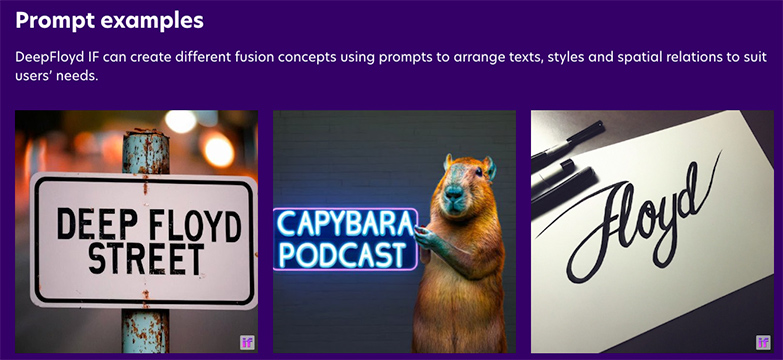
Stability AI releases DeepFloyd IF, a powerful text-to-image model that can smartly integrate text into images


New AI Powered Denoise in PhotoShop — from jeadigitalmedia.org

In the most recent update, Adobe is now using AI to Denoise, Enhance and create Super Resolution or 2x the file size of the original photo. Click here to read Adobe’s post and below are photos of how I used the new AI Denoise on a photo. The big trick is that photos have to be shot in RAW.


From DSC:
Attention all school districts! Listen up! –> Top 10 Tips for Creating a Successful Onboarding Experience  — from learningguild.com by Tara Roberson-Moore, PhD

Excerpts:

Did you know that 69% of employees say they are likely to stay with a company for a least three years after a great onboarding experience? (O.C.Tanner, 2018)

Did you know that new hires in companies with longer onboarding programs report being more proficient in their roles four months sooner than in companies with short onboarding programs? (O.C. Tanner, 2018)

Also relevant/see:

Analyze This — from learningguild.com by Tara Roberson-Moore

Excerpt:

Onboarding is a program. It is not one training event. It is also usually not one development event either—I have seen onboarding programs built in one full development phase and I have seen onboarding programs divided into several development phases (costs are one factor, but project fatigue is also a factor). Due to the sheer size of a long-term initiative like onboarding, getting everything in place before development begins is imperative to success.

Analysis results in a plan. As we have mentioned before, you get the blueprint of the house—not the house. Remember, not even paint colors are being picked yet!

If you are thinking about creating an onboarding program, whether on your own or working with a really cool and fun troupe of elves, start by asking questions…


Cognitive Load and Virtual Training — from learningguild.com by Pamela Wise

Excerpt:

 As designers navigate the waters of building learning interventions that utilize virtual technology, they must keep the learner’s cognitive load low in order to increase learning retention. As with all instructional design, virtual training should utilize effective instructional methods. However, studies have shown that some virtual training strategies, such as immersion, may increase the cognitive load in one setting but decrease it in another.


From NPR:

We closed the fifth annual Student Podcast Challenge — more than 2,900 entries!!!  

So today, I wanted to share something that I’m also personally proud of – an elaborate resources page for student podcasting that our team published earlier this year. My big boss Steve Drummond named it “ Sound Advice: The NPR guide to student podcasting.” And, again, this isn’t just for Student Podcast Challenge participants. We have guides from NPR and more for anyone interested in starting a podcast!

Here’s a sampler of some of my favorite resources:

  • Using sound: Teachers, here’s a lovely video you can play for your class! Or for any visual learners, this is a fun watch! In this video, veteran NPR correspondent Don Gonyea walks you through how to build your own recording studio – a pillow fort! (And yes, this is an actual trick we use at NPR!)
  • Voice coaching: Speaking into a microphone is hard, even for our radio veterans. In this video, NPR voice coach Jessica Hansen and our training team share a few vocal exercises that will help you sound more natural in front of a mic! I personally watched this video before recording my first radio story, so I’d highly recommend it for everyone!
  • Life Kit episode on podcasting: In this episode from NPR’s Life Kit , Lauren Migaki, our very own NPR Ed senior producer, brings us tips from podcast producers across NPR, working on all your favorite shows, including Code Switch, Planet Money and more! It’s an awesome listen for a class or on your own!
 

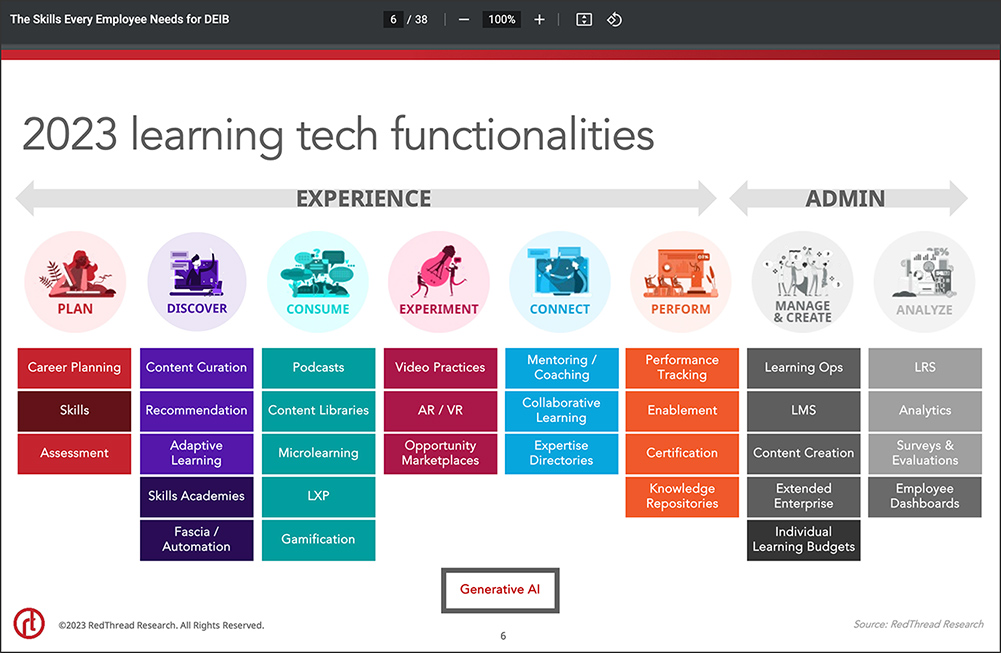
Another nice example of a learning ecosystem

2023 learning tech functionalities -- from RedThread Research

With thanks to Stephen Downes for this resource


Pathways With a Purpose: Supporting Students in Revealing Meaning — from gettingsmart.com by Michalle Blanchet

Key Points

  • As we look at career pathways for students we might do more to support students to find meaningful work.
  • Data suggests young people care about having jobs that make an impact.

Difference-making, social innovation, social entrepreneurship – there’s a thread that unites these various themes. They are purpose-driven. As we look at career pathways for students we might do more to support students to find meaningful work. Data suggests young people care about having jobs that make an impact. They want to do something that contributes positively to society, and the environment while earning a paycheck. This is something that we must nurture as educators.


Proverbs 4:23 NIV — from bible.com

Above all else, guard your heart, for everything you do flows from it.
.

1 Corinthians 13:4-8 NIV — from bible.com

Love is patient, love is kind. It does not envy, it does not boast, it is not proud. It does not dishonor others, it is not self-seeking, it is not easily angered, it keeps no record of wrongs. Love does not delight in evil but rejoices with the truth. It always protects, always trusts, always hopes, always perseveres. Love never fails. But where there are prophecies, they will cease; where there are tongues, they will be stilled; where there is knowledge, it will pass away.

 
  1. The GPT-4 Browser That Will Change Your Search Game — from noise.beehiiv.com by Alex Banks
    Why Microsoft Has The ‘Edge’ On Google

Excerpts:

Microsoft has launched a GPT-4 enhanced Edge browser.

By integrating OpenAI’s GPT-4 technology with Microsoft Edge, you can now use ChatGPT as a copilot in your Bing browser. This delivers superior search results, generates content, and can even transform your copywriting skills (read on to find out how).

Benefits mentioned include: Better Search, Complete Answers, and Creative Spark.

The new interactive chat feature means you can get the complete answer you are looking for by refining your search by asking for more details, clarity, and ideas.

From DSC:
I have to say that since the late 90’s, I haven’t been a big fan of web browsers from Microsoft. (I don’t like how Microsoft unfairly buried Netscape Navigator and the folks who had out-innovated them during that time.) As such, I don’t use Edge so I can’t fully comment on the above article.

But I do have to say that this is the type of thing that may make me reevaluate my stance regarding Microsoft’s browsers. Integrating GPT-4 into their search/chat functionalities seems like it would be a very solid, strategic move — at least as of late April 2023.


Speaking of new items coming from Microsoft, also see:

Microsoft makes its AI-powered Designer tool available in preview — from techcrunch.com by Kyle Wiggers

Excerpts:

[On 4/27/23], Microsoft Designer, Microsoft’s AI-powered design tool, launched in public preview with an expanded set of features.

Announced in October, Designer is a Canva-like web app that can generate designs for presentations, posters, digital postcards, invitations, graphics and more to share on social media and other channels. It leverages user-created content and DALL-E 2, OpenAI’s text-to-image AI, to ideate designs, with drop-downs and text boxes for further customization and personalization.

Designer will remain free during the preview period, Microsoft says — it’s available via the Designer website and in Microsoft’s Edge browser through the sidebar. Once the Designer app is generally available, it’ll be included in Microsoft 365 Personal and Family subscriptions and have “some” functionality free to use for non-subscribers, though Microsoft didn’t elaborate.


From DSC:
I don’t think all students hate AI. My guess is that a lot of them like AI and are very intrigued by it. The next generation is starting to see its potential — for good and/or for ill.

One of the comments (from the above item) said to check out the following video.  I saw one (or both?) of these people on a recent 60 Minutes piece as well.


Speaking of AI, also see:


PricewaterhouseCoopers to Pour $1 Billion Into Generative AI — from wsj.com by Angus Loten
Multiyear investment in U.S. business includes accessing ChatGPT maker OpenAI’s language model, training staff in AI capabilities

Excerpt:

PricewaterhouseCoopers LLP plans to invest $1 billion in generative artificial intelligence technology in its U.S. operations over the next three years, working with Microsoft Corp. and ChatGPT-maker OpenAI to automate aspects of its tax, audit and consulting services.

The accounting and consulting giant said the multiyear investment, announced Wednesday, includes funding to recruit more AI workers and train existing staff in AI capabilities, while targeting AI software makers for potential acquisitions.

For PwC, the goal isn’t only to develop and embed generative AI into its own technology stack and client-services platforms, but also advising other companies on how best to use generative AI, while helping them build those tools, said Mohamed Kande, PwC’s vice chair and co-leader of U.S. consulting solutions and global advisory leader.


7 reasons to get rid of the law degree — from jordanfurlong.substack.com by Jordan Furlong
Requiring a law degree for bar admission imposes unfair burdens on new lawyers and blocks innovation in legal education. Here’s what we can do instead.

Excerpt:

Hey there, legal sector participant! Do you feel that law school is too expensive? That law students graduate too heavily in debt and deeply stressed? That legal education seems impossible to reform? That the whole lawyer development and bar admission system in general is an enormous hot mess?

If so, you’re like thousands of others who’ve grown massively frustrated with the profession’s broken-down approach to developing new lawyers. But I’m here with some good news! There’s a simple and straightforward path to resolving these and many other problems with legal education and bar admission.

We start by getting rid of the law degree.

Now, hold on, let me be clear — I don’t mean kill the law degree itself. That would be crazy.

No, I mean, let’s get rid of the law degree as a mandatory element of the lawyer licensing process. Law schools should continue to offer whatever sort of degree programs they like — but legal regulators and bar admission authorities should no longer require everybody who wants to be a lawyer to get one.

From DSC:
I need to think on this further, but Jordan could be onto something here…

A better pathway to lawyer licensing — from jordanfurlong.substack.com by Jordan Furlong
No law degree; a single knowledge exam; training in legal, business and professional skills; and a term of supervised practice. This is how we do it.

Excerpt:

Previously here at Substack, I provided a pretty comprehensive takedown of the law degree requirement for lawyer licensing. It generated a ton of fascinating and gratifying feedback, here and especially at LinkedIn, with a few objections but mostly a lot of support.

Of course, it’s easy to criticize legal education — fun, too — but look, most people in the legal profession already know all the problems with the law degree, and complaining about it is kind of a vacuous pastime. What I’m really interested in here is a bigger and more important question: How does — how should — someone become a lawyer?


Going to court without a lawyer? DIY law is on the rise — from cbc.ca by Yvette Brend
Self-representation saves money, but the larger cost is high, say justice-access advocates

Excerpt:

Most reported feeling the justice system was “unfair,” and many described a sense of “the odds being stacked against them.”

Advocates say the rising number of lawyer-free litigants is problematic. The legal system is meant to be adversarial — with strong lawyers on each side — but the high rate of self-representation creates lopsided justice, pitting an untrained individual against a professional.

‘Legal Tech Lists’: 3 Things Your CRM Should Do For You — from abovethelaw.com by Cady Darago
How you can go beyond merely storing information.

Exploring the Hottest Legal Tech Startups in Europe — from legalreader.com by Amy Hollow
Europe is quickly becoming a hub for legal tech startups, offering innovative solutions to the legal industry.

Excerpt:
Europe is home to some of the most innovative legal tech startups in the world. Here are five of the hottest ones:

    1. Legatics
    2. Juro
    3. LawGeex
    4. The Lawyer Guide
    5. CaseCrunch

Keep Up With Today’s Legal Tech (Or Be Left Behind) — from legaltalknetwork.com by Joy Murao and Tony Sipp

In this podcast:

  • High tech tools aren’t just for big trials anymore. Learn to incorporate the latest tech for depositions and even smaller hearings and trials.
  • Keep track of every detail and hold every bit of data at your fingertips.
  • The COVID-19 pandemic opened doors and highlighted technologies that support paralegals and legal teams in the courtroom and online.

Legal Operations and Generative AI: Preparing for a Sea Change — from jdsupra.com

Excerpt:

AI will likely make lawyer’s jobs easier (or, at least, more interesting) for some tasks, however the effects it may have on the legal profession could be the real legacy of the technology. Schafer pointed to its potential to improve access to justice for people who want legal representation but can’t get it for whatever reason.


Poetry writing about Flint murals allows for ‘creative freedom’ in this high school classroom — from mlive.com  by Dylan Goetz (behind paywall)

Excerpt:

It’s a new tradition in the curriculum of the senior-level English class, where teacher Carrie Mattern asks her students to seek out a mural in Flint and write poetry about it.

This year, there was a focus on writing around cultural grief and the process of healing.

It’s become a favorite assignment for the students who’ve worked on the project, who say it allows them to use “creative freedom” in a way that other classes don’t.
.


Also see:

 
© 2025 | Daniel Christian