You’re already harnessing the science of learning (you just don’t know it) — from edsurge.com by Pooja Agarwal

Excerpt (emphasis DSC):

Now, a decade later, I see the same clicker-like trend: tools like Kahoot, Quizlet, Quizizz and Plickers are wildly popular due to the increased student engagement and motivation they can provide. Meanwhile, these tech tools continue to incorporate powerful strategies for learning, which are discussed less often. Consider, for example, four of the most robust research-based strategies from the science of learning:

  1. Retrieval practice
  2. Spaced practice
  3. Interleaving
  4. Feedback

Sound familiar? It’s because approaches that encourage students to use what they know, revisit it over time, mix it up and learn about their own learning are core elements in many current edtech tools. Kahoot and Quizlet, for example, provide numerous retrieval formats, reminders, shuffle options and instant feedback. A century of scientific researchdemonstrates that these features don’t simply increase engagement—they also improve learning, higher order thinking and transfer of knowledge.


From DSC:
Pastors should ask this type of question as well: “What did we talk about the last time we met?” — then give the congregation a minute to write down what they can remember.


Also from Pooja Agarwal and RetrievalPractice.org

For teachers, here’s what we share in a minute or less about retrieval practice:

And when it comes to students, the first thing we share are Retrieval Warm Ups. These quick, fun questions engage students in class discussion and start a conversation about how retrieval is something we do every day. Try one of these with a teacher to start a conversation about retrieval practice, too!


50 Twitter accounts lawyers should follow — from postali.com

Excerpt:

Running a successful law practice is about much more than being an excellent attorney. A law firm is a business, and those who stay informed on trends in legal marketing, business development and technology are primed to run their practice more efficiently.

Law firms are a competitive business. In order to stay successful, you need to stay informed. The industry trends can often move at lightning speed, and you want to be ahead of them.

Twitter is a great place for busy attorneys to stay informed. Many thought leaders in the legal industry are eager and willing to share their knowledge in digestible, 280-character tweets that lawyers on-the-go can follow.

We’ve rounded up some of the best Twitter accounts for lawyers (in no particular order.) To save you even more time, we’ve also added all of these account to a Twitter List that you can follow with one click. (You can use some of the time you’ll save to follow Postali on Twitter as well.)

Click here to view the Twitter List of Legal Influencers.


From DSC:
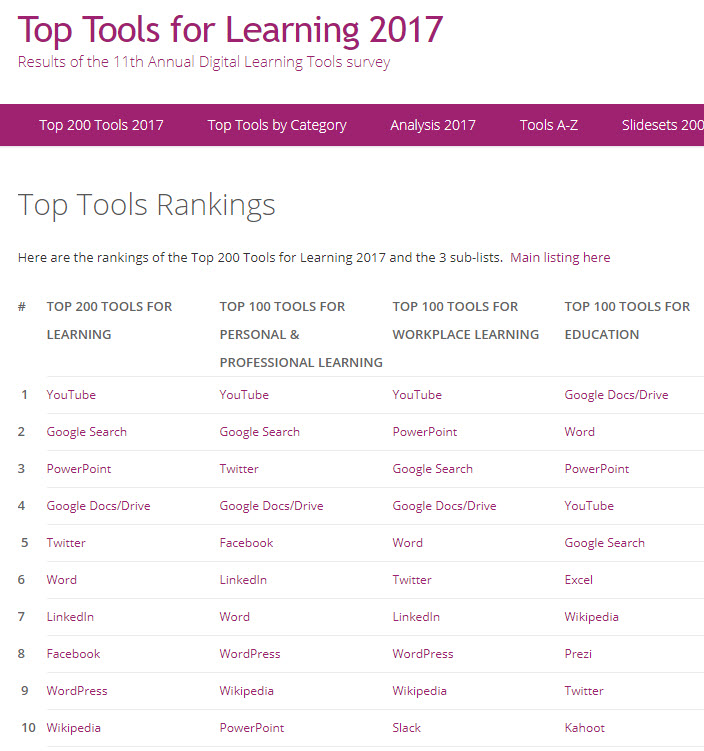
I find Twitter to be an excellent source of learning, and it is one of the key parts of my own learning ecosystem. I’m not the only one. Check out these areas of Jane Hart’s annual top tools for learning.

Twitter is in the top 10 lists for learning tools no matter whether you are looking at education, workplace learning, and/or for personal and professional learning


Also see/relevant:

  • Prudenti: Law schools facing new demands for innovative education— from libn.com
    Excerpt:
    Law schools have always taught the law and the practice thereof, but in the 21st century that is not nearly enough to provide students with the tools to succeed. Clients, particularly business clients, are not only looking for an “attorney” in the customary sense, but a strategic partner equipped to deal with everything from project management to metrics to process enhancement. Those demands present law schools with both an opportunity for and expectation of innovation in legal education.


Can we design online learning platforms that feel more intimate than massive? — from edsurge.com by Amy Ahearn

Excerpt:

This presents a challenge and an opportunity: How can we design online learning environments that achieve scale and intimacy? How do we make digital platforms feel as inviting as well-designed physical classrooms?

The answer may be that we need to balance massiveness with miniaturization. If the first wave of MOOCs was about granting unprecedented numbers of students access to high-quality teaching and learning materials, Wave 2 needs to focus on creating a sense of intimacy within that massiveness.

We need to be building platforms that look less like a cavernous stadium and more like a honeycomb. This means giving people small chambers of engagement where they can interact with a smaller, more manageable and yet still diverse groups. We can’t meaningfully listen to the deafening roar of the internet. But we can learn from a collection of people with perspectives different than ours.


What will it take to get MOOC platforms to begin to offer learning spaces that feel more inviting and intimate? Perhaps there’s a new role that needs to emerge in the online learning ecosystem: a “learning architect” who sits between the engineers and the instructional designers.


Where teachers can find free audiobooks for their students — from thetechedvocate.org by Matthew Lynch

Excerpt (emphasis DSC):

Audiobooks are fantastic ways to bring stories to life in your classroom and keep students engaged. Reading Rockets explains, “Audiobooks have traditionally been used in schools by teachers of second-language learners, learning-disabled students, and struggling readers or nonreaders. In many cases, audiobooks have proven successful in providing a way for these students to access literature and enjoy books.” However, educators have found that audiobooks benefit all students!

Unfortunately, audiobooks are pricey, so you should not expect your students to have them at home. You should also not plan on spending large amounts of money to build your audiobook collection for your classroom. For instance, the widely popular Audible site for downloadable audiobooks is a subscription-based service, but it only allows you to choose one book per month. Instead, take advantage of the wealth of free audiobooks available for teachers and students.


Get started with rubrics — from thecreativeeducator.com by Melinda Kolk
Make assessment a classroom conversation

Excerpt:

A rubric is an assessment tool that clearly outlines expectations for student work. A rubric describes which performances will be assessed and specifies the criteria for assessing them. Rubrics can be used throughout the process of student work, making them useful for project-based learning implementations.

Because rubrics describe what high performance looks like, they are great tools to help students gauge their work and provide an opportunity for conversation between students and teachers about high-quality work.

Creating a rubric for the final product and various components of project work can ensure a more accurate, specific, and useful assessment.

A rubric is an authentic assessment tool that:

  • Provides clear expectations for a project.
  • Considers the product as well as the entire project-building process.
  • Enumerates the performances on which students will be evaluated.
  • Explains what constitutes excellence for each performance.
  • Helps students understand what they need to do to excel.
  • Prevents subjectivity and bias during the evaluation process.


Also see:


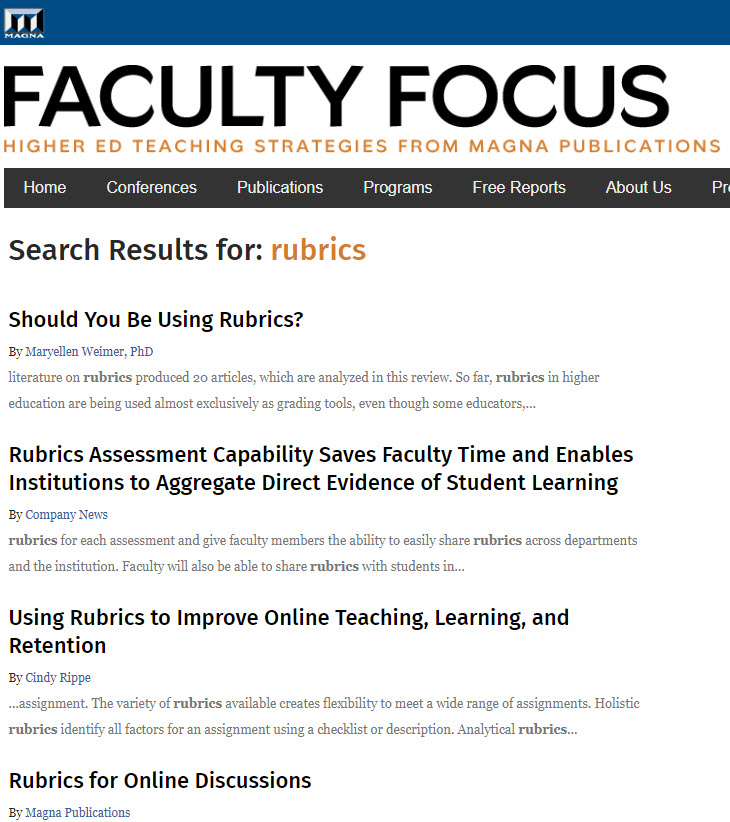
this graphic links to a search for rubrics out at FacultyFocus.com


From DSC:
Rubrics need to be very carefully designed/constructed though; otherwise rubrics can spoon-feed students the answers in an age where problem solving capabilities are really needed.


What is a learning ecosystem? And how does it support corporate strategy? — from ej4.com by Ryan Eudy

Excerpt:

learning ecosystem is a system of people, content, technology, culture, and strategy, existing both within and outside of an organization, all of which has an impact on both the formal and informal learning that goes on in that organization.

The word “ecosystem” is worth paying attention to here. It’s not just there to make the term sound fancy or scientific. A learning ecosystem is the L&D equivalent of an ecosystem out in the wild. Just as a living ecosystem has many interacting species, environments, and the complex relationships among them, a learning ecosystem has many people and pieces of content, in different roles and learning contexts, and complex relationships.

Just like a living ecosystem, a learning ecosystem can be healthy or sick, nurtured or threatened, self-sustaining or endangered. Achieving your development goals, then, requires an organization to be aware of its own ecosystem, including its parts and the internal and external forces that shape them.


From DSC:
Yes, to me, the concept/idea of a learning ecosystem IS important. Very important. So much so, I named this blog after it.

Each of us as individuals have a learning ecosystem, whether we officially recognize it or not. So do the organizations that we work for. And, like an ecosystem out in nature, a learning ecosystem is constantly morphing, constantly changing.

We each have people in our lives that help us learn and grow, and the people that were in our learning ecosystems 10 years ago may or may not still be in our current learning ecosystems. Many of us use technologies and tools to help us learn and grow. Then there are the spaces where we learn — both physical and virtual spaces. Then there are the processes and procedures we follow, formally and/or informally. Any content that helps us learn and grow is a part of that ecosystem. Where we get that content can change, but obtaining up-to-date content is a part of our learning ecosystems. I really appreciate streams of content in this regard — and tapping into blogs/websites, especially via RSS feeds and Feedly (an RSS aggregator that took off when Google Reader left the scene).

The article brings up a good point when it states that a learning ecosystem can be “healthy or sick, nurtured or threatened, self-sustaining or endangered.” That’s why I urge folks to be intentional about maintaining and, better yet, consistently enhancing their learning ecosystems. In this day and age where lifelong learning is now a requirement to remain in the workforce, each of us needs to be intentional in this regard.


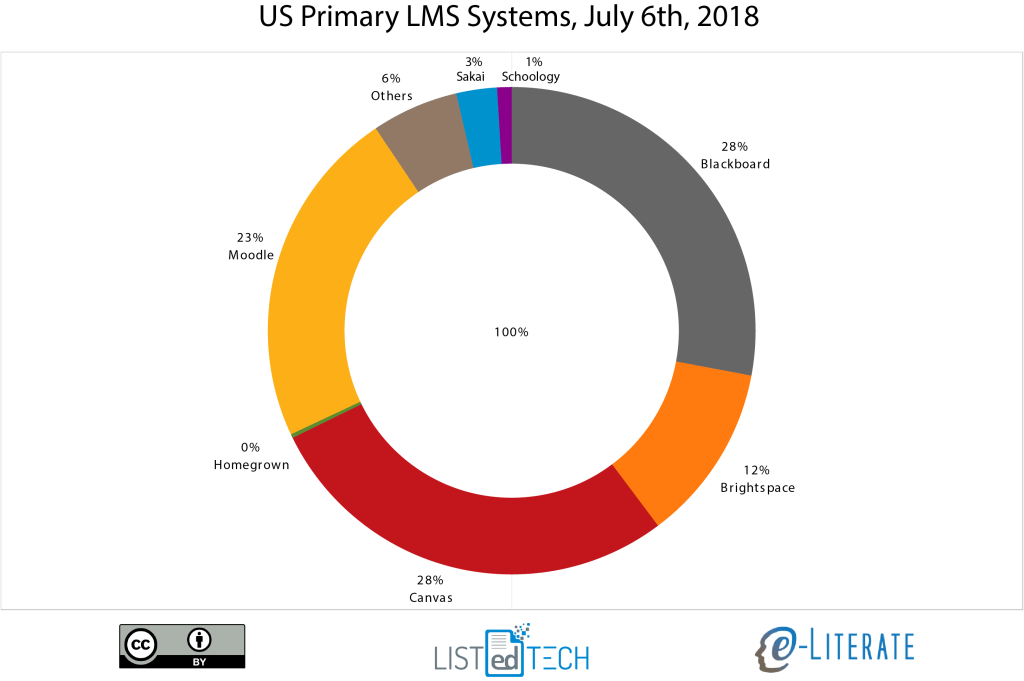
Canvas catches, & maybe passes, Blackboard — from by Lindsay McKenzie
Blackboard dominated the U.S. learning management system market for 20 years, but new data show its cloud-based competitor edging past it.

Excerpt:

Canvas has unseated Blackboard Learn as the leading LMS at U.S. colleges and universities, according to new data from MindWires Consulting.

In a blog post on [7/8/18], Michael Feldstein, partner at MindWires Consulting and co-publisher of the e-Literate blog, wrote that Canvas now has 1,218 installations at U.S. institutions, compared with Blackboard’s 1,216. Although the two-figure difference may seem insignificant — and Blackboard and some of its allies say the data don’t accurately reflect the two companies’ relative reach — most analysts agree that Canvas’s ascent, largely at Blackboard’s expense, is noteworthy.

“This is a stunning development for a company that seemed to have established an unbreakable market dominance a decade ago,” wrote Feldstein.

At its peak in 2006, Blackboard controlled approximately 70 percent of the U.S. and Canadian market, with its nearest competitors “far, far behind,” said Feldstein. But slowly Canvas, and others such as Moodle and D2L’s Brightspace, have closed the gap.


The market share for Learning Management Systems


Also, you might want to know about the upcoming FREE opportunity to learn more about Instructure (the maker of Canvas), where Canvas is heading, and some other keynotes re: K-12 and higher education.

Next week, Instructure is hosting a conference that’s focusing on Canvas, and it’s called InstructureCarn. You can register — for free — to watch the live stream of all 5 keynotes at InstructureCarn, and Instructure will send you an email reminder to tune into the following keynote speakers and sessions:

  • Tuesday, July 24 @ 5pm MST Josh Coates, CEO, Instructure
  • Wednesday, July 25 @ 9am MST Adora Svitak, Author, Speaker, Advocate
  • Wednesday, July 25 @ 1:30pm MST Jared Stein, VP of Higher Ed Strategy, Instructure
  • Thursday, July 26 @ 9am MST Michael Bonner, 2nd Grade Teacher, Visionary Leader
  • Thursday, JULY 26 @ 1:30PM MST Mitch Benson, SVP of Product, Instructure

Click here to attend virtually!
The times listed above are in Mountain Standard Time (MST)– so you may need to convert those times to your time zone.


Teaching with Technology in 2018 — from thejournal.com by David Nagel
In our third-annual ed tech survey, teachers reveal an overwhelmingly positive attitude toward tech in the classroom and its impact on teaching, learning and professional development.

Excerpt:

Teachers are growing fonder of technology every year. Even the dreaded mobile phone is gaining acceptance as a classroom tool, at least among those who participated in THE Journal’s third-annual Teaching with Technology Survey.

Teacher Attitudes Toward Tech
While teachers in each of the preceding survey were, for the most part, pumped up about tech for learning, this year’s results reveal an evolving positivism not just about tech, but about the direction tech is heading.

Exactly three-quarters of teachers in the survey indicated tech has had an extremely positive (38.37 percent) or mostly positive (36.63 percent) impact on education. The remaining 25 percent said tech has had both positive and negative effects on education. Zero respondents said tech had a negative or extremely negative impact.

Responses about tech’s impact on student learning were similar, with 84 percent saying it’s had a positive impact, 6 percent saying it’s had a negative impact and 10 percent being neutral.


10 steps to achieving active learning on a budget — from campustechnology.com by Dian Schaffhauser
Active learning often means revamping classrooms to enable more collaborative, hands-on student work — and that can be costly. Here’s how to achieve the pedagogical change without the high expense.

Excerpt:

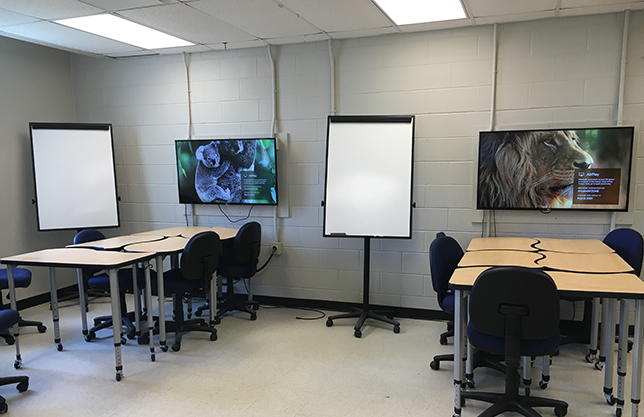
Active learning is a great way to increase student excitement and participation, facilitate different kinds of learning activities, help people develop skills in small group work, promote discussion, boost attendance and give an outlet for technology usage that stays on track. It also requires remaking classrooms to enable that hands-on, collaborative student work — and that can often mean a six-figure price tag. But at Saint Anselm College in Manchester, NH, a $12,000 experiment proved successful enough that the institution now sports two permanent active learning classrooms as well as a brand-new active learning lab. Here are the 10 steps this school with just under 2,000 students followed on its road to active learning victory.


the article being linked here is entitled 10 steps to achieving active learning on a budget


Also see:


The title of this article being linked to is: Augmented and virtual reality mean business: Everything you need to know


Augmented and virtual reality mean business: Everything you need to know — from zdnet by Greg Nichols
An executive guide to the technology and market drivers behind the hype in AR, VR, and MR.

Excerpt:

Overhyped by some, drastically underestimated by others, few emerging technologies have generated the digital ink like virtual reality (VR), augmented reality (AR), and mixed reality (MR).  Still lumbering through the novelty phase and roller coaster-like hype cycles, the technologies are only just beginning to show signs of real world usefulness with a new generation of hardware and software applications aimed at the enterprise and at end users like you. On the line is what could grow to be a $108 billion AR/VR industry as soon as 2021. Here’s what you need to know.


The reason is that VR environments by nature demand a user’s full attention, which make the technology poorly suited to real-life social interaction outside a digital world. AR, on the other hand, has the potential to act as an on-call co-pilot to everyday life, seamlessly integrating into daily real-world interactions. This will become increasingly true with the development of the AR Cloud.

The AR Cloud
Described by some as the world’s digital twin, the AR Cloud is essentially a digital copy of the real world that can be accessed by any user at any time.

For example, it won’t be long before whatever device I have on me at a given time (a smartphone or wearable, for example) will be equipped to tell me all I need to know about a building just by training a camera at it (GPS is operating as a poor-man’s AR Cloud at the moment).

What the internet is for textual information, the AR Cloud will be for the visible world. Whether it will be open source or controlled by a company like Google is a hotly contested issue.


Augmented reality will have a bigger impact on the market and our daily lives than virtual reality — and by a long shot. That’s the consensus of just about every informed commentator on the subject.


Mixed reality will transform learning (and Magic Leap joins act one) — from edsurge.com by Maya Georgieva

Excerpt:

Despite all the hype in recent years about the potential for virtual reality in education, an emerging technology known as mixed reality has far greater promise in and beyond the classroom.

Unlike experiences in virtual reality, mixed reality interacts with the real world that surrounds us. Digital objects become part of the real world. They’re not just digital overlays, but interact with us and the surrounding environment.

If all that sounds like science fiction, a much-hyped device promises some of those features later this year. The device is by a company called Magic Leap, and it uses a pair of goggles to project what the company calls a “lightfield” in front of the user’s face to make it look like digital elements are part of the real world. The expectation is that Magic Leap will bring digital objects in a much more vivid, dynamic and fluid way compared to other mixed-reality devices such as Microsoft’s Hololens.

 

The title of the article being linked to here is Mixed reality will transform learning (and Magic Leap joins act one)


Now think about all the other things you wished you had learned this way and imagine a dynamic digital display that transforms your environment and even your living room or classroom into an immersive learning lab. It is learning within a highly dynamic and visual context infused with spatial audio cues reacting to your gaze, gestures, gait, voice and even your heartbeat, all referenced with your geo-location in the world. Unlike what happens with VR, where our brain is tricked into believing the world and the objects in it are real, MR recognizes and builds a map of your actual environment.


Also see:

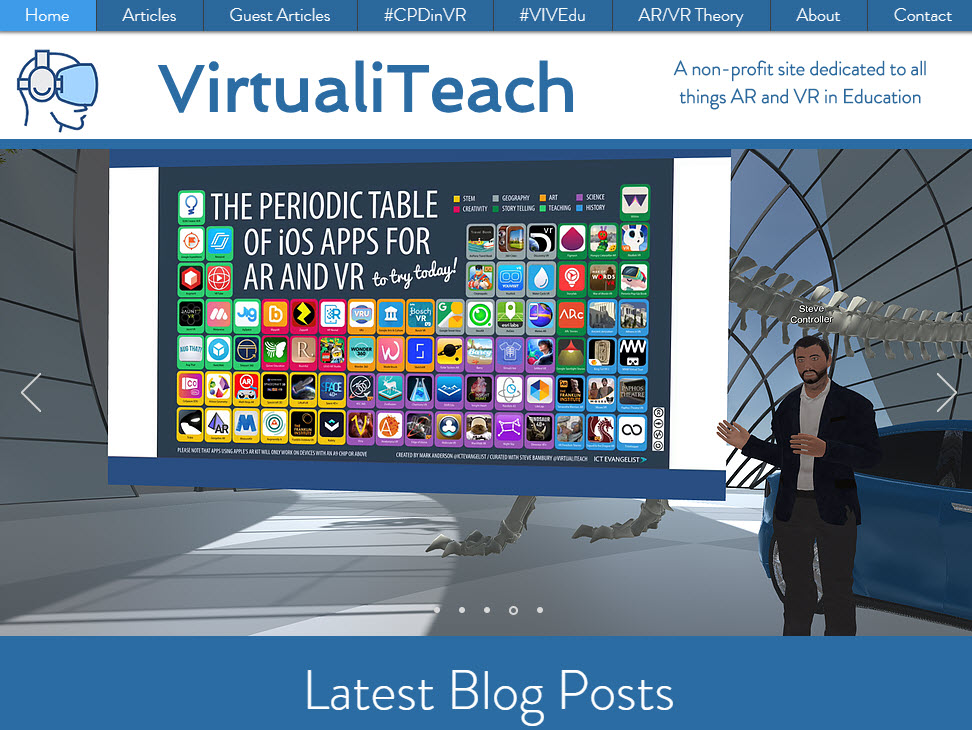
virtualiteach.com
Exploring The Potential for the Vive Focus in Education
 

virtualiteach.com


Digital Twins Doing Real World Work — from stambol.com

Excerpt:

On the big screen it’s become commonplace to see a 3D rendering or holographic projection of an industrial floor plan or a mechanical schematic. Casual viewers might take for granted that the technology is science fiction and many years away from reality. But today we’re going to outline where these sophisticated virtual replicas – Digital Twins – are found in the real world, here and now. Essentially, we’re talking about a responsive simulated duplicate of a physical object or system. When we first wrote about Digital Twin technology, we mainly covered industrial applications and urban infrastructure like transit and sewers. However, the full scope of their presence is much broader, so now we’re going to break it up into categories.
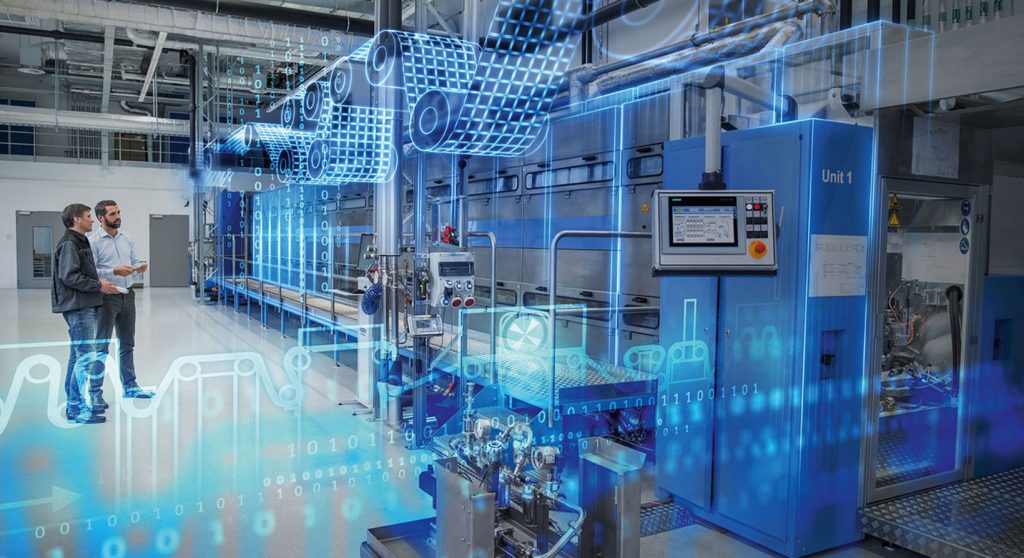
 

The title of the article being linked to here is Digital twins doing real world work


Digital twin — from Wikipedia

Digital twin refers to a digital replica of physical assets (physical twin), processes and systems that can be used for various purposes.[1] The digital representation provides both the elements and the dynamics of how an Internet of Things device operates and lives throughout its life cycle.[2]

Digital twins integrate artificial intelligence, machine learning and software analytics with data to create living digital simulation models that update and change as their physical counterparts change. A digital twin continuously learns and updates itself from multiple sources to represent its near real-time status, working condition or position. This learning system, learns from itself, using sensor data that conveys various aspects of its operating condition; from human experts, such as engineers with deep and relevant industry domain knowledge; from other similar machines; from other similar fleets of machines; and from the larger systems and environment in which it may be a part of. A digital twin also integrates historical data from past machine usage to factor into its digital model.

In various industrial sectors, twins are being used to optimize the operation and maintenance of physical assets, systems and manufacturing processes.[3] They are a formative technology for the Industrial Internet of Things, where physical objects can live and interact with other machines and people virtually.[4]


Disney to debut its first VR short next month — from techcrunch.com by Sarah Wells

Excerpt:

Walt Disney Animation Studio is set to debut its first VR short film, Cycles, this August in Vancouver, the Association for Computing Machinery announced today. The plan is for it to be a headliner at the ACM’s computer graphics conference (SIGGRAPH), joining other forms of VR, AR and MR entertainment in the conference’s designated Immersive Pavilion.

This film is a first for both Disney and its director, Jeff Gipson, who joined the animation team in 2013 to work as a lighting artist on films like Frozen, Zootopia and Moana. The objective of this film, Gipson said in the statement released by ACM, is to inspire a deep emotional connection with the story.

“We hope more and more people begin to see the emotional weight of VR films, and with Cycles in particular, we hope they will feel the emotions we aimed to convey with our story,” said Gipson.


How artificial intelligence is transforming legal research — from abovethelaw.com by David Lat

Excerpt:

Technology and innovation are transforming the legal profession in manifold ways. According to Professor Richard Susskind, author of The Future of Law, “Looking 30 years ahead, I think it unimaginable that our legal systems will not undergo vast change.” Indeed, this revolution is already underway – and to serve their clients effectively and ethically, law firms must adapt to these changing realities.

One thing that remains unchanged, however, is the importance of legal research. In the words of Don MacLeod, Manager of Knowledge Management at Debevoise & Plimpton and author of How to Find Out Anything and The Internet Guide for the Legal Researcher:

As lawyers, you need to be on top of the current legal landscape. Legal research will allow you to advise your client on the standards of the law at this moment, whether they come from case law, statutes, or regulations.

The importance of legal research persists, but how it’s conducted is constantly advancing and evolving. Just as attorneys who used hard-copy books for all of their legal research would be amazed by online legal research services like Westlaw, attorneys using current services will be amazed by the research tools of tomorrow, powered by artificial intelligence and analytics.


Inside China’s Dystopian Dreams: A.I., Shame and Lots of Cameras — from nytimes.com by Paul Mozur

Excerpts:

ZHENGZHOU, China — In the Chinese city of Zhengzhou, a police officer wearing facial recognition glasses spotted a heroin smuggler at a train station.

In Qingdao, a city famous for its German colonial heritage, cameras powered by artificial intelligence helped the police snatch two dozen criminal suspects in the midst of a big annual beer festival.

In Wuhu, a fugitive murder suspect was identified by a camera as he bought food from a street vendor.

With millions of cameras and billions of lines of code, China is building a high-tech authoritarian future. Beijing is embracing technologies like facial recognition and artificial intelligence to identify and track 1.4 billion people. It wants to assemble a vast and unprecedented national surveillance system, with crucial help from its thriving technology industry.


In some cities, cameras scan train stations for China’s most wanted. Billboard-size displays show the faces of jaywalkers and list the names of people who don’t pay their debts. Facial recognition scanners guard the entrances to housing complexes. Already, China has an estimated 200 million surveillance cameras — four times as many as the United States.

Such efforts supplement other systems that track internet use and communications, hotel stays, train and plane trips and even car travel in some places.


A very slippery slope has now been setup in China with facial recognition infrastructures


From DSC:
A veeeeery slippery slope here. The usage of this technology starts out as looking for criminals, but then what’s next? Jail time for people who disagree w/ a government official’s perspective on something? Persecution for people seen coming out of a certain place of worship?  

Very troubling stuff here….


State of AI — from stateof.ai

Excerpt:

In this report, we set out to capture a snapshot of the exponential progress in AI with a focus on developments in the past 12 months. Consider this report as a compilation of the most interesting things we’ve seen that seeks to trigger informed conversation about the state of AI and its implication for the future.

We consider the following key dimensions in our report:

  • Research: Technology breakthroughs and their capabilities.
  • Talent: Supply, demand and concentration of talent working in the field.
  • Industry: Large platforms, financings and areas of application for AI-driven innovation today and tomorrow.
  • Politics: Public opinion of AI, economic implications and the emerging geopolitics of AI.


definitions of terms involved in AI

definitions of terms involved in AI


hard to say how AI is impacting jobs yet -- but here are 2 perspectives


There’s nothing artificial about how AI is changing the workplace — from forbes.com by Eric Yuan

Excerpt:

As I write this, AI has already begun to make video meetings even better. You no longer have to spend time entering codes or clicking buttons to launch a meeting. Instead, with voice-based AI, video conference users can start, join or end a meeting by simply speaking a command (think about how you interact with Alexa).

Voice-to-text transcription, another artificial intelligence feature offered by Otter Voice Meeting Notes (from AISense, a Zoom partner), Voicefox and others, can take notes during video meetings, leaving you and your team free to concentrate on what’s being said or shown. AI-based voice-to-text transcription can identify each speaker in the meeting and save you time by letting you skim the transcript, search and analyze it for certain meeting segments or words, then jump to those mentions in the script. Over 65% of respondents from the Zoom survey said they think AI will save them at least one hour a week of busy work, with many claiming it will save them one to five hours a week.


AI can now ‘listen’ to machines to tell if they’re breaking down — from by Rebecca Campbell

Excerpt:

Sound is everywhere, even when you can’t hear it.

It is this noiseless sound, though, that says a lot about how machines function.

Helsinki-based Noiseless Acoustics and Amsterdam-based OneWatt are relying on artificial intelligence (AI) to better understand the sound patterns of troubled machines. Through AI they are enabling faster and easier problem detection.


Making sound visible even when it can’t be heard. With the aid of non-invasive sensors, machine learning algorithms, and predictive maintenance solutions, failing components can be recognized at an early stage before they become a major issue.


Chinese university uses facial recognition for campus entry — from cr80news.com by Andrew Hudson

Excerpt:

A number of higher education institutions in China have deployed biometric solutions for access and payments in recent months, and adding to the list is Peking University. The university has now installed facial recognition readers at perimeter access gates to control access to its Beijing campus.

As reported by the South China Morning Post, anyone attempting to enter through the southwestern gate of the university will no longer have to provide a student ID card. Starting this month, students will present their faces to a camera as part of a trial run of the system ahead of full-scale deployment.

From DSC:
I’m not sure I like this one at all — and the direction that this is going in. 


Will We Use Big Data to Solve Big Problems? Why Emerging Technology is at a Crossroads — from blog.hubspot.com by Justin Lee

Excerpt:

How can we get smarter about machine learning?
As I said earlier, we’ve reached an important crossroads. Will we use new technologies to improve life for everyone, or to fuel the agendas of powerful people and organizations?

I certainly hope it’s the former. Few of us will run for president or lead a social media empire, but we can all help to move the needle.

Consume information with a critical eye.
Most people won’t stop using Facebook, Google, or social media platforms, so proceed with a healthy dose of skepticism. Remember that the internet can never be objective. Ask questions and come to your own conclusions.

Get your headlines from professional journalists.
Seek credible outlets for news about local, national and world events. I rely on the New York Times and the Wall Street Journal. You can pick your own sources, but don’t trust that the “article” your Aunt Marge just posted on Facebook is legit.


© 2025 | Daniel Christian