Instructure’s Age of Adolescence: A Conversation With CEO Dan Goldsmith — from edsurge.com by Tony Wan

Excerpts (emphasis DSC):

…we sat down with Goldsmith in Long Beach, California, at InstructureCon, the company’s annual user conference, to learn more about what lays ahead for the company as it enters, in his words, the “adolescent phase.”

How big is the company now?
We’re over 1,200. A little less than half the company is focused on R&D, which is a pretty high percentage for a technology company like ours.

What’s connecting the dots between the education and corporate sides is actually the market itself. Educational institutions are recognizing that the largest growing population is the professional worker, and there’s a lot of opportunity for online programs. When institutions are extending those programs to build corporate relationships, it’s very common they use Canvas to do that. Then Bridge comes in to provide the employee development piece.

I asked [Instructure’s co-founder and former CEO] Josh Coates this five years ago, and now I’ll ask you. What three words would you use to describe Instructure today?
Mission-minded. Curious. Optimistic.
(Coates’ answers: Impactful. Open. Innovative.)


From DSC:
To those of you graduate students out there: Never underestimate the impact/influence that you can have!

Were it not for his volunteering as an adjunct professor at Brigham Young University, Coates might still be on vacation. In 2008, he was approached by two graduate students in his venture startup class with a fledgling idea that would become Instructure. Skeptical at first, Coates saw potential after they shared transcripts from interviews with 17 university administrators, detailing pain points and the need for a better product.

In 2014: 450 employees
In 2019: Over 1200 employees and now the #1 LMS within U.S. higher ed


Bigscreen TV launches with 50+ channels of video content — from vrscout.com by Allison Hollender

Excerpts:

Bigscreen, an immersive social platform that allows you to access your computer in VR, aims to continue revolutionizing the TV viewing experience with Bigscreen TV — a VR streaming experience that opens up access to over 50 major television providers.


“With Bigscreen, users can watch a Netflix show or a Twitch stream in an IMAX-like virtual movie theater,” Bigscreen reports. This means users from around the world can gather together to watch big championship games or their favorite shows with their friends as though they are together on the same couch.


How might immersive techs like those found in BigScreen TV impact teaching and learning related experiences?


From DSC:
Interesting…how might technologies and vendors like Bigscreen TV impact learning-related experiences? Hmmm….time will tell.


Top 9 Ways Artificial Intelligence Prevents Fraud — from forbes.com by Louis Columbus

Excerpt:

Bottom Line:
Rule-based engines and simple predictive models could identify the majority of fraud attempts in the past, yet they aren’t keeping up with the scale and severity of fraud attempts today. Fraud attempts and breaches are more nuanced, with organized crime and state-sponsored groups using machine learning algorithms to find new ways to defraud digital businesses. Fraud-based attacks have a completely different pattern, sequence, and structure, which make them undetectable using rules-based logic and predictive models alone.

AI Is A Perfect Match For the Challenges Of Battling Fraud


Penn State World Campus Taps Google Cloud to Build Virtual Advising Assistant — from campustechnology.com by Rhea Kelly

Excerpt:

At the start of the spring 2020 semester this January, Penn State World Campus will have a new artificial intelligence tool for answering the most common requests from its undergraduate students. A virtual assistant will help academic advisers at the online institution screen student e-mails for certain keywords and phrases, and then automatically pull relevant information for the advisers to send to students. For instance, the AI will be trained to assist advisers when students inquire how to change their major, change their Penn State campus, re-enroll in the university or defer their semester enrollment date, according to a news announcement.


How WiFi 6 is about to revolutionize the Internet of Things — from interestingengineering.com by John Loeffler
While 5G tends to get all the press nowadays, WiFi 6 is going to have as big an impact behind the scenes by powering a next phase of the Internet of Things.

Excerpt:

So what’s such a big deal about these new standards? The difference between WiFi 5 and WiFi 6 is much like the jump from mobile’s 4G LTE networks to the new 5G networks rolling out this year and next.

The primary improvements will be in speed, connection strength, a wider spectrum of channels to operate in, and simultaneous streams. This means that there will be more room for each connection at an access point, allowing more devices to connect with less loss of bandwidth than current standards; these connections will be 37% faster than WiFi 5; and the ability of a WiFi 6 network to handle different data streams at the same time.

All of this adds up to a significant jump in speed over WiFi 5, allowing for up to 10 to 12 gigabytes per second of data transfer per connection, which opens up a whole new world of connected devices both at home, at work, and everywhere else in our lives.


I opted out of facial recognition at the airport — it wasn’t easy — from wired.com by Allie Funk

Excerpt (emphasis DSC):

As a privacy-conscious person, I was uncomfortable boarding this way. I also knew I could opt out. Presumably, most of my fellow fliers did not: I didn’t hear a single announcement alerting passengers how to avoid the face scanners.

As I watched traveler after traveler stand in front of a facial scanner before boarding our flight, I had an eerie vision of a new privacy-invasive status quo. With our faces becoming yet another form of data to be collected, stored, and used, it seems we’re sleepwalking toward a hyper-surveilled environment, mollified by assurances that the process is undertaken in the name of security and convenience. I began to wonder: Will we only wake up once we no longer have the choice to opt out?

Until we have evidence that facial recognition is accurate and reliable—as opposed to simply convenient—travelers should avoid the technology where they can.


To figure out how to do so, I had to leave the boarding line, speak with a Delta representative at their information desk, get back in line, then request a passport scan when it was my turn to board. 


From DSC:
Readers of this blog will know that I am generally a pro-technology person. That said, there are times when I don’t trust humankind to use the power of some of these emerging technologies appropriately and ethically. Along these lines, I don’t like where facial recognition could be heading…and citizens don’t seem to have effective ways to quickly weigh in on this emerging technology. I find this to be a very troubling situation. How about you?


Daniel Christian -- A technology is meant to be a tool, it is not meant to rule.


Reflections on “Clay Shirky on Mega-Universities and Scale” [Christian]

Clay Shirky on Mega-Universities and Scale — from philonedtech.com by Clay Shirky
[This was a guest post by Clay Shirky that grew out of a conversation that Clay and Phil had about IPEDS enrollment data. Most of the graphs are provided by Phil.]

Excerpts:

Were half a dozen institutions to dominate the online learning landscape with no end to their expansion, or shift what Americans seek in a college degree, that would indeed be one of the greatest transformations in the history of American higher education. The available data, however, casts doubt on that idea.

Though much of the conversation around mega-universities is speculative, we already know what a mega-university actually looks like, one much larger than any university today. It looks like the University of Phoenix, or rather it looked like Phoenix at the beginning of this decade, when it had 470,000 students, the majority of whom took some or all of their classes online. Phoenix back then was six times the size of the next-largest school, Kaplan, with 78,000 students, and nearly five times the size of any university operating today.

From that high-water mark, Phoenix has lost an average of 40,000 students every year of this decade.


From DSC:
First of all, I greatly appreciate both Clay’s and Phil’s thought leadership and their respective contributions to education and learning through the years. I value their perspectives and their work.  Clay and Phil offer up a great article here — one worth your time to read.  

The article made me reflect on what I’ve been building upon and tracking for the last decade — a next generation ***PLATFORM*** that I believe will represent a powerful piece of a global learning ecosystem. I call this vision, “Learning from the Living [Class] Room.” Though the artificial intelligence-backed platform that I’m envisioning doesn’t yet fully exist — this new era and type of learning-based platform ARE coming. The emerging signs, technologies, trends — and “fingerprints”of it, if you will — are beginning to develop all over the place.

Such a platform will:

  • Be aimed at the lifelong learner.
  • Offer up major opportunities to stay relevant and up-to-date with one’s skills.
  • Offer access to the program offerings from many organizations — including the mega-universities, but also, from many other organizations that are not nearly as large as the mega-universities.
  • Be reliant upon human teachers, professors, trainers, subject matter experts, but will be backed up by powerful AI-based technologies/tools. For example, AI-based tools will pulse-check the open job descriptions and the needs of business and present the top ___ areas to go into (how long those areas/jobs last is anyone’s guess, given the exponential pace of technological change).

Below are some quotes that I want to comment on:

Not nothing, but not the kind of environment that will produce an educational Amazon either, especially since the top 30 actually shrank by 0.2% a year.


Instead of an “Amazon vs. the rest” dynamic, online education is turning into something much more widely adopted, where the biggest schools are simply the upper end of a continuum, not so different from their competitors, and not worth treating as members of a separate category.


Since the founding of William and Mary, the country’s second college, higher education in the U.S. hasn’t been a winner-take-all market, and it isn’t one today. We are not entering a world where the largest university operates at outsized scale, we’re leaving that world; 


From DSC:
I don’t see us leaving that world at all…but that’s not my main reflection here. Instead, I’m not focusing on how large the mega-universities will become. When I speak of a forthcoming Walmart of Education or Amazon of Education, what I have in mind is a platform…not one particular organization.

Consider that the vast majority of Amazon’s revenues come from products that other organizations produce. They are a platform, if you will. And in the world of platforms (i.e., software), it IS a winner take all market. 

Bill Gates reflects on this as well in this recent article from The Verge:

“In the software world, particularly for platforms, these are winner-take-all markets.

So it’s all about a forthcoming platform — or platforms. (It could be more than one platform. Consider Apple. Consider Microsoft. Consider Google. Consider Facebook.)

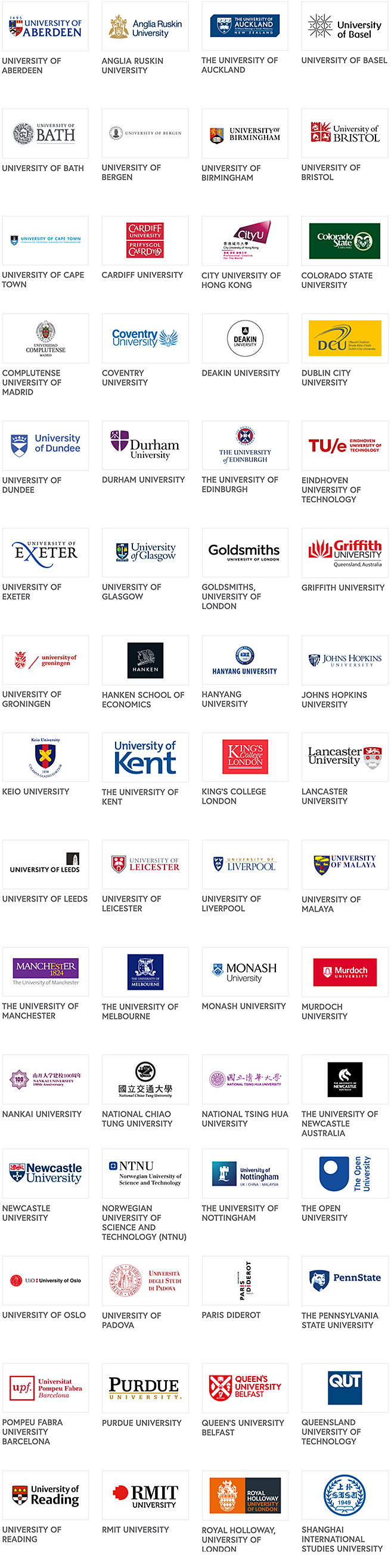
But then the question becomes…would a large amount of universities (and other types of organizations) be willing to offer up their courses on a platform? Well, consider what’s ALREADY happening with FutureLearn:
Finally…one more excerpt from Clay’s article:

Eventually the new ideas lose their power to shock, and end up being widely copied. Institutional transformation starts as heresy and ends as a section in the faculty handbook. 

From DSC:
This is a great point. Reminds me of this tweet from Fred Steube (and I added a piece about Western Telegraph):


Some things to reflect upon…for sure.


From DSC:
A couple of somewhat scary excerpts from Meet Hemingway: The Artificial Intelligence Robot That Can Copy Your Handwriting (from forbes.com by Bernard Marr):

The Handwriting Company now has a robot that can create beautifully handwritten communication that mimics the style of an individual’s handwriting while a robot from Brown University can replicate handwriting from a variety of languages even though it was just trained on Japanese characters.

Hemingway is The Handwriting Company’s robot that can mimic anyone’s style of handwriting. All that Hemingway’s algorithm needs to mimic an individual’s handwriting is a sample of handwriting from that person.


From DSC:
So now there are folks out there that can generate realistic “fakes” using videos, handwriting, audio and more. Super. Without technologies to determine such fakes, things could get ugly…especially as we approach a presidential election next year. I’m trying not to be negative, but it’s hard when the existence of fakes is a serious topic and problem these days.


Addendum on 7/5/19:
AI poised to ruin Internet using “massive tsunami” of fake news — from futurism.com

“Because [AI systems] enable content creation at essentially unlimited scale, and content that humans and search engines alike will have difficulty discerning… we feel it is an incredibly important topic with far too little discussion currently,” Tynski told The Verge.


Cisco and American Well are teaming up to let you talk to your doctor from your TV — from cnbc.com by Christina Farr

Key points:

  • Cisco and American Well are working on bringing virtual medical visits to homes across the country.
  • Traditionally, virtual medical visits are conducted via laptops and smartphones.
  • But the television set might be more accessible, especially for older Americans.


The World’s First Full in VR Semester Course Taught by Survios CTO — from medium.com by Rahel Demant

Excerpt:

VR First is excited to announce its strategic partnership with Axon Park?—?the world’s first educational campus in VR. To kick things off, they are running a full semester course taught in VR. Launching this fall, the course will teach expert-level Unreal Engine VR development, taught remotely by Survios CTO and Co-Founder Alex Silkin with support from the Unreal Engine team.

To enable Axon Park’s commitment to diversity and inclusion through immersive education, VR First has signed a strategic partnership with Axon Park, an organization which maintains the largest network of VR lab enabled universities and science parks internationally. Together, Axon Park and VR First are announcing a needs-based scholarship program that will provide students with low cost or free access to VR hardware and resources through their partner network of 850 universities. With their expertise in VR/AR workforce education and regional tech cluster facilities, VR First is the international distribution partner for Axon Park training solutions to universities, businesses and governments.


Also see:

Axon Park -- in fall 2019, delivering the world’s first full in VR semester course


Microsoft’s new AI wants to help you crush your next presentation — from pcmag.com by Jake Leary
PowerPoint is receiving a slew of updates, including one that aims to help you improve your public speaking.

Excerpt:

Microsoft [on 6/18/19] announced several PowerPoint upgrades, the most notable of which is an artificial intelligence tool that aims to help you overcome pre-presentation jitters.

The Presenter Coach AI listens to you practice and offers real-time feedback on your pace, word choice, and more. It will, for instance, warn you if you’re using filler words like “umm” and “ahh,” profanities, non-inclusive language, or reading directly from your slides. At the end of your rehearsal, it provides a report with tips for future attempts. Presenter Coach arrives later this summer.


From DSC:
Are you kidding me!? Geo-fencing technology or not, I don’t trust this for one second.


Amazon patents ‘surveillance as a service’ tech for its delivery drones — from theverge.com by Jon Porter
Including technology that cuts out footage of your neighbor’s house

Excerpt:

The patent gives a few hints how the surveillance service could work. It says customers would be allowed to pay for visits on an hourly, daily, or weekly basis, and that drones could be equipped with night vision cameras and microphones to expand their sensing capabilities.

 
© 2025 | Daniel Christian