


On 02/14/2022,
in 24x7x365 access, 3D, A/V -- audio/visual, active learning, attention, communications, communities of practice, creativity, digital learning, digital storytelling, distance education, education, education reform, education technology, educational games / serious games, Emotion, engagement / engaging students, ethics, hearts -- matters of the heart, homeschooling/homeschoolers, ideas, K-12 related, learning ecosystem, Learning from the Living [Class] Room, learning preferences, library / librarians, love of learning, Microsoft, morals/values, neurodivergent/special needs, online learning, online media, parents/guardians, participation, passions, platforms, play, productivity / tips and tricks, psychology, remote teaching and learning, social learning / networks, storytelling, student teaching/teacher education, student-related, teachers, teaching online, technologies for your home, tools, UK, United States, vendors, web-based collaboration, youth,
by Daniel Christian
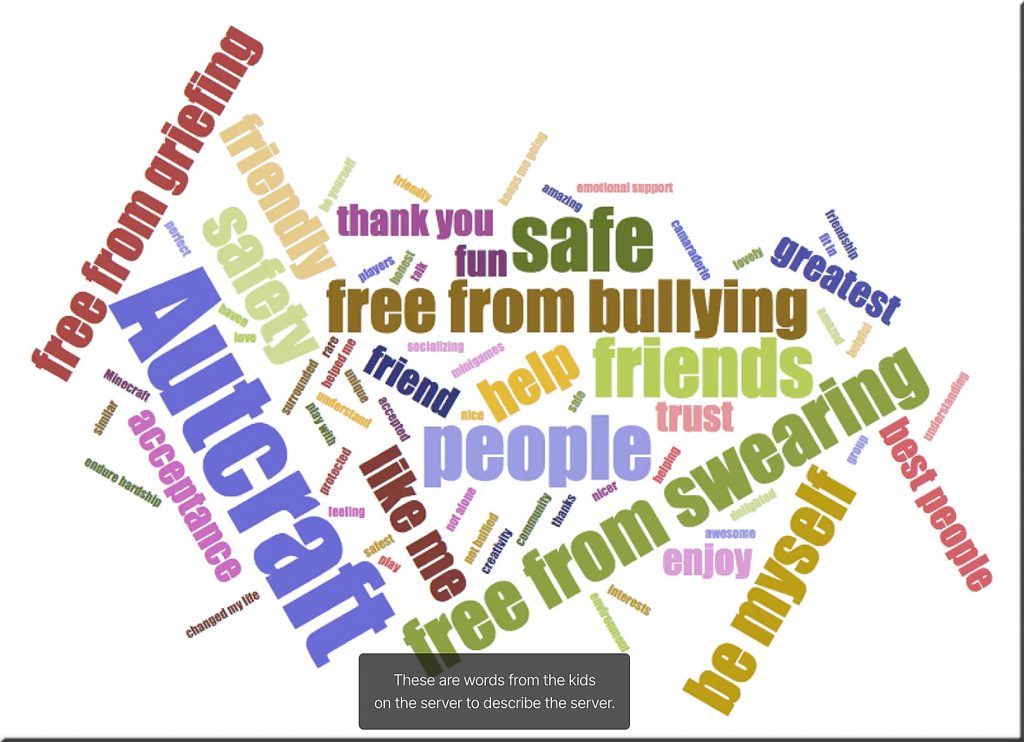
How I use Minecraft to help kids with autism — from ted.com by Stuart Duncan; with thanks to Dr. Kate Christian for this resource
Description:
The internet can be an ugly place, but you won’t find bullies or trolls on Stuart Duncan’s Minecraft server, AutCraft. Designed for children with autism and their families, AutCraft creates a safe online environment for play and self-expression for kids who sometimes behave a bit differently than their peers (and who might be singled out elsewhere). Learn more about one of the best places on the internet with this heartwarming talk.
Below are two excerpted snapshots from Stuart’s presentation:

On 01/25/2022,
in active learning, CMS/LMS, communications, content development, aggregation, repositories, corporate universities / corporate training, Daniel S. Christian, education technology, flipping -- inverted learning, higher education, ideas, instructional design, K-12 related, law schools, learning, learning ecosystem, Learning Experience Design, learning hubs & pods & microschooling, learning spaces, learning theories, memory, metacognition / metacognitive skills, tools, training / L&D, universities,
by Daniel Christian
From DSC:
How can we better get the word out to our learners regarding how they can maximize their Return On Investment (ROI) from their studying time and efforts?
Two ideas come to mind here:
- Place learning-related tips directly into our banners within our CMS’s and LMS’s
and/or - Link our banners to some other web pages/resources that provide such best practices and tips for our learners


Along these lines, we should have 11″x17″ (or larger) posters like this plastered in every hallway of every learning space out there:

Some would also add:
- Active learning
- Flipping the classroom
- Providing individualized feedback
- Metacognition (which was referenced in the first graphic above in regards to identifying gaps in one’s knowledge)
On 01/18/2022,
in Cost of legal services - including access, innovation, law schools, Legal operations, legal technologies, Michigan, tools, trends,
by Daniel Christian
Looking Forward and Backward at Legal Technology – 2021 and 2022 — from legaltechmonitor.com by Dennis Kennedy, Tom Mighell, Debbie Foster
Excerpt:
Tom Mighell and I, with help from Debbie Foster, continued our annual tradition of looking backward and forward at #legaltech at the end/beginning of each year on our podcast. Of course, we do that in our own way.
Here are the two episodes of The Kennedy-Mighell Report podcast:
- Pardon the Interruption: 2021 Edition
- Dennis & Tom’s 2022 Tech Resolutions
Also see:
- #363: What Is the Future of Legal Tech?, with Zack Glaser — from legaltalknetwork.com
Also see:

On 01/17/2022,
in 21st century, 24x7x365 access, Artificial Intelligence/Agents/LLMs/and Related, Asia, change, Daniel S. Christian, data related items, emerging technologies, legal reform, legislatures / government / legal, platforms, policy, political science, privacy, society, the downsides of how people use tech, tools, United States,
by Daniel Christian
Feds’ spending on facial recognition tech expands, despite privacy concerns — from by Tonya Riley
Excerpt:
The FBI on Dec. 30 signed a deal with Clearview AI for an $18,000 subscription license to the company’s facial recognition technology. While the value of the contract might seem just a drop in the bucket for the agency’s nearly $10 billion budget, the contract was significant in that it cemented the agency’s relationship with the controversial firm. The FBI previously acknowledged using Clearview AI to the Government Accountability Office but did not specify if it had a contract with the company.
From DSC:
What?!? Isn’t this yet another foot in the door for Clearview AI and the like? Is this the kind of world that we want to create for our kids?! Will our kids have any privacy whatsoever? I feel so powerless to effect change here. This technology, like other techs, will have a life of its own. Don’t think it will stop at finding criminals.
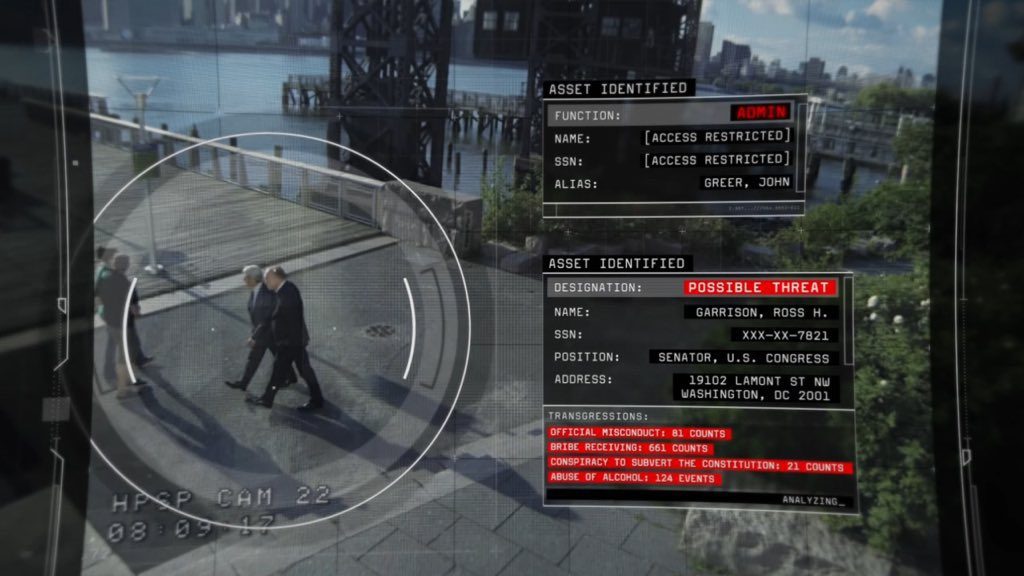
This is a snapshot from the series entitled, “Person of Interest.“
Will this show prove to be right on the mark?
Addendum on 1/18/22:
As an example, check out this article:
- Tencent is scanning kids’ faces to stop them using older relatives’ gaming accounts to get around China’s gaming restrictions — from businessinsider.com by Weilun Soon
Tencent is set to ramp up facial recognition on Chinese children who log into its gaming platform. The increased surveillance comes as the tech giant caps how long kids spend gaming on its platform. In August 2021, China imposed strict limits on how much time children could spend gaming online.
On 01/14/2022,
in art, CMS/LMS, collaboration, communications, creativity, digital learning, education technology, educational games / serious games, ideas, innovation, interactivity, K-12 related, learning, learning ecosystem, Learning Experience Design, learning preferences, more voice more choice more control, multimedia, project-based learning, skills, student-related, teachers, teaching & learning, tools, vendors, youth,
by Daniel Christian
Methods and tools to develop future-ready skills — from blog.neolms.com by Rachelle Dene Poth
Excerpt:
Because of the changes that we experienced in the past year, I believe that it is important to have various options, whether teaching in-person, hybrid, or virtually. Choosing methods like Genius hour or project-based learning, activities such as scavenger hunts or learning stations, or selecting digital tools that promote more interaction with and between students will help foster the development of essential future-ready and SEL skills.
There are many methods and tools to explore, but it’s important to focus on the why behind the choices we make for our students. The use of digital tools promotes collaboration, communication, creativity and many more essential skills while also promoting the power of choice for students to share what they have learned.

Also see:
- What is Breakout EDU and How Can It Be Used for Teaching? Tips and Tricks — from techlearning.com by Luke Edwards
Breakout EDU is a puzzle game based in the real world and digitally that’s great for team-based learning
Escape rooms have become very popular as a place teams can go to work out how to get free from the room in which they are “trapped.” It’s like a real-world version of a computer game that makes you work together to solve puzzles to escape from somewhere.
Breakout EDU helps to bring that experience to educators so as to better engage students and help them learn while having fun.
On 01/13/2022,
in 21st century, 24x7x365 access, adult learning, change, corporate universities / corporate training, education technology, immersion, innovation, learning, learning ecosystem, Learning from the Living [Class] Room, lifelong learning, online learning, personalized/customized learning, technology (general), tools, training / L&D, United States, vendors, Virtual Reality (VR) / worlds / learning, XR - extended reality,
by Daniel Christian
School in the metaverse: How tech and the pandemic are changing online education — from protocol.com by David Pierce
Coursera’s CEO and chief content officer see a future of learning that’s more on-demand, more personalized and more immersive.
Excerpts:
Maggioncalda and Coursera Chief Content Officer Betty Vandenbosch joined the Source Code podcast to talk about the chaotic state of online education, what’s next for corporate training, how softer skills are becoming part of the work curriculum, how learning might work in the metaverse and much more.
“We know, broadly, that learning will become more available, it’ll be more online, and there’ll be a lot more people learning for a lot more of their lives,” said Coursera CEO Jeff Maggioncalda.
On 01/10/2022,
in adult learning, Alternatives, career development, CMS/LMS, corporate universities / corporate training, education technology, MOOCs -- Massive Open Online Courses, reinvent, skills, surviving, tools, trends, United States, universities, workplace,
by Daniel Christian
3 major trends affecting ed tech companies — from highereddive.com by Natalie Schwartz
We reviewed what executives said during their latest earnings calls to better understand patterns in the growing sector.
“It’s going to be a series of short, discrete skill-building offerings knitted together in a curated or customized manner,” Craig said. “It’s going to be done within enterprises in five years’ time, and that’s going to further reduce the influence of colleges and universities.”