Using Virtual Reality for Career Training — from techlearning.com by Erik Ofgang
The Boys & Girls Clubs of Indiana have had success using virtual reality simulations to teach students about career opportunities.

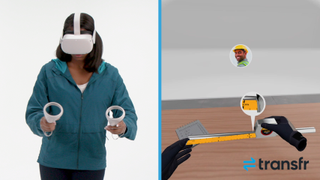
a Woman with a virtual reality set on occupies one half of the screen. The other shows virtual tools that she is controlling.

Excerpts:

Virtual reality can help boost CTE programs and teach students about potential careers in fields they may know nothing about, says Lana Taylor from the Indiana Alliance of Boys & Girls Clubs of America.
…
One of those other resources has been a partnership with Transfer VR to provide students access to headsets to participate in career simulations that can give them a tactile sense of what working in certain careers might be like.

“Not all kids are meant to go to college, not all kids want to do it,” Taylor says. “So it’s important to give them some exposure to different careers and workforce paths that maybe they hadn’t thought of before.” 


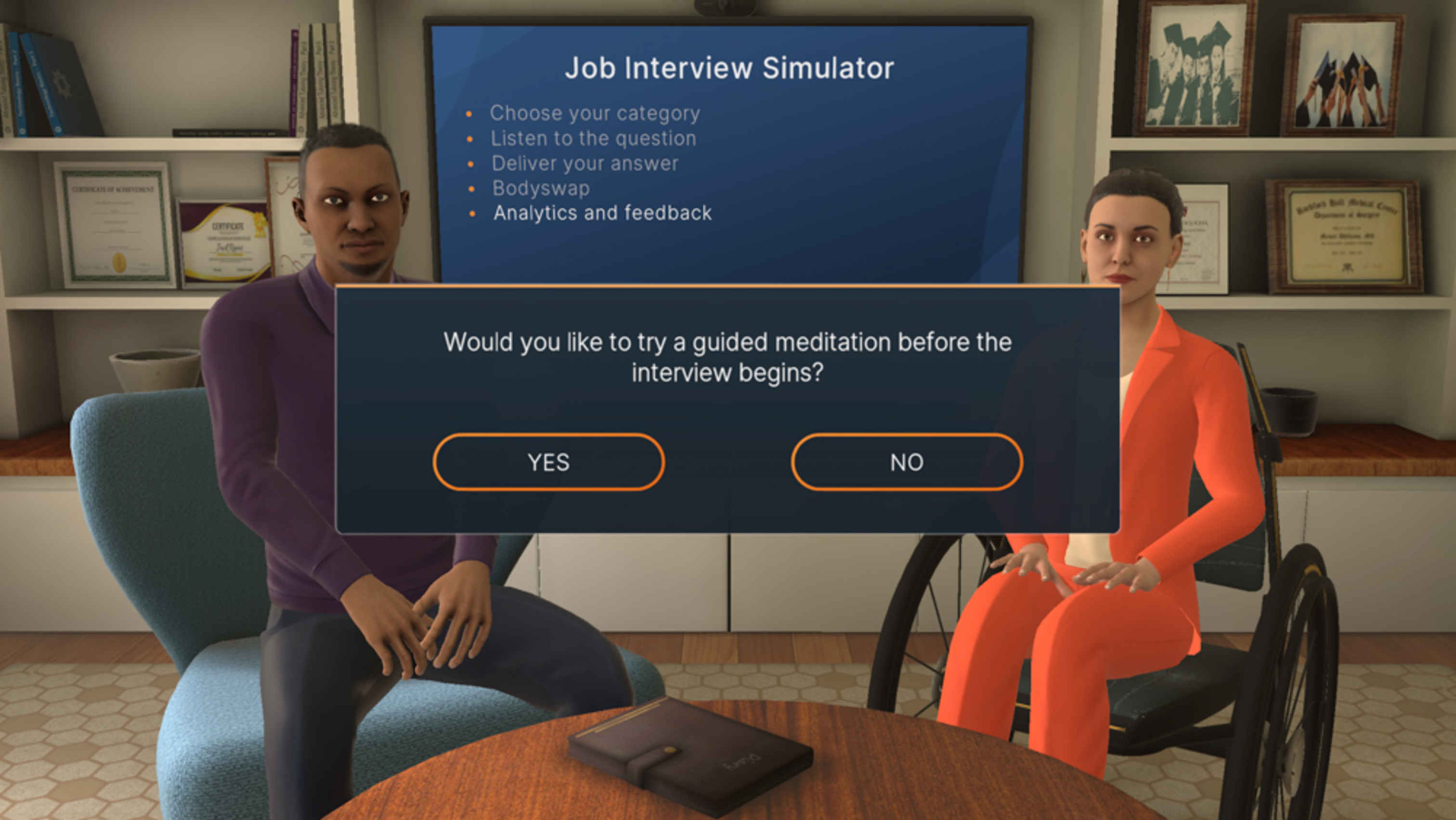
AI interviews in VR prepare students for real jobseeking — from inavateonthenet.net


Future Today Institute's 2022 Tech and Science Trends Report is now available

The Future Today Institute’s 15th Anniversary Tech Trends Report

Excerpt:

Future Today Institute’s 2022 Tech and Science Trends Report is now available. Downloaded more than 1 million times each year, FTI’s annual Tech Trends Report is a must-read for every industry. Learn the key trends impacting finance, insurance, transportation, healthcare, sports, logistics, telecom, work, government and policy, security, privacy, education, agriculture, entertainment, music, CPG, hospitality and dining, ESGs, climate, space and more. Discover critical insights. See what strategic action you can take on the futures, today.


HundrED Global Collection 2023 — from hundred.org
Meet the 100 most impactful innovations that are changing the face of education in a post-COVID world.
The HundrED Global Collection 2023

Excerpt:

The year 2022 has been a year to look to the future, as the global education conversation moves again toward themes of education transformation and the futures of education. The 100 innovations selected for this year’s global collection are impacting the lives of over 95 million students worldwide. The collection highlights the important role of teachers in education innovation; the continued need for students to develop 21st century skills, including social and emotional learning; an increasing focus on student wellbeing and mental health; and equity in education.

For more information, download the full Global Collection 2023 report.
You can also browse the innovation pages of the selected innovators here.
.

From DSC:
Here’s an excerpt of the email I received today from EducationHQ out of Australia — though I think it applies here in the United States as well:

.

Amplify and value teachers’ voice in education policymaking: researchers — from educationhq.com
Amplify and value teachers’ voice in education policymaking: researchers

Excerpt:

Monash University’s Teachers’ Perceptions of their Work Survey has revealed teachers’ waning satisfaction in their role and highlighted their…

Also from educationhq.com

Teachers changed my life: Trauma-informed education shows kids they matter — from educationhq.com by Beck Thompson
.

Nonprofit Bringing Businesses to Life in the Classroom — to the Tune of $400,000 — from the74million.org by Tim Newcomb
Making candles out of crayons, building birdhouses, fashioning furniture: Real World Scholars has helped 50,000 students become entrepreneurs

Not much entices a second grader to skip out on recess to get back to schoolwork. But excitement around a classroom-run business can do just that, especially when it means creating candles out of crayons and selling them in the local community.

Students design their ideal urban home in My ArchiSchool exhibition — from dezeen.com

Students were able to bring family members to the exhibition. Architectural model by Ethan Chan

Excerpt:

Promotion: fifty-two students presented digital designs and architectural models of their ideal home as part of Hong Kong-based education institute My ArchiSchool’s latest exhibition. As part of the exhibition, My ArchiSchool students were asked to design their ideal home within an urban environment. The exhibition, which took place on 2 October 2022 at the Sky100 on the 100th floor of the International Commerce Centre in Hong Kong, showcased photomontages of digital designs presented alongside physical models.

5 Resources that help students become digital citizens — from rdene915.com by Rachelle Dene Poth

Excerpt:

We need to create opportunities for students to become more digitally aware and literate, and to be responsible when using technology. There are many ways to do this, depending on our content area and grade level. We can model best practices for our students, bring in a specific digital citizenship curriculum to guide them through their learning, or use digital tools and resources available to have students explore and create.

Helping students learn to safely navigate what has become a highly digital world is something that we are all responsible for. Students need to be aware of the impact of their posts online, how to create and manage social accounts and protect their information, and how to properly access and use resources they obtain through technology.

3 Reasons School and District Leaders Should Get on Social Media — from edweek.org by Marina Whiteleather

Excerpt:

School and district leaders can—and should—be using social media in their work.

That’s the message shared by Stephanie McConnell, a superintendent in the Hawkins Independent School District in Texas, and Salome Thomas-El, a K-8 principal in Delaware, during an Education Week K-12 Essentials forum on Oct. 13.

At the event, McConnell and Thomas-El provided insights and advice for school leaders who are hesitant to post on certain social platforms or unsure how to use them.


Threats uncovered: QR code exploits offer personal and business risks — from technative.io by Len Noe

Excerpts:

Cyber attackers have quickly caught onto QR codes as a social vulnerability and attacks using them as the vector are on the rise.

It’s clear we intuitively trust QR codes, even though this trust is poorly founded. To get a clearer picture of exactly how QR codes could present a threat, I did some digging. Through research, I discovered a variety of ways QR codes can be used maliciously, to steal not only personal information but provide a solid base of information from which to attack an organisation.


How Might Engineering Education Transition From In-Person To Hybrid and Online Modalities? — from insidehighered.com by Joshua Kim
Three questions for Rick Hill, professor of mechanical engineering at the University of Detroit Mercy.

Excerpts:

Tools I use in my classroom, including MATLAB and Simulink, are key to recreating the in-person lab experience and giving engineering students access to the same equipment as engineers in the field. Students can gain experience analyzing data, developing algorithms and creating models. They’re developing skills in the design of systems with multidomain models, simulation and deployment without the need for code.

Virtual labs allow an instructor to easily introduce “experiments” into nonlab classes, either in the middle of a lecture or in homework. I do this with live scripts and simulation models. It saves me and the students the time of having to set up and debug the lab hardware and saves the cost and space of the physical laboratory while providing a very quick and controlled environment for doing experiments.


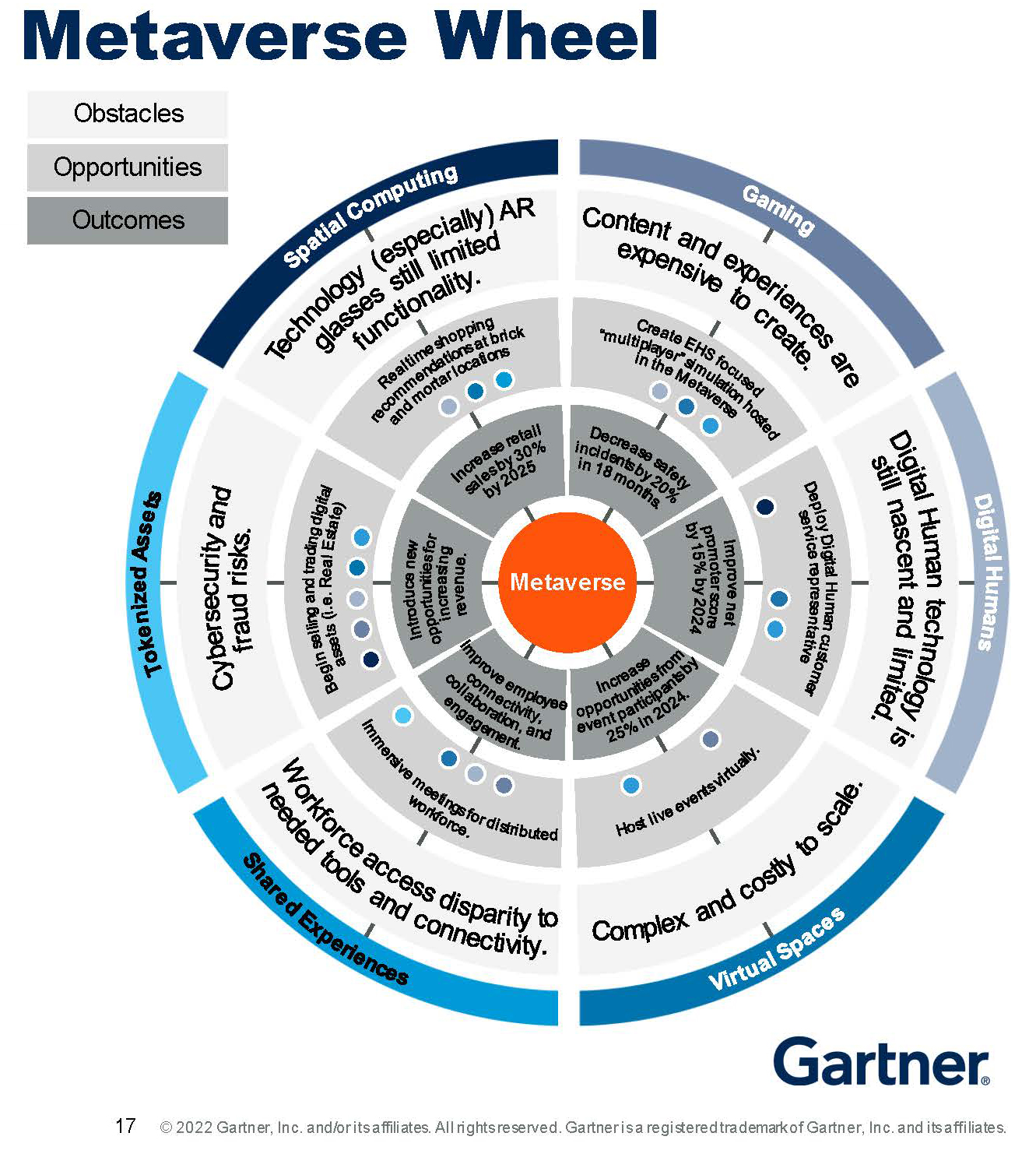
6 trends are driving the use of #metaverse tech today. These trends and technologies will continue to drive its use over the next 3 to 5 years:

1. Gaming
2. Digital Humans
3. Virtual Spaces
4. Shared Experiences
5. Tokenized Assets
6. Spatial Computing
#GartnerSYM

.

“Despite all of the hype, the adoption of #metaverse tech is nascent and fragmented.” 

.

Also relevant/see:

According to Apple CEO Tim Cook, the Next Internet Revolution Is Not the Metaverse. It’s This — from inc.com by Nick Hobson
The metaverse is just too wacky and weird to be the next big thing. Tim Cook is betting on AR.

Excerpts:

While he might know a thing or two about radical tech, to him it’s unconvincing that the average person sufficiently understands the concept of the metaverse enough to meaningfully incorporate it into their daily life.

The metaverse is just too wacky and weird.

And, according to science, he might be on to something.


Updated Creative Cloud helps you create with precision and speed and collaborate seamlessly — from blog.adobe.com by Scott Belsky

Excerpt:

Over the past few years, creative expression has become a widespread desire. From new social media platforms to our efforts to stand out in school, or at work through our ideas, creativity has become a vital skill for everyone. Our teams at Adobe are on a mission to outfit everyone to create.

The latest version of Adobe Creative Cloud, released [on 10/18/22] at Adobe MAX, includes innovations that support creativity for all.

Also relevant/see:


10 Websites to Have Fun With Your Photos — from Hongkiat.com

Excerpt:

Getting a little bored with how your photos are presented online? How about injecting some fun and humor into it? You don’t really need to be Photoshop literate to edit and add effects to your photos. There’re some really great sites out there that allow you to add effects to your photo by using their existing effect templates.

The best part is – they are free, output is shown immediately on the fly,, and no installation of apps is required. Here’s a collection of ten websites to have fun with your photos, we’ve come to know. You know they don’t really have to be your photos 🙂


The 5 Biggest Artificial Intelligence (AI) Trends In 2023 — from forbes.com by Bernard Marr

Excerpt:

Today, the technology most commonly used to achieve AI is machine learning – advanced software algorithms designed to carry out one specific task, such as answering questions, translating languages or navigating a journey – and become increasingly good at it as they are exposed to more and more data.

Worldwide, spending by governments and business on AI technology will top $500 billion in 2023, according to IDC research. But how will it be used, and what impact will it have? Here, I outline what I believe will be the most important trends around the use of AI in business and society over the next 12 months.


Also relevant/see:


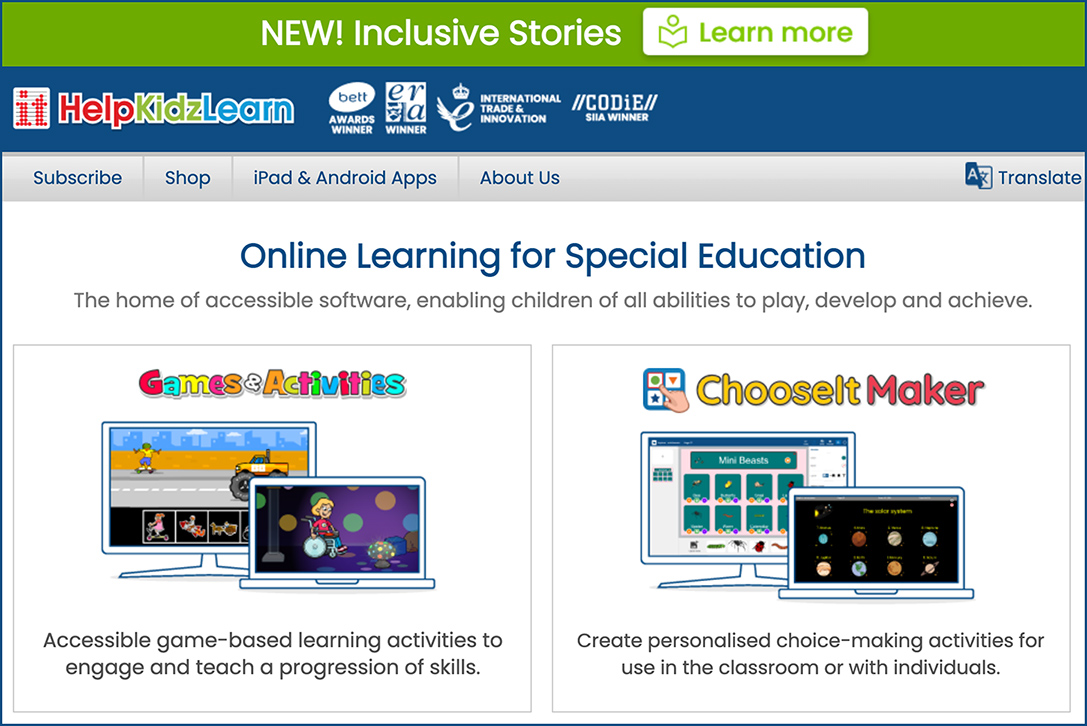
Assistive Technology for Kids with Multiple Disabilities — from equalentry.com

Help Kids Learn dot com -- online learning for special education -- uses assistive technologies


Lego Owner to Acquire Education-Technology Firm Brainpop — from nytimes.com by Trefor Moss
Kirkbi, the family-run company behind the world’s largest toy maker, plans to establish an education business

Excerpt:

Lego owner Kirkbi A/S is buying U.S. video-learning firm Brainpop for $875 million, according to the companies, as the family behind the world’s largest toy maker expands into the education business.

The Danish company said the purchase of Brainpop, which produces short animations used in schools to help children learn everything from math to music, was part of a plan to build a new business pillar. The deal—through which Kirkbi is acquiring Brainpop’s owner FWD Media Inc.—is expected to close Tuesday, the companies said.

“We are definitely on the path to establishing the Lego idea of learning through play in the formal education space,” said Jørgen Vig Knudstorp, executive chairman of the Lego Brand Group, the Kirkbi entity that oversees the toy brand.


Creating a Culture to Support Student Voice & Choice — from techlearning.com by Matthew X. Joseph
Encouraging student voice and choice helps foster a more engaging learning environment

Excerpt:

During my time as a district and school leader, I observed and conferenced with students entering high school, and only about a third of those reported feeling engaged with their education. I believe education should provide students with meaningful learning experiences in a classroom of engaged learners.

One way to enhance student engagement is to allow for student voice. Students who feel their voices are heard are more likely to feel academically engaged and respected in the school community. In addition, students feel valued when they feel heard. Students learn for someone, not just from someone. Thus, feeling valued is essential in creating a safe culture for students to share their voice.

Providing students with multiple options for an assignment helps them choose the content that is relevant, meaningful, and exciting to them. As a result, they are a part of their own learning process, rather than having to move through assignments that are not engaging.


Clio’s 2022 Legal Trends Report
Learn how lawyers are balancing the flexibility of hybrid work, and what clients look for when hiring a lawyer.

Also relevant/see:

Clio’s 2022 Legal Trends Report Finds Lawyers’ Business Growing But Fees Fail to Keep Pace — from lawnext.com by Bob Ambrogi

Top law schools have been slow to add women faculty members, research finds — from highereddive.com

Excerpt:

Law schools have increasingly sorted along gender lines, and the makeup of faculties has become a reflection of schools’ student population, according to preprint research published on the SSRN, an open access platform for early-stage research.

Five digital trends to watch in the legal tech sector — from information-age.com by Leanne Aldrich

Excerpt:

Technology is changing the legal sector. The UK government has recently announced that it is investing £4m to modernise the UK legal industry through its LawTechUK programme. The initiative is a part of a drive to keep the UK at the global forefront of legal services..

ILTA’s Annual Technology Survey: Highlights — from legaltechnology.com

What does it take to be a legal technologist? — legalfutures.co.uk

Excerpt:

When the first seeds of the legal technologist role were planted in the early 2010s, they took some time to germinate. A decade later, after a seemingly slow start, there has been an explosion of investment, awareness and new job opportunities in legal technology.

But as this new strand of the legal profession sets its roots deeper in the industry, what exactly does it take to be a legal technologist?

Shearman & Sterling Launches Legal Ops Service In Sign of the Times — from artificiallawyer.com

Excerpt:

In another sign of the changing times we are in, leading New York law firm Shearman & Sterling is formally launching a Legal Operations capability. The move follows fellow elite rival Cleary Gottlieb launching Cleary X, its innovation-focused legal delivery arm.

A decade ago many would not have expected New York’s top firms to be that bothered with anything other than high-end legal advisory and disputes work, but the legal world is evolving.

‘Legal Operations by Shearman’ will offer a range of services including legal tech help, data analytics, and inhouse department design, but may work with ALSPs and other groups when it comes to CLM onboarding, with these other providers handling actual implementation and with Shearman focused on the bigger legal ops picture.

#legal #trends #legaltech #lawyers #law #lawschools


What might the ramifications be for text-to-everything? [Christian]

From DSC:

  • We can now type in text to get graphics and artwork.
  • We can now type in text to get videos.
  • There are several tools to give us transcripts of what was said during a presentation.
  • We can search videos for spoken words and/or for words listed within slides within a presentation.

Allie Miller’s posting on LinkedIn (see below) pointed these things out as well — along with several other things.


This raises some ideas/questions for me:

  • What might the ramifications be in our learning ecosystems for these types of functionalities? What affordances are forthcoming? For example, a teacher, professor, or trainer could quickly produce several types of media from the same presentation.
  • What’s said in a videoconference or a webinar can already be captured, translated, and transcribed.
  • Or what’s said in a virtual courtroom, or in a telehealth-based appointment. Or perhaps, what we currently think of as a smart/connected TV will give us these functionalities as well.
  • How might this type of thing impact storytelling?
  • Will this help someone who prefers to soak in information via the spoken word, or via a podcast, or via a video?
  • What does this mean for Augmented Reality (AR), Mixed Reality (MR), and/or Virtual Reality (VR) types of devices?
  • Will this kind of thing be standard in the next version of the Internet (Web3)?
  • Will this help people with special needs — and way beyond accessibility-related needs?
  • Will data be next (instead of typing in text)?

Hmmm….interesting times ahead.


Why text-to-speech tools might have a place in your classroom with Dr. Kirsten Kohlmeyer – Easy TeTech Podcast 183 — from classtechtips.com by Monica Burns

Excerpt:

In this episode, Assistive Technology Director, Dr. Kirsten Kohlmeyer, joins to discuss the power of accessibility and text-to-speech tools in classroom environments. You’ll also hear plenty of digital resources to check out for text-to-speech options, audiobooks, and more!

Assistive tools can provide:

  • Text-to-speech
  • Definitions/vocabularies
  • Ability to level the Lexile level of a reading
  • Capability to declutter a website
  • More chances to read to learn something new
  • and more

Speaking of tools, also see:


Inclusive Education For Students With Hearing Impairment — from edtechreview.in by Priyanka Gupta

Excerpt:

The following may be difficult for a student with a hearing impairment:

  • The subjects of spelling, grammar, and vocabulary
  • Making notes while listening to lectures
  • Participate, engage or understand classroom discussions
  • Understand educational videos
  • Present oral reports
 
© 2025 | Daniel Christian