What’s next for AI — from technologyreview.com by Melissa Heikkilä and Will Douglas Heaven
Get a head start with our four big bets for 2023.

Excerpts:

But take the conversational skills of ChatGPT and mix them up with image manipulation in a single model and you’d get something a lot more general-purpose and powerful. Imagine being able to ask a chatbot what’s in an image, or asking it to generate an image, and have these interactions be part of a conversation so that you can refine the results more naturally than is possible with DALL-E.

10 AI Predictions For 2023 — from forbes.com by Rob Toews

Excerpts (emphasis DSC):

  1. GPT-4 will be released in the next couple months—and yes, it will be a big deal.
  2. We are going to start running out of data to train large language models.
  3. For the first time, some members of the general public will begin using fully driverless cars as their day-to-day mode of transportation.
  4. Midjourney will raise venture capital funding.
  5. Search will change more in 2023 than it has since Google went mainstream in the early 2000s.

AI Trends For 2023: Industry Experts (And ChatGPT AI) Make Their Predictions — from forbes.com by Ganes Kesari

Excerpt:

To understand the top AI trends, I asked industry leaders and academic experts five questions. It’s the age of human-machine collaboration, so what better way to demonstrate this than by asking AI software about the 2023 AI trends it’s excited about? I did that too.
…

    1. What do you think was the biggest achievement in the AI space in 2022?
    2. What’s the most exciting AI trend that you look forward to materializing in 2023?
    3. What’s a fad in this space that you wish would go away next year?
    4. To get value from AI, what’s one thing that leaders can start doing today that doesn’t take big effort or money?
    5. What’s one thing that leaders should stop doing immediately to realize benefits from AI?

Is A.I. the Future of Test Prep? — from nytimes.com by Craig S. Smith (NOTE: Paywall)

Excerpt:

Riiid is one of a handful of companies that believe that A.I.’s algorithms are perfectly suited to track student performance and give individualized attention.

“Education is a complex field deeply related to cognition, motivation, peer interaction, etc.,” Mr. Jang wrote in an email. “We draw insights from learning science, cognitive biology, data science, and other related areas of research for an iterative experimentation process that is challenging and time consuming — that’s why there are only a few players in the market.”

Artificial intelligence predictions 2023 — from information-age.com by Tim Adler
2023 could be the year that artificial intelligence moves from the fringes into the mainstream, as AI becomes widely adopted by healthcare, travel and banking. Five experts give their predictions

Excerpt:

Worldwide spending on artificial intelligence will hit half a billion dollars this year, according to IDC. Five artificial intelligence experts give Information Age their predictions as to how adoption of AI will accelerate in 2023.

.


From DSC:
The following article made me again wonder about the place of technology in the access to justice realm.


Legal Tech Startup Lexion Tasks GPT-3 to Help Draft Contracts in Microsoft Word — from voicebot.ai by Eric Hal Schwartz

Excerpt:

Lawyers can ask GPT-3 to help write contracts in Microsoft Word thanks to legal tech startup Lexion’s new AI Contract Assist Word plugin. The new tool offers assistance in drafting and negotiating terms, as well as summarizing the contract for those not versed in legal language and marks the growing interest in applying generative AI within the legal profession.

Lexion’s AI Contract Assistant is designed to compose, adjust, and explain contracts with an eye toward streamlining their creation and approval. Lawyers with the Word plugin can write a prompt describing the goal of a contract clause, and the AI will generate one with appropriate language. 


ChatGPT and The Professional’s Guide to Using AI — from linkedin.com by Allie K. Miller

Excerpt:

Real Ways Professionals Can Use ChatGPT to Improve Job Performance
Let’s dive into some real examples of how professionals across sales, marketing, product management, project management, recruiting, and teaching can take advantage of this new tool and leverage it for even more impact in their careers.

Teachers and ChatGPT

  1. Help with grading and feedback on student work.
    Example prompt: “Tell me every grammar rule that’s been violated in this student’s essay: [paste in essay]”
  2. Create personalized learning materials.
    Example prompt: “Help me explain photosynthesis to a 10th grade student in a way similar to sports.”
  3. Generate lesson plans and activities.
    Example prompt: “Create an activity for 50 students that revolves around how to learn the different colors of the rainbow.” or “Generate a lesson plan for a high school English class on the theme of identity and self-discovery, suitable for a 45-minute class period.”
  4. Write fake essays several reading levels below your class, then print them out, and have your students review and edit the AI’s work to make it better.
    Example prompt: “Generate a 5th grade level short essay about Maya Angelou and her work.”
  5. Providing one-on-one support to students.
    Example prompt: “How can I best empower an introverted student in my classroom during reading time?”

From DSC:
I haven’t tried these prompts. Rather I post this because I’m excited about the potential of Artificial Intelligence (AI) to help people teach and to help people to learn.


Why College Students Turned From Being Down on Remote Learning to Mostly in Favor of It — from edsurge.com by Robert Ubell

Excerpt:

Over time, with months of practice as the pandemic proceeded, instructors and students learned how to use remote tools. Continuously online, enormous numbers gained proficiency with digital learning software. “The quality of a well-run synchronous, online class can now rival—and in some respects exceed—the quality of the in-person equivalent,” observes John Villasenor at the Brookings Institution.

The good news is that online learning is no longer reviled and resented, but after a rocky tryout in the pandemic, it’s now just another higher ed choice in which students and faculty, after years of digital stress, have largely adapted to it.

The above article linked to:

Noetel, M., Griffith, S., Delaney, O., Sanders, T., Parker, P., del Pozo Cruz, B., & Lonsdale, C. (2021). Video Improves Learning in Higher Education: A Systematic Review. Review of Educational Research, 91(2), 204–236. https://doi.org/10.3102/0034654321990713

Conclusion
Online teaching allows for learning to be delivered affordably, at scale, and with fewer infrastructure constraints than face-to-face instruction—it does not require a university to have hundreds of people in the same room at the same time. As universities move content online, staff usually turn to teaching via asynchronous videos and synchronous videoconferences (Cook et al., 2010). Videoconferences may be more conducive to student–teacher interactivity (Al-Samarraie, 2019; Bernard et al., 2009), but most studies in our review had the same level of active learning in the video and comparison condition, meaning teachers can maintain active learning while shifting to video. When they do, videos lead to better student learning than many other teaching methods, even when compared with face-to-face teaching. We suggest that these results are because videos may provide students with control over their level of cognitive load, they allow authentic demonstrations of skills, and they enable teaching staff to edit according to multimedia learning principles. Pragmatically, videos allow students to fit learning around their other commitments, and are less reliant than videoconferences on stable, high-speed internet connections (Al-Samarraie, 2019), because they can be buffered to the user’s device. Many of these findings are still contingent on students having access to online learning (Warschauer & Matuchniak, 2010), so ensuring students have social and technical support is a critical challenge for universities around the world. Provided those supports are available, universities can effectively switch to video for efficient and scalable education. Video appears to have a range of benefits in higher education settings.

Online Tools and Web Applications — from schrockguide.net by Kathy Schrock

Excerpt:

Web tools and online utilities have become more full-featured and useful over the years.

Here are some links to various online tools to help both teaching and learning. The online tools all work with laptops and Chromebooks unless stated otherwise. The ones that have Chrome apps available have a link to the Chrome Web Store link.

Categories include:

    • A.I. online tools
    • Online graphic design tools
    • Online video editors/creators/downloaders
    • Online audio recorders/editors
    • Online image editors/creators
    • Online collage makers
    • Online sketchnoting and drawing tools
    • Online word processors
    • Online animation creators
    • …and many more!

Three Things to Know about AI Tools and Teaching — from derekbruff.org by Derek Bruff

Excerpt:

There’s lot more to say on this subject, of course, but I hope these three observations are useful as you make sense of this new technology landscape. Here they are again for easy reference:

    • We are going to have to start teaching our students how AI generation tools work.
    • When used intentionally, AI tools can augment and enhance student learning, even towards traditional learning goals.
    • We will need to update our learning goals for students in light of new AI tools and that can be a good thing.

President Speaks: To put students first, colleges need to rethink the OPM model — from highereddive.com by  Paul Pastorek
Paul Pastorek, president of the University of Arizona Global Campus, explains why his institution cut ties with Zovio, a former online program manager.

Following our separation from Zovio, UAGC has not only undertaken efforts that shift the structure and responsibility for critical decisions around enrollment, marketing and student advising to a fully in-house team, it unlocked resources that will enable us to make investments that better align with our mission: providing adult learners with affordable college credentials that prepare them for careers in a rapidly evolving global economy.

Savings from increased efficiency and reduced costs will be reinvested in the student experience — and entirely at our discretion. No longer stifled by the contractual obligations of a company primarily motivated by profit, our faculty and staff are already expressing they have greater freedom to innovate and find new ways to enhance student success. We are all aligned under one common goal, working together to move the institution in the same direction.

Colleges’ expenses rose 5.2% in FY22, the biggest increase since 2001 — from highereddive.com by Laura Spitalniak

Dive Brief:

  • The cost of running a college jumped 5.2% in the 2022 fiscal year, according to data from Commonfund, an asset management firm that tracks inflation in the higher education sector.
  • That’s the highest rate of inflation the Higher Education Price Index, or HEPI, has tracked since 2001, when it hit 6%. It’s also a sharp increase from 2021, when the college inflation rate was 2.7%.
  • But the HEPI increase was outpaced by inflation more broadly in the U.S., a rare occurrence according to Commonfund. The Consumer Price Index, or CPI, reached 7.2% in fiscal 2022.

University of Wisconsin-Milwaukee to offer HR apprenticeships — from highereddive.com by Ginger Christ

“As demand for technology skills continues to grow across the region, UWM has a unique opportunity to solve two challenges at once: creating new pathways to high-wage jobs for our community, while also addressing a growing need for workers with those tech skills,” UWM Provost Scott Gronert said in a news release. “Together with Helios, we’re helping to address one of the most critical talent gaps faced by Wisconsin employers, and enabling our students and graduates to gain the skills that translate to success in today’s increasingly tech-driven labor market.”

Unusual majors help some colleges stand out from the crowd — and boost enrollment — from hechingerreport.org by Jon Marcus
A bachelor’s degree in automotive restoration has put a tiny Kansas school on the map

Excerpt:

That’s an unusual ambition for a small college — which is exactly the point. This particular small college has what it says is the country’s only four-year bachelor’s degree in automotive restoration, a major that combines engineering, history, business, communication, art and other disciplines.

It’s an example of the way a small regional higher education institution can stand out in a crowded field of competitors at a time when many other schools appear intent on trying to attract applicants by becoming more alike than different.


ChatGPT, Chatbots and Artificial Intelligence in Education — from ditchthattextbook.com by Matt Miller
AI just stormed into the classroom with the emergence of ChatGPT. How do we teach now that it exists? How can we use it? Here are some ideas.

Excerpt:
Now, we’re wondering …

  • What is ChatGPT? And, more broadly, what are chatbots and AI?
  • How is this going to impact education?
  • How can I teach tomorrow knowing that this exists?
  • Can I use this as a tool for teaching and learning?
  • Should we block it through the school internet filter — or try to ban it?

Also relevant/see:

We gave ChatGPT a college-level microbiology quiz. It blew the quiz away. — from bigthink.com by Dr. Alex Berezow
ChatGPT’s capabilities are astonishing.

Key takeaways:

  • The tech world is abuzz over ChatGPT, a chat bot that is said to be the most advanced ever made.
  • It can create poems, songs, and even computer code. It convincingly constructed a passage of text on how to remove a peanut butter sandwich from a VCR, in the voice of the King James Bible.
  • As a PhD microbiologist, I devised a 10-question quiz that would be appropriate as a final exam for college-level microbiology students. ChatGPT blew it away.

ChatGPT Is Dumber Than You Think — from theatlantic.com by Ian Bogost
Treat it like a toy, not a tool.

Excerpt:

On the one hand, yes, ChatGPT is capable of producing prose that looks convincing. But on the other hand, what it means to be convincing depends on context. The kind of prose you might find engaging and even startling in the context of a generative encounter with an AI suddenly seems just terrible in the context of a professional essay published in a magazine such as The Atlantic. And, as Warner’s comments clarify, the writing you might find persuasive as a teacher (or marketing manager or lawyer or journalist or whatever else) might have been so by virtue of position rather than meaning: The essay was extant and competent; the report was in your inbox on time; the newspaper article communicated apparent facts that you were able to accept or reject.

I Would Have Cheated in College Using ChatGPT — from eliterate.us by Michael Feldstein

Excerpt:

These lines of demarcation—the lines between when a tool can do all of a job, some of it, or none of it—are both constantly moving and critical to watch. Because they define knowledge work and point to the future of work. We need to be teaching people how to do the kinds of knowledge work that computers can’t do well and are not likely to be able to do well in the near future. Much has been written about the economic implications to the AI revolution, some of which are problematic for the employment market. But we can put too much emphasis on that part. Learning about artificial intelligence can be a means for exploring, appreciating, and refining natural intelligence. These tools are fun. I learn from using them. Those two statements are connected.

Google to Rival OpenAI’s ChatGPT? New AI Bot for Chats in 2023, CEO Claims to Use it for Search — from techtimes.com by Isaiah Richard
Google to expand its Search engine with AI for 2023, but not in a creepy way.

Excerpt:

Google is planning to create a new AI feature for its Search engine, one that would rival the recently released and controversial ChatGPT from OpenAI. The company revealed this after a recent Google executive meeting that involved the likes of its CEO Sundar Pichai and AI head, Jeff Dean, that talked about the technology that the internet company already has, soon for development.

Employees from the Mountain View giant were concerned that it was behind the current AI trends to the likes of OpenAI despite already having a similar technology laying around.


And more focused on the business/vocational/corporate training worlds:

Sana raises $34M for its AI-based knowledge management and learning platform for workplaces — from techcrunch.com by Ingrid Lunden

There are a lot of knowledge management, enterprise learning and enterprise search products on the market today, but what Sana believes it has struck on uniquely is a platform that combines all three to work together: a knowledge management-meets-enterprise-search-meets-e-learning platform.

Exclusive: ChatGPT owner OpenAI projects $1 billion in revenue by 2024 — from reuters.com by Jeffrey Dastin, Krystal Hu, and Paresh Dave

Excerpt:

Three sources briefed on OpenAI’s recent pitch to investors said the organization expects $200 million in revenue next year and $1 billion by 2024.

The forecast, first reported by Reuters, represents how some in Silicon Valley are betting the underlying technology will go far beyond splashy and sometimes flawed public demos.

“We’re going to see advances in 2023 that people two years ago would have expected in 2033. It’s going to be extremely important not just for Microsoft’s future, but for everyone’s future,” he said in an interview this week.


Addendum on 12/21/22:

ChatGPT and higher education: last week and this week — from bryanalexander.org by Bryan Alexander


The talent needed to adopt mobile AR in industry — from chieflearningofficer.com by Yao Huang Ph.D.

Excerpt:

Therefore, when adopting mobile AR to improve job performance, L&D professionals need to shift their mindset from offering training with AR alone to offering performance support with AR in the middle of the workflow.

The learning director from a supply chain industry pointed out that “70 percent of the information needed to build performance support systems already exists. The problem is it is all over the place and is available on different systems.”

It is the learning and development professional’s job to design a solution with the capability of the technology and present it in a way that most benefits the end users.

All participants revealed that mobile AR adoption in L&D is still new, but growing rapidly. L&D professionals face many opportunities and challenges. Understanding the benefits, challenges and opportunities of mobile AR used in the workplace is imperative.

A brief insert from DSC:
Augmented Reality (AR) is about to hit the mainstream in the next 1-3 years. It will connect the physical world with the digital world in powerful, helpful ways (and likely in negative ways as well). I think it will be far bigger and more commonly used than Virtual Reality (VR). (By the way, I’m also including Mixed Reality (MR) within the greater AR domain.) With Artificial Intelligence (AI) making strides in object recognition, AR could be huge.

Learning & Development groups should ask for funding soon — or develop proposals for future funding as the new hardware and software products mature — in order to upskill at least some members of their groups in the near future.

As within Teaching & Learning Centers within higher education, L&D groups need to practice what they preach — and be sure to train their own people as well.


AI bot ChatGPT stuns academics with essay-writing skills and usability — from theguardian.com by Alex Hern
Latest chatbot from Elon Musk-founded OpenAI can identify incorrect premises and refuse to answer inappropriate requests

Excerpt:

Professors, programmers and journalists could all be out of a job in just a few years, after the latest chatbot from the Elon Musk-founded OpenAI foundation stunned onlookers with its writing ability, proficiency at complex tasks, and ease of use.

The system, called ChatGPT, is the latest evolution of the GPT family of text-generating AIs. Two years ago, the team’s previous AI, GPT3, was able to generate an opinion piece for the Guardian, and ChatGPT has significant further capabilities.

In the days since it was released, academics have generated responses to exam queries that they say would result in full marks if submitted by an undergraduate, and programmers have used the tool to solve coding challenges in obscure programming languages in a matter of seconds – before writing limericks explaining the functionality.


Also related/see:


AI and the future of undergraduate writing — from chronicle.com by Beth McMurtrie

Excerpts:

Is the college essay dead? Are hordes of students going to use artificial intelligence to cheat on their writing assignments? Has machine learning reached the point where auto-generated text looks like what a typical first-year student might produce?

And what does it mean for professors if the answer to those questions is “yes”?
…
Scholars of teaching, writing, and digital literacy say there’s no doubt that tools like ChatGPT will, in some shape or form, become part of everyday writing, the way calculators and computers have become integral to math and science. It is critical, they say, to begin conversations with students and colleagues about how to shape and harness these AI tools as an aide, rather than a substitute, for learning.

“Academia really has to look at itself in the mirror and decide what it’s going to be,” said Josh Eyler, director of the Center for Excellence in Teaching and Learning at the University of Mississippi, who has criticized the “moral panic” he has seen in response to ChatGPT. “Is it going to be more concerned with compliance and policing behaviors and trying to get out in front of cheating, without any evidence to support whether or not that’s actually going to happen? Or does it want to think about trust in students as its first reaction and building that trust into its response and its pedagogy?”


ChatGPT Could Be AI’s iPhone Moment — from bloomberg.com by Vlad Savov; with thanks to Dany DeGrave for his Tweet on this

Excerpt:

The thing is, a good toy has a huge advantage: People love to play with it, and the more they do, the quicker its designers can make it into something more. People are documenting their experiences with ChatGPT on Twitter, looking like giddy kids experimenting with something they’re not even sure they should be allowed to have. There’s humor, discovery and a game of figuring out the limitations of the system.


And on the legal side of things:


From DSC:
I was watching a sermon the other day, and I’m always amazed when the pastor doesn’t need to read their notes (or hardly ever refers to them). And they can still do this in a much longer sermon too. Not me man.

It got me wondering about the idea of having a teleprompter on our future Augmented Reality (AR) glasses and/or on our Virtual Reality (VR) headsets.  Or perhaps such functionality will be provided on our mobile devices as well (i.e., our smartphones, tablets, laptops, other) via cloud-based applications.

One could see one’s presentation, sermon, main points for the meeting, what charges are being brought against the defendant, etc. and the system would know to scroll down as you said the words (via Natural Language Processing (NLP)).  If you went off script, the system would stop scrolling and you might need to scroll down manually or just begin where you left off.

For that matter, I suppose a faculty member could turn on and off a feed for an AI-based stream of content on where a topic is in the textbook. Or a CEO or University President could get prompted to refer to a particular section of the Strategic Plan. Hmmm…I don’t know…it might be too much cognitive load/overload…I’d have to try it out.

And/or perhaps this is a feature in our future videoconferencing applications.

But I just wanted to throw these ideas out there in case someone wanted to run with one or more of them.

Along these lines, see:

.

Is a teleprompter a feature in our future Augmented Reality (AR) glasses?

Is a teleprompter a feature in our future Augmented Reality (AR) glasses?


CIO Review > Legal Technology postings

Example resources:


Also see:

PODCAST EPISODE 369: USING SPACED REPETITION FOR YOUR LAW SCHOOL AND BAR EXAM STUDIES (W/GABRIEL TENINBAUM)

In this episode we discuss:

  • Some background on our guest Gabe Teninbaum, and why he’s passionate about spaced repetition
  • The theory behind spaced repetition and how it works in practice
  • Using spaced repetition to memorize material as a law student
  • How early in your study should you start using the spaced repetition technique?
  • Does learning with spaced repetition as a law student help lay the foundation for bar study?
  • How you can use the spacedrepetition.com website for your law school and bar exam studies
 

Global Education Market to reach $10 Trillion by 2030 — from holoniq.com

Excerpt:

The global education market is set to reach at least $10T by 2030 as population growth in developing markets fuels a massive expansion and technology drives unprecedented re-skilling and up-skilling in developed economies. The next decade will see an additional 350 million post secondary graduates and nearly 800 million more K12 graduates than today. Asia and Africa are the driving force behind the expansion. The world needs to add 1.5 million teachers per year on average, approaching 100 million in total in order to keep pace with the unprecedented changes ahead in education around the world.


From DSC:
I’d like to thank Sarah Huibregtse for her post out on LinkedIn where she commented on and referenced the following item from Nicholas Thompson (CEO at The Atlantic):


Also relevant/see:


Also related/see the following item which I thank Sam DeBrule’s Machine Learnings newsletter for:


Also, somewhat related, see the following item that Julie Johnston mentioned out on LinkedIn:

Top 10 conversational AI trends for 2023 — from linkedin.com by Kane Simms and  Tim Holve, Tarren Corbett-Drummond, Arte Merritt, and Kevin Fredrick.

Excerpt:

In 2023, businesses will realise that, in order to get out of FAQ Land, they need to synchronise business systems together to deliver personalised transactional experiences for customers.

“We finally have the technologies to do all the things we imagined 10 years ago.”


Tech Survey 2022 — from lawtechnologytoday.org

Excerpt:

The ABA Legal Technology Survey Report is the most comprehensive study available of lawyers’ actual technology use, spanning a vast range of topics from security and basic office software to technology budgets, marketing tools, and much more. The survey has been published annually for more than 20 years. The 2022 edition features five volumes, each with detailed charts, tables, and trends.

TechReport 2022: Technology Budget and Planning — from lawtechnologytoday.org by Taylor Young

Excerpt:

Each year the American Bar Association’s Legal Technology Resource Center surveys ABA members to discover how lawyers are using technology in their practices nationwide. The 2022 ABA Legal Technology Survey Report is published in five volumes:  Online Research, Technology Basics & Security, Law Office Technology, Marketing & Communication Technology, Litigation Technology & E-Discovery. The published results represent one of the most comprehensive technology surveys of lawyers available.

2022 ABA Tech Survey provides information on attorney use of iPhones and iPads — from legaltechmonitor.com by Jeff Richardson

Excerpt:

For over three decades, the ABA has conducted an annual survey of lawyers to find out what legal technology they use.   These results are released every year by the ABA Legal Technology Resource Center.  The 2022 report was just released (edited by Taylor Young, and researched by Taylor Young and Joshua Poje).  There are five volumes, and you can purchase a copy using this page of the ABA website.

I have been looking at these reports every year since 2010 because they have been the best source of statistics on the use of mobile technology by lawyers.  (My reports on the prior ABA surveys are located here: 2021, 2020, 2019, 2018, 2017, 2016, 2015, 2014, 2013, 2012, 2011, 2010.)

AALS Selects 2023 Scholarly Papers Competition Winner — from aals.org

Excerpt (emphasis DSC):

Washington, DC (November 22, 2022) – The Association of American Law Schools (AALS) has announced the winner of the 2023 AALS Scholarly Papers Competition for law school faculty members in the field for five years or fewer.

The competition’s selection committee recognized the following outstanding paper:

    • Nicole Summers, Associate Professor, Georgetown University Law Center, “Civil Probation.”  

In “Civil Probation,” Summers investigates the outcomes of eviction settlements. Based on her empirical findings, she advances a novel theory of “civil probation” within the eviction legal system. The article will be published in an upcoming issue of Stanford Law Review.
…
“With eviction complaints comprising nearly a quarter of all civil filings, it’s crucial we develop policies that address the myriad ways tenants are systemically disadvantaged in the cases and ultimately harmed. I am very grateful to my mentors and colleagues for encouraging and supporting me in this project.”


How to Do Screen Recording with Just Your Browser — from Hongkiat.com

Excerpt:

Do you know you can perform screen recording without using any native tool provided by your operating system or any 3rd party screen recording app?

Here’s an awesome screen recording tool by Google that you need to know about if you haven’t already. And all you need is your Google Chrome browser.

To start, go to the Google Admin Toolbox website and click on Screen Recorder.

Speaking of applications and tools, also see:

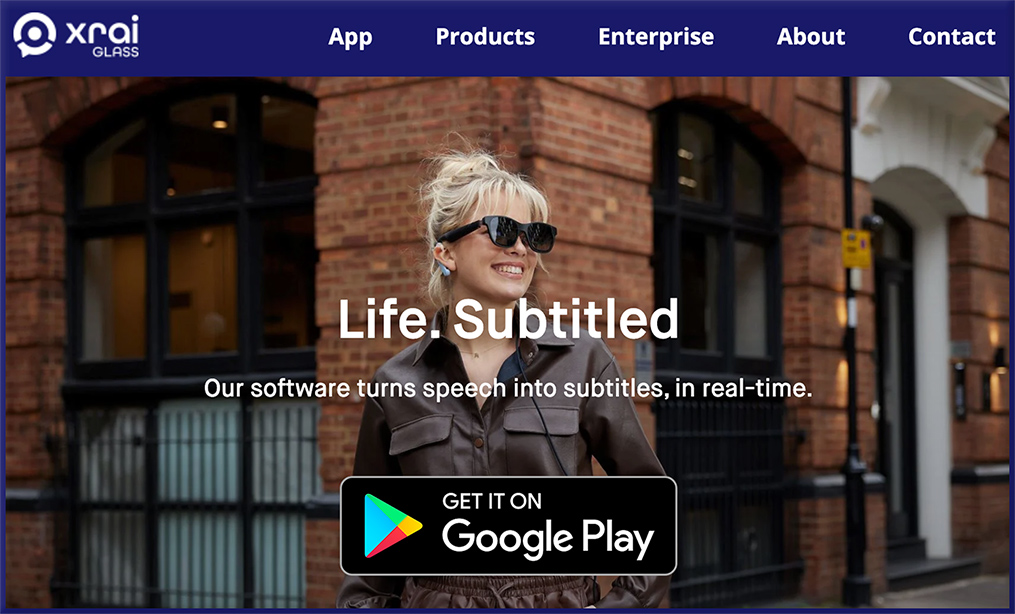
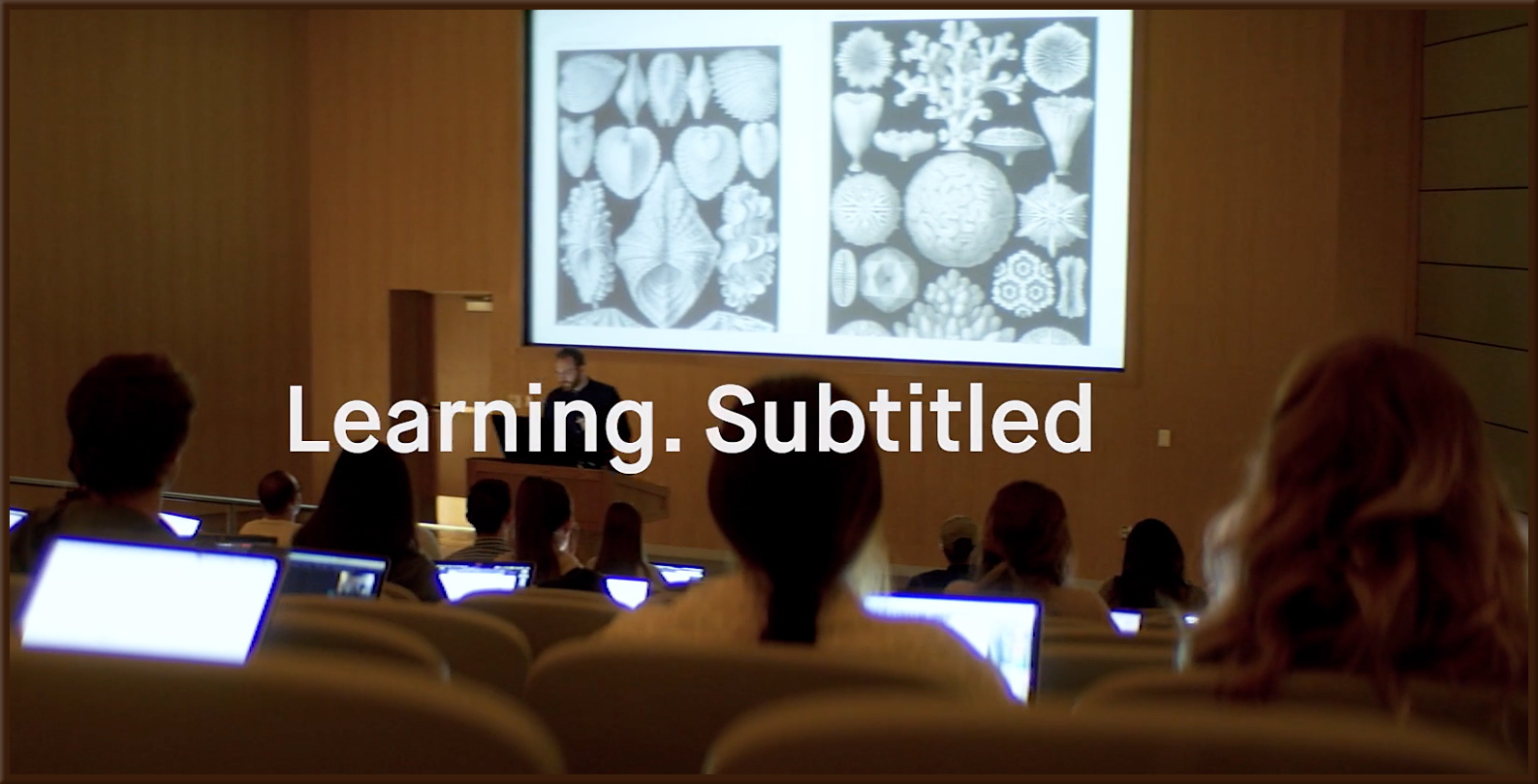
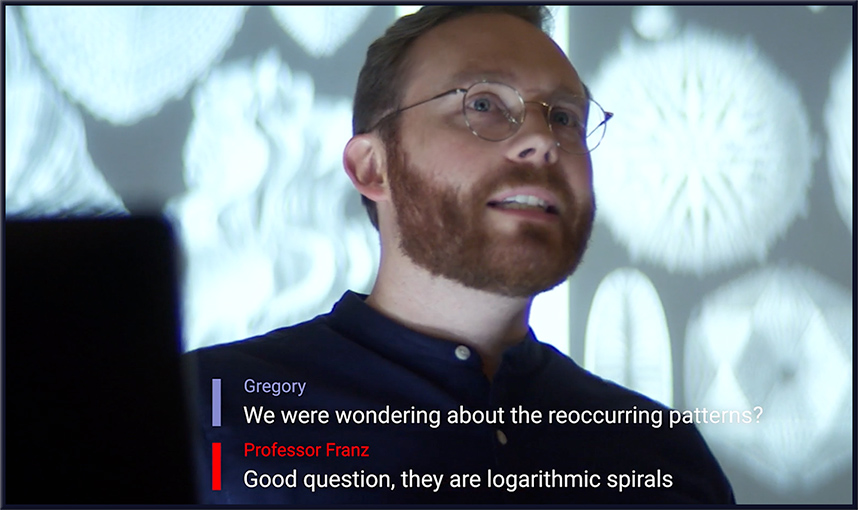
xrai.glass


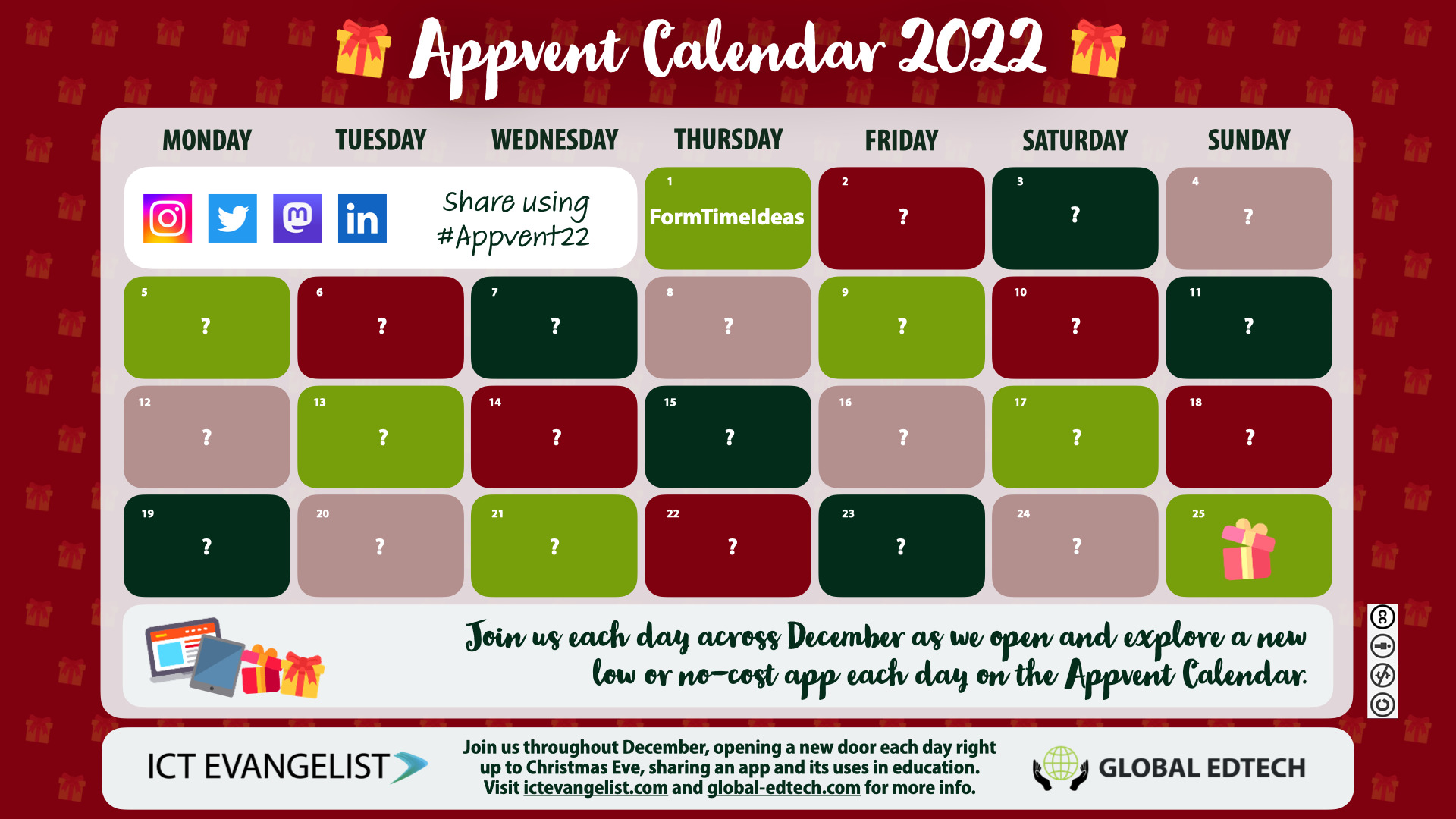
Welcome To Day One Of #Appvent22 — from ictevangelist.com by Mark Anderson

What is Book Creator? Tips & Tricks — from techlearning.com by Erik Ofgang
Book Creator is a free tool that allows users to create multimedia ebooks

Excerpt:

Book Creator is a free education tool designed to enable students to engage with class material in a direct and active way by creating multimedia ebooks with a variety of functions.

 Available as a web app on Chromebooks, laptops, and tablets, and also as a standalone iPad app, Book Creator is a digital resource that helps students explore their creative sides while learning.

The tool lends itself well to active learning and collaborative projects of all kinds, and is appropriate for various subjects and age groups.


MADE Podcast on Branching Scenarios — from christytuckerlearning.com by Christy Tucker
My interview for the MADE podcast on branching scenarios: when to use them, challenges, tools, planning, and getting started.

Excerpt:

MADE is the Media and Design in Education team for the University of Toronto. Inga Breede from this educational technology group recently interviewed me for their podcast. We talked about scenario-based learning and specifically about branching scenarios.

What we discussed
We covered several topics in our 20-minute conversation.

  • When should branching scenarios be used in learning experiences?
  • What are some of the challenges and limitations that designers typically come across when they’re building a branching scenario?
  • What are the key components to consider in the planning stage?
  • What are my favorite tools to use to build branching scenarios?
  • For learning designers who are interested in scenario building, where can they begin their journey of discovery?
 
© 2025 | Daniel Christian