14 Technology Predictions for Higher Education in 2023 — from campustechnology.com by Rhea Kelly How will technologies and practices like artificial intelligence, predictive analytics, digital transformation, and change management impact colleges and universities this year? Here’s what the experts told us.
Excerpt:
In an open call on LinkedIn, we asked higher education and ed tech industry leaders to forecast the most important trends to watch in the coming year. Their responses reflect both the challenges on the horizon — persistent cyber attacks, the disruptive force of emerging technologies, failures in project management — as well as the opportunities that technology brings to better serve students and support the institutional mission. Here are 14 predictions to help steer your technology efforts in 2023.
The use of digital tools that help to connect students with real-world learning opportunities will expand global awareness and transform the learning experience.
Here are 12 digital tools to consider using in 2023.
StoryJumper is a digital storytelling platform that gives students so many ways to share their learning. Students can choose different characters, props, and background scenes and even add audio to the books that they create. StoryJumper helps educators promote student choice, and spark curiosity and creativity as they design their stories. There are also libraries full of books to explore. Books can also be shared with classmates and families.
Here’s the list of sources: https://t.co/fJd4rh8kLy. The larger resource area at https://t.co/bN7CReGIEC has sample ChatGPT essays, strategies for mitigating harm, and questions for teachers to ask as well as a listserv.
— Anna Mills, amills@mastodon.oeru.org, she/her (@EnglishOER) January 11, 2023
Microsoft is reportedly eyeing a $10 billion investment in OpenAI, the startup that created the viral chatbot ChatGPT, and is planning to integrate it into Office products and Bing search.The tech giant has already invested at least $1 billion into OpenAI. Some of these features might be rolling out as early as March, according to The Information.
This is a big deal. If successful, it will bring powerful AI tools to the masses.So what would ChatGPT-powered Microsoft products look like? We asked Microsoft and OpenAI. Neither was willing to answer our questions on how they plan to integrate AI-powered products into Microsoft’s tools, even though work must be well underway to do so. However, we do know enough to make some informed, intelligent guesses. Hint: it’s probably good news if, like me, you find creating PowerPoint presentations and answering emails boring.
I have maintained for several years, including a book ‘AI for Learning’, that AI is the technology of the age and will change everything. This is unfolding as we speak but it is interesting to ask who the winners are likely to be.
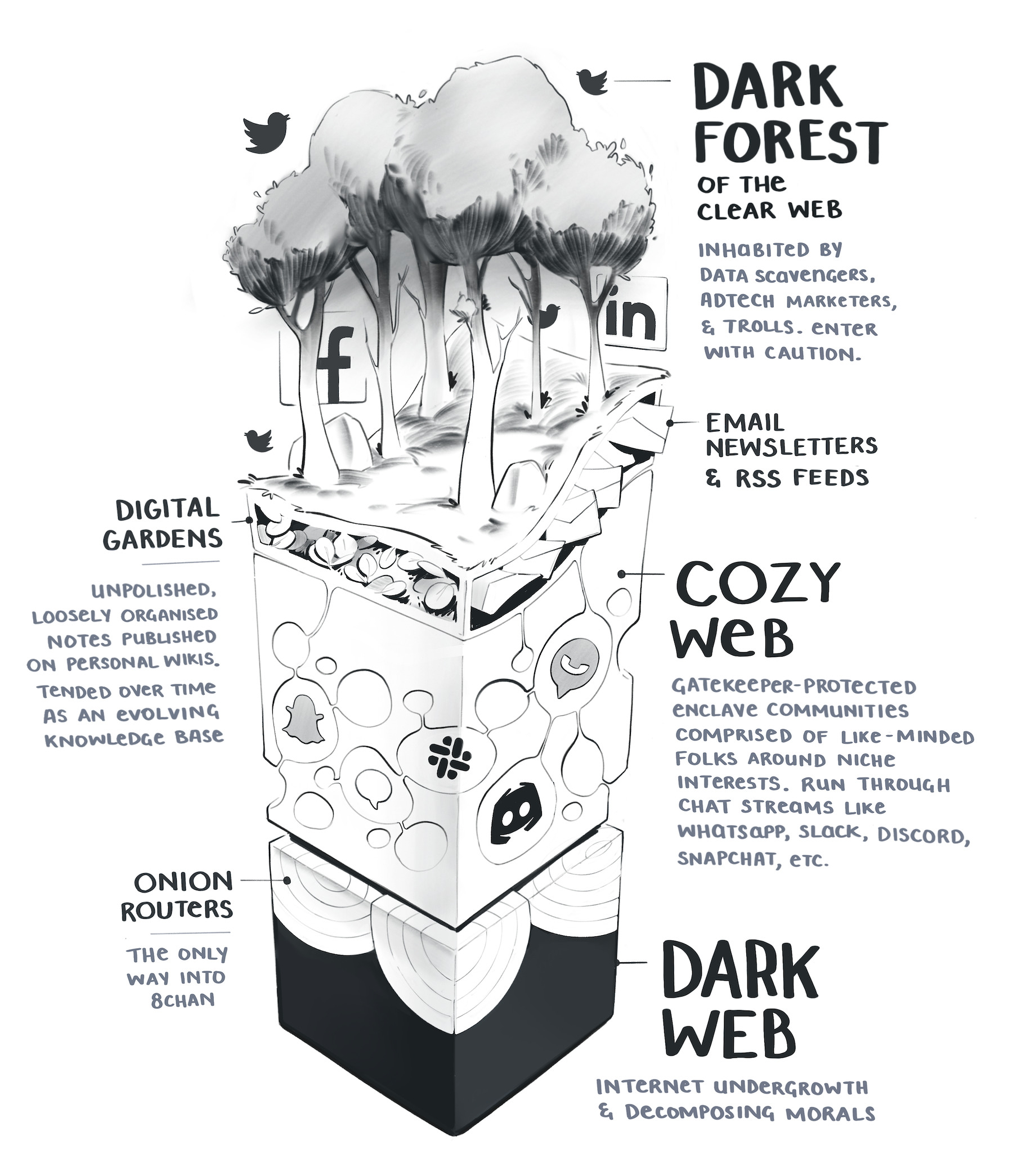
People who have heard of GPT-3 / ChatGPT, and are vaguely following the advances in machine learning, large language models, and image generators. Also people who care about making the web a flourishing social and intellectual space.
That dark forest is about to expand. Large Language Models (LLMs) that can instantly generate coherent swaths of human-like text have just joined the party.
It is in this uncertain climate that Hassabis agrees to a rare interview, to issue a stark warning about his growing concerns. “I would advocate not moving fast and breaking things.”
…
“When it comes to very powerful technologies—and obviously AI is going to be one of the most powerful ever—we need to be careful,” he says. “Not everybody is thinking about those things. It’s like experimentalists, many of whom don’t realize they’re holding dangerous material.” Worse still, Hassabis points out, we are the guinea pigs.
Demis Hassabis
Excerpt (emphasis DSC):
Hassabis says these efforts are just the beginning. He and his colleagues have been working toward a much grander ambition: creating artificial general intelligence, or AGI, by building machines that can think, learn, and be set to solve humanity’s toughest problems.Today’s AI is narrow, brittle, and often not very intelligent at all. But AGI, Hassabis believes, will be an “epoch-defining” technology—like the harnessing of electricity—that will change the very fabric of human life. If he’s right, it could earn him a place in history that would relegate the namesakes of his meeting rooms to mere footnotes.
But with AI’s promise also comes peril.In recent months, researchers building an AI system to design new drugs revealed that their tool could be easily repurposed to make deadly new chemicals. A separate AI model trained to spew out toxic hate speech went viral, exemplifying the risk to vulnerable communities online. And inside AI labs around the world, policy experts were grappling with near-term questions like what to do when an AI has the potential to be commandeered by rogue states to mount widespread hacking campaigns or infer state-level nuclear secrets.
Headteachers and university lecturers have expressed concerns that ChatGPT, which can provide convincing human-sounding answers to exam questions, could spark a wave of cheating in homework and exam coursework.
Now, the bot’s makers, San Francisco-based OpenAI, are trying to counter the risk by “watermarking” the bot’s output and making plagiarism easier to spot.
Students need now, more than ever, to understand how to navigate a world in which artificial intelligence is increasingly woven into everyday life. It’s a world that they, ultimately, will shape.
We hail from two professional fields that have an outsize interest in this debate. Joanne is a veteran journalist and editor deeply concerned about the potential for plagiarism and misinformation. Rebecca is a public health expert focused on artificial intelligence, who champions equitable adoption of new technologies.
We are also mother and daughter. Our dinner-table conversations have become a microcosm of the argument around ChatGPT, weighing its very real dangers against its equally real promise. Yet we both firmly believe that a blanket ban is a missed opportunity.
ChatGPT: Threat or Menace? — from insidehighered.com by Steven Mintz Are fears about generative AI warranted?
The rapid pace of change is driven by a “perfect storm” of factors, including the falling cost of computing power, the rise of data-driven decision-making, and the increasing availability of new technologies. “The speed of current breakthroughs has no historical precedent,”concluded Andrew Doxsey, co-founder of Libra Incentix, in an interview. “Unlike previous technological revolutions, the Fourth Industrial Revolution is evolving exponentially rather than linearly. Furthermore, it disrupts almost every industry worldwide.”
An updated version of the AI chatbot ChatGPT was recently released to the public.
I got the chatbot to write cover letters for real jobs and asked hiring managers what they thought.
The managers said they would’ve given me a call but that the letters lacked personality.
.
I mentor a young lad with poor literacy skills who is starting a landscaping business. He struggles to communicate with clients in a professional manner.
I created a GPT3-powered Gmail account to which he sends a message. It responds with the text to send to the client. pic.twitter.com/nlFX9Yx6wR
AI to help realize your dream career The Unschooler mentor helps you understand what you need to do to achieve your dream career. You can select one of six broad areas of expertise: science, people, tech, info, art, and business. The platform will then ask questions related to your future career.
It also has some other useful features. Unschooler keeps track of your skills by adding them to a skill map that’s unique to you.You can also ask it to expand on the information it has already given you. This is done by selecting the text and clicking one of four buttons: more, example, how to, explain, and a question mark icon that defines the selected text. There’s also a mobile app that analyzes text from pictures and explains tasks or concepts.
From DSC: This integration of AI is part of the vision that I’ve been tracking at:
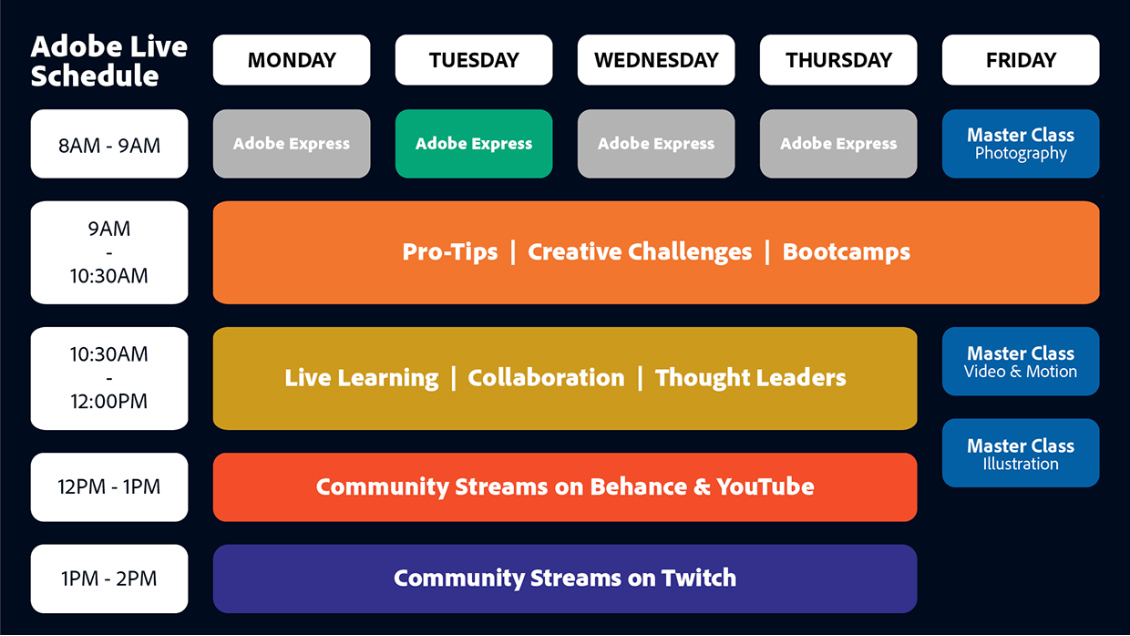
Join us in the morning for Adobe Express streams — If you are an aspiring creative, small business owner, or looking to kickstart a side hustle – these live streams are for you!
Then level up your skills with Creative Challenges, Bootcamps, and Pro-Tips. Get inspired by artists from all over the world during our live learning events. Tune in to connect directly with your instructors and other creatives just like you.
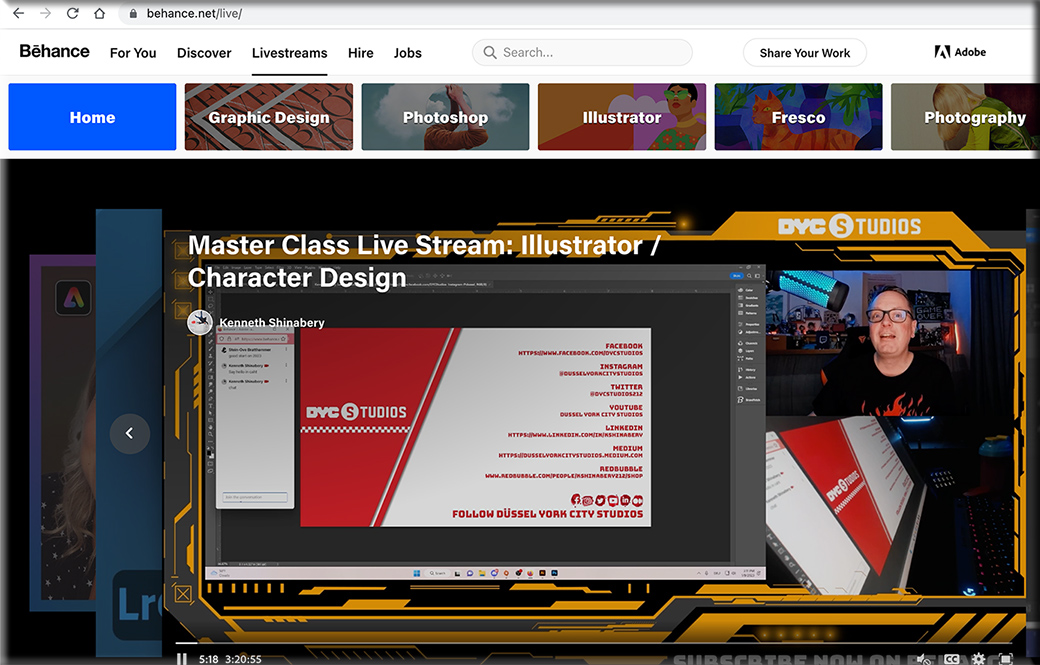
In the afternoon, join creatives in their own Community Streams! Laugh and create along side other Adobe Live Community members on Behance, Youtube and Twitch!
For weekly updates on the Adobe Live schedule + insight into upcoming guests and content, join our discord communities!
CES is more than just a neon-drenched show-and-tell session for the world’s biggest tech manufacturers. More and more, it’s also a place where companies showcase innovations that could truly make the world a better place — and at CES 2023, this type of tech was on full display. We saw everything from accessibility-minded PS5 controllers to pedal-powered smart desks. But of all the amazing innovations on display this year, these three impressed us the most…
From DSC: A few items re: ChatGPT — with some items pro-chat and other items against the use of ChatGPT (or at least to limit its use).
How About We Put Learning at the Center? — from insidehighered.com by John Warner The ongoing freak-out about ChatGPT sent me back to considering the fundamentals.
Excerpt:
So, when people express concern that students will use ChatGPT to complete their assignments, I understand the concern, but what I don’t understand is why this concern is so often channeled into discussions about how to police student behavior, rather than using this as an opportunity to exam the kind of work we actually ask students (and faculty) to do around learning.
If ChatGPT can do the things we ask students to do in order to demonstrate learning, it seems possible to me that those things should’ve been questioned a long time ago. It’s why I continue to believe this technology is an opportunity for reinvention, precisely because it is a threat to the status quo.
Top AI conference bans use of ChatGPT and AI language tools to write academic papers — from theverge.com by James Vincent; with thanks to Anna Mills for this resource AI tools can be used to ‘edit’ and ‘polish’ authors’ work, say the conference organizers, but text ‘produced entirely’ by AI is not allowed. This raises the question: where do you draw the line between editing and writing?
Excerpt:
The International Conference on Machine Learning (ICML) announced the policy earlier this week, stating, “Papers that include text generated from a large-scale language model (LLM) such as ChatGPT are prohibited unless the produced text is presented as a part of the paper’s experimental analysis.” The news sparked widespread discussion on social media, with AI academics and researchers both defending and criticizing the policy. The conference’s organizers responded by publishing a longer statement explaining their thinking. (The ICML responded to requests from The Verge for comment by directing us to this same statement.)
I am protective of my organic writing process, but when it’s time to edit, ChatGPT sometimes helps me notice which sentences aren’t quite put together as they should be. When I ask it why it suggested a revision, it sometimes describes a word choice nuance I hadn’t thought of.
— Anna Mills, amills@mastodon.oeru.org, she/her (@EnglishOER) January 5, 2023
Instead, I want to discuss the opportunity provided by AI, because it can help us teach in new ways. The very things that make AI scary for educators — its tedency to make up facts, its lack of nuance, and its ability to make excellent student essays — can be used to make education better.
This isn’t for some future theoretical version of AI. You can create assignments, right now, using ChatGPT, that we will help stretch students in knew ways. We wrote a paper with the instructions. You can read it here, but I also want to summarize our suggestions. These are obviously not the only ways to use AI to educate, but they solve some of the hardest problems in education, and you can start experimenting with them right now.
New York City students and teachers can no longer access ChatGPT — the new artificial intelligence-powered chatbot that generates stunningly cogent and lifelike writing — on education department devices or internet networks, agency officials confirmed Tuesday.
SINGAPORE – Teachers in Singapore say they will likely have to move from assignments requiring regurgitation to those that require greater critical thinking, to stay ahead in the fight against plagiarism.
This comes on the back of the rise of ChatGPT, an intelligent chatbot that is able to spin essays and solve mathematical equations in seconds.
ChatGPT Is Not Ready to Teach Geometry (Yet)— from educationnext.org by Paul T. von Hippel The viral chatbot is often wrong, but never in doubt. Educators need to tread carefully.
Excerpt:
Can ChatGPT provide feedback and answer questions about math in a more tailored and natural way? The answer, for the time being, is no. Although ChatGPT can talk about math superficially, it doesn’t “understand” math with real depth. It cannot correct mathematical misconceptions, it often introduces misconceptions of its own; and it sometimes makes inexplicable mathematical errors that a basic spreadsheet or hand calculator wouldn’t make.
Elsewhere, a group of professors is compiling examples of how instructors are using text generation technologies in their assignments. The results will be published in an open-access collection. You can find out more about the project on this site, Teaching with Text Generation Technologies.
If you’re rather listen to a discussion, here are a couple of webinars:
It’s fascinating to see what GPT-3 can do and the possibilities are in some cases nothing short of mind blowing. But before you plan your early 2023 implementation, you may want to exercise a bit of caution. When it comes to using AI in a production environment – i.e., serving real customers with real expectations – you need solutions that deliver reliable results that you can explain to your clients … and potentially to a lot of other stakeholders, including courts and regulatory authorities.
Maybe in 2023 you can also try this line: ‘Dear client / court / regulator, we know it’s hard to believe, but a lot of the time you can rely on what we tell you.’
NOTE: Artificial Lawyer and its Founder are now on sabbatical during 2023, returning in 2024.
From DSC: My guess is that they are pursuing some serious, new opportunities involving using AI within the legaltech realm. Time will tell.
Unhook is a great browser extension for Chrome and Firefox that strips away YouTube’s unwanted elements. Just click the extension icon, and you’ll see a menu of features to remove from the website, including the recommendations sidebar, ending screen cards, autoplay, and even comments.
Over the holiday season, lots of people play games such as Scrabble, cards or crossword puzzles. I decided to play with ChatGPT by testing it in areas where I consider myself an expert. (For more about ChatGPT, go to Broom, 2022)
I will first of all show you the responses I got from ChatGPT, then I will discuss the results, comparing them to what I wrote about these topics in Teaching in a Digital Age.
Example questions that Tony asked (emphasis DSC):
What is the difference between synchronous and asynchronous learning? Give references.
What are the limitations of teaching chemistry online? Give references
What are the affordances of video in teaching? Give references
From DSC:
Check out the items below. As with most technologies, there are likely going to be plusses & minuses regarding the use of AI in digital video, communications, arts, and music.
DC: What?!? Wow. I should have seen this coming. I can see positives & negatives here. Virtual meetings could become a bit more creative/fun. But apps could be a bit scarier in some instances, such as with #telelegal.
In 2023, we are going to a huge increase in content creation generated by AI avatars. The use cases the infinite – from demos and tutorials to billboards and even ads.
? Here are 6 companies that are currently defining the future of content creation:
GPT Takes the Bar Exam — from papers.ssrn.com by Michael James Bommarito and Daniel Martin Katz; with thanks to Gabe Teninbaum for his tweet on this
Excerpt from the Abstract (emphasis DSC):
While our ability to interpret these results is limited by nascent scientific understanding of LLMs and the proprietary nature of GPT, we believe that these results strongly suggest that an LLM will pass the MBE component of the Bar Exam in the near future.