Virtual reality homebuying is on the horizon — from latimes.com by Phillip Molnar

Excerpt:

Would you buy a home without ever stepping foot in it?

Thanks to virtual reality, prospective homebuyers can check out for-sale properties by viewing them through a headset — exploring faraway kitchens and bathrooms without ever leaving the couch.

“VR is the next natural evolution in terms of marketing real estate,” said David Scott Van Woert, account director at Transparent House, which has developed a virtual reality mobile app for home builders. “A lot of these companies are very tech-forward and always looking for, not only an edge over competition, but to stay current.”


From DSC:
For those of us working on creating and renovating learning spaces, consider producing VR-based pieces for your donors to check out. It could really help paint the picture — the vision — of what your selected space will look like once it’s done. Very compelling visuals — and a very compelling experience.


Part 2: Virtual Reality Headsets: Which One Is For You? — from 900lbs.com


steven_vr


Excerpt:

It’s 2017, a new year, and another tremendous growth opportunity for VR and AR. With advancements in eye-tracking technology,  inside-out camera-based positional tracking, the implementation of add-on wireless capabilities for tethered headsets, and a push for lower price points, just like the preceding year, 2017 will continue to be a time of growth and technological innovation for virtual and augmented reality headsets.

As mentioned before, VR/AR headsets are still in the introduction stage of the product cycle while steadily creeping into its second iteration as investment in  R&D is being poured into the industry. Here at 900lbs, we’re researching all we can to stay on frontier of the emerging market, making sure we’re using the greatest, if not latest, hardware and software for our projects.

We compiled a list of the coolest, mind-blowing headsets last year (Part 1), but much has changed and will change. Here’s an updated list of the coolest (still mind-blowing) headsets available or soon-to-be-available on the market now. Note: we included some of the headsets we covered in our original post.


12 augmented reality apps students can use today — from ecampusnews.com by Laura Ascione
As augmented reality’s classroom potential grows, apps are becoming more relevant and targeted

Excerpt:

Augmented reality–a technology that uses a trigger image to superimpose digital content over a user’s view of the real world–is growing in popularity and accessibility, and it holds a wealth of potential for education.
…
“If you can captivate those kids when you introduce the lesson, you know they’re going to pay attention throughout the lesson,” Peterson said. “This is a great way to grab kids and get them involved.”


How VR is Helping the Broken Prison System — from vudream.com by Mark Metry

Excerpt:

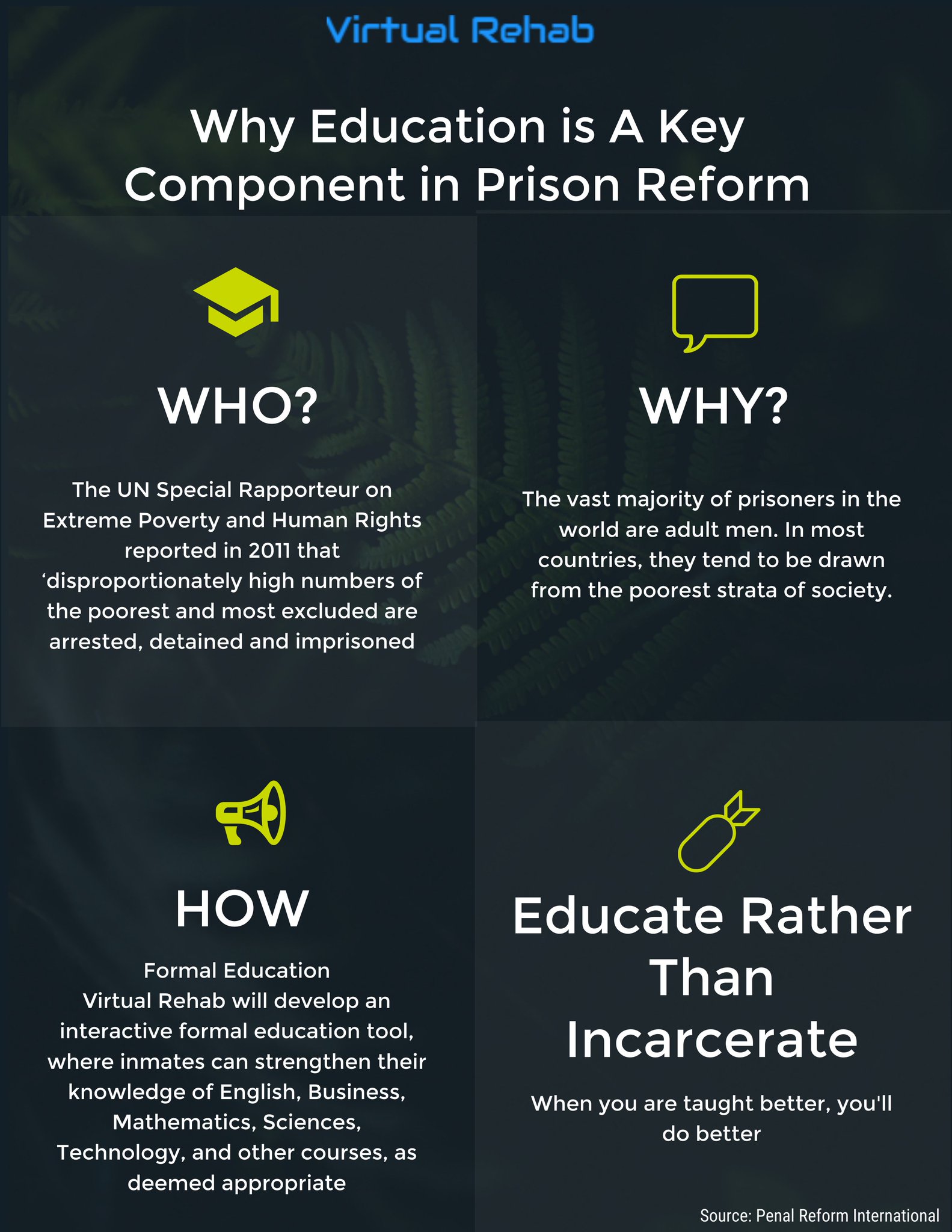
Virtual Rehab focuses on 4 areas:

  1. Formal Education
    Virtual Rehab will develop an interactive formal education tool, where inmates can strengthen their knowledge of English, Business, Mathematics, Sciences, Technology, and other courses, as deemed appropriate
  2. Vocational Job Training
    Leveraging Virtual Rehab’s interactive tool, inmates will be able to acquire new vocational job training skills including car mechanic, plumbing, welding, carpentry, and others, as deemed appropriate
  3. Psychological Rehabilitation
    Virtual Rehab’s interactive tool will assist in treating inmates psychological challenges including mental & emotional disorders, co-existing disorder, intermittent explosive disorder, and others, as deemed appropriate
  4. Correctional Services Rehabilitation
    The real-life scenarios and interactivity of Virtual Rehab’s tool will allow inmates to undergo correctional services rehabilitation across sex offending, family violence, alcoholism, and others, as deemed appropriate.


Outline of a VR History App — from medium.com by Robson Beaudry


Companies Creating AR Smart Glasses — from thearea.org


Excerpt from Amazon fumbles earnings amidst high expectations (emphasis DSC):

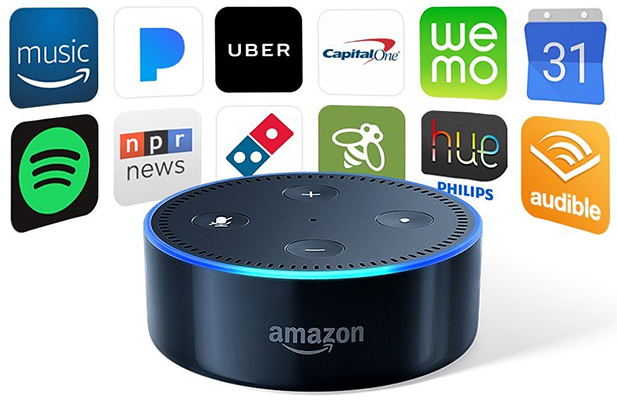
Aside from AWS, Amazon Alexa-enabled devices were the top-selling products across all categories on Amazon.com throughout the holiday season and the company is reporting that Echo family sales are up over 9x compared to last season. Amazon aims to brand Alexa as a platform, something that has helped the product to gain capabilities faster than its competition. Developers and corporates released 4,000 new skills for the voice assistant in just the last quarter.


Alexa got 4,000 new skills in just the last quarter!

From DSC:
What are the teaching & learning ramifications of this?

By the way, I’m not saying for professors, teachers, & trainers to run for the hills (i.e., that they’ll be replaced by AI-based tools). But rather, I would like to suggest that we not only put this type of thing on our radars, but we should begin to actively experiment with such technologies to see if they might be able to help us do some heavy lifting for students learning about new topics.


Virtual Reality for architecture: a beginner’s guide — from aecmag.com
With the availability of affordable headsets like the Oculus Rift and HTC Vive, VR is now within reach of AEC firms of all sizes. Greg Corke explores this brave new virtual world

Excerpt:

It’s an all too familiar scenario: an architect enters a building for the first time and the space doesn’t quite match the vision of his or her design. However beautiful a static rendered image may be, traditional design visualisation can only convey so much, even when the scene is rendered at eyelevel with furniture for scale.

At Gensler, design director and principal Hao Ko knows the feeling. “You still have to make a translation in your mind, in terms of how tall this space is going to feel,” he says. “More often than not, I’ll go to my own projects and I’ll be like, ‘Wow! That’s a lot bigger than I expected.’ You still have those moments.”

This, he says, is where virtual reality, or VR, comes in – and others in the industry are starting to reach the same conclusion.

VR head-mounted displays (HMDs) such as the Oculus Rift and HTC Vive have the power to change the way architects design and communicate buildings before they are built. The wearer is instantly immersed in a true three dimensional environment that gives an incredible sense of scale, depth and spatial awareness that simply cannot be matched by traditional renders, animations or physical-scale models.


Augmented and Virtual Reality for Architecture, Engineering and Design — from brainxchange.events by Emily Friedman

Excerpt:

What is the potential for Augmented Reality and Virtual Reality in the AEC industry? How might viewing virtual objects integrated into one’s physical environment or immersing oneself into a virtual world benefit the AEC sector? In this article, we will focus specifically on the use of augmented and virtual reality technology on head-mounted displays by architects, engineers and designers in the building design process.


Enscape – Realtime rendering plugin for Revit


Architectural Visualization – Virtual Reality VR Demo


Addendum on 2/16/17:

Step Inside a Virtual Building of the Future
Architects are embracing virtual reality and the complex designs they can create there


“The world’s first smart #AugmentedReality for the Connected Home has arrived.  — from thunderclap.it

From DSC:
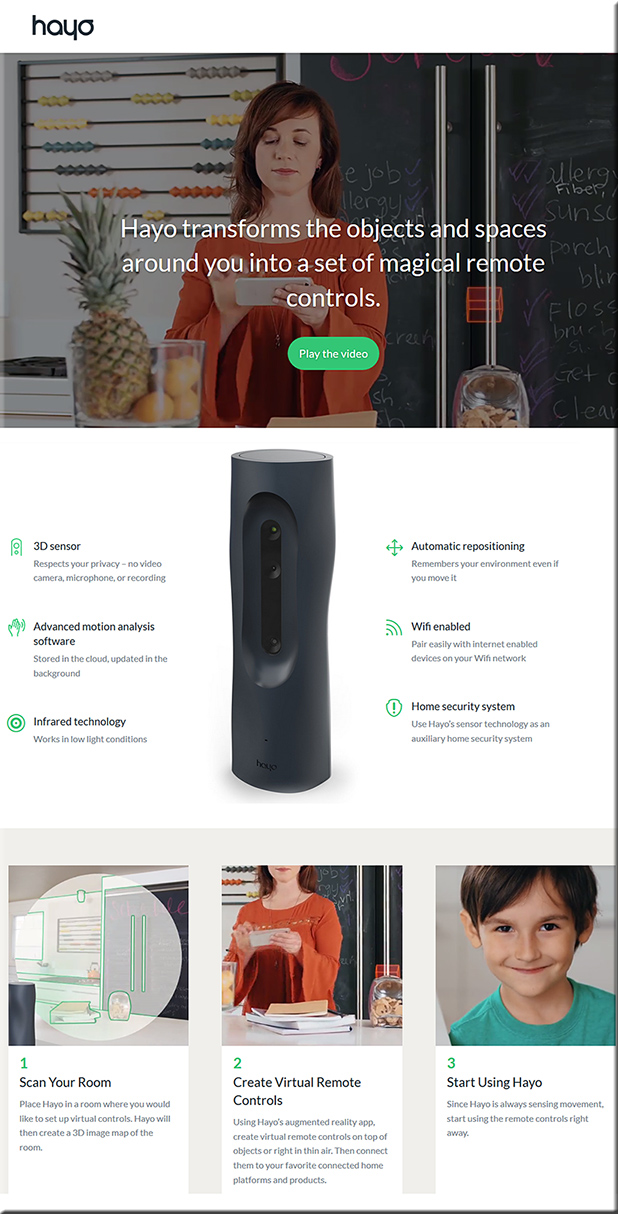
Note this new type of Human Computer Interaction (HCI). I think that we’ll likely be seeing much more of this sort of thing.


Excerpt (emphasis DSC):

How is Hayo different?
AR that connects the magical and the functional:

Unlike most AR integrations, Hayo removes the screens from smarthome use and transforms the objects and spaces around you into a set of virtual remote controls. Hayo empowers you to create experiences that have previously been limited by the technology, but now are only limited by your imagination.

Screenless IoT:
The best interface is no interface at all. Aside from the one-time setup Hayo does not use any screens. Your real-life surfaces become the interface and you, the user, become the controls. Virtual remote controls can be placed wherever you want for whatever you need by simply using your Hayo device to take a 3D scan of your space.

Smarter AR experience:
Hayo anticipates your unique context, passive motion and gestures to create useful and more unique controls for the connected home. The Hayo system learns your behaviors and uses its AI to help meet your needs.


Also see:


Apple iPhone 8 To Get 3D-Sensing Tech For Augmented-Reality Apps — from investors.com by Patrick Seitz

Excerpt:

Apple’s (AAPL) upcoming iPhone 8 smartphone will include a 3D-sensing module to enable augmented-reality applications, Rosenblatt Securities analyst Jun Zhang said Wednesday. Apple has included the 3D-sensing module in all three current prototypes of the iPhone 8, which have screen sizes of 4.7, 5.1 and 5.5 inches, he said. “We believe Apple’s 3D sensing might provide a better user experience with more applications,” Zhang said in a research report. “So far, we think 3D sensing aims to provide an improved smartphone experience with a VR/AR environment.”

Apple's iPhone 8 is expected to have 3D-sensing tech like Lenovo’s Phab 2 Pro smartphone. (Lenovo)Apple’s iPhone 8 is expected to have 3D-sensing tech like Lenovo’s Phab 2 Pro smartphone. (Lenovo)


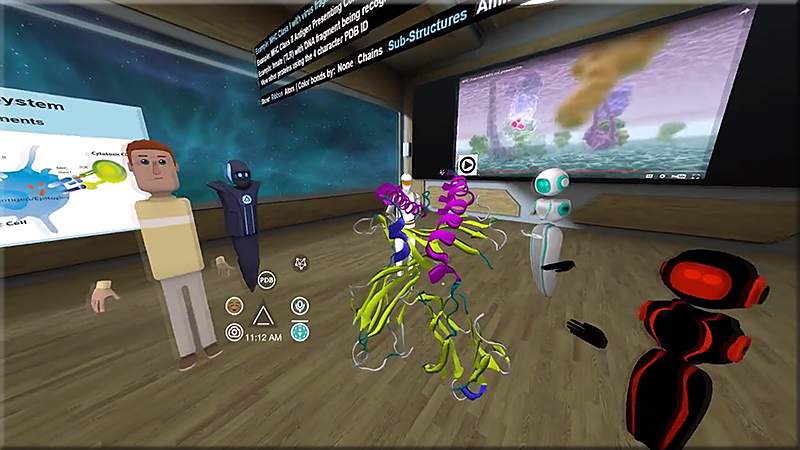
AltspaceVR Education Overview


10 Prominent Developers Detail Their 2017 Predictions for The VR/AR Industry — from uploadvr.com by David Jagneaux

Excerpt:

As we look forward to 2017 then, we’ve reached out to a bunch of industry experts and insiders to get their views on where we’re headed over the next 12 months.

2016 provided hints of where Facebook, HTC, Sony, Google, and more will take their headsets in the near future, but where does the industry’s best and brightest think we’ll end up this time next year? With CES, the year’s first major event, now in the books, let’s hear from some those that work with VR itself about what happens next.

We asked all of these developers the same four questions:

1) What do you think will happen to the VR/AR market in 2017?
2) What NEEDS to happen to the VR AR market in 2017?
3) What will be the big breakthroughs and innovations of 2017?
4) Will 2017 finally be the “year of VR?”


MEL Lab’s Virtual Reality Chemistry Class — from thereisonlyr.com by Grant Greene
An immersive learning startup brings novel experiences to science education.


The MEL app turned my iPhone 6 into a virtual microscope, letting me walk through 360 degree, 3-D representations of the molecules featured in the experiment kits.


Labster releases ‘World of Science’ Simulation on Google Daydream — from labster.com by Marian Reed

Excerpt:

Labster is exploring new platforms by which students can access its laboratory simulations and is pleased to announce the release of its first Google Daydream-compatible virtual reality (VR) simulation, ‘Labster: World of Science’. This new simulation, modeled on Labster’s original ‘Lab Safety’ virtual lab, continues to incorporate scientific learning alongside of a specific context, enriched by story-telling elements. The use of the Google VR platform has enabled Labster to fully immerse the student, or science enthusiast, in a wet lab that can easily be navigated with intuitive usage of Daydream’s handheld controller.


The Inside Story of Google’s Daydream, Where VR Feels Like Home — from wired.com by David Pierce

Excerpt:

Jessica Brillhart, Google’s principle VR filmmaker, has taken to calling people “visitors” rather than “viewers,” as a way of reminding herself that in VR, people aren’t watching what you’ve created. They’re living it. Which changes things.


Welcoming more devices to the Daydream-ready family — from blog.google.com by Amit Singh

Excerpt:

In November, we launched Daydream with the goal of bringing high quality, mobile VR to everyone. With the Daydream View headset and controller, and a Daydream-ready phone like the Pixel or Moto Z, you can explore new worlds, kick back in your personal VR cinema and play games that put you in the center of the action.

Daydream-ready phones are built for VR with high-resolution displays, ultra smooth graphics, and high-fidelity sensors for precise head tracking. To give you even more choices to enjoy Daydream, today we’re welcoming new devices that will soon join the Daydream-ready family.


Kessler Foundation awards virtual reality job interview program — from haptic.al by Deniz Ergürel

Excerpt:

Kessler Foundation, one of the largest public charities in the United States, is awarding a virtual reality training project to support high school students with disabilities. The foundation is providing a two-year, $485,000 Signature Employment Grant to the University of Michigan in Ann Arbor, to launch the Virtual Reality Job Interview Training program. Kessler Foundation says, the VR program will allow for highly personalized role-play, with precise feedback and coaching that may be repeated as often as desired without fear or embarrassment.


Deep-water safety training goes virtual — from shell.com by Soh Chin Ong
How a visit to a shopping centre led to the use of virtual reality safety training for a new oil production project, Malikai, in the deep waters off Sabah in Malaysia.


Per X Media Lab:

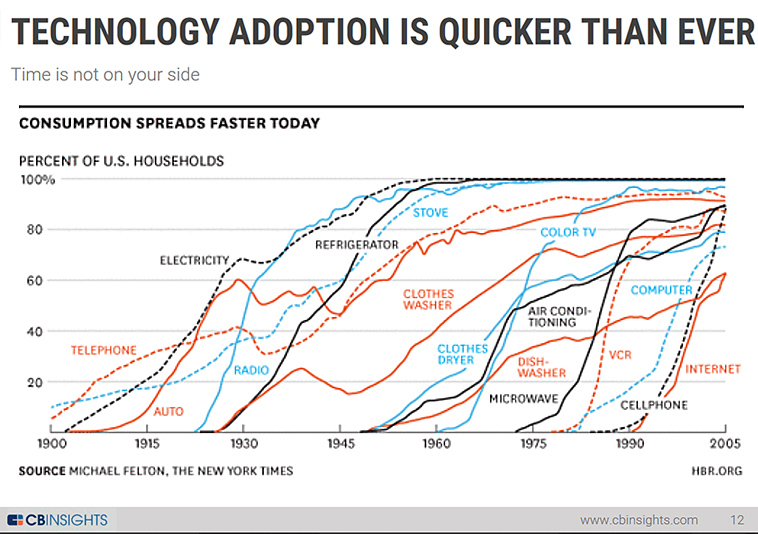
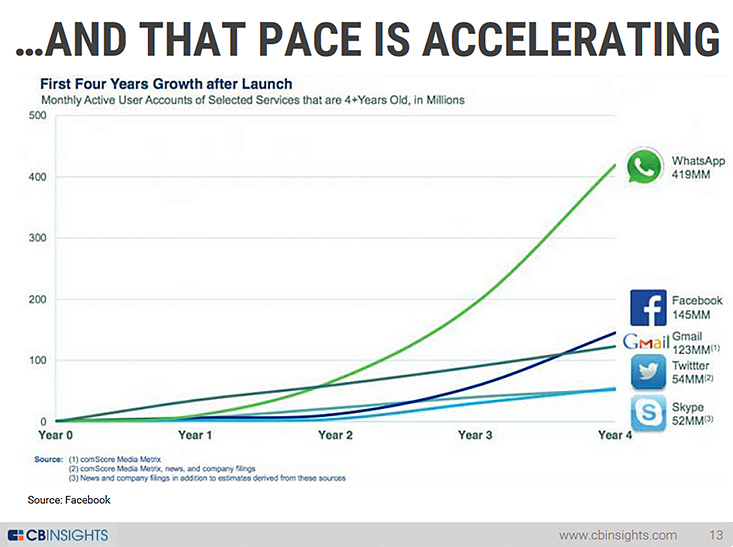
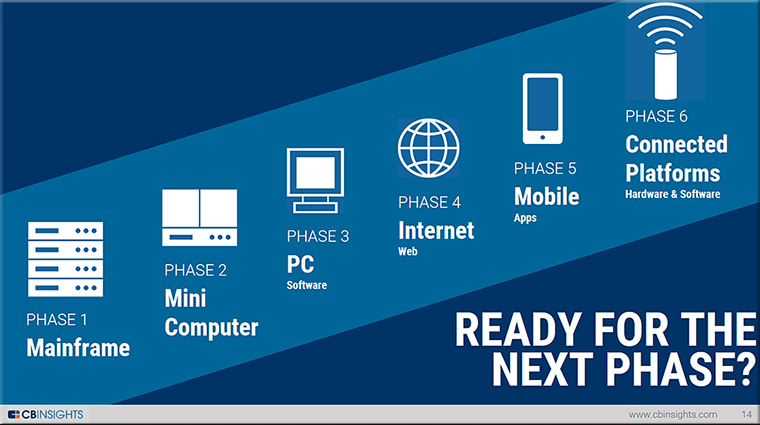
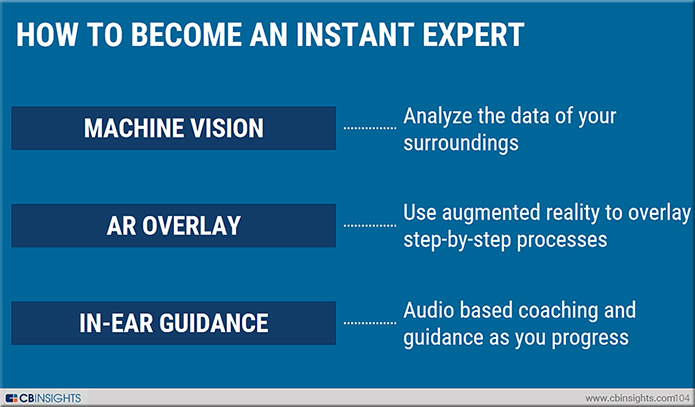
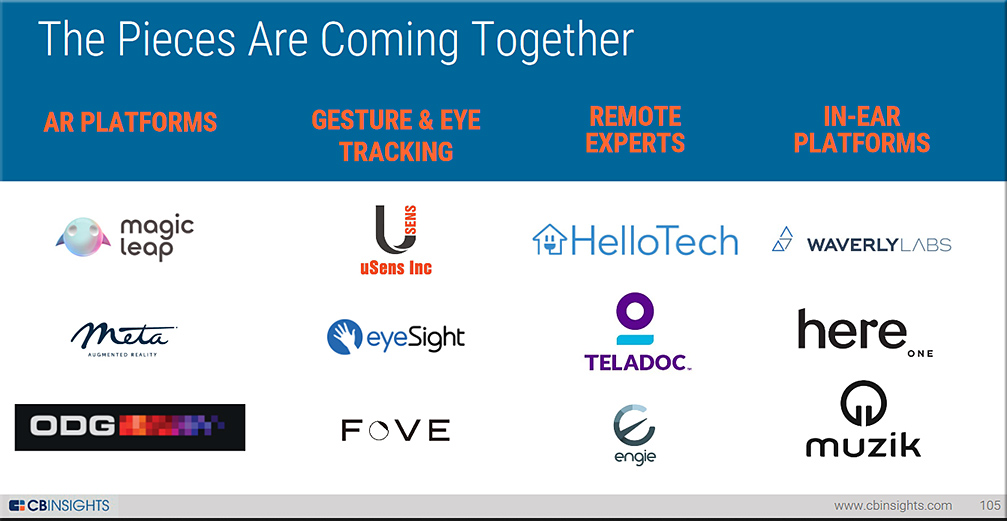
The authoritative CB Insights lists imminent Future Tech Trends: customized babies; personalized foods; robotic companions; 3D printed housing; solar roads; ephemeral retail; enhanced workers; lab-engineered luxury; botroots movements; microbe-made chemicals; neuro-prosthetics; instant expertise; AI ghosts. You can download the whole outstanding report here (125 pgs).


From DSC:
Though I’m generally pro-technology, there are several items in here which support the need for all members of society to be informed and have some input into if and how these technologies should be used. Prime example: Customized babies.  The report discusses the genetic modification of babies: “In the future, we will choose the traits for our babies.” Veeeeery slippery ground here.


Below are some example screenshots:


Also see:

CBInsights — Innovation Summit

  • The New User Interface: The Challenge and Opportunities that Chatbots, Voice Interfaces and Smart Devices Present
  • Fusing the physical, digital and biological: AI’s transformation of healthcare
  • How predictive algorithms and AI will rule financial services
  • Autonomous Everything: How Connected Vehicles Will Change Mobility and Which Companies Will Own this Future
  • The Next Industrial Age: The New Revenue Sources that the Industrial Internet of Things Unlocks
  • The AI-100: 100 Artificial Intelligence Startups That You Better Know
  • Autonomous Everything: How Connected Vehicles Will Change Mobility and Which Companies Will Own this Future


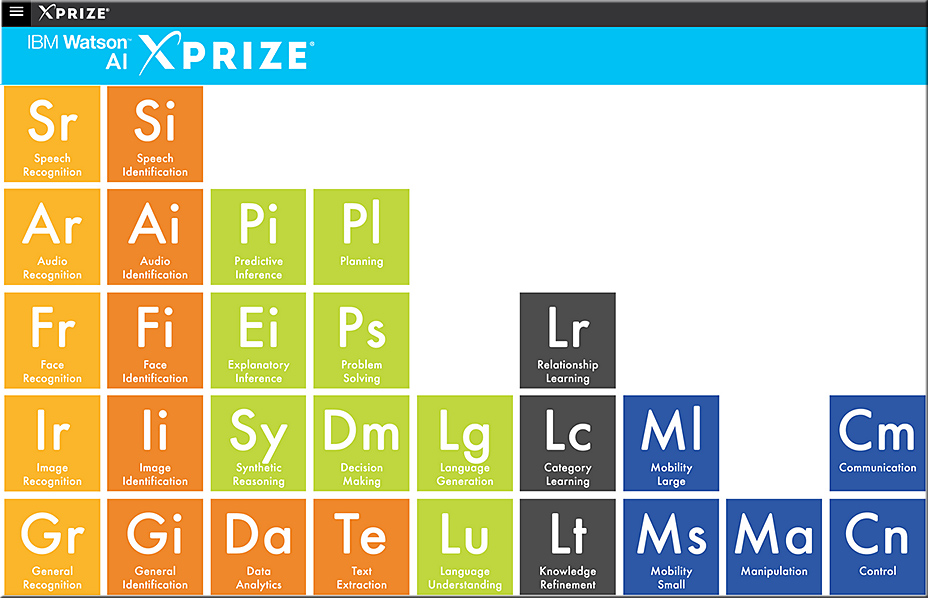
The Periodic Table of AI — from ai.xprize.org by Kris Hammond

Excerpts:

This is an invitation to collaborate.  In particular, it is an invitation to collaborate in framing how we look at and develop machine intelligence. Even more specifically, it is an invitation to collaborate in the construction of a Periodic Table of AI.

Let’s be honest. Thinking about Artificial Intelligence has proven to be difficult for us.  We argue constantly about what is and is not AI.  We certainly cannot agree on how to test for it.  We have difficultly deciding what technologies should be included within it.  And we struggle with how to evaluate it.

Even so, we are looking at a future in which intelligent technologies are becoming commonplace.
…
With that in mind, we propose an approach to viewing machine intelligence from the perspective of its functional components. Rather than argue about the technologies behind them, the focus should be on the functional elements that make up intelligence.  By stepping away from how these elements are implemented, we can talk about what they are and their roles within larger systems.


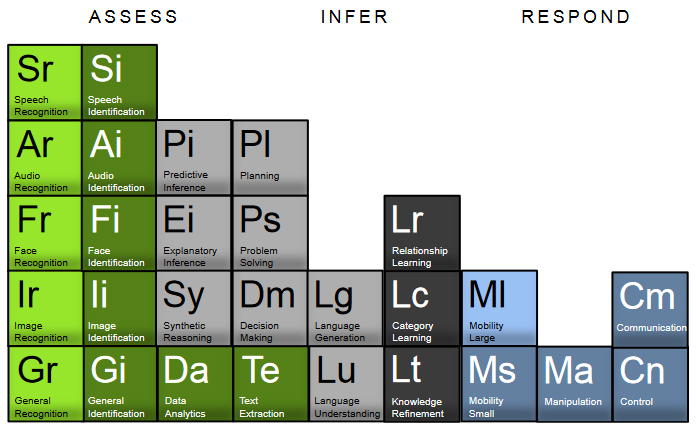
Also see this article, which contains the graphic below:


From DSC:
These graphics are helpful to me, as they increase my understanding of some of the complexities involved within the realm of artificial intelligence.


Also relevant/see:


Robots will take jobs, but not as fast as some fear, new report says — from nytimes.com by Steve Lohr


Excerpt:

The robots are coming, but the march of automation will displace jobs more gradually than some alarming forecasts suggest.

A measured pace is likely because what is technically possible is only one factor in determining how quickly new technology is adopted, according to a new study by the McKinsey Global Institute. Other crucial ingredients include economics, labor markets, regulations and social attitudes.

The report, which was released Thursday, breaks jobs down by work tasks — more than 2,000 activities across 800 occupations, from stock clerk to company boss. The institute, the research arm of the consulting firm McKinsey & Company, concludes that many tasks can be automated and that most jobs have activities ripe for automation. But the near-term impact, the report says, will be to transform work more than to eliminate jobs.


So while further automation is inevitable, McKinsey’s research suggests that it will be a relentless advance rather than an economic tidal wave.


Harnessing automation for a future that works — from mckinsey.com by James Manyika, Michael Chui, Mehdi Miremadi, Jacques Bughin, Katy George, Paul Willmott, and Martin Dewhurst
Automation is happening, and it will bring substantial benefits to businesses and economies worldwide, but it won’t arrive overnight. A new McKinsey Global Institute report finds realizing automation’s full potential requires people and technology to work hand in hand.

Excerpt:

Recent developments in robotics, artificial intelligence, and machine learning have put us on the cusp of a new automation age. Robots and computers can not only perform a range of routine physical work activities better and more cheaply than humans, but they are also increasingly capable of accomplishing activities that include cognitive capabilities once considered too difficult to automate successfully, such as making tacit judgments, sensing emotion, or even driving. Automation will change the daily work activities of everyone, from miners and landscapers to commercial bankers, fashion designers, welders, and CEOs. But how quickly will these automation technologies become a reality in the workplace? And what will their impact be on employment and productivity in the global economy?

The McKinsey Global Institute has been conducting an ongoing research program on automation technologies and their potential effects. A new MGI report, A future that works: Automation, employment, and productivity, highlights several key findings.


Also related/see:

This Japanese Company Is Replacing Its Staff With Artificial Intelligence — from fortune.com by Kevin Lui

Excerpt:

The year of AI has well and truly begun, it seems. An insurance company in Japan announced that it will lay off more than 30 employees and replace them with an artificial intelligence system.  The technology will be based on IBM’s Watson Explorer, which is described as having “cognitive technology that can think like a human,” reports the Guardian. Japan’s Fukoku Mutual Life Insurance said the new system will take over from its human counterparts by calculating policy payouts. The company said it hopes the AI will be 30% more productive and aims to see investment costs recouped within two years. Fukoku Mutual Life said it expects the $1.73 million smart system—which costs around $129,000 each year to maintain—to save the company about $1.21 million each year. The 34 staff members will officially be replaced in March.


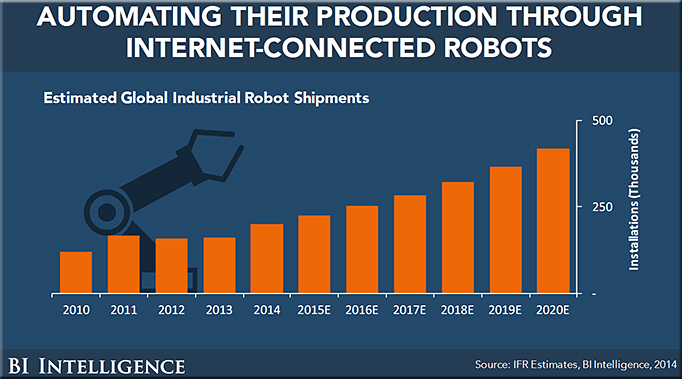
Also from “The Internet of Everything” report in 2016 by BI Intelligence:


A Darker Theme in Obama’s Farewell: Automation Can Divide Us — from nytimes.com by Claire Cain Miller

Excerpt:

Underneath the nostalgia and hope in President Obama’s farewell address Tuesday night was a darker theme: the struggle to help the people on the losing end of technological change.

“The next wave of economic dislocations won’t come from overseas,” Mr. Obama said. “It will come from the relentless pace of automation that makes a lot of good, middle-class jobs obsolete.”


Artificial Intelligence, Automation, and the Economy — from whitehouse.gov by Kristin Lee

Summary:
[On 12/20/16], the White House released a new report on the ways that artificial intelligence will transform our economy over the coming years and decades.

 Although it is difficult to predict these economic effects precisely, the report suggests that policymakers should prepare for five primary economic effects:

    Positive contributions to aggregate productivity growth;
Changes in the skills demanded by the job market, including greater demand for higher-level technical skills;
Uneven distribution of impact, across sectors, wage levels, education levels, job types, and locations;
Churning of the job market as some jobs disappear while others are created; and
The loss of jobs for some workers in the short-run, and possibly longer depending on policy responses.


From DSC:
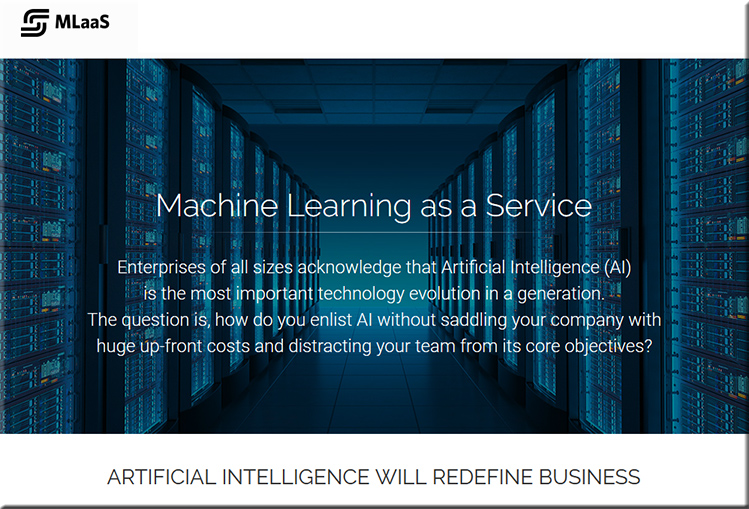
Hmmm…this is interesting! I ran into a company based out of Canada called Sightline Innovation — and they offer Machine Learning as a Service!


Here’s an excerpt from their site:

MLaaS: AI for everyone
Sightline’s Machine Learning as a Service (MLaaS) is the AI solution for Enterprise. With MLaaS, you provide the data and the desired outcome, and Sightline provides the Machine Learning capacity. By analyzing data sets, MLaaS generates strategic insights that allow companies to optimize their business processes and maximize efficiency. Discover new approaches to time management, teamwork and collaboration, client service and business forecasting.

Mine troves of inert customer data to reveal sales pipeline bottlenecks, build more in-depth personas and discover opportunities for upsales.
MLaaS empowers Enterprise to capitalize on opportunities that were previously undiscovered. MLaaS.net is the only system that brings together a full spectrum of AI algorithms including:

  • Convolutional Neural Networks
  • Deep Nets
  • Restricted Boltzman Machines
  • Probabilistic Graphical Models; and
  • Bayesian Networks

I wonder if Machine Learning as a Service (MLaaS) is the way that many businesses in the future will tap into the power of AI-based solutions – especially smaller and mid-size companies who can’t afford to build an internal team focused on AI…?


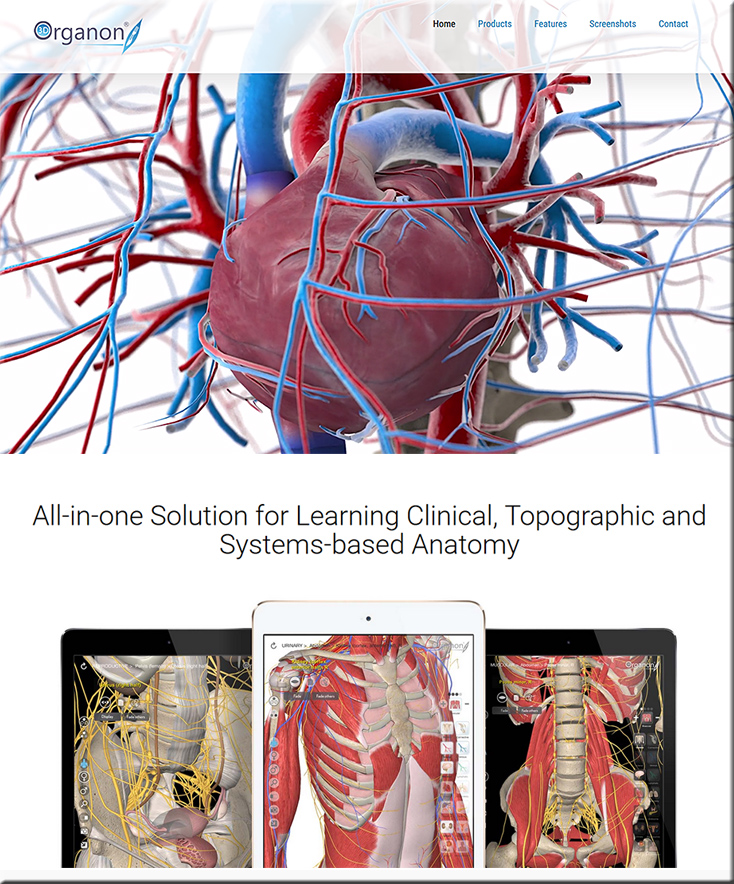
3dorganon.com

User interface features:

  •     Visualize anatomy using the latest 3D technologies.
  •     Single- and multi-select modes.
  •     Rotate, pan, and zoom in/out 3D models.
  •     Double tap to select and focus on a structure.
  •     Hide or fade selected structures.
  •     Easily switch systems on and off using the corresponding buttons.
  •     Unique topographic and systems-based anatomy layouts.
  •     Action buttons for displaying muscles into layers, from deep to superficial.
  •     Realistic X-ray mode (Fade others button).
  •     Amazing life-like high detail graphics for better user experience.
  •     Beautiful symmetry between designed organs and structures makes learning easy and pleasant.
  •     All featured text descriptions and clinical correlations are written by professors of anatomy and medical professionals.
  •     Full screen mode for enhanced presentation of 3D anatomy on projectors or large screens.
  •     Take snapshots of your scene for later study or reference.


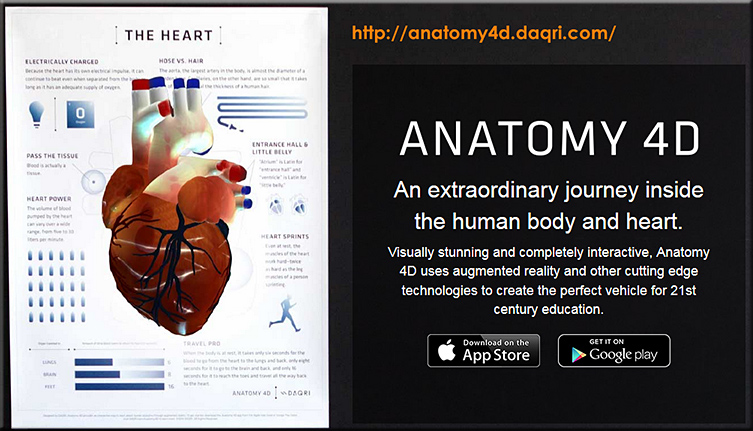
anatomy4d.daqri.com

Anatomy 4D transports teachers, medical professionals, and students of all levels into an interactive 4D experience of human anatomy.


CES 2017: Intel’s VR visions — from jwtintelligence.com by Shepherd Laughlin
The company showed off advances in volumetric capture, VR live streaming, and “merged reality.”

Excerpt (emphasis DSC):

Live-streaming 360-degree video was another area of focus for Intel. Guests were able to watch a live basketball game being broadcast from Indianapolis, Indiana, choosing from multiple points of view as the action moved up and down the court. Intel “will be among the first technology providers to enable the live sports experience on multiple VR devices,” the company stated.

After taking a 3D scan of the room, Project Alloy can substitute virtual objects where physical objects stand.


From DSC:
If viewers of a live basketball game can choose from multiple points of view, why can’t remote learners do this as well with a face-to-face classroom that’s taking place at a university or college?  Learning from the Living [Class] Room.
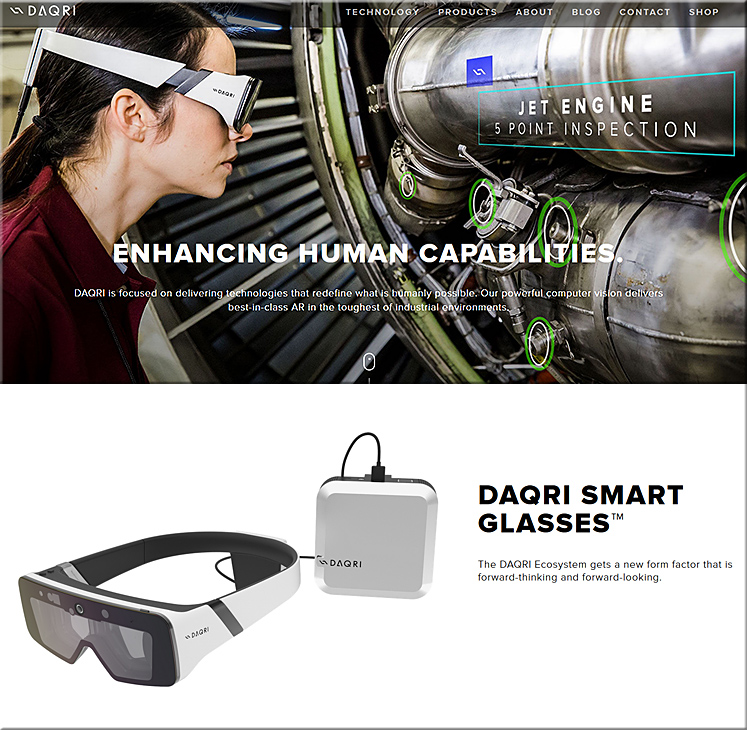


From CES 2017: Introducing DAQRI’s Smart Glasses™

Excerpt:

Data visualization, guided work instructions, remote expert — for use in a variety of industries: medical, aviation and aerospace, architecture and AEC, lean manufacturing, engineering, and construction.


Third-party Microsoft HoloLens-based mixed reality headsets coming soon, prices to start at $299 — from bgr.in by Deepali Moray
Microsoft has partnered with companies including Dell and Acer which will release their own HoloLens compatible devices.

Excerpt:

The company said that it is teaming up with the likes of Dell, HP, Lenovo and Acer, which will release headsets based on the HoloLens technology. “These new head-mounted displays will be the first consumer offerings utilizing the Mixed Reality capabilities of Windows 10 Creators Update,” a Microsoft spokesperson said. Microsoft’s partner companies for taking the HoloLens technology forward include Dell, HP, Lenovo, Acer, and 3 Glasses. Headsets by these manufacturers will work the same way as the original HoloLens but carry the design and branding of their respective companies. While the HoloLens developer edition costs a whopping $2999 (approximately Rs 2,00,000), the third-party headsets will be priced starting $299 (approximately Rs 20,000).


Verto Studio 3D App Makes 3D Modeling on HoloLens Easy — from winbuzzer.com by Luke Jones
The upcoming Verto Studio 3D application allows users to create 3D models and interact with them when wearing HoloLens. It is the first software of its kind for mixed reality.
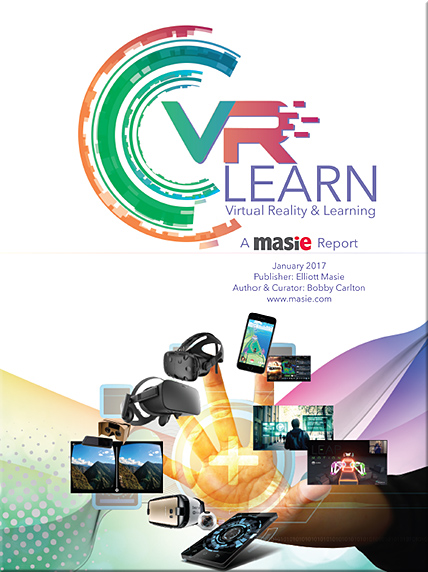


Excerpt:
How is The Immersive Experience Delivered?

Tethered Headset VR – The user can participate in a VR experience by using a computer with a tethered VR headset (also known as a Head Mounted Display – HMD) like Facebook’s Oculus Rift, PlayStation VR, or the HTC Vive. The user has the ability to move freely and interact in the VR environment while using a handheld controller to emulate VR hands. But, the user has a limited area in which to move about because they are tethered to a computer.

Non-Tethered Headset VR/AR – These devices are headsets and computers built into one system, so users are free of any cables limiting their movement. These devices use AR to deliver a 360° immersive experience. Much like with Oculus Rift and Vive, the user would be able to move around in the AR environment as well as interact and manipulate objects. A great example of this headset is Microsoft’s HoloLens, which delivers an AR experience to the user through just a headset.

Mobile Device Inserted into a Headgear – To experience VR, the user inserts their mobile device into a Google Cardboard, Samsung Gear 360°, or any other type of mobile device headgear, along with headphones if they choose. This form of VR doesn’t require the user to be tethered to a computer and most VR experiences can be 360° photos, videos, and interactive scenarios.

Mobile VR – The user can access VR without any type of headgear simply by using a mobile device and headphones (optional). They can still have many of the same experiences that they would through Google Cardboard or any other type of mobile device headgear. Although they don’t get the full immersion that they would with headgear, they would still be able to experience VR. Currently, this version of the VR experience seems to be the most popular because it only requires a mobile device. Apps like Pokémon Go and Snapchat’s animated selfie lens only require a mobile device and have a huge number of users.

Desktop VR – Using just a desktop computer, the user can access 360° photos and videos, as well as other VR and AR experiences, by using the trackpad or computer mouse to move their field of view and become immersed in the VR scenario.

New VR – Non-mobile and non-headset platforms like Leap Motion use depth sensors to create a VR image of one’s hands on a desktop computer; they emulate hand gestures in real time. This technology could be used for anything from teaching assembly in a manufacturing plant to learning a step-by-step process to medical training.

VR/AR Solutions

  • Oculus Rift – www.oculus.com
  • HTC Vive – htcvive.com
  • Playstation VR – playstation.com
  • Samsung VR Gear – www.samsung.com
  • Google Daydream – https://vr.google.com/daydream/
  • Leap Motion – www.leapmotion.com
  • Magic Leap – www.magicleap.com
  • Most mobile devices


Goggles that are worn, while they are “Oh Myyy” awesome, will not be the final destination of VR/AR. We will want to engage and respond, without wearing a large device over our eyes. Pokémon Go was a good early predictor of how non-goggled experiences will soar.

Elliott Masie


Top 8 VR & AR predictions for 2017 — from haptic.al by Christine Hart

Excerpt:

Education will go virtual
Similar to VR for brand engagement, we’ve seen major potential for delivering hands-on training and distance education in a virtual environment. If VR can take a class on a tour of Mars, the current trickle of educational VR could turn into a flood in 2017.




Published on Dec 26, 2016
Top 10 Virtual Reality Predictions For 2017 In vTime. Its been an amazing year for VR and AR. New VR and AR headsets, ground breaking content and lots more. 2017 promises to be amazing as well. Here’s our top 10 virtual reality predictions for the coming year. Filmed in vTime with vCast. Sorry about the audio quality. We used mics on Rift and Vive which are very good on other platforms. We’ve reported this to vTime.


Addendums


  • 5 top Virtual Reality and Augmented Reality technology trends for 2017 — from marxentlabs.com by Joe Bardi
    Excerpt:
    So what’s in store for Virtual Reality and Augmented Reality in 2017? We asked Marxent’s talented team of computer vision experts, 3D artists and engineers to help us suss out what the year ahead will hold. Here are their predictions for the top Virtual Reality and Augmented Reality technology trends for 2017.


AR becomes the killer app for smartphones



A new $300 gadget from Mattel will make being a parent much easier — from thestreet.com by Lindsay Rittenhouse
Mattel is developing a smart baby monitor called Aristotle that is designed to grow and learn with the child.

Excerpts:

Aristotle by Nabi — the Mattel-owned unit that produces children’s tablets — will debut this summer and is developed with the help of Microsoft and Qualcomm. The system uses artificial intelligence, cognitive services and Internet of Things (IoT) technology to cater to the basic needs of children, the Barbie maker said in a statement today.
…
However, one of the groundbreaking features of Aristotle is that the device is designed to adapt to the child’s life as it grows. For toddlers, Aristotle will use audio and visual learning methods to teach children basic education such as the ABCs and 123s, Mattel said.

For “kids,” Aristotle can help with homework or become an entertainment system, and for “tweens” the gadget transforms into a “more sophisticated” learning device that can teach foreign languages, according to Mattel.


From DSC:
Though I’m a bit skeptical on how much such a device can lessen the enormous task of parenting, I do find the “grow with the child” approach very interesting and highly  innovative.


However, one of the groundbreaking features of Aristotle is that the device is designed to adapt to the child’s life as it grows.


© 2025 | Daniel Christian