Some Pods Will Outlast the Pandemic  — from educationnext.org by Michael Horn
Students, parents say they appreciate the support

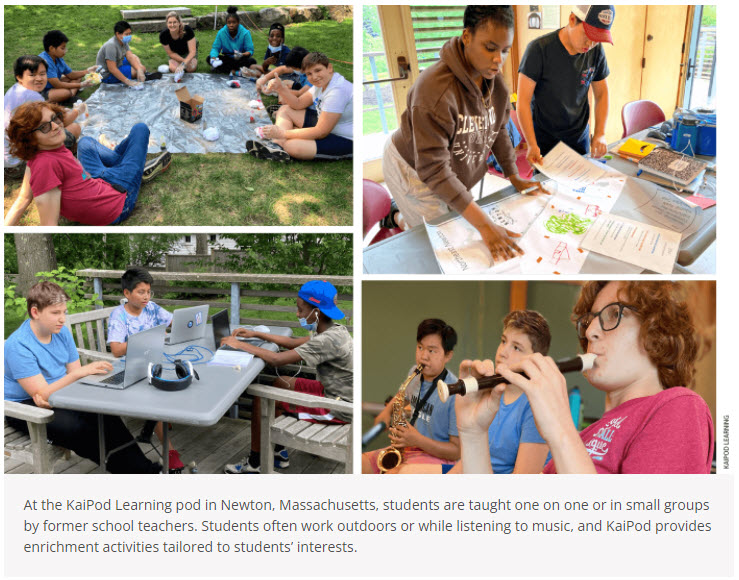
At the KaiPod Learning pod in Newton, Massachusetts, students are taught one on one or in small groups by former school teachers.

And yet many pods that have an institutional structure behind them, rather than being fully parent-run, have survived. They are finding their niches and growing. Despite fears that pods would benefit only people in prosperous suburbs such as Newton, some of the most robust pod experiments have taken place in school districts disproportionately serving low-income and minority students.


How to Support Students and Families through Technology and Innovation — from thejournal.com by Jeremy Davis

Excerpt:

Here are just a few district-wide innovations that resulted from the pandemic:

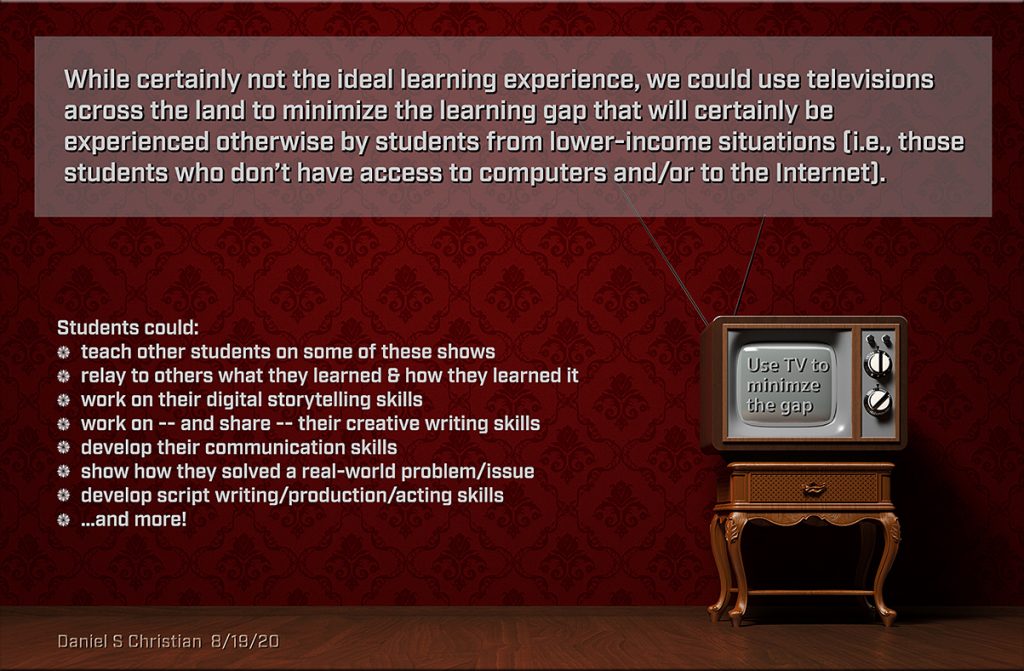
  • Worked with our local public access television station to broadcast district updates and educational resources. We contracted with Discovery Education to post some of their content to local channel 3 for students without home Internet access, and we built a television studio where our Innovation team worked with district teachers to produce content for local cable from 8–3 every week day.

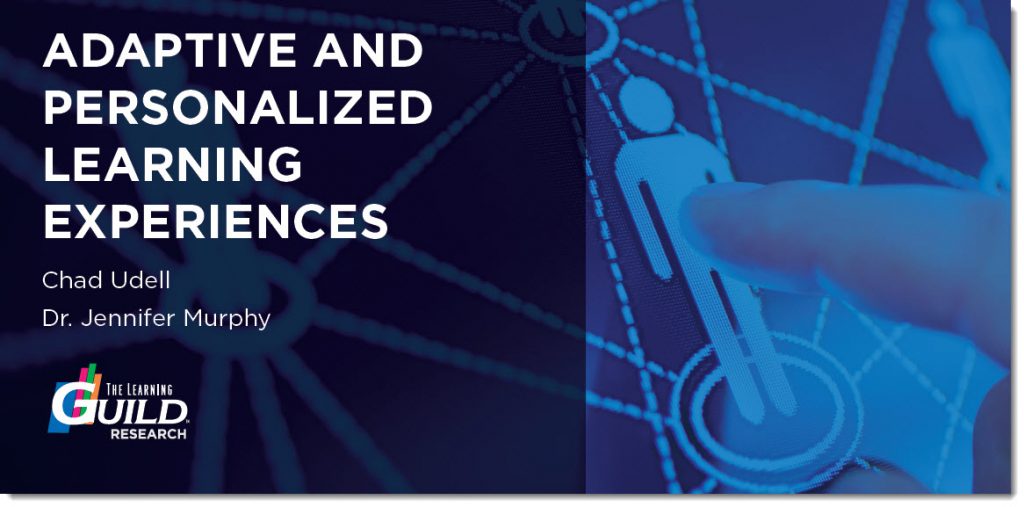
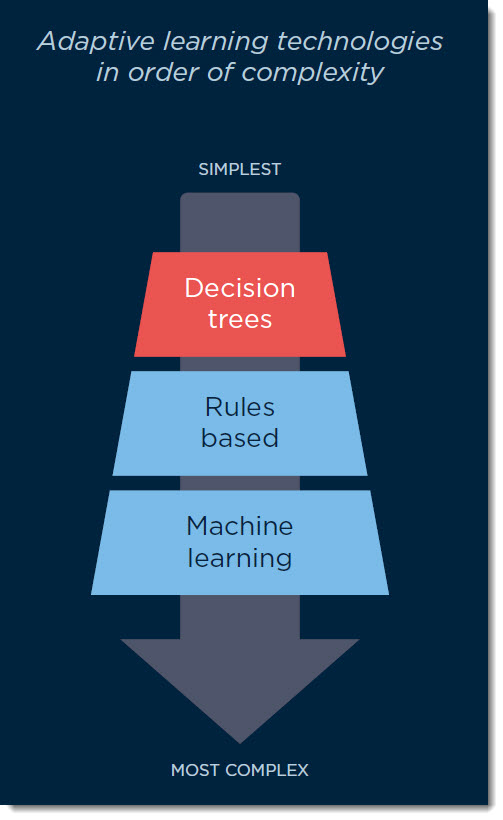
DC: Which reminds me of this idea/graphic:

  • Students were provided with Internet hotspots to ensure every student in the district could access the content and the video conferencing lessons with their teachers.
  • The Educational Services department created an amazing curriculum and summer school program where students could log in and complete curricular activities as enhancements to the curriculum and throughout the summer.
  • Created videos of “how” we could do both live and online teaching at the same time to help teachers feel more comfortable with the new way of teaching.
 

What is Stop Motion Studio and How Does It Work? Best Tips and Tricks — from techlearning.com by Luke Edwards
Stop Motion Studio is a movie maker that’s easy to use and ideal for students and teachers

Excerpt:

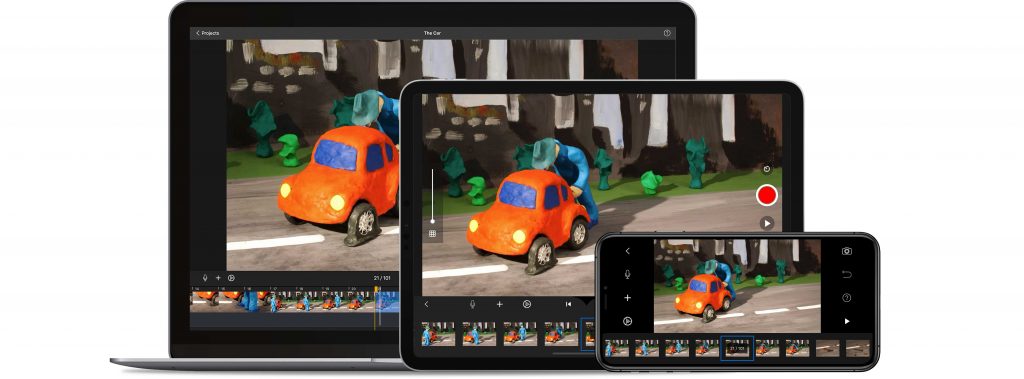
Stop Motion Studio is an app that makes turning images into video a fun and educational process for students.

Designed to be easy to use, and with the basics coming free, this is a useful tool to allow students to express ideas in video format. Since it is app-based it can be accessed on personal devices, both in class and elsewhere.

Also see the Stop Motion Studio website:

Stop Motion Studio


5 Ways to Make Edtech More Inclusive — from techlearning.com by Erik Ofgang
Better communication with students and more representation within edtech are just some ways we can better serve all special education students with technology, says University of California, Irvine’s Gillian Hayes.

Excerpt:

Making edtech accessible to all students has always been important but as it is now an essential part of the classroom, it has never been more vital.

Gillian Hayes, vice provost for graduate education and dean of the Graduate Division at University of California, Irvine, has studied edtech accessibility extensively. Making technology more accessible in the classroom is one of her goals at The Connecting the EdTech Research EcoSystem (CERES), which she coleads with UCI colleague Candice Odgers.

She shares strategies for how educators, programmers, and researchers can help foster more accessibility in edtech.


From DSC:
I was reading about a Ph.D. who was currently doing some research into the science of learning. This person had been teaching in a School of Education for years, but just (relatively) recently embarked on a Ph.D. During this person’s research, they came across a lot more information regarding the science of learning.

If this was true with someone who had been in education for years (and I can relate to that as well), it made me wonder:

  • How can we better get the word out to our learners re: how they can maximize their Return On Investment (ROI) from their studying time and efforts…?

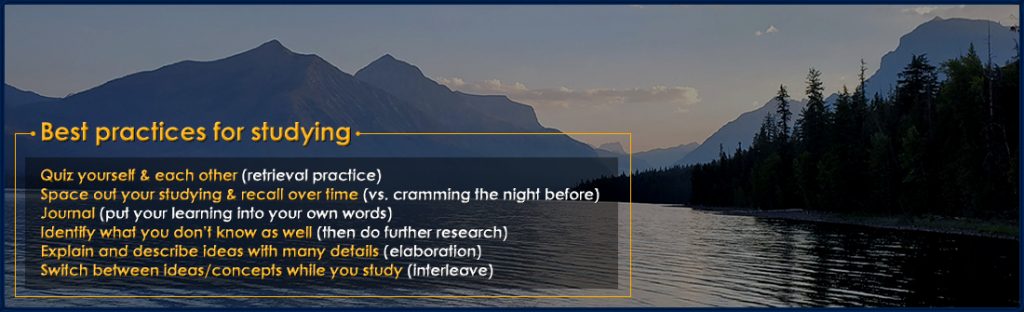
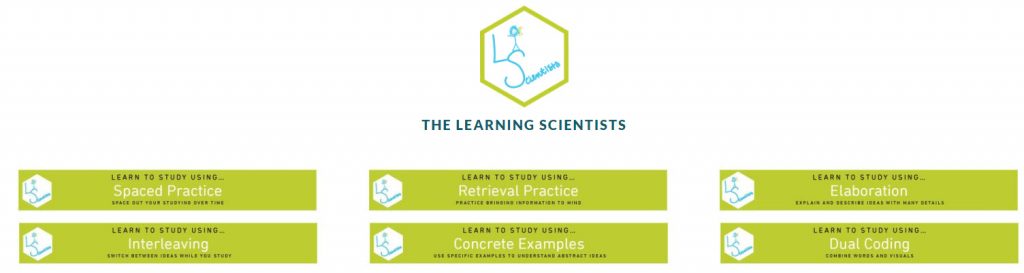
Then I thought, why couldn’t we put these tips directly into our banners on our CMS’s and LMS’s and/or link our banners to some other web pages/resources that provide such best practices and tips for our learners!?!  This could occur within the corporate training world as well.

Examples:

Let's put best practices on studying directly within our LMSs banners!

Or we could link to resources regarding best practices in studying!

Along these lines, we should have 11×17 (or larger) posters like this plastered in every hallway of every learning space out there:


We should plaster these types of posters throughout our learning spaces!!!


A Crusade to End Grading in High Schools — from washingtonpost.com by Thomas Toch and Alina Tugend; with thanks to Ryan Craig for this resource
One educator is leading an effort to evaluate students differently. Can it catch on?

Excerpt:

He envisioned schools where students learned math, history and science not as isolated subjects in classroom-bound courses but while working together to address real-world issues like soil conservation, homelessness and illegal immigration. Such learning would make schooling more meaningful for students and thus more engaging, Looney believed. It would let students demonstrate more talents to colleges, holding out the prospect of a wider, more diverse range of students entering higher education’s top ranks.

The existing high school transcript, however, with its simple summary of courses and grades, wouldn’t do justice to the interdisciplinary, project-based learning he wanted. It wouldn’t capture students’ creativity, persistence and other qualities. Looney needed a radically different way to portray students’ high school experiences, one that replaced grades with a richer picture. But he didn’t know what it was.

Today, 275 private high schools and 125 public schools are part of the nonprofit Mastery Transcript Consortium (MTC). They are in various stages of designing and launching the transcript — and working to make Looney’s radical vision a reality. Started in 2017, the organization is expanding rapidly.


What is NaNoWriMo and How Can It Be Used to Teach Writing? — from techlearning.com by Erik Ofgang
November is National Novel Writing Month (NaNoWriMo) and there are plenty of ways to have your class participate and learn in the process.

Excerpt:

National Novel Writing Month (NaNoWriMo) aims to help aspiring writers of all ages and levels, including students, get their novels written. Every year, tens of thousands of participating writers commit to writing a first draft of their novel within the month of November.

The NaNoWriMo program is designed to help writers silence their inner critic and get their thoughts down on the page, which it accomplishes by encouraging participants to wait until the end of the month to go back and edit, by helping them establish a deadline, and by using technology to help them connect and inspire one another.

Educators can facilitate their students’ participation in NaNoWrMo in order to teach storytelling, grammar, written communication, creativity, and more, all while helping encourage young novelists.


Why we need some humility about online learning – and about face-to-face teaching — from tonybates.ca by Tony Bates

Excerpt:

Those of us who have been fighting to get online learning accepted over the last 20-25 years have argued strongly the merits of online learning. We have argued that not only can it increase access, especially for older, working and lifelong learners, but it can also teach as well, and under certain circumstances, even better than face-to-face teaching. Covid-19 in particular showed the value of online learning, allowing students to continue their learning, even during a pandemic.

The limits of online learning
However, Covid-19 also taught us that online learning has its limits. When there was no access to face-to-face learning, we found that online learning was not able to help certain students. We also found that there are important aspects of face-to-face or campus based learning that cannot easily be replaced by online learning. Let’s look at some of these limitations.

We need to not only accept that both online learning and face-to-face teaching have equal value, but also to strive to understand what each does best. This will vary by subject matter, by types of students, and by instructors’ training and experience. We all have a lot to learn.

Also from Tony, see:

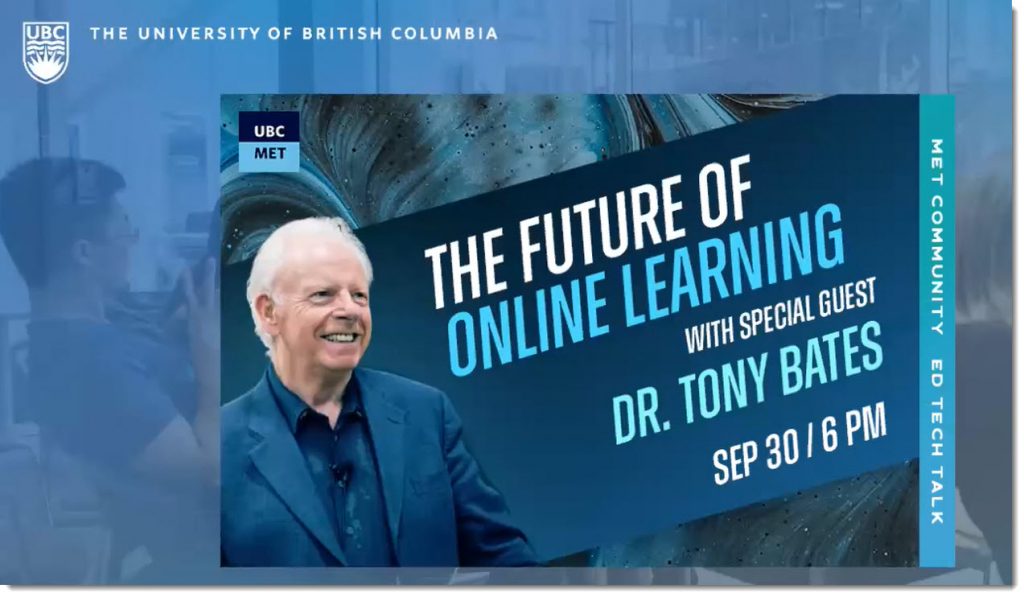
The future of online learning with Dr. Tony Bates


The Damaging Myth of the Natural Teacher — from chronicle.com by Beth McMurtrie

Excerpt:

The mistaken ideas about teaching that Sathy had early in her career are widespread — and not only among new instructors. Good teaching is often seen as a natural talent when really it’s a skill, one that can be learned and refined.
…
Thinking back to those early days, though, Sathy sees how that first stumble could have led her in a different direction. If it weren’t for a “big lightbulb moment” that enabled her to quickly understand her mistakes, a fierce determination to become a better teacher, and an openness to seeing her role not as the expert who commands a room, but as a partner in students’ learning, she could have been yet another hapless instructor wondering how to get through the semester without too many punishing evaluations.

“I’m glad I had the courage to keep getting back into the ring,” she says.


The Great Education Unbundling and How Learning Will be Rebundled — from gettingsmart.com by Nate McClennen, Tom Vander Ark

Key Points

  • The pandemic accelerated the great unbundling of learning – at least for those with access, agency, and advocates.
  • While unbundling will expand, how learning is rebundled will emerge as the next innovation — accessible, personalized, accountable and massive.

Excerpts:

By removing the barrier of full credit/school offered, schools become more robust in terms of richness of offerings as well as more personalized to meet the needs of students and communities.

The majority of unbundled experiences still fall back on the course level as the smallest granular level of choice. Following the lead of industry, unbundling in schools should mean a reduction in grain size so that skills are the level of unbundling rather than courses.

 
© 2025 | Daniel Christian