A Review of Online Learning in 2021 — from tonybates.ca by Dr. Tony Bates

Excerpt:

In terms of online learning, there has been considerable progress. We learned a lot about online learning during Covid-19, and while not all these lessons were good, the landscape of teaching and learning has altered, in general for the best. It’s these developments that I want to discuss in my review of the year.

I will draw heavily on my summary of research reports on Covid-19 and emergency remote/online learning.


The next age of the internet could suck power away from Big Tech while living on the same backbone as cryptocurrencies. Here’s what to know about Web3. — from businessinsider.com by Katie Canales

Excerpts (emphasis DSC):

  • Web3 is the next generation of the internet and will exist on the blockchain.
  • It will be decentralized, meaning it won’t be controlled entities like Facebook or Google.
  • Twitter, GameStop, Reddit, and VC firm a16z are all putting resources into building Web3.

…

One aspect of the metaverse is that users will hopefully be able to go virtually from platform to platform with one single account — just like we will in Web3. 

And NFTs, one-of-a-kind tokens representing your ownership of a virtual good, could be more easily bought and sold with cryptocurrencies within a space like Web3. 


From DSC:
How might “Web3” translate into the future of lifelong learning? Here’s one vision/possibility:

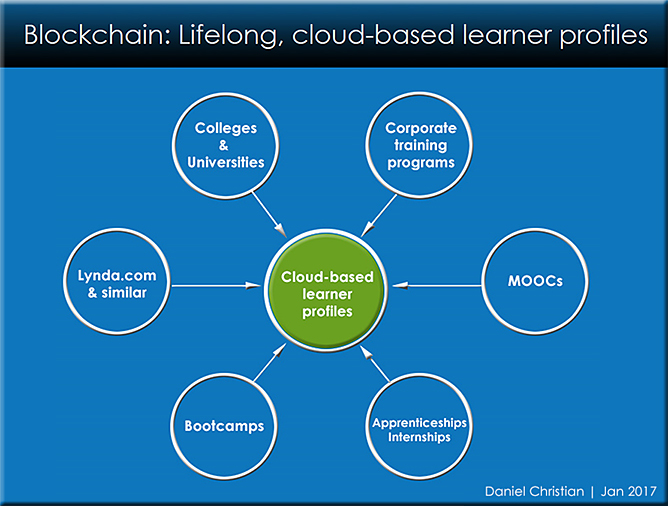
There could be several entities and services feeding one's cloud-based learner profile

Each person would have a learner profile/account that could seamlessly log into multiple education/training providers’ platforms and services. The results of that learning could be stored in one’s cloud-based learner profile. This type of next-generation learning platform would still need subject matter experts, instructional designers, programmers, and other team members. But the focus would be on building skills — skills that an artificial intelligence-backed interface would demonstrate are currently being requested by the modern workplace.  This constantly-being-updated list of skills could then link to the learning-related experiences and resources that people could choose from in order to develop those skills.

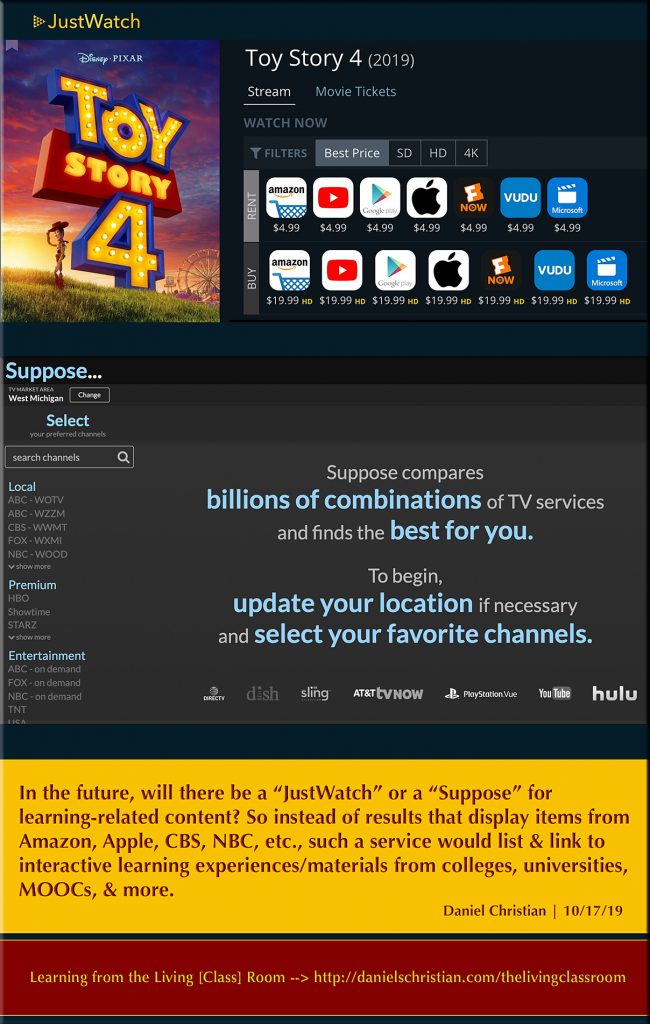
The following vision/graphic also comes to my mind:

Learning from the living class room


Teaching in the ‘Metaverse’? Roblox Looks to Make It a Reality — from edweek.org by Benjamin Herold
With millions in new grants to STEM organizations like Project Lead the Way, the gaming platform is moving into K-12 education.

Excerpts:

Hoping to expand its presence in K-12 schools, gaming company Roblox announced this month a new $10 million fund to support the creation of online learning experiences that take advantage of its platform’s unique way of letting users play, explore, and socialize in an endlessly evolving virtual world.
…
Roblox aims to play a major role in the emerging metaverse. Expanding into classroom education is a key vehicle for making that happen, Kantar told investors at a November conference. The company’s stated goal is to reach 100 million students worldwide by the end of the decade.

Making such inroads with K-12 schools, however, is no sure bet.

Also see:

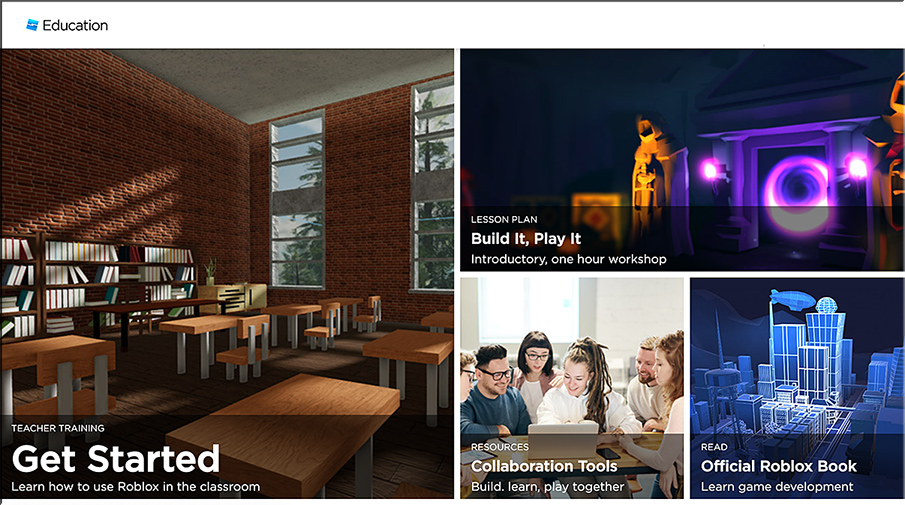
Roblox Education


No Textbooks, No Lectures, and No Right Answers. Is This What Higher Education Needs? — from chronicle.com by Beth McMurtrie
From DSC: Though this was back from 2/10/19, Beth recently linked to it on The Chronicle and it caught my eye due to it’s focus on solving real-world issues and problems.

Excerpts:

Tackling big problems is the point of JMU X-Labs, a four-year-old experiment in undergraduate education. Through a blend of interdisciplinary collaboration, project-based learning, and unscripted, open-ended research, each course takes students through the long and often aggravating process of developing new ways of thinking about complex problems.

They might design drones to help with environmental problems, tackle foreign-policy challenges, build autonomous vehicles, or develop medical innovations to help with the opioid crisis.


Got Teacher Burnout? Launch A Microschool — from forbes.com by Kerry McDonald

Rather than abandoning their passion for teaching, some educators are discovering that they can do what they love and avoid the bureaucracy and stress of a conventional classroom by starting their own microschools.

Microschools are modern twists on the quaint, one-room schoolhouse model, where small, multi-age groups of students learn together in more intimate educational settings, such as private homes, with individualized attention from adult educators and facilitators. Interest in microschools accelerated over the past year, as school shutdowns led parents to consider home-based “pandemic pods” to help their children learn in small, safe groups. 


Top Resources For Students To Discover Real World Problems and Issues

Top Resources For Students To Discover Real World Problems & Issues — from edtechreview.in by Saniya Khan

Are you looking for ways to help students learn about world issues: climate change, cultural diversity, biodiversity, education, water crisis, [homelessness] and more to build awareness about global issues and develop global competence?


EduMAX 2021 recap: Together for student success around the globe — from blog.adobe.com by Sebastian Distefano

Excerpt:

University CIOs, deans, provosts, faculty and staff from more than 100 institutions convened online for the Adobe EduMAX 2021 conference, where academic leaders shared how they are transforming teaching and learning practices across their campuses. Key discussion points included:

  • How digital literacy increases engagement to bring faculty and students together, whether they are in-person, online or in a hybrid environment.
  • How digital literacy closes the skills gap in higher education and industry by fostering critical essential skills that employers value.
  • How faculty can integrate digital literacy across the curriculum for all students.
 

The State of Student Success & Engagement in Higher Education -- from Instructure

The State of Student Success & Engagement in Higher Education — from instructure.com (authors of the Canvas LMS)
Our 2021 Global Student engagement and success study uncovers vital stats and key trends to help education institutions thrive through today’s education challenges.

Excerpt:

  • Connect students with alumni and potential employers through virtual networking, internships/externships, mentorship programs, and strategic partnerships.
  • Align curriculum with workforce outcomes and offer opportunities for students to showcase skill sets.
  • Close the perceived awareness gap of work/career readiness programs on campus with alumni programming highlighting the success of campus career resources.
  • Embed career exploration throughout the higher education experience and provide actionable insights into employment trends.


Why Do My Webcam And Microphone Not Work? — from techlearning.com by Luke Edwards
Webcam and microphone not work? This is how you can get up and running.

Excerpt:

Webcam and microphone not work? That can be a frustrating situation to be in, especially when you need to teach a class over Zoom or attend a school meeting using Meet. Whatever your video chat platform, without a microphone or webcam working, you’re stuck.

Thankfully, it can often be the case that it’s not a hardware fault with your device but rather a setting issue, which can be relatively easily fixed. So even if you’re in a chat right this minute, frantically scouring the web for a fix and finding yourself here, you may yet join that meeting.

This guide aims to clarify a few areas that should be checked before going into panic mode and heading to your hardware store with the credit card at the ready.


The Best Advice for New Teachers, in 5 Words or Less — from edweek.org by Hayley Hardison; though back from August, the words still (and will) ring true.

Excerpts:

Teachers just entering the profession are looking for advice on how to find their footing.

We put a call out on Twitter for experienced educators to share their best tips for new teachers, in five words or less. Here’s what they said.

Many people responding pointed to the importance of building strong relationships with students—and how critical that is for learning.


Writing Multiple Choice Questions For Higher Order Thinking — from theelearningcoach.com by Connie Malamed

Excerpt:

One of the biggest criticisms of multiple choice questions is that they only test factual knowledge. But it doesn’t have to be that way. We can also use multiple choice questions to assess higher-order thinking.

Higher Order Thinking in a Nutshell
Higher order thinking goes beyond memorizing and recalling facts and data. It even goes beyond comprehension. Higher-order thinking refers to cognitive processes that involve analytical, critical and creative thinking. The concept is based on various learning taxonomies, such as application, analysis, evaluation, creation, problem-solving, connecting ideas and making decisions. Keep in mind that many of these cognitive tasks, including the recall of information, appear to occur simultaneously. See Alternatives to Bloom’s Taxonomy for criticisms of the hierarchical classifications.

Because test items must be aligned with performance objectives, you’ll need to include higher-order thinking skills from the start. And yes, these may be better measured through open ended questions, essays and discussions. But if you find yourself needing to use multiple choice tests, you can make the best of this situation with these three approaches.


The EdSurge Product Index

About:

Since 2012, the EdSurge Product Index has been the first stop for educators in search of learning technology solutions. The redesigned EdSurge Product Index(BETA) features enhanced product profiles and validations from trusted education and technology organizations. Now, educators will be able to find the most complete, reliable and up-to-date information available on learning technology products.

Also see:


From DSC:
From my perspective, both of the items below are highly-related to each other:

Let’s Teach Computer Science Majors to Be Good Citizens. The Whole World Depends on It. — from edsurge.com by Anne-Marie Núñez, Matthew J. Mayhew, Musbah Shaheen and Laura S. Dahl

Excerpt:

Change may need to start earlier in the workforce development pipeline. Undergraduate education offers a key opportunity for recruiting students from historically underrepresented racial and ethnic, gender, and disability groups into computing. Yet even broadened participation in college computer science courses may not shift the tech workforce and block bias from seeping into tech tools if students aren’t taught that diversity and ethics are essential to their field of study and future careers.

Computer Science Majors Lack Citizenship Preparation
Unfortunately, those lessons seem to be missing from many computer science programs.

…and an excerpt from Why AI can’t really filter out “hate news” — with thanks to Sam DeBrule for this resource (emphasis DSC):

The incomprehensibility and unexplainability of huge algorithms
Michael Egnor: What terrifies me about artificial intelligence — and I don’t think one can overstate this danger — is that artificial intelligence has two properties that make it particularly deadly in human civilization. One is concealment. Even though every single purpose in artificial intelligence is human, it’s concealed. We don’t really understand it. We don’t understand Google’s algorithms.

There may even be a situation where Google doesn’t understand Google’s algorithms. But all of it comes from the people who run Google. So the concealment is very dangerous. We don’t know what these programs are doing to our culture. And it may be that no one knows, but they are doing things.

Note:Roman Yampolskiy has written about the incomprehensibility and unexplainability of AI: “Human beings are finite in our abilities. For example, our short term memory is about 7 units on average. In contrast, an AI can remember billions of items and AI capacity to do so is growing exponentially. While never infinite in a true mathematical sense, machine capabilities can be considered such in comparison with ours. This is true for memory, compute speed, and communication abilities.” So we have built-in bias and incomprehensibility at the same time.

From DSC:
That part about concealment reminds me that our society depends upon the state of the hearts of the tech leaders. We don’t like to admit that, but it’s true. The legal realm is too far behind to stop the Wild West of technological change. The legal realm is trying to catch up, but they’re coming onto the race track with no cars…just as pedestrians walking or running as fast as they can….all the while, the technological cars are whizzing by. 

The pace has changed significantly and quickly


The net effect of all of this is that we are more dependent upon the ethics, morals, and care for their fellow humankind (or not) of the C-Suites out there (especially Facebook/Meta Platforms, Google, Microsoft, Amazon, Google, and Apple) than we care to admit. Are they producing products and services that aim to help our societies move forward, or are they just trying to make some more bucks? Who — or what — is being served?

The software engineers and software architects are involved here big time as well. “Just because we can doesn’t mean we should.” But that perspective is sometimes in short supply.


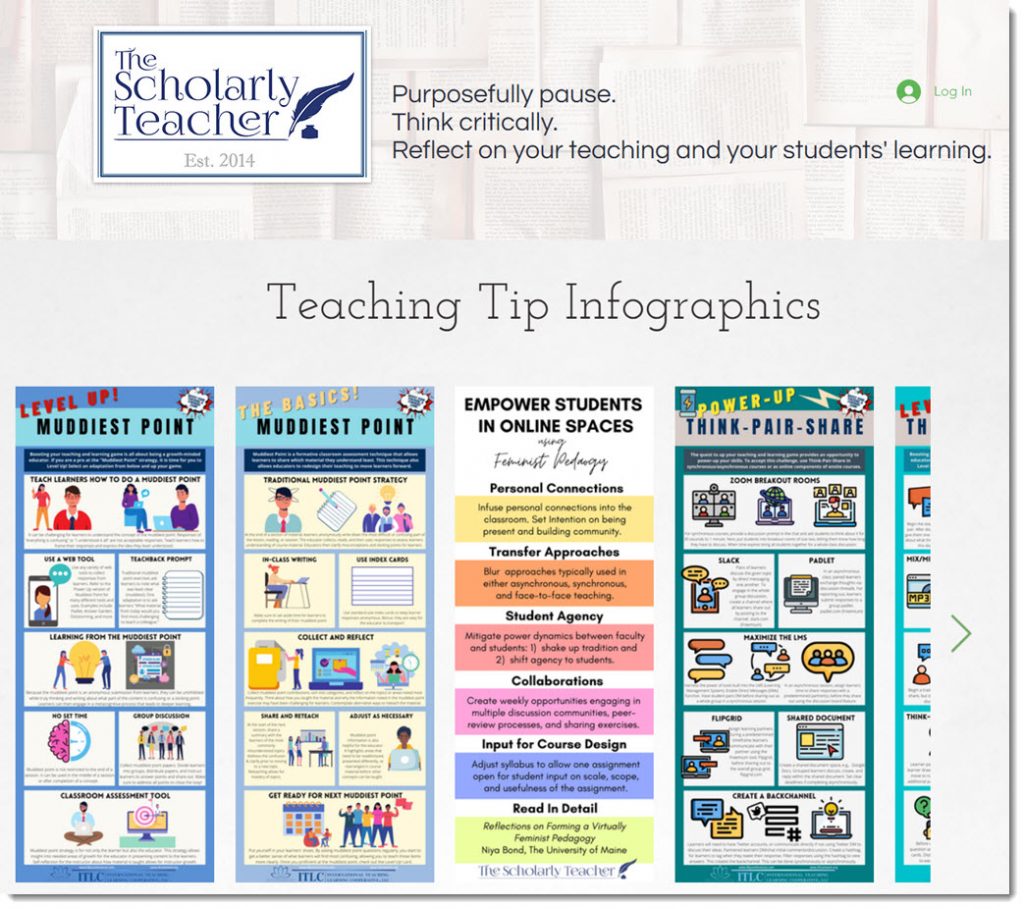
Teaching Tip Infographics — from scholarlyteacher.com

 
© 2025 | Daniel Christian