Contrasting Cases: A Simple Strategy for Deep Understanding — from cultofpedagogy.com by Sarah Levine

Excerpt:

Contrasting cases is a valuable tool for any cognitive work—in any subject area—that involves going beyond surface traits and considering deeper connecting principles, or reflecting on specific features of a thing.
…
In my field of study, literary interpretation, using contrasting cases is especially useful to help students enrich their reading experiences and build interpretations of many kinds of texts, including fiction, poetry, or political speech. But you can use this approach in any subject where you’re studying rhetorically powerful texts, like advertisements, headlines, art, primary historical documents, and film.


Tinkerhunts — from engagetheirminds.com by Terri Eichholz

Excerpt:

For anyone new to 3d design, Tinkercad is the perfect entry level program. It’s free, web-based, and contains lots of tutorials. As a teacher, you can create classes and assign projects that you can oversee through a dashboard. I’ve used it with students from 2nd grade through 12th, so it’s quite a versatile tool.
…
That’s why I think these Tinkerhunts from HL Modtech (Mike Harmon, @HLTinkercad) are pretty genius. In the first one, he gives kudos to his student, Kingston, who first gave him the idea for these three-dimensional virtual scavenger hunts.

Also see:

Tinkercad is a free, easy-to-use web app that equips the next generation of designers and engineers with the foundational skills for innovation: 3D design, electronics, and coding!


One District’s Ongoing Hybrid Success — from by Erik Ofgang
Early in the pandemic, Kyle Berger, chief technology officer for Grapevine-Colleyville Independent School District, installed cameras in every classroom for hybrid learning. Those cameras continue to be used in innovative ways.

Excerpt:

In the meantime, the cameras continue to be utilized in a variety of ways, including:

  • For students who are out of school with COVID or for other medical reasons to keep participating in class.
  • To allow a teacher to quickly record an explanation or lesson so students can access it later. “The way they’re mounted on the ceiling, the teachers started taking that to a different level because you could reach up to the webcam if you wanted to and you could turn it to point down, and now in a sense, it’s a document camera,” Berger says.
  • To help with the substitute teacher shortage. “We can bridge two classrooms together through our video solutions, and maybe just have an instructional aide in the second classroom,” Berger says.
  • To allow educators to engage in professional development by watching videos of their own lectures and lessons.

“It’s really allowed us a lot more flexibility to continue to navigate the ever-changing environment and education right now,” Berger says.

From DSC:
I’d probably use the word hyflex here instead of the word hybrid…but you get the point. I would also assert that for the following relevant article as well:


<blockquote class=”twitter-tweet”><p lang=”en” dir=”ltr”>Questions that provoke critical thinking: <a href=”https://t.co/AgSkJbOXO7″>https://t.co/AgSkJbOXO7</a> <a href=”https://twitter.com/hashtag/instructionaldesign?src=hash&amp;ref_src=twsrc%5Etfw”>#instructionaldesign</a> <a href=”https://twitter.com/hashtag/instructionaldesigners?src=hash&amp;ref_src=twsrc%5Etfw”>#instructionaldesigners</a></p>&mdash; Instructional Design Lady (@instructlady) <a href=”https://twitter.com/instructlady/status/1504664266661679104?ref_src=twsrc%5Etfw”>March 18, 2022</a></blockquote> <script async src=”https://platform.twitter.com/widgets.js” charset=”utf-8″></script>


Nurturing Non-STEM Gifted Kids and Meeting Their Needs — from raisinglifelonglearners.com by Colleen Kessler

Excerpt:

But what about that kid who doesn’t want a new chemistry set or microscope for Christmas? What about the gifted kid who doesn’t really get your science puns? What about the brilliant child who isn’t into STEM at all?

They’re rare, but they’re out there. Artists, chefs, readers, writers, dancers, musicians, linguists, all of the above. Kids who like space just fine, but like nature even more. Gifted kids who can crush their math work but would rather crush pigments. Gifted kids who can learn to code, but whose heart swells when guitar strings strum. Brilliant babes who appreciate the arts, the stories, or are just filled with curiosity that isn’t subject-specific. You see, intelligence isn’t a stereotype. An IQ score isn’t like a horoscope. Scoring a few standard deviations above the norm doesn’t dictate your personality, your likes, dislikes, talents, passions, or hobbies. It means your brain processes information differently than the majority of the population. That’s really it. Intelligence and brilliance are as likely to be found on a stage as they are in a lab. For every Einstein there is a Beethoven, for every Musk there’s a Spielberg.

What Can You Recommend For Students Who Finish Their Work Early? — from teachthought.com

Excerpt:

How to respond when students finish their work early is a classic teacher challenge.

Most of it boils down to lesson design–creating learning opportunities where students are naturally funneled toward extending, improving, and sharing their work so that ‘stopping points’ are more of a matter of scheduling than learning itself.

Motivating your child with ADHD: 7 tips for your homeschool — from raisinglifelonglearners.com by Colleen Kessler

Excerpt:

This series is all about homeschooling a child with ADHD. Today, we are discussing 7 of our best tips for motivating a child with ADHD.

Preparing Kids With Real-World Skills via Ed-Tech — from emergingedtech.com by Kelly Walsh

Excerpt:

Educational technologies enable children to learn things on a whole new level, broadening their minds and their capabilities. The practical applications alone make ed-tech a highly valuable tool in the classroom setting, but these technologies also can enhance kids’ skills as well as their emotional and cultural awareness and intelligence, which can better prepare them for real-world situations and scenarios.

Edumilestones Has Launched Career Lab™ For Progressive Schools — from edtechreview.in

Excerpt:

Edumilestones, a pioneer in career guidance platform has now launched a next-generation Career Lab™ for schools. Based on 11 years of experience in career counselling industry, this technology is set to help students to identify and execute their career goals with clarity and confidence.


Revisiting Camera Use in Live Remote Teaching: Considerations for Learning and Equity — from er.educause.edu by Patricia Turner

Excerpts:

Given the need to balance equity concerns with effective teaching practices, the following suggestions might be helpful in articulating an approach to using cameras in live remote teaching sessions. This list is not exhaustive; these suggestions are offered as a starting point from which to begin thinking about this issue.

…
Given what we know from research about interaction, active learning, equity, and inclusion, one possible philosophy is this: if we believe that some students are not using a camera because of privacy issues, because they lack a quiet space in which to learn, or because of inequitable circumstances, we can let our students know that we are available if they need help and that, although we can’t solve all problems, we may be able to help students get the support and resources they need.


A group of workers are shown paving a new highway in this image.

From DSC:
What are the cognitive “highways” within our minds?

I’ve been thinking a lot about highways recently. Not because it’s construction season (quite yet) here in Michigan (USA), but because I’ve been reflecting upon how many of us build cognitive highways within our minds. The highways that I’m referring to are our well-trodden routes of thinking that we quickly default/resort to. Such well-trodden pathways in our minds get built over time…as we build our habits and/or our ways of thinking about things. Sometimes these routes get built without our even recognizing that new construction zones are already in place.

Those involved with cognitive psychology will connect instantly with what I’m saying here. Those who have studied memory, retrieval practice, how people learn, etc. will know what I’m referring to. 

But instead of a teaching and learning related origin, I got to thinking about this topic due to some recent faith-based conversations instead. These conversations revolved around such questions as:

  • What makes our old selves different from our new selves? (2 Corinthians 5:17)
  • What does it mean to be transformed by the “renewing of our minds?” (Romans 12:2)
  • When a Christian says, “Keep your eyes on Christ” — what does that really mean and look like (practically speaking)?

For me, at least a part of the answers to those questions has to do with what’s occupying my thought life. I don’t know what it means to keep my eyes on Christ, as I can’t see Him. But I do understand what it means to keep my thoughts on what Christ said and/or did…or on the kinds of things that Philippians 4:8 suggests that we think about. No wonder that we often hear the encouragement to be in the Word…as I think that new cognitive highways get created in our minds as we read the Bible. That is, we begin to look at things differently. We take on different perspectives.

The ramifications of this idea are huge:

  • We can’t replace an old highway by ourselves. It takes others to help us out…to teach us new ways of thinking.
  • We sometimes have to unlearn some things. It took time to learn our original perspective on those things, and it will likely be a process for new learning to occur and replace the former way of thinking about those topics.
  • This idea relates to addictions as well. It takes time for addicts to build up their habits/cravings…and it takes time to replace those habits/cravings with more positive ones. One — or one’s family, partner/significant other, and friends — should not expect instant change. Change takes time, and therefore patience and grace are required. This goes for the teachers/faculty members, coaches, principals, pastors, policemen/women, judges, etc. that a person may interact with as well over time. (Hmmm…come to think of it, it sounds like some other relationships may be involved here at times also. Certainly, God knows that He needs to be patient with us — often, He has no choice. Our spouses know this as well and we know that about them too.)
  • Christians, who also struggle with addictions and go to the hospital er…the church rather, take time to change their thoughts, habits, and perspectives. Just as the rebuilding of a physical highway takes time, so it takes time to build new highways (patterns of thinking and responses) in our minds. So the former/old highways may still be around for a while yet, but the new ones are being built and getting stronger every day.
  • Sometimes we need to re-route certain thoughts. Or I suppose another way to think about this is to use the metaphor of “changing the tapes” being played in our minds. Like old cassette tapes, we need to reject some tapes/messages and insert some new ones.

What are the cognitive highways within your own mind? How can you be patient with others (that you want to see change occur within) inside of your own life?

Anyway, thanks for reading this posting. May you and yours be blessed on this day. Have a great week and weekend!


Addendum on 3/31/22…also relevant, see:

I Analyzed 13 TED Talks on Improving Your Memory— Here’s the Quintessence — from learntrepreneurs.com by Eva Keiffenheim
How you can make the most out of your brain.

Excerpt:

In her talk, brain researcher and professor Lara Boyds explains what science currently knows about neuroplasticity. In essence, your brain can change in three ways.

Change 1 — Increase chemical signalling
Your brain works by sending chemicals signals from cell to cell, so-called neurons. This transfer triggers actions and reactions. To support learning your brain can increase the concentration of these signals between your neurons. Chemical signalling is related to your short-term memory.

Change 2 — Alter the physical structure
During learning, the connections between neurons change. In the first change, your brain’s structure stays the same. Here, your brain’s physical structure changes?—?which takes more time. That’s why altering the physical structure influences your long-term memory.

For example, research shows that London taxi cab drivers who actually have to memorize a map of London to get their taxicab license have larger brain regions devoted to spatial or mapping memories.

Change 3 — Alter brain function
This one is crucial (and will also be mentioned in the following talks). When you use a brain region, it becomes more and more accessible. Whenever you access a specific memory, it becomes easier and easier to use again.

But Boyd’s talk doesn’t stop here. She further explores what limits or facilitates neuroplasticity. She researches how people can recover from brain damages such as a stroke and developed therapies that prime or prepare the brain to learn?—?including simulation, exercise and robotics.

Her research is also helpful for healthy brains?—?here are the two most important lessons:

The primary driver of change in your brain is your behaviour.
…
There is no one size fits all approach to learning.


With Few Details But Big Ideas, Sec. Cardona Pushes Total Reimagining of Education — from edsurge.com by Emily Tate

Excerpt:

In the last two years, while schools experienced more disruption and strain than in almost any other time in recent memory, education leaders have been broadcasting one message, loud and clear and often: Education cannot go back to normal. This moment presents a chance to move forward, not go back. The upheaval of the pandemic can be an opportunity for positive change, if we let it.

As the weather warms and COVID cases plummet and classrooms return to full capacity, the moment of truth is near. And during a keynote panel at the SXSW EDU conference in Austin, Texas, on Wednesday, Education Secretary Miguel Cardona made sure to drill home the message to the hundreds of educators seated before him.


Tapping the Potential of Learning Through Play in STEAM Programs — from techlearning.com by Ray Bendici
Encouraging purposeful play through tools such as LEGO Education to engage students and improve STEAM learning outcomes

Excerpt:

We know children thrive through play, but did you know that learning through play is a powerful research-backed strategy to boost student engagement in the classroom?

“When students are playing, they’re unlocking their natural curiosity and finding their joy in learning,” said Dr. Jenny Nash, Head of Education Impact, US, for LEGO Education, during a recent virtual Tech & Learning roundtable discussion. “And when students learn in a purposeful, hands-on way it builds their confidence, and lessons can really become more motivating and meaningful. Purposeful play is rooted in pedagogical approaches, such as project-based learning, and it’s really known to increase student learning outcomes.”


10 ways to improve students’ long-term learning — from ditchthattextbook.com

Research has a lot to say about improving students’ long-term memory. Here are 10 ideas you can use in class.

Also relevant/see:

Busting The Myth of Learning Styles — from techlearning.com by Erik Ofgang
The idea that different students have different learning styles pervades education, but cognitive scientists say there is no evidence learning styles exist.


Majority of workers who quit a job in 2021 cite low pay, no opportunities for advancement, feeling disrespected — from pewresearch.org by Kim Parker and Juliana Menasce Horowitz

Excerpt:

A new Pew Research Center survey finds that low pay, a lack of opportunities for advancement and feeling disrespected at work are the top reasons why Americans quit their jobs last year. The survey also finds that those who quit and are now employed elsewhere are more likely than not to say their current job has better pay, more opportunities for advancement and more work-life balance and flexibility.

Also relevant/see:

EDUCAUSE QuickPoll Results: The Workforce Shakeup — from by Mark McCormack
A sizable wave of staff departures is headed toward higher education. Staff cite either institutional or personal reasons for staying or leaving, suggesting a range of institutional strategies for attracting and retaining talent.

Excerpt:

Middle-managers and middle-tenure staff, in particular, may be at risk of leaving, suggesting a number of solutions institutions might deploy to help attract and retain needed talent.

Addendum on 3/13/22:


Web Accessibility on a Budget: How to Get Started for Free or Little Cost — from boia.org

Excerpt:

How to improve web accessibility for little to no cost:

  • Get a free accessibility assessment.
  • Learn what accessibility updates you can make yourself.
  • Use free assistive technology and accessibility tools.
  • Read content and continue learning from the accessibility community.
  • Publish an accessibility statement.
  • Create a long-term plan to full accessibility compliance.

Also related/see:  The #accessibilityChecker hashtag on Twitter.


The best lighting for video conferencing, according to experts— from blog.webex.com

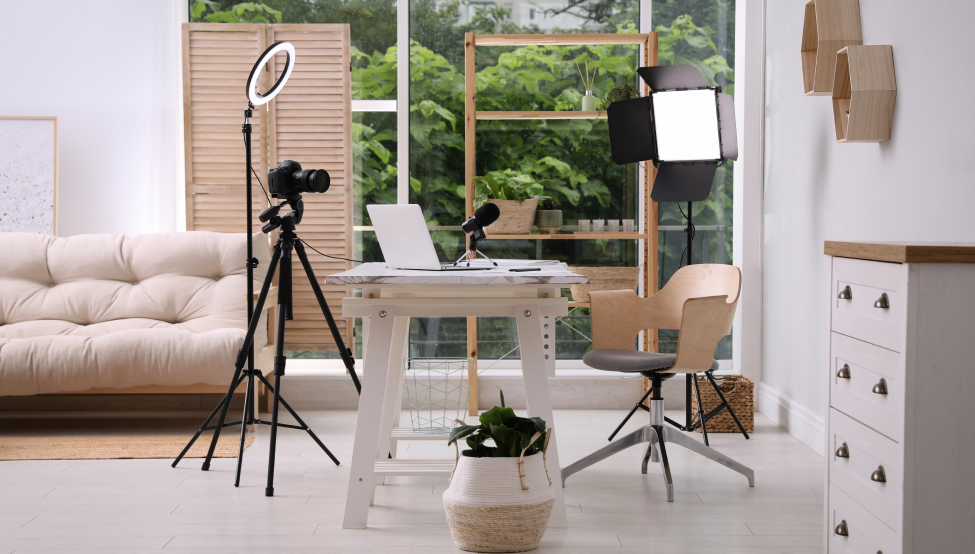
A home office lighting setup for video conferencing.

Contents:

  • What is the best lighting for video conferencing?
  • Where should the light be for a video call?
  • What kind of lighting is best for video meetings?
  • What are the best lighting products for a video conference?
  • What is the best lighting for video conferencing on-the-go?
  • Good lighting means good communication:
 
© 2025 | Daniel Christian