Teaching for uncertainty vs. teaching the basics — from davecormier.com by Dave Cormier

Excerpts:

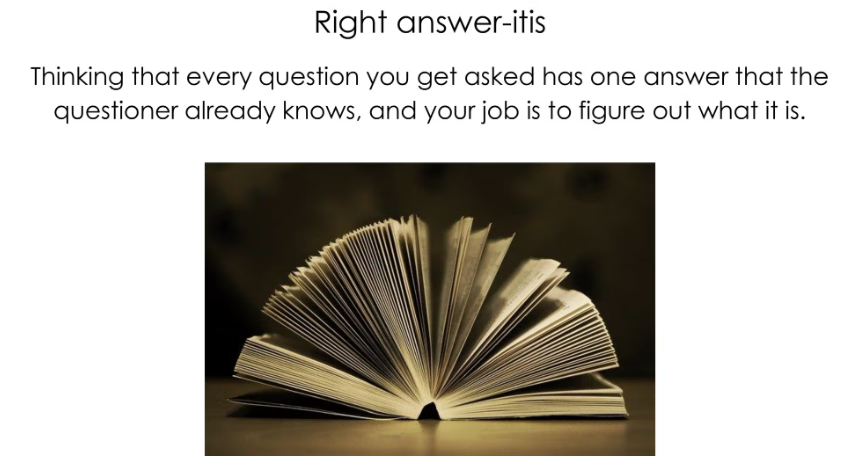
The first question I asked the crowd was what they thought students were learning for…
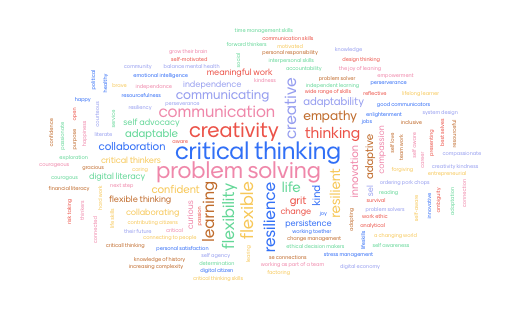
Q1. What do you think our students are learning for? What should they be good at when they’re done school?

…


What Does “Learner-Centered” Higher Ed Really Look Like? Insights from Leaders at SXSW EDU — from wgulabs.org by Nicole Barbaro

Excerpt (emphasis DSC):

What does the future of higher ed look like? Leaders from across the education sector dove deep into this question at the annual SXSW EDU conference that was held in Austin, Texas [last] month. During his keynote session, US Secretary of Education, Miguel Cardona, echoed the need for transformation by stating, “We’re closer to a reset in education than ever before. Let’s not build back something that wasn’t working for everyone.” 

So, how should higher ed build back?

As a “learner-centered” ecosystem. Leaders across education agree that we must put students at the center of our design. But what does it look like in practice to be learner-centered? 

A learner-centered future breaks down institutional silos and works in networks to innovate and support students. And with the ubiquity of online learning in today’s higher ed ecosystem, there’s no reason not to collaborate. “There is no possible future in which online education is not an integral part of higher ed.” affirmed Executive Director of the University Innovation Alliance, Bridget Burns during a panel discussion at SXSW EDU.


It’s (Past) Time to Redesign the Teaching Profession — from gettingsmart.com by Katie Kimbrell

Excerpts (emphasis DSC):

I don’t care if you don’t have kids, if your kids are grown, or if you think for some reason you’re shielded from this threat: This crisis should concern everyone. Just like when any core institution is threatened to subsist, reinvention is not just an opportunity to do better, but an imperative to survive—both for an institution, but more importantly, for our collective humanity.

Please note that this piece is not making an argument for the concept of agency teaching (ie. please don’t send me your theses on why my idea is bad), but rather to demonstrate a point about the need to rethink the teaching profession and to treat educators as humans and critical stakeholders in the way we redesign it.
…
Asking a critical mass of past, present, and future educators these questions is where the empathy work begins—and therein the only way we will be on the right track in designing a system that works for all the humans inside of it.

Also relevant/see:

Who is Going to Teach the Kids? — from by Cameron Paterson

Key Points:

  • There have been profound changes in the work and workload of teachers.
  • During remote learning, both teachers and students discovered a new sense of autonomy.
  • Reprioritizing the focus of work for teachers is critical to the success of schools.
 

Fun formative assessment: 12 easy, no-tech ideas you can use tomorrow — from ditchthattextbook.com

Excerpt:

Below you will find a growing list of fun formative assessment ideas that you can use with any lesson. These ideas are meant to be used in a grab-bag sort of way so that you nor the students know what they are going to get.

Here are some ideas, and then two clever ways to pick formative assessments:

Also relevant/see:


From Instructional Design to Learning Experience Design: Understanding the Whole Student — a podcast out at campustechnology.com by Rhea Kelly, Mark Milliron, and Kim Round

Excerpt:

These days, we hear a lot about the “new normal” in higher education. Remote and hybrid learning is here to stay, offering students more flexibility in their learning journeys. But what if the new normal is not enough? It’s time to go beyond the new normal and consider the “new possible” — how to put together the best of face-to-face, online and hybrid to create powerful learning experiences based on a deep understanding of the whole student. We spoke to Mark Milliron, senior vice president of Western Governors University and executive dean of the Teachers College, and Kim Round, academic programs director and associate dean of the Teachers College, about their vision for reimagining education and why learning experience design is essential to student success.

Another interesting podcast:


A Conversation with Ken Robinson’s Daughter about Their New Book on Transforming Education — from betterhumans.pub by Eva Keiffenheim
Kate Robinson and Co-Author of Imagine if — Creating a Future for us All

Excerpt:

In writing the book, we highlighted ten “Manifesto Statements” that really summarize the key points the book is making.

The main themes of them are:

  • we are all born with immense creative capacities
  • our incredible powers of imagination are what separates us from the rest of life on Earth
  • Education systems are based on conformity
  • real life thrives on diversity
  • we are in the midst of two climate crises: the crisis of the Earth’s natural resources, and the crisis of our human resources
  • and no matter who you are, you are the system — if you change your behavior, you have changed the system, and when enough people commit to changing the system, we have a revolution that will change the world

According to Imagine if…, the future will be grim unless we take action to change the course where we’re heading. What actions need to be taken and what needs to be done and how? Where do we start?

The first and most important step is to embrace a richer conception of human intelligence. Like any ecosystem, our cultural ecosystems depend on a wide variety of talents, interests, and capabilities to thrive. Therefore, we must actively encourage each person to connect with and make the most of their own abilities and passions.


Learning Disorders and Law School: Strategies and Resources — from onlinemasteroflegalstudies.com with thanks to Allegra Balmadier for these resources

Excerpt:

Law schools across the country with all kinds of students and faculty could fairly be described by a single word: rigor. Juris Doctor (J.D.) degree programs are traditionally known for copious amounts of required reading and semester-end exams that count for a student’s whole grade. A legal education is an intensive course of study that would challenge any student.

A student with a learning disorder or disability (LD) may struggle for a particular reason—not for lack of effort but because of the conventional structure of class, assignments and tests. LDs can cause difficulty with processing information, a problem that is exacerbated when universities and colleges fail to offer support.

However, with appropriate strategies, students with LDs can succeed in law school and in the legal profession. Learn more about learning disorders and find resources below.


45 Next Generation Learning Tools That Kids Will Love — from ireviews.com with thanks to Alex Ward for this resource

Excerpts:

There’s a wide range of tools designed to support curriculum and help teachers and students achieve their goals. These are our top picks for school students of every age, due to their impressive functionality and simple integration into the classroom.


From DSC:
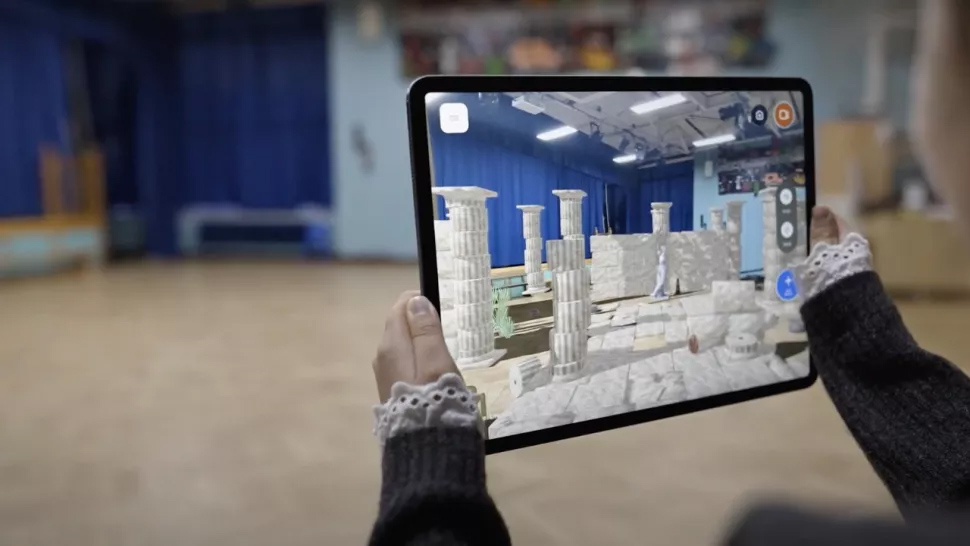
Below is a sample screenshot from the Elementary school resources section. They also have resources for middle schoolers and high schoolers.
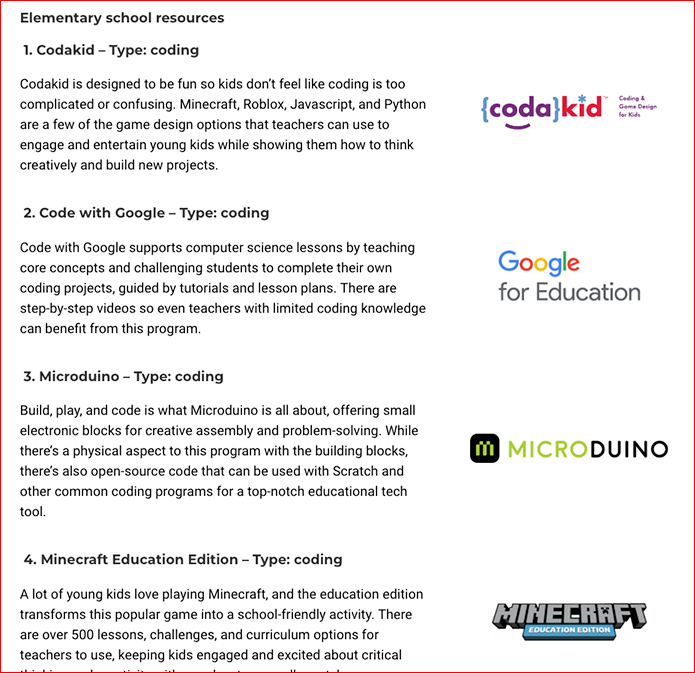

45 Next Generation Learning Tools That Kids Will Love


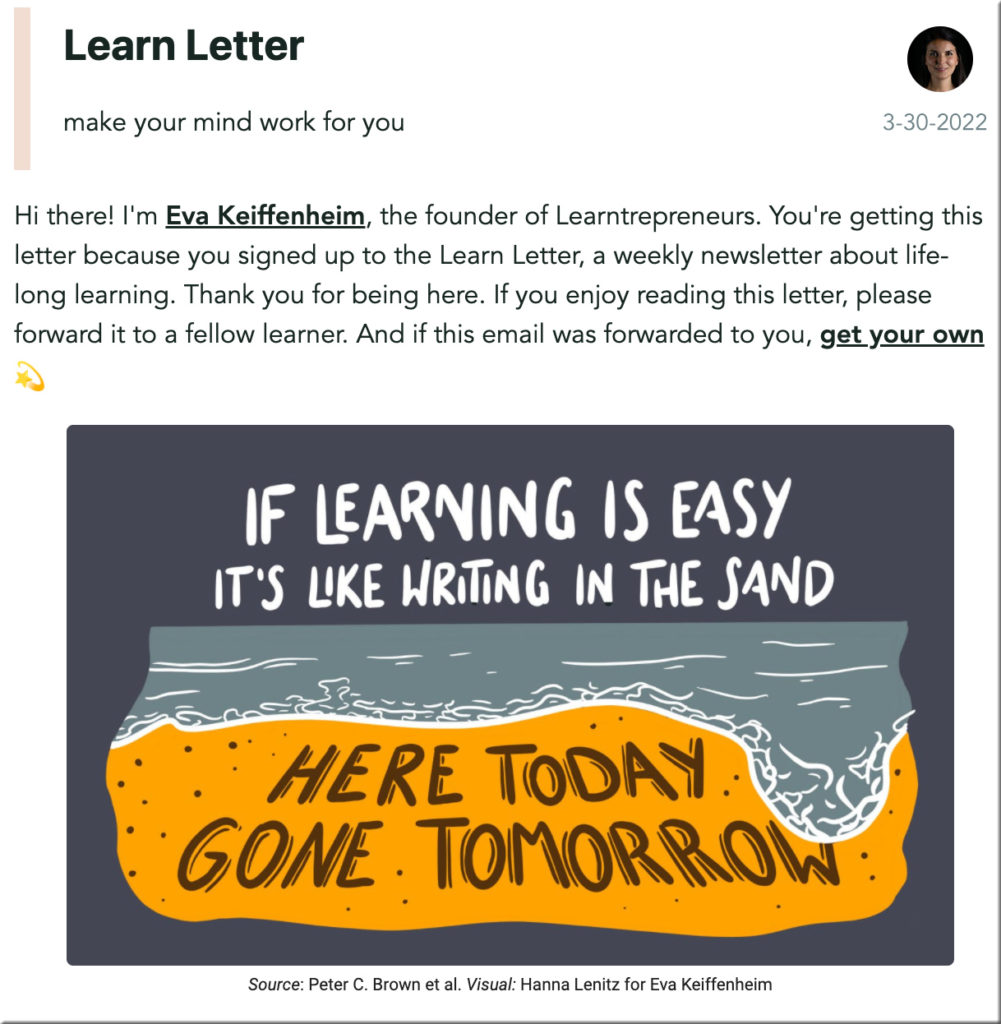
If learning is easy, it's here today and gone tomorrow...like footprints in the sand on a beach

Excerpt:

While studying I misjudged the depth of my knowledge. I confused familiarity with knowing.

When you passively consume information like reading books or watching courses and things start to make sense we often tell ourselves: “Oh, easy. I understand this. Got it.”

But it’s wrong to think you can access something from your memory if you can recognize it.


Want Students Who Think for Themselves? Let’s Eliminate Our Standardized School System — from edsurge.com by Zachary Morita

Excerpt:

It is a wake-up call when a student feels defeated by an educational system that focuses on standardizing students who feel like they are “the problem.” We can’t expect students to understand the purpose of education on their own. They need educators, leaders and supporters to guide them to create the education system they deserve to succeed in life. I stand by what I share with all of my students: that we must reimagine and redesign our education system so that students are NOT the problem.

Instead, we must ensure that learners are intrinsically motivated through learning activities that are challenging, purposeful, relevant and empowering.


Students Co-authoring Their Own Learning — from gettingsmart.com by Tom Vander Ark

Key Points

  • By inviting learners to co-author learning experiences, journeys and records, we help them build the most important skills and dispositions they’ll need to succeed in a changing world.
  • Helping learners weave together learner-chosen and co-authored experiences into coherent pathways is the new learning design challenge.
 

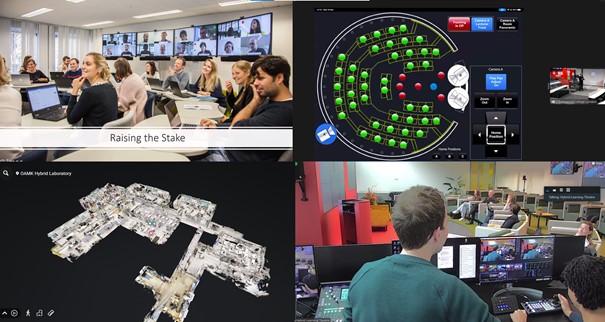
Picturesof learning spaces at KU Leuven, Imperial College London, University of Amsterdam, Oulu University of Applied Sciences, Finland

Clockwise from top left (KU Leuven, Imperial College London, University of Amsterdam,
Oulu University of Applied Sciences, Finland

.

A virtual tour of four advanced hybrid learning spaces — from zacwoolfitt.blogspot.com by Zac Woolfitt

Excerpt:

What are the next developments in the Hybrid Virtual Classroom? What kind of spaces might we be teaching in soon?

On March 16th we glimpsed the future. Colleagues from 4 higher education institutes gave virtual tours of their technology rich learning spaces in Belgium, England, Finland and the Netherlands. Media and Learning arranged the session [i]. (Disclosure: Zac is on their advisory panel of Media and Learning).

From DSC:
Here in the U.S., some would promote the use of the word “Hyflex” here instead of hybrid or blended learning — as it sounds like they are simultaneously teaching students in a physical classroom along with online-based learners.
 
© 2025 | Daniel Christian