Assistive Technology for Kids with Multiple Disabilities — from equalentry.com
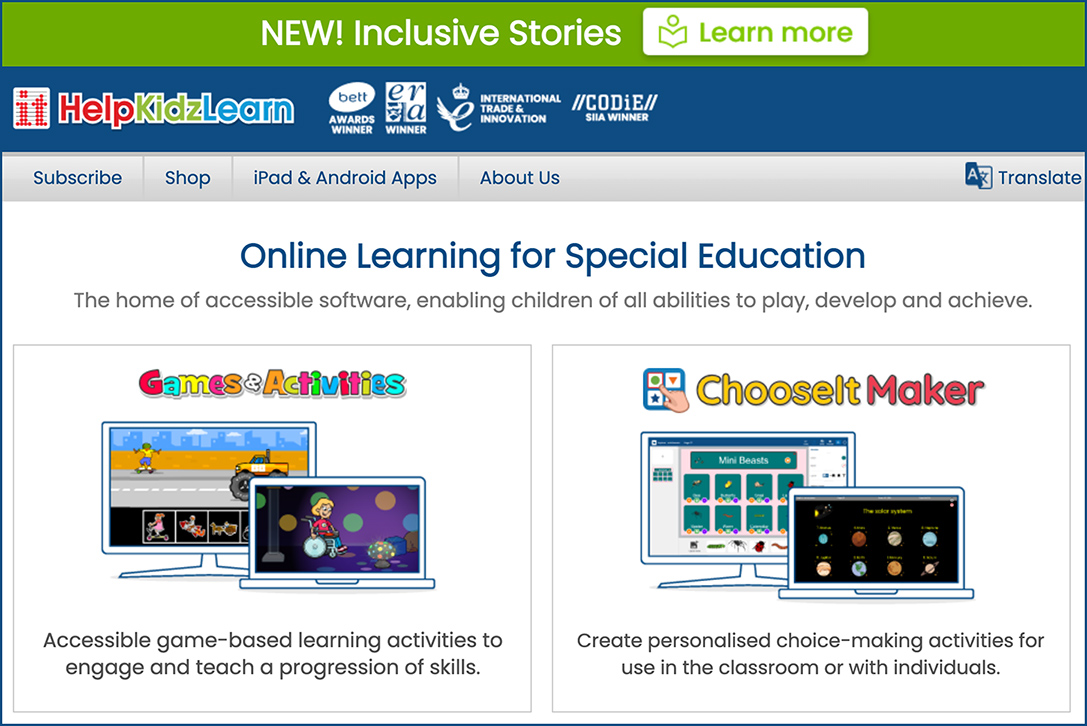
Help Kids Learn dot com -- online learning for special education -- uses assistive technologies


Lego Owner to Acquire Education-Technology Firm Brainpop — from nytimes.com by Trefor Moss
Kirkbi, the family-run company behind the world’s largest toy maker, plans to establish an education business

Excerpt:

Lego owner Kirkbi A/S is buying U.S. video-learning firm Brainpop for $875 million, according to the companies, as the family behind the world’s largest toy maker expands into the education business.

The Danish company said the purchase of Brainpop, which produces short animations used in schools to help children learn everything from math to music, was part of a plan to build a new business pillar. The deal—through which Kirkbi is acquiring Brainpop’s owner FWD Media Inc.—is expected to close Tuesday, the companies said.

“We are definitely on the path to establishing the Lego idea of learning through play in the formal education space,” said Jørgen Vig Knudstorp, executive chairman of the Lego Brand Group, the Kirkbi entity that oversees the toy brand.
 

Creating a Culture to Support Student Voice & Choice — from techlearning.com by Matthew X. Joseph
Encouraging student voice and choice helps foster a more engaging learning environment

Excerpt:

During my time as a district and school leader, I observed and conferenced with students entering high school, and only about a third of those reported feeling engaged with their education. I believe education should provide students with meaningful learning experiences in a classroom of engaged learners.

One way to enhance student engagement is to allow for student voice. Students who feel their voices are heard are more likely to feel academically engaged and respected in the school community. In addition, students feel valued when they feel heard. Students learn for someone, not just from someone. Thus, feeling valued is essential in creating a safe culture for students to share their voice.

Providing students with multiple options for an assignment helps them choose the content that is relevant, meaningful, and exciting to them. As a result, they are a part of their own learning process, rather than having to move through assignments that are not engaging.


Data Science: Re-Imagining Our Institutions at the Systems Level — from campustechnology.com by Mary Grush
A Q&A with George Siemens

Excerpt:

We know that higher education institutions have been exploring data science for decades. Many began by leveraging institutional data to serve administrative computing needs and efficiencies, later taking on an additional learning science focus, at least to some, often limited degree.

What can institutions do now, to use data science better and perhaps reinvent themselves in the process? Are they taking advantage of all the access they have to so many disciplines and researchers, to help move data science ahead in the real world? Here, George Siemens, who is a professor of practice at the University of Texas-Arlington and co-leads the Centre for Change and Complexity in Learning at the University of South Australia, talks with CT about data science in higher education.


What might the ramifications be for text-to-everything? [Christian]

From DSC:

  • We can now type in text to get graphics and artwork.
  • We can now type in text to get videos.
  • There are several tools to give us transcripts of what was said during a presentation.
  • We can search videos for spoken words and/or for words listed within slides within a presentation.

Allie Miller’s posting on LinkedIn (see below) pointed these things out as well — along with several other things.


This raises some ideas/questions for me:

  • What might the ramifications be in our learning ecosystems for these types of functionalities? What affordances are forthcoming? For example, a teacher, professor, or trainer could quickly produce several types of media from the same presentation.
  • What’s said in a videoconference or a webinar can already be captured, translated, and transcribed.
  • Or what’s said in a virtual courtroom, or in a telehealth-based appointment. Or perhaps, what we currently think of as a smart/connected TV will give us these functionalities as well.
  • How might this type of thing impact storytelling?
  • Will this help someone who prefers to soak in information via the spoken word, or via a podcast, or via a video?
  • What does this mean for Augmented Reality (AR), Mixed Reality (MR), and/or Virtual Reality (VR) types of devices?
  • Will this kind of thing be standard in the next version of the Internet (Web3)?
  • Will this help people with special needs — and way beyond accessibility-related needs?
  • Will data be next (instead of typing in text)?

Hmmm….interesting times ahead.


A Philosophy of Faculty Development — from derekbruff.org by Derek Bruff

Excerpts:

Fortunately, a few questions at the beginning of a conversation can go a long way here. “Tell me about your teaching experience over the last few years?” “What does a typical class session look like for you?” “What can you tell me about the students who are taking your course?”
…
Asking good questions is a key skill for a faculty developer. You ask questions to understand an instructor’s beliefs about teaching and to figure out what’s driving some problem they’ve identified. You also ask questions to help an instructor explore possible solutions or changes to their teaching practice.

Faculty are professionals, and if they’re going to make a change to their practice that’s successful, they need to own that change. Leading with a non-directive consulting approach is usually the best approach.


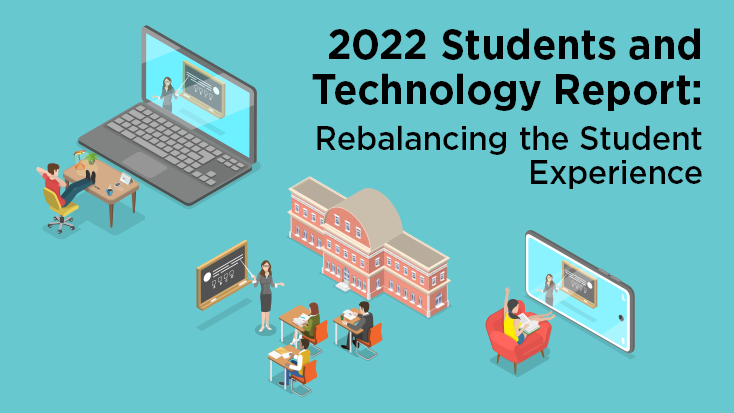
2022 Students and Technology Report: Rebalancing the Student Experience — from library.educause.edu by Jenay Robert

2022 Students and Technology Report: Rebalancing the Student Experience

Excerpt:

In this report, we describe the findings of the survey in four key areas:

Key Findings

  • Educational technology impacts student wellness.
  • Physical campus spaces continue to play an important role in students’ access to education.
  • The online versus face-to-face dichotomy is being disrupted.
  • Device access is not a simple issue when examined through an equity lens.
  • Assistive technology can help all students.
  • Students are whole people with complex learning needs and goals.
 

Learning from Our Students: Student Perspectives on Good Teaching — from everylearnereverywhere.org; with thanks to Beth McMurtrie for this resource

Excerpt (emphasis DSC):

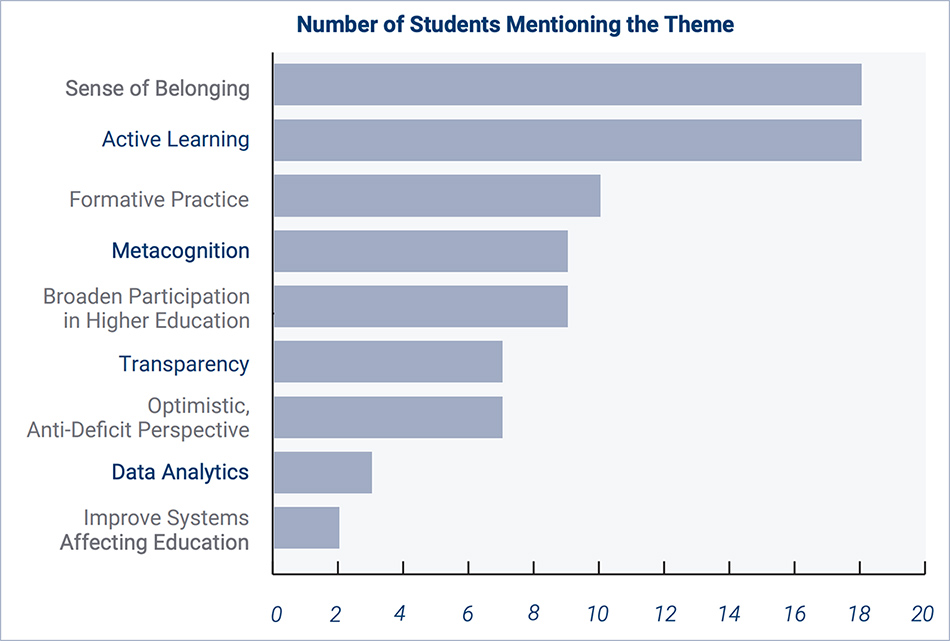
Twenty-two students trusted us with their stories and their reflections on good teaching. We honor that trust and hope that instructors who read this document gain as much insight about teaching from the students as we did. While we often write of students in the plural, each one of these students had an individual experience with learning and therefore a unique story to tell about good teaching. The key takeaways from their stories are:

  1. Students want to be recognized as individuals and appreciated in the classroom.
  2. Students want real life in the classroom.
  3. Students want to be treated with respect and trust.

We hope readers will likewise ask their own students, “What do your best instructors do?” and use that feedback to continuously improve their craft as teachers.

Out of 22 students:

active learning and a sense of belonging were the most frequently mentioned items from these 22 students


What researchers learned about online higher education during the pandemic — from hechingerreport.org by Jon Marcus
Its massive expansion created a worldwide laboratory to finally assess how well it works

Excerpts:

Now the results of this experiment are starting to come in. They suggest that online higher education may work better than pre-pandemic research showed, and that it is evolving decisively toward a combination of in-person and online, or “blended,” classes.
…
“Initially when we were doing that research it was always on the class or the course level and very rarely were you able to see how online education worked across programs and across institutions,” never mind across the world, said Michael Brown, assistant professor of higher education and student affairs at the Iowa State University School of Education.

By last year, more than half of all faculty said they “agreed” or “strongly agreed” that they wanted to combine online with face-to-face instruction, a Bay View Analytics survey found. A Harvard University task force found that 82 percent of faculty there were interested in adding digital tools they adopted while teaching remotely to their in-person classes.
…
“It’s going to take years for us to really be able to see, out of the things coming out of the pandemic, what works well, what works well in some settings and what works well for some students and not for others,” Hart said.


Also from hechingerreport.org by Jon Marcus, see:


Why text-to-speech tools might have a place in your classroom with Dr. Kirsten Kohlmeyer – Easy TeTech Podcast 183 — from classtechtips.com by Monica Burns

Excerpt:

In this episode, Assistive Technology Director, Dr. Kirsten Kohlmeyer, joins to discuss the power of accessibility and text-to-speech tools in classroom environments. You’ll also hear plenty of digital resources to check out for text-to-speech options, audiobooks, and more!

Assistive tools can provide:

  • Text-to-speech
  • Definitions/vocabularies
  • Ability to level the Lexile level of a reading
  • Capability to declutter a website
  • More chances to read to learn something new
  • and more

Speaking of tools, also see:


Inclusive Education For Students With Hearing Impairment — from edtechreview.in by Priyanka Gupta

Excerpt:

The following may be difficult for a student with a hearing impairment:

  • The subjects of spelling, grammar, and vocabulary
  • Making notes while listening to lectures
  • Participate, engage or understand classroom discussions
  • Understand educational videos
  • Present oral reports


Lessons Learned from Six Years of Podcasting — from derekbruff.org by Derek Bruff

Excerpt:

Last month on Twitter, I shared some of the many, many things I’ve learned from podcast guests over the last six years. I encourage you to check out that thread and listen to a few of my favorite episodes. Here on the blog, I’d like to share a few more general reflections about what I learned through producing Leading Lines.

Finally, one lesson that the podcast reinforced for me is that faculty and other instructors want to hear stories. Sure, a peer-reviewed journal article on the impact of some teaching practice is useful, but some of those can focus too much on assessment and not enough on the practice itself. Hearing a colleague talk about their teaching, the choices they’ve made, why they made those choices, what effects those choices have had on student learning… that can be both inspirational and intensely practical for those seeking to improve their teaching. A big part of Leading Lines was finding instructors with compelling stories and then letting them shine during our interviews.

Speaking of digital audio, also relevant/see:

With Audiobooks Launching in the U.S. Today, Spotify Is the Home for All the Audio You Love — from newsroom.spotify.com by

Excerpt:

Adding an entirely new content format to our service is no small feat. But we’ve done it before with podcasts, and we’re excited to now do the same with audiobooks.
…
Just as we did with podcasting, this will introduce a new format to an audience that has never before consumed it, unlocking a whole new segment of potential listeners. This also helps us support even more kinds of creators and connect them with fans that will love their art—which makes this even more exciting.


Addendum on 9/30/22:


Just another new Academic Year? Think again! — from The Educationalist by Alexandra Mihai

Excerpt:

Welcome to a new issue of “The Educationalist”! For many of us the new Academic Year just started or is about to start. These are busy times: catching up with our academic (and administrative) duties, reconnecting with colleagues and with students. It’s all too easy to fall back into an old pattern and go into the classroom with the same set of assumptions and expectations from previous years. That’s why I would like to call for a pause. A moment to collect our thoughts and acknowledge where we are. Think of what’s important. I believe this exercise is not a luxury; it is extremely necessary right now as it allows us to take stock of the current situation and decide on our next steps. Intentionally and not “by default”.

But how about letting go of the idea of “normal”? How about we take a moment to meaningfully reflect on our experience in the past three years in a try to see how it shaped the way we teach, learn, work, the way we interact with each other and with our environment?


New Directory of Innovative School Models Aims to Encourage Experimentation — from edsurge.com by Daniel Mollenkamp

Excerpt:

A new online library called the “Innovative Models Exchange,” unveiled Monday, hopes to give educators an easy place to quickly consider some possibilities. The exchange—developed by the nonprofit Transcend Education with funding from the Gates Foundation—allows schools to search through a database of “innovative” models that Transcend says are ready to be adopted by schools.

The nonprofit hopes that the database will shake up the education system.


Boosting High School Students’ Sense of Agency and Motivation — from edutopia.org by Mary Davenport
Providing students with greater voice and choice in the classroom can build their desire to learn and do well academically.

Excerpt:

This year, instead of repeating essay after essay, we included project-based, performative, and creative assessments. The variety allowed for every student to shine at some point in a way unique to themselves.

More than anything, creating opportunities for autonomy has necessitated a shift in my perspective. Our field likes to talk about everything standards-based, but there are dangers to that: When the standard becomes more important than the student in front of us, we have lost the true meaning of education.
…

I offer students choice by giving them options regarding

    • learning content (which texts to read, videos to watch, podcasts to listen to);
    • communication and processing (written, verbal, or visual);
    • assessments (choosing topics, choosing texts, choosing supports, choosing structures); and
    • work time (independent, collaborative, location).

Learners need: More voice. More choice. More control. -- this image was created by Daniel Christian


© 2025 | Daniel Christian