


Instant translation on the go #AI #MachineLearning #voice
RT @helene_wpli @BrianRoemmele @jblefevre60 @akwyz @DimitriHommel @alvinfoo @floriansemle @dinisguarda @YuHelenYu @kashthefuturist @MarshaCollier @CurtisSChin @Xbond49 @guzmand @kalydeoo @Ym78200 @ArnaultChatel pic.twitter.com/XcUiX9oNdz— Olivier Laborde ????? (@labordeolivier) February 13, 2019
On 02/08/2019,
in 21st century, A/V -- audio/visual, Artificial Intelligence/Agents/LLMs/and Related, bots, Google, innovation, languages and translation, Natural Language Processing (NLP), platforms, technologies for your home, voice recognition / voice enabled interfaces,
by Daniel Christian
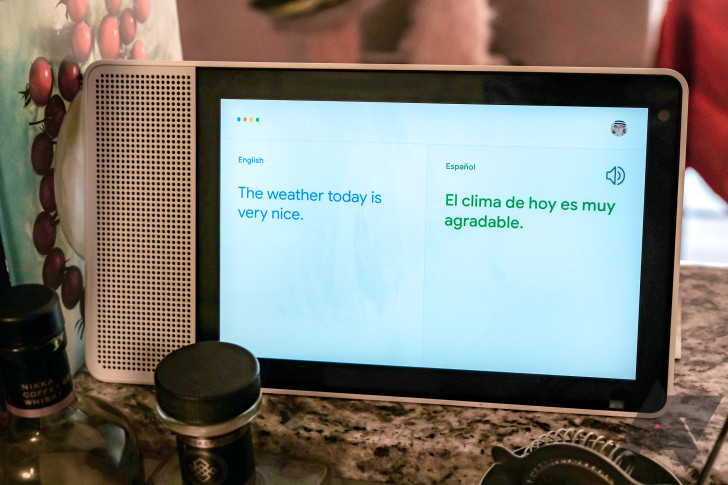
Google is bringing translation to its Home speakers — from businessinsider.com by Peter Newman
Excerpt:
Google has added real-time translation capabilities to its Google Home smart speakers, the Home Hub screened speaker, as well as other screened devices from third parties, according to Android Police.
Also see:
- Google Assistant is now your multilingual interpreter — from androidpolice.com by Hagop Kavafian
On 01/22/2019,
in Apple, Artificial Intelligence/Agents/LLMs/and Related, Augmented Reality (AR), emerging technologies, languages and translation, vendors,
by Daniel Christian
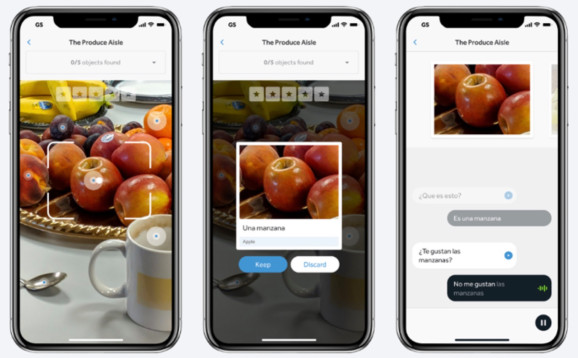
Rosetta Stone for iPhone adds AI to identify objects for live translations — from venturebeat.com by Jeremy Horwitz
Excerpt:
Today, language teaching developer Rosetta Stone is taking the next step forward by adding augmented reality and machine learning to its iPhone app, enabling users to identify and translate the names of real-world objects…
On 01/09/2019,
in 21st century, A/V -- audio/visual, accessibility / UDL, adjunct faculty, adult learning, Artificial Intelligence/Agents/LLMs/and Related, business, career development, change, changing business models, cloud-based computing / apps / other cloud-related, collaboration, colleges, communications, communities of practice, community colleges, computer science, content development, aggregation, repositories, corporate / business world, corporate universities / corporate training, cost of getting a degree, dangers of the status quo, Daniel S. Christian, disruption, distance education, education, education technology, emerging technologies, engagement / engaging students, faculty/staff, future, future of higher education, game-changing environment, global / globalization, higher education, homeschooling/homeschoolers, human-computer interaction (HCI), ideas, innovation, languages and translation, learner profiles, learning, learning ecosystem, Learning from the Living [Class] Room, learning spaces, Microsoft, neurodivergent/special needs, online learning, personalized/customized learning, platforms, productivity / tips and tricks, second screen apps, teachers, teaching & learning, tools, training / L&D, universities, usability, user experience (UX), vendors, web-based collaboration,
by Daniel Christian
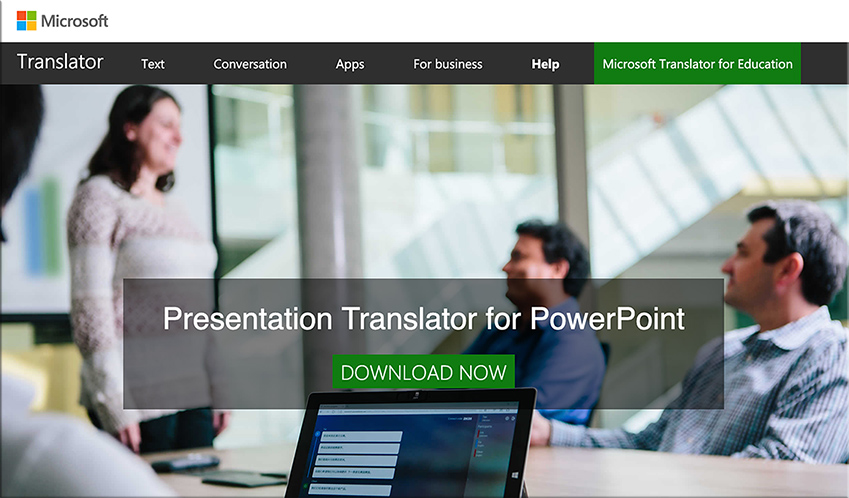
Presentation Translator for PowerPoint — from Microsoft (emphasis below from DSC:)
Presentation Translator breaks down the language barrier by allowing users to offer live, subtitled presentations straight from PowerPoint. As you speak, the add-in powered by the Microsoft Translator live feature, allows you to display subtitles directly on your PowerPoint presentation in any one of more than 60 supported text languages. This feature can also be used for audiences who are deaf or hard of hearing.
Additionally, up to 100 audience members in the room can follow along with the presentation in their own language, including the speaker’s language, on their phone, tablet or computer.
From DSC:
Up to 100 audience members in the room can follow along with the presentation in their own language! Wow!
Are you thinking what I’m thinking?! If this could also address learners and/or employees outside the room as well, this could be an incredibly powerful piece of a next generation, global learning platform!
Automatic translation with subtitles — per the learner’s or employee’s primary language setting as established in their cloud-based learner profile. Though this posting is not about blockchain, the idea of a cloud-based learner profile reminds me of the following graphic I created in January 2017.
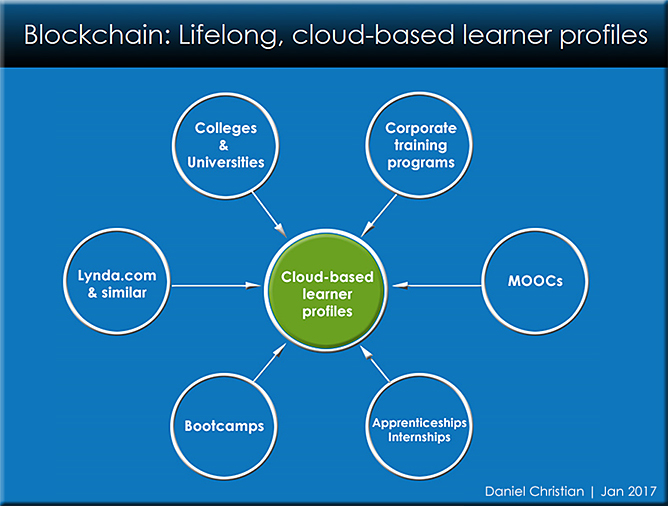
A couple of relevant quotes here:
A number of players and factors are changing the field. Georgia Institute of Technology calls it “at-scale” learning; others call it the “mega-university” — whatever you call it, this is the advent of the very large, 100,000-plus-student-scale online provider. Coursera, edX, Udacity and FutureLearn (U.K.) are among the largest providers. But individual universities such as Southern New Hampshire, Arizona State and Georgia Tech are approaching the “at-scale” mark as well. One could say that’s evidence of success in online learning. And without question it is.
But, with highly reputable programs at this scale and tuition rates at half or below the going rate for regional and state universities, the impact is rippling through higher ed. Georgia Tech’s top 10-ranked computer science master’s with a total expense of less than $10,000 has drawn more than 10,000 qualified majors. That has an impact on the enrollment at scores of online computer science master’s programs offered elsewhere. The overall online enrollment is up, but it is disproportionately centered in affordable scaled programs, draining students from the more expensive, smaller programs at individual universities. The dominoes fall as more and more high-quality at-scale programs proliferate.
Education goes omnichannel. In today’s connected world, consumers expect to have anything they want available at their fingertips, and education is no different. Workers expect to be able to learn on-demand, getting the skills and knowledge they need in that moment, to be able to apply it as soon as possible. Moving fluidly between working and learning, without having to take time off to go to – or back to – school will become non-negotiable.
From DSC:
Is there major change/disruption ahead? Could be…for many, it can’t come soon enough.
On 09/01/2018,
in A/V -- audio/visual, Artificial Intelligence/Agents/LLMs/and Related, Asia, Augmented Reality (AR), biology, career development, chemistry, corporate / business world, corporate universities / corporate training, creativity, Daniel S. Christian, digital learning, emerging technologies, engagement / engaging students, Europe, future, health, human-computer interaction (HCI), ideas, languages and translation, Microsoft, Mixed Reality (MR), Natural Language Processing (NLP), platforms, science, simulations, society, STEAM-related, tools, training / L&D, trends, United States, user experience (UX), vendors, Virtual Reality (VR) / worlds / learning, voice recognition / voice enabled interfaces, XR - extended reality,
by Daniel Christian
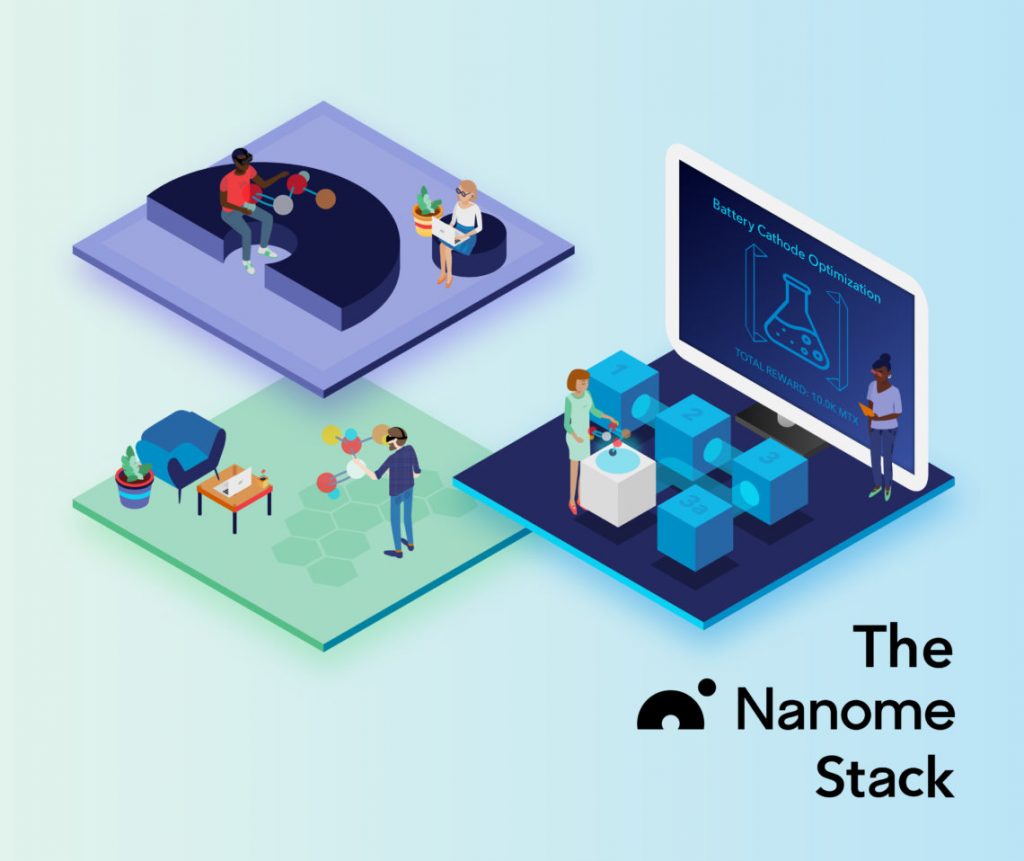
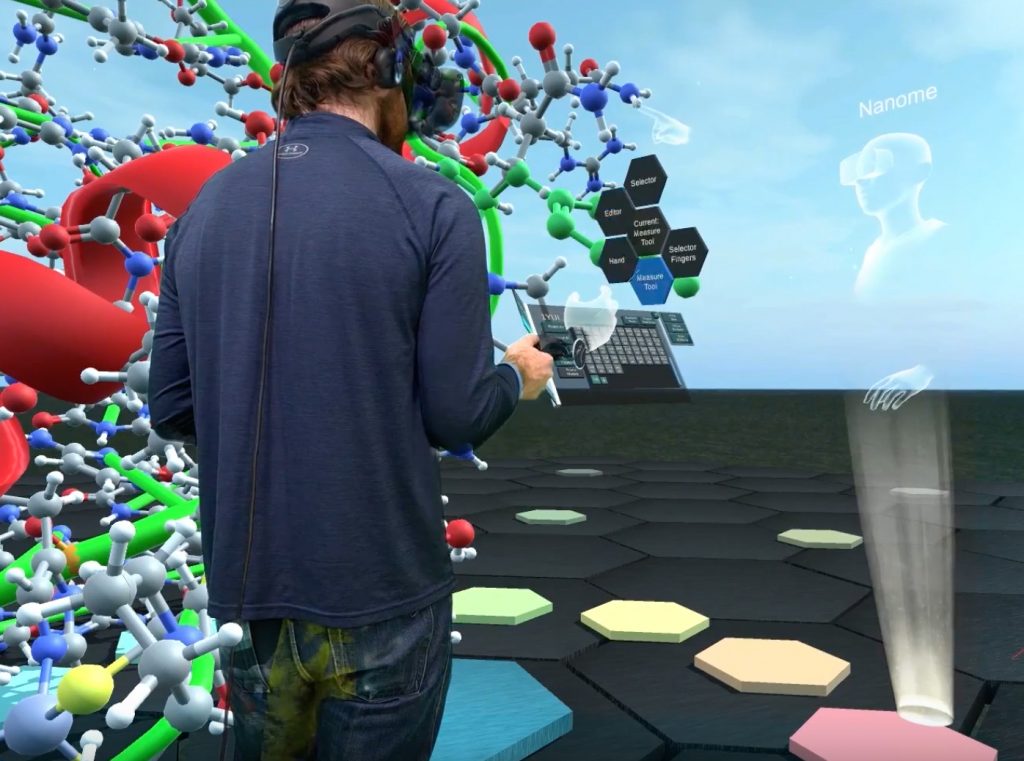
San Diego’s Nanome Inc. releases collaborative VR-STEM software for free — from vrscout.com by Becca Loux
Excerpt:
The first collaborative VR molecular modeling application was released August 29 to encourage hands-on chemistry experimentation.
The open-source tool is free for download now on Oculus and Steam.
Nanome Inc., the San Diego-based start-up that built the intuitive application, comprises UCSD professors and researchers, web developers and top-level pharmaceutical executives.
“With our tool, anyone can reach out and experience science at the nanoscale as if it is right in front of them. At Nanome, we are bringing the craftsmanship and natural intuition from interacting with these nanoscale structures at room scale to everyone,” McCloskey said.
10 ways VR will change life in the near future — from forbes.com
Excerpts:
- Virtual shops
- Real estate
- Dangerous jobs
- Health care industry
- Training to create VR content
- Education
- Emergency response
- Distraction simulation
- New hire training
- Exercise
From DSC:
While VR will have its place — especially for timeswhen you need to completely immerse yourself into another environment — I think AR and MR will be much larger and have a greater variety of applications. For example, I could see where instructions on how to put something together in the future could use AR and/or MR to assist with that process. The system could highlight the next part that I’m looking for and then highlight the corresponding parts where it goes — and, if requested, can show me a clip on how it fits into what I’m trying to put together.
How MR turns firstline workers into change agents — from virtualrealitypop.com by Charlie Finkand
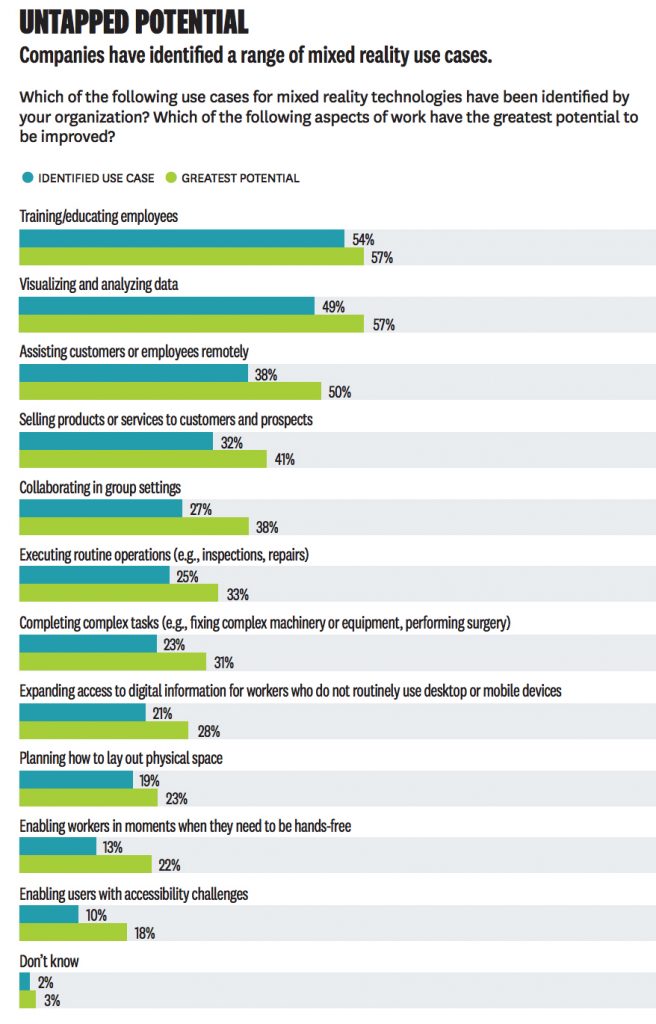
Mixed Reality, a new dimension of work — from Microsoft and Harvard Business Review
Excerpts:
Workers with mixed-reality solutions that enable remote assistance, spatial planning, environmentally contextual data, and much more,” Bardeen told me. With the HoloLens Firstline Workers workers conduct their usual, day-to-day activities with the added benefit of a heads-up, hands-free, display that gives them immediate access to valuable, contextual information. Microsoft says speech services like Cortana will be critical to control along with gesture, according to the unique needs of each situation.
Expect new worker roles. What constitutes an “information worker” could change because mixed reality will allow everyone to be involved in the collection and use of information. Many more types of information will become available to any worker in a compelling, easy-to-understand way.
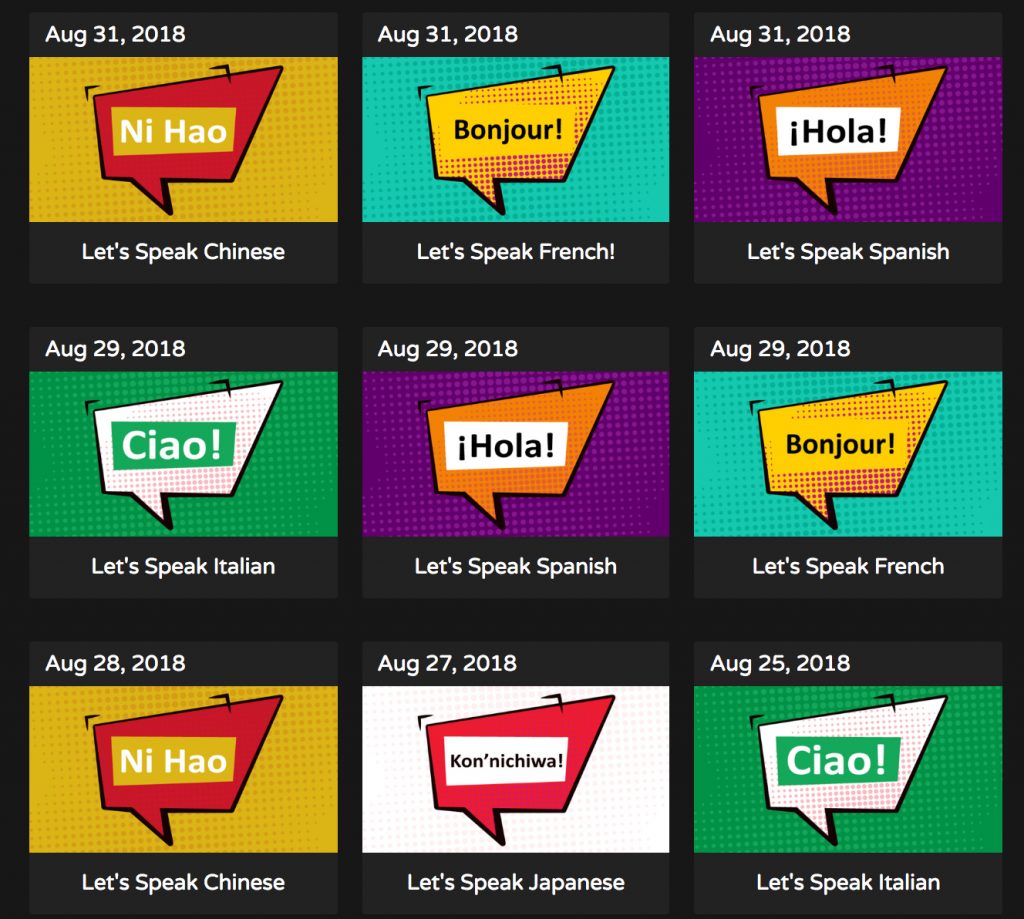
Let’s Speak: VR language meetups — from account.altvr.com
On 05/11/2018,
in 21st century, A/V -- audio/visual, Artificial Intelligence/Agents/LLMs/and Related, blended learning, business, collaboration, colleges, communications, future, future of higher education, game-changing environment, higher education, human-computer interaction (HCI), ideas, innovation, intelligent systems, languages and translation, learning, learning ecosystem, learning spaces, Microsoft, MOOCs -- Massive Open Online Courses, Natural Language Processing (NLP), online learning, platforms, productivity / tips and tricks, smart classrooms, tools, training / L&D, universities, vendors, vision/possibilities, voice recognition / voice enabled interfaces, workplace,
by Daniel Christian
Microsoft’s meeting room of the future is wild — from theverge.com by Tom Warren
Transcription, translation, and identification
Excerpts:
Microsoft just demonstrated a meeting room of the future at the company’s Build developer conference.
…
It all starts with a 360-degree camera and microphone array that can detect anyone in a meeting room, greet them, and even transcribe exactly what they say in a meeting regardless of language.
…
Microsoft takes the meeting room scenario even further, though. The company is using its artificial intelligence tools to then act on what meeting participants say.
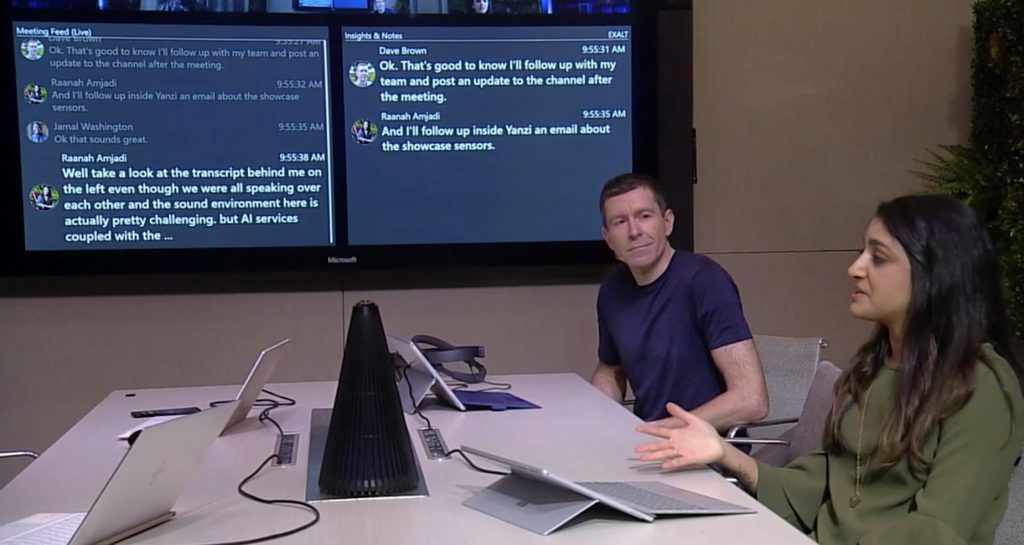
From DSC:
Whoa! Many things to think about here. Consider the possibilities for global/blended/online-based learning (including MOOCs) with technologies associated with translation, transcription, and identification.
On 04/23/2018,
in adjunct faculty, Amazon, Apple, Artificial Intelligence/Agents/LLMs/and Related, bots, career development, change, colleges, community colleges, computer science, corporate / business world, education, education technology, emerging technologies, engagement / engaging students, Facebook / Meta Platforms, faculty/staff, Google, higher education, human-computer interaction (HCI), ideas, innovation, intelligent systems, intelligent tutoring, K-12 related, languages and translation, learning, learning agents, learning ecosystem, Learning from the Living [Class] Room, marketing/social marketing, marketplaces, personalized/customized learning, platforms, tools, training / L&D, trends, usability, user experience (UX), vendors, wearables, workplace,
by Daniel Christian
An AI Bot for the Teacher — with thanks to Karthik Reddy for this resource
Artificial intelligence is the stuff of science fiction – if you are old enough, you will remember those Terminator movies a good few years ago, where mankind was systematically being wiped out by computers.
The truth is that AI, though not quite at Terminator level yet, is already a fact and something that most of us have encountered already. If you have ever used the virtual assistant on your phone or the Ask Google feature, you have used AI.
Some companies are using it as part of their sales and marketing strategies. An interesting example is Lowe’s Home Improvement that, instead of chatbots, uses actual robots into their physical stores. These robots are capable of helping customers locate products that they’re interested in, taking a lot of the guesswork out of the entire shopping experience.
Of course, there are a lot of different potential applications for AI that are very interesting. Imagine an AI teaching assistant, for example. They could help grade papers, fact check and assist with lesson planning, etc., all to make our harassed teachers’ lives a little easier.
Chatbots could be programmed as tutors to help kids better understand core topics if they are struggling with them, ensuring that they don’t hold the rest of the class up. And, for kids who have a real affinity with the subject, help them learn more about what they are interested in.
It could also help enhance long distance training. Imagine if your students could get instant answers to basic questions through a simple chatbot. Sure, if they were still not getting it, they would come through to you – the chatbot cannot replace a real, live, teacher after all. But it could save you a lot of time and frustration.
Here, of course, we have only skimmed the surface of what artificial intelligence is capable of. Why not look through this infographic to see how different brands have been using this tech, and see what possible applications of it we might expect.
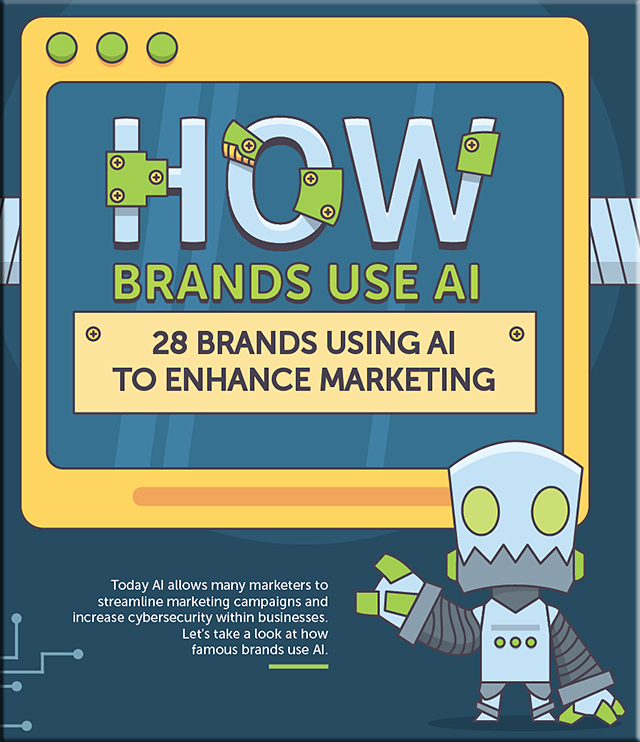
Brands that use AI to enhance marketing (infographic) 2018
From 16best.net with thanks to Karthik Reddy for this resource
On 03/23/2018,
in 3D, Augmented Reality (AR), computer science, digital learning, emerging technologies, Google, human-computer interaction (HCI), languages and translation, legislatures / government / legal, platforms, programming, tools, universities, vendors, Virtual Reality (VR) / worlds / learning,
by Daniel Christian
Experience Virtual Reality on the web with Chrome — from blog.google
Excerpt:
Virtual reality (VR) lets you tour the Turkish palace featured in “Die Another Day,” learn about life in a Syrian refugee camp firsthand, and walk through your dream home right from your living room. With the latest version of Chrome, we’re bringing VR to the web—making it as easy to step inside Air Force One as it is to access your favorite webpage.
For a fully immersive experience, use Chrome with your Daydream-ready phone and Daydream View—just browse to a VR experience you want to view, choose to enter VR, and put the phone in your Daydream View headset. If you don’t have a headset you can view VR content on any phone or desktop computer and interact using your finger or mouse.
You can already try out some great VR-enabled sites, with more coming soon. For example, explore the intersection of humans, nature and technology in the interactive documentary Bear 71. Questioning how we see the world through the lens of technology, this story blurs the lines between the wild world and the wired one.
Learn A New Language With Your Mobile Using MondlyAR — from vrfocus.com by
Start learn a new language today on your Android device.
Excerpt:
MondlyAR features an avatar “teacher” who brings virtual objects – planets, animals, musical instruments and more – into the room as teaching tools, engages the user in conversations and gives instant feedback on pronunciation thanks to chatbot technology. By incorporating these lifelike elements in the lessons, students are more likely to understand, process, and retain what they are taught.
Users will have seven languages to chose from, American English, British English, French, Spanish, Italian, Portuguese, and German with the studio expecting to be able to offer no less than 30 languages in AR by the next update in August 2018.
Augmented Reality takes 3-D printing to next level — from rtoz.org
Excerpt:
Cornell researchers are taking 3-D printing and 3-D modeling to a new level by using augmented reality (AR) to allow designers to design in physical space while a robotic arm rapidly prints the work. To use the Robotic Modeling Assistant (RoMA), a designer wears an AR headset with hand controllers. As soon as a design feature is completed, the robotic arm prints the new feature.
The Legal Hazards of Virtual Reality and Augmented Reality Apps — from by Tam Harbert
Liability and intellectual property issues are just two areas developers need to know about
Excerpt:
As virtual- and augmented-reality technologies mature, legal questions are emerging that could trip up VR and AR developers. One of the first lawyers to explore these questions is Robyn Chatwood, of the international law firm Dentons. “VR and AR are areas where the law is just not keeping up with [technology] developments,” she says. IEEE Spectrum contributing editor Tam Harbert talked with Chatwood about the legal challenges.
Why VR has a bright future in the elearning world — elearninglearning.com by Origin Learning
Excerpt:
The Benefits of Using Virtual Reality in eLearning
- It offers a visual approach – According to numerous studies, people retain what they have read better when they are able to see it or experience it somehow. VR in eLearning makes this possible and creates a completely new visual experience to improve learners’ retention capacity and their understanding of the material.
- It lowers the risk factor – VR in eLearning can simulate dangerous and risky situations in an environment that is controllable, so that it removes the risk factor usually associated with such situations. This lets learners alleviate their fear of making a mistake.
- It facilitates complex data – Like the visual approach, when learners can really experience complex situations, they are more likely to handle them with ease. VR simplifies the complexity of those situations, allowing learners to actually experience everything themselves, rather than just reading about it.
- It offers remote access – VR in eLearning doesn’t require an actual classroom so that learning can be conducted remotely, which can help you save a lot of time and money that would normally have to be spent on planning a complete learning program.
- It provides real-life scenarios – As mentioned, one of the greatest things about VR in the context of eLearning is that it allows learners to really immerse themselves in various virtual scenarios. For instance, if the learning program involves some real situation that a certain business has faced before, an employee will be able to handle such a situation more efficiently after experiencing it virtually.
- It is fun and innovative – People love to try out new things. VR offers a completely innovative and interactive approach to learning and makes learning become an entertaining, rather than an everyday dull process.
5 reasons to use augmented reality in education — from kitaboo.com
Excerpt:
[AR] is making it possible to add a layer of enhanced reality to a context-sensitive virtual world. This gives educators and trainers numerous possibilities to enhance the learning experience, making it lively, significant and circumstantial to the learner.
According to the investment company, Goldman Sachs, Augmented Reality “has the potential to become a standard tool in education and could revolutionize the way in which students are taught, for both the K-12 segment and higher education.” The company further projects that by 2025, there would be 15 million users of educational AR worldwide, representing a $700 million market.
Let’s have a look at 5 main reasons to use Augmented Reality in education.
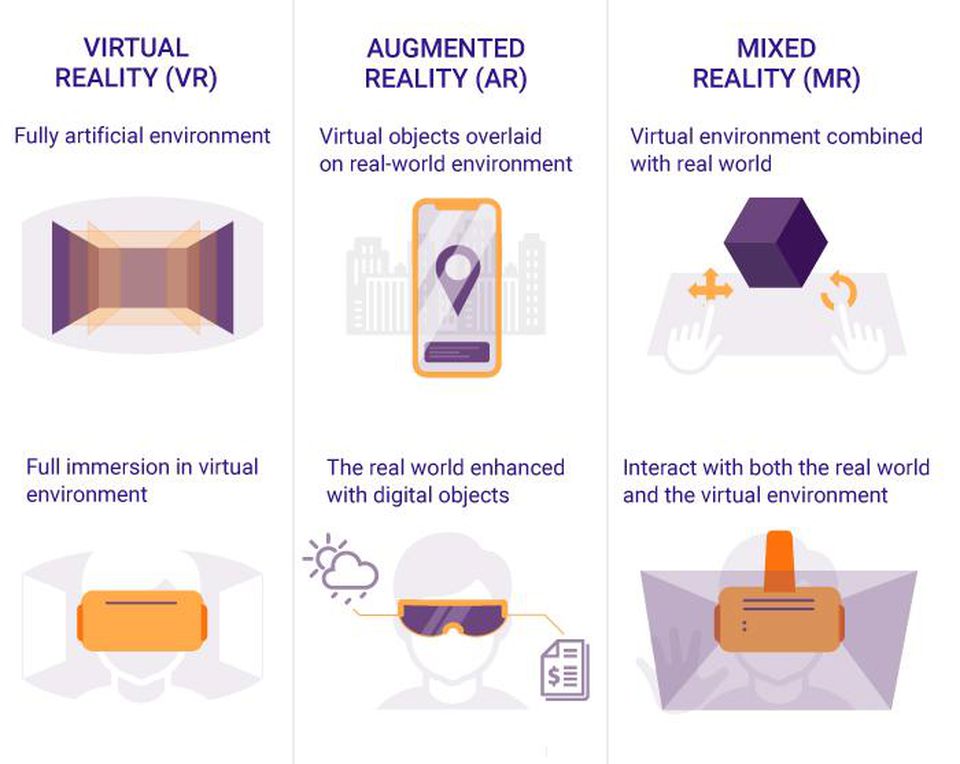
The Difference Between Virtual Reality, Augmented Reality And Mixed Reality — from forbes.com
On 03/16/2018,
in Apple, attention, Augmented Reality (AR), cloud-based computing / apps / other cloud-related, digital storytelling, education technology, emerging technologies, engagement / engaging students, Google, immersion, journalism, languages and translation, story, storytelling, tools, trends, universities, usability, user experience (UX), vendors, Virtual Reality (VR) / worlds / learning,
by Daniel Christian
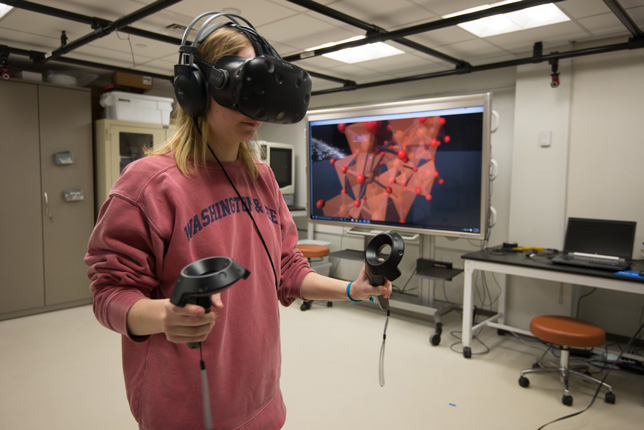
How to Set Up a VR Pilot — from campustechnology.com by Dian Schaffhauser
As Washington & Lee University has found, there is no best approach for introducing virtual reality into your classrooms — just stages of faculty commitment.
Excerpt:
The work at the IQ Center offers a model for how other institutions might want to approach their own VR experimentation. The secret to success, suggested IQ Center Coordinator David Pfaff, “is to not be afraid to develop your own stuff” — in other words, diving right in. But first, there’s dipping a toe.
The IQ Center is a collaborative workspace housed in the science building but providing services to “departments all over campus,” said Pfaff. The facilities include three labs: one loaded with high-performance workstations, another decked out for 3D visualization and a third packed with physical/mechanical equipment, including 3D printers, a laser cutter and a motion-capture system.
The Future of Language Learning: Augmented Reality vs Virtual Reality — from medium.com by Denis Hurley
Excerpts:
Here, I would like to stick to the challenges and opportunities presented by augmented reality and virtual reality for language learning.
…
While the challenge is a significant one, I am more optimistic than most that wearable AR will be available and popular soon. We don’t yet know how Snap Spectacles will evolve, and, of course, there’s always Apple.
…
I suspect we will see a flurry of new VR apps from language learning startups soon, especially from Duolingo and in combination with their AI chat bots. I am curious if users will quickly abandon the isolating experiences or become dedicated users.
Bose has a plan to make AR glasses — from cnet.com by David Carnoy
Best known for its speakers and headphones, the company has created a $50 million development fund to back a new AR platform that’s all about audio.
Excerpts:
“Unlike other augmented reality products and platforms, Bose AR doesn’t change what you see, but knows what you’re looking at — without an integrated lens or phone camera,” Bose said. “And rather than superimposing visual objects on the real world, Bose AR adds an audible layer of information and experiences, making every day better, easier, more meaningful, and more productive.”
…
The secret sauce seems to be the tiny, “wafer-thin” acoustics package developed for the platform. Bose said it represents the future of mobile micro-sound and features “jaw-dropping power and clarity.”
Bose adds the technology can “be built into headphones, eyewear, helmets and more and it allows simple head gestures, voice, or a tap on the wearable to control content.”
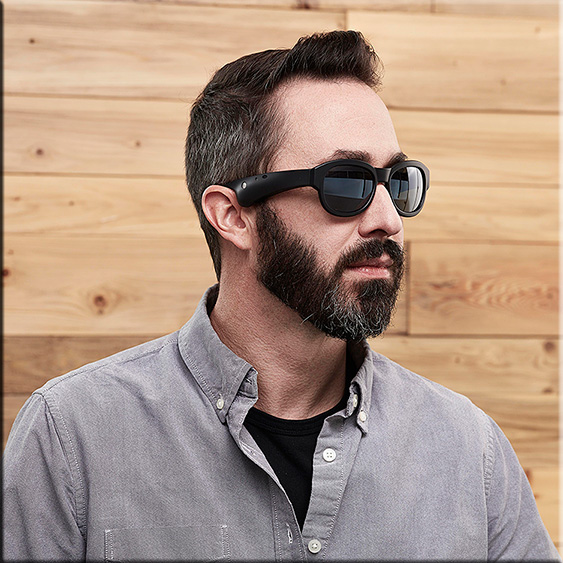
Here are some examples Bose gave for how it might be used:
-
- For travel, the Bose AR could simulate historic events at landmarks as you view them — “so voices and horses are heard charging in from your left, then passing right in front of you before riding off in the direction of their original route, fading as they go.” You could hear a statue make a famous speech when you approach it. Or get told which way to turn towards your departure gate while checking in at the airport.
- Bose AR could translate a sign you’re reading. Or tell you the word or phrase for what you’re looking at in any language. Or explain the story behind the painting you’ve just approached.
- With gesture controls, you could choose or change your music with simple head nods indicating yes, no, or next (Bragi headphones already do this).
- Bose AR would add useful information based on where you look. Like the forecast when you look up or information about restaurants on the street you look down.
The 10 Best VR Apps for Classrooms Using Merge VR’s New Merge Cube — from edsurge.com
Google Lens arrives on iOS — from techcrunch.com by Sarah Perez
Excerpt:
On the heels of last week’s rollout on Android, Google’s new AI-powered technology, Google Lens, is now arriving on iOS. The feature is available within the Google Photos iOS application, where it can do things like identify objects, buildings, and landmarks, and tell you more information about them, including helpful details like their phone number, address, or open hours. It can also identify things like books, paintings in museums, plants, and animals. In the case of some objects, it can also take actions.
For example, you can add an event to your calendar from a photo of a flyer or event billboard, or you can snap a photo of a business card to store the person’s phone number or address to your Contacts.
The eventual goal is to allow smartphone cameras to understand what it is they’re seeing across any type of photo, then helping you take action on that information, if need be – whether that’s calling a business, saving contact information, or just learning about the world on the other side of the camera.
15 Top Augmented Reality (AR) Apps Changing Education — from vudream.com by Steven Wesley
CNN VR App Brings News to Oculus Rift — from vrscout.com by Jonathan Nafarrete
On 12/22/2017,
in 21st century, 24x7x365 access, active learning, adult learning, analytics, Artificial Intelligence/Agents/LLMs/and Related, Blockchain, bots, business, business side of he, career development, collaboration, colleges, community colleges, convergence, corporate / business world, corporate universities / corporate training, cost of getting a degree, Daniel S. Christian, digital learning, disruption, education technology, emerging technologies, engagement / engaging students, future of higher education, game-changing environment, global / globalization, higher education, homeschooling/homeschoolers, human-computer interaction (HCI), ideas, immersion, informal learning, innovation, intelligent systems, intelligent tutoring, internet, K-12 related, languages and translation, learner profiles, learning, learning agents, learning ecosystem, Learning from the Living [Class] Room, learning preferences, learning spaces, lifelong learning, multimedia, Natural Language Processing (NLP), online learning, participation, pedagogy, personalized/customized learning, platforms, second screen apps, simulations, student teaching/teacher education, student-related, teachers, teaching & learning, teaching online, technologies for your home, technology (general), television, tools, training / L&D, TVs, ubiquitous learning, universities, user experience (UX), virtual K-12 schools, Virtual Reality (VR) / worlds / learning, virtual tutoring, vision/possibilities,
by Daniel Christian
Virtual reality simulates classroom environment for aspiring teachers — from phys.org by Charles Anzalone, University at Buffalo
Excerpt (emphasis DSC):
Two University at Buffalo education researchers have teamed up to create an interactive classroom environment in which state-of-the-art virtual reality simulates difficult student behavior, a training method its designers compare to a “flight simulator for teachers.”
The new program, already earning endorsements from teachers and administrators in an inner-city Buffalo school, ties into State University of New York Chancellor Nancy L. Zimpher’s call for innovative teaching experiences and “immersive” clinical experiences and teacher preparation.
…
The training simulator Lamb compared to a teacher flight simulator uses an emerging computer technology known as virtual reality. Becoming more popular and accessible commercially, virtual reality immerses the subject in what Lamb calls “three-dimensional environments in such a way where that environment is continuous around them.” An important characteristic of the best virtual reality environments is a convincing and powerful representation of the imaginary setting.
Also related/see:
- How Virtual Reality Is Helping Train New Teachers — from edweek.org by Liana Loewus
- TeachLive.org
TLE TeachLivE™ is a mixed-reality classroom with simulated students that provides teachers the opportunity to develop their pedagogical practice in a safe environment that doesn’t place real students at risk. This lab is currently the only one in the country using a mixed reality environment to prepare or retrain pre-service and in-service teachers. The use of TLE TeachLivE™ Lab has also been instrumental in developing transition skills for students with significant disabilities, providing immediate feedback through bug-in-ear technology to pre-service teachers, developing discrete trial skills in pre-service and in-service teachers, and preparing teachers in the use of STEM-related instructional strategies.
- Virtual reality lessons can help students become better real-life teachers — from news.psu.edu by Jim Carlson
- 10 amazing virtual museum tours — from virtualiteach.com

This start-up uses virtual reality to get your kids excited about learning chemistry — from Lora Kolodny and Erin Black
- MEL Science raised $2.2 million in venture funding to bring virtual reality chemistry lessons to schools in the U.S.
- Eighty-two percent of science teachers surveyed in the U.S. believe virtual reality content can help their students master their subjects.
This start-up uses virtual reality to get your kids excited about learning chemistry from CNBC.
From DSC:
It will be interesting to see all the “places” we will be able to go and interact within — all from the comfort of our living rooms! Next generation simulators should be something else for teaching/learning & training-related purposes!!!
The next gen learning platform will likely offer such virtual reality-enabled learning experiences, along with voice recognition/translation services and a slew of other technologies — such as AI, blockchain*, chatbots, data mining/analytics, web-based learner profiles, an online-based marketplace supported by the work of learning-based free agents, and others — running in the background. All of these elements will work to offer us personalized, up-to-date learning experiences — helping each of us stay relevant in the marketplace as well as simply enabling us to enjoy learning about new things.
But the potentially disruptive piece of all of this is that this next generation learning platform could create an Amazon.com of what we now refer to as “higher education.” It could just as easily serve as a platform for offering learning experiences for learners in K-12 as well as the corporate learning & development space.
I’m tracking these developments at:
http://danielschristian.com/thelivingclassroom/
![The Living [Class] Room -- by Daniel Christian -- July 2012 -- a second device used in conjunction with a Smart/Connected TV](http://danielschristian.com/learning-ecosystems/wp-content/uploads/2012/07/The-Living-Class-Room-Daniel-S-Christian-July-2012.jpg)
* Also see:
Blockchain, Bitcoin and the Tokenization of Learning — from edsurge.com by Sydney Johnson
Excerpt:
In 2014, Kings College in New York became the first university in the U.S. to accept Bitcoin for tuition payments, a move that seemed more of a PR stunt than the start of some new movement. Much has changed since then, including the value of Bitcoin itself, which skyrocketed to more than $19,000 earlier this month, catapulting cryptocurrencies into the mainstream.
A handful of other universities (and even preschools) now accept Bitcoin for tuition, but that’s hardly the extent of how blockchains and tokens are weaving their way into education: Educators and edtech entrepreneurs are now testing out everything from issuing degrees on the blockchain to paying people in cryptocurrency for their teaching.
On 12/19/2017,
in A/V -- audio/visual, Apple, art, biology, collaboration, communications, digital storytelling, digital video, education technology, emerging technologies, health, human-computer interaction (HCI), innovation, languages and translation, multimedia, platforms, productivity / tips and tricks, psychology, storytelling, tools, vendors, Virtual Reality (VR) / worlds / learning,
by Daniel Christian
This three-part lab can be experienced all at once or separately. At the beginning of each part, Beatriz’s brain acts as an omniscient narrator, helping learners understand how changes to the brain affect daily life and interactions.
Pre and post assessments, along with a facilitation guide, allow learners and instructors to see progression towards outcomes that are addressed through the story and content in the three parts, including:
1) increased knowledge of Alzheimer’s disease and the brain
2) enhanced confidence to care for people with Alzheimer’s disease
3) improvement in care practice
Why a lab about Alzheimer’s Disease?
The Beatriz Lab is very important to us at Embodied Labs. It is the experience that inspired the start of our company. We believe VR is more than a way to evoke feelings of empathy; rather, it is a powerful behavior change tool. By taking the perspective of Beatriz, healthcare professionals and trainees are empowered to better care for people with Alzheimer’s disease, leading to more effective care practices and better quality of life. Through embodying Beatriz, you will gain insight into life with Alzheimer’s and be able to better connect with and care for your loved ones, patients, clients, or others in this communities who live with the disease every day. In our embodied VR experience, we hope to portray both the difficult and joyful moments — the disease surely is a mix of both.
Watch our new promo video to learn more!

As part of the experience, you will take a 360 degree trip into Beatriz’s brain,
and visit a neuron “forest” that is being affected by amyloid beta plaques and tau proteins.
From DSC:
I love the work that Carrie Shaw and @embodiedLabs are doing! Thanks Carrie & Company!
Top 7 Business Collaboration Conference Apps in Virtual Reality (VR) — from vudream.com by Ved Pitre
Excerpt (emphasis DSC):
As VR continues to grow and improve, the experiences will feel more real. But for now, here are the best business conference applications in virtual reality.
Final Cut Pro X Arrives With 360 VR Video Editing — from vrscount.com by Jonathan Nafarrete
Excerpt:
A sign of how Apple is supporting VR in parts of its ecosystem, Final Cut Pro X (along with Motion and Compressor), now has a complete toolset that lets you import, edit, and deliver 360° video in both monoscopic and stereoscopic formats.
Final Cut Pro X 10.4 comes with a handful of slick new features that we tested, such as advanced color grading and support for High Dynamic Range (HDR) workflows. All useful features for creators, not just VR editors, especially since Final Cut Pro is used so heavily in industries like video editing and production. But up until today, VR post-production options have been minimal, with no support from major VR headsets. We’ve had options with Adobe Premiere plus plugins, but not everyone wants to be pigeon-holed into a single software option. And Final Cut Pro X runs butter smooth on the new iMac, so there’s that.
Now with the ability to create immersive 360° films right in Final Cut Pro, an entirely new group of creators have the ability to dive into the world of 360 VR video. Its simple and intuitive, something we expect from an Apple product. The 360 VR toolset just works.
See Original, Exclusive Star Wars Artwork in VR — from vrscount.com by Alice Bonasio

Excerpt:
HWAM’s first exhibition is a unique collection of Star Wars production pieces, including the very first drawings made for the film franchise and never-before-seen production art from the original trilogy by Lucasfilm alum Joe Johnston, Ralph McQuarrie, Phil Tippett, Drew Struzan, Colin Cantwell, and more.
Learning a language in VR is less embarrassing than IRL — from qz.com by Alice Bonasio
Excerpt:
Will virtual reality help you learn a language more quickly? Or will it simply replace your memory?
VR is the ultimate medium for delivering what is known as “experiential learning.” This education theory is based on the idea that we learn and remember things much better when doing something ourselves than by merely watching someone else do it or being told about it.
The immersive nature of VR means users remember content they interact with in virtual scenarios much more vividly than with any other medium. (According to experiments carried out by professor Ann Schlosser at the University of Washington, VR even has the capacity to prompt the development of false memories.)
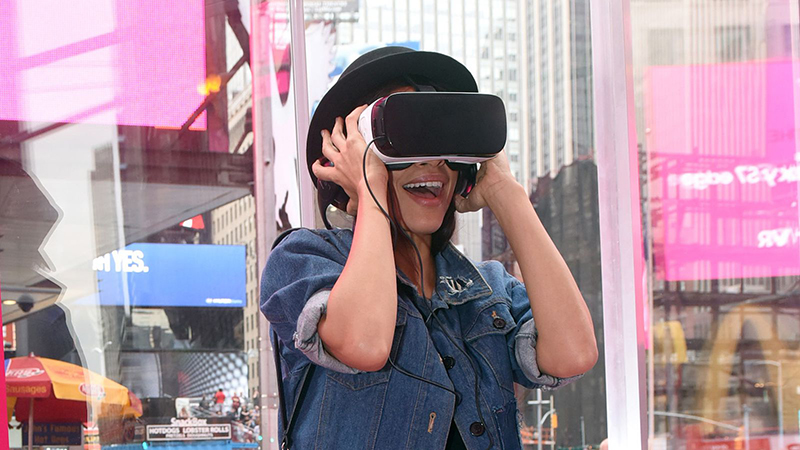
Since immersion is a key factor in helping students not only learn much faster but also retain what they learn for longer, these powers can be harnessed in teaching and training—and there is also research that indicates that VR is an ideal tool for learning a language.
Addendum on 12/20/17:
- Virtual reality lets scientists walk around inside cancer cells, set to revolutionise medicine — from abc.net.au by Sophie Scott