The Future Today Institute’s 12th Annual Emerging Tech Trends Report — from futuretodayinstitute.com

Excerpts:

At the Future Today Institute, we identify emerging tech trends and map the future for our clients. This is FTI’s 12th annual Tech Trends Report, and in it we identify 315 tantalizing advancements in emerging technologies — artificial intelligence, biotech, autonomous robots, green energy and space travel — that will begin to enter the mainstream and fundamentally disrupt business, geopolitics and everyday life around the world. As of the publication date, the annual FTI Tech Trend Report report has garnered more than 7.5 cumulative views.

Key findings for 2019 (emphasis DSC)

  • Privacy is dead. (DC: NOT GOOD!!! If this is true, can the situation be reversed?)
  • Voice Search Optimization (VSO) is the new SEO.
  • The Big Nine.
  • Personal data records are coming. (DC: Including cloud-based learner profiles I hope.)
  • China continues to ascend, and not just in artificial intelligence.
  • Lawmakers around the world are not prepared to deal with new challenges that arise from emerging science and technology.
  • Consolidation continues as a key theme for 2019.


How MIT’s Mini Cheetah Can Help Accelerate Robotics Research — from spectrum.ieee.org by Evan Ackerman
Sangbae Kim talks to us about the new Mini Cheetah quadruped and his future plans for the robot


From DSC:
Sorry, but while the video/robot is incredible, a feeling in the pit of my stomach makes me reflect upon what’s likely happening along these lines in the militaries throughout the globe…I don’t mean to be a fear monger, but rather a realist.


Five key trends for professional and continuing education leaders in the next five years — from evolllution.com by Ray Schroeder

Excerpts:

Higher education is on the cusp of major changes. Enrollments are on the decline—both online and on campus—and the trend is expected to accelerate.[1] Graduates are laboring under substantial college loan debts totaling more than $1.5 trillion.[2] Employers are demanding that applicants possess soft and hard skills that many college graduates do not hold.[3] At the same time new and emerging technologies are changing the way credentials are shared and work is done.

It is in this context that continuing, professional and online programs have been imported from the periphery to the center of traditional universities. Students and employers alike have made clear that their top priority is relevance to the rapidly changing workplace. Artificial intelligence, blockchain, augmented/virtual reality and other technologies are driving the changes. Professional and Continuing Education (PCE) has long been the leader in providing relevant courses, certificates and degrees that connect students with the needs of employers.


…the Online Master’s Science in Computer Science degree at Georgia Tech is now the largest computer science program in the world. And the degree costs less than $9,000.


Also see:

Interview with Hunt Lambert – What is the 60-year curriculum?
Colleges and universities used to be primarily responsible for a four-year learning experience. We now need to envision a 60-year curriculum, whereby educational institutions partner with learners at all stages of their professional career, providing skills and knowledge as needed.


Instructure: Plans to expand beyond Canvas LMS into machine learning and AI — from mfeldstein.com by Phill Hill

Excerpts:

On the same day as Instructure’s earnings call and release of FY2018 financial results, the company announced the acquisition of Portfolium for $43 million, a small startup focusing on “ePortfolio network, student-centered assessment, job matching capabilities, and academic and co-curricular pathways”.

Instructure now views itself as a company with a suite of products, and they are much more open to using corporate M&A to build this portfolio.

We already have analytical capabilities in our Canvas platform. I want to be really clear and delineate the difference between an analytics and reporting capability, and a machine learning and AI platform.

We have the most comprehensive database on the educational experience in the globe. So given that information that we have, no one else has those data assets at their fingertips to be able to develop those algorithms and predictive models.

What’s even more interesting and compelling is that we can take that information, correlate it across all sorts of universities, curricula, etc, and we can start making recommendations and suggestions to the student or instructor in how they can be more successful. Watch this video, read this passage, do problems 17-34 in this textbook, spend an extra two hours on this or that. When we drive student success, we impact things like retention, we impact the productivity of the teachers, and it’s a huge opportunity. That’s just one small example. Our DIG initiative, it is first and foremost a platform for ML and AI, and we will deliver and monetize it by offering different functional domains of predictive algorithms and insights. Maybe things like student success, retention, coaching and advising, career pathing, as well as a number of the other metrics that will help improve the value of an institution or connectivity across institutions.


From DSC:
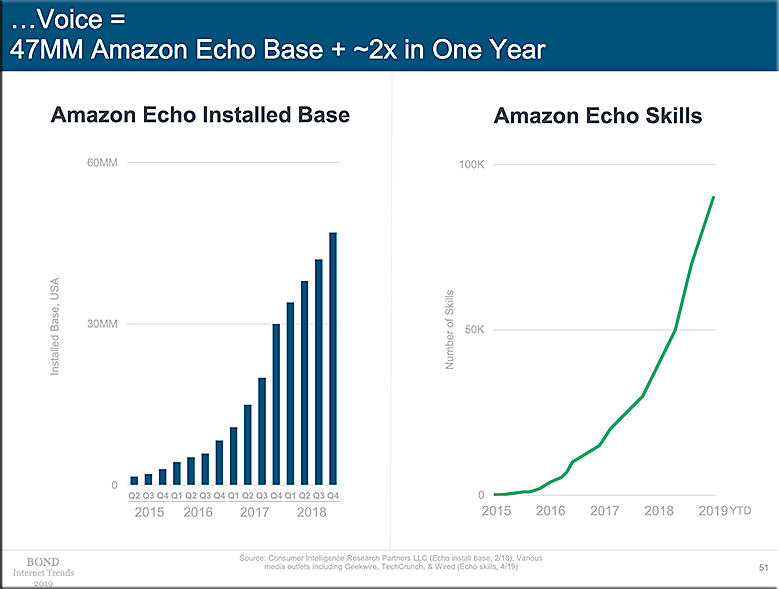
Our family uses AT&T for our smartphones and for our Internet access. What I would really like from AT&T is to be able to speak into an app — either located on a smartphone or have their routers morph into Alexa-type of devices — to be able to speak to what I want my router to do:

“Turn off Internet access tonight from 9pm until 6am tomorrow morning.”
“Only allow Internet access for parents’ accounts.”
“Upgrade my bandwidth for the next 2 hours.”

Upon startup, the app would ask whether I wanted to setup any “admin” types of accounts…and, if so, would recognize that voice/those voices as having authority and control over the device.

Would you use this type of interface? I know I would!

P.S. I’d like to be able to speak to our
thermostat in that sort of way as well.


The 10+ best real-world examples of augmented reality — from forbes.com by Bernard Marr

Excerpt:

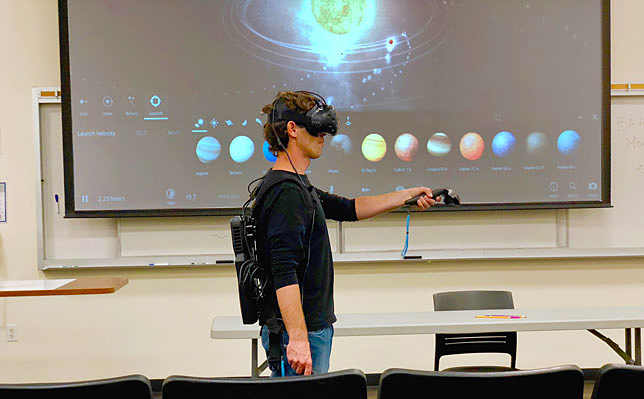
Augmented reality (AR) can add value, solve problems and enhance the user experience in nearly every industry. Businesses are catching on and increasing investments to drive the growth of augmented reality, which makes it a crucial part of the tech economy.


As referenced by Bernard in his above article:


From DSC:
Along these lines, I really appreciate the “translate” feature within Twitter. It helps open up whole new avenues of learning for me from people across the globe. A very cool, practical, positive, beneficial feature/tool!!!


Horizon Report Preview 2019 — from library.educause.edu
Analytics, Artificial Intelligence (AI), Badges and Credentialing, Blended Learning, Blockchain, Digital Learning, Digital Literacy, Extended Reality (XR), Instructional Design, Instructional Technologies, Learning Analytics, Learning Space, Mobile Learning, Student Learning Support, Teaching and Learning

Abstract
The EDUCAUSE Horizon Report Preview provides summaries of each of the upcoming edition’s trends, challenges, and important developments in educational technology, which were ranked most highly by the expert panel. This year’s trends include modularized and disaggregated degrees, the advancing of digital equity, and blockchain.

For more than a decade, EDUCAUSE has partnered with the New Media Consortium (NMC) to publish the annual Horizon Report – Higher Education Edition. In 2018, EDUCAUSE acquired the rights to the NMC Horizon project.


Microsoft’s HoloLens 2: A $3,500 mixed reality headset for the factory, not the living room — from theverge.com by Dieter Bohn

Excerpt:

The HoloLens 2 is only being sold to corporations, not to consumers. It’s designed for what Kipman calls “first-line workers,” people in auto shops, factory floors, operating rooms, and out in the field fixing stuff. It’s designed for people who work with their hands and find it difficult to integrate a computer or smartphone into their daily work. Kipman wants to replace the grease-stained Windows 2000 computer sitting in the corner of the workroom. It’s pretty much the same decision Google made for Google Glass.

“If you think about 7 billion people in the world, people like you and I — knowledge workers — are by far the minority,” he replies. To him, the workers who will use this are “maybe people that are fixing our jet propulsion engine. Maybe they are the people that are in some retail space. Maybe they’re the doctors that are operating on you in an operating room.”

He continues, saying it’s for “people that have been, in a sense, neglected or haven’t had access to technology [in their hands-on jobs] because PCs, tablets, phones don’t really lend themselves to those experiences.”


Also see:

Microsoft is making a new HoloLens headset, called HoloLens 2. But, it’s only getting sold to companies, not consumers. Meant for professionals who work with their hands and not on computers, the new HoloLens has an improved field of view and doesn’t clip as much as the original. Dieter Bohn visited Microsoft’s campus to get an early look at the new HoloLens 2 headset.


Addendum on 2/28/19:

Microsoft launches HoloLens 2 mixed-reality headset, betting on holograms in the workplace — from cnbc.com by Elizabeth Schulze

Excerpts:

  • Microsoft unveiled HoloLens 2, an upgraded version of its mixed-reality headset, on Sunday at Mobile World Congress in Barcelona.
  • The new headset will cost $3500, lower than the cost of the earlier version.
  • The HoloLens 2 launch comes amid controversy over Microsoft’s $480 million deal to sell 100,000 of its mixed reality headsets to the U.S. Army.

Microsoft unveiled HoloLens 2, an upgraded version of its mixed-reality headset, on Sunday in Barcelona, in a bet that doubles down on the idea that businesses will increasingly use hologram technology in the workplace.

The HoloLens 2 headset will cost $3500 —$1500 less than the commercial price of the first HoloLens device Microsoft released more than four years ago.


Philips, Microsoft Unveils Augmented Reality Concept for Operating Room of the Future — from hitconsultant.net by Fred Pennic

Excerpt:

Health technology company Philips unveiled a unique mixed reality concept developed together with Microsoft Corp. for the operating room of the future. Based on the state-of-the-art technologies of Philips’Azurion image-guided therapy platform and Microsoft’s HoloLens 2 holographic computing platform, the companies will showcase novel augmented reality applications for image-guided minimally invasive therapies.


India Just Swore in Its First Robot Police Officer — from futurism.com by Dan Robitzski
RoboCop, meet KP-Bot.

Excerpt:

RoboCop
India just swore in its first robotic police officer, which is named KP-Bot.

The animatronic-looking machine was granted the rank of sub-inspector on Tuesday, and it will operate the front desk of Thiruvananthapuram police headquarters, according to India Today.


From DSC:
Whoa….hmmm…note to the ABA and to the legal education field — and actually to anyone involved in developing laws — we need to catch up. Quickly.

My thoughts go to the governments and to the militaries around the globe. Are we now on a slippery slope? How far along are the militaries of the world in integrating robotics and AI into their weapons of war? Quite far, I think.

Also, at the higher education level, are Computer Science and Engineering Departments taking their responsibilities seriously in this regard? What kind of teaching is being done (or not done) in terms of the moral responsibilities of their code? Their robots?


For a next gen learning platform: A Netflix-like interface to check out potential functionalities / educationally-related “apps” [Christian]

From DSC:
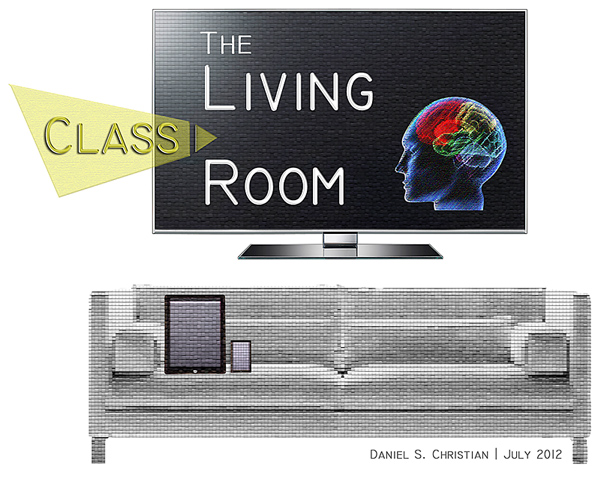
In a next generation learning system, it would be sharp/beneficial to have a Netflix-like interface to check out potential functionalities that you could turn on and off (at will) — as one component of your learning ecosystem that could feature a setup located in your living room or office.

For example, put a Netflix-like interface to the apps out at eduappcenter.com (i.e., using a rolling interface at first, then going to a static page/listing of apps…again…similar to Netflix).


A Netflix-like interface to check out potential functionalities / educationally-related apps


AI bias: 9 questions leaders should ask — from enterprisersproject.com by Kevin Casey
Artificial intelligence bias can create problems ranging from bad business decisions to injustice. Use these questions to fight off potential biases in your AI systems.

Excerpt:

People questions to ask about AI bias
1. Who is building the algorithms?
2. Do your AI & ML teams take responsibility for how their work will be used?
3. Who should lead an organization’s effort to identify bias in its AI systems?
4. How is my training data constructed?

Data questions to ask about AI bias
5. Is the data set comprehensive?
6. Do you have multiple sources of data?

Management questions to ask about AI bias
7. What proportion of resources is appropriate for an organization to devote to assessing potential bias?
8. Have you thought deeply about what metrics you use to evaluate your work?
9. How can we test for bias in training data?


Emerging technology trends can seem both elusive and ephemeral, but some become integral to business and IT strategies—and form the backbone of tomorrow’s technology innovation. The eight chapters of Tech Trends 2019 look to guide CIOs through today’s most promising trends, with an eye toward innovation and growth and a spotlight on emerging trends that may well offer new avenues for pursuing strategic ambitions.


© 2025 | Daniel Christian