


VR & robotics could be the future of medical training — from vrscout.com by Kyle Melnick
FundamentalVR is partnering with Haply Robotics to provide more realistic VR surgical simulations.

Also relevant/see:
VR & robotics could be the future of medical training — from vrscout.com by Kyle Melnick
FundamentalVR is partnering with Haply Robotics to provide more realistic VR surgical simulations.
Also relevant/see:
Hard Truths That Higher Education Has Evaded for Too Long — from insidehighered.com by Steven Mintz
The brutal truths that institutions don’t want to acknowledge.
If we want to make higher education truly equitable and produce the learning outcomes that we claim to seek, then we must confront painful truths no matter how uncomfortable they make us.
Preaching to, and Challenging, the Liberal Arts Choir — from insidehighered.com by Doug Lederman
In a conversation with presidents of small private colleges, tech company executives praise graduates’ leadership and critical thinking ability but say they need to develop skills for a first job, too.
Excerpt:
In that more competitive landscape, Ferrick and others said, colleges should think in terms of “both-and”—delivering a four-year degree grounded in the liberal arts that remains the best preparation for a lifetime career, yes, but also building into their curricula more practical digital and other skills that can help graduates compete for a first job.
The Edge: Momentum Builds for ‘Credential as You Go’ — from chronicle.com by Goldie Blumenstyk
Excerpt:
A higher-ed credential system that’s ‘not all about degrees.’
Holly Zanville has a clear goal for the Credential as You Go initiative she co-leads: Shift the entire “degree-centric” model of postsecondary education to make it easier for people to develop skills and knowledge in shorter chunks while recognizing “meaningful learning along the way.”
Whatever you think of its prospects, you can hardly fault the effort for a lack of ambition.
Ideally, students will layer incremental credentials over a lifetime of learning.
Goldie Blumenstyk
Issue #11: Navigating the credential maze — from theview.substack.com by Gordon Macrae
Running to stand still.
Excerpt:
The credentials market for degree and non-degree programs is… complex.
A recent report from the non-profit Credential Engine identified 1,076,358 different credentials – from specialized certificates to bachelor’s degrees to PhDs.
Credential Engine started producing these reports in 2018. Back then there were “just” 334,114 credentials. In the last four years, the number of certifications has more than trebled. And from 2021 to 2022, there’s been a 38% increase in providers issuing certificates.
.
When you eyeball the largest higher ed institutions by enrollment comparing 2012 to today, it’s pretty clear that online degrees have driven – essentially – ALL of the growth.
Brandon Busteed commenting on Phil Hill’s posting (also listed below)
.
Fall 2021 Largest Institutions by Total Enrollment and DE Type — from philonedtech.com by Phil Hill
Excerpt:
Based on reader request after yesterday’s post, I’d like to share another view of largest US higher education institutions, this one ranked by total enrollment with color coding of distance education (DE) type. This chart combines undergrad and grad student enrollments.
Mental Health Is the Top Student Stressor — from insidehighered.com by Johanna Alonso
Excerpt:
Fifty percent of college students cited their own mental health struggles as their top stressor going into 2023, according to a survey of 1,200 students nationwide conducted by the virtual health services provider TimelyMD. Thirty-nine percent of respondents said they were most concerned about their personal finances, and 37 percent named academics, while mass shootings and inflation were each cited by 35 percent.
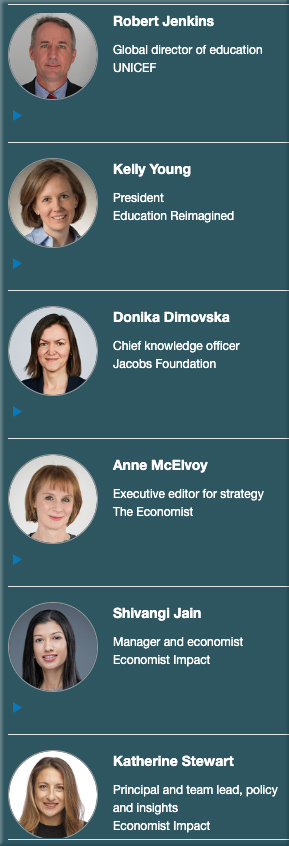
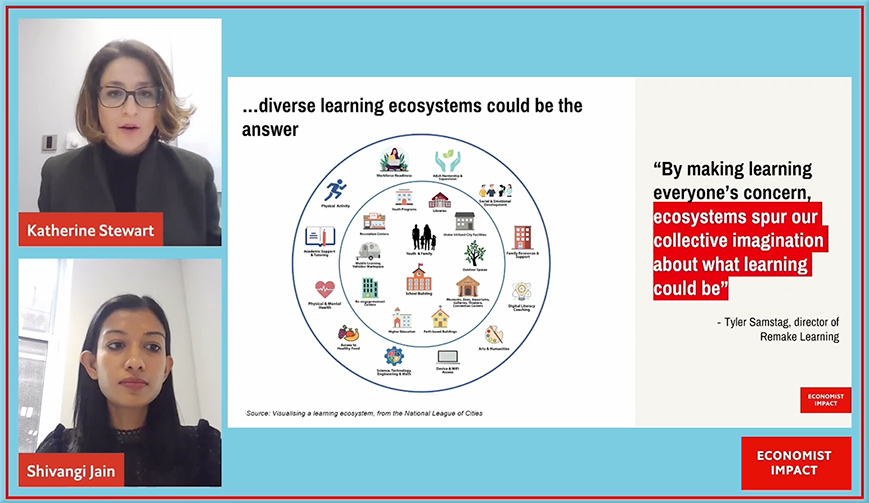
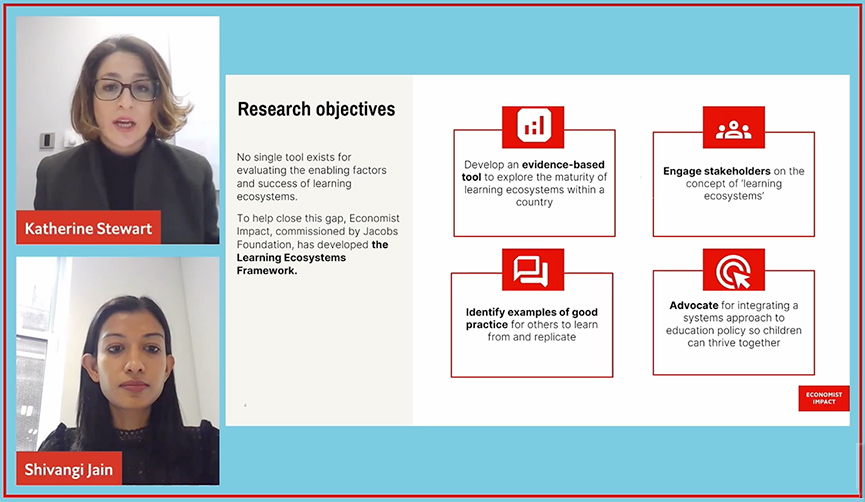
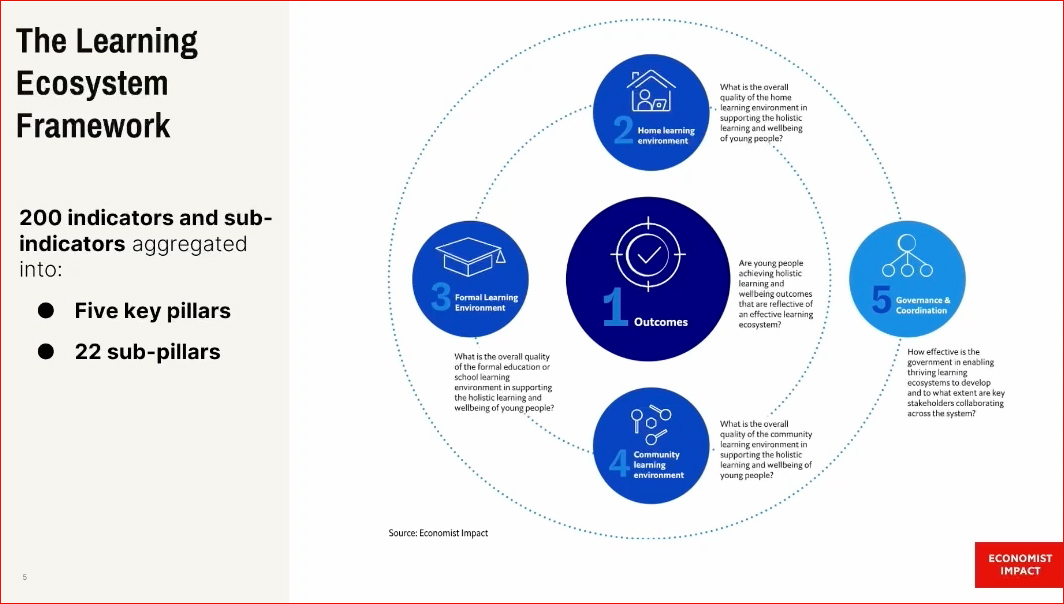
Thriving education systems, thriving youth — from events.economist.com by Economist Impact
Some of the key topics to be discussed include:
2023 Higher Education Trend Watch — from educause.edu
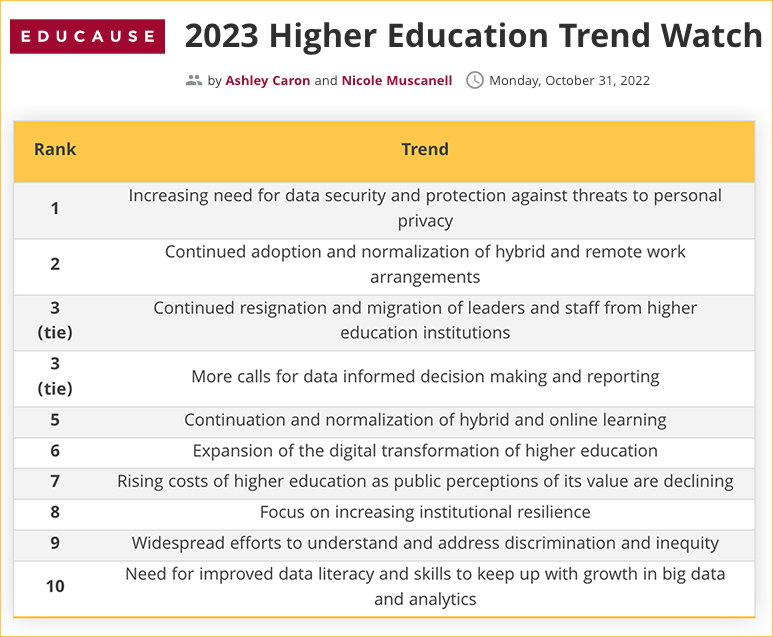
Also see:
2023 Strategic Trends Glossary — from educause.edu
Excerpts:

The Future Today Institute’s 15th Anniversary Tech Trends Report
Excerpt:
Future Today Institute’s 2022 Tech and Science Trends Report is now available. Downloaded more than 1 million times each year, FTI’s annual Tech Trends Report is a must-read for every industry. Learn the key trends impacting finance, insurance, transportation, healthcare, sports, logistics, telecom, work, government and policy, security, privacy, education, agriculture, entertainment, music, CPG, hospitality and dining, ESGs, climate, space and more. Discover critical insights. See what strategic action you can take on the futures, today.
Digest #166: Perfectionism in Education — from learningscientists.org by Carolina Kuepper-Tetzel

“Perfection is the opposite of done!” I came across this statement recently and it made me think about how perfectionism really affects one’s work and studying. Growing up, I always thought of perfectionism as a good thing, as something to aspire to. However, more recently I am questioning this thought. It adds unnecessary pressure that it difficult to live up to and sustain. I see that many issues that my students are experiencing can be traced back to perfectionism. To incredibly high goals and standards that are impossible to achieve and that makes your work not being “good enough” – when it actually is. The consequences of high perfectionism can be manifold and in today’s digest, I’d like to offer an overview of resources on perfectionism in education.
From DSC:
Somewhere along the lines, I heard that if an interviewer asks you to state a negative characteristic, choose something like perfectionism — to turn something that could be a negative into a positive. And back in my earlier days, I thought that made sense.
But I have to agree with Carolina here. The older I get, the more my empathy levels would rise if someone gave me that answer today. I’m a perfectionist and I can truly say that perfectionism is a joy-robber! It can destroy a good day. It can destroy a good mood. It can destroy joy. I don’t recommend it.
HundrED Global Collection 2023 — from hundred.org
Meet the 100 most impactful innovations that are changing the face of education in a post-COVID world.
Excerpt:
The year 2022 has been a year to look to the future, as the global education conversation moves again toward themes of education transformation and the futures of education. The 100 innovations selected for this year’s global collection are impacting the lives of over 95 million students worldwide. The collection highlights the important role of teachers in education innovation; the continued need for students to develop 21st century skills, including social and emotional learning; an increasing focus on student wellbeing and mental health; and equity in education.
For more information, download the full Global Collection 2023 report.
You can also browse the innovation pages of the selected innovators here.
.
From DSC:
Here’s an excerpt of the email I received today from EducationHQ out of Australia — though I think it applies here in the United States as well:
 .
.
Amplify and value teachers’ voice in education policymaking: researchers — from educationhq.com
Amplify and value teachers’ voice in education policymaking: researchers

Excerpt:
Monash University’s Teachers’ Perceptions of their Work Survey has revealed teachers’ waning satisfaction in their role and highlighted their…
Also from educationhq.com
Teachers changed my life: Trauma-informed education shows kids they matter — from educationhq.com by Beck Thompson
.
Nonprofit Bringing Businesses to Life in the Classroom — to the Tune of $400,000 — from the74million.org by Tim Newcomb
Making candles out of crayons, building birdhouses, fashioning furniture: Real World Scholars has helped 50,000 students become entrepreneurs
Not much entices a second grader to skip out on recess to get back to schoolwork. But excitement around a classroom-run business can do just that, especially when it means creating candles out of crayons and selling them in the local community.
Students design their ideal urban home in My ArchiSchool exhibition — from dezeen.com
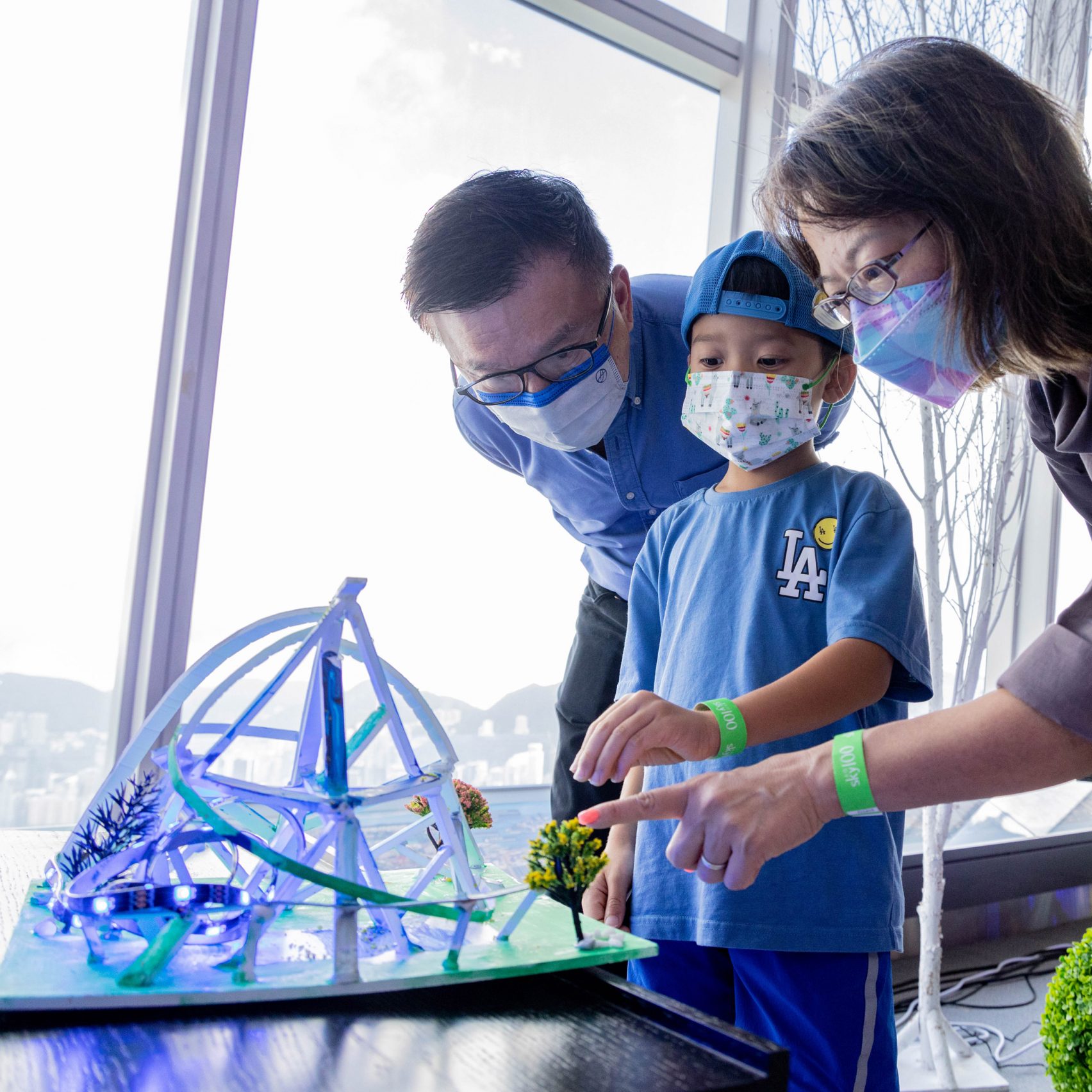
Excerpt:
Promotion: fifty-two students presented digital designs and architectural models of their ideal home as part of Hong Kong-based education institute My ArchiSchool’s latest exhibition. As part of the exhibition, My ArchiSchool students were asked to design their ideal home within an urban environment. The exhibition, which took place on 2 October 2022 at the Sky100 on the 100th floor of the International Commerce Centre in Hong Kong, showcased photomontages of digital designs presented alongside physical models.
5 Resources that help students become digital citizens — from rdene915.com by Rachelle Dene Poth
Excerpt:
We need to create opportunities for students to become more digitally aware and literate, and to be responsible when using technology. There are many ways to do this, depending on our content area and grade level. We can model best practices for our students, bring in a specific digital citizenship curriculum to guide them through their learning, or use digital tools and resources available to have students explore and create.
Helping students learn to safely navigate what has become a highly digital world is something that we are all responsible for. Students need to be aware of the impact of their posts online, how to create and manage social accounts and protect their information, and how to properly access and use resources they obtain through technology.
3 Reasons School and District Leaders Should Get on Social Media — from edweek.org by Marina Whiteleather
Excerpt:
School and district leaders can—and should—be using social media in their work.
That’s the message shared by Stephanie McConnell, a superintendent in the Hawkins Independent School District in Texas, and Salome Thomas-El, a K-8 principal in Delaware, during an Education Week K-12 Essentials forum on Oct. 13.
At the event, McConnell and Thomas-El provided insights and advice for school leaders who are hesitant to post on certain social platforms or unsure how to use them.
7 Technologies that are Changing Healthcare — from digitalsalutem.com by João Bocas
In this article we are going to talk about the seven technologies that are changing healthcare:
This startup 3D prints tiny homes from recyclable plastics — from interestingengineering.com by Nergis Firtina; with thanks to Laura Goodrich for this resource
/2022/08/22/image/png/wSxqwE19L3sKdFwuPdKfsfzJ5ixmzUJWXJ8Ox6Ir.png)
Satellite Billboards Are a Dystopian Future We Don’t Need — from gizmodo.com by George Dvorsky; with thanks to Laura Goodrich for this resource
Brightly lit ads in orbit are technologically and economically viable, say Russian scientists. But can we not?

South Korea to Provide Blockchain-based Digital Identities to Citizens by 2024 — from blockchain.news by Annie Li; with thanks to Laura Goodrich for this resource
Excerpt:
South Korea plans to provide digital identities encrypted by blockchain with smartphones to citizens in 2024 to facilitate its economic development., Bloomberg reported Monday.
The South Korean government stated that with the expansion of the digital economy, the ID embedded in the smartphone is an indispensable emerging technology to support the development of data.
From DSC:
Interesting to see blockchain show up in the first item above on healthcare and also on this item coming out of South Korea for digital identities.
The Bruce Willis Deepfake Is Everyone’s Problem — from wired.com by Will Bedingfield; with thanks to Stephen Downes for this resource
There’s a fight brewing over how Hollywood stars can protect their identities. But it’s not just actors who should be paying attention.
Excerpts:
Yet the question of “who owns Bruce Willis,” as Levy put it, isn’t only a concern for the Hollywood star and his representatives. It concerns actors unions across the world, fighting against contracts that exploit their members’ naivety about AI. And, for some experts, it’s a question that implicates everyone, portending a wilder, dystopian future—one in which identities are bought, sold, and seized.
“This is relevant not just to AI contracts [for synthetic performances], but any contract involving rights to one’s likeness and voice,” says Danielle S. Van Lier, assistant general counsel, intellectual property and contracts at SAG-AFTRA. “We have been seeing contracts that now include ‘simulation rights’ to performers’ images, voices, and performances. These contract terms are buried deep in the boilerplate of performance agreements in traditional media.”
Addendum on 10/26/22: