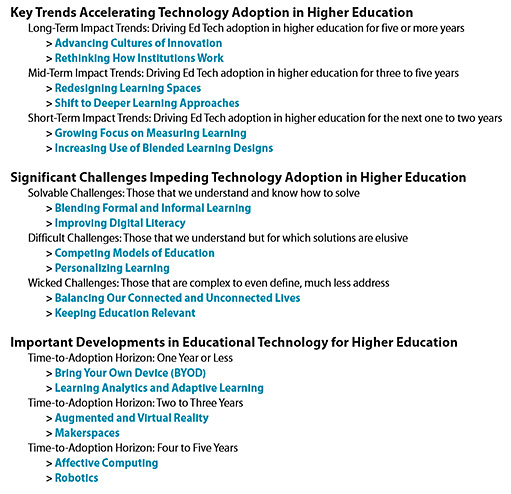
Key issues in teaching and learning 2016 — from educause.edu

Active Learning: In Need of Deeper Exploration — from facultyfocus.com by Maryellen Weimer
Excerpt (emphasis DSC):
The one proposed by Bonwell and Eison in an early (and now classic) active learning monograph is widely referenced: involving “students in doing things and thinking about the things they are doing.” (p. 2)
Those are fine places to start, but as interest in active learning has grown—and with its value now firmly established empirically—what gets labeled as active learning continues to expand. Carr, Palmer, and Hagel recently wrote, “Active learning is a very broad concept that covers or is associated with a wide variety of learning strategies.” (p. 173) They list some strategies now considered to be active learning. I’ve added a few more: experiential learning; learning by doing (hands-on learning); applied learning; service learning; peer teaching (in various contexts); lab work; role plays; case-based learning; group work of various kinds; technology-based strategies such as simulations, games, clickers, and various smart phone applications; and classroom interaction, with participation and discussion probably being the most widely used of all active learning approaches. Beyond strategies are theories such as constructivism that have spun off collections of student-centered approaches that promote student autonomy, self-direction, and self-regulation of learning.
“It’s Not You, It’s the Room”— Are the High-Tech, Active Learning Classrooms Worth It? [2013] – from cvm.umn.edu by Sehoya Cotner, Jessica Loper, J. D. Walker, and D. Christopher Brooks
Excerpt (emphasis DSC):
Several institutions have redesigned traditional learning spaces to better realize the potential of active, experiential learning. We compare student performance in traditional and active learning classrooms in a large, introductory biology course using the same syllabus, course goals, exams, and instructor. Using ACT scores as predictive, we found that students in the active learning classroom outperformed expectations, whereas those in the traditional classroom did not. By replicating initial work, our results provide empirical confirmation that new, technology-enhanced learning environments positively and independently affect student learning. Our data suggest that creating space for active learning can improve student performance in science courses. However, we recognize that such a commitment of resources is impractical for many institutions, and we offer recommendations for applying what we have learned to more traditional spaces.
…
We believe that the investment in ALCs at the University of Minnesota was worth it. Documented increases in student engagement and confirmed average gains of nearly 5 percentage points in final grades are improvements in the student academic experience that few educational interventions could aspire to. However, whether these improvements warrant the capital investment in ALCs is a judgment each educational institution must make for itself, drawing on local priorities and resources.
Instructors may need to think seriously and creatively about changing the manner in which they deliver their courses in spaces such as these —not only for the sake of navigating the challenges of teaching in a decentered space, but also to take advantage of the features of the room that allow us to better realize the benefits of active learning. The classroom architecture is bound to frustrate the efforts of faculty who don’t yield to the rooms’ novel demands. There is no well-identified “stage” from which to deliver a traditional lecture. Half of the students in the class may be facing away from the instructor at any given time. Teachers who view silence as engagement will need to adjust their perceptions, as one goal of decentralized classrooms is increased small-group interaction and this activity can be noisy and difficult to monitor. And, in the case of the ALCs at our institution, there is a learning curve with respect to the technological capabilities of the rooms.
Excerpt from the University of Minnesota’s Active Learning Classrooms web page:
What Is an Active Learning Classroom (ALC)?
ALC is the term often used to describe the student-centered, technology-rich learning environments at the University of Minnesota. U of M ALCs feature large round tables with places for nine students. Each table supports three laptops, with switching technology that connects them to a fixed flat-panel display projection system, and three microphones. There is a centered teaching station which allows the instructor to select and display table-specific information. Multiple white boards or glass-surface marker boards are distributed around the perimeter of the classrooms.
Key point from DSC:
Digitally-based means of learning are going to skyrocket!!! Far more than what we’ve seen so far! There are several trends that are occurring to make this so.
As background here, some of the keywords and phrases that are relevant to this posting include:
Some of the relevant products in this area include:
From DSC:
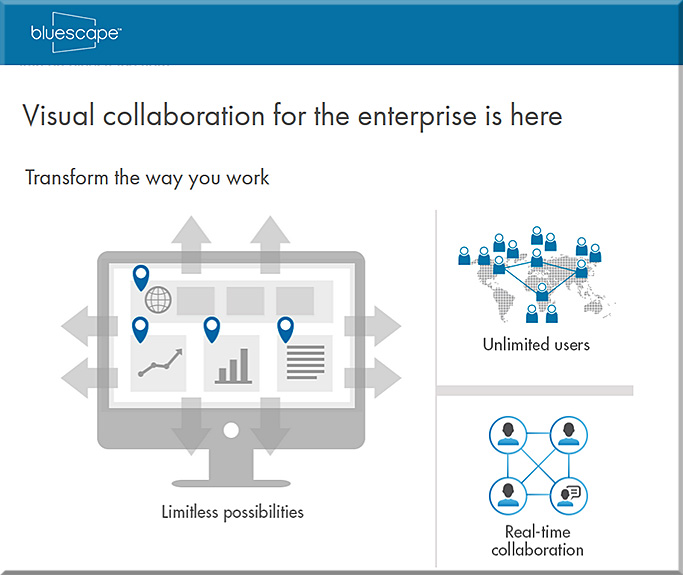
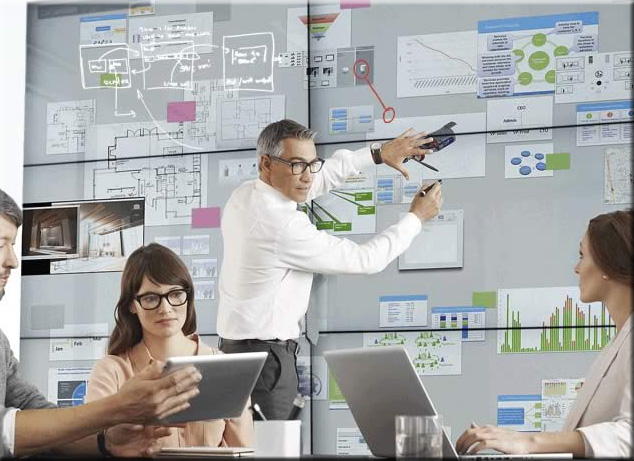
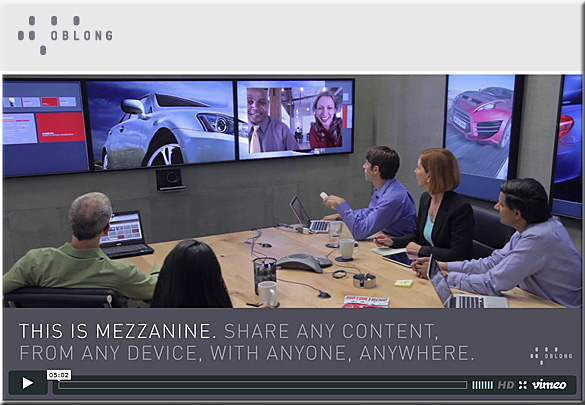
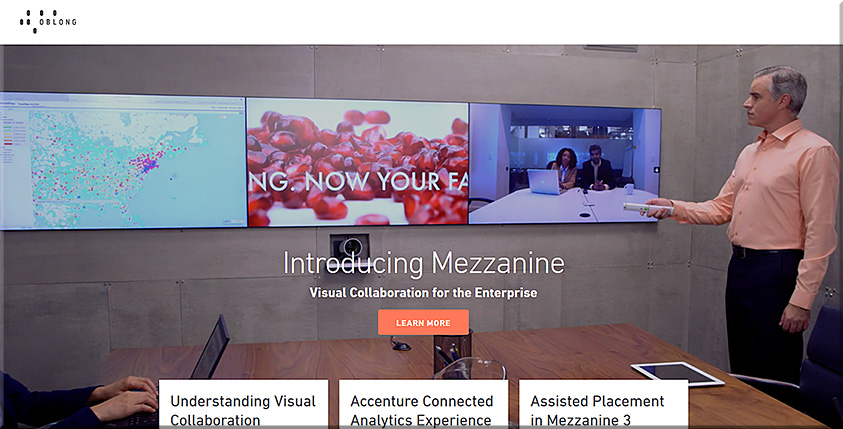
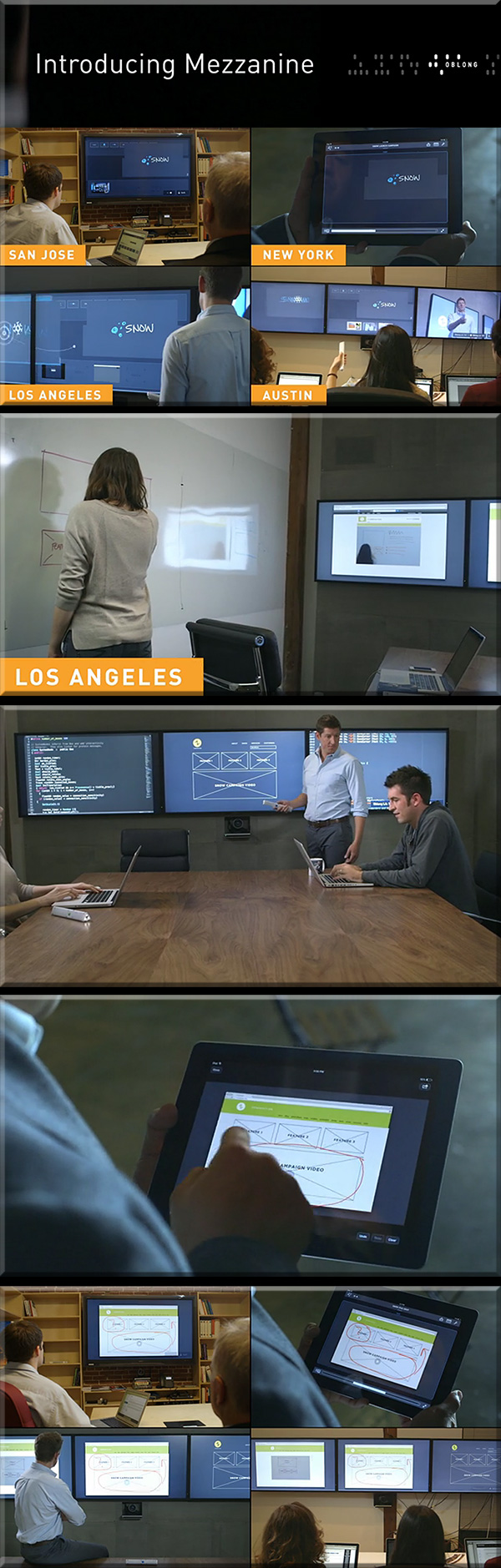
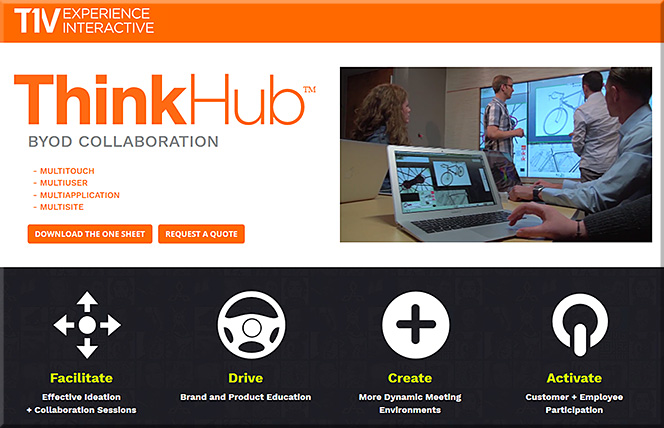
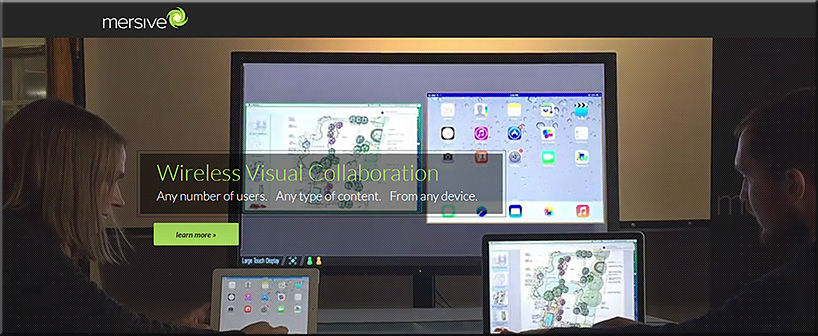
First of all, consider the following products and the functionalities they offer.
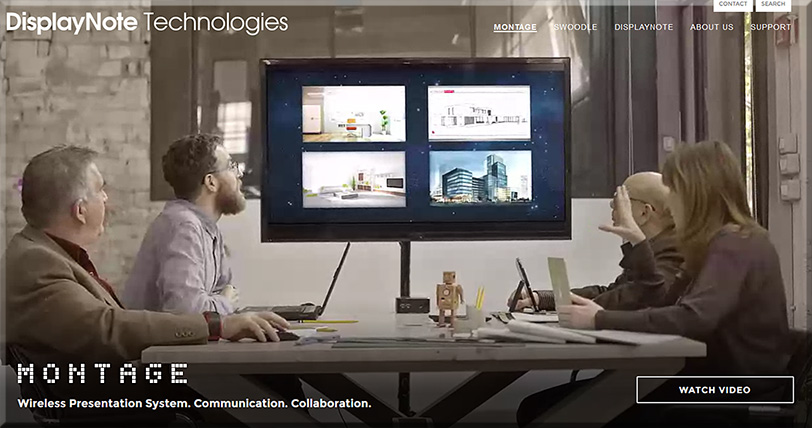
People who are in the same physical space can collaborate with people from all over the world — no matter if they are at home, in another office, on the road, etc.
For several of these products, remote employees/consultants/trainers/learners can contribute content to the discussions, just like someone in the same physical location can.

From DSC:
Many of these sorts of systems & software are aimed at helping people collaborate — again, regardless of where they are located. Remote learners/content contributors are working in tandem with a group of people in the same physical location. If this is true in business, why can’t it be true in the world of education?
So keep that in mind, as I’m now going to add on a few other thoughts and trends that build upon these sorts of digitally-based means of collaborating.
Q: Towards that end…ask yourself, what do the following trends and items have in common?
To wrap up this line of thought, below are some excerpts from recent articles that illustrate what I’m trying to get at here.
Embrace the Power of Data
A continuous improvement mindset is important. Back-end learning analytics, for example, can reveal where large numbers of students are struggling, and may provide insights into questions that require new feedback or content areas that need more development. Data can also highlight how students are interacting with the content and illuminate things that are working well—students’ lightbulb moments.
— Five Principles for Your Learning Design Toolkit
from edsurge.com by Amanda Newlin
Mitchell gave the example of flight simulators, which not only provide students with a way to engage in the activity that they want to learn, but also have data systems that monitor students’ learning over time, providing them with structured feedback at just the right moment. This sort of data-centric assessment of learning is happening in more and more disciplines — and that opens the door to more innovation, he argued.
…
A promising example, said Thille, is the use of educational technology to create personalized and adaptive instruction. As students interact with adaptive technology, the system collects large amounts of data, models those data, and then makes predictions about each student based on their interactions, she explained. Those predictions are then used for pedagogical decision-making — either feeding information back into the system to give the student a personalized learning path, or providing insights to faculty to help them give students individualized support.
…
“We need the models and the data to be open, transparent, peer-reviewable and subject to academic scrutiny.”
…
“We began to actually examine what we could do differently — based not upon hunches and traditions, but upon what the data told us the problems were for the students we enroll,” said Renick. “We made a commitment not to raise our graduation rate through getting better students, but through getting better — and that gain meant looking in the mirror and making some significant changes.”
…
A 21st-century learning culture starts with digital content. In 2010, Jackson State University was looking for ways that technology could better address the needs of today’s learner. “We put together what we call our cyberlearning ecosystem,” said Robert Blaine, dean of undergraduate studies and cyberlearning. “What that means is that we’re building a 21st-century learning culture for all of our students, writ large across campus.” At the core of that ecosystem is digital content, delivered via university-supplied iPads.
— 7 Things Higher Education Innovators Want You to Know
from campustechnology.com by Rhea Kelly
On Bennett’s wish list right now is an application that allows students to give feedback at specific points of the videos that they’re watching at home. This would help him pinpoint and fix any “problem” areas (e.g. insufficient instructions for difficult topics/tasks) and easily see where students are experiencing the most difficulties.
TechSmith’s now-retired “Ask3” video platform, for example, would have done the trick. It allowed users to watch a video and ask text-based questions at the point where playback was stopped. “I’d like to be able to look at my content and say, ‘Here’s a spot where there are a lot of questions and confusion,'” said Bennett, who also sees potential in an “I get it” button that would allow students to hit the button when everything clicks. “That would indicate the minimum viable video that I’d need to produce.” Learning Catalytics offers a similar product at a fee, Bennett said, “but I can’t charge my students $20 a year to use it.”
— 6 Flipped Learning Technologies To Watch in 2016
from thejournal.com by Bridget McCrea
The world’s first virtual reality cinema has opened in Amsterdam — from springwise.com
The VR Cinema gives movie-goers an immersive experience via Samsung Gear VR, headphones, and 360 degree chairs.
Excerpt:
At the beginning of this month, the world’s first VR Cinema opened in Amsterdam.
The idea originated as a pop-up cinema touring cities in the Netherlands, Germany and Switzerland. Unlike a traditional cinema, the theatre uses Samsung Gear VR, combined with a Samsung Galaxy S6 and a 360 degree chair to allow people to look around freely through the film. This is combined with immersive headphones to give a full VR experience to those watching the films.
Now showing:
Addendum on 3/17/16:
Everything Siri can do for you and your Apple TV — from imore.com by Lory Gill
Excerpt:
When you ask Siri what it can search for, it will respond, “I can search by title, people (actor, director, character name, guest star, producer, or writer), ratings (like PG or TV-G), reviews (such as best or worst), dates (like 2012 or the 80s), age (like kid-friendly or teen), seasons, episodes, and studio. And of course, I can search by genre.”
But, what else can Siri do?
…
Siri has a fairly robust search feature with multi-layer filtering.
…
While you are watching a movie or TV show, or listening to music, you can get a little extra help from Siri. It’s like having a buddy sitting next to you — but they don’t shush you when you ask a question.
…
You can search for content in the Music app on Apple TV by artist, album, or song title. With a little know-how, you can also turn Siri into your personal deejay.
…
While you may normally look to your smartphone for your weather predictions, Siri can be just as helpful about the conditions around the world as your local weatherman or app. All you have to do is ask.
From DSC:
Following this trajectory out a bit into the future — and in light of significant developments that continue to occur with artificial intelligence, the development and use of algorithms, the potential use of web-based learner profiles (think LinkedIn.com/Lynda.com, MOOCs, the use of nanodegrees), second screen-based apps, and the like — one has to wonder:
“What are the ramifications of this for learning-related applications?!”
![The Living [Class] Room -- by Daniel Christian -- July 2012 -- a second device used in conjunction with a Smart/Connected TV](http://danielschristian.com/learning-ecosystems/wp-content/uploads/2012/07/The-Living-Class-Room-Daniel-S-Christian-July-2012.jpg)
Virtual classrooms: A vision of the future of teacher training — from edtechmagazine.com by D. Frank Smith
A classroom simulator platform operating out of UCF is breaking new ground for how teachers hone their craft.
Excerpt:
Stepping in front of a classroom of skeptical students can be nerve-wracking for first-time teachers, but a new teaching platform at the University of Central Florida gives educators-in-training the option of conquering their classroom jitters in a virtual environment.
Educators must navigate social, pedagogical and professional hurdles all at once. And TeachLive is the first of its kind — a classroom simulator that can emulate these challenges and scale its difficulty to the specific needs of the teacher.
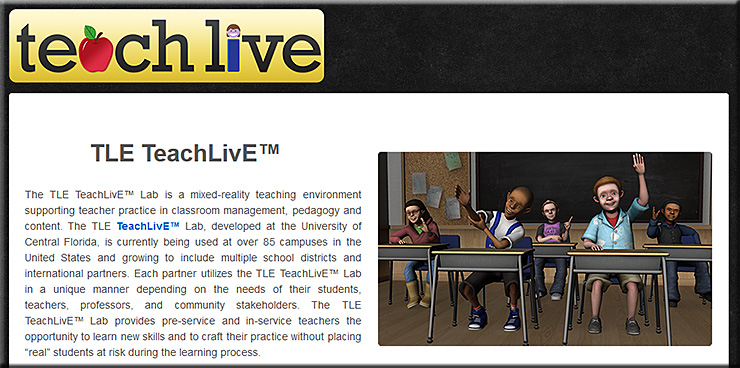
TeachLive places a teacher-in-training in a virtual classroom populated by computer-generated students. A Skype conference call and a Microsoft Kinect motion sensor power the high-tech pantomiming behind the platform. It’s currently being used at more than 80 campuses across the U.S. to train some of the next generation of educators, and it appears to be working.
Also see:
Excerpt:
TLE TeachLivE™ is a mixed-reality classroom with simulated students that provides teachers the opportunity to develop their pedagogical practice in a safe environment that doesn’t place real students at risk. This lab is currently the only one in the country using a mixed reality environment to prepare or retrain pre-service and in-service teachers. The use of TLE TeachLivE™ Lab has also been instrumental in developing transition skills for students with significant disabilities, providing immediate feedback through bug-in-ear technology to pre-service teachers, developing discrete trial skills in pre-service and in-service teachers, and preparing teachers in the use of STEM-related instructional strategies.
From DSC:
Don’t rule out tvOS for some powerful learning experiences / new affordances. The convergence of the television, the telephone, and the computer continues…and is now coming into your home. Trainers, faculty members, teachers, developers, and others will want to keep an eye on this space. The opportunities are enormous, especially as second screen-based apps and new forms of human computer interfaces (HCI) unfold.
The following items come to my mind:
Online-based communities of practice. Virtual reality, virtual tutoring. Intelligent systems. Artificial intelligence. Global learning. 24×7, lifelong learning. Career development. Flipping the classroom. Homeschooling. Learning hubs. Online learning. Virtual schools. Webinars on steroids.
With the reach of these powerful technologies (that continue to develop), I would recommend trying to stay informed on what’s happening in the world of tvOS-based apps in the future. Towards that end, below are some items that might help.
Apple releases Apple TV Tech Talks video series for building better tvOS apps — by AppleInsider Staff
Excerpt:
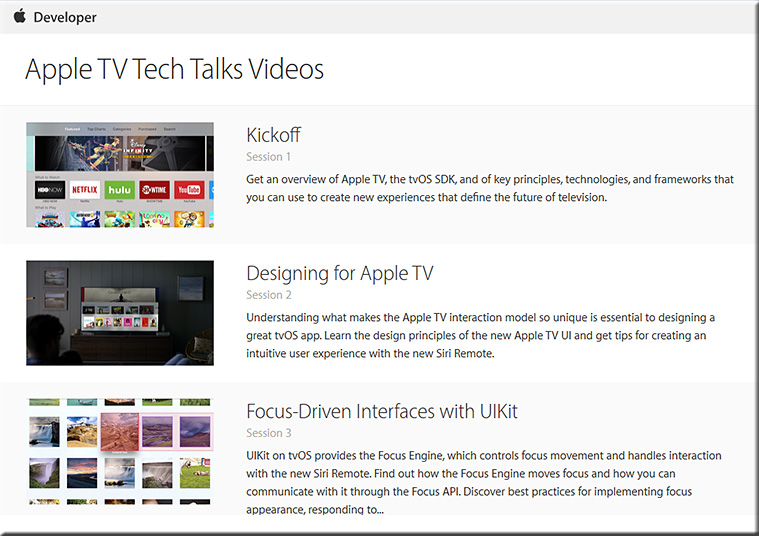
Apple on Wednesday released to developers a series of videos focusing on Apple TV and its tvOS operating system, offering a detailed look at the underlying SDK, resources and best practices associated with coding for the platform.
Also see:
Addendum on 2/26/16:
Harvard’s new official tour app leverages augmented reality — from betaboston.com
New York Times showcases virtual reality technology — from browndailyherald.com by Harry August
Virtual reality, used to craft more immersive storytelling, risks providing less narrative context
Oculus preview event to highlight multiplayer games — from uploadvr.com
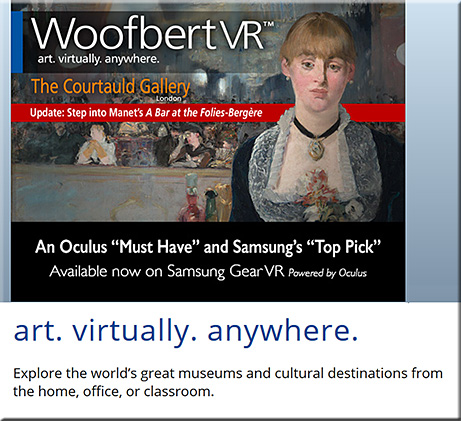
Woofbert are using VR to bring great art to everyone — from roadtovr.com by Kent Bye
Voices of VR Podcast – Episode #303
Microsoft developing video calling that projects people in front of yYou — from gadgets.ndtv.com by Robin Sinha
Facebook has created a new ‘Social VR’ team to explore how we’ll communicate in virtual reality — from businessinsider.com by Jillian D’Onfro
I planned out my last vacation in virtual reality — here’s what it was like — from Business Insider By Brandt Ranj
Augmented reality looks to future where screens vanish — from interaksyon.com by Glenn Chapman
VR And AR will be mobile’s demand driver, not its replacement — from techcrunch.com by Mike Hoefflinger
Excerpt:
Projections for the big players
If things go in this direction, here’s how it may play out for The Big Six:

Addendum:
HTC Vive is launching, here’s what we know — from futurism.com
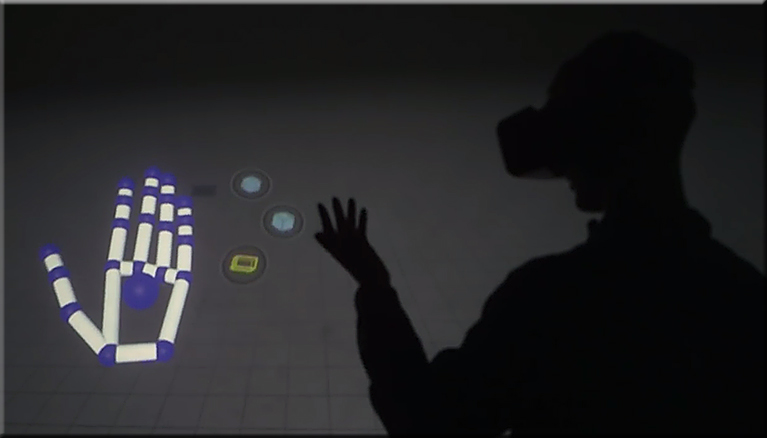
Leap Motion: Orion (video)
Reach into the future with Orion, Leap Motion’s new hand tracking software that’s built from the ground up for virtual reality.
Example slides from their
SlideShare presentation:
and from the PDF:
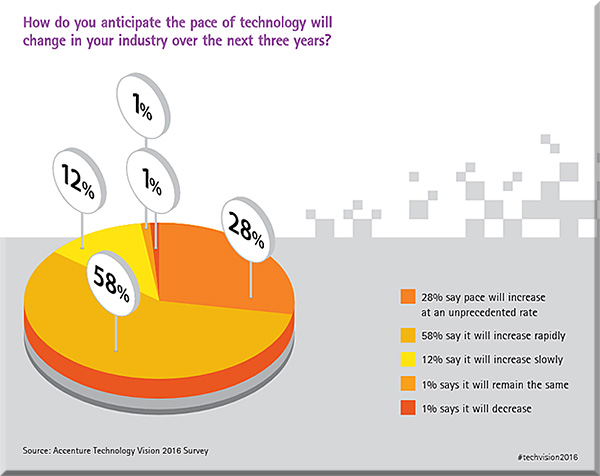
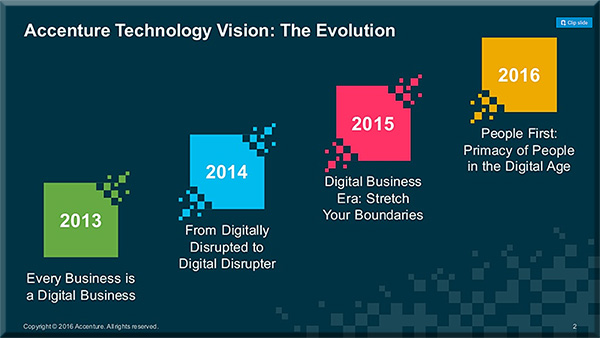
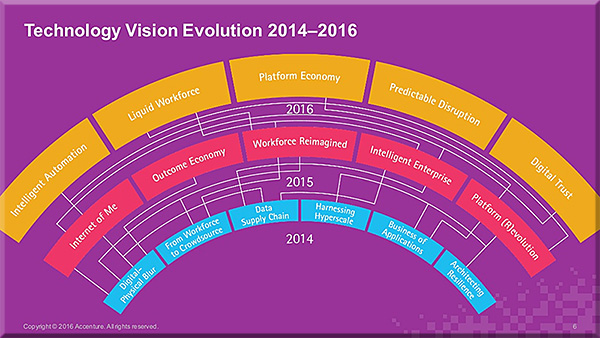
accenture: Technology Vision 2016 | People First: The Remedy to Digital Culture Shock — from accenture.com
Excerpt:
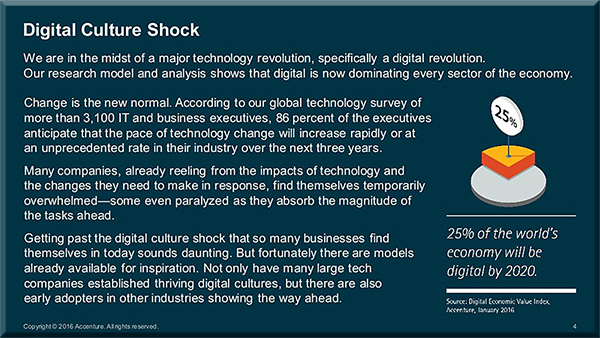
Winners in the digital age do much more than complete a technology checklist. They know their success hinges on people. Understanding changing customer needs and behaviors is, of course, hugely important. But the real deciding factor in the digital era will be the ability to evolve corporate culture. That means not simply taking advantage of emerging technologies but, critically, embracing the new business strategies that those technologies drive.
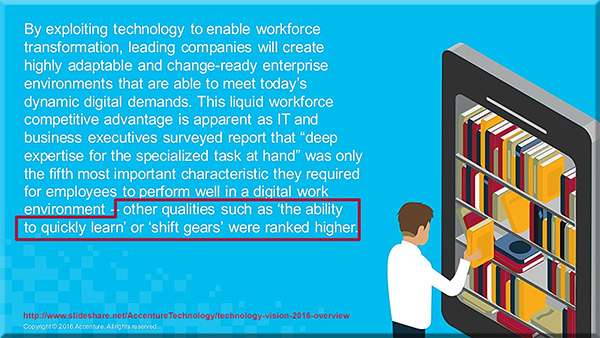
You can’t solve this challenge just by consuming more and more technology. Nor, as some fear, by replacing humans with machines. Instead, enterprises must focus on enabling people – consumers, employees and ecosystem partners – to do more with technology. That demands a digital corporate culture enabling people to continuously adapt, learn, create new solutions, drive relentless change, and disrupt the status quo. In an age where tech is grabbing the limelight, true leaders will, in fact, put people first.
But the real deciding factor in the era of intelligence will be a company’s ability to evolve its corporate culture to not only take advantage of emerging technologies, but also, critically, embrace the new business strategies that those technologies drive.
From DSC:
Are we preparing our students to be ready for — and successful in — this changing workplace? Are adults ready for this changing workplace? It appears that some are, and some are left reeling by the pace of change.
What is our role as educators in K-12? In higher ed?
What are the roles of trainers and/or mentors in the marketplace?
How does one help another person to learn quickly?
——–
Addendum:
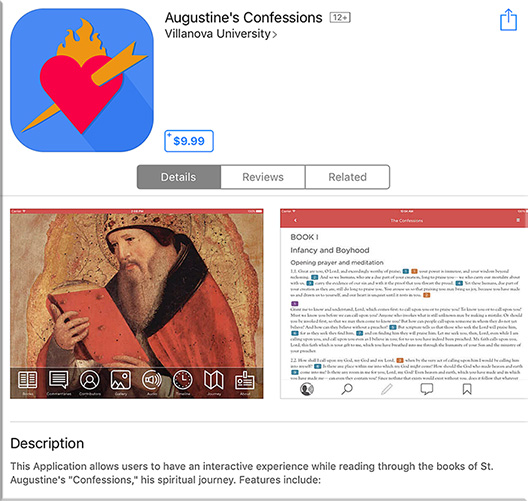
Interactive app brings 4th-century thinker to life — from campustechnology.com by Toni Fuhrman
At Villanova University, a student-developed app version of Augustine’s Confessions brings contemporary vitality and relevance to a classic 4th-century work.
Excerpt:
Augustine of Hippo, who lived from A.D. 354 to 430, might be surprised to find his Confessions in circulation today, including a number of e-book versions. Still widely read, popular in great books programs and studied in university classes, The Confessions of St. Augustine is autobiography and confession, spiritual quest and emotional journey.
One of the most recent electronic versions of the Confessions is an interactive app developed at Villanova University (PA), the nation’s only Augustinian Catholic University. Released three months ago on Augustine’s birthday (Nov. 13), the Confessions app is required for all freshmen as part of a “foundation” course. Available for both Apple and Android devices, the app includes the 13 books of the Confessions, authoritative commentaries, photo gallery, timeline, map and text-highlighted audio, as well as search, note-taking, annotation and bookmark options.
“What better way to reflect on and update this struggle than for today’s students to use technology to bring the text to life through visual, audio and analytical components?”
From DSC:
Love the idea. Love the use of teams — including students — to produce this app!
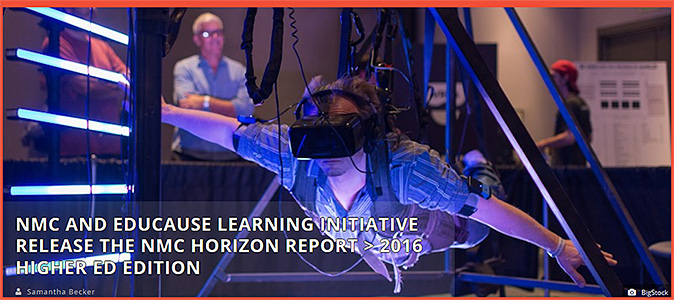
New Media Consortium (NMC) & Educause Learning Initiative (ELI) release the NMC Horizon Report > 2016 Higher Ed Edition — from nmc.org
Excerpt:
The New Media Consortium (NMC) and EDUCAUSE Learning Initiative (ELI) are jointly releasing the NMC Horizon Report > 2016 Higher Education Edition at the 2016 ELI Annual Meeting. This 13th edition describes annual findings from the NMC Horizon Project, an ongoing research project designed to identify and describe emerging technologies likely to have an impact on learning, teaching, and creative inquiry in higher education.
The report identifies six key trends, six significant challenges, and six important developments in educational technology across three adoption horizons spanning over the next one to five years, giving campus leaders, educational technologists, and faculty a valuable guide for strategic technology planning. The report provides higher education leaders with in-depth insight into how trends and challenges are accelerating and impeding the adoption of educational technology, along with their implications for policy, leadership, and practice.