Web 3.0 vs Metaverse: What’s the difference? — from homo-digitalis.net by Fabian Schmidt

Excerpt:

So what is Web 3.0?

On Twitter, a user asked if someone could explain the term in baby talk. I thought one answer was good:

    • Web 1.0 = Read
    • Web 2.0 = Read/Write
    • Web 3.0 = Read/Write/Own

This is a sufficient simplification to gain an initial understanding. Yet a bit more information is still important.

Let’s get one thing straight right away. As with all things in the making, there is not yet a clear-cut definition of Web 3.0. Tim Berners-Lee, the inventor of the classic web, thinks of the semantic web as the next big step.

Since 2020/2021, there is another idea of Web3, and it is inspired by a new form of technology: Blockchains. At its core is a new wave of decentralization.

Besides decentralization, other key topics related to Web 3.0 include Decentralized Autonomous Organizations (DAO), Non-fungible-tokens (NFT), and Decentralized Finance (DeFi).

The metaverse is a digital world that is meant to feel as real as possible and can represent all concerns of human existence. From leisure to work.

Fabian Schmidt, Homo Digitalis, 2021


Bill Gates: Most Work Meetings Will Happen In The Metaverse In 3 Years — from vrscout.com by Kyle Melnick

Excerpt:

“Within the next two or three years, I predict most virtual meetings will move from 2D camera image grids—which I call the Hollywood Squares model, although I know that probably dates me—to the metaverse, a 3D space with digital avatars,” said Gates in the post. “Both Facebook and Microsoft recently unveiled their visions for this, which gave most people their first view of what it will look like”.


Adidas to enter the metaverse with first NFT products — from dezeen.com by Rima Sabina Aouf

Excerpt:

Adidas has announced its next collection will be a mix of digital and physical items, and will be sold as NFTs produced with collaborators such as Bored Ape Yacht Club.

Titled Into the Metaverse, the collection will comprise virtual wearables that buyers can use in online platforms, but also the physical clothing to match.

It is Adidas’ first collection of NFTs, or non-fungible tokens – essentially, digital collectibles with proven authenticity. NFTs act as a blockchain-based certificate of ownership, allowing pieces to be authenticated, bought and collected.


How Coinbase thinks about the Metaverse — from blog.coinbase.com by Brian Armstrong & Alex Reeve

Excerpt:

Primitive Metaverse platforms are selling virtual land for millions of dollars. Billions more are being invested in Metaverse startups. And Mark Zuckerberg recently renamed his entire company to reflect a focus on building the Metaverse.

Recently, our team put together an internal presentation about the Metaverse, who’s working on it, and how crypto will help make it real. I thought the presentation was well done, so I’m sharing most of the slides here.

Like Matt[hew Ball], we define the Metaverse as:

The future of the internet: A massively-scaled, persistent, interactive, and interoperable real-time platform comprised of interconnected virtual worlds where people can socialize, work, transact, play, and create.

The Metaverse is the distant evolution of Web3. In its most complete form, it will be a series of decentralized, interconnected virtual worlds with a fully functioning economy where people can do just about anything they can do in the physical world.
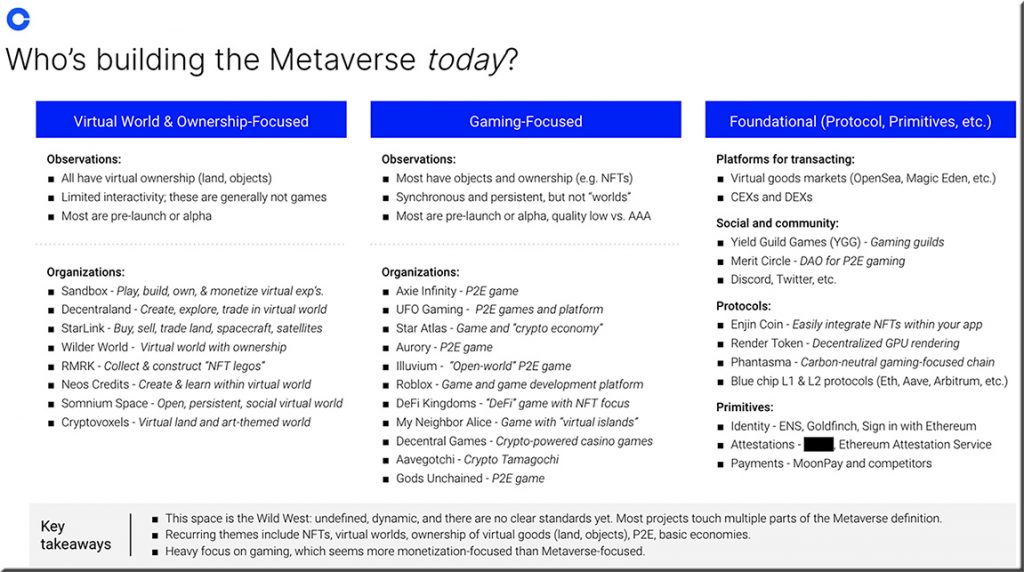
Who is building the Metaverse today?


From DSC:
I’m not saying not to go there…but one has to be very careful when dealing with cryptocurrencies. As the items below show, you can mess up…big time.

From DSC:
And that bit about the decimal point is key! I tried to locate an article that I recently read that described how one person lost hundreds of thousands of dollars because he misplaced the decimal in his asking price for a cryptocurrency. It was worth hundreds of thousands of dollars, but he said that his big thumbs got in the way. He mistyped the asking price and hit the Enter key before he recognized his mistake. He sold the cryptocurrency for a fraction of its real value. In that case, one would hope that the buyer would extend some grace and readjust the price. But that didn’t happen in this case. Ouch!


From DSC:
Again, I’m not saying that this area may not represent an enormous new, impactful, prosperous wave to ride. But I need to do a whole lot more learning before I feel comfortable jumping into this ocean.

That said when I read the quote below…I wondered:


The next age of the internet could suck power away from Big Tech while living on the same backbone as cryptocurrencies. Here’s what to know about Web3. — from businessinsider.com by Katie Canales

Excerpts (emphasis DSC):

  • Web3 is the next generation of the internet and will exist on the blockchain.
  • It will be decentralized, meaning it won’t be controlled entities like Facebook or Google.
  • Twitter, GameStop, Reddit, and VC firm a16z are all putting resources into building Web3.

One aspect of the metaverse is that users will hopefully be able to go virtually from platform to platform with one single account — just like we will in Web3. 

And NFTs, one-of-a-kind tokens representing your ownership of a virtual good, could be more easily bought and sold with cryptocurrencies within a space like Web3. 


From DSC:
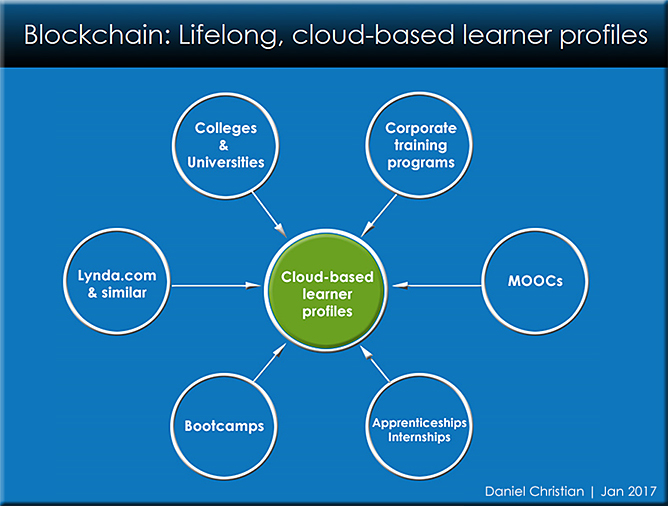
How might “Web3” translate into the future of lifelong learning? Here’s one vision/possibility:

There could be several entities and services feeding one's cloud-based learner profile

Each person would have a learner profile/account that could seamlessly log into multiple education/training providers’ platforms and services. The results of that learning could be stored in one’s cloud-based learner profile. This type of next-generation learning platform would still need subject matter experts, instructional designers, programmers, and other team members. But the focus would be on building skills — skills that an artificial intelligence-backed interface would demonstrate are currently being requested by the modern workplace.  This constantly-being-updated list of skills could then link to the learning-related experiences and resources that people could choose from in order to develop those skills.

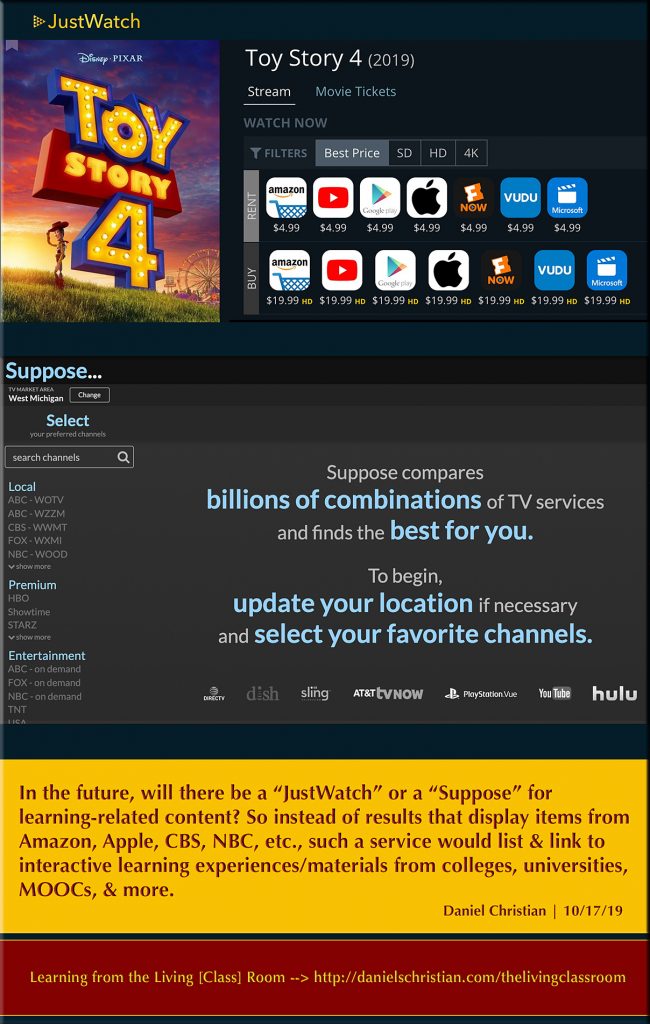
The following vision/graphic also comes to my mind:

Learning from the living class room


From DSC:
When I ran across the items below, I couldn’t help but wonder…”What does the legal realm need to know here?”

The Ultimate List Of Crypto Lending Platforms — from 101blockchains.com by Diego Geroni

The Ultimate List Of Crypto Lending Platforms

Know The Vulnerabilities And Security Concerns Associated With NFT — from 101blockchains.com by Diego Geroni

Know The Vulnerabilities And Security Concerns Associated With NFT

Radar trends to watch: December 2021 — from oreilly.com by Mike Loukides
Developments in Programming, Quantum Computing, Cryptocurrency, and More

Radar trends to watch: December 2021

NFT sales reached $27 billion this year — from protocol.com by Nat Rubio-Licht
OpenSea dominated the business.

UNISWAP – Know Everything About The Largest Decentralized Exchange (DEX) — from 101blockchains.com by Diego Geroni

UNISWAP – Know Everything About The Largest Decentralized Exchange (DEX)


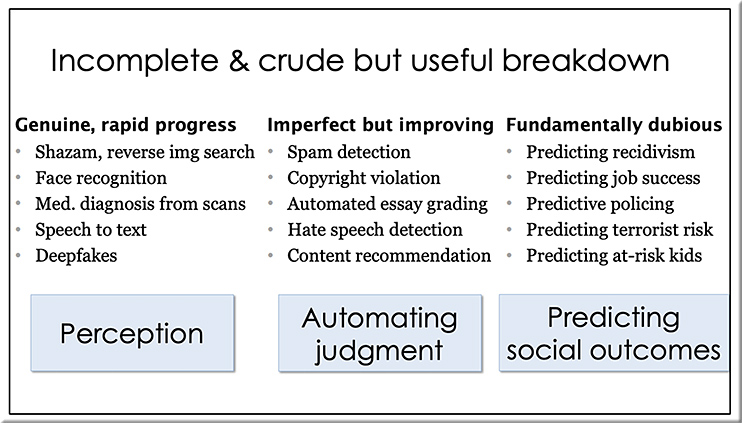
From DSC:
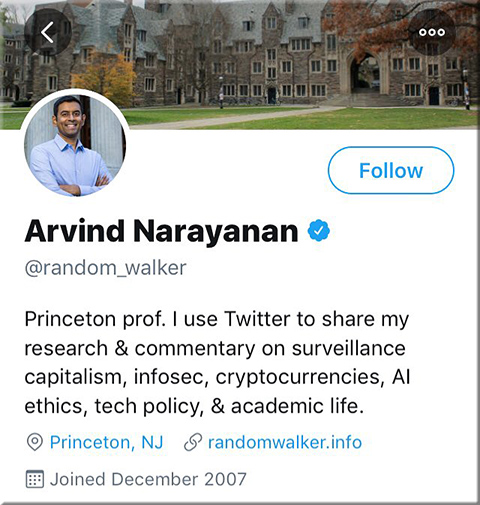
I wish that more faculty members would share their research, teaching methods, knowledge, and commentary with the world as this professor does (vs. talking to other professors behind publishers’ walled off content). In this case, Arvind happens to use Twitter. But if one doesn’t like to use Twitter, there’s also LinkedIn, WordPress/blogging, podcasting, and other outlets. 


We’ve been warned about AI and music for over 50 years, but no one’s prepared — from theverge.com by Dani Deahl
‘This road is literally being paved as we’re walking on it’

Excerpt:

AI is capable of making music, but does that make AI an artist? As AI begins to reshape how music is made, our legal systems are going to be confronted w/ some messy questions regarding authorship.


 law will also have to contend with the bigger issue of authorship. That is, can an AI system claim legal authorship of the music it produces, or does that belong to the humans who created the software?


The Research Pirates of the Dark Web — from theatlantic.com by Kaveh Waddell; with thanks to Faculty Row for this item
After getting shut down late last year, a website that allows free access to paywalled academic papers has sprung back up in a shadowy corner of the Internet.

Excerpt:

There’s a battle raging over whether academic research should be free, and it’s overflowing into the dark web.

Most modern scholarly work remains locked behind paywalls, and unless your computer is on the network of a university with an expensive subscription, you have to pay a fee, often around 30 dollars, to access each paper.

Many scholars say this system makes publishers rich—Elsevier, a company that controls access to more than 2,000 journals, has a market capitalization about equal to that of Delta Airlines—but does not benefit the academics that conducted the research, or the public at large. Others worry that free academic journals would have a hard time upholding the rigorous standards and peer reviews that the most prestigious paid journals are famous for.


27 superb sites with royalty free stock images for commercial use — from verveuk.eu by Dave Lane

Excerpt (emphasis DSC):

For my own benefit, I wanted a ‘go to’ list of sites that offered royalty free stock images for commercial use. There did not seem to be much available that wholly offered what I was looking for. There are articles that list ‘free stock image’ sites but I found that 99% of these did not clearly state the licensing rules with regards to commercial use of the images.

All of the photographs featured on the sites on this list are free from copyright restrictions and can be used on your web sites, blogs and for any other commercial use.

The list is split into 2 sections and an overview of the license for each site is included within block quotes along with a link to the full license details (if applicable).


light spiral free stock image

Creativity 103


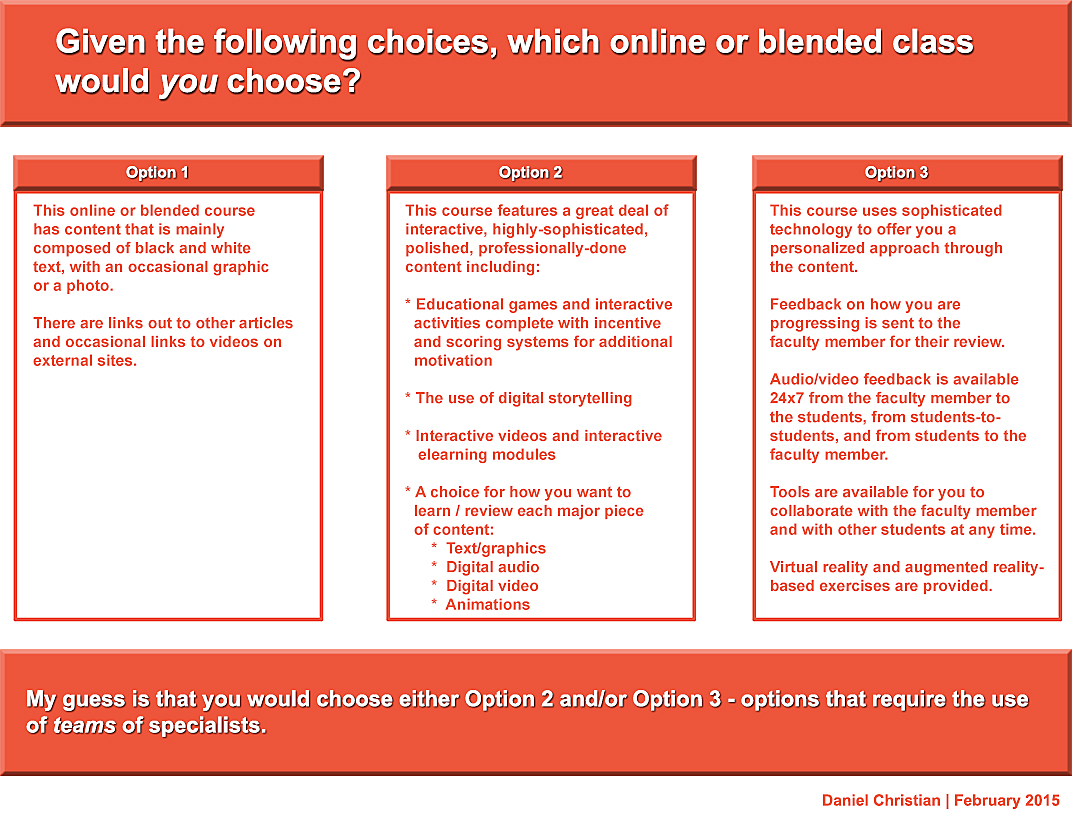
My thanks to Mary Grush at Campus Technology for her continued work in bringing relevant topics and discussions to light — so that our institutions of higher education will continue delivering on their missions well into the future. By doing so, learners will be able to continue to partake of the benefits of attending such institutions. But in order to do so, we must adapt, be responsive, and be willing to experiment. Towards that end, this Q&A with Mary relays some of my thoughts on the need to move more towards a team-based approach.

When you think about it, we need teams whether we’re talking about online learning, hybrid learning or face-to-face learning. In fact, I just came back from an excellent Next Generation Learning Space Conference and it was never so evident to me that you need a team of specialists to design the Next Generation Learning Space and to design/implement pedagogies that take advantage of the new affordances being offered by active learning environments.


DanielSChristian-CampusTechologyMagazine-2-24-15


DanielSChristian-CampusTechologyMagazine2-2-24-15


ThePowerofOER-WileyMarch2014


Excerpted slides:


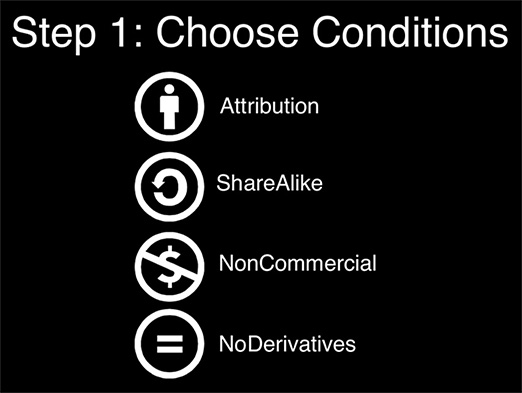
CC-ChoseConditions-ViaDavidWileyMarch2014


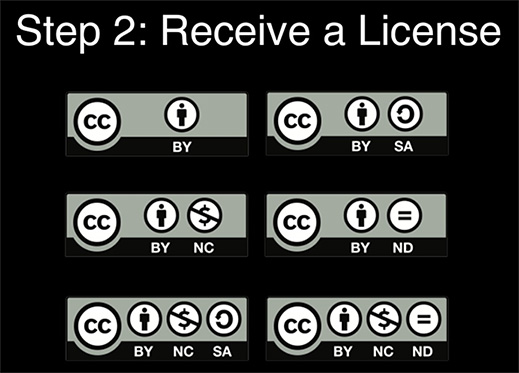
CC-ReceiveLicenseViaDavidWileyMarch2014


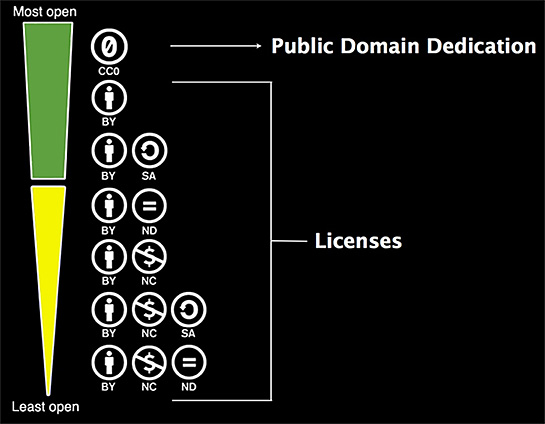
CC-LevelsOfOpennessViaDavidWileyMarch2014


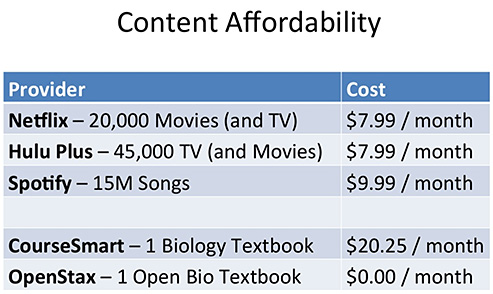
ContentAffordability-WileyMarch2014


This was a keynote address that was delivered
to the Maryland Distance Learning Association (MDLA), March 2014.

With thanks to Volkmar Langer for his Scoop on this.


Tagged with:  

For Immediate Release
Tue, 09/04/2012 – 12:55

Excerpt:

Washington, D.C.— As the digital environment continues to develop rapidly, school librarians and K-12 educators face challenging issues concerning copyright-protected print and online materials at schools and outside of the traditional educational environment. When asked to make copyright decisions, uncertain librarians and educators tend to take more conservative copyright positions than necessary for fear of liability.

Today, the American Library Association’s Office for Information Technology Policy (OITP) released the book “Complete Copyright for K–12 Librarians and Educators” to help librarians and teachers understand copyright law. The book teaches school librarians and educators how to fully exercise rights such as fair use while making decisions that are both lawful and best serve the learning community.

A Communiqué from the Horizon Project Retreat [2012]
Building on ten years of research into emerging technology in education

Excerpt:

From these discussions, 28 hugely important metatrends were identified. The ten most significant are listed here and will be the focus of the upcoming NMC Horizon Project 10th Anniversary Report:

  1. The world of work is increasingly global and increasingly collaborative. As more and more companies move to the global marketplace, it is common for work teams to span continents and time zones. Not only are teams geographically diverse, they are also culturally diverse.
  2. People expect to work, learn, socialize, and play whenever and wherever they want to. Increasingly, people own more than one device, using a computer, smartphone, tablet, and ereader. People now expect a seamless experience across all their devices.
  3. The Internet is becoming a global mobile network — and already is at its edges. Mobithinking reports there are now more than 6 billion active cell phone accounts. 1.2 billion have mobile broadband as well, and 85% of new devices can access the mobile web.
  4. The technologies we use are increasingly cloud-based and delivered over utility networks, facilitating the rapid growth of online videos and rich media. Our current expectation is that the network has almost infinite capacity and is nearly free of cost. One hour of video footage is uploaded every second to YouTube; over 250 million photos are sent to Facebook every day.
  5. Openness — concepts like open content, open data, and open resources, along with notions of transparency and easy access to data and information — is moving from a trend to a value for much of the world. As authoritative sources lose their importance, there is need for more curation and other forms of validation to generate meaning in information and media.
  6. Legal notions of ownership and privacy lag behind the practices common in society. In an age where so much of our information, records, and digital content are in the cloud, and often clouds in other legal jurisdictions, the very concept of ownership is blurry.
  7. Real challenges of access, efficiency, and scale are redefining what we mean by quality and success. Access to learning in any form is a challenge in too many parts of the world, and efficiency in learning systems and institutions is increasingly an expectation of governments — but the need for solutions that scale often trumps them both. Innovations in these areas are increasingly coming from unexpected parts of the world, including India, China, and central Africa.
  8. The Internet is constantly challenging us to rethink learning and education, while refining our notion of literacy. Institutions must consider the unique value that each adds to a world in which information is everywhere. In such a world, sense-making and the ability to assess the credibility of information and media are paramount.
  9. There is a rise in informal learning as individual needs are redefining schools, universities, and training. Traditional authority is increasingly being challenged, not only politically and socially, but also in academia — and worldwide. As a result, credibility, validity, and control are all notions that are no longer givens when so much learning takes place outside school systems.
  10.  Business models across the education ecosystem are changing. Libraries are deeply reimagining their missions; colleges and universities are struggling to reduce costs across the board. The educational ecosystem is shifting, and nowhere more so than in the world of publishing, where efforts to reimagine the book are having profound success, with implications that will touch every aspect of the learning enterprise.

These metatrends are the first of much yet to come in the next year. Watch NMC.org for news and more throughout the Horizon Project’s 10th Anniversary. To be part of the discussions, follow #NMChz!


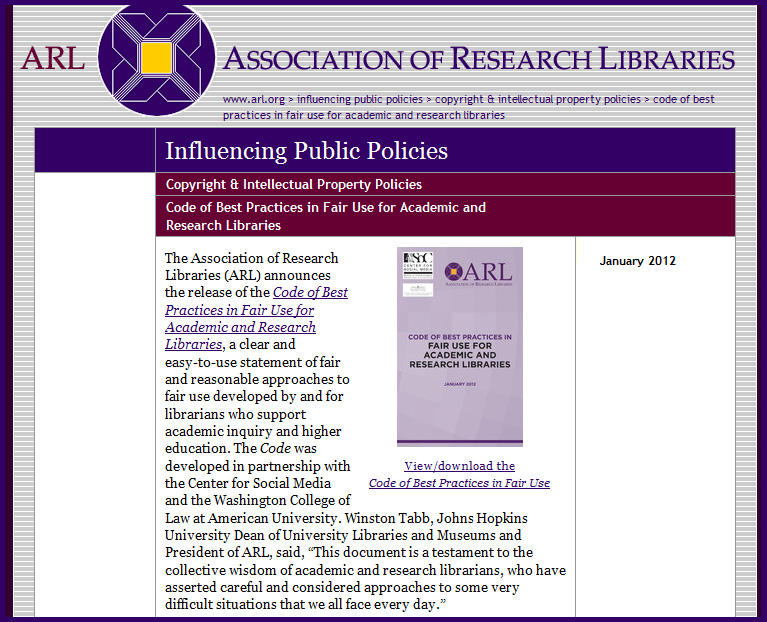
Fair Use Report from ARL - January 2012
Also see:

© 2025 | Daniel Christian