From DSC:
I also wanted to highlight the item below, which Barsee also mentioned above, as it will likely hit the world of education and training as well:


Also relevant/see:


The perils of consulting an Electric Monk — from jordanfurlong.substack.com by Jordan Furlong
Don’t blame ChatGPT for the infamous incident of the made-up cases. And don’t be too hard on the lawyer, either. We’re all susceptible to a machine that tells us exactly what we want to hear.

Excerpt:

But then the “ChatGPT Lawyer” story happened, and all hell broke loose on LawTwitter and LawLinkedIn, and I felt I needed to make three points, one of which involves an extra-terrestrial robot.

My first two points are pretty straightforward:

  1. The tsunami of gleeful overreaction from lawyers on social media, urging bans on the use of ChatGPT and predicting prison time for the hapless practitioner, speaks not only to their fear and loathing of generative AI, but also to their desperate hope that it’s all really nothing but hype and won’t disturb their happy status quo. Good luck with that.
  2. The condemnation and mockery of the lawyer himself, who made a bad mistake but who’s been buried by an utterly disproportionate avalanche of derision, speaks to the lack of compassion in this profession, whose members should pray that their worst day as a lawyer never makes it to the front page of The New York Times. There but for the grace of God.

Are you looking for evidence to support the side that’s hired you? Or are you looking for the truth? Choosing the first option has never been easier. It’s also never been more dangerous.


As referenced topic-wise by Jordan above, also see:

A lawyer used ChatGPT to prepare a court filing. It went horribly awry. — from cbsnews.com by Megan Cerullo


What I learned at CLOC 2023 — from alexofftherecord.com by Alex Su
This week I attended the premier legal operations conference. Here’s what I heard.

Excerpt:

Theme 1: Generative AI isn’t going anywhere
This was a huge theme throughout the conference. Whether it was vendors announcing GPT integrations, or panels discussing how to use AI, there was just an enormous amount of attention on generative AI. I’m certainly no stranger to all this hype, but I’d always wondered if it was all from my Silicon Valley bubble. It wasn’t.

What was driving all this interest in AI? Well, the ubiquity of ChatGPT. Everyone’s talking about it and trying to figure out how to incorporate it into the business. And not just in the U.S. It’s a worldwide trend. Word on the street is that it’s a CEO-level priority. Everywhere. So naturally it trickles down to the legal department.


We need to talk about ChatGPT — from mnbar.org by Damien Riehl

Excerpt:

How well do LLMs perform on legal tasks? 

Personal experience and anecdotal evidence indicate that LLMs’ current state provides impressive output in various legal tasks. Specifically, they provide extraordinary results on the following:

  • Drafting counterarguments.
  • Exploring client fact inquiries (e.g., “How did you lose money?”).
  • Ideating voir dire questions (and rating responses).
  • Summarizing statutes.
  • Calculating works’ copyright expiration.
  • Drafting privacy playbooks.
  • Drafting motions to dismiss.
  • Responding to cease-and-desist letters.
  • Crafting decision trees.
  • Creating chronologies.
  • Drafting contracts.
  • Extracting key elements from depositions.


Changed by Our Journey: Engaging Students through Simulive Learning — from er.educause.edu by Lisa Lenze and Megan Costello
In this article, an instructor explains how she took an alternative approach to teaching—simulive learning—and discusses the benefits that have extended to her in-person classrooms.

Excerpts:

Mustering courage, Costello devised a novel way to (1) share the course at times other than when it was regularly scheduled and (2) fully engage with her students in the chat channel during the scheduled class meeting time. Her solution, which she calls simulive learning, required her to record her lectures and watch them with her students. (Courageous, indeed!)

Below, Costello and I discuss what simulive learning looks like, how it works, and how Costello has taken her version of remote synchronous teaching forward into current semesters.

Megan Costello: I took a different approach to remote synchronous online learning at the start of the pandemic. Instead of using traditional videoconferencing software to hold class, I prerecorded, edited, and uploaded videos of my lectures to a streaming website. This website allowed me to specify a time and date to broadcast my lectures to my students. Because the lectures were already prepared, I could watch and participate in the chat with my students as we encountered the materials together during the scheduled class time. I drove conversations in chat, asked questions, and got students engaged as we covered materials for the day. The students had my full attention.


Professors Plan Summer AI Upskilling, With or Without Support — from insidehighered.com by Susan D’Agostino
Academics seeking respite from the fire hose of AI information and hot takes launch summer workshops. But many of the grass-roots efforts fall short of meeting demand.

Excerpt:

In these summer faculty AI workshops, some plan to take their first tentative steps in redesigning assignments to recognize the AI-infused landscape. Others expect to evolve their in-progress teaching-with-AI practices. At some colleges, full-time staff will deliver the workshops or pay participants for professional development time. But some offerings are grassroots efforts delivered by faculty volunteers attended by participants on their own time. Even so, many worry that the efforts will fall short of meeting demand.

From DSC:
We aren’t used to this pace of change. It will take time for faculty members — as well as Instructional Designers, Instructional Technologists, Faculty Developers, Learning Experience Designers, Librarians, and others — to learn more about AI and its implications for teaching and learning. Faculty are learning. Staff are learning. Students are learning. Grace is needed. And faculty/staff modeling what it is to learn themselves is a good thing for students to see as well.


Also relevant/see:

It takes a village… Reflections on sustainable learning design — from The Educationalist (educationalist.substack.com) by Alexandra Mihai

Excerpts:

This can be done first and foremost through collaboration, bringing more people at the table, in a meaningful workflow, whereby they can make the best use of their expertise. Moreover, we need to take a step back and keep the big picture in mind, if we want to provide our students with a valuable experience.

This is all about creating and nurturing partnerships. Thinking in an inclusive way about who is at the table when we design our courses and our programmes and who we are currently missing. Generally speaking, the main actors involved should be: teaching staff, learning design professionals (under all their various names) and students. Yes, students. Although we are designing for their learning, they are all too often not part of the process.

In order to yield results, collaborative practice needs to be embedded in the institutional fabric, and this takes time. Building silos happens fast, breaking them is a long term process. Creating a culture of dialogue, with clear and replicable processes is key to making collaborative learning design work.

From DSC:
To me, Alexandra is addressing the topic of using teams to design, develop, and teach/offer courses. This is where a variety of skills and specialties can come together to produce an excellent learning experience. No one individual has all of the necessary skills — nor the necessary time. No way.


Romans 12:10
Be devoted to one another in love. Honor one another above yourselves.

Proverbs 12:22
“The Lord detests lying lips, but he delights in people who are trustworthy.”

Psalms 65:3
When we were overwhelmed by sins, you forgave our transgressions.

Proverbs 13:10
Where there is strife, there is pride, but wisdom is found in those who take advice.


Professional Baseball Coaches Are Now Available In VR — from vrscout.com by KyleMelnick


Also see:

VR Brings A Terminally Ill Girl’s Dream To Life — from vrscout.com by KyleMelnick
A group of compassionate VR developers came together for an incredible cause.

Excerpt:

This week we learned of yet another heart-warming story wherein immersive technology was used to change a life. As reported by Shacknews, a handful of talented VR developers recently joined forces to answer the wish of a terminally-ill girl with a passion for mythical sea creatures.

Organized by VR Therapies, a group dedicated to exploring the use of VR technology for psychological and physical therapy, the project brought together 10 compassionate developers to make four-year-old Zainab’s dream of swimming through the ocean as a mermaid a reality for her birthday.


Webinars from Tom Barrett regarding AI for Education — a free webinar series

  • Webinar 6 replay
    • Miriam Scott – Head of Digital Education at Hillbrook Anglican School, Brisbane, Queensland, Australia.
    • Laura Bain – Head of Emerging Technologies and Innovation, Matthew Flinders Anglican College, Sunshine Coast, Queensland, Australia.
    • Nicole Dyson – Founder & CEO, Future Anything, Brisbane, Queensland, Australia.
  • Webinar 5 replay
    • In the fifth free webinar on AI for Education, I am joined by Dean Pearman, Head of Education at Beaconhills College and Tom Oliphant, Head of Technology and Enterprise at St John’s Grammar School. We explore questions about creativity, design and the new skills that are emerging. Join us to invest in your AI Literacy. Expand your toolset, broaden your understanding, and challenge your thinking.
  • Webinar 4 replay
    • You are watching the fourth free webinar, a dialogue about AI for education with Sophie Fenton, Steve Brophy and hosted by Tom Barrett Building Blocks – key AI concepts to learn. Practical frameworks for navigating the challenges of AI for education. Be part of a dialogue on provocations about AI and human centred education, truth and identity.
  • Webinar 3 replay – Claire Amos and Philly Wintle
  • Webinar 2 replay – Gemma Rainger and Dr Nick Jackson
  • Webinar 1 replay – Chantelle Love, Pip Cleaves and Steve Brophy

Using ChatGPT in Math Lesson Planning — from edutopia.org by Kristen Moore
Artificial intelligence tools are useful beyond language arts classes. Math teachers can use them to save time and create interesting lessons.


Democratic Inputs to AI — from openai.com
Our nonprofit organization, OpenAI, Inc., is launching a program to award ten $100,000 grants to fund experiments in setting up a democratic process for deciding what rules AI systems should follow, within the bounds defined by the law.


AI Canon — from a16z.com (Andreessen Horowitz) by Derrick Harris, Matt Bornstein, and Guido Appenzeller; via The Neuron newsletter

Excerpts:

Research in artificial intelligence is increasing at an exponential rate. It’s difficult for AI experts to keep up with everything new being published, and even harder for beginners to know where to start. So, in this post, we’re sharing a curated list of resources we’ve relied on to get smarter about modern AI. We call it the “AI Canon” because these papers, blog posts, courses, and guides have had an outsized impact on the field over the past several years.

Table of contents

  • A gentle introduction
  • Foundational learning
  • Tech deep dive
  • Practical guides to building with LLMs
  • Market analysis
  • Landmark research results

Generative AI hits Adobe Photoshop!

Generative AI hits Adobe Photoshop!


How Financially Resilient Is Your College? — from bain.com; with thanks to Jeff Selingo for this resource
See how your school stacks up in our interactive database.  

Excerpt:

Use this interactive tool to explore the impact of macroeconomic, enrollment, and cost scenarios on your institution’s financial position, actions you can take boost resilience, and how your school compares with others.


NVIDIA ACE for Games is a new foundry for intelligent in-game characters powered by generative AI. Developers of middleware, tools, and games can use NVIDIA ACE for Games to build and deploy customized speech, conversation, and animation AI models in their software and games.

From DSC:
I can’t wait to see this type of thing integrated into educational games/simulations/training.


082 | Generating Voices — from thebrainyacts.beehiiv.com

Excerpts:

Conventional Use Cases

  1. Audio Document Reading:
  2. Accessibility:
  3. Training Materials:
  4. Document Proofing:
  5. Transcriptions:
  6. Blog to Podcast:

Unconventional Use Cases

  1. Voice Cloning for Client Interaction:
  2. Multilingual Services:
  3. AI-based Legal Information Hotline:
  4. Real-Time Courtroom Assistance:
  5. Engaging Jurors:
  6. Storytelling for Case Understanding:
 

From DSC:
And how long before that type of interactivity is embedded into learning-related applications/games?!


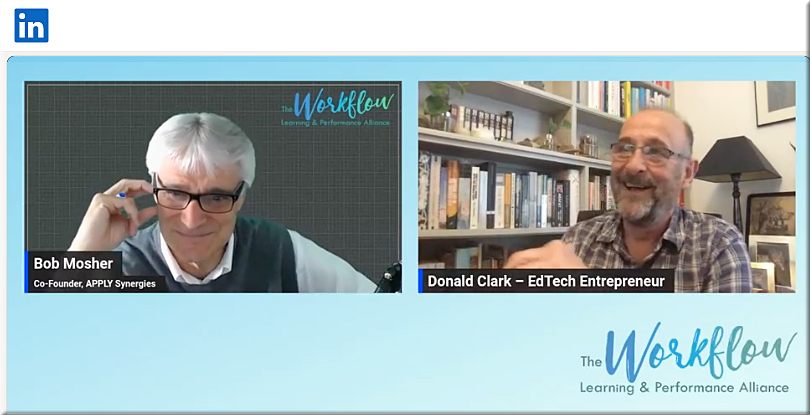
AI in Learning: The Impact of ChatGPT on L&D & Workflow Learning — from linkedin.com; this event by Bob Mosher features his conversation with Donald Clark

AI in Learning: The Impact of ChatGPT on L&D & Workflow Learning -- from linkedin.com; this event by Bob Mosher features his conversation with Donald Clark


Bill Gates says AI is poised to destroy search engines and Amazon — from futurism.com by Victor Tangermann
Who will win the AI [competition]? (DSC: I substituted the word competition here, as that’s what it is. It’s not a war, it’s a part of America’s way of doing business.)

“Whoever wins the personal agent, that’s the big thing, because you will never go to a search site again, you will never go to a productivity site, you’ll never go to Amazon again,” Gates said during a Goldman Sachs event on AI in San Francisco this week, as quoted by CNBC.

These AI assistants could “read the stuff you don’t have time to read,” he said, allowing users to get to information without having to use a search engine like Google.


EdX launches ChatGPT-powered plugin, learning assistant — from edscoop.com
The online learning firm edX introduced two new tools powered by ChatGPT, the “first of many innovations” in generative AI for the platform.

The online learning platform edX introduced two new tools on Friday based on OpenAI’s ChatGPT technology: an edX plugin for ChatGPT and a learning assistant embedded in the edX platform, called Xpert.

According to the company, its plugin will enable ChatGPT Plus subscribers to discover educational programs and explore learning content such as videos and quizzes across edX’s library of 4,200 courses.


Bing is now the default search for ChatGPT — from theverge.com by Tom Warren; via superhuman.beehiiv.com
The close partnership between Microsoft and OpenAI leads to plug-in interoperability and search defaults.

Excerpt:

OpenAI will start using Bing as the default search experience for ChatGPT. The new search functionality will be rolling out to ChatGPT Plus users today and will be enabled for all free ChatGPT users soon through a plug-in in ChatGPT.


How ChatGPT Could Help or Hurt Students With Disabilities — from chronicle.com by Beth McMurtrie

Excerpt:

  • Students with mobility challenges may find it easier to use generative AI tools — such as ChatGPT or Elicit — to help them conduct research if that means they can avoid a trip to the library.
  • Students who have trouble navigating conversations — such as those along the autism spectrum — could use these tools for “social scripting.” In that scenario, they might ask ChatGPT to give them three ways to start a conversation with classmates about a group project.
  • Students who have trouble organizing their thoughts might benefit from asking a generative AI tool to suggest an opening paragraph for an essay they’re working on — not to plagiarize, but to help them get over “the terror of the blank page,” says Karen Costa, a faculty-development facilitator who, among other things, focuses on teaching, learning, and living with ADHD. “AI can help build momentum.”
  • ChatGPT is good at productive repetition. That is a practice most teachers use anyway to reinforce learning. But AI can take that to the next level by allowing students who have trouble processing information to repeatedly generate examples, definitions, questions, and scenarios of concepts they are learning.

It’s not all on you to figure this out and have all the answers. Partner with your students and explore this together.


A new antibiotic, discovered with artificial intelligence, may defeat a dangerous superbug — from edition.cnn.com by Brenda Goodman


8 YouTube Channels to Learn AI — from techthatmatters.beehiiv.com by Harsh Makadia

  • The AI Advantage (link)
  • Jason West (link)
  • TheAIGRID (link)
  • Prompt Engineering (link)
  • Matt Wolfe (link)
  • Two-Minute Papers (link)
  • Brett Malinowski (link)
  • 10X Income (link)

AI and the Future of Teaching and Learning | Insights and Recommendations from the Office of Educational Technology

Artificial Intelligence and the Future of Teaching and Learning | Insights and Recommendations — with thanks to Robert Gibson on LinkedIn for this resource


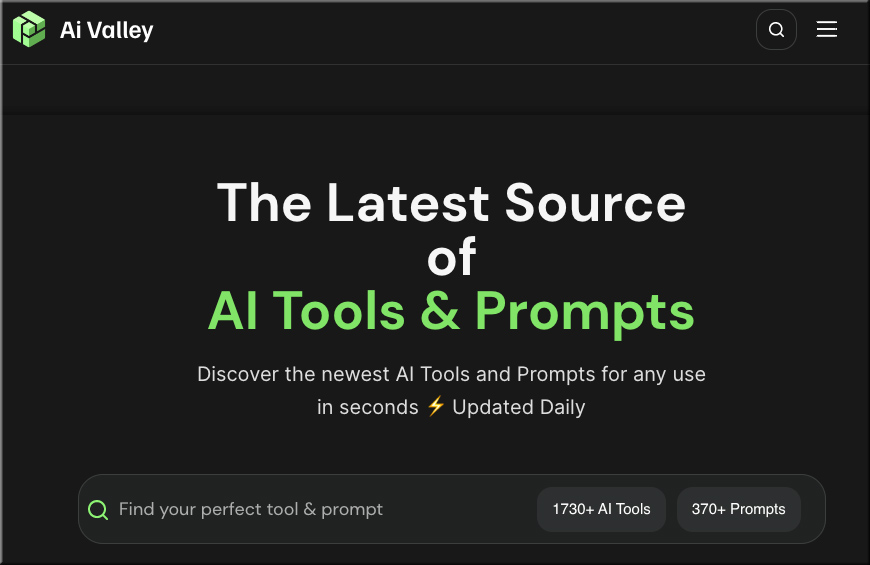
Ai Valley -- the latest source of AI tools and prompts


It takes a village… Reflections on sustainable learning design – from educationalist.substack.com; The Educationalist by Alexandra Mihai

Excerpt:

For the purpose of this article I want to look at learning design in a more holistic way, as a practice that takes place at institutional level. Because we are actually not designing the learning, we are designing for learning. It’s all about an ecosystem with many variable components, including people, institutions, pedagogy, disciplinary content, technology. Some of them more controllable or predictable, some of them less so. So learning design is (should be!) all about being adaptive, iterative, empathic, but also efficient, sustainable (from different points of view, I will come back to that later), scalable.


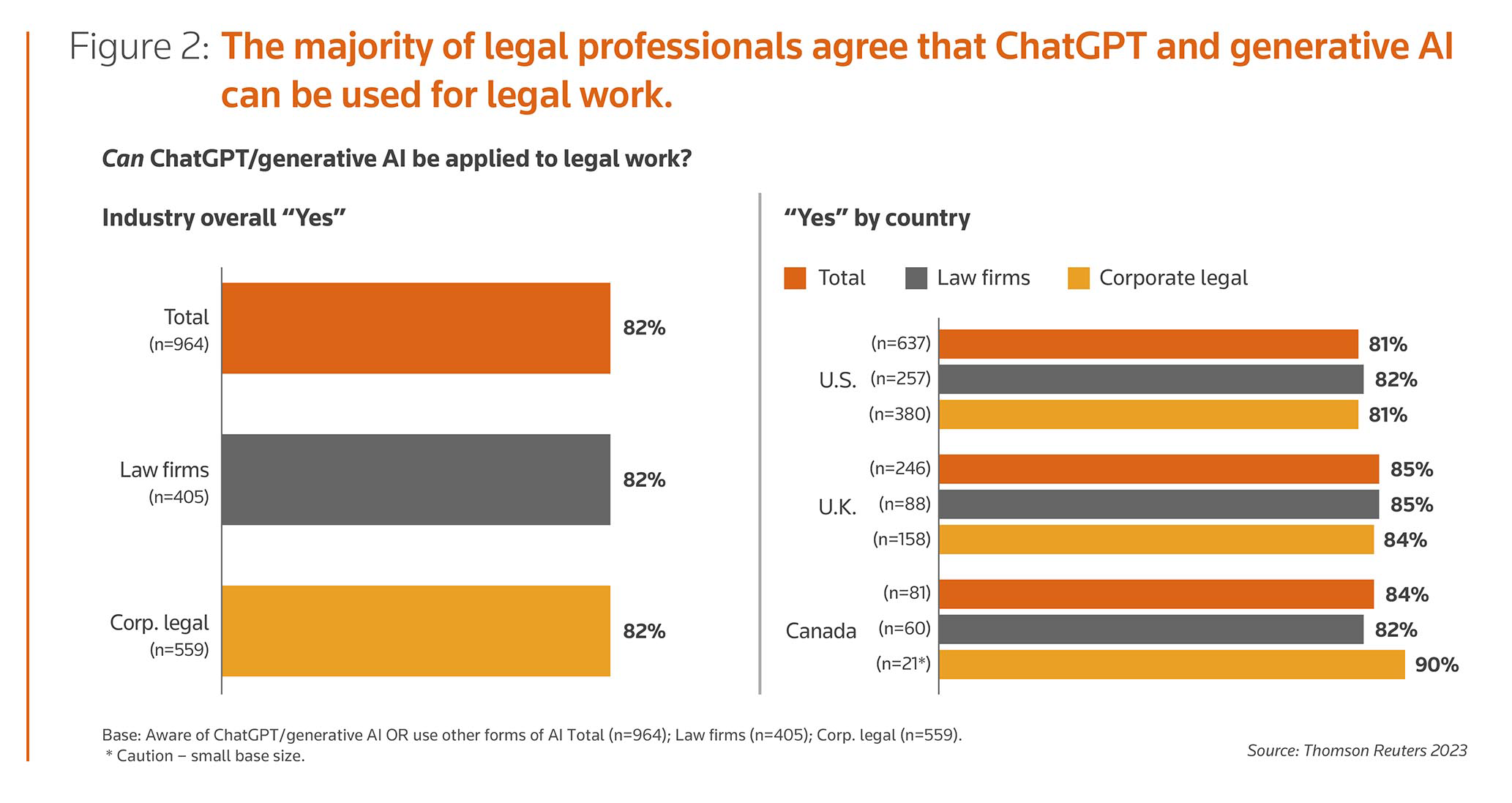
Corporate legal departments see use cases for generative AI & ChatGPT, new report finds — from thomsonreuters.com

New legal tech tools showcased at CLOC 2023 — from legaldive.comRobert Freedman
Innovations include a better way to evaluate law firm proposals, centralize all in-house legal requests in a single intake function and analyze agreements.

Guest post: CLOC 2023 – Key insights into how to drive value during changing economic times — from legaltechnology.com by Valerie Chan

Excerpt:

Typically, Legalweek has always been focused on eDiscovery, while CLOC was focused on matter management and contracts management. This time I noticed more balance in the vendor hall and sessions, with a broader range of services providers than before, including staffing providers, contracts management vendors and other new entrants in addition to eDiscovery vendors.

One theme dominated the show floor conversations: Over and over, the legal operators I talked with said if their technologies and vendors were able to develop better workflows, achieve more cost savings and report on the metrics that mattered to their GC, the GC could function as more of a business advisor to the C-suite.


AI is already being used in the legal system—we need to pay more attention to how we use it — by phys.org Morgiane Noel

Excerpt:

While ChatGPT and the use of algorithms in social media get lots of attention, an important area where AI promises to have an impact is law.

The idea of AI deciding guilt in legal proceedings may seem far-fetched, but it’s one we now need to give serious consideration to.

That’s because it raises questions about the compatibility of AI with conducting fair trials. The EU has enacted legislation designed to govern how AI can and can’t be used in criminal law.


Legal Innovation as a Service, Now Enhanced with AI — from denniskennedy.com by Dennis Kennedy

Excerpt:

Over the last semester, I’ve been teaching two classes at Michigan State University College of Law, one called AI and the Law and the other called New Technologies and the Law, and a class at University of Michigan Law School called Legal Technology Literacy and Leadership. All three classes pushed me to keep up-to-date with the nearly-daily developments in AI, ChatGPT, and LLMs. I also did quite a lot of experiments, primarily with ChatGPT, especially GPT-4, and with Notion AI.


Emerging Tech Trends: The rise of GPT tools in contract analysis — from abajournal.com by Nicole Black

Excerpt:

Below, you’ll learn about many of the solutions currently available. Keep in mind that this overview is not exhaustive. There are other similar tools currently available and the number of products in this category will undoubtedly increase in the months to come.


Politicians need to learn how AI works—fast — link.wired.com

Excerpt:

This week we’ll hear from someone who has deep experience in assessing and regulating potentially harmful uses of automation and artificial intelligence—valuable skills at a moment when many people, including lawmakers, are freaking out about the chaos that the technology could cause.


© 2025 | Daniel Christian