This moment requires agility — and L&D can lead the way.
For individuals, agility fuels career growth and relevance. For organizations, agility equals the ability to survive and thrive even amid economic headwinds.
And what is agility if not constant learning? To build a resilient and adaptable future, learning leaders are working across HR to ensure everyone has the tools, the career paths, and the skills to succeed.
Read on for insights and ideas to power your own path.
— Daniel Christian (he/him/his) (@dchristian5) June 23, 2023
.
On giving AI eyes and ears— from oneusefulthing.org by Ethan Mollick AI can listen and see, with bigger implications than we might realize.
Excerpt:
But even this is just the beginning, and new modes of using AI are appearing, which further increases their capabilities. I want to show you some examples of this emerging world, which I think will soon introduce a new wave of AI use cases, and accompanying disruption.
We need to recognize that these capabilities will continue to grow, and AI will be able to play a more active role in the real world by observing and listening. The implications are likely to be profound, and we should start thinking through both the huge benefits and major concerns today.
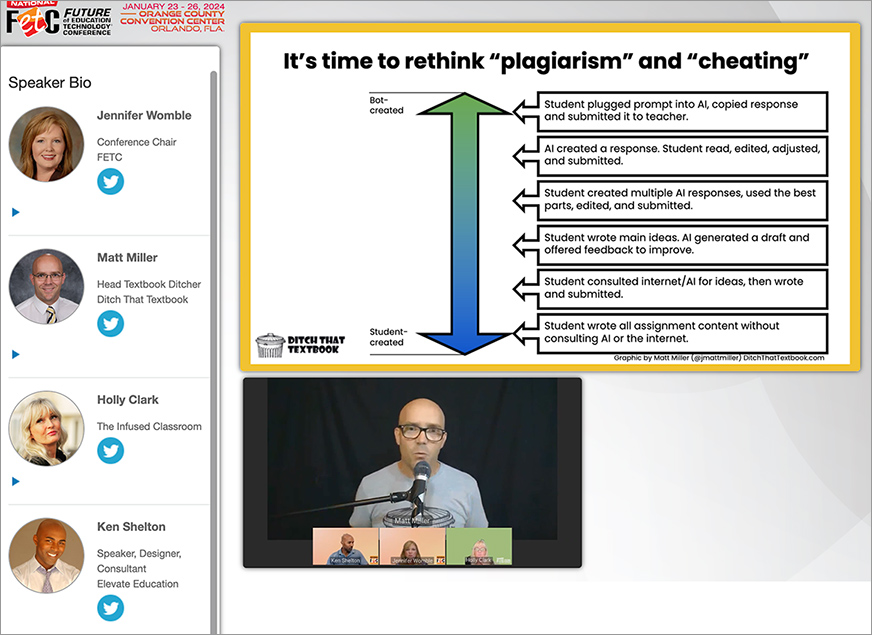
Even though generative AI is a new thing, it doesn’t change why students cheat. They’ve always cheated for the same reason: They don’t find the work meaningful, and they don’t think they can achieve it to their satisfaction. So we need to design assessments that students find meaning in.
Tricia Bertram Gallant
Caught off guard by AI— from chonicle.com by Beth McMurtrie and Beckie Supiano Professor scrambled to react to ChatGPT this spring — and started planning for the fall
Excerpt:
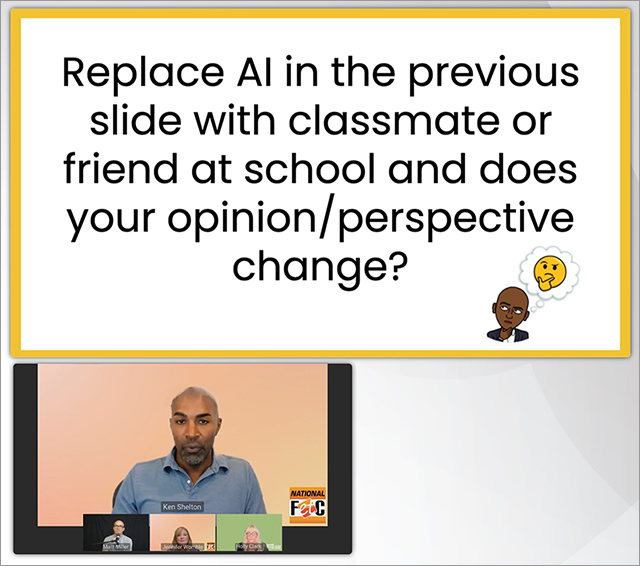
Is it cheating to use AI to brainstorm, or should that distinction be reserved for writing that you pretend is yours? Should AI be banned from the classroom, or is that irresponsible, given how quickly it is seeping into everyday life? Should a student caught cheating with AI be punished because they passed work off as their own, or given a second chance, especially if different professors have different rules and students aren’t always sure what use is appropriate?
…OpenAI built tool use right into the GPT API with an update called function calling. It’s a little like a child’s ability to ask their parents to help them with a task that they know they can’t do on their own. Except in this case, instead of parents, GPT can call out to external code, databases, or other APIs when it needs to.
Each function in function calling represents a tool that a GPT model can use when necessary, and GPT gets to decide which ones it wants to use and when. This instantly upgrades GPT capabilities—not because it can now do every task perfectly—but because it now knows how to ask for what it wants and get it. .
.
How ChatGPT can help disrupt assessment overload— from timeshighereducation.com by David Carless Advances in AI are not necessarily the enemy – in fact, they should prompt long overdue consideration of assessment types and frequency, says David Carless
Excerpt:
Reducing the assessment burden could support trust in students as individuals wanting to produce worthwhile, original work. Indeed, students can be co-opted as partners in designing their own assessment tasks, so they can produce something meaningful to them.
A strategic reduction in quantity of assessment would also facilitate a refocusing of assessment priorities on deep understanding more than just performance and carries potential to enhance feedback processes.
If we were to tackle assessment overload in these ways, it opens up various possibilities. Most significantly there is potential to revitalise feedback so that it becomes a core part of a learning cycle rather than an adjunct at its end. End-of-semester, product-oriented feedback, which comes after grades have already been awarded, fails to encourage the iterative loops and spirals typical of productive learning. .
Since AI in education has been moving at the speed of light, we built this AI Tools in Education database to keep track of the most recent AI tools in education and the changes that are happening every day.This database is intended to be a community resource for educators, researchers, students, and other edtech specialists looking to stay up to date. This is a living document, so be sure to come back for regular updates.
These claims conjure up the rosiest of images: human resource departments and their robot buddies solving discrimination in workplace hiring. It seems plausible, in theory, that AI could root out unconscious bias, but a growing body of research shows the opposite may be more likely.
…
Companies’ use of AI didn’t come out of nowhere: For example, automated applicant tracking systems have been used in hiring for decades. That means if you’ve applied for a job, your resume and cover letter were likely scanned by an automated system. You probably heard from a chatbot at some point in the process. Your interview might have been automatically scheduled and later even assessed by AI.
From DSC:
Here was my reflection on this:
DC: Along these lines, I wonder if Applicant Tracking Systems cause us to become like typecast actors and actresses — only thought of for certain roles. Pigeonholed.
— Daniel Christian (he/him/his) (@dchristian5) June 23, 2023
In June, ResumeBuilder.com surveyed more than 1,000 employees who are involved in hiring processes at their workplaces to find out about their companies’ use of AI interviews.
The results:
43% of companies already have or plan to adopt AI interviews by 2024
Two-thirds of this group believe AI interviews will increase hiring efficiency
15% say that AI will be used to make decisions on candidates without any human input
More than half believe AI will eventually replace human hiring managers
Watch OpenAI CEO Sam Altman on the Future of AI — from bloomberg.com Sam Altman, CEO & Co-Founder, OpenAI discusses the explosive rise of OpenAI and its products and what an AI-laced future can look like with Bloomberg’s Emily Chang at the Bloomberg Technology Summit.
The implementation of generative AI within these products will dramatically improve educators’ ability to deliver personalized learning to students at scale by enabling the application of personalized assessments and learning pathways based on individual student needs and learning goals. K-12 educators will also benefit from access to OpenAI technology…
Schools and organizations are human systems, filled with opportunities.
And yet there is a profound difference between building from a foundation of schooling and building from a foundation of learning.
Rather than simply replicate and scale the arrangements of schooling, we must seize the possibility to shift from a schooling system to a learning ecosystem to truly empower learners, educators, and parents to create a virtuous future for themselves and their communities.
Louka Parry
Our challenge will be how we choose to redesign and remake our experiences, environments, and ecosystems so that we unlock our true creative potential and thrive in the future.
After chronicling 160+ AI tools (which is surely only a small fraction of the total), we’re seeing a few clear patterns among the tools that have come out so far- here are 10 categories that are jumping out!
“I don’t usually get worked up about announcements but I see promise in JFF’s plans for a new Center for Artificial Intelligence & the Future of Work, in no small part because the organization bridges higher ed, K-12 education, employers, and policymakers.”
BOSTON June 14, 2023 —Jobs for the Future (JFF), a national nonprofit that drives transformation in the U.S. education and workforce systems, today announced the launch of its new Center for Artificial Intelligence &the Future of Work. This center will play an integral role in JFF’s mission and newly announced 10-year North Star goal to help 75 million people facing systemic barriers to advancement work in quality jobs. As AI’s explosive growth reshapes every aspect of how we learn, work, and live, this new center will serve as a nexus of collaboration among stakeholders from every part of the education-to-career ecosystem to explore the most promising opportunities—and profound challenges—of AI’s potential to advance an accessible and equitable future of learning and work.
OpenAI Considers ‘App Store’ For ChatGPT — from searchenginejournal.com by; with thanks to Barsee at AI Valley for this resource OpenAI explores launching an ‘app store’ for AI models, potentially challenging current partners and expanding customer reach.
Highlights:
OpenAI considers launching an ‘app store’ for customized AI chatbots.
This move could create competition with current partners and extend OpenAI’s customer reach.
Early interest from companies like Aquant and Khan Academy shows potential, but product development and market positioning challenges remain.
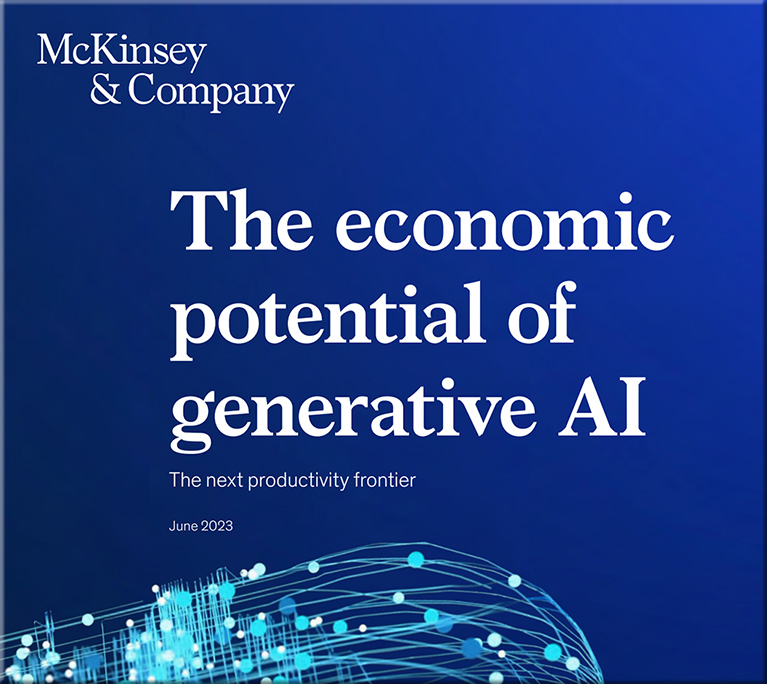
The rise of artificial intelligence, especially generative AI, boosts productivity in content creation–text, code, images and increasingly video.
Here are six preliminary conclusions about the nature of work and learning.
Wonder Tools: AI to try— from wondertools.substack.com by Jeremy Caplan 9 playful little ways to explore AI
Excerpt:
Create a personalized children’s story ? | Schrodi Collaborate with AI on a free customized, illustrated story for someone special. Give your story’s hero a name, pick a genre (e.g. comedy, thriller), choose an illustration style (e.g. watercolor, 3d animation) and provide a prompt to shape a simple story. You can even suggest a moral. After a minute, download a full-color PDF to share. Or print it and read your new mini picture book aloud.
Generate a quiz ? | Piggy Put in a link, a topic, or some text and you’ll get a quiz you can share, featuring multiple-choice or true-false questions. Example: try this quick entrepreneurship quiz Piggy generated for me.
Q: How will generative AI impact teaching and learning in the near and long term?
Baker Stein: One-on-one tutoring at scale is finally being unlocked for learners around the world. This type of quality education is no longer only available to students with the means to hire a private tutor.I’m also particularly excited to see how educators make use of generative AI tools to create courses much faster and likely at a higher quality with increased personalization for each student or even by experimenting with new technologies like extended reality. Professors will be able to put their time toward high-impact activities like mentoring, researching and office hours instead of tedious course-creation tasks. This helps open up the capacity for educators to iterate on their courses faster to keep pace with industry and global changes that may impact their field of study.
Another important use case is how generative AI can serve as a great equalizer for students when it comes to writing, especially second language learners.
DC: This is the type of thing that might impact the interface design of future #AI related applications. If so, our current efforts to refine prompts may have a shorter lifespan that we expected.https://t.co/MuNMf2kGwL
— Daniel Christian (he/him/his) (@dchristian5) June 26, 2023
Why it matters: The best AI assistants will be the ones that require the least prompting. They’ll get to know who you are, what you need, and your modus operandi. Profiles are a good starting point, but we believe the game-changer will be larger context windows (that’s nerd-speak for the amount of context ChatGPT can handle). .
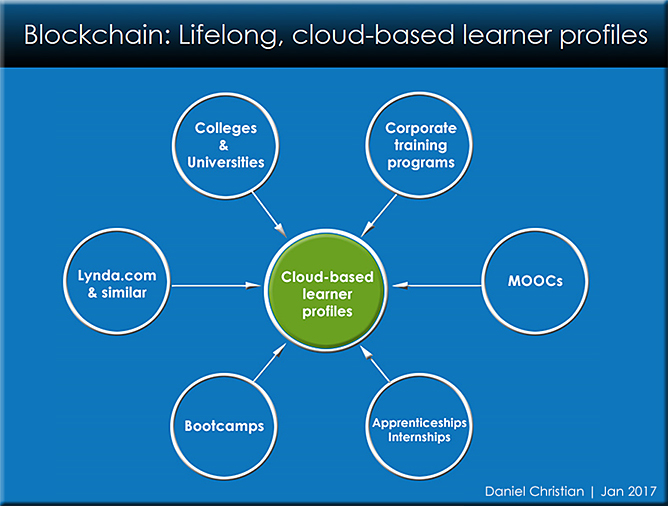
From DSC: And how about taking this a step further and remembering — or being able to access — our constantly updated Cloud-Based Learning Profiles?
After 20 years as a classroom teacher & senior leader, I've collated lists of all the best stories and non-fiction I've bought, bookmarked or reviewed in my career and put together this collection of recommended books for children: from EYFS to KS5. https://t.co/8tGflWVXKS
My hypothesis and research suggest that as bar associations and the ABA begin to recognize the on-going systemic issues of high-cost legal education, growing legal deserts (where no lawyer serves a given population), on-going and pervasive access to justice issues, and a public that is already weary of the legal system – alternative options that are already in play might become more supported.
What might that look like?
The combination of AI-assisted education with traditional legal apprenticeships has the potential to create a rich, flexible, and engaging learning environment. Here are three scenarios that might illustrate what such a combination could look like:
Scenario One – Personalized Curriculum Development
Scenario Two – On-Demand Tutoring and Mentoring
Scenario Three – AI-assisted Peer Networks and Collaborative Learning:
We know that there are challenges – a threat to human jobs, the potential implications for cyber security and data theft, or perhaps even an existential threat to humanity as a whole. But we certainly don’t yet have a full understanding of all of the implications. In fact, a World Economic Forum report recently stated that organizations “may currently underappreciate AI-related risks,” with just four percent of leaders considering the risk level to be “significant.”
A survey carried out by analysts Baker McKenzie concluded that many C-level leaders are over-confident in their assessments of organizational preparedness in relation to AI. In particular, it exposed concerns about the potential implications of biased data when used to make HR decisions.
AI & lawyer training: How law firms can embrace hybrid learning & development — thomsonreuters.com A big part of law firms’ successful adaptation to the increased use of ChatGPT and other forms of generative AI, may depend upon how firmly they embrace online learning & development tools designed for hybrid work environments
Excerpt:
As law firms move forward in using of advanced artificial intelligence such as ChatGPT and other forms of generative AI, their success may hinge upon how they approach lawyer training and development and what tools they enlist for the process.
One of the tools that some law firms use to deliver a new, multi-modal learning environment is an online, video-based learning platform, Hotshot, that delivers more than 250 on-demand courses on corporate, litigation, and business skills.
Ian Nelson, co-founder of Hotshot, says he has seen a dramatic change in how law firms are approaching learning & development (L&D) in the decade or so that Hotshot has been active. He believes the biggest change is that 10 years ago, firms hadn’t yet embraced the need to focus on training and development.
From DSC: Heads up law schools. Are you seeing/hearing this!?
Are we moving more towards a lifelong learning model within law schools?
If not, shouldn’t we be doing that?
Are LLM programs expanding quickly enough? Is more needed?
Jesus did many other things as well. If every one of them were written down, I suppose that even the whole world would not have room for the books that would be written.
An instrument for a city: An audio project filling one of London’s busiest roads with serene sounds
Why shouldn’t we have a piece of audio infrastructure as we do with lighting (lampposts) or seating, and use it to enable us to change the sound of a place, not once every 300 years but every second? We could transform the street using the sound of a rainforest into the sound of a river into the sound of voices.
From DSC: A very interesting idea here. I can’t help but think there are applications of this type of thing within some of our learning spaces out there.
IAALS, the Institute for the Advancement of the American Legal System at the University of Denver, announced today the release of its new report, Allied Legal Professionals: A National Framework for Program Growth. As part of IAALS’ Allied Legal Professionals project—which is generously supported by the Sturm Family Foundation—this report includes multiple research-informed recommendations to help standardize a new tier of legal professionals across states, with the goal of increasing the options for accessible and affordable legal help for the public.
“To hire a lawyer, people either need considerable money or have an income low enough to qualify for the limited legal aid available. The problem is that the majority of people in the middle class don’t fit into either of those categories, making access to legal services incredibly difficult,” says IAALS Director of Special Projects Michael Houlberg. “Even if every lawyer took on pro bono clients, it wouldn’t come close to addressing the need. And IAALS’ research shows that people who need legal help are open to receiving it from qualified and authorized providers who are not lawyers.”
Could this immersive AR experience revolutionize the culinary arts?
Earlier this month, the popular culinary livestreaming network Kittch announced that it is partnering with American technology company Qualcomm to create hands-free cooking experiences accessible via AR glasses.
The generative AI announcements are coming fast and furious these days, but among the biggest in terms of sheer dollar commitments just landed: Accenture, the global professional services and consulting giant, today announced it will invest $3 billion (with a “b”!) in AI over the next three years in building out its team of AI professionals and AI-focused solutions for its clients.
“There is unprecedented interest in all areas of AI, and the substantial investment we are making in our Data & AI practice will help our clients move from interest to action to value, and in a responsible way with clear business cases,” said Julie Sweet, Accenture’s chairwoman and CEO.
Also related/see:
Artificial intelligence creates 40,000 new roles at Accenture— from computerweekly.com by Karl Flinders Accenture is planning to add thousands of AI experts to its workforce as part of a $3bn investment in its data and artificial intelligence practice
Why leaders need to evolve alongside generative AI — from fastcompany.com by Kelsey Behringer Even if you’re not an educator, you should not be sitting on the sidelines watching the generative AI conversation being had around you—hop in.
Excerpts (emphasis DSC):
Leaders should be careful to watch and support education right now. At the end of the day, the students sitting in K-12 and college classrooms are going to be future CPAs, lawyers, writers, and teachers. If you are parenting a child, you have skin in the game. If you use professional services, you have skin in the game. When it comes to education, we all have skin in the game. … Students need to master fundamental skills like editing, questioning, researching, and verifying claims before they can use generative AI exceptionally well.
[On 6/15/23, I joined] colleagues from OpenAI, Google, Microsoft, Stanford, Harvard and other others at the first meeting of the GenAI Summit. Our shared goal [was] to help to educate universities & schools in Europe about the impact of Generative AI on their work.
…how can we effectively communicate to education professionals that generative AI will enhance their work rather than replace them?
A recent controlled study found that ChatGPT can help professionals increase their efficiency in routine tasks by ~35%. If we keep in mind that the productivity gains brought by the steam engine in the nineteenth century was ~25%, this is huge.
As educators, we should embrace the power of ChatGPT to automate the repetitive tasks which we’ve been distracted by for decades. Lesson planning, content creation, assessment design, grading and feedback – generative AI can help us to do all of these things faster than ever before, freeing us up to focus on where we bring most value for our students.
SAN FRANCISCO, June 15 (Reuters) – Alphabet Inc (GOOGL.O) is cautioning employees about how they use chatbots, including its own Bard, at the same time as it markets the program around the world, four people familiar with the matter told Reuters.
The Google parent has advised employees not to enter its confidential materials into AI chatbots, the people said and the company confirmed, citing long-standing policy on safeguarding information.
Adobe Firefly for the Enterprise — Dream Bigger with Adobe Firefly. Dream it, type it, see it with Firefly, our creative generative AI engine. Now in Photoshop (beta), Illustrator, Adobe Express, and on the web.
Thanks for dropping by my Learning Ecosystems blog!
My name is Daniel Christian and this blog seeks to cover the teaching and learning environments within the K-12 (including homeschooling, learning pods/micro-schools), collegiate, and corporate training spaces -- whether those environments be face-to-face, blended, hyflex, or 100% online.
Just as the organizations that we work for have their own learning ecosystems, each of us has our own learning ecosystem. We need to be very intentional about enhancing those learning ecosystems -- as we all need to be lifelong learners in order to remain marketable and employed. It's no longer about running sprints (i.e., getting a 4-year degree or going to a vocational school and then calling it quits), but rather, we are all running marathons now (i.e., we are into lifelong learning these days).