But a recent survey of contingent faculty reveals the more uncertain situation most adjuncts find themselves in. A third of respondents earn less than $25,000 a year, falling below federal poverty guidelines for a family of four. Fewer than half receive university-provided health insurance, with nearly 20 percent on Medicaid.
In a stinging irony, many tenured faculty teach courses on equity and social justice, where students learn about oppression engendered by privilege. Yet just down the hall, someone else with the same level of education is teaching a similar course for vastly less pay and with little or no benefits.
School’s out for summer, but will educators return to the classroom in the fall? Nearly a third of US K–12 educators—or roughly 900,000 teachers—said in a recent McKinsey survey they are thinking of leaving their jobs before the next school year. “The longer [talent shortages] go unaddressed, the more potential damage they could cause to students and the future of the nation,” write partner Jake Bryant and coauthors. “By tailoring solutions that address the root causes of attrition, leaders could potentially build more fulfilling and equitable environments that better serve not only educators but also students and society at large.” Check out these insights for more on the factors that motivate educators to stay or leave, and dive into other vital issues impacting American public education.
In fact, our top pieces all address the reality that plenty of educators are thinking of leaving the classroom behind. A National Education Association survey from 2022 found that more than half of educators were thinking of departing the profession earlier than planned.
As EdSurge senior reporter Emily Tate Sullivan wrote earlier this year, “Most educators have not left, and many never will. But some are following through; they’re walking out of their classrooms and away from the careers they thought they’d have for life.”
Instructional design is a multidisciplinary field. This explains why it is often overwhelming when you want to transition into the career. There are so many shiny objects to attract your attention along the way. Do you love visual design? We’ve got it. Are you fascinated by the latest technologies? We’ve got that too. Perhaps you’re interested in data and analytics? We’ve got a place for you.
No wonder one of the most common questions I’m asked during coaching calls is, “Where do I start?” If you need help, here is the path I recommend regarding what to learn for a career in instructional design. To reduce stress and confusion, learn and build skills in one area at a time.
Schools can’t afford to lose teachers of color. And with public schools struggling to fill teacher vacancies with qualified educators, district and school leaders can’t afford to lose any more teachers,period.
What I’ve found is that inviting families in as collaborators has not only strengthened my students’ performance in school, but it has strengthened the bonds I have with their families, which is important, especially when those relationships are put under pressure in times of conflict. And conflict does inevitably come.
The problems facing schools are complex ones without easy answers, so we will disagree. But parents and families need to work with each other, not against each other, in order to jointly create the best schools for all of our kids.
Nearly half of all parents are seeking new schools for their children in the 2023-24 school year. The data comes from a new survey by National School Choice Week, which found that 45.9 percent of parents want to enroll their child in a different learning environment this fall.
Of those parents, about 17 percent are still considering their options; 13 percent enrolled their student in a new school; 8.4 percent applied, and 7.5 percent chose homeschooling. That leaves 54 percent of parents keeping their child in their current school.
Generative AI has taken the world by storm since OpenAI launched ChatGPT-3 in November 2022. Generative AI is characterized by its capacity to generate human-like content based on deep learning models in response to prompts. There is a wealth of opinions about how this will impact higher education spanning from the need to limit the use in the protection of higher education to embracing the tool as a means to improve higher education. In this webinar session, speakers from different regions shared their views and perspectives and discuss how Generative AI will transform higher education. What are the challenges to be addressed and which opportunities can be pursued to improve the quality of higher education? Watch the webinar and learn about the uncertainties, tensions, and opportunities triggered by Generative AI.
Trust and Transparency Are Key Factors When Using AI in Academia — from by Dr. Andrew Lang Much can be learned from embracing artificial intelligence in the teaching and learning process. Here, two professors share their experiences using ChatGPT freely in the classroom.
The AI-Education Divide— from drphilippahardman.substack.com by Philippa Hardman How the rise of AI has reinforced inequity in education (and what we need to do to reverse it) .
Ever since the Supreme Court announced last year that it would rule on two cases involving affirmative action in college admissions, the world of higher education has been anxiously awaiting a decision. Most experts predicted the court would eventually forbid the use of race as a factor in admissions decisions, and colleges and advocates have been scrambling to prepare for that new world.
On Thursday, the Supreme Court met those expectations, ruling that the consideration of race in college admissions is unconstitutional.
The U.S. Supreme Court ruled Thursday that race-conscious admissions practices at Harvard University and the University of North Carolina at Chapel Hill are unconstitutional, shattering decades of legal precedent and upending the recruitment and enrollment landscape for years to come.
The Supreme Court on Thursday held that race-conscious admissions programs at Harvard and the University of North Carolina violate the Constitution’s guarantee of equal protection, a historic ruling that rolls back decades of precedent and will force a dramatic change in how the nation’s private and public universities select their students.
The U.S. Supreme Court on Thursday struck down colleges’ use of race-conscious admissions nationwide, ruling in a pair of closely watched cases that the practice is racially discriminatory.
Writing for the court’s majority, Chief Justice John G. Roberts Jr. said that policies that claim to consider an applicant’s race as one factor among many are in fact violating the equal-protection clause of the 14th Amendment to the U.S. Constitution.
Coursera’s Global Skills Report for 2023 — from coursera.org Benchmark talent and transform your workforce with skill development and career readiness insights drawn from 124M+ learners.
Excerpt:
Uncover global skill trends
See how millions of registered learners in 100 countries are strengthening critical business, technology, and data science skills.
My experience has taught me that if students do not believe their school is invested in activities and programs that reflect their community and culture, they will not feel a sense of belonging in the classroom, which will negatively impact student engagement and their ability to understand and appreciate cultural differences among one another.
Unfortunately, not every school believes the performing arts are worth the investment; if anything, the trend of school funding in the performing arts has been in sharp decline for some time. While student engagement continues to be a significant issue for classrooms across the country, I believe the performing arts can be an opportunity for schools to reimagine community engagement in schools and get students back on track.
A pilot project designed to test the potential of artificial intelligence tools at McCarthy Tétrault LLP showed that certain types of applications for the legal profession seemed to work better than others, panellists told attendees to the recent Canadian Lawyer Legal Tech Summit.
“I would say that the results were mixed,” David Cohen, senior director of client service delivery for the firm. During the panel, moderated by University of Calgary assistant professor Gideon Christian, Cohen spoke about a pilot of about 40 lawyers from different practices at the firm who used an AI platform with only public data.
The group [testing the platform] said it needs to get better before we start using this for research,” he said. However, he said, when it came to tasks like generating documents, reviewing 100-page cases “and summarizing and analyzing them,” the AI platforms did much better.
To help with this, our Client Success Team have summarised the eight key legal technology trends in the market, as well as the themes discussed at recent legal technology events and conferences including the British Legal Technology Forum and iManage ConnectLive Virtual 2023, both of which we were proud to sponsor.
On a somewhat related note, also see:
Designing the Law Office of the Future — from workdesign.com by Deborah Nemeth Deborah Nemeth of SmithGroup shares how inspiration from higher education and hospitality can help inform the next evolution of the law office.
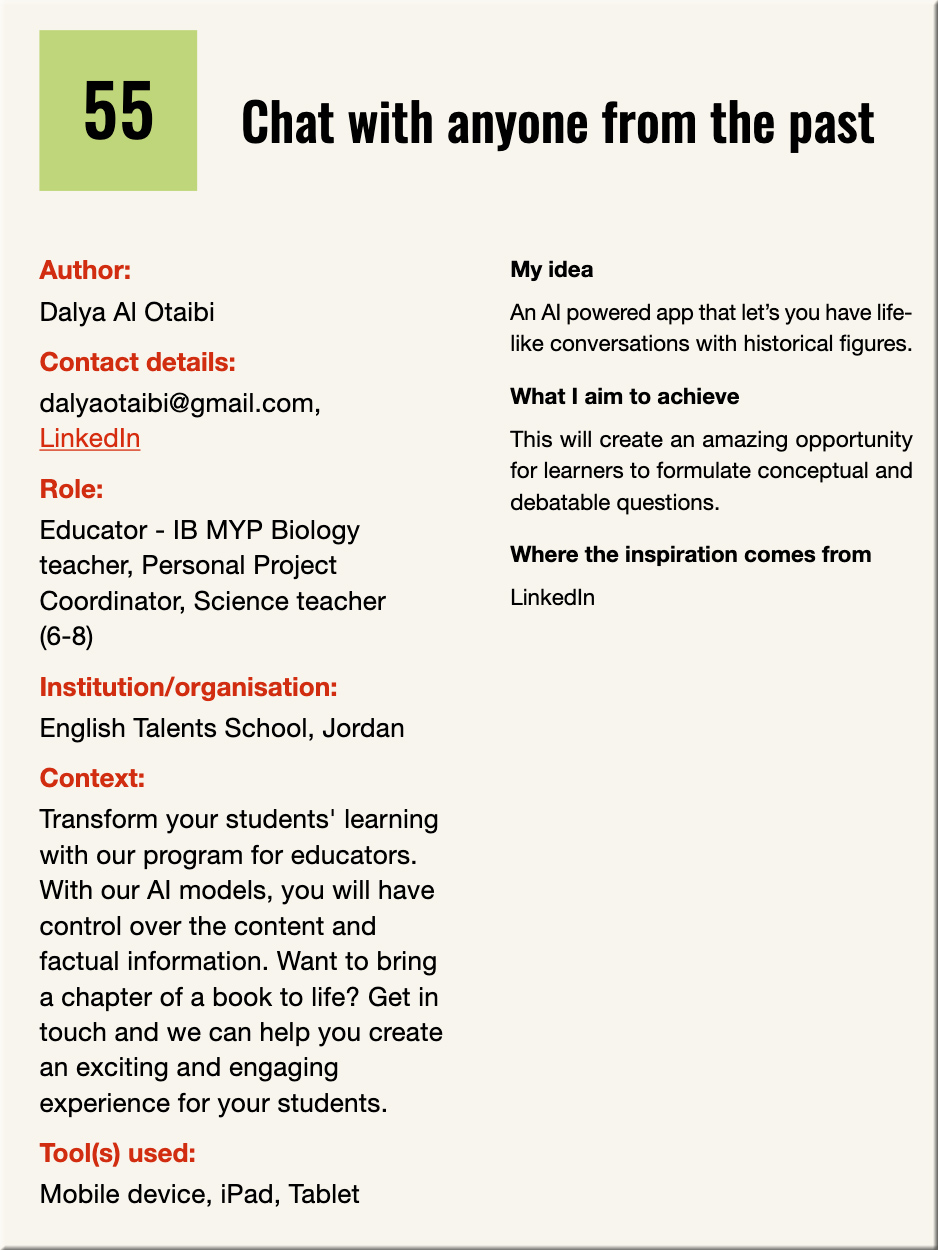
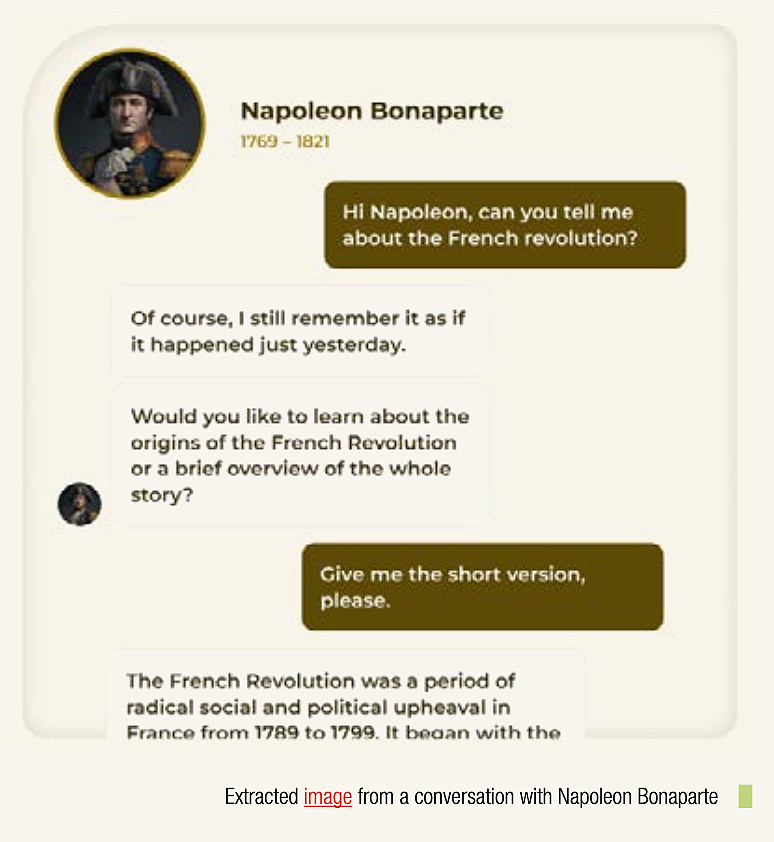
Merlyn Mind, an AI-powered digital assistant platform, announced the launch of a suite of large language models (LLMs) specifically tailored for the education sector under an open-source license.
Designing courses in an age of AI— from teachinginhighered.com by Maria Andersen Maria Andersen shares about designing courses in an age of artificial intelligence (AI) on episode 469 of the Teaching in Higher Ed podcast.
With generative AI, we have an incredible acceleration of change happening.
Their most recognisable role is to partner with faculty and provide them with inspiration, expertise and support in their teaching. But a broader role is emerging at institutional level- helping create a culture where people value talking about teaching and more generally, fostering a culture of continuous learning. In this respect, CTLs act as agents of change, aiming to influence the organizational (learning) environment.
…
CTLs are part of an ecosystem, internally and externally, and they have the potential to play a very important role, that of a network node. Internally, this can mean connecting various silos within the university, a much needed task, while externally it implies establishing collaboration flows with other CTLs that can in turn lead to broader inter-university collaboration. Making use of the full potential of this role can make a big difference for the success of a CTL.
Speaking of Teaching & Learning Centers, also see:
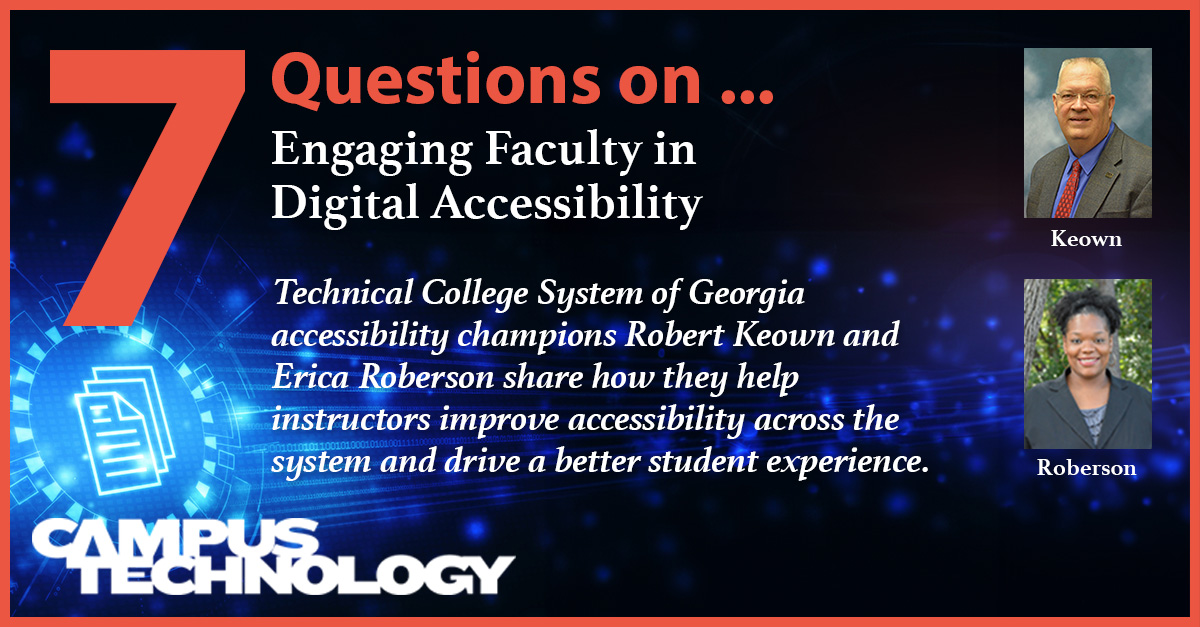
7 Questions on Engaging Faculty in Digital Accessibility — from campustechnology.com by Rhea Kelly We asked the Technical College System of Georgia’s accessibility champions how they help instructors create a more inclusive learning experience for all students.
Now a nonprofit co-founded by Havens has invented a computational programming platform built around one of the few technologies that people in prison do have access to: highly restricted, text-only e-mail. And as this facility begins to offer new opportunities, more and more incarcerated people are working on advanced mathematics to give meaning to their years behind bars.
“The proposed transaction will complement Thomson Reuters existing AI roadmap and builds on its recent initiatives, including a commitment to invest more than $100 million annually on AI capabilities, the development of new generative AI experiences across its product suite, as well as a new plugin with Microsoft and Microsoft 365 Copilot for legal professionals,” TR’s announcement said.
From DSC: I post this to show how AI continues to make inroads into the legal realm — and how serious vendors are about it. I believe AI-enabled applications will eventually increase access to justice for the citizens of the United States of America.
Below is an addendum on 6/28/23 that further illustrates how serious vendors are about AI:
Databricks announced it will pay $1.3 billion to acquire MosaicML, an open source startup with neural networks expertise that has built a platform for organizations to train large language models and deploy generative AI tools based on them.
Higher ed may appear less impacted on the surface. But a small yet critical cohort of students and families has been heavily affected – students and parents who take out private student loans. Private student loans are a small piece of the overall student loan puzzle, representing roughly 8% of outstanding student debt (~$146.9 billion) according to a March 2023 analysis from Federal Student Aid.
… Private student loans have gotten way more expensive With that context in mind, it’s worth analyzing how the rise in interest rates has impacted borrowing costs for families. The numbers are staggering. As the Fed has hiked interest rates, private loan borrowing costs have more than doubled since November of 2021. The average interest rate on a 10-year private student loan has jumped from a low of 3.3% in November 2021 to 7% at the end of May 2023. Interest rates for 5-year private loans have skyrocketed even faster, jumping from a low of 2.4% all the way to 8.70% across the same period. .
Tuesday, June 6, 2023 – Far too often, individuals in higher education don’t understand the nuances of how accreditors operate and the role they play in supporting—or constraining—institutions. Jeff and Michael welcome Barbara Brittingham, former president of the New England Commission on Higher Education, to give the history of accreditation, break down how accrediting agencies operate, show how they compare to one another, and delve into how they might evolve in the future with an eye toward how these organizations impact institutional transformation and support learners in achieving their education and career goals. This episode is made possible with support from Ascendium Education Group, the Bill & Melinda Gates Foundation, and Course Hero. .
On today’s episode of the Illumination by Modern Campus podcast, host Amrit Ahluwalia was joined by Rich Novak to evaluate the changes in higher education over the past decade, and the opportunities ahead for continuing education. .
Partnering With Higher Education I believe that companies can gain a competitive edge in hiring and retention by establishing long-term partnerships with educators, universities and other pedagogically-driven institutions. However, it is crucial to design these partnerships with scale and replication in mind in order to avoid high costs and low adoption rates that can result in failure.
Establishing a successful partnership will also require companies and universities to determine and agree on the skill-based outcomes they aim to achieve. They will have to find effective ways to share data, develop timelines and measure success for both parties.
This is a shift from traditional partnerships, which often focus on research and innovation initiatives. With this, intellectual property was the outcome of the collaboration. Instead, in a reskilling partnership, in-demand skills are the outcome. .
EDUCAUSE and WCET QuickPoll Results: Current Trends in Microcredential Design and Delivery — from er.educause.edu by Jenay Robert Microcredentialing programs remain nascent at many institutions, but interest continues to grow. As the demand for flexible learning experiences increases, stakeholders might find renewed interest in and uses for microcredentials.
We needed to identify people to interview—classroom teachers, district leaders, maybe a reading researcher—and then I would need to interview them. I would also need to write the scripts, incorporating audio clips from the interviews. Then I would need to record the narration, which someone would have to integrate with the interview clips. Plus a lot of other stuff I wasn’t even aware of.
But I’m delighted to report that we’ve actually done it! The first episode is set to drop on June 28th, and you can listen to the trailer right now, here. You’ll also find links on that page to various podcast platforms where you can subscribe.
From DSC: If you don’t mind providing me with feedback here on what you think of this new podcast (as new recordings become available), I’d appreciate it.
Thanks for dropping by my Learning Ecosystems blog!
My name is Daniel Christian and this blog seeks to cover the teaching and learning environments within the K-12 (including homeschooling, learning pods/micro-schools), collegiate, and corporate training spaces -- whether those environments be face-to-face, blended, hyflex, or 100% online.
Just as the organizations that we work for have their own learning ecosystems, each of us has our own learning ecosystem. We need to be very intentional about enhancing those learning ecosystems -- as we all need to be lifelong learners in order to remain marketable and employed. It's no longer about running sprints (i.e., getting a 4-year degree or going to a vocational school and then calling it quits), but rather, we are all running marathons now (i.e., we are into lifelong learning these days).