Psalm 113:3

From the rising of the sun to the place where it sets,
the name of the Lord is to be praised.

Micah 6:8

He has shown you, O mortal, what is good.
And what does the Lord require of you?
To act justly and to love mercy
and to walk humbly[a] with your God.

Proverbs 31:8-9

8 Speak up for those who cannot speak for themselves,
for the rights of all who are destitute.
9 Speak up and judge fairly;
defend the rights of the poor and needy.

Proverbs 29:25

Fear of man will prove to be a snare,
but whoever trusts in the Lord is kept safe.


The waiting game — from college-inside.beehiiv.com by Charlotte West
College Inside breaks down the numbers from a first-of-its kind report on higher education in Illinois prisons.

For every person enrolled in higher education at Illinois prisons, someone else is waiting for their turn, according to new state data that reveals a system where access to college depends largely on where someone is incarcerated.

Right now, roughly 2,000 people in Illinois prisons are participating in higher education programs, according to a report released at the beginning of September. That’s about 1 out of every 15 people incarcerated in the state. At the same time, though, another 2,000 are stuck on waiting lists to get into classes because there’s not enough programming available.

Another 700 people on supervised release — Illinois’ version of parole — are also enrolled in higher education, per the report. Those numbers include enrollment in both college classes, and career and technical education.


Titus 2:2

Teach the older men to be temperate, worthy of respect, self-controlled, and sound in faith, in love and in endurance.

Isaiah 46:4

Even to your old age and gray hairs I am he, I am he who will sustain you. I have made you and I will carry you; I will sustain you and I will rescue you.

Philippians 4:4

Final Exhortations
Rejoice in the Lord always. I will say it again: Rejoice!

1 Peter 4:8-10

8 Above all, love each other deeply, because love covers over a multitude of sins. 9 Offer hospitality to one another without grumbling. 10 Each of you should use whatever gift you have received to serve others, as faithful stewards of God’s grace in its various forms.


Miro and GenAI as drivers of online student engagement — from timeshighereducation.com by Jaime Eduardo Moncada Garibay
A set of practical strategies for transforming passive online student participation into visible, measurable and purposeful engagement through the use of Miro, enhanced by GenAI

To address this challenge, I shifted my focus from requesting participation to designing it. This strategic change led me to integrate Miro, a visual digital workspace, into my classes. Miro enables real-time visualisation and co-creation of ideas, whether individually or in teams.

The transition from passive attendance to active engagement in online classes requires deliberate instructional design. Tools such as Miro, enhanced by GenAI, enable educators to create structured, visually rich learning environments in which participation is both expected and documented.

While technology provides templates, frames, timers and voting features, its real pedagogical value emerges through intentional facilitation, where the educator’s role shifts from delivering content to orchestrating collaborative, purposeful learning experiences.


Benchmarking Online Education with Bruce Etter and Julie Uranis — from buzzsprout.com by Derek Bruff

Here are some that stood out to me:

  • In the past, it was typical for faculty to teach online courses as an “overload” of some kind, but BOnES data show that 92% of online programs feature courses taught as part of faculty member’s standard teaching responsibilities. Online teaching has become one of multiple modalities in which faculty teach regularly.
  • Three-quarters of chief online officers surveyed said they plan to have a great market share of online enrollments in the future, but only 23% said their current marketing is better than their competitors. The rising tide of online enrollments won’t lift all boats–some institutions will fare better than others.
  • Staffing at online education units is growing, with the median staff size increasing from 15 last year to 20 this year. Julie pointed out that successful online education requires investment of resources. You might need as many buildings as onsite education does, but you need people and you need technology.


GRCC students to use AI to help businesses solve ‘real world’ challenges in new course — from www-mlive-com.cdn.ampproject.org by Brian McVicar; via Patrick Bailey on LinkedIn

GRAND RAPIDS, MI — A new course at Grand Rapids Community College aims to help students learn about artificial intelligence by using the technology to solve real-world business problems.

In a release, the college said its grant application was supported by 20 local businesses, including Gentex, TwistThink and the Grand Rapids Public Museum. The businesses have pledged to work with students who will use business data to develop an AI project such as a chatbot that interacts with customers, or a program that automates social media posts or summarizes customer data.

“This rapidly emerging technology can transform the way businesses process data and information,” Kristi Haik, dean of GRCC’s School of Science, Technology, Engineering and Mathematics, said in a statement. “We want to help our local business partners understand and apply the technology. We also want to create real experiences for our students so they enter the workforce with demonstrated competence in AI applications.”

As Patrick Bailey said on LinkedIn about this article:

Nice to see a pedagogy that’s setting a forward movement rather than focusing on what could go wrong with AI in a curriculum.


Forecast for Learning and Earning in 2025-2026 report — from pages.asugsvsummit.com by Jennifer Lee and Claire Zau

In this look ahead at the future of learning and work, we aim to define:

  • Major thematic observations
  • What makes this moment an inflection point
  • Key predictions (and their precedent)
  • Short- and long-term projected impacts


The LMS at 30: From Course Management to Learning Management (At Last) — from onedtech.philhillaa.com; a guest post from Matthew Pittinsky, Ph.D.

As a 30 year observer and participant, it seems to me that previous technology platform shifts like SaaS and mobile did not fundamentally change the LMS. AI is different. We’re standing at the precipice of LMS 2.0, where the branding change from Course Management System to Learning Management System will finally live up to its name. Unlike SaaS or mobile, AI represents a technology platform shift that will transform the way participants interact with learning systems – and with it, the nature of the LMS itself.

Given the transformational potential of AI, it is useful to set the context and think about how we got here, especially on this 30th anniversary of the LMS.

LMS at 30 Part 2: Learning Management in the AI Era — from onedtech.philhillaa.com; a guest post from Matthew Pittinsky, Ph.D.

Where AI is disruptive is in its ability to introduce a whole new set of capabilities that are best described as personalized learning services. AI offers a new value proposition to the LMS, roughly the set of capabilities currently being developed in the AI Tutor / agentic TA segment. These new capabilities are so valuable given their impact on learning that I predict they will become the services with greatest engagement within a school or university’s “enterprise” instructional platform.

In this way, by LMS paradigm shift, I specifically mean a shift from buyers valuing the product on its course-centric and course management capabilities, to valuing it on its learner-centric and personalized learning capabilities.


AI and the future of education: disruptions, dilemmas and directions — from unesdoc.unesco.org

This anthology reveals how the integration of AI in education poses profound philosophical, pedagogical, ethical and political questions. As this global AI ecosystem evolves and becomes increasingly ubiquitous, UNESCO and its partners have a shared responsibility to lead the global discourse towards an equity- and justice-centred agenda. The volume highlights three areas in which UNESCO will continue to convene and lead a global commons for dialog and action particularly in areas on AI futures, policy and practice innovation, and experimentation.

  1. As guardian of ethical, equitable human-centred AI in education.
  2. As thought leader in reimagining curriculum and pedagogy
  3. As a platform for engaging pluralistic and contested dialogues

AI, copyright and the classroom: what higher education needs to know — from timeshighereducation.com by Cayce Myers
As artificial intelligence reshapes teaching and research, one legal principle remains at the heart of our work: copyright. Understanding its implications isn’t just about compliance – it’s about protecting academic integrity, intellectual property and the future of knowledge creation. Cayce Myers explains


The School Year We Finally Notice “The Change” — from americanstogether.substack.com by Jason Palmer

Why It Matters
A decade from now, we won’t say “AI changed schools.” We’ll say: this was the year schools began to change what it means to be human, augmented by AI.

This transformation isn’t about efficiency alone. It’s about dignity, creativity, and discovery, and connecting education more directly to human flourishing. The industrial age gave us schools to produce cookie-cutter workers. The digital age gave us knowledge anywhere, anytime. The AI age—beginning now—gives us back what matters most: the chance for every learner to become infinitely capable.

This fall may look like any other—bells ringing, rows of desks—but beneath the surface, education has begun its greatest transformation since the one-room schoolhouse.


How should universities teach leadership now that teams include humans and autonomous AI agents? — from timeshighereducation.com by Alex Zarifis
Trust and leadership style are emerging as key aspects of teambuilding in the age of AI. Here are ways to integrate these considerations with technology in teaching

Transactional and transformational leaderships’ combined impact on AI and trust
Given the volatile times we live in, a leader may find themselves in a situation where they know how they will use AI, but they are not entirely clear on the goals and journey. In a teaching context, students can be given scenarios where they must lead a team, including autonomous AI agents, to achieve goals. They can then analyse the situations and decide what leadership styles to apply and how to build trust in their human team members. Educators can illustrate this decision-making process using a table (see above).

They may need to combine transactional leadership with transformational leadership, for example. Transactional leadership focuses on planning, communicating tasks clearly and an exchange of value. This works well with both humans and automated AI agents.


In Rural Wisconsin, Pat Perry Connects the Various Forces That Shape Our World — from thisiscolossal.com by Pat Perry & Grace Ebert

To conceptualize the work, the collective helped to contact and secure permissions from the teachers pictured, and with the exception of the woman in the red floral garment at the bottom of the piece—she’s the artist’s mother and a retired educator—all work in the area. And why teachers? Perry explains:

Day after day, people find purpose. They wake up early, show up with intention, and try to make sense of things—not just for themselves, but also for others. Teachers do this every day. Not for recognition, and rarely for much pay. It’s a repetitive act of maintenance that holds things together. Choosing to shoulder that task, even while standing at the edge of something vast and indifferent, is a quiet act of defiance. Amidst overwhelmingness and uncontrollableness and unanswerableness, teachers—and all custodians of human affairs—keep meaning in the world by steadily and stubbornly tending to it.


While you’re out there, also see:


Song Dong’s Monumental Installations Mirror Memories, Globalization, and Impermanence — from thisiscolossal.com by Song Dong and Kate Mothes


The Transformative Power of Arts Education | A Conversation with Dr. Lucy Chen — from gettingsmart.com by Mason Pashia

Key Points

  • Arts education boosts academic performance, communication skills, and student engagement, supported by long-term data.
  • Tailoring arts programs to individual student needs creates impactful pathways, from foundational exposure to professional aspirations.

12 Shifts to Move from Teacher-Led to Student-Centered Environments — from gettingsmart.com by Kyle Wagner

Key Points

  • Despite modern technological advancements in classroom tools, many educational settings still center around a traditional model where the teacher is the primary source of information and students passively receive content.
  • Slowly, learning environments are inviting students to actively participate and take ownership of their learning through collaborative projects, inquiry-based experiences, and real-world problem-solving, thereby transforming traditional educational roles and practices.

From Readiness to Relevance: 3 Ways to Transform Career Connected Learning — from gettingsmart.com by Dr. Mahnaz R. Charania

Key Points

  • Career-connected learning must start early and be integrated across K–12 to provide students with exposure and informed choices for their futures.
  • Real-world, immersive learning experiences enhance student engagement and help build critical skills, social capital, and opportunities for success.
 

From Content To Capability: How AI Agents Are Redefining Workplace Learning — from forbes.com by Nelson Sivalingam

Real, capability-building learning requires three key elements: content, context and conversation. 

The Rise Of AI Agents: Teaching At Scale
The generative AI revolution is often framed in terms of efficiency: faster content creation, automated processes and streamlined workflows. But in the world of L&D, its most transformative potential lies elsewhere: the ability to scale great teaching.

AI gives us the means to replicate the role of an effective teacher across an entire organization. Specifically, AI agents—purpose-built systems that understand, adapt and interact in meaningful, context-aware ways—can make this possible. These tools understand a learner’s role, skill level and goals, then tailor guidance to their specific challenges and adapt dynamically over time. They also reinforce learning continuously, nudging progress and supporting application in the flow of work.

More than simply sharing knowledge, an AI agent can help learners apply it and improve with every interaction. For example, a sales manager can use a learning agent to simulate tough customer scenarios, receive instant feedback based on company best practices and reinforce key techniques. A new hire in the product department could get guidance on the features and on how to communicate value clearly in a roadmap meeting.

In short, AI agents bring together the three essential elements of capability building, not in a one-size-fits-all curriculum but on demand and personalized for every learner. While, obviously, this technology shouldn’t replace human expertise, it can be an effective tool for removing bottlenecks and unlocking effective learning at scale.


AI firm Anthropic reaches landmark $1.5B copyright deal with book authors — from washingtonpost.com by Will Oremus; this is a gifted article
The authors hailed the settlement as a win for human creators after they alleged the company downloaded millions of books without permission.

Anthropic, the artificial intelligence company behind the popular chatbot Claude, will pay $1.5 billion to settle a class-action lawsuit brought by book publishers and authors, according to documents filed in federal court Friday.

The settlement allows Anthropic to avoid going to trial over claims that it violated copyrights by downloading millions of books without permission and storing digital copies of them. The company will not admit wrongdoing.


Expanding economic opportunity with AI — from openai.com; via The Neuron Daily

First, we’re working to build out the OpenAI Jobs Platform.

If you’re a business looking to hire an AI-savvy employee, or you just need help with a specific task, finding the right person can be hit-or-miss. The OpenAI Jobs Platform will have knowledgeable, experienced candidates at every level, and opportunities for anyone looking to put their skills to use. And we’ll use AI to help find the perfect matches between what companies need and what workers can offer.

We also realize that anyone looking to hire, whether it’s through the Jobs Platform or elsewhere, needs to trust that candidates are actually fluent in AI. Most businesses, including small businesses, think AI is the key to their future. And most of the companies we talk to want to make sure their employees know how to use our tools.

That’s the idea behind our new OpenAI Certifications.

Studies show? that AI-savvy workers are more valuable, more productive, and are paid more than workers without AI skills. That’s why, earlier this year, we launched the OpenAI Academy, a free, online learning platform that has helped connect more than 2 million people with the resources, workshops, and communities they need to master AI tools.


Higher ed’s ‘hunker-down mindset’ — from open-campus-dispatch.beehiiv.com by Colleen Murphy
A tight housing market and a fragile job market mean those working in higher ed have fewer options than ever.

Faculty and administrators could be just as constrained by the golden handcuffs of a 2% interest rate as everybody else. That makes them less likely to move for a new job, Kelchen said, especially since they’re unlikely to get the type of salary increase they’d need to offset more pricey mortgage payments. Plus, even finding an affordable house in the first place could be a challenge right now.

All of this contributes to what Kelchen called a “hunker-down mindset” in higher ed.

“Even if the institutions are giving out pay raises, the pay raises aren’t matching housing costs,” Kelchen said. “And then that creates a pressure to stay.”

While that might seem like a “first-world problem,” it also affects college and university staff members, Kelchen told me. Often the only way for staff members to make more money is to move universities — there aren’t the same in-house growth opportunities as there are for faculty. But that’s easier said than done.


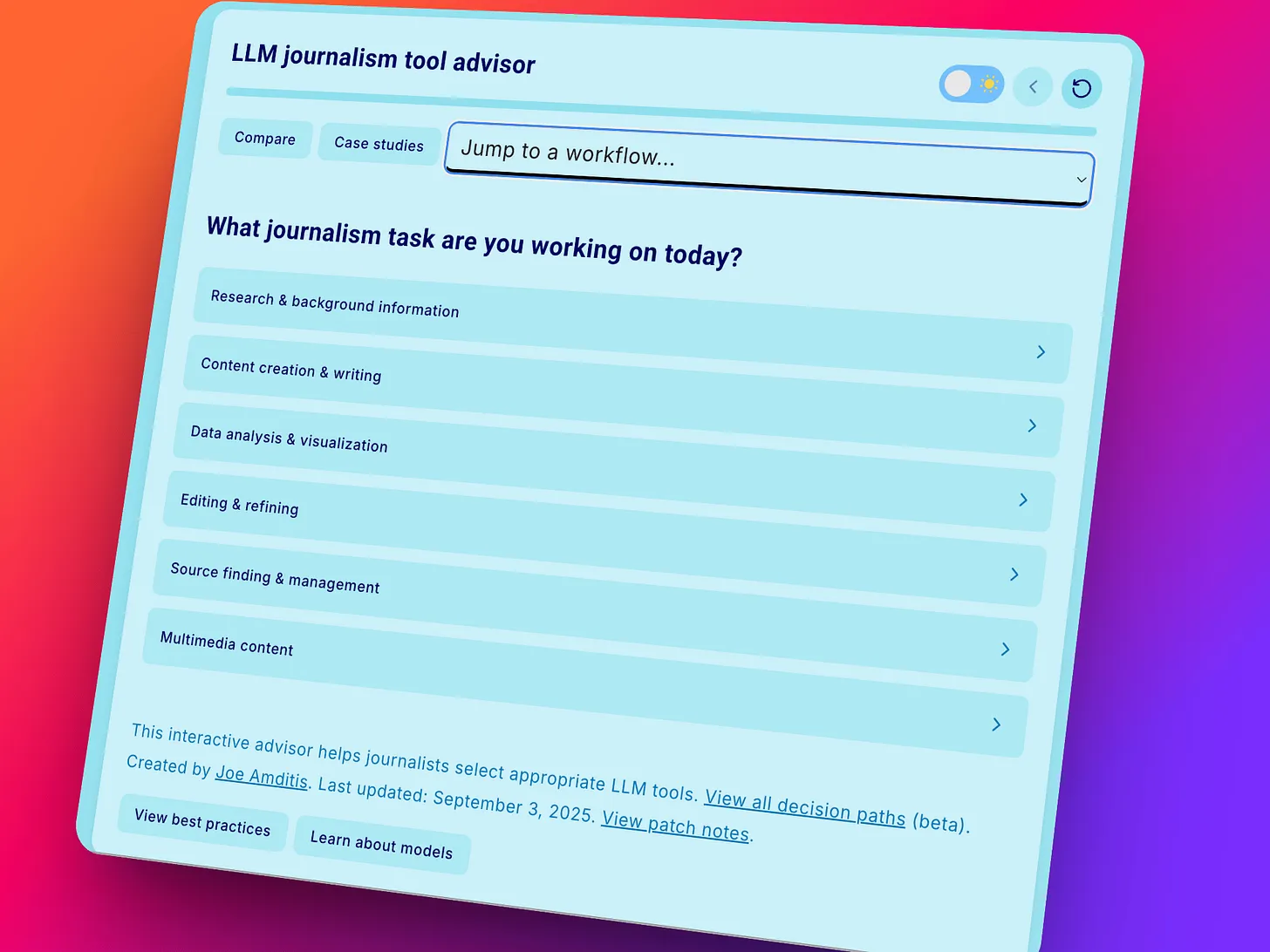
A Journalist’s Toolkit for the AI Era — from wondertools.substack.com by Jeremy Caplan and Joe Amditis
A guest expert shares his practical tools

As news organizations scramble to update their digital toolkits, I invited one of the most tech savvy journalism advisors I know to share his guidance.

In the guest post below, Joe Amditis shares a bunch of useful resources. A former CUNY student of mine, Joe now serves as associate director of operations at the Center for Cooperative Media at Montclair State University.


The Jobs and Degrees Underemployed College Graduates Have — from stlouisfed.org by Heather Hennerich; via Ryan Craig

Economist Oksana Leukhina, an economic policy advisor at the Federal Reserve Bank of St. Louis, sat down for a conversation about underemployment, including:

  • The effects it has on college graduates’ income and careers
  • The kinds of degrees underemployed grads are more likely to have
  • The job amenities underemployed graduates have

On a somewhat-related note, also see:


Workers disagree with executives on outlook as labor market stall continues — from linkedin.com by Kory Kantenga

In this month’s edition of the State of the Labor Market, we dive deeper into recent hiring trends, including revisiting entry-level work. This edition also examines labor market churn and its importance to the overall health of a dynamic labor market. We end by taking a closer look at the growing divide between worker and executive sentiment.


PODCAST: The AI that’s making lawyers 100x better (and it’s not ChatGPT) — from theneurondaily.com by Matthew Robinson
How Thomson Reuters solved AI hallucinations in legal work

Bottom line: The best engineers became 100x better with AI coding tools. Now the same transformation is hitting law. Joel [the CTO at Thomson Reuters] predicts the best attorneys who master these tools will become 100x more powerful than before.


Legal Tech at a Turning Point: What 2025 Has Shown Us So Far — from community.nasscom.in by Elint AI

4. Legal Startups Reshape the Market for Judges and Practitioners
Legal services are no longer dominated by traditional providers. Business Insider reports on a new wave of nimble “Law Firm 2.0” entities—AI-enabled startups offering fixed cost services for specific tasks such as contract reviews or drafting. The LegalTech Lab is helping launch such disruptors with funding and guidance.

At the same time, alternative legal service providers or ALSPs are integrating generative AI, moving beyond cost-efficient support to providing legal advice and enhanced services—often on subscription models.

In 2025 so far, legal technology has moved from incremental adoption to integral transformation. Generative AI, investments, startups, and regulatory readiness are reshaping the practice of law—for lawyers, judges, and the rule of law.


Insights On AI And Its Impact On Legal, Part One — from abovethelaw.com by Stephen Embry
AI will have lasting impact on the legal profession.

I recently finished reading Ethan Mollick‘s excellent book on artificial intelligence, entitled Co-Intelligence: Living and Working with AI. He does a great job of explaining what it is, how it works, how it best can be used, and where it may be headed.

The first point that resonated with me is that artificial intelligence tools can take those with poor skills in certain areas and significantly elevate their output. For example, Mollick cited a study that demonstrated that the performance of law students at the bottom of their class got closer to that of the top students with the use of AI.

Lawyers and law firms need to begin thinking and planning for how the coming skill equalization will impact competition and potentially profitability. They need to consider how the value of what they provide to their clients will be greater than their competition. They need to start thinking about what skill will set them apart in the new AI driven world. 


267 | AI First Drafts: What Your Clients Aren’t Telling You (and Why It Matters) — from thebrainyacts.beehiiv.com by Brainyacts

Welcome to the new normal: the AI First Draft.
Clients—from everyday citizens to solo entrepreneurs to sophisticated in-house counsel—are increasingly using AI to create the first draft of legal documents before outside counsel even enters the conversation. Contracts, memos, emails, issue spotters, litigation narratives: AI can now do it all.

This means outside counsel is now navigating a very different kind of document review and client relationship. One that comes with hidden risks, awkward conversations, and new economic pressures.

Here are the three things every lawyer needs to start thinking about when reviewing client-generated work product.

1. The Prompt Problem: What Was Shared, and With Whom?…
2. The Confidence Barrier: When AI Sounds Right, But Isn’t…
3. The Economic Shift: Why AI Work Can Cost More, Not Less…


How HR is adapting as AI agents join the workforce — from hrexecutive.com by Jill Barth

Business leaders across the world are grappling with a reality that would have seemed like science fiction just a few decades ago: Artificial intelligence systems dubbed AI agents are becoming colleagues, not just tools. At many organizations, HR pros are already developing balanced and thoughtful machine-people workforces that meet business goals.

At Skillsoft, a global corporate learning company, Chief People Officer Ciara Harrington has spent the better part of three years leading digital transformation in real time. Through her front-row seat to CEO transitions, strategic pivots and the rapid acceleration of AI adoption, she’s developed a strong belief that organizations must be agile with people operations.

‘No role that’s not a tech role’
Under these modern conditions, she says, technology is becoming a common language in the workplace. “There is no role that’s not a tech role,” Harrington said during a recent discussion about the future of work. It’s a statement that gets at the heart of a shift many HR leaders are still coming to terms with.

But a key question remains: Who will manage the AI agents, specifically, HR leaders or someone else?

 
© 2025 | Daniel Christian