College sports is following the money but may not like where it leads — from theathletic.com by Chris Vannini

Excerpts:

College sports long ago hitched its entire wagon to the money train.

But college sports is about to learn, if it hasn’t already, that when you’ve sacrificed everything at the altar of money, you no longer control where things go, and you might not like where it ends. The big brands will be fine, but a lot of fans will be left behind, and this isn’t the end of it.

The people who make these decisions won’t deal with the long-term consequences. The Big Ten commissioner who added USC and UCLA last year — the beginning of the end of the Pac-12 — bailed on college sports less than a year later. Most of the commissioners who created the CFP a decade ago have left. More commissioners, athletic directors and other administrators are just passing through to their next job, blowing up the sport to make money and put something on the resume. It’s not their fault. It’s what they were asked to do.

As we shrink at the top, the big brands will survive. I fear for everyone else. Nothing in the history of sports has shown that shrinking your product helps it, yet it’s happening to the No. 2 sport in the country. What happens to the fans you leave out? Are they supposed to change school allegiances? Are their kids?

It was fun when college football fans could argue about who was better on the field. Now we spend each offseason arguing about who has the better television deal. I can’t blame fans for that. Because the industry’s leaders have been yelling for years that the only thing that mattered was money. The supposed apocalyptic future they feared for years has arrived by their own hand, and it won’t stop here.

From DSC:
I played tennis at Northwestern University. We had a very solid team. (We finished #2 in the Big 10 my freshman year, losing to Michigan by 1 point. My partner and I won our flight that year in doubles.) So I know what it’s like to travel 8-10 hours in the back of a station wagon or a van to play another Big 10 Team. And then to try and get ready for that midterm on the Monday after being gone all weekend. I know what it’s like to get back from practices almost every day to find others leaving the dining room and I’m just getting there. I know what it’s like to see people getting back from the library when I’m just going there. I know what it’s like to dedicate some serious time and energy to a sport while trying to get a solid degree in — knowing that I wouldn’t be pursuing tennis after college.

So when these enormous decisions are made for football and their lucrative TV contracts, I feel for all of the other athletes who are trying to be STUDENT-ATHLETES and not just pre-NFL players. There are some seriously long weeks/weekends ahead for them, as they have to make their way ***clear across the country*** to play their conference opponents.

Along these lines, see this Tweet:


Also relevant, see the following addendum made on 8/15/23:
Athletes and Grad Students and Higher Ed’s Next Headache — from jeffselingo-14576223.hs-sites.com by Jeff Selingo


InstructureCon 23 Conference Notes — from onedtech.beehiiv.com by Phil Hill

The company is increasingly emphasizing its portfolio of products built around the Canvas LMS, what they call the Instructure Unified Learning Platform. Perhaps the strongest change in message is the increased emphasis on the EdTech Collective, Instructure’s partner ecosystem. In fact, two of the three conference press releases were on the ecosystem – describing the 850 partners as “a larger partner community than any other LMS provider” and announcing a partnership with Khan Academy with its Khanmigo AI-based tutoring and teaching assistant tool (more on generative AI approach below).

Anthology Together 23 Conference Notes — from philhillaa.com by Glenda Morgan

The Anthology conference, held from July 17-19, marked the second gathering since Blackboard ceased operating as a standalone company and transformed into a brand for a product line.

What stood out was not just the number of added features but the extent to which these enhancements were driven by customer input. There has been a noticeable shift in how Anthology listens to clients, which had been a historical weakness for Blackboard. This positive change was emphasized not only by Anthology executives, but more importantly by customers themselves, even during unscripted side conversations.

D2L Fusion 23 Conference Notes — from onedtech.beehiiv.com

D2L is a slow burn company, and in the past eight years in a good way. The company started working on its move to the cloud, tied to its user experience redesign as Brightspace, in 2014. Five years later, the company’s LMS was essentially all cloud (with one or two client exceptions). More importantly, D2L Brightspace in this time period became fully competitive with Instructure Canvas, winning head-to-head competitions not just due to specialized features but more broadly in terms of general system usability and intuitive design. That multi-year transformation is significant, particularly for a founder-led company.


Proverbs 19:22

What a person desires is unfailing love; better to be poor than a liar.

Romans 11:33-36

Oh, the depth of the riches of the wisdom and knowledge of God! How unsearchable his judgments, and his paths beyond tracing out! “Who has known the mind of the Lord? Or who has been his counselor?” “Who has ever given to God, that God should repay them?” For from him and through him and for him are all things. To him be the glory forever! Amen.

Are not five sparrows sold for two pennies? Yet not one of them is forgotten by God. Indeed, the very hairs of your head are all numbered. Don’t be afraid; you are worth more than many sparrows.


‘A second prison’: People face hidden dead ends when they pursue a range of careers post-incarceration — from hechingerreport.org by Tara Garcia Mathewson
Nearly 14,000 laws and regulations restrict people who have been convicted or even just arrested from getting professional licenses

For Wiese, it was all a big, expensive gamble — and, in one form or another, is one millions of people with criminal records take every year as they pursue education and workforce training on their way to jobs that require a license. Yet that effort might be wasted thanks to the nearly 14,000 laws and regulations that can restrict individuals with arrest and conviction histories from getting licensed in a given field.

Jesse Wiese served seven years in prison, but says that the barriers he found to working after leaving amount to a “second prison.” Credit: Noah Willman for the Hechinger Report


Some incredible creativity!!!

Against the Ream: An Expansive Exhibition Invites Thirteen Artists to Explore the Vast ‘Possibilities of Paper’ — Colossal — from thisiscolossal.com by Kate Mothes & various artists

Jaq Belcher, “All in Good Time” (2023), hand-cut paper, dimensions variable. Courtesy of Jayne H. Baum/JHB Gallery


The Master’s Pupil is a hand-painted video game informed by Monet’s artworks — from dezeen.com by Amy Peacock and Pat Naoum

Game developer Pat Naoum has launched a video game with backgrounds, creatures and scenery entirely painted by hand, which took seven years to complete.

Available on Nintendo Switch and Steam for Windows and Mac, The Master’s Pupil is a 12-level puzzle-adventure game that explores a painterly world through the eyes of French artist Claude Monet.

The Master’s Pupil is the first game Naoum developed and took him seven years to complete.


10 ways for students to get repetitions for practice — from ditchthattextbook.com by Matt Miller

If we want students to remember – to lock new information or ideas into long-term memory – getting meaningful repetitions still is key. And the science of learning still backs that up.

So … if we want students to get repetitions to make new learning permanent, how can they do it? Here are 10 ways to help students get repetitions for practice – and how classroom technology can help.


MUST-TRY FIRST WEEK OF SCHOOL ACTIVITY IDEAS – EASY EDTECH PODCAST 225 — from classtechtips.com by Dr. Monica Burns

In this episode, I share ten engaging activities that combine education, technology, and plenty of fun to make the first week of class super memorable. From digital scavenger hunts to virtual field trips, hear about a few of my favorite ways to create an interactive start to your school year.

Tips for First Week of School Activity Ideas

  • Establish routines in a fun way.
  • Provide opportunities for collaboration.
  • Introduce tech tools that will be used all year.

From DSC:
Dr. Burns has a great list of tools/tips/resources in this posting.


Teaching: What does it take to elevate good teaching? A lot. — from chronicle.com by Beth McMurtrie

Advice guides for teaching
As the fall approaches, we want to remind readers that The Chronicle offers a range of free advice guides designed to help improve your teaching. They’re written by experts for instructors who want to gather ideas on creating a syllabusteaching a good first day of classmaking your teaching more engagingimproving classroom discussion, making your teaching more inclusive and being a better online teacher.


Four directions for assessment redesign in the age of generative AI— from timeshighereducation.com by Julia Chen
The rise of generative AI has led universities to rethink how learning is quantified. Julia Chen offers four options for assessment redesign that can be applied across disciplines

Direction 1: From written description to multimodal explanation and application

Direction 2: From literature review alone to referencing lectures

Direction 3: From presentation of ideas to defence of views

Direction 4: From working alone to student-staff partnership


Absenteeism Mires Recovery from Pandemic Learning Losses — from educationnext.org by Phyllis W. Jordan
But simple measures by schools can encourage better student attendance

Excerpt (emphasis DSC):

With the latest national test results showing a dispiriting lack of progress in catching students up academically in the wake of the pandemic, one potential explanation stands out: stubbornly high rates of student absenteeism. Vast numbers of students haven’t returned to class regularly since schools reopened.

From DSC:
Shouldn’t that tell us something? 


Also relevant/see:

Chase Hertel

@ABAesq is supposed to be the great facilitator of debate and discourse to steer the profession. To create an environment that facilitates the censorship of varying opinions is the opposite of what the organization is charged with by its members.

I was once part of the Center’s staff. I know many current ABA staff members personally. This is a situation that forces these servants of the profession to defend their existence and livelihoods because they are encouraging debate. I will defend my friends. Try me.

Kelli Proia 

This is why I won’t join @ABAesq

. A Center for Innovation that can’t honestly discuss innovation in a profession that desperately needs it. Disgusting. And the truth is innovation is good for attys. Protecting a 120yo biz model is not good for lawyers or the public.

Jordan Furlong

This is equal parts disappointing and infuriating. The ABA is cutting the legs out from under its one truly forward-looking, people-focussed initiative. It’s a shameful sellout to the rising protectionist wave in the legal profession, and history will judge it accordingly.

Damien Riehl (@damienriehl)

If “Self-Regulation” has any meaning, the self-regulatory body should permit robust dialogue.

Dialogue ? Improvements

Censorship ? Moribund Stasis

@ABAesq
, please permit discussion about how technology/regulation could improve the public interest.


Antitrust and Global Investigations: The Era of the Legal Technologist Has Arrived — from jdsupra.com

The marriage of technology expertise with the license to practice law is in high demand and essential to the efficient handling of large-scale and complex antitrust and white-collar investigations and litigation.  This is no longer a discretionary skill set designed to benefit those who respond to ESI requests, but rather a necessary proficiency needed to navigate the eDiscovery landscape. 


Students can use AI on applications, Arizona State law school says — from reuters.com by Sara Merken

July 28 (Reuters) – A week after The University of Michigan Law School banned the use of popular artificial intelligence tools like ChatGPT on student applications, at least one school is going in the other direction.

The Sandra Day O’Connor College of Law at Arizona State University said on Thursday that prospective students are explicitly allowed to use generative artificial intelligence tools to help draft their applications.


Gen-AI Movie Trailer For Sci Fi Epic “Genesis” — from forbes.com by Charlie Fink

The movie trailer for “Genesis,” created with AI, is so convincing it caused a stir on Twitter [on July 27]. That’s how I found out about it. Created by Nicolas Neubert, a senior product designer who works for Elli by Volkswagen in Germany, the “Genesis” trailer promotes a dystopian sci-fi epic reminiscent of the Terminator. There is no movie, of course, only the trailer exists, but this is neither a gag nor a parody. It’s in a class of its own. Eerily made by man, but not.


Google’s water use is soaring. AI is only going to make it worse. — from businessinsider.com by Hugh Langley

Google just published its 2023 environmental report, and one thing is for certain: The company’s water use is soaring.

The internet giant said it consumed 5.6 billion gallons of water in 2022, the equivalent of 37 golf courses. Most of that — 5.2 billion gallons — was used for the company’s data centers, a 20% increase on the amount Google reported the year prior.


We think prompt engineering (learning to converse with an AI) is overrated. — from the Neuron

We think prompt engineering (learning to converse with an AI) is overrated. Yup, we said it. We think the future of chat interfaces will be a combination of preloading context and then allowing AI to guide you to the information you seek.

From DSC:
Agreed. I think we’ll see a lot more interface updates and changes to make things easier to use, find, develop.


Radar Trends to Watch: August 2023 — from oreilly.com by Mike Loukides
Developments in Programming, Web, Security, and More

Artificial Intelligence continues to dominate the news. In the past month, we’ve seen a number of major updates to language models: Claude 2, with its 100,000 token context limit; LLaMA 2, with (relatively) liberal restrictions on use; and Stable Diffusion XL, a significantly more capable version of Stable Diffusion. Does Claude 2’s huge context really change what the model can do? And what role will open access and open source language models have as commercial applications develop?


Try out Google ‘TextFX’ and its 10 creative AI tools for rappers, writers — from 9to5google.com by Abner Li; via Barsee – AI Valley 

Google Lab Sessions are collaborations between “visionaries from all realms of human endeavor” and the company’s latest AI technology. [On 8/2/23], Google released TextFX as an “experiment to demonstrate how generative language technologies can empower the creativity and workflows of artists and creators” with Lupe Fiasco.

Google’s TextFX includes 10 tools and is powered by the PaLM 2 large language model via the PALM API. Meant to aid in the creative process of rappers, writers, and other wordsmiths, it is part of Google Labs.


From DSC:
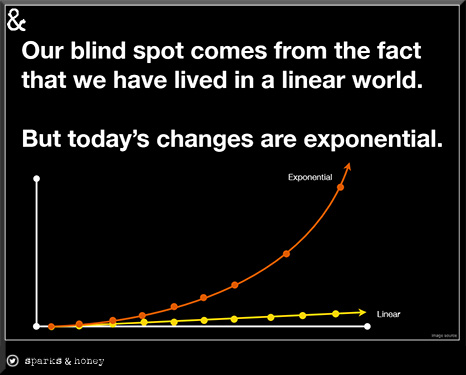
Which reminds me of some graphics:

The pace has changed -- don't come onto the track in a Model T


From DSC:
Time will tell.

Per Jeff Maggioncalda, Coursera CEO: “This system-wide industry micro-credential program sets an innovative blueprint for the future of higher education.”

***

University Of Texas, Coursera Launch Historic Micro-credential Partnership — from forbes.com by Michael T. Nietzel

The University of Texas and Coursera, the online learning platform and a pioneer of Massive Open Online Courses (MOOCS), are launching a large-scale, industry-recognized micro-credential program. The collaboration was announced today in a blogpost by Coursera.

Through the new partnership, every student, faculty, and staff (and even alumni) across all nine universities in the University of Texas (UT) System will gain access to Courser’s Career Academy for no additional cost to them.


The future of learning and skilling with AI in the picture — from chieflearningofficer.com by Janice Burns
Janice Burns, chief transformation officer at Degreed, looks at how AI is impacting the future of learning and skilling.

Sections include:

  • Saving L&D time
  • Recommending and personalizing
  • ‘As you need it’ learning 
  • A career coach for everyone?
  • More advances coming
  • Be mindful of the limitations
  • Remain open to the changes coming

Also relevant/see:


Who Will Train Digital (Legal) Talent At Scale? — from forbes.com by Mark A. Cohen

Excerpt (emphasis DSC):

The urgency to fill existing and prospective positions with digital talent and to upskill those already in the workforce are among the reasons why leading companies have boldly assessed and transformed their enterprise talent management strategies. Some key initiatives leading companies are undertaking include:

  • Direct involvement by the C-Suite in the formulation of the enterprise talent strategy and lifecycle;
  • A paradigmatic hiring shift from diplomas to skills;
  • Increased investment in upskilling and career advancement to promote retention and to identify high-performers early on;
  • Targeted collaboration with universities focused on training in areas of existing and projected talent supply demand
  • Promoting a learning-for-life mindset and encouraging creative thinking, cross-cultural collaboration, and forging a culture that values these and other humanistic values.
  • Collaborating with other companies to create joint solutions for fulfilling skill demand

Practical, powerful employee education: How interactivity supports greater learning online — from chieflearningofficer.com by Natasha Nicholson

Consider this comparison: In more passive online learning, a participant will learn primarily by listening, watching and observing. Conversely, in an interactive model, the participant will be expected to engage with a story or situation by being asked to make choices that will show potential consequences.

Here are some of the elements that, when combined, make interactive learning especially effective:


Skilled Trades School — from uei.edu with thanks to Noah Adam for this resource

Excerpt:

UEI College provides students with a wide range of career training opportunities for those who enjoy hands-on work and are interested in building, fixing, or designing things. UEI College’s programs range from HVAC Training to Automotive Technician Training. Our skilled trades programs are designed to equip you with the knowledge and skills needed to succeed in your chosen trade. With experienced instructors, hands-on training, and suitable facilities, we are able to provide you with a comprehensive education that prepares you for a successful career in the skilled trades.

 
© 2025 | Daniel Christian