


From DSC:
I’ve been wondering about collaborations, consortiums, and other forms of pooling resources within higher education for quite some time. As such, this an interesting item to me.
On 06/19/2024,
in business side of he, change, changing business models, collaboration, colleges, community colleges, future, future of higher education, game-changing environment, higher education, innovation, learning ecosystem, online learning, online media, teaching & learning, United States, universities,
by Daniel Christian
On 06/19/2024,
in Artificial Intelligence/Agents/LLMs/and Related, Asia, content development, aggregation, repositories, creativity, digital audio, digital video, education technology, emerging technologies, Emotion, engagement / engaging students, experimentation, graphics, Microsoft, multimedia, new media literacies, platforms, tools, United States, vendors, vision/possibilities,
by Daniel Christian
Introducing Gen-3 Alpha: Runway’s new base model for video generation.
Gen-3 Alpha can create highly detailed videos with complex scene changes, a wide range of cinematic choices, and detailed art directions.https://t.co/YQNE3eqoWf
(1/10) pic.twitter.com/VjEG2ocLZ8
— Runway (@runwayml) June 17, 2024
A new chapter of creativity begins.
Introducing GEN-3 Alpha – The first of a series of new models built by creatives for creatives. Video generated with @runwayml‘s new Text-2-Video model.
Coming soon. pic.twitter.com/oNONabxdNl
— Nicolas Neubert (@iamneubert) June 17, 2024
Google just announced their work on Video-to-audio, absolutely wild.
Here are 11 crazy examples
1. drums pic.twitter.com/sTNfymJIeN
— Linus ??? Ekenstam (@LinusEkenstam) June 17, 2024
Kuaishou Unveils Kling: A Text-to-Video Model To Challenge OpenAI’s Sora — from maginative.com by Chris McKay
Generating audio for video — from deepmind.google

LinkedIn leans on AI to do the work of job hunting — from techcrunch.com by Ingrid Lunden
Learning personalisation. LinkedIn continues to be bullish on its video-based learning platform, and it appears to have found a strong current among users who need to skill up in AI. Cohen said that traffic for AI-related courses — which include modules on technical skills as well as non-technical ones such as basic introductions to generative AI — has increased by 160% over last year.
You can be sure that LinkedIn is pushing its search algorithms to tap into the interest, but it’s also boosting its content with AI in another way.
For Premium subscribers, it is piloting what it describes as “expert advice, powered by AI.” Tapping into expertise from well-known instructors such as Alicia Reece, Anil Gupta, Dr. Gemma Leigh Roberts and Lisa Gates, LinkedIn says its AI-powered coaches will deliver responses personalized to users, as a “starting point.”
These will, in turn, also appear as personalized coaches that a user can tap while watching a LinkedIn Learning course.
Also related to this, see:
Unlocking New Possibilities for the Future of Work with AI — from news.linkedin.com
Personalized learning for everyone: Whether you’re looking to change or not, the skills required in the workplace are expected to change by 68% by 2030.
Expert advice, powered by AI: We’re beginning to pilot the ability to get personalized practical advice instantly from industry leading business leaders and coaches on LinkedIn Learning, all powered by AI. The responses you’ll receive are trained by experts and represent a blend of insights that are personalized to each learner’s unique needs. While human professional coaches remain invaluable, these tools provide a great starting point.
Personalized coaching, powered by AI, when watching a LinkedIn course: As learners —including all Premium subscribers — watch our new courses, they can now simply ask for summaries of content, clarify certain topics, or get examples and other real-time insights, e.g. “Can you simplify this concept?” or “How does this apply to me?”
Roblox’s Road to 4D Generative AI — from corp.roblox.com by Morgan McGuire, Chief Scientist
- Roblox is building toward 4D generative AI, going beyond single 3D objects to dynamic interactions.
- Solving the challenge of 4D will require multimodal understanding across appearance, shape, physics, and scripts.
- Early tools that are foundational for our 4D system are already accelerating creation on the platform.
On 06/17/2024,
in art, creativity,
by Daniel Christian
Striking New Prints from Tugboat Printshop Reflect on the Mysteries of Nature and Mythology — from thisiscolossal.com by Valerie Lueth

On 06/17/2024,
in Legal operations, legal reform, legal technologies, legislatures / government / legal, productivity / tips and tricks, trends, UK, United States,
by Daniel Christian
Brazil hires OpenAI to cut costs of court battles — from reuters.com by Marcela Ayres and Bernardo Caram
BRASILIA, June 10 (Reuters) – Brazil’s government is hiring OpenAI to expedite the screening and analysis of thousands of lawsuits using artificial intelligence (AI), trying to avoid costly court losses that have weighed on the federal budget.
The AI service will flag to government the need to act on lawsuits before final decisions, mapping trends and potential action areas for the solicitor general’s office (AGU).
Gen AI Cut Lawyers’ Drafting Time in Half, UK’s Ashurst Says — from news.bloomberglaw.com by Isabel Gottlieb
The firm’s findings included:
- Using generative AI tools, lawyers saved 45% of the time they said it would otherwise have taken them to write a first draft of a legal brief—about 2.5 hours saved per briefing draft, the firm said in a release. They also saved 80% of the time it would have taken them to draft UK corporate filings “requiring review and extraction of information from articles of association”; and 59% of the time it would have taken them to draft reports about industries and sectors using company filings.
- Output produced by generative AI was at least as accurate, or legally correct, as a human lawyer’s first draft in 67% of cases. Human output had higher average scores for accuracy, and the AI content had greater variations than human-created content in how accurate it was.
- The panel was unable to identify half of the AI-created output as coming from AI, but it made no mistakes on identifying human-created content.
On 06/17/2024,
in legislatures / government / legal, political science, society, UK, Uncategorized,
by Daniel Christian
AI candidate running for Parliament in the U.K. says AI can humanize politics — from nbcnews.com by Angela Yang and Daniele Hamamdjian; via The Rundown AI
Voters can talk to AI Steve, whose name will be on the ballot for the U.K.’s general election next month, to ask policy questions or raise concerns.
Commentary from The Rundown AI:
The Rundown: An AI-powered candidate named ‘AI Steve’ is running for U.K. Parliament in next month’s general election — creating polarizing questions around AI’s use in government affairs.
The details:
- AI Steve is represented by businessman Steve Endacott and will appear as an independent candidate in the upcoming election.
- Voters can interact with AI Steve online to ask policy questions and raise concerns or suggestions, which the AI will incorporate based on feedback.
- If elected, Endacott will serve as AI Steve’s human proxy in Parliament, attending meetings and casting votes based on the AI’s constituent-driven platform.
Why it matters: The idea of an AI running for office might sound like a joke, but the tech behind it could actually help make our politicians more independent and (ironically) autonomous. AI-assisted governance is likely coming someday, but it’s probably still a bit too early to be taken seriously.
Also related, see:
- Steve for PM? Meet the AI candidate standing for election as an MP in the UK — from yahoo.com by Anna Desmarais

- Meet VIC, Wyoming’s First AI Candidate Running For Cheyenne Mayor — from cowboystatedaily.com
Meet VIC, an artificial intelligence-powered candidate for Cheyenne Mayor that is Wyoming’s first AI-powered political hopeful. The man behind VIC, Victor Miller, says if elected VIC will make all decisions related to the office.
From The Deep View:
The details: Hearing aids have employed machine learning algorithms for decades. But these algorithms historically have not been powerful enough to tackle the ‘cocktail party’ problem; they weren’t able to isolate a single voice in a loud, crowded room.
Dr. DeLiang Wang has been working on the problem for decades and has published numerous studies in recent years that explore the application of deep learning within hearing aids.
Last year, Google partnered up with a number of organizations to design personalized, AI-powered hearing aids.
Why it matters: Wang’s work has found that deep learning algorithms, running in real-time, could separate speech from background noises, “significantly” improving intelligibility in hearing-impaired people.
The tech is beginning to become publicly available, with brands like Phonak and Starkey leveraging deep learning and AI to enhance their hearing aids.
Canva is used by over 130M users.
But most people still don’t know its full potential.
Here’re 13 Canva features you should not miss:
— Poonam Soni (@CodeByPoonam) June 12, 2024
On 06/17/2024,
in Bias | Diversity Equity & Inclusion (DE&I), career development, change, changing business models, collaboration, communications, creativity, digital audio, digital video, education, education reform, education technology, engagement / engaging students, engineering, entrepreneurship, experimentation, ideas, innovation, instructional design, journalism, K-12 related, leadership, learning, learning ecosystem, Learning Experience Design, media/film, more voice more choice more control, multimedia, neurodivergent/special needs, play, podcasting, real-world assignments, robotics, skills, society, sociology, strategy, student-related, teachers, United States, vision/possibilities, vocational / trades,
by Daniel Christian
NYC High School Reimagines Career & Technical Education for the 21st Century — from the74million.org by Andrew Bauld
Thomas A. Edison High School is providing students with the skills to succeed in both college and career in an unusually creative way.
From DSC:
Very interesting to see the mention of an R&D department here! Very cool.
Baker said ninth graders in the R&D department designed the essential skills rubric for their grade so that regardless of what content classes students take, they all get the same immersion into critical career skills. Student voice is now so integrated into Edison’s core that teachers work with student designers to plan their units. And he said teachers are becoming comfortable with the language of career-centered learning and essential skills while students appreciate the engagement and develop a new level of confidence.
…
The R&D department has grown to include teachers from every department working with students to figure out how to integrate essential skills into core academic classes. In this way, they’re applying one of the XQ Institute’s crucial Design Principles for innovative high schools: Youth Voice and Choice.
.
Student Enterprise: Invite Learners to Launch a Media Agency or Publication — from gettingsmart.com by Tom Vander Ark
Key Points
- Client-connected projects have become a focal point of the Real World Learning initiative, offering students opportunities to solve real-world problems in collaboration with industry professionals.
- Organizations like CAPS, NFTE, and Journalistic Learning facilitate community connections and professional learning opportunities, making it easier to implement client projects and entrepreneurship education.
Important trend: client projects. Work-based learning has been growing with career academies and renewed interest in CTE. Six years ago, a subset of WBL called client-connected projects became a focal point of the Real World Learning initiative in Kansas City where they are defined as authentic problems that students solve in collaboration with professionals from industry, not-for-profit, and community-based organizations….and allow students to: engage directly with employers, address real-world problems, and develop essential skills.
Portrait of a Community to Empower Learning Transformation — from gettingsmart.com by Rebecca Midles and Mason Pashia
Key Points
- The Community Portrait approach encourages diverse voices to shape the future of education, ensuring it reflects the needs and aspirations of all stakeholders.
- Active, representative community engagement is essential for creating meaningful and inclusive educational environments.
The Portrait of a Graduate—a collaborative effort to define what learners should know and be able to do upon graduation—has likely generated enthusiasm in your community. However, the challenge of future-ready graduates persists: How can we turn this vision into a reality within our diverse and dynamic schools, especially amid the current national political tensions and contentious curriculum debates?
The answer lies in active, inclusive community engagement. It’s about crafting a Community Portrait that reflects the rich diversity of our neighborhoods. This approach, grounded in the same principles used to design effective learning systems, seeks to cultivate deep, reciprocal relationships within the community. When young people are actively involved, the potential for meaningful change increases exponentially.
Q&A: Why Schools Must Redesign Learning to Include All Students — from edtechmagazine.com by Taashi Rowe
Systems are broken, not children, says K–12 disability advocate Lindsay E. Jones.
Although Lindsay E. Jones came from a family of educators, she didn’t expect that going to law school would steer her back into the family business. Over the years she became a staunch advocate for children with disabilities. And as mom to a son with learning disabilities and ADHD who is in high school and doing great, her advocacy is personal.
Jones previously served as president and CEO of the National Center for Learning Disabilities and was senior director for policy and advocacy at the Council for Exceptional Children. Today, she is the CEO at CAST, an organization focused on creating inclusive learning environments in K–12. EdTech: Focus on K–12 spoke with Jones about how digital transformation, artificial intelligence and visionary leaders can support inclusive learning environments.
Our brains are all as different as our fingerprints, and throughout its 40-year history, CAST has been focused on one core value: People are not broken, systems are poorly designed. And those systems are creating a barrier that holds back human innovation and learning.
On 06/14/2024,
in 21st century, 24x7x365 access, Artificial Intelligence/Agents/LLMs/and Related, Asia, communications, creativity, digital audio, digital learning, digital video, emerging technologies, engagement / engaging students, media/film, multimedia, United States, vendors,
by Daniel Christian

Dream Machine is an AI model that makes high quality, realistic videos fast from text and images.
It is a highly scalable and efficient transformer model trained directly on videos making it capable of generating physically accurate, consistent and eventful shots. Dream Machine is our first step towards building a universal imagination engine and it is available to everyone now!
Luma AI just dropped a Sora-like AI video generator called Dream Machine.
But unlike Sora or KLING, it’s completely open access to the public.
Here are 10 wild examples (and how to access it):
— Rowan Cheung (@rowancheung) June 12, 2024
Text-to-Video Emergence for July 2024 — from ai-supremacy.com by Michael Spencer
Who needs Sora?
There have been some incredible teasers in the text-to-video arena of Generative AI. Namely I’m watching:
- Kling AI (by Kuaishou)
- Luma AI
- Vidu (ShengShu Technology and Tsinghua University)
- Pika Labs
- Zhipu AI & ByteDance (not yet released their products)
- The timeline for the release of OpenAI’s Sora
“OpenAI seems to have the ability to create video in Sora, send it to ChatGPT for a script, use Voice Engine for voice over and put it all together.”
byu/MassiveWasabi insingularity
On 06/14/2024,
in Africa, Artificial Intelligence/Agents/LLMs/and Related, business, Canada, career development, change, cloud-based computing / apps / other cloud-related, corporate / business world, corporate universities / corporate training, cost of getting a degree, credentialing, future, future of higher education, game-changing environment, global, India, learning ecosystem, microlearning, pace of change, skills, training / L&D, UK, United States, universities, vendors, workplace,
by Daniel Christian
- AI literacy emerges as a global imperative
- AI readiness initiatives drive emerging skill adoption across regions
- The digital skills gap persists in a rapidly evolving job market
- Cybersecurity skills remain crucial amid talent shortages and evolving threats
- Micro-credentials are a rapid pathway for learners to prepare for in-demand jobs
- The global gender gap in online learning continues to narrow, but regional disparities persist
- Different regions prioritize different skills, but the majority focus on emerging or foundational capabilities
You can use the Global Skills Report 2024 to:
- Identify critical skills for your students to strengthen employability
- Align curriculum to drive institutional advantage nationally
- Track emerging skill trends like GenAI and cybersecurity
- Understand entry-level and digital role skill trends across six regions
On 06/13/2024,
in 21st century, 24x7x365 access, Access to Justice (A2J), adjunct faculty, Adobe, adult learning, Artificial Intelligence/Agents/LLMs/and Related, bots, business side of he, change, cloud-based computing / apps / other cloud-related, colleges, community colleges, content development, aggregation, repositories, corporate / business world, corporate universities / corporate training, cost of getting a degree, creativity, culture, dangers of the status quo, Daniel S. Christian, data related items, design, digital audio, digital learning, digital photography, digital storytelling, digital video, education technology, emerging technologies, experimentation, faculty/staff, future of higher education, game-changing environment, heutagogy, higher education, homeschooling/homeschoolers, human-computer interaction (HCI), ideas, innovation, instructional design, intelligent systems, intelligent tutoring, K-12 related, learning, learning agents, learning ecosystem, Learning Experience Design, Learning from the Living [Class] Room, liberal arts, library / librarians, lifelong learning, media/film, microlearning, more voice more choice more control, multimedia, Natural Language Processing (NLP), new business models, NVIDIA, online media, online tutoring, Open AI, pace of change, personalized/customized learning, platforms, productivity / tips and tricks, professional development, reinvent, skills, society, staying relevant, streams of content, student-related, surviving, teachers, technologies for your home, technology (general), the downsides of how people use tech, tools, training / L&D, TVs, United States, universities, user experience (UX), user interface design, vendors, vision/possibilities, web-based collaboration, workplace,
by Daniel Christian
From DSC:
Last Thursday, I presented at the Educational Technology Organization of Michigan’s Spring 2024 Retreat. I wanted to pass along my slides to you all, in case they are helpful to you.
Topics/agenda:
- Topics & resources re: Artificial Intelligence (AI)
- Top multimodal players
- Resources for learning about AI
- Applications of AI
- My predictions re: AI
- The powerful impact of pursuing a vision
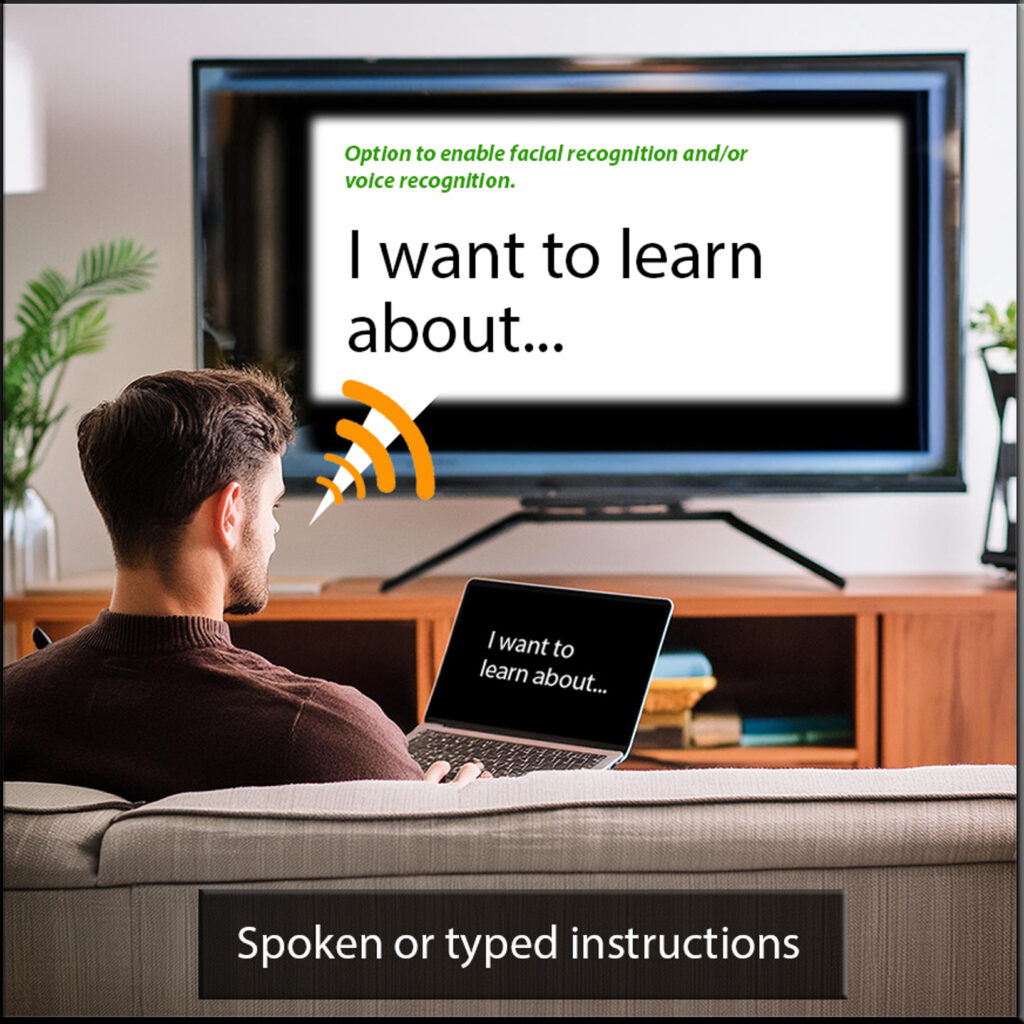
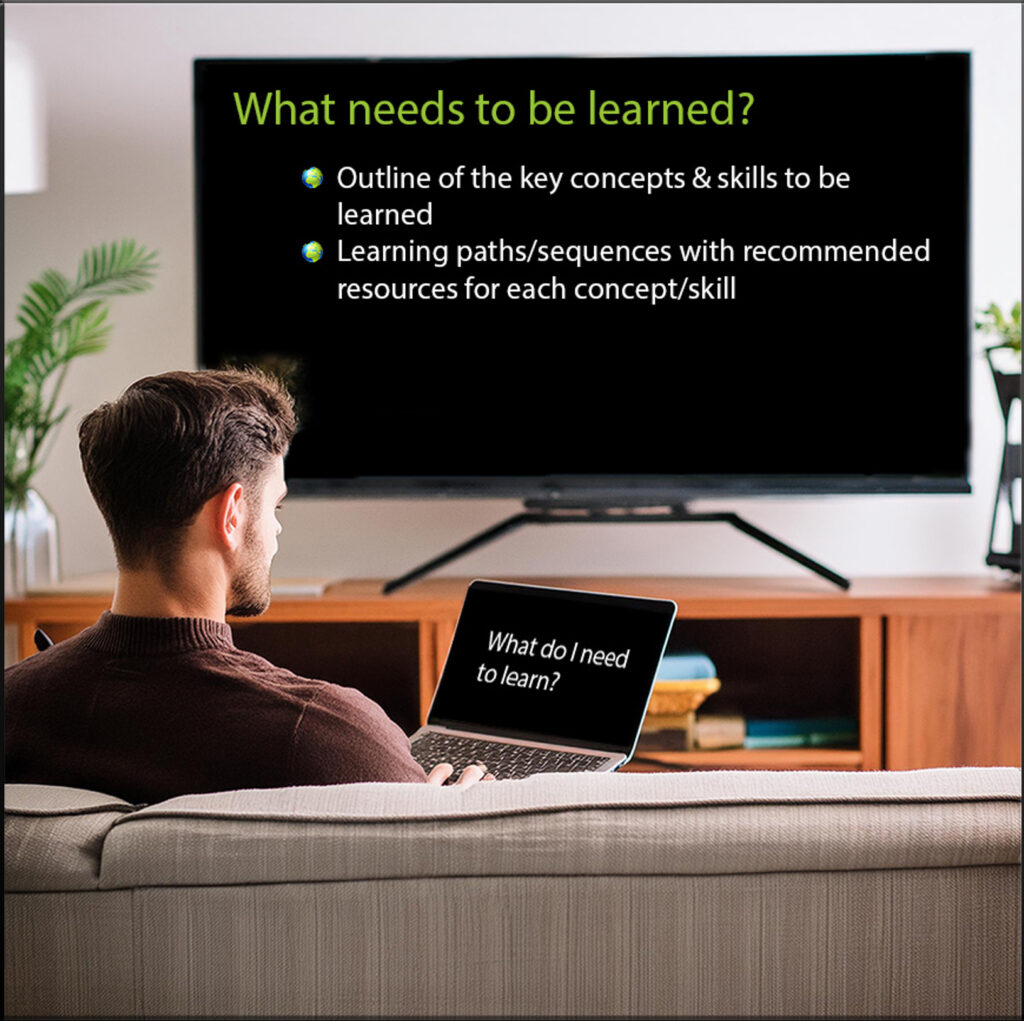
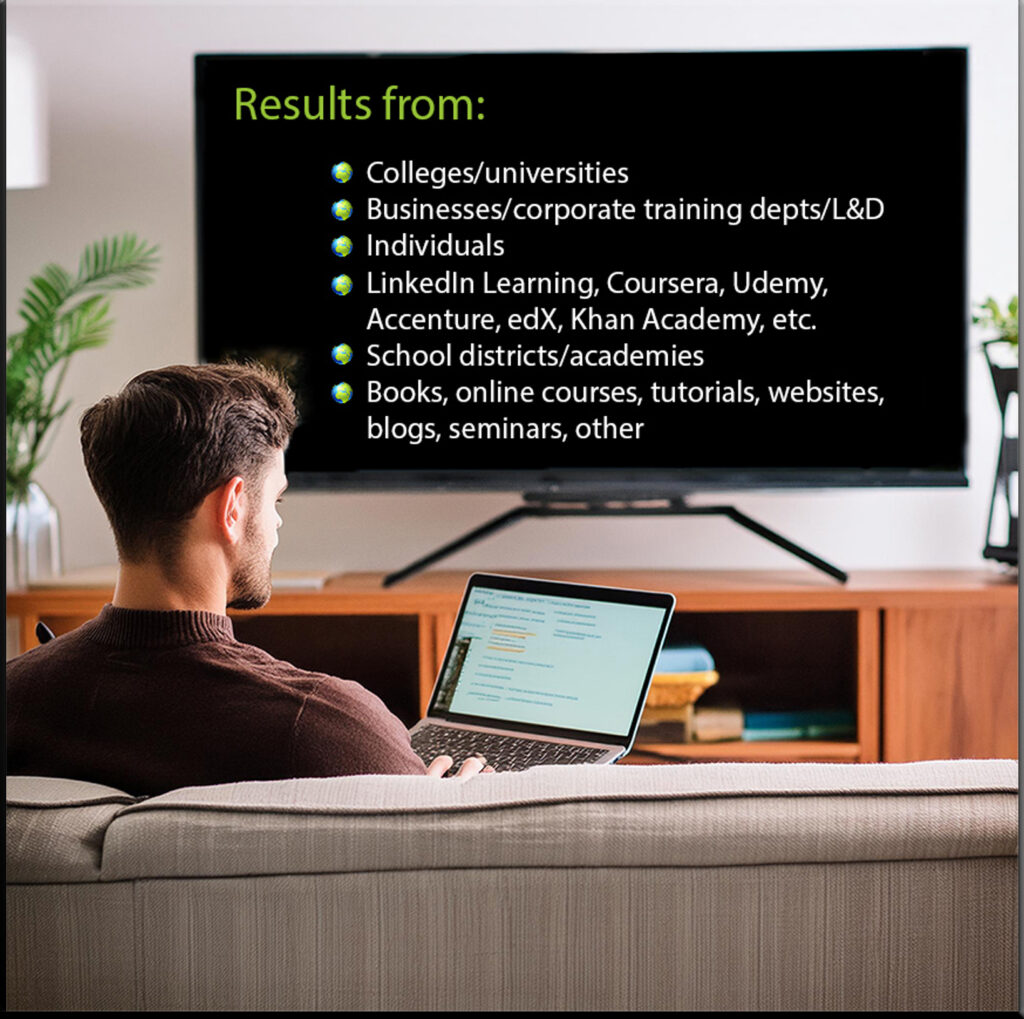
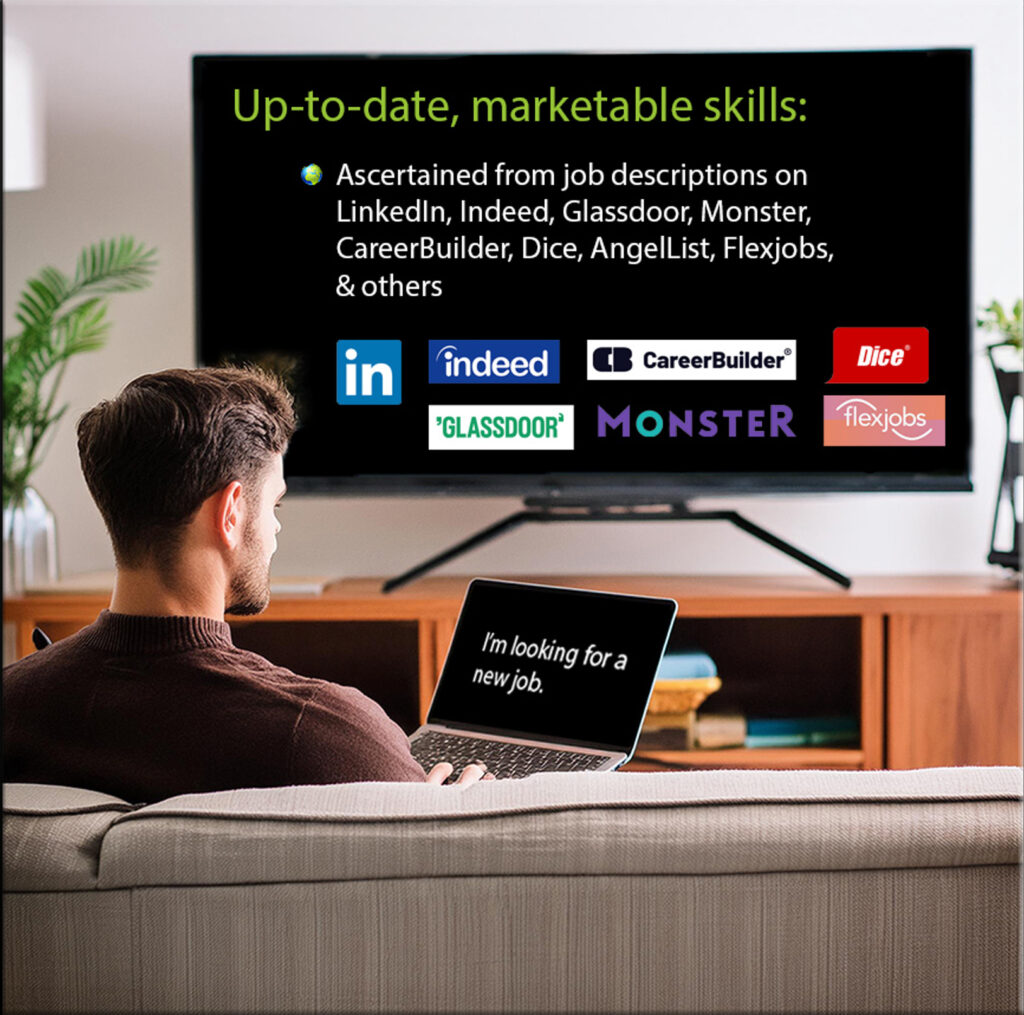
- A potential, future next-gen learning platform
- Share some lessons from my past with pertinent questions for you all now
- The significant impact of an organization’s culture
- Bonus material: Some people to follow re: learning science and edtech
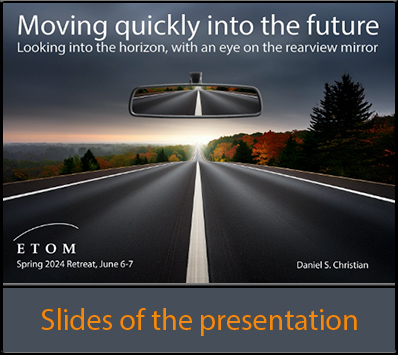
Slides of the presentation (.PPTX)
Slides of the presentation (.PDF)
On 06/13/2024,
in career development, competency-based learning/education, education, education reform, engagement / engaging students, ideas, K-12 related, leadership, legislatures / government / legal, parents/guardians, personalized/customized learning, policy, society, sociology, strategy, student-related, teachers, United States, vision/possibilities, vocational / trades,
by Daniel Christian
6 Ways State Policymakers Can Build More Future-Focused Education Systems — from gettingsmart.com by Jennifer Kabaker
Key Points
- Guided by a vision – often captured as a Portrait of a Graduate – co-constructed with local leaders, community members, students, and families, state policymakers can develop policies that equitably and effectively support students and educators in transforming learning experiences.
- The Aurora Institute highlights the importance of collaborative efforts in creating education systems that truly meet the diverse needs of every student.
The Aurora Institute has spent years working with states looking to advance competency-based systems, and has identified a set of key state policy levers that policymakers can put into action to build more personalized and competency-based systems. These shifts should be guided by a vision–co-constructed with local leaders, community members, students, and families–for what students need to know and be able to do upon graduating.
Career Pathways In A Rapidly Changing World: US Career Pathways Story — from gettingsmart.com by Paul Herdman
Key Points
- There has been a move away from the traditional “Bachelor’s or Bust” mentality towards recognizing the value of diverse career pathways that may not necessarily require a four-year degree.
- Local entities such as states, school districts, and private organizations have played a crucial role in implementing and scaling up career pathways programs.
While much has been written on this topic (see resources below), this post, in the context of our OECD study of five Anglophone countries, will attempt to provide a backdrop on what was happening at the federal level in the U.S. over the last several decades to help catalyze this shift in career pathways and offer a snapshot of how this work is evolving in two very different states—Delaware and Texas.
U.S. public, private and charter schools in 5 charts — from pewresearch.org by Katherine Schaeffer
.

On 06/12/2024,
in Artificial Intelligence/Agents/LLMs/and Related, assessment, bots, business, content development, aggregation, repositories, copyright/ownership/NFTs, corporate / business world, corporate universities / corporate training, digital learning, education, education technology, elearning, emerging technologies, engagement / engaging students, experimentation, higher education, homeschooling/homeschoolers, human-computer interaction (HCI), ideas, innovation, instructional design, intelligent systems, intelligent tutoring, IT in HE, K-12 related, learning, learning ecosystem, Learning Experience Design, parents/guardians, personalized/customized learning, platforms, productivity / tips and tricks, skills, strategy, student-related, teachers, teaching & learning, technologies for your home, training / L&D, vendors, web-based collaboration,
by Daniel Christian
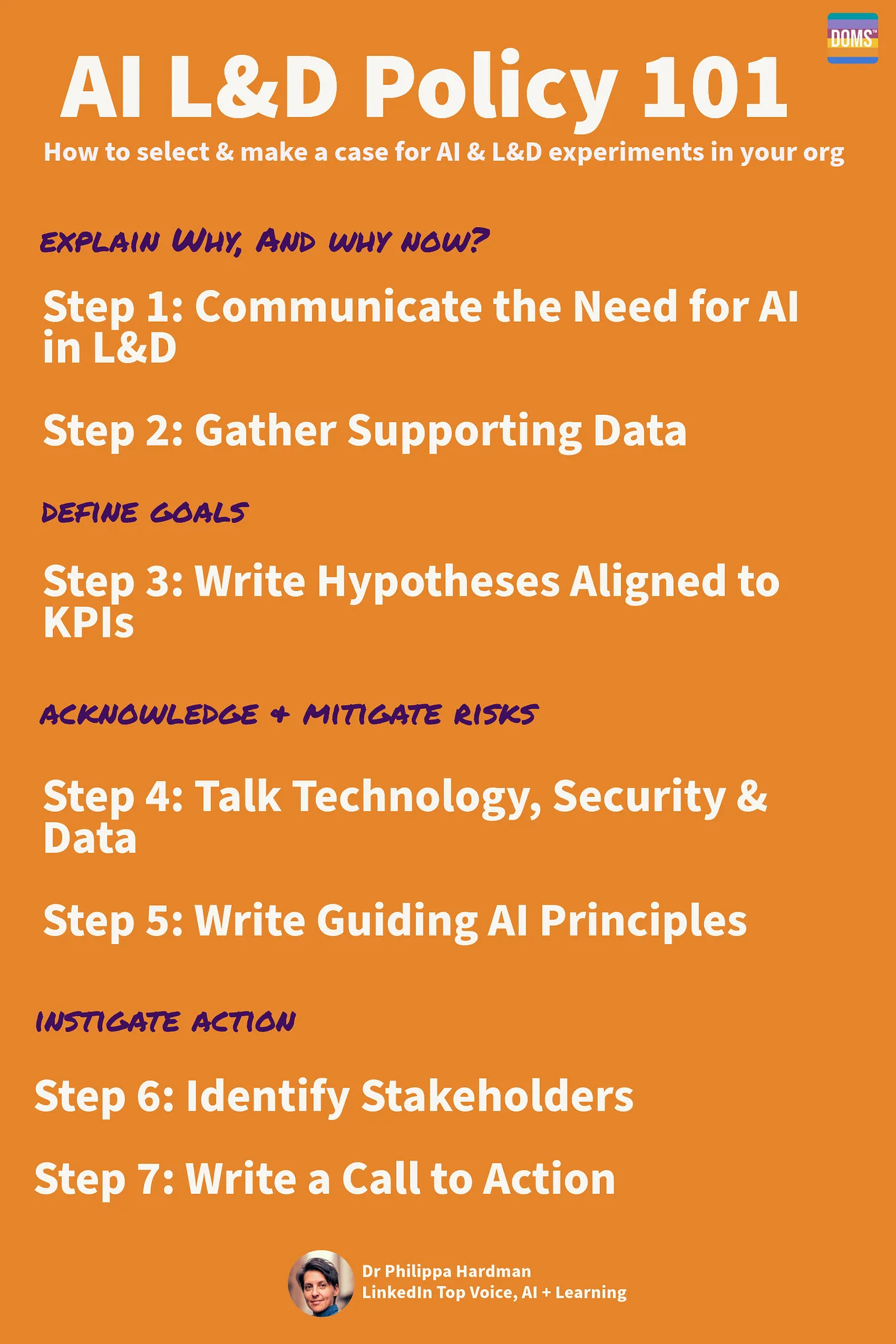
AI Policy 101: a Beginners’ Framework — from drphilippahardman.substack.com by Dr. Philippa Hardman
How to make a case for AI experimentation & testing in learning & development
6 AI Tools Recommended By Teachers That Aren’t ChatGPT — from forbes.com by Dan Fitzpatrick
Here are six AI tools making waves in classrooms worldwide:
- Brisk Teaching
- SchoolAI
- Diffit
- Curipod
- Skybox by Blockade Labs in ThingLink
- Ideogram
With insights from educators who are leveraging their potential, let’s explore them in more detail.
AI Is Speeding Up L&D But Are We Losing the Learning? — from learningguild.com by Danielle Wallace
The role of learning & development
Given these risks, what can L&D professionals do to ensure generative AI contributes to effective learning? The solution lies in embracing the role of trusted learning advisors, guiding the use of AI tools in a way that prioritizes achieving learning outcomes over only speed. Here are three key steps to achieve this:
1. Playtest and Learn About AI…
2. Set the Direction for AI to Be Learner-Centered…
3. Become Trusted Learning Advisors…
Some other tools to explore:
Descript: If you can edit text, you can edit videos. — per Bloomberg’s Vlad Savov
Descript is the AI-powered, fully featured, end-to-end video editor that you already know how to use.
A video editor that works like docs and slides
No need to learn a new tool — Descript works like the tools you’ve already learned.
Audeze | Filter — per Bloomberg’s Vlad Savov
AI Chatbots in Schools Findings from a Poll of K-12 Teachers, Students, Parents, and College Undergraduates — from Impact Research; via Michael Spencer and Lily Lee
Key Findings
- In the last year, AI has become even more intertwined with our education system. More teachers, parents, and students are aware of it and have used it themselves on a regular basis. It is all over our education system today.
- While negative views of AI have crept up over the last year, students, teachers, and parents feel very positive about it in general. On balance they see positive uses for the technology in school, especially if they have used it themselves.
- Most K-12 teachers, parents, and students don’t think their school is doing much about AI, despite its widespread use. Most say their school has no policy on it, is doing nothing to offer desired teacher training, and isn’t meeting the demand of students who’d like a career in a job that will need AI.
- The AI vacuum in school policy means it is currently used “unauthorized,” while instead people want policies that encourage AI. Kids, parents, and teachers are figuring it out on their own/without express permission, whereas all stakeholders would rather have a policy that explicitly encourages AI from a thoughtful foundation.
The Value of AI in Today’s Classrooms — from waltonfamilyfoundation.org
There is much discourse about the rise and prevalence of AI in education and beyond. These debates often lack the perspectives of key stakeholders – parents, students and teachers.
In 2023, the Walton Family Foundation commissioned the first national survey of teacher and student attitudes toward ChatGPT. The findings showed that educators and students embrace innovation and are optimistic that AI can meaningfully support traditional instruction.
A new survey conducted May 7-15, 2024, showed that knowledge of and support for AI in education is growing among parents, students and teachers. More than 80% of each group says it has had a positive impact on education.
On 06/11/2024,
in Apple, Artificial Intelligence/Agents/LLMs/and Related, design, graphics, Open AI, platforms, presentations, productivity / tips and tricks, tools, United States, usability, user experience (UX), user interface design, vendors, writing,
by Daniel Christian

Apple Intelligence: every new AI feature coming to the iPhone and Mac — from theverge.com by Wes Davis
Apple announced “Apple Intelligence” at WWDC 2024, its name for a new suite of AI features for the iPhone, Mac, and more. Starting later this year, Apple is rolling out what it says is a more conversational Siri, custom, AI-generated “Genmoji,” and GPT-4o access that lets Siri turn to OpenAI’s chatbot when it can’t handle what you ask it for.
Apple jumps into the AI arms race with OpenAI deal — from washingtonpost.com by Gerrit De Vynck
The iPhone maker has mostly stayed on the sidelines as the tech industry goes wild for AI. Not anymore.
SAN FRANCISCO — Apple officially launched itself into the artificial intelligence arms race, announcing a deal with ChatGPT maker OpenAI to use the company’s technology in its products and showing off a slew of its own new AI features.
The announcements, made at the tech giant’s annual Worldwide Developers Conference on Monday in Cupertino, Calif., are aimed at helping the tech giant keep up with competitors such as Google and Microsoft, which have boasted in recent months that AI makes their phones, laptops and software better than Apple’s. In addition to Apple’s own homegrown AI tech, the company’s phones, computers and iPads will also have ChatGPT built in “later this year,” a huge validation of the importance of the highflying start-up’s tech.
Apple Intelligence: AI for the rest of us. — from apple.com
- Built into your iPhone, iPad, and Mac to help you write, express yourself, and get things done effortlessly.
- Draws on your personal context while setting a brand-new standard for privacy in AI.
Introducing Apple Intelligence, the personal intelligence system that puts powerful generative models at the core of iPhone, iPad, and Mac — from apple.com
Setting a new standard for privacy in AI, Apple Intelligence understands personal context to deliver intelligence that is helpful and relevant
Apple doubles down on artificial intelligence, announcing partnership with OpenAI — from npr.org by Lola Murti and Dara Kerr
The highly anticipated AI partnership is the first of its kind for Apple, which has been regarded by analysts as slower to adopt artificial intelligence than other technology companies such as Microsoft and Google.
The deal allows Apple’s millions of users to access technology from OpenAI, one of the highest-profile artificial intelligence companies of recent years. OpenAI has already established partnerships with a variety of technology and publishing companies, including a multibillion-dollar deal with Microsoft.
The real deal here is that Apple is literally putting AI into the hands of >1B people, most of whom will probably be using AI for the 1st time. And it’s delivering AI that’s actually useful (forget those Genmojis, we’re talking about implanting ChatGPT-4o’s brain into Apple devices).
Noah Edelman (source)
Here’s everything Apple announced at the WWDC 2024 keynote, including Apple Intelligence, Siri makeover — from techcrunch.com by Christine Hall
It’s WWDC 2024 keynote time! Each year Apple kicks off its Worldwide Developers Conference with a few hours of just straight announcements, like the long-awaited Apple Intelligence and a makeover for smart AI assistant, Siri. We expected much of them to revolve around the company’s artificial intelligence ambitions (and here), and Apple didn’t disappoint. We also bring you news about Vision Pro and lots of feature refreshes.
Here’s how to watch the archive of WWDC 2024.
Why Gamma is great for presentations — from Jeremy Caplan
Gamma has become one of my favorite new creativity tools. You can use it like Powerpoint or Google Slides, adding text and images to make impactful presentations. It lets you create vertical, square or horizontal slides. You can embed online content to make your deck stand out with videos, data or graphics. You can even use it to make quick websites.
Its best feature, though, is an easy-to-use application of AI. The AI will learn from any document you import, or you can use a text prompt to create a strong deck or site instantly.
.
107 Up-to-Date ChatGPT Statistics & User Numbers [April 2024] — from nerdynav.com
Top ChatGPT Statistics
- ChatGPT has 180.5 million users out of which 100 million users are active weekly.
- In January 2024, ChatGPT got 2.3 billion website visits and 2 million developers are using its API.
- The highest percentage of ChatGPT users belong to USA (46.75%), followed by India (5.47%). ChatGPT is banned in 7 countries including Russia and China.
- OpenAI’s projected revenue from ChatGPT is $2billion in 2024.
- Running ChatGPT costs OpenAI around $700,000 daily.
- Sam Altman is seeking $7 trillion for a global AI chip project while Open AI is also listed as a major shareholder in Reddit.
- ChatGPT offers a free version with GPT-3.5 and a Plus version with GPT-4, which is 40% more accurate and 82% safer costing $20 per month.
- ChatGPT is being used for automation, education, coding, data-analysis, writing, etc.
- 43% of college students and 80% of the Fortune 500 companies are using ChatGPT.
- A 2023 study found 25% of US companies surveyed saved $50K-$70K using ChatGPT, while 11% saved over $100K.