Under LeBlanc’s direction, SNHU has transformed from a small regional university to an internationally known leader in higher education, having grown from 2,500 students to more than 225,000 learners, making SNHU the largest nonprofit provider of higher education in the country. With his vision to make higher education more accessible, more than 200,000 students have earned their degrees during LeBlanc’s tenure at SNHU. The university also ranks among the most innovative universities in the country and as a top employer nationwide.
When the concept of student evaluations was first developed in the 1920s, by the psychologists Herman H. Remmers, at Purdue University, and Edwin R. Guthrie, at the University of Washington, administrators were never meant to have access to them. Remmers and Guthrie saw evaluations as modest tools for pedagogical improvement, not criteria of administrative judgment. In the 1950s, Guthrie warned about the misuse of evaluations. But no one listened. Instead, as Stroebe writes, they “soon became valued sources of information for university administrators, who used them as a basis for decisions about merit increases and promotion.” Is it too late to return to Remmers and Guthrie’s original conception?
Today, we’re a step closer to this vision as we introduce Gemini, the most capable and general model we’ve ever built.
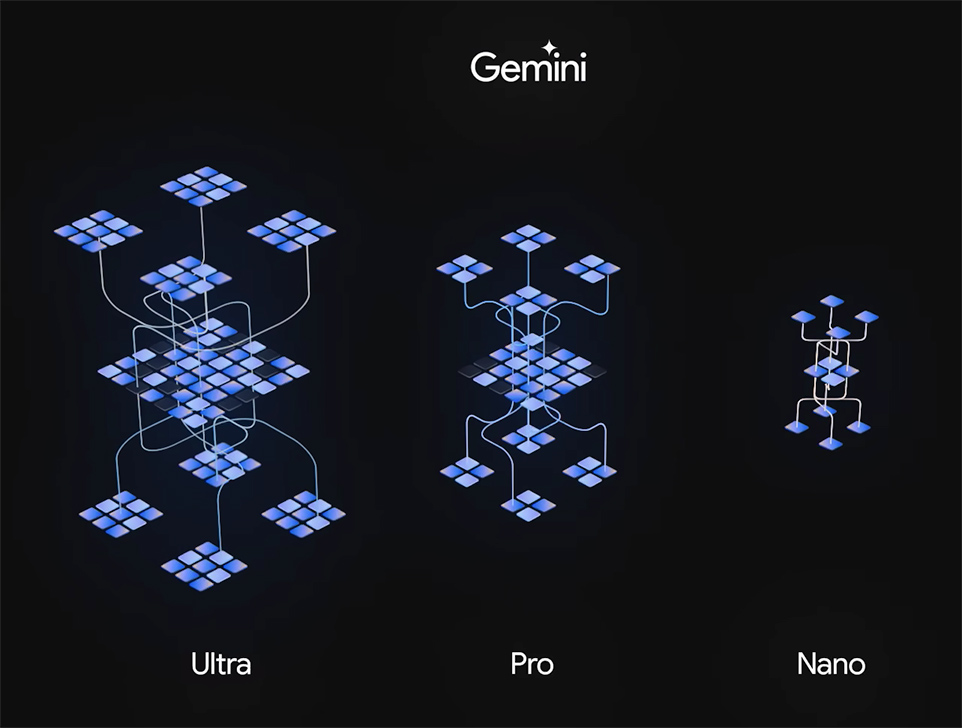
Gemini is the result of large-scale collaborative efforts by teams across Google, including our colleagues at Google Research. It was built from the ground up to be multimodal, which means it can generalize and seamlessly understand, operate across and combine different types of information including text, code, audio, image and video.
So, in many ways, ChatGPT and its friends are far from as intelligent as a human; they do not have “general” intelligence (AGI).
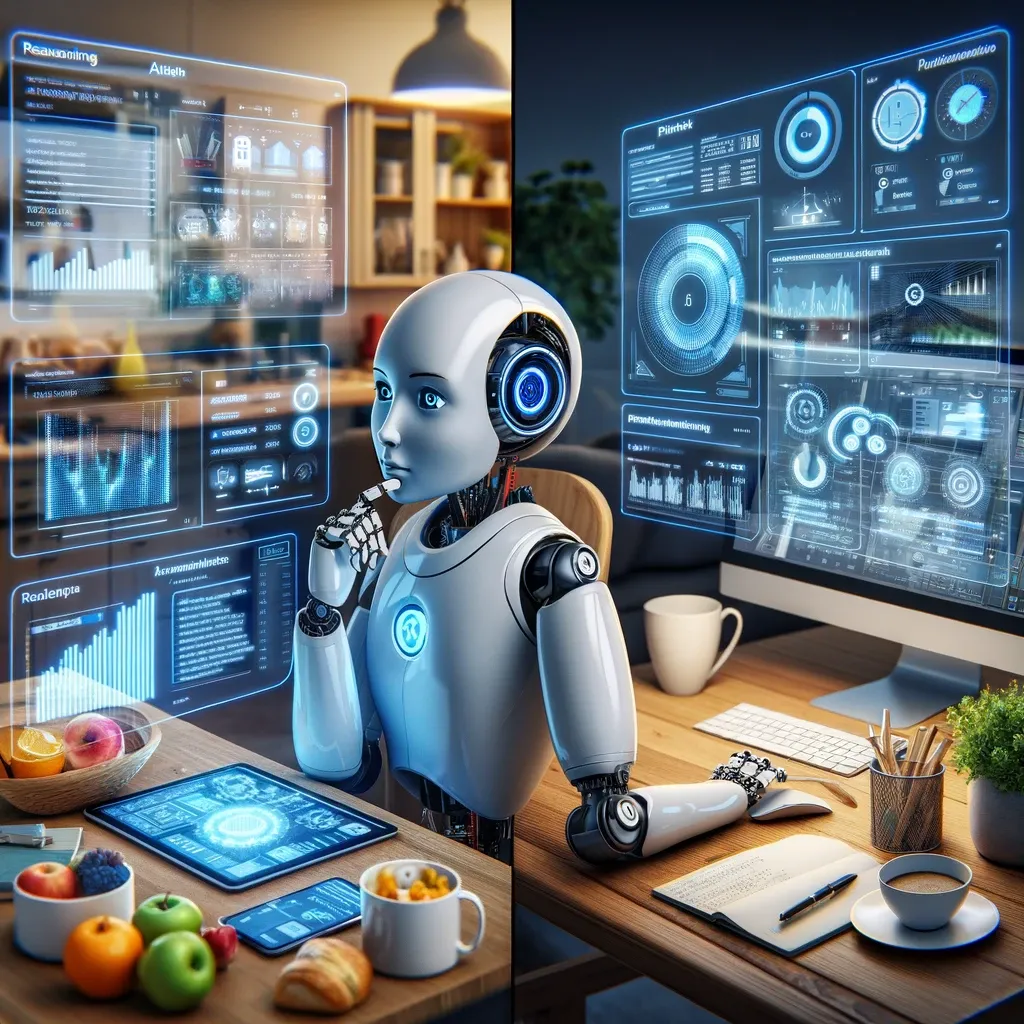
But this will not last for long. The debate about ProjectQ aside, AIs with the ability to engage in high-level reasoning, plan, and have long-term memory are expected in the next 2–3 years. We are already seeing AI agents that are developing the ability to actautonomously and collaborate to a degree. Once AIs can reason and plan, acting autonomously and collaborating will not be a challenge.
ChatGPT is winning the future — but what future is that?— from theverge.com by David Pierce OpenAI didn’t mean to kickstart a generational shift in the technology industry. But it did. Now all we have to decide is where to go from here.
We don’t know yet if AI will ultimately change the world the way the internet, social media, and the smartphone did. Those things weren’t just technological leaps — they actually reorganized our lives in fundamental and irreversible ways. If the final form of AI is “my computer writes some of my emails for me,” AI won’t make that list. But there are a lot of smart people and trillions of dollars betting that’s the beginning of the AI story, not the end. If they’re right, the day OpenAI launched its “research preview” of ChatGPT will be much more than a product launch for the ages. It’ll be the day the world changed, and we didn’t even see it coming.
AI is overhyped” — from theneurondaily.com by Pete Huang & Noah Edelman
If you’re feeling like AI is the future, but you’re not sure where to start, here’s our advice for 2024 based on our convos with business leaders:
Start with problems – Map out where your business is spending time and money, then ask if AI can help. Don’t do AI to say you’re doing AI.
Model the behavior – Teams do better in making use of new tools when their leadership buys in. Show them your support.
Do what you can, wait for the rest – With AI evolving so fast, “do nothing for now” is totally valid. Start with what you can do today (accelerating individual employee output) and keep up-to-date on the rest.
Google has unveiled a new artificial intelligence model that it claims outperforms ChatGPT in most tests and displays “advanced reasoning” across multiple formats, including an ability to view and mark a student’s physics homework.
The model, called Gemini, is the first to be announced since last month’s global AI safety summit, at which tech firms agreed to collaborate with governments on testing advanced systems before and after their release. Google said it was in discussions with the UK’s newly formed AI Safety Institute over testing Gemini’s most powerful version, which will be released next year.
More Chief Online Learning Officers Step Up to Senior Leadership Roles In 2024, I think we will see more Chief Online Learning Officers (COLOs) take on more significant roles and projects at institutions.
In recent years, we have seen many COLOs accept provost positions. The typical provost career path that runs up through the faculty ranks does not adequately prepare leaders for the digital transformation occurring in postsecondary education.
As we’ve seen with the professionalization of the COLO role, in general, these same leaders proved to be incredibly valuable during the pandemic due to their unique skills: part academic, part entrepreneur, part technologist, COLOs are unique in higher education. They sit at the epicenter of teaching, learning, technology, and sustainability. As institutions are evolving, look for more online and professional continuing leaders to take on more senior roles on campuses.
Julie Uranis, Senior Vice President, Online and Strategic Initiatives, UPCEA
Animate Anyone — from theneurondaily.com by Noah Edelman & Pete Huang
Animate Anyone is a new project from Alibaba that can animate any image to move however you’d like.
While the technology is bonkers (duh), the demo video has stirred up mixed reactions.
…
I mean…just check out the (justified) fury on Twitter in response to this research.
To the researchers’ credit, they haven’t released a working demo yet, probably for this exact concern.
DC: Agreed. But don’t expect much help from the American Bar Association! It’s almost 2024 and the vast majority of law schools still can’t offer 100% online-based programs!!!
Progress in the national college completion rate has stalled. The six-year completion rate for the fall 2017 cohort was 62.2 percent, essentially unchanged since 2015.
Six-year completion rates increased in over half of states, with nine states increasing 1 percentage point (pp) or more. This is up from the previous year when only five states had gains of at least 1 pp.
Completions rates stalled or declined across all ethnicities, with Native American (-2.0 pp) and Black students (-0.4 pp) posting the largest decreases.
The gender gap in completion rates continues to grow and is the widest seen since 2008 (7.2 pp)
Traditional-aged students entering college in fall 2017 saw declines in their overall six-year completion rate. Older students continue to make gains, but they still lag behind traditional aged students.
The national eight-year completion rate for the fall 2015 cohort declined 0.5pp from 2014. Only 2.4 percent of the cohort completed in the seventh and eighth years.
The EdResearch for Action Overview Series summarizes the research on key topics to provide K-12 education decision makers and advocates with an evidence base to ground discussions about how to best serve students. Authors – leading experts from across the field of education research – are charged with highlighting key findings from research that provide concrete, strategic insight on persistent challenges sourced from district and state leaders.
Central Question
What evidence-based practices can schools and districts implement to identify and support students experiencing homelessness?
From DSC: Wouldn’t it be nice to be able to gift someone an article or access to a particular learning module? This would be the case whether you are a subscriber to that vendor/service or not. I thought about this after seeing the following email from MLive.com. .
.
Not only is this a brilliant marketing move — as recipients can get an idea of the services/value offered — but it can provide concrete information to someone.
Perhaps colleges and universities should take this idea and run with it. They could gift courses and/or individual lectures! Doing so could open up some new revenue streams, aid adult learners in their lifelong learning pathways, and help people build new skills — all while helping market the colleges and universities. Involved faculty/staff members could get a percentage of the sales. Sounds like a WIN-WIN to me.
LERs Are Hot. What Are States Going To Do With Them?
Governors and state leaders are concerned about the current labor shortage, occurring during a time when many skilled workers are underemployed or even unemployed. Skills-based approaches to hiring and recruiting can shift that dynamic—making pathways to good careers accessible to a wider segment of the workforce and opening up new pools of talent for employers. They do so by focusing on what workers know and can do, not on the degrees or credentials they’ve earned.
That’s the theory. But a lot hinges on how things actually play out on the ground.
Technology will play a key role, and many states have zeroed in on learning and employment records—essentially digital resumes with verified records of people’s skills, educational experiences, and work histories—as an essential tool. A lot of important work is going into the technical design and specifications.
This project, on the other hand, aims to take a step back and look at the current state of play when it comes to the use cases for LERs. Just a few of the key questions:
How might employers, education providers, government agencies, and workers themselves actually use them? Will they?
In what areas do state policymakers have the most influence over key stakeholders and the most responsibility to invest?
What actions are needed now to ensure that LERs, and skills-based hiring more broadly, actually widen access to good jobs—rather than setting up a parallel system that perpetuates many of today’s inequities?
6. ChatGPT’s hype will fade, as a new generation of tailor-made bots rises up
11. We’ll finally turn the corner on teacher pay in 2024
21. Employers will combat job applicants’ use of AI with…more AI
31. Universities will view the creator economy as a viable career path
New Podcast and An Update on TPS — from onedtech.philhillaa.com by Phil Hill (and Glenda Morgan) Announcing a new podcast: Online Education Across the Atlantic
Morgan and I are working to ensure that our coverage of EdTech and online education is more global in nature, avoiding the pitfall of looking only in the US bubble. Yesterday’s post on the OEB conference is one example of this scope.
We’re happy to announce that we are working with UK-based Neil Mosley, who is one of our favorite writers on EdTech, on a new podcast. Online Education Across the Atlantic intentionally takes a broader view of education trends, and it is available with Apple, Spotify, Google, or any of your favorite podcast players. The links below go to Apple, but you can use your favorite with the links above.
Last year, in “The Partnership Imperative,” we put forth a set of more than 40 best practices that employers and educators can use to develop a close collaboration. As part of that effort, we identified three main goals and laid out strategies for achieving each.
Partner with each other to offer training and education that is aligned with industry needs. (DSC: Similar to how Instructional Designers want alignment with learning objectives, learning activities, and assessments of learning.)
Establish relationships with each other that result in the recruitment and hiring of students and graduates.
Make supply-and-demand decisions that are informed by the latest data and trends.
From DSC:
Under #1, their strategies include:
Cocreate and regularly update college curriculums so that they reflect relevant technical and foundational skills based on industry needs. Codesign programs that fit with students’ lives and industry hiring cycles. Incorporate classroom experiences that simulate real-world settings and scenarios.
I see AI being able to identify what those changing, currently sought-after, and foundational skills are based on industry needs (which shouldn’t be hard, and vendors like Microsoft are already doing this by combing through the posted job descriptions on their platforms). These findings/results will help build regularly updated learning playlists and should provide guidance to learning-related organizations/groups/individuals/teams on what content to develop and offer (i.e., courses/learning modules/micro-learning-based streams of content, other).
DSC: I’m a bit confused this am as I’m seeing multiple — but different – references to “Q” and what it is. It seems to be at least two different things: 1) OpenAI’s secret project Q* and 2) Amazon Q, a new type of generative artificial intelligence-powered assistant
We need to start aligning the educational system with a world where humans live with machines that have intelligence capabilities that approximate their own.
Today’s freshmen *may* graduate into a world where AIs have at least similar intelligence abilities to humans. Today’s 1st graders *probably* will.
Efforts need to be made to align the educational system with a world where machines will have intelligence capabilities similar to those of humans.
AWS Announces Amazon Q to Reimagine the Future of Work— from press.aboutamazon.com New type of generative AI-powered assistant, built with security and privacy in mind, empowers employees to get answers to questions, solve problems, generate content, and take actions using the data and expertise found at their company
LAS VEGAS–(BUSINESS WIRE)–At AWS re:Invent, Amazon Web Services, Inc. (AWS), an Amazon.com, Inc. company (NASDAQ: AMZN), today announced Amazon Q, a new type of generative artificial intelligence-(AI) powered assistant that is specifically for work and can be tailored to a customer’s business. Customers can get fast, relevant answers to pressing questions, generate content, and take actions—all informed by a customer’s information repositories, code, and enterprise systems. Amazon Q provides information and advice to employees to streamline tasks, accelerate decision making and problem solving, and help spark creativity and innovation at work.
From DSC: I was hoping to see a bit more from Deborah’s answer to where she sees higher education (including Alma College) might end up 35 years from now. Her answer seemed like business as usual — the status quo. Nothing will change (hopefully, in her perspective). If that’s the case, many will be shut out of higher education. We can do better. I don’t mean to bash a residential, liberal arts, collegiate experience. I worked for such an institution for 10 years! But it needs to be augmented. New business models. More access.
Students can earn an associate degree from Butler University at no cost to them, and continue on to earn a bachelor’s degree for $10,000, thanks to a new program.
On Friday, Butler announced it is opening a new two-year college on campus that will offer associate degrees in business and allied health. The program will start enrolling students in fall 2025.
The program is focused on Indianapolis-area students from low-income backgrounds, including students who are undocumented. The university said in its Friday announcement that it wants to make college more accessible and affordable for previously underserved students, and help them navigate the college-going process.
So asks a recent study by two academics from Stanford Law School, David Freeman Engstrom and Nora Freeman Engstrom, on the potential impact of AI on the civil litigation landscape in the US.
It is against this landscape, the study observes, that champions of legal tech have suggested that there is an opportunity for legal tech to “democratise” litigation and put litigation’s “haves” and “have nots” on a more equal footing, by arming smaller firms and sole practitioners with the tools necessary to do battle against their better resourced opponents, and cutting the cost of legal services, putting lawyers within reach of a wider swathe of people.
But is this a real opportunity, and will AI be key to its realisation?
…
However, while AI may reduce the justice gap between the “haves” and “have-nots” of litigation, it could also exacerbate existing inequalities.
From DSC: While this article approaches things from the lawyer’s viewpoint, I’d like to see this question and the use of AI from the common man’s/woman’s viewpoint. Why? In order to provide FAR GREATER access to justice (#A2J) for those who can’t afford a lawyer as they head into the civil law courtrooms.
Should I take my case to court? Do I have a chance to win this case? If so, how?
What forms do I need to complete if I’m going to go to court?
When and how do I address the judge?
What does my landlord have to do?
How do I prevent myself from falling into a debt-collection mess and/or what options do I have to get out of this mess?
Are there any lawyers in my area who would take my case on a pro bono basis?
…and judges and lawyers — as well as former litigants — could add many more questions (and answers) to this list
Bottom line: It is my hope that technology can help increase access to justice.
A number of products are already under development, or have been launched. One example is a project that Norton Rose Fulbright is working on, together with not-for-profit legal service Justice Connect. The scope is to develop an automated natural language processing AI model that seeks to interpret the ‘everyday’ language used by clients in order to identify the client’s legal issues and correctly diagnose their legal problem. This tool is aimed at addressing the struggles that individuals often face in deciphering legal jargon and understanding the nature of their legal issue and the type of lawyer, or legal support, they need to resolve that problem.
Thanks for dropping by my Learning Ecosystems blog!
My name is Daniel Christian and this blog seeks to cover the teaching and learning environments within the K-12 (including homeschooling, learning pods/micro-schools), collegiate, and corporate training spaces -- whether those environments be face-to-face, blended, hyflex, or 100% online.
Just as the organizations that we work for have their own learning ecosystems, each of us has our own learning ecosystem. We need to be very intentional about enhancing those learning ecosystems -- as we all need to be lifelong learners in order to remain marketable and employed. It's no longer about running sprints (i.e., getting a 4-year degree or going to a vocational school and then calling it quits), but rather, we are all running marathons now (i.e., we are into lifelong learning these days).