


— Daniel Christian (he/him/his) (@dchristian5) February 2, 2024
The 2023 Wildlife Photographer of the Year Reveals the Most Magnificent Animal Behavior — from thisiscolossal.com by Grace Ebert and Co.

The Sony World Photography Awards 2024 Celebrate Childhood Joy and Fiery Festivities — from thisiscolossal.com by Grace Ebert and Co.

In Drew Simms’s Short Film, Yellowstone National Park’s Gentle Giants Hunker Down in Subzero Temperatures — from thisiscolossal.com by Kate Mothes and Drew Simms
From DSC:
Check out this beautiful short film. It’s incredibly well done!
On 02/05/2024,
in adjunct faculty, Augmented Reality (AR), Bias | Diversity Equity & Inclusion (DE&I), business side of he, career development, change, changing business models, colleges, community colleges, faculty/staff, higher education, intelligent systems, IT in HE, leadership, new business models, online learning, professional development, teaching & learning, trends, United States, universities, Virtual Reality (VR) / worlds / learning, XR - extended reality,
by Daniel Christian
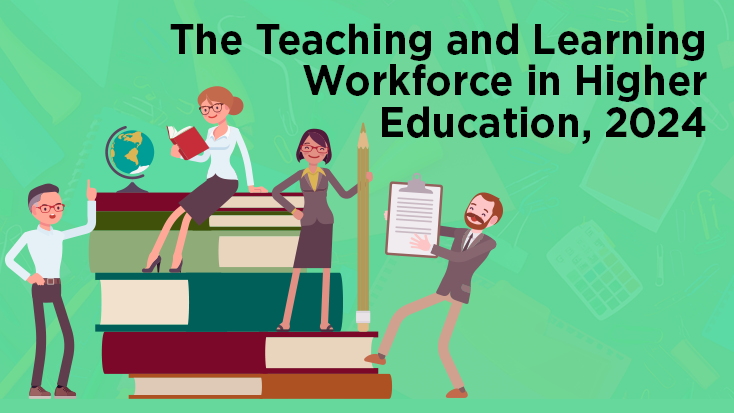
The Teaching and Learning Workforce in Higher Education, 2024 — from library.educause.edu by Nicole Muscanell
Opinion: Higher-Ed Trends to Watch in 2024 — from govtech.com by Jim A. Jorstad
If the recent past is any indication, higher education this year is likely to see financial stress, online learning, a crisis of faith in leadership, emerging tech such as AI and VR, cybersecurity threats, and a desperate need for skilled IT staff.
“We’re in the early stages of creating a new paradigm for personalized assessment and learning; it’s critical for moving the field forward … It’s supporting teachers in the classroom to personalize their teaching by using AI to provide feedback for individual learners and pointing in the direction where students can go.”
PROOF POINTS: Most college kids are taking at least one class online, even long after campuses reopened — from hechingerreport.org by Jill Barshay
Shift to online classes and degrees is a response to declining enrollment
The pandemic not only disrupted education temporarily; it also triggered permanent changes. One that is quietly taking place at colleges and universities is a major, expedited shift to online learning. Even after campuses reopened and the health threat diminished, colleges and universities continued to offer more online courses and added more online degrees and programs. Some brick-and-mortar schools even switched to online only.
College Affordability Helped Drive Rise in State Support for Higher Ed — from chronicle.com by Sonel Cutler
State support for higher education saw a significant jump this year, rising more than 10 percent from 2023 — even though the share of that money provided by the federal government dropped 50 percent.
That’s according to the annual Grapevine report released Thursday by the State Higher Education Executive Officers Association, or SHEEO. The data reflect a continued upward trajectory for state investment in higher education, with a 36.5-percent increase in support nationally over the last five years, not adjusted for inflation.
On 02/05/2024,
in 21st century, 24x7x365 access, Access to Justice (A2J), law schools, Legal operations, legal reform, legal technologies, legislatures / government / legal, productivity / tips and tricks, society, sociology, UK, United States,
by Daniel Christian
From DSC:
How does this sentence hit you? I read it in a fictional book recently and it gave me pause.
…we don’t have a justice system in this country. We have a legal system.
Innovative New Project Launches to Increase Access to Justice for the Overlooked Middle Class — from iaals.du.edu by Kelsey Montague
An important addition to the national access to justice landscape, the Above the Line Network (ATLN) has launched today to tackle the daunting challenges that middle-class Americans face when seeking legal help that doesn’t break the bank. While most organized access to justice efforts rightly focus on low-income and poor people who are especially vulnerable, we can never achieve our nation’s ideal of equal justice for all when middle-class people—who make up more than 50% of the nation’s population— and small businesses struggle to find quality, affordable legal services. They are “above the line” of income eligibility for the free legal aid reserved for the poorest Americans, but they also struggle to find quality and affordable legal services in the current legal market.
Top legal tech trends for businesses to watch in 2024 — from verdict.co.uk by
- Data protection: a new regulator, more reforms and continued enforcement
- Online reforms and increased regulation
2024 in-house legal outlook series: GCs, CLOs ready for hard decisions — from legaldive.com by Lyle Moran and Robert Freedman
Legal leaders look at practical generative AI use cases and get tough on outside counsel spend, among other priorities this year.
General counsel and chief legal officers will do more work in-house with the help of tech investments, especially as more legal tech companies add generative AI and other types of artificial intelligence capabilities to the tools they offer in-house teams. At the same time, legal leaders will be exploring ways to reduce outside counsel costs, in part by giving work to smaller firms and reserving the most complex work for the largest firms.
Politico Launches AI-generated Bill Summaries Available to Politico Pro Subscribers — from politico.com by Melissa Cooke; via The Neuron
ARLINGTON, Va. – POLITICO, today announced the launch of a new, innovative feature allowing POLITICO Pro users to quickly review an AI-generated summary of Federal bills, rapidly accessing critical legislative context while benefiting from the in-depth analysis and insights that subscribers rely upon. POLITICO Pro is the leading subscription policy intelligence platform.
Legaltech is revolutionizing the way lawyers work — from verdict.co.uk by
Legaltech focuses on increasing work efficiency by addressing important but low-value or high-volume work to provide more time for lawyers to work on tasks requiring a higher skill set.
For example, in February 2023, Allen & Overy launched its generative AI platform, integrating Harvey (based on GPT-4 technology by OpenAI), into its global practice to help its lawyers with drafting legal documentation. In December 2023, Allen & Overy also created an AI contract negotiation tool, ContractMatrix, in partnership with Harvey. The firm estimates that the tool saves around seven hours when negotiating a contract. When discussing these innovations, David Wakeling, Head of the Markets Innovation Group at Allen & Overy explained that the firm’s goal was to “disrupt the legal market before someone disrupts us.”
On 02/05/2024,
in career development, K-12 related, learning, Learning Experience Design, neurodivergent/special needs, parents/guardians, real-world assignments, skills, society, student-related, vision/possibilities, vocational / trades,
by Daniel Christian
Vocational training programs for special education students teach work, life skills — from edsource.org by Lasherica Thornton
Programs also foster acceptance in the community
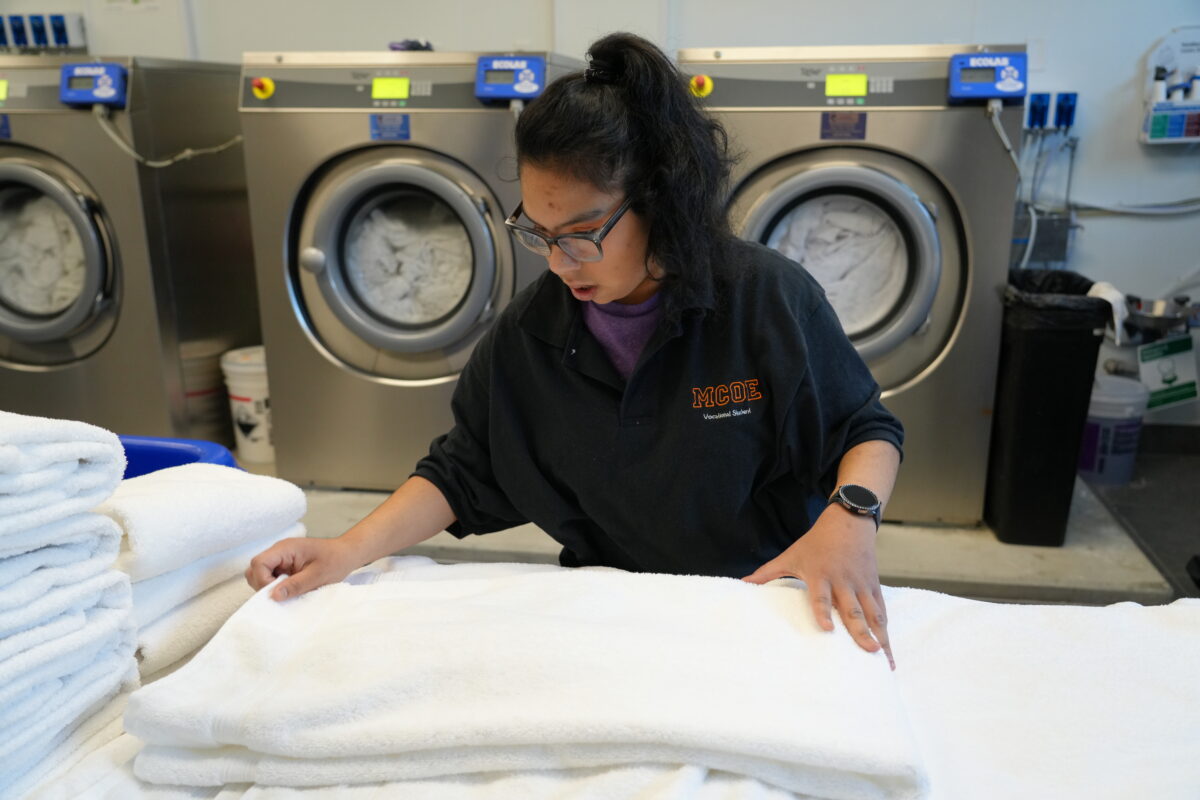
Through hands-on experience at the hotel, students gain skills to work in the housekeeping and hospitality industry – whether at El Capitan or elsewhere – after they graduate. And they develop life skills for adulthood.
…
This is not the case with Merced County’s program which, instead, integrates students into the housekeeping career, making it one of a few in California and across the nation to do so. The program now serves as a model for other districts aspiring to integrate students with disabilities into careers and society.
Fong said the year-long program is critical for the students “to be in the actual field,” get on-the-job training and be able to model employees’ behavior, which in turn provides them with real world experience while allowing them to interact with others.
From DSC:
This hits home for my family and me. We are entering a phase of our youngest daughter’s life where we need to help her build life skills. This type of program is excellent — highly relevant to many families out there.
On 02/05/2024,
in A/V -- audio/visual, collaboration, colleges, communications, community colleges, education technology, engagement / engaging students, experimentation, faculty/staff, future, future of higher education, game-changing environment, global / globalization, higher education, ideas, innovation, learning ecosystem, Learning from the Living [Class] Room, platforms, UK, United States, vendors, vision/possibilities, web-based collaboration,
by Daniel Christian
Hologram lecturers thrill students at trailblazing UK university — from theguardian.com by Rachel Hall
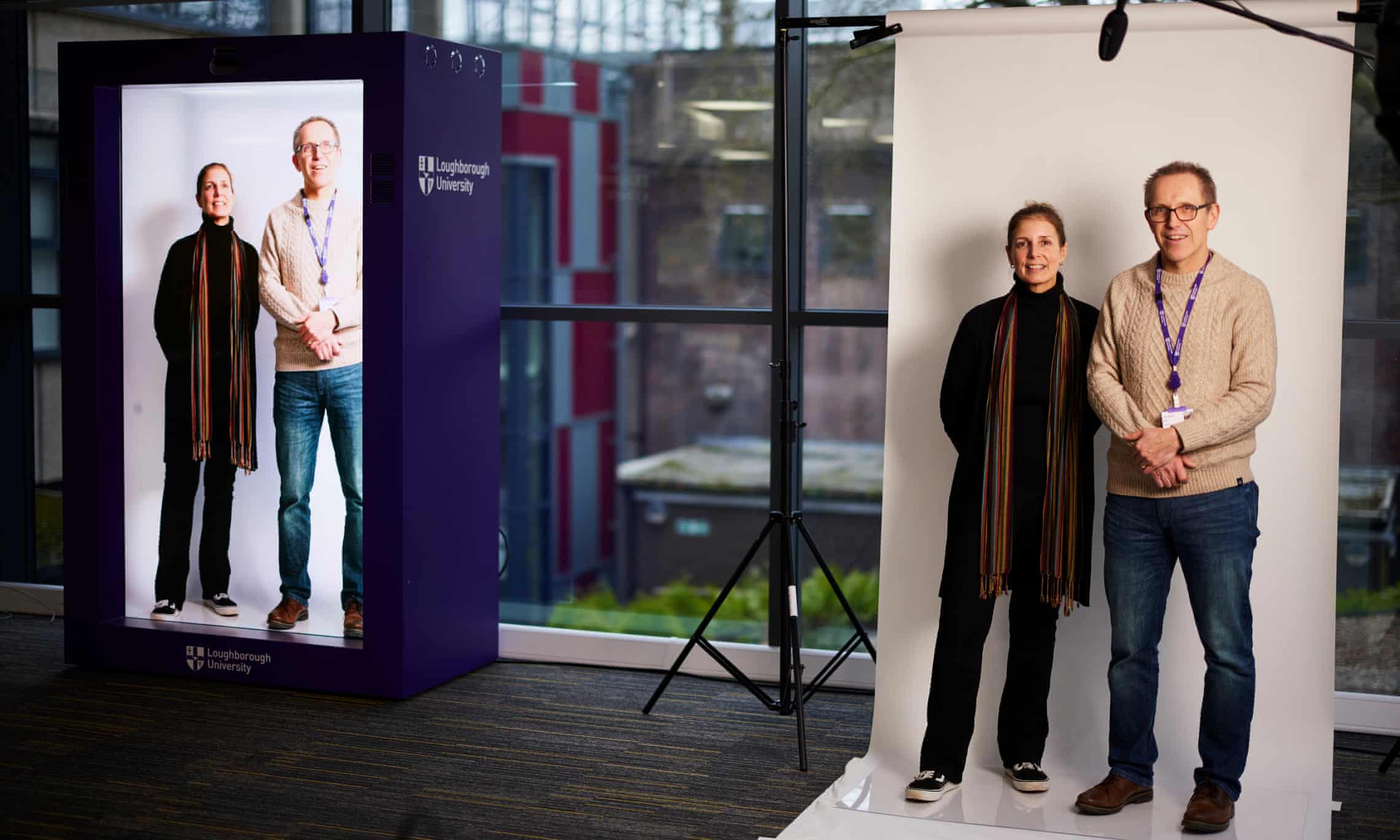
Any university lecturer will tell you that luring students to a morning lecture is an uphill struggle. But even the most hungover fresher would surely be enticed by a physics lesson from Albert Einstein or a design masterclass from Coco Chanel.
This could soon be the reality for British students, as some universities start to beam in guest lecturers from around the globe using the same holographic technology that is used to bring dead or retired singers back to the stage.
On 02/05/2024,
in art, change, creativity, engagement / engaging students, experimentation, ideas, K-12 related, leadership, parents/guardians, strategy, student-related, United States, youth,
by Daniel Christian
Denver middle schoolers can get a $1,000 debit card for extracurriculars in new experiment for school success — from coloradosun.com by Jennifer Brown
Middle school students in Denver Public Schools who qualify for free and reduced-price lunch are eligible to apply for debit cards loaded with $1,000 for sports, art and music activities

The offer — $1,000 on a restricted debit card that works at 127 organizations with after-school and summer programs — is called My Spark Denver, an experiment for Denver middle school students that organizers hope could one day expand to other age groups and other parts of the state.
The program is capped at 4,000 kids, and already, more than 1,000 have been approved. It’s first-come, first-served, and the only requirements are that the kids are in a Denver Public Schools middle school and that their family qualifies for free and reduced-price lunch, a measure of poverty.
On 02/05/2024,
in adult learning, Alternatives, career development, change, colleges, community colleges, corporate / business world, corporate universities / corporate training, credentialing, higher education, lifelong learning, United States, universities, vendors,
by Daniel Christian
Employers Partnering to Provide Microcredential and Training Programs on the Rise, New Study From Collegis Education and UPCEA Reveals — from prweb.com by Collegis Education
Opportunities are growing, but higher ed institutions are losing ground to private providers
OAKBROOK, Ill. , Jan. 23, 2024 /PRNewswire-PRWeb/ — Companies partnering externally to provide training or professional development to employees increased by 26 percent (nearly 15 percentage points) between 2022 and 2023, according to a new study released today by Collegis Education and UPCEA, the online and professional education association. In addition, the report, “Unveiling the Employer’s View: An Employer-Centric Approach to Higher Education Partnerships,” revealed that more than 61 percent of companies without external training partnerships are interested in developing them.
In the second year of an ongoing research series, Collegis partnered with UPCEA to survey more than 500 employers to better understand their perceptions of collaborating with higher ed on professional development programs and alternative credentials.
Instructure Completes Acquisition of Parchment, the World’s Largest Academic Credential Management Platform and Network — from prnewswire.com
Expands Instructure’s market-leading teaching and learning ecosystem by providing learners with a lifelong record of their journey
SALT LAKE CITY, Feb. 1, 2024 /PRNewswire/ — Instructure Holdings, Inc. (Instructure) (NYSE: INST), the leading learning ecosystem and maker of Canvas, announced today it has completed the acquisition of Parchment, the world’s largest credential management platform and network. Parchment has over 13,000 customers and has exchanged more than 165 million credentials over two decades. This acquisition is expected to significantly expand Instructure’s existing customer base and unlock exciting new growth opportunities.
“The addition of Parchment to the Instructure ecosystem enables our customers to offer flexible lifelong learning experiences to meet the needs of the ever-growing sector of non-traditional learners,” said Steve Daly, CEO of Instructure. “By providing a verifiable and comprehensive digital passport of achievement records and outcomes for learners, we’ll be able to help our customers navigate skill mastery, transfer credits, provide proof of prior learning, and much more.”
From DSC:
Instructure’s purchase here represents an important piece of our future learning ecosystems— a way to document/prove the learning a person has done throughout their ***lifelong learning*** journey.
The Importance of Credit for Prior Learning — from evolllution.com by Alexa Dunne
Higher ed needs to focus on providing credit for prior learning that properly communicates what learners know to provide them with more opportunities in the workforce.
According to research from the Council for Adult and Experiential Learning (CAEL) and Western Interstate Commission for Higher Education (WICHE)**, students complete their credentials at a substantially higher rate when they are awarded 15 or more credits for prior learning. For institutions, awarding CPL is an easy—and equitable—way of helping students succeed. Do we want a 22-point increase in credential completion? Yes, please!
Addendum on 2/9/24:
Lego my Metaphor — from onedtech.philhillaa.com by Glenda Morgan
The problem with how we think about stackability of microcredentials=
A key aspect of microcredentials promise is that they are small and have fewer barriers to entry in terms of time and cost than for degrees. But given that microcredentials are small, they can only take a learner so far. This is where stackability comes in. By stacking these microcredentials (i.e., adding multiple credentials, each building on the other) they can be combined to make a more meaningful overall set of qualifications or to create an entryway into a new career. Microcredential stackability is a key assumption underlying many higher education institutions microcredential efforts, as well as a central thread in how they are speaking about and marketing the microcredentials.
In the coming months I want to explore more about microcredentials, as I think they are going to be a key part of higher education in the future. Right now, in higher education I see a lot of talk about microcredentials but less execution and less success than most people would like. Microcredentials are difficult to get right, but we need to start by talking about them in the right way.
On 01/21/2024,
in blogs / blogging / vlogging, Daniel S. Christian,
by Daniel Christian

Heads-up: I won’t be posting on this Learning Ecosystems blog until after 2/3/24. Thanks and have a good one all!
Peace be with you and with yours,
Daniel