…that doesn’t mean everyone is having an easy time of it. Some Americans feel increasingly pressured by the surge in the cost of carrying their debt. Delinquency rates on their credit card debt and auto loans are now at the highest in more than a decade.

Just a serious note of caution for you and for your future families. 


And speaking of youth and personal finances — and seeing as it’s tax time — also see:

Topic no. 501, Should I itemize?

Deductions reduce the amount of your taxable income. In general, individuals not in a trade or business or an activity for profit, may take a standard deduction or itemize their deductions.

You should itemize deductions on Schedule A (Form 1040), Itemized Deductions if the total amount of your allowable itemized deductions is greater than your standard deduction or if you must itemize deductions because you can’t use the standard deduction. You may also want to itemize deductions if your standard deduction is limited because another taxpayer claims you as a dependent. Itemized deductions, subject to certain dollar limitations, include amounts you paid, during the taxable year, for state and local income or sales taxes, real property taxes, personal property taxes, mortgage interest, disaster losses, gifts to charities, and part of the amount you paid for medical and dental expenses.


Implementing a workplace microlearning strategy — from chieflearningofficer.com by Jared B. Andres

Outside of practicing their learning, there are many challenges to creating and delivering meaningful workplace L&D programs. Participants are busy and may struggle to free up even an hour or two on their calendars. Training could be delivered in the wrong format or at the wrong time. After they attend the training, they may not have an opportunity to apply what they have learned. This can lead to some participants not perceiving training as time well spent. As L&D professionals, our job is to create learning experiences that are meaningful and relevant to people’s day-to-day work.

Adults learn best when training is delivered when it is most relevant to their work, and they can apply what they have learned right away. They must be able to connect what they are learning with the work they are doing and the overarching goals and strategies of the organization.

One possible solution is to implement a microlearning strategy into workplace learning programs. In this article, I will discuss reasons why microlearning can be an effective tool in the L&D toolkit, things to think about when creating a microlearning strategy, cost-effective technology solutions to leverage and ideas to help your microlearning strategy feel exciting and engaging for your participants.


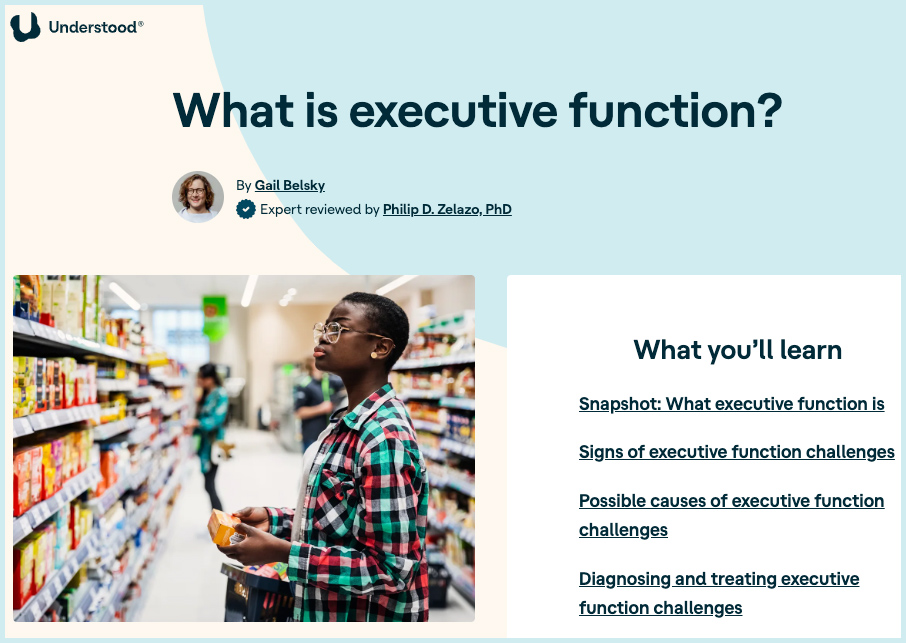
What is executive function?

What is executive function? — from understood.org by Gail Belsky

Executive function is a set of mental skills that include working memory, flexible thinking, and self-control. We use these skills every day to learn, work, and manage daily life. Trouble with executive function can make it hard to focus, follow directions, and handle emotions, among other things.

Snapshot: What executive function is
Some people describe executive function as “the management system of the brain.” That’s because the skills involved let us set goals, plan, and get things done. When people struggle with executive function, it impacts them at home, in school, and in life.

There are three main areas of executive function. They are…


Doubts About Value Are Deterring College Enrollment — from insidehighered.com by Jessica Blake
Survey data suggests that prospective learners are being dissuaded from college by skepticism about whether degrees are worth the time and money.

Enrollment has been declining in higher education for more than a decade, and the most common explanations in recent years have been lingering effects of the pandemic and a looming demographic cliff expected to shrink the number of traditional-age college students. But new research suggests that public doubts about the value of a college degree are a key contributor.

The study—conducted by Edge Research, a marketing research firm, and HCM Strategists, a public policy and advocacy consulting firm with funding from the Bill & Melinda Gates Foundation—uses focus groups and parallel national surveys of current high school students and of adults who decided to leave college or who didn’t go at all to link the value proposition of a college degree and Americans’ behaviors after high school.

“At the end of the day, higher education has a lot of work to do to convince these audiences of its value,” said Terrell Dunn, an HCM consultant.


‘A Condemnation’: Under Mental Health Strains, Students Weigh Quitting College — from edsurge.com by Daniel Mollenkamp

When college students think about quitting, it’s most likely because of mental health strain or stress.

That’s according to the recent data from the “State of Higher Education Study,” conducted by the analytics company Gallup and the private foundation Lumina.


Edtech Unicorns Are Evolving Rather Than Disrupting — from bloomberg.com by Alex Webb

Consider Coursera Inc., the most prominent survivor of that early edtech hype. It’s now a public company, with a hefty $2.3 billion valuation. Finally, 12 years after it was founded — by, incidentally, another Google veteran in Andrew Ng — it’s set to report its first profit this year, according to analyst estimates. And the enterprise business is considerably more profitable, enjoying a 68% gross margin in 2023, compared to the consumer business’s 53% margin.

Figuring out the right match between training and utility is how several business schools seem to have developed successful online courses — which they are charging top dollar for. They’re in close contact with the sort of large corporations who hire their graduates, giving them a more intimate understanding of what those businesses seek.

Harvard Business School is one example. It made $74 million from online courses in fiscal 2022, the most recent year for which data is available


From DSC:
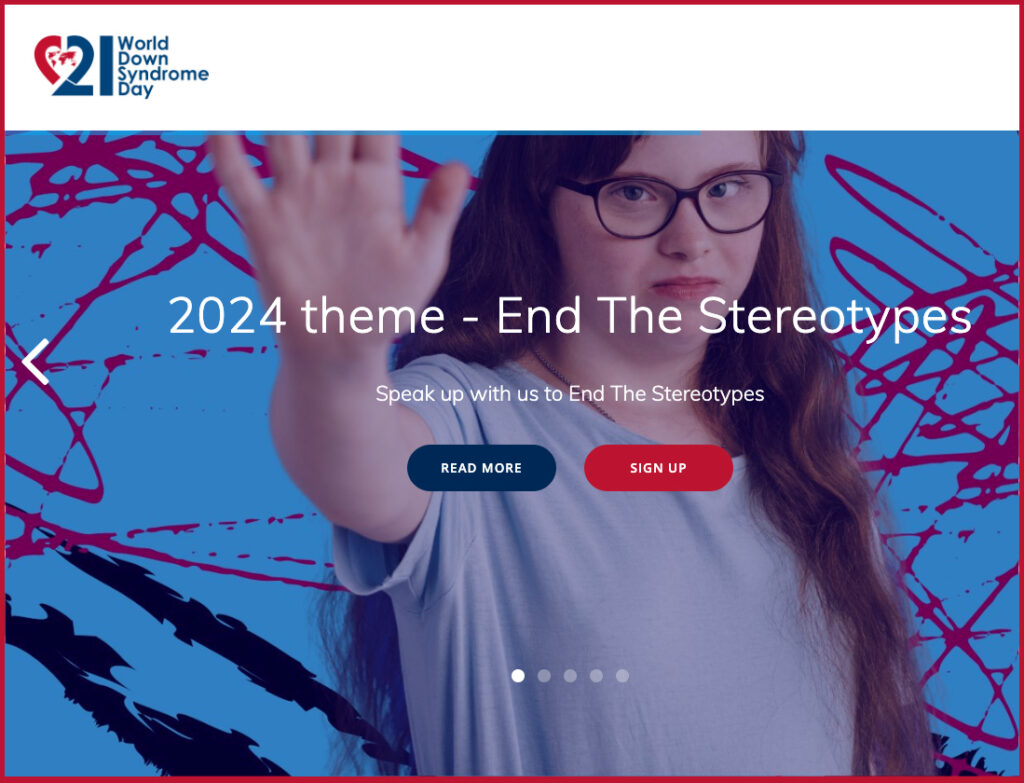
Let’s celebrate World Down Syndrome Day on March 21st! The theme is “End The Stereotypes.”

And for me, there is no “normal” anymore. That’s a word that has increasingly been pushed out of my vocabulary. I don’t believe in it anymore.

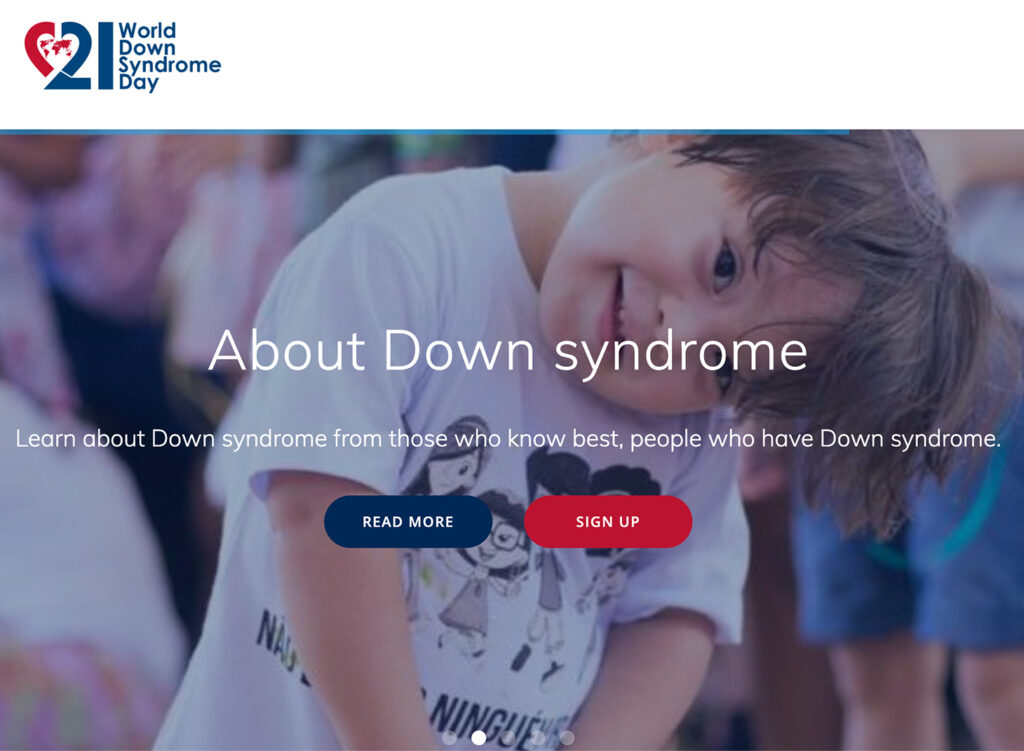
Along these lines, here’s one of the quotes from the website:

Some people think that people with Down syndrome can’t live ‘normal’ lives. That’s wrong! And what is ‘normal’ anyway?

My life is similar to lots of my family and friends. I went to my local school, I’m involved in a local orchestra and the scouts. I am training to be a teaching assistant.

All of this for me is ‘normal’, just like everyone else.
.

World Down Syndrome Day for 2024 -- with the theme being End The Stereotypes


Also see:

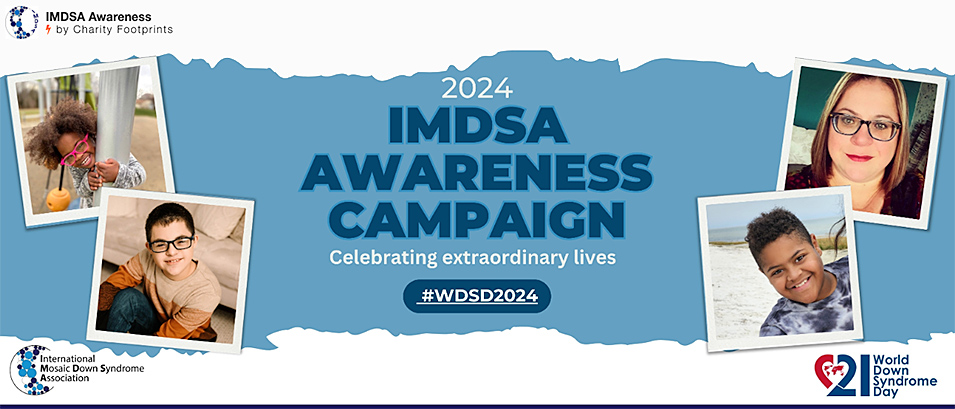
Let’s Celebrate World Down Syndrome Day 2024 on March 21st!!! — from charityfootprints.com

Let's Celebrate World Down Syndrome Day 2024 on March 21st!


Also see:

Mosaic Down Syndrome


Also see:

Cognition Labs Blob


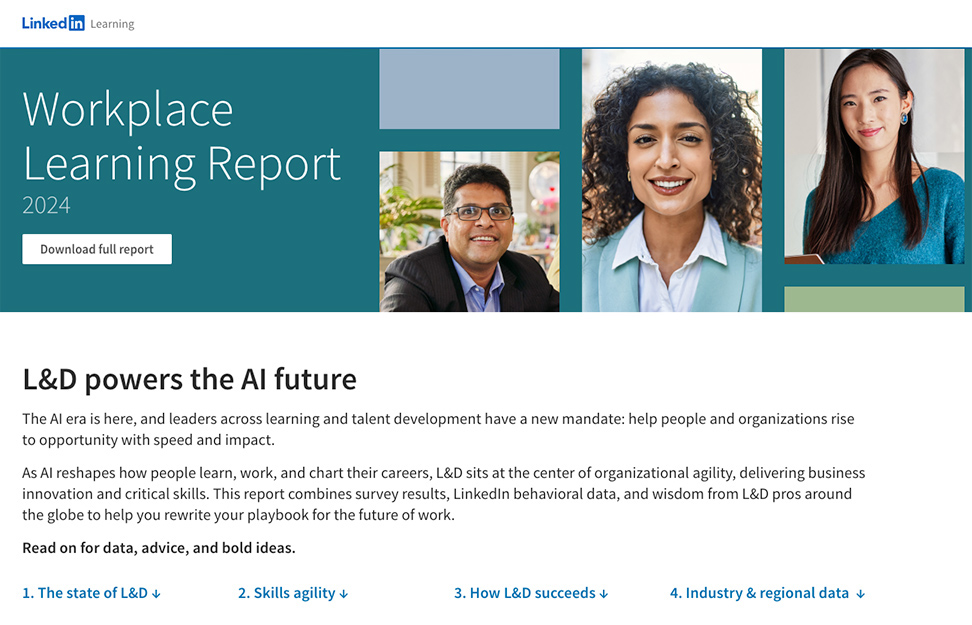
LinkedIn Learning: Workplace Learning Report 2024 — learning.linkedin.com

L&D powers the AI future

The AI era is here, and leaders across learning and talent development have a new mandate: help people and organizations rise to opportunity with speed and impact. 

As AI reshapes how people learn, work, and chart their careers, L&D sits at the center of organizational agility, delivering business innovation and critical skills. This report combines survey results, LinkedIn behavioral data, and wisdom from L&D pros around the globe to help you rewrite your playbook for the future of work. 


A View into the Generative AI Legal Landscape 2024 — from law.stanford.edu by Megan Ma, Aparna Sinha,  Ankit Tandon, & Jennifer Richards

Excerpt (emphasis DSC):

Some key observations and highlights:

  1. Emerging technical solutions are addressing the main challenges of using Generative AI in legal applications, such as lack of consistency and accuracy, limited explainability, privacy concerns, and difficulty in obtaining and training models on legal domain data.
  2. Structural impediments in the legal industry, such as the billable hour, lack of standardization, vendor dependence, and incumbent control, moderate the success of generative AI startups.
  3. Our defined “client-facing” LegalTech market is segmented into three broad lines of work: Research and Analysis, Document Review and Drafting, and Litigation. We view the total LegalTech market in the United States to be estimated at ~$13B in 2023, with litigation being the largest category.
  4. LegalTech incumbents play a significant role in the adoption of generative AI technologies, often opting for market consolidation through partnerships or acquisitions rather than building solutions organically.
  5. Future evolution in LegalTech may involve specialization in areas such as patent and IP, immigration, insurance, and regulatory compliance. There is also potential for productivity tools and access to legal services, although the latter faces structural challenges related to the Unauthorized Practice of Law (UPL).

Fresh Voices on Legal Tech with Tessa Manuello — from legaltalknetwork.com by Dennis Kennedy and Tom Mighell

EPISODE NOTES
Creative thinking and design elements can help you elevate your legal practice and develop more meaningful solutions for clients. Dennis and Tom welcome Tessa Manuello to discuss her insights on legal technology with a particular focus on creative design adaptations for lawyers. Tessa discusses the tech learning process for attorneys and explains how a more creative approach for both learning and implementing tech can help lawyers make better use of current tools, AI included.


International Women’s Day: Kriti Sharma Calls for More Women Working in AI, LegalTech — from legalcurrent.com

In honor of International Women’s Day, Sharma discusses on LinkedIn the need for more female role models in the tech sector as AI opens up traditional career pathways and creates opportunities to welcome more women to the space.

Sharma invited Thomson Reuters female leaders working in legal technology to share their perspectives, including Rawia Ashraf, Emily Colbert, and Anu Dodda.


Amid explosive demand, America is running out of power — from washingtonpost.com by Evan Halper
AI and the boom in clean-tech manufacturing are pushing America’s power grid to the brink. Utilities can’t keep up.

Vast swaths of the United States are at risk of running short of power as electricity-hungry data centers and clean-technology factories proliferate around the country, leaving utilities and regulators grasping for credible plans to expand the nation’s creaking power grid.

A major factor behind the skyrocketing demand is the rapid innovation in artificial intelligence, which is driving the construction of large warehouses of computing infrastructure that require exponentially more power than traditional data centers. AI is also part of a huge scale-up of cloud computing. Tech firms like Amazon, Apple, Google, Meta and Microsoft are scouring the nation for sites for new data centers, and many lesser-known firms are also on the hunt.


The Obscene Energy Demands of A.I. — from newyorker.com by Elizabeth Kolbert
How can the world reach net zero if it keeps inventing new ways to consume energy?

“There’s a fundamental mismatch between this technology and environmental sustainability,” de Vries said. Recently, the world’s most prominent A.I. cheerleader, Sam Altman, the C.E.O. of OpenAI, voiced similar concerns, albeit with a different spin. “I think we still don’t appreciate the energy needs of this technology,” Altman said at a public appearance in Davos. He didn’t see how these needs could be met, he went on, “without a breakthrough.” He added, “We need fusion or we need, like, radically cheaper solar plus storage, or something, at massive scale—like, a scale that no one is really planning for.”


A generative AI reset: Rewiring to turn potential into value in 2024 — from mckinsey.com by Eric Lamarre, Alex Singla, Alexander Sukharevsky, and Rodney Zemmel; via Philippa Hardman
The generative AI payoff may only come when companies do deeper organizational surgery on their business.

  • Figure out where gen AI copilots can give you a real competitive advantage
  • Upskill the talent you have but be clear about the gen-AI-specific skills you need
  • Form a centralized team to establish standards that enable responsible scaling
  • Set up the technology architecture to scale
  • Ensure data quality and focus on unstructured data to fuel your models
  • Build trust and reusability to drive adoption and scale

AI Prompt Engineering Is Dead Long live AI prompt engineering — from spectrum.ieee.org

Since ChatGPT dropped in the fall of 2022, everyone and their donkey has tried their hand at prompt engineering—finding a clever way to phrase your query to a large language model (LLM) or AI art or video generator to get the best results or sidestep protections. The Internet is replete with prompt-engineering guides, cheat sheets, and advice threads to help you get the most out of an LLM.

However, new research suggests that prompt engineering is best done by the model itself, and not by a human engineer. This has cast doubt on prompt engineering’s future—and increased suspicions that a fair portion of prompt-engineering jobs may be a passing fad, at least as the field is currently imagined.


What the birth of the spreadsheet teaches us about generative AI — from timharford.com by Tim Harford; via Sam DeBrule

There is one very clear parallel between the digital spreadsheet and generative AI: both are computer apps that collapse time. A task that might have taken hours or days can suddenly be completed in seconds. So accept for a moment the premise that the digital spreadsheet has something to teach us about generative AI. What lessons should we absorb?

It’s that pace of change that gives me pause. Ethan Mollick, author of the forthcoming book Co-Intelligence, tells me “if progress on generative AI stops now, the spreadsheet is not a bad analogy”. We’d get some dramatic shifts in the workplace, a technology that broadly empowers workers and creates good new jobs, and everything would be fine. But is it going to stop any time soon? Mollick doubts that, and so do I.


A Notre Dame Senior’s Perspective on AI in the Classroom — from learning.nd.edu — by Sarah Ochocki; via Derek Bruff on LinkedIn

At this moment, as a college student trying to navigate the messy, fast-developing, and varied world of generative AI, I feel more confused than ever. I think most of us can share that feeling. There’s no roadmap on how to use AI in education, and there aren’t the typical years of proof to show something works. However, this promising new tool is sitting in front of us, and we would be foolish to not use it or talk about it.

I’ve used it to help me understand sample code I was viewing, rather than mindlessly trying to copy what I was trying to learn from. I’ve also used it to help prepare for a debate, practicing making counterarguments to the points it came up with.

AI alone cannot teach something; there needs to be critical interaction with the responses we are given. However, this is something that is true of any form of education. I could sit in a lecture for hours a week, but if I don’t do the homework or critically engage with the material, I don’t expect to learn anything.


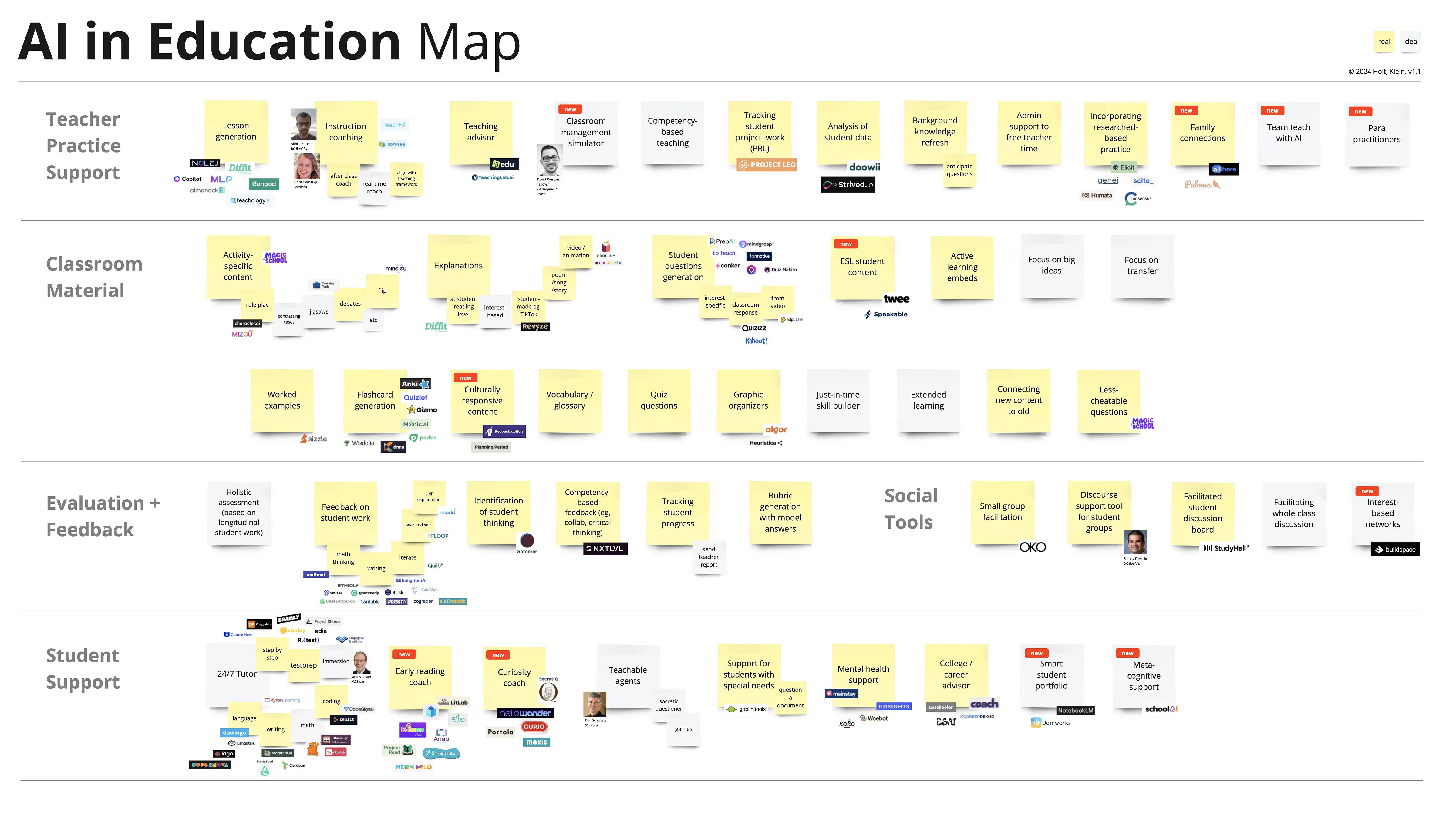
A Map of Generative AI for Education — from medium.com by Laurence Holt; via GSV
An update to our map of the current state-of-the-art


Last ones (for now):


Survey: K-12 Students Want More Guidance on Using AI — from govtech.com by Lauraine Langreo
Research from the nonprofit National 4-H Council found that most 9- to 17-year-olds have an idea of what AI is and what it can do, but most would like help from adults in learning how to use different AI tools.

“Preparing young people for the workforce of the future means ensuring that they have a solid understanding of these new technologies that are reshaping our world,” Jill Bramble, the president and CEO of the National 4-H Council, said in a press release.

AI School Guidance Document Toolkit, with Free Comprehensive Review — from tefanbauschard.substack.com by Stefan Bauschard and Dr. Sabba Quidwai


This week in 5 numbers: Another faith-based college plans to close — from by Natalie Schwartz
We’re rounding up some of our top recent stories, from Notre Dame College’s planned closure to Valparaiso’s potential academic cuts.

BY THE NUMBERS

  • 1,444
    The number of students who were enrolled at Notre Dame College in fall 2022, down 37% from 2014. The Roman Catholic college recently said it would close after the spring term, citing declining enrollment, along with rising costs and significant debt.
  • 28
    The number of academic programs that Valparaiso University may eliminate. Eric Johnson, the Indiana institution’s provost, said it offers too many majors, minors and graduate degrees in relation to its enrollment.

A couple of other items re: higher education that caught my eye were:

Universities Expect to Use More Tech in Future Classrooms—but Don’t Know How — from insidehighered.com by Lauren Coffey

University administrators see the need to implement education technology in their classrooms but are at a loss regarding how to do so, according to a new report.

The College Innovation Network released its first CIN Administrator EdTech survey today, which revealed that more than half (53 percent) of the 214 administrators surveyed do not feel extremely confident in choosing effective ed-tech products for their institutions.

“While administrators are excited about offering new ed-tech tools, they are lacking knowledge and data to help them make informed decisions that benefit students and faculty,” Omid Fotuhi, director of learning and innovation at WGU Labs, which funds the network, said in a statement.

From DSC:
I always appreciated our cross-disciplinary team at Calvin (then College). As we looked at enhancing our learning spaces, we had input from the Teaching & Learning Group, IT, A/V, the academic side of the house, and facilities. It was definitely a team-based approach. (As I think about it, it would have been helpful to have more channels for student feedback as well.)


Per Jeff Selingo:

Optionality. In my keynote, I pointed out that the academic calendar and credit hour in higher ed are like “shelf space” on the old television schedule that has been upended by streaming. In much the same way, we need similar optionality to meet the challenges of higher ed right now: in how students access learning (in-person, hybrid, online) to credentials (certificates, degrees) to how those experiences stack together for lifelong learning.

Culture in institutions. The common thread throughout the conference was how the culture of institutions (both universities and governments) need to change so our structures and practices can evolve. Too many people in higher ed right now are employing a scarcity mindset and seeing every change as a zero-sum game. If you’re not happy about the present, as many attendees suggested you’re not going to be excited about the future.


Guiding Students in Special Education to Generate Ideas for Writing — from edutopia.org by Erin Houghton
When students are stuck, breaking the brainstorming stage down into separate steps can help them get started writing.

Students who first generate ideas about a topic—access what they know about it—more easily write their outlines and drafts for the bigger-picture assignment. For Sally, brainstorming was too overwhelming as an initial step, so we started off by naming examples. I gave Sally a topic—name ways characters in Charlotte’s Web helped one another—she named examples of things (characters), and we generated a list of ways those characters helped one another.

IMPLEMENTING BRAINSTORMING AS SKILL BUILDING
This “naming” strategy is easy to implement with individual students or in groups. These are steps to get you started.

Step 1. Introduce the student to the exercise.
Step 2. Select a topic for practice.


[Opinion] It’s okay to play: How ‘play theory’ can revitalize U.S. education — from hechingerreport.org by Tyler Samstag
City planners are recognizing that play and learning are intertwined and turning public spaces into opportunities for active learning

When we’re young, playing and learning are inseparable.

Simple games like peekaboo and hide-and-seek help us learn crucial lessons about time, anticipation and cause and effect. We discover words, numbers, colors and sounds through toys, puzzles, storybooks and cartoons. Everywhere we turn, there’s something fun to do and something new to learn.

Then, somewhere around early elementary school, learning and play officially become separated for life.

Suddenly, learning becomes a task that only takes place in proper classrooms with the help of textbooks, homework and tests. Meanwhile, play becomes a distraction that we’re only allowed to indulge in during our free time, often by earning it as a reward for studying. As a result, students tend to grow up feeling as if learning is a stressful chore while playing is a reward.

Similar interactive learning experiences are popping up in urban areas from California to the East Coast, with equally promising results: art, games and music are being incorporated into green spaces, public parks, transportation stations, laundromats and more.


And on a somewhat related note, also see:


Though meant for higher ed, this is also applicable to the area of pedagogy within K12:

Space to fail. And learn — from educationalist.substack.com by Alexandra Mihai
I want to use today’s newsletter to talk about how we can help students to own their mistakes and really learn from them, so I’m sharing some thoughts, some learning design ideas and some resources…

10 ideas to make failure a learning opportunity

  • Start with yourself:
  • Admit when you don’t know something
  • Try to come up with “goal free problems”
  • Always dig deeper:
  • Encourage practice:
 

Some very fun art and creativity for you!

Aurélie Hoegy’s Surging Rattan Forms Oscillate Between Interior Design and Sculpture — from thisiscolossal.com by Jackie Andres and  Aurélie Hoegy


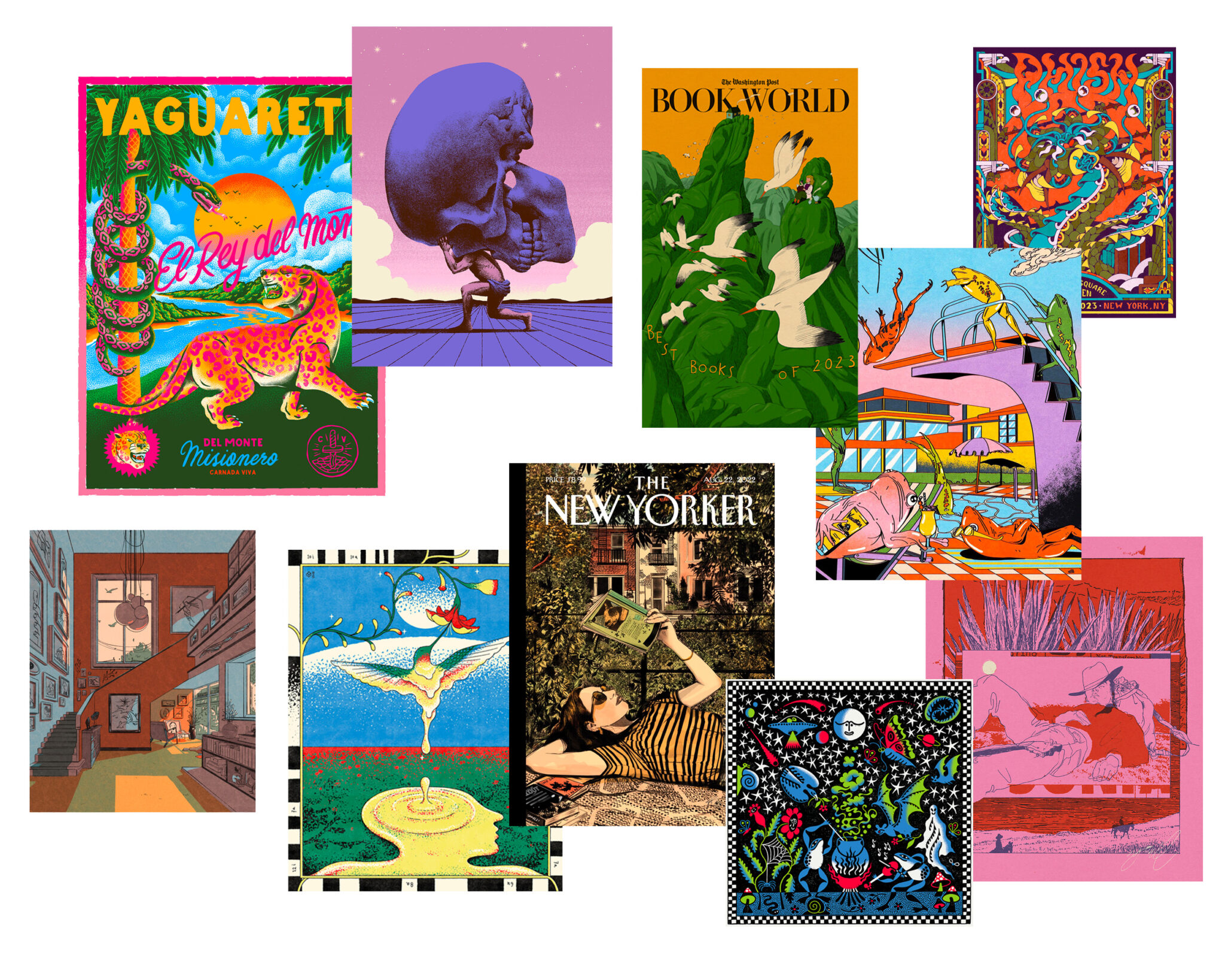
10 of Our Fav Illustrators Using True Grit Texture Supply — from booooooom.com


Nursing Career Guide for People With Disabilities — from nursingeducation.org by Abby McCoy, RN, BSN; with thanks to Sarah Breckon for this resource

As Sarah mentioned to me, this article includes a comparison of some of the benefits and challenges of a nursing career, tips on choosing an accessible nursing school, and examines different nursing career paths, their demands, and accommodations available. It also includes practical advice on job interviews, disclosing disabilities to employers, and understanding legal protections.

The need for caring and skilled nurses is higher than ever. For people with disabilities, getting into nursing might seem like a tough road with a lot of unknowns. Luckily, it isn’t just doable, people with different abilities can find the career extremely fulfilling. Plenty of opportunities and resources exist for those who want to make a mark in healthcare, no matter the challenges they might face.

 
© 2025 | Daniel Christian