When Heads Butt — from kathleendelaski.substack.com by Kathlee deLaski
An actual debate at LinkedIn Headquarters on the value of the college degree

Coincidentally published the same day, our books do take opposing views in parts. Scott is very strong on the value of the traditional degree, but wants to help students see beyond “the major,” telling them not to rely on what essentially amounts to a minority of the courses you’ll take in college to find your path to passion and employment. He urges them to find a “field of study,” to build in a broader range of self-directed experiences and classes to find your purpose and profession. (I love this and recommend his book.)

WhiIe I don’t recommend against college, “Who Needs College Anymore?” points to the growing number of employers and colleges that are offering skills-based career paths, that can be achieved with shorter term programs…that can be a stepladder to a degree, but don’t leave you credential-less if life gets in the way. I call on colleges to embrace all the market share they are leaving on the table, the 60% plus of Americans who are not getting a four-year degree, and to consider providing more modular professional pathway opportunities in addition to degrees.


Also re: higher education, see:

After years of quietly falling, college tuition is on the rise again — from hechingerreport.org
As colleges also pare back services, many students are paying more and getting less

Students nationwide are facing increases in tuition this fall of as high as 10 percent, along with new fees and rising costs for dorms and dining. And as in Pennsylvania, it’s an abrupt change from a period during which something happened that most Americans probably didn’t notice: Tuition had actually been falling, when adjusted for inflation, after decades of outpacing the cost of almost everything else.

That’s among the conclusions of The Hechinger Report’s update of its Tuition Tracker tool, which shows what students pay to go to individual colleges and universities based on their families’ incomes.

Considering the growing skepticism that college is “the magic ticket to the American dream,” said Gillen, raising tuition, for many higher education institutions, “definitely has the potential to be penny-wise and pound-foolish.” 

But universities and colleges are confronting unprecedented problems on the funding side. 


The State of AI Report 2025 — from nathanbenaich.substack.com by Nathan Benaich

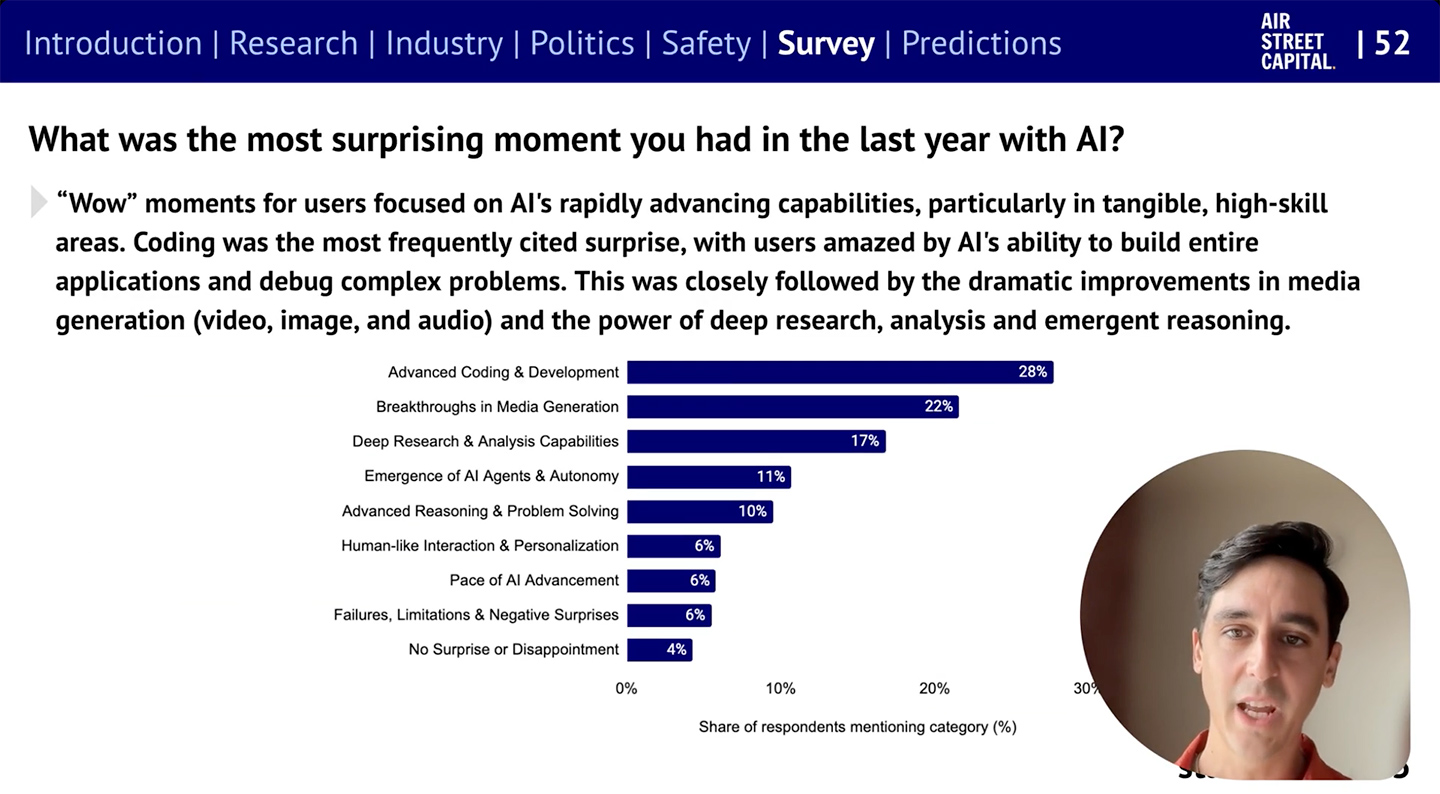
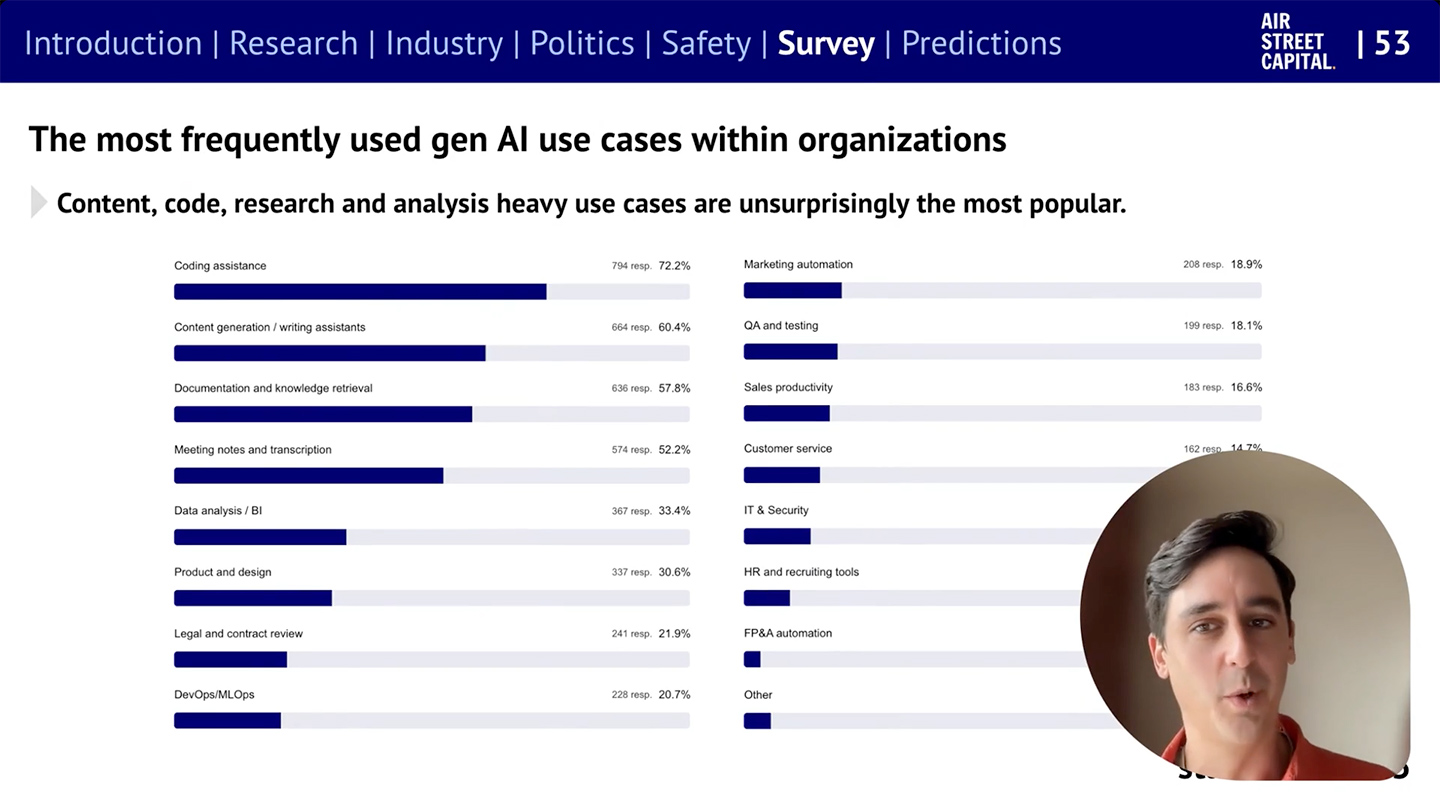
In short, it’s been a monumental 12 months for AI. Our eighth annual report is the most comprehensive it’s ever been, covering what you need to know about research, industry, politics, and safety – along with our first State of AI Usage Survey of 1,200 practitioners.

stateof.ai
.


10 Tips from Smart Teaching Stronger Learning — from Pooja K. Agarwal, Ph.D.

Per Dr. Pooja Agarwal:

Combining two strategies—spacing and retrieval practice—is key to success in learning, says Shana Carpenter.


On a somewhat related note (i.e., for Instructional Designers, teachers, faculty members, T&L staff members), also see:


“A new L&D operating system for the AI Era?” [Hardman] + other items re: AI in our learning ecosystems

From 70/20/10 to 90/10 — from drphilippahardman.substack.com by Dr Philippa Hardman
A new L&D operating system for the AI Era?

This week I want to share a hypothesis I’m increasingly convinced of: that we are entering an age of the 90/10 model of L&D.

90/10 is a model where roughly 90% of “training” is delivered by AI coaches as daily performance support, and 10% of training is dedicated to developing complex and critical skills via high-touch, human-led learning experiences.

Proponents of 90/10 argue that the model isn’t about learning less, but about learning smarter by defining all jobs to be done as one of the following:

  • Delegate (the dead skills): Tasks that can be offloaded to AI.
  • Co-Create (the 90%): Tasks which well-defined AI agents can augment and help humans to perform optimally.
  • Facilitate (the 10%): Tasks which require high-touch, human-led learning to develop.

So if AI at work is now both real and material, the natural question for L&D is: how do we design for it? The short answer is to stop treating learning as an event and start treating it as a system.


My daughter’s generation expects to learn with AI, not pretend it doesn’t exist, because they know employers expect AI fluency and because AI will be ever-present in their adult lives.

— Jenny Maxell

The above quote was taken from this posting.


Unlocking Young Minds: How Gamified AI Learning Tools Inspire Fun, Personalized, and Powerful Education for Children in 2025 — from techgenyz.com by Sreyashi Bhattacharya

Table of Contents

Highlight

  • Gamified AI Learning Tools personalize education by adapting the difficulty and content to each child’s pace, fostering confidence and mastery.
  • Engaging & Fun: Gamified elements like quests, badges, and stories keep children motivated and enthusiastic.
  • Safe & Inclusive: Attention to equity, privacy, and cultural context ensures responsible and accessible learning.

How to test GenAI’s impact on learning — from timeshighereducation.com by Thibault Schrepel
Rather than speculate on GenAI’s promise or peril, Thibault Schrepel suggests simple teaching experiments to uncover its actual effects

Generative AI in higher education is a source of both fear and hype. Some predict the end of memory, others a revolution in personalised learning. My two-year classroom experiment points to a more modest reality: Artificial intelligence (AI) changes some skills, leaves others untouched and forces us to rethink the balance.

This indicates that the way forward is to test, not speculate. My results may not match yours, and that is precisely the point. Here are simple activities any teacher can use to see what AI really does in their own classroom.

4. Turn AI into a Socratic partner
Instead of being the sole interrogator, let AI play the role of tutor, client or judge. Have students use AI to question them, simulate cross-examination or push back on weak arguments. New “study modes” now built into several foundation models make this kind of tutoring easy to set up. Professors with more technical skills can go further, design their own GPTs or fine-tuned models trained on course content and let students interact directly with them. The point is the practice it creates. Students learn that questioning a machine is part of learning to think like a professional.


Assessment tasks that support human skills — from timeshighereducation.com by Amir Ghapanchi and Afrooz Purarjomandlangrudi
Assignments that focus on exploration, analysis and authenticity offer a road map for university assessment that incorporates AI while retaining its rigour and human elements

Rethinking traditional formats

1. From essay to exploration 
When ChatGPT can generate competent academic essays in seconds, the traditional format’s dominance looks less secure as an assessment task. The future lies in moving from essays as knowledge reproduction to assessments that emphasise exploration and curation. Instead of asking students to write about a topic, challenge them to use artificial intelligence to explore multiple perspectives, compare outputs and critically evaluate what emerges.

Example: A management student asks an AI tool to generate several risk plans, then critiques the AI’s assumptions and identifies missing risks.


What your students are thinking about artificial intelligence — from timeshighereducation.com by Florencia Moore and Agostina Arbia
GenAI has been quickly adopted by students, but the consequences of using it as a shortcut could be grave. A study into how students think about and use GenAI offers insights into how teaching might adapt

However, when asked how AI negatively impacts their academic development, 29 per cent noted a “weakening or deterioration of intellectual abilities due to AI overuse”. The main concern cited was the loss of “mental exercise” and soft skills such as writing, creativity and reasoning.

The boundary between the human and the artificial does not seem so easy to draw, but as the poet Antonio Machado once said: “Traveller, there is no path; the path is made by walking.”


Jelly Beans for Grapes: How AI Can Erode Students’ Creativity — from edsurge.com by Thomas David Moore

There is nothing new about students trying to get one over on their teachers — there are probably cuneiform tablets about it — but when students use AI to generate what Shannon Vallor, philosopher of technology at the University of Edinburgh, calls a “truth-shaped word collage,” they are not only gaslighting the people trying to teach them, they are gaslighting themselves. In the words of Tulane professor Stan Oklobdzija, asking a computer to write an essay for you is the equivalent of “going to the gym and having robots lift the weights for you.”


Deloitte will make Claude available to 470,000 people across its global network — from anthropic.com

As part of the collaboration, Deloitte will establish a Claude Center of Excellence with trained specialists who will develop implementation frameworks, share leading practices across deployments, and provide ongoing technical support to create the systems needed to move AI pilots to production at scale. The collaboration represents Anthropic’s largest enterprise AI deployment to date, available to more than 470,000 Deloitte people.

Deloitte and Anthropic are co-creating a formal certification program to train and certify 15,000 of its professionals on Claude. These practitioners will help support Claude implementations across Deloitte’s network and Deloitte’s internal AI transformation efforts.


How AI Agents are finally delivering on the promise of Everboarding: driving retention when it counts most — from premierconstructionnews.com

Everboarding flips this model. Rather than ending after orientation, everboarding provides ongoing, role-specific training and support throughout the employee journey. It adapts to evolving responsibilities, reinforces standards, and helps workers grow into new roles. For high-turnover, high-pressure environments like retail, it’s a practical solution to a persistent challenge.

AI agents will be instrumental in the success of everboarding initiatives; they can provide a much more tailored training and development process for each individual employee, keeping track of which training modules may need to be completed, or where staff members need or want to develop further. This personalisation helps staff to feel not only more satisfied with their current role, but also guides them on the right path to progress in their individual careers.

Digital frontline apps are also ideal for everboarding. They offer bite-sized training that staff can complete anytime, whether during quiet moments on shift or in real time on the job, all accessible from their mobile devices.


TeachLM: insights from a new LLM fine-tuned for teaching & learning — from drphilippahardman.substack.com by Dr Philippa Hardman
Six key takeaways, including what the research tells us about how well AI performs as an instructional designer

As I and many others have pointed out in recent months, LLMs are great assistants but very ineffective teachers. Despite the rise of “educational LLMs” with specialised modes (e.g. Anthropic’s Learning Mode, OpenAI’s Study Mode, Google’s Guided Learning) AI typically eliminates the productive struggle, open exploration and natural dialogue that are fundamental to learning.

This week, Polygence, in collaboration with Stanford University researcher Prof Dora Demszky. published a first-of-its-kind research on a new model — TeachLM — built to address this gap.

In this week’s blog post, I deep dive what the research found and share the six key findings — including reflections on how well TeachLM performs on instructional design.


The Dangers of using AI to Grade — from marcwatkins.substack.com by Marc Watkins
Nobody Learns, Nobody Gains

AI as an assessment tool represents an existential threat to education because no matter how you try and establish guardrails or best practices around how it is employed, using the technology in place of an educator ultimately cedes human judgment to a machine-based process. It also devalues the entire enterprise of education and creates a situation where the only way universities can add value to education is by further eliminating costly human labor.

For me, the purpose of higher education is about human development, critical thinking, and the transformative experience of having your ideas taken seriously by another human being. That’s not something we should be in a rush to outsource to a machine.


Sam Altman kicks off DevDay 2025 with a keynote to explore ideas that will challenge how you think about building. Join us for announcements, live demos, and a vision of how developers are reshaping the future with AI.

Commentary from The Rundown AI:

Why it matters: OpenAI is turning ChatGPT into a do-it-all platform that might eventually act like a browser in itself, with users simply calling on the website/app they need and interacting directly within a conversation instead of navigating manually. The AgentKit will also compete and disrupt competitors like Zapier, n8n, Lindy, and others.


AMD and OpenAI announce strategic partnership to deploy 6 gigawatts of AMD GPUs — from openai.com

  • OpenAI to deploy 6 gigawatts of AMD GPUs based on a multi-year, multi-generation agreement
  • Initial 1 gigawatt OpenAI deployment of AMD Instinct™ MI450 Series GPUs starting in 2H 2026

Thoughts from OpenAI DevDay — from bensbites.com by Ben Tossell
When everyone becomes a developer

The event itself was phenomenal, great organisation. In terms of releases, there were two big themes:

  1. Add your apps to ChatGPT
  2. Add ChatGPT to your apps

Everything OpenAI announced at DevDay 2025 — from theaivalley.com by Barsee
PLUS: OpenAI has signed $1T in compute deals

Today’s climb through the Valley reveals:

  • Everything OpenAI announced at DevDay 2025
  • OpenAI has signed $1T in compute deals
  • Plus trending AI tools, posts, and resources

Also relevant/see:


Making Retrieval Practice a Classroom Routine — from edutopia.org
By regularly working in activities that get students to recall content they’ve learned in the past and apply it, teachers can ensure deeper understanding.

Also see:

  • The Teaching Tips section out at RetrievalPractice.org
    Retrieval practice is a simple research-based teaching strategy that dramatically raises students’ grades. When students retrieve and bring information to mind, this mental challenge produces durable long-term learning. Easy learning leads to easy forgetting. Stop cramming, reviewing, and re-teaching. Instead, simply ask students what they remember. No prep, no grading, just powerful teaching. The science of learning exists. It’s time to unleash it.
 

Medtech devices becoming “learning systems”, says Google Cloud exec — from currently.att.yahoo.com by Ross Law

As the healthcare world progresses from one focused on diagnostics to prognostics, the rise of agentic artificial intelligence (AI) is transforming medical technology into learning systems, a Google Cloud executive has said.

In a blog post, Shweta Maniar, Google Cloud’s global director of healthcare & life sciences, stated that the advancement of AI technology and healthcare ecosystems is drawing down on operational complexity for device companies and helping specialised expertise to reach more patients.

By embedding technology into medical devices, they are becoming more like pre-emptive learning systems, Shweta said.

“Looking forward, implants with monitoring capabilities will be able to track how your body reacts, how you heal, and when it’s safe to return to activities like running or surfing,” she explained.

“More importantly, they will gather data that improves the next version of that device for every future patient.”


Nutrition education programs shutter amid funding cuts — from open-campus-dispatch.beehiiv.com by Colleen Murphy
SNAP-Ed programs teach low-income families about healthy eating habits and food preparation.

University-run nutrition education programs are closing around the country following Trump administration funding cuts. That means low-income families are losing access to information about healthy eating and cooking.

“When you teach people how to eat healthier, the students do better in school, the parents do better at work, that feeds the economy,” Mark Lynch, director of advocacy, told the TV station. “Everybody lives longer and stays out of the doctor’s offices or the ERs.”

From DSC:
“Everybody lives longer and stays out of the doctor’s offices or the ERs.” DC: Yup. We can pay up front and be healthier as a society, or we can try to get people their necessary healthcare later on (probably costing us much more on the aggregate).

Making America Great Again…NOT!


AI agents: Where are they now? From proof of concept to success stories — from hrexecutive.com by Jill Barth

The 4 Rs framework
Salesforce has developed what Holt Ware calls the “4 Rs for AI agent success.” They are:

  1. Redesign by combining AI and human capabilities. This requires treating agents like new hires that need proper onboarding and management.
  2. Reskilling should focus on learning future skills. “We think we know what they are,” Holt Ware notes, “but they will continue to change.”
  3. Redeploy highly skilled people to determine how roles will change. When Salesforce launched an AI coding assistant, Holt Ware recalls, “We woke up the next day and said, ‘What do we do with these people now that they have more capacity?’ ” Their answer was to create an entirely new role: Forward-Deployed Engineers. This role has since played a growing part in driving customer success.
  4. Rebalance workforce planning. Holt Ware references a CHRO who “famously said that this will be the last year we ever do workforce planning and it’s only people; next year, every team will be supplemented with agents.”

Synthetic Reality Unleashed: AI’s powerful Impact on the Future of Journalism — from techgenyz.com by Sreyashi Bhattacharya

Table of Contents

  • Highlights
  • What is “synthetic news”?
  • Examples in action
  • Why are newsrooms experimenting with synthetic tools
  • Challenges and Risks
  • What does the research say
    • Transparency seems to matter. —What is next: trends & future
  • Conclusion

The latest video generation tool from OpenAI –> Sora 2

Sora 2 is here — from openai.com

Our latest video generation model is more physically accurate, realistic, and more controllable than prior systems. It also features synchronized dialogue and sound effects. Create with it in the new Sora app.

And a video on this out at YouTube:

Per The Rundown AI:

The Rundown: OpenAI just released Sora 2, its latest video model that now includes synchronized audio and dialogue, alongside a new social app where users can create, remix, and insert themselves into AI videos through a “Cameos” feature.

Why it matters: Model-wise, Sora 2 looks incredible — pushing us even further into the uncanny valley and creating tons of new storytelling capabilities. Cameos feels like a new viral memetic tool, but time will tell whether the AI social app can overcome the slop-factor and have staying power past the initial novelty.


OpenAI Just Dropped Sora 2 (And a Whole New Social App) — from heneuron.ai by Grant Harvey
OpenAI launched Sora 2 with a new iOS app that lets you insert yourself into AI-generated videos with realistic physics and sound, betting that giving users algorithm control and turning everyone into active creators will build a better social network than today’s addictive scroll machines.

What Sora 2 can do

  • Generate Olympic-level gymnastics routines, backflips on paddleboards (with accurate buoyancy!), and triple axels.
  • Follow intricate multi-shot instructions while maintaining world state across scenes.
  • Create realistic background soundscapes, dialogue, and sound effects automatically.
  • Insert YOU into any video after a quick one-time recording (they call this “cameos”).

The best video to show what it can do is probably this one, from OpenAI researcher Gabriel Peters, that depicts the behind the scenes of Sora 2 launch day…


Sora 2: AI Video Goes Social — from getsuperintel.com by Kim “Chubby” Isenberg
OpenAI’s latest AI video model is now an iOS app, letting users generate, remix, and even insert themselves into cinematic clips

Technically, Sora 2 is a major leap. It syncs audio with visuals, respects physics (a basketball bounces instead of teleporting), and follows multi-shot instructions with consistency. That makes outputs both more controllable and more believable. But the app format changes the game: it transforms world simulation from a research milestone into a social, co-creative experience where entertainment, creativity, and community intersect.


Also along the lines of creating digital video, see:

What used to take hours in After Effects now takes just one text prompt. Tools like Google’s Nano Banana, Seedream 4, Runway’s Aleph, and others are pioneering instruction-based editing, a breakthrough that collapses complex, multi-step VFX workflows into a single, implicit direction.

The history of VFX is filled with innovations that removed friction, but collapsing an entire multi-step workflow into a single prompt represents a new kind of leap.

For creators, this means the skill ceiling is no longer defined by technical know-how, it’s defined by imagination. If you can describe it, you can create it. For the industry, it points toward a near future where small teams and solo creators compete with the scale and polish of large studios.

Bilawal Sidhu


OpenAI DevDay 2025: everything you need to know — from getsuperintel.com by Kim “Chubby” Isenberg
Apps Inside ChatGPT, a New Era Unfolds

Something big shifted this week. OpenAI just turned ChatGPT into a platform – not just a product. With apps now running inside ChatGPT and a no-code Agent Builder for creating full AI workflows, the line between “using AI” and “building with AI” is fading fast. Developers suddenly have a new playground, and for the first time, anyone can assemble their own intelligent system without touching code. The question isn’t what AI can do anymore – it’s what you’ll make it do.


Matthew 7:12

Proverbs 29:25

Fear of man will prove to be a snare, but whoever trusts in the Lord is kept safe.

It is not good to be partial to the wicked and so deprive the innocent of justice.

2 Corinthians 13:14

May the grace of the Lord Jesus Christ, and the love of God, and the fellowship of the Holy Spirit be with you all.

Acts 4:31

After they prayed, the place where they were meeting was shaken. And they were all filled with the Holy Spirit and spoke the word of God boldly.


7 Teaching Practices that Nurture Student Voice — from cultofpedagogy.com by Jennifer Gonzalez

In our efforts to improve school, especially in the United States, student voice has really gotten lost. We focus on test scores, top-down curriculum, and measures of success that never quite get to the humanity of our students. Not only have these efforts not succeeded in raising test scores (Schwartz, 2025), they haven’t given us much satisfaction in other ways, either: In a recent survey, nearly half of educators reported that student behavior was worse than before the pandemic, and that number had grown since teachers were surveyed just two years earlier (Stephens, 2025).

Although there are most certainly individual schools where great things are happening, too many schools are still missing the mark. Too many schools keep trying to address these problems without hearing from the very people who are impacted most: the students. 

But there is another way. Four years ago, I started talking a lot about a new book I’d read called Street Data


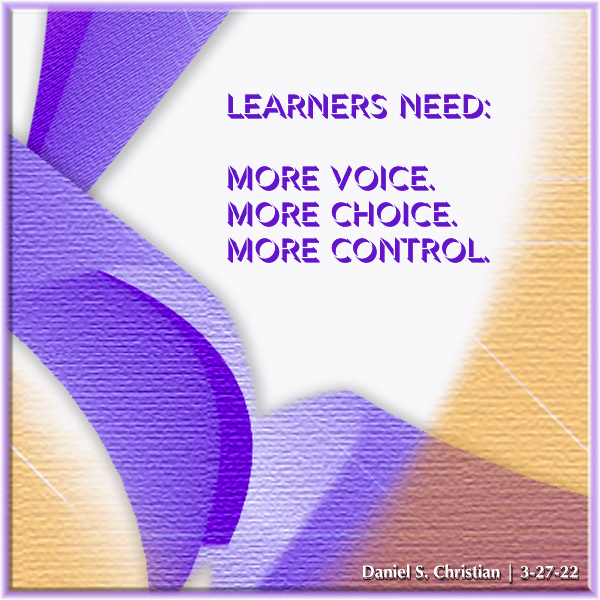
Learners need: More voice. More choice. More control. -- this image was created by Daniel Christian


The World’s Classrooms Are Short 44 Million Teachers — from edsurge.com by Nadia Tamez-Robledo
It’s not just pay that’s a problem in retaining and recruiting educators, experts say.

K-12 education worldwide is facing a two-pronged dilemma: A global shortage of 44 million teachers by 2030 and not enough funding to train or retain them, according to a report released by UNESCO and the International Taskforce on Teachers for Education 2030 following the summit. Countries around the world risk not having enough teachers — or not enough high-caliber teachers — for the rising number of students expected to enter primary and secondary school within the next five years.

The report’s findings reflect what some school districts and states have been grappling with in the United States, where research has consistently shown that teachers face lower rates of well-being and satisfaction with pay than similarly employed workers in other fields.

 
© 2025 | Daniel Christian