From DSC:
I posted an excerpt of this in another posting, but I wanted to highlight these two powerful, extremely well-done video series for those who might be interested in them.


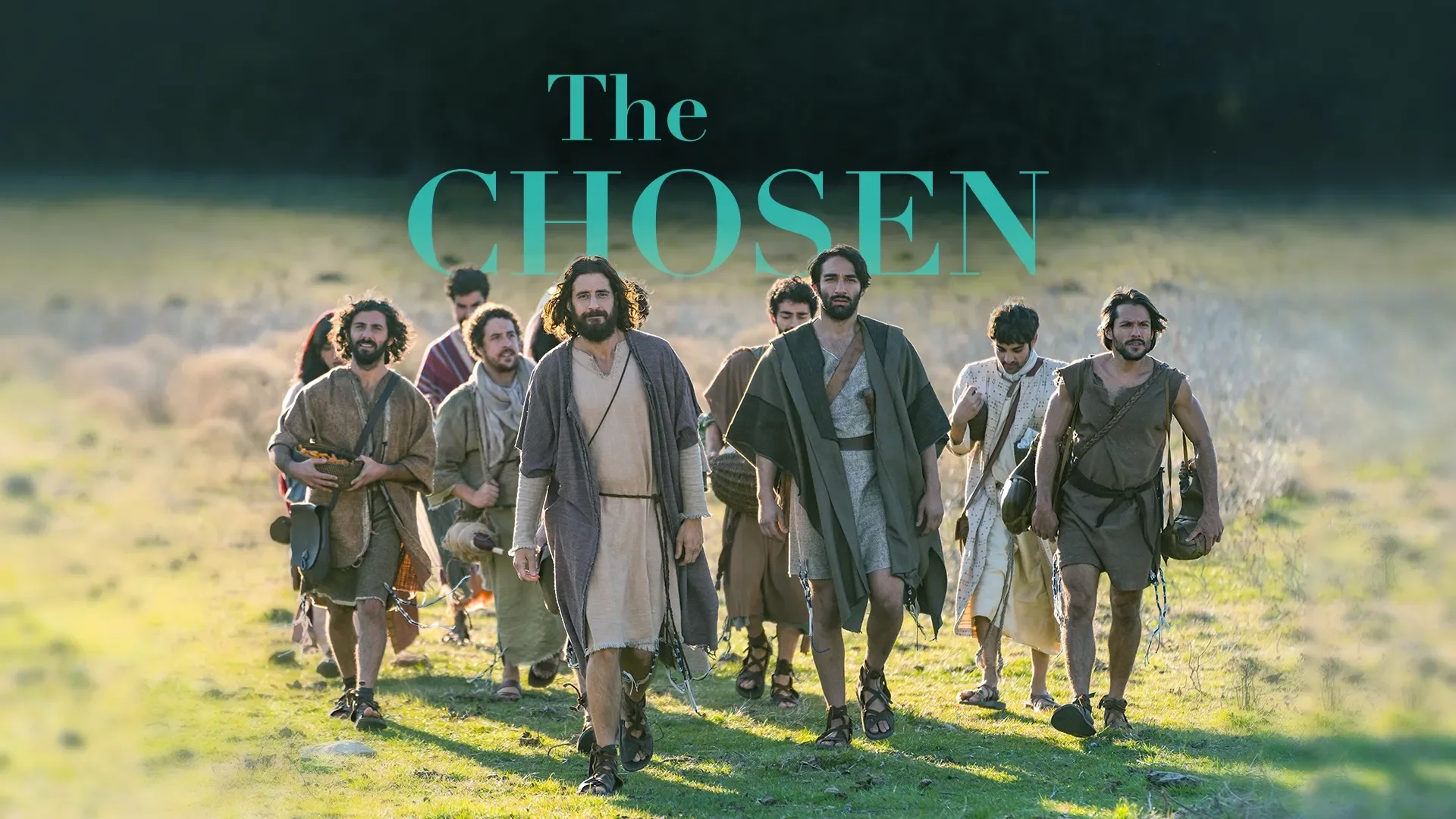
The House of David is very well done! I enjoyed watching Season 1. Like The Chosen, it brings the Bible to life in excellent, impactful ways! Both series convey the context and cultural tensions at the time. Both series are an answer to prayer for me and many others — as they are professionally-done. Both series match anything that comes out of Hollywood in terms of the acting, script writing, music, the sets, etc.  Again, both of these series are very well done.
.

The House of David

.

The Chosen


A sampling of others who cover The Chosen includes:


2. Concern and excitement about AI — from pewresearch.org by Jacob Poushter,Moira Faganand Manolo Corichi

Key findings

  • A median of 34% of adults across 25 countries are more concerned than excited about the increased use of artificial intelligence in daily life. A median of 42% are equally concerned and excited, and 16% are more excited than concerned.
  • Older adults, women, people with less education and those who use the internet less often are particularly likely to be more concerned than excited.

Also relevant here:


AI Video Wars include Veo 3.1, Sora 2, Ray3, Kling 2.5 + Wan 2.5 — from heatherbcooper.substack.com by Heather Cooper
House of David Season 2 is here!

In today’s edition:

  • Veo 3.1 brings richer audio and object-level editing to Google Flow
  • Sora 2 is here with Cameo self-insertion and collaborative Remix features
  • Ray3 brings world-first reasoning and HDR to video generation
  • Kling 2.5 Turbo delivers faster, cheaper, more consistent results
  • WAN 2.5 revolutionizes talking head creation with perfect audio sync
  • House of David Season 2 Trailer
  • HeyGen Agent, Hailuo Agent, Topaz Astra, and Lovable Cloud updates
  • Image & Video Prompts

From DSC:
By the way, the House of David (which Heather referred to) is very well done! I enjoyed watching Season 1. Like The Chosen, it brings the Bible to life in excellent, impactful ways! Both series convey the context and cultural tensions at the time. Both series are an answer to prayer for me and many others — as they are professionally-done. Both series match anything that comes out of Hollywood in terms of the acting, script writing, music, the sets, etc.  Both are very well done.
.


An item re: Sora:


Other items re: Open AI’s new Atlas browser:

Introducing ChatGPT Atlas — from openai.com
The browser with ChatGPT built in.

[On 10/21/25] we’re introducing ChatGPT Atlas, a new web browser built with ChatGPT at its core.

AI gives us a rare moment to rethink what it means to use the web. Last year, we added search in ChatGPT so you could instantly find timely information from across the internet—and it quickly became one of our most-used features. But your browser is where all of your work, tools, and context come together. A browser built with ChatGPT takes us closer to a true super-assistant that understands your world and helps you achieve your goals.

With Atlas, ChatGPT can come with you anywhere across the web—helping you in the window right where you are, understanding what you’re trying to do, and completing tasks for you, all without copying and pasting or leaving the page. Your ChatGPT memory is built in, so conversations can draw on past chats and details to help you get new things done.

ChatGPT Atlas: the AI browser test — from getsuperintel.com by Kim “Chubby” Isenberg
Chat GPT Atlas aims to transform web browsing into a conversational, AI-native experience, but early reviews are mixed

OpenAI’s new ChatGPT Atlas promises to merge web browsing, search, and automation into a single interface — an “AI-native browser” meant to make the web conversational. After testing it myself, though, I’m still trying to see the real breakthrough. It feels familiar: summaries, follow-ups, and even the Agent’s task handling all mirror what I already do inside ChatGPT.

OpenAI’s new Atlas browser remembers everything — from theneurondaily.com by Grant Harvey
PLUS: Our AIs are getting brain rot?!

Here’s how it works: Atlas can see what you’re looking at on any webpage and instantly help without you needing to copy/paste or switch tabs. Researching hotels? Ask ChatGPT to compare prices right there. Reading a dense article? Get a summary on the spot. The AI lives in the browser itself.

OpenAI’s new product — from bensbites.com

The latest entry in AI browsers is Atlas – A new browser from OpenAI. Atlas would feel similar to Dia or Comet if you’ve used them. It has an “Ask ChatGPT” sidebar that has the context of your page, and choose “Agent” to work on that tab. Right now, Agent is limited to a single tab, and it is way too slow to delegate anything for real to it. Click accuracy for Agent is alright on normal web pages, but it will definitely trip up if you ask it to use something like Google Sheets.

One ambient feature that I think many people will like is “select to rewrite” – You can select any text in Atlas, hover/click on the blue dot in the top right corner to rewrite it using AI.


Your AI Resume Hacks Probably Won’t Fool Hiring Algorithms — from builtin.com by Jeff Rumage
Recruiters say those viral hidden prompt for resumes don’t work — and might cost you interviews.

Summary: Job seekers are using “prompt hacking” — embedding hidden AI commands in white font on resumes — to try to trick applicant tracking systems. While some report success, recruiters warn the tactic could backfire and eliminate the candidate from consideration.


The Job Market Might Be a Mess, But Don’t Blame AI Just Yet — from builtin.com by Matthew Urwin
A new study by Yale University and the Brookings Institution says the panic around artificial intelligence stealing jobs is overblown. But that might not be the case for long.

Summary: A Yale and Brookings study finds generative AI has had little impact on U.S. jobs so far, with tariffs, immigration policies and the number of college grads potentially playing a larger role. Still, AI could disrupt the workforce in the not-so-distant future.


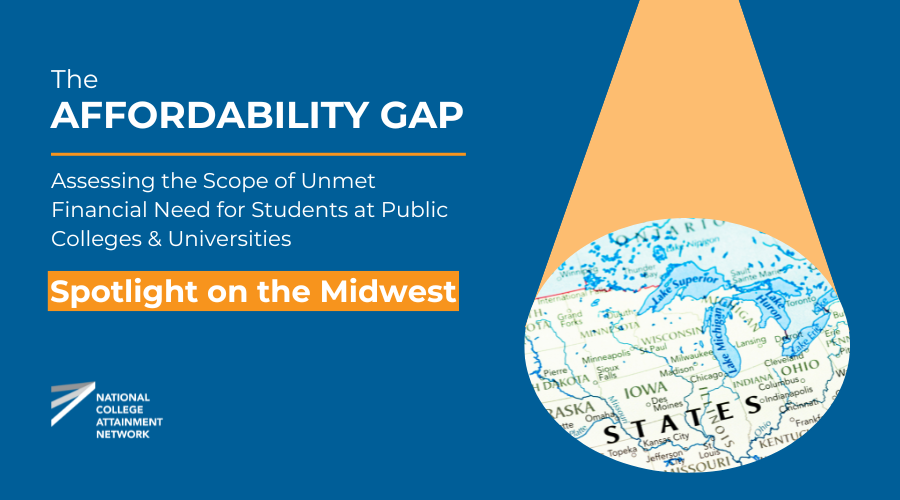
New Analysis: Affordability Gaps Remain in Great Lakes States — from ncan.org by Louisa Woodhouse

Key Takeaways

  • In every Great Lakes state except Illinois and Minnesota, students face affordability gaps greater than the national average of $1,555.
  • Five out of six Great Lakes states have a smaller percentage of affordable public bachelor’s-granting institutions than the national average of 35% of postsecondary institutions.
  • In two states (Ohio and Wisconsin), the affordability gap for students at public bachelor’s-granting institutions is more than twice the national average.
  • Still, a subset of states have committed to making community college more affordable. In Ohio, Indiana, and Michigan there is no affordability gap, on average, for students to attend community college.
 

“Future of Professionals Report” analysis: Why AI will flip law firm economics — from thomsonreuters.com by Ragunath Ramanathan
AI forces a reinvention of law firm billing models, the market will reward those firms that price by outcome, guarantee efficiency, and are transparent. The question then isn’t whether to change — it’s whether firms will stand on the sidelines or lead

Key insights:

  • Efficiency and cost savings are expected  AI is significantly increasing efficiency and reducing costs in the legal industry, with each lawyer expecting to save 190 work-hours per year by leveraging AI, resulting in approximately $20 billion worth of work-savings in the US alone.
  • Challenges to the billable hour model — The traditional billable hour model is being challenged by AI advancements, as lawyers are now able to complete tasks more efficiently and quickly, leading some law firms to explore alternative pricing models that reflect the value delivered rather than the time spent.
  • Opportunities for smaller law firms — AI presents unique opportunities for smaller law firms to differentiate themselves and compete with larger firms, as AI solutions allow smaller firms to access advanced technology without significant investment and deliver innovative pricing models.

The legal industry is undergoing a significant transformation that’s being driven by the rapid adoption of AI — a shift that is poised to redefine traditional practices, particularly the billable hour model, a cornerstone of law firm operations.

Not surprisingly, AI is anticipated to have the biggest impact on the legal industry over the next five years, with 80% of law firm survey respondents to Thomson Reuters recently published 2025 Future of Professionals report saying that they expect AI to fundamentally alter how they conduct business, especially around how law firms price, staff, and deliver legal work to their clients.


From DSC:
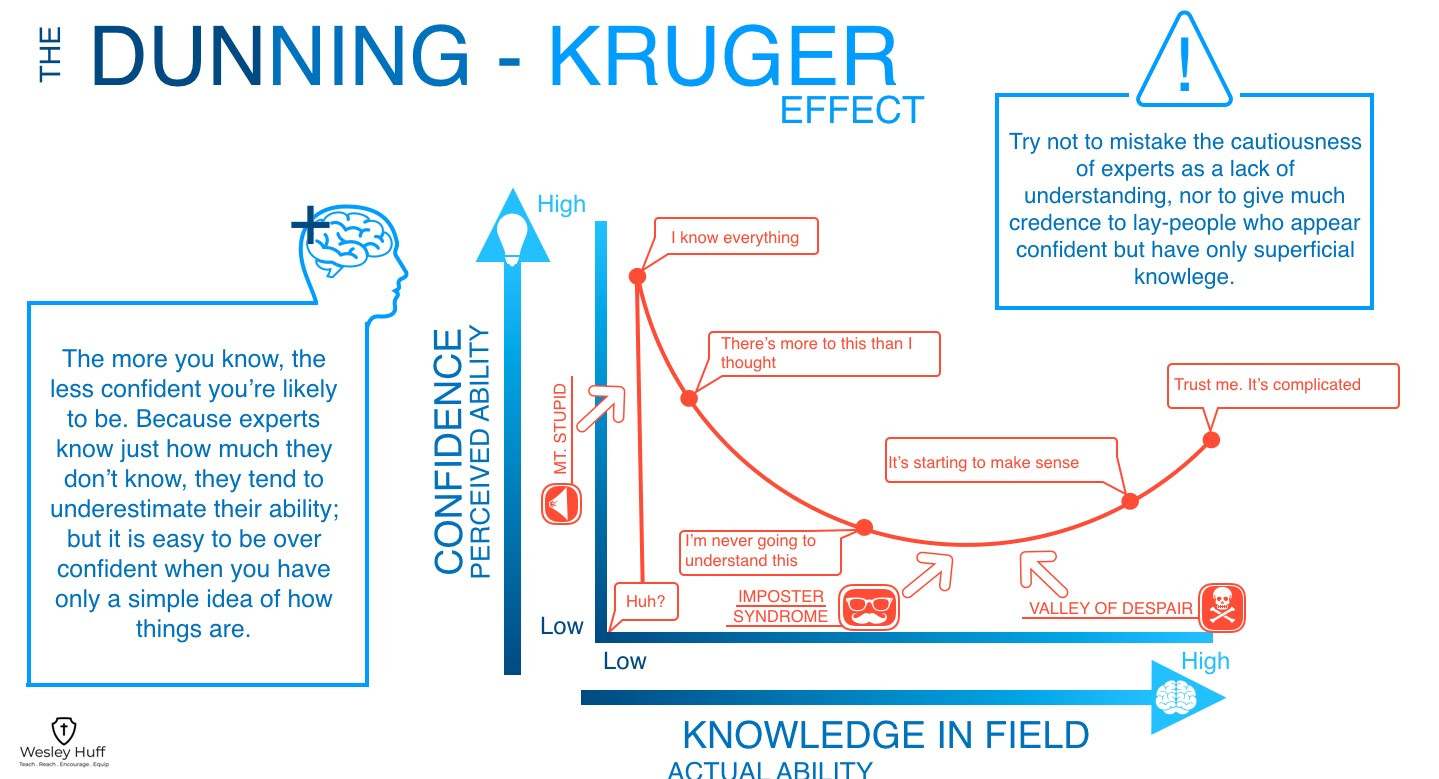
I love the graphic below of the Dunning-Kruger Effect:


— graphic via a teacher at one of our daughters’ schools
.


The Dunning-Kruger effect is a cognitive bias where people with low ability in a task tend to overestimate their own competence, while high-ability individuals often underestimate theirs. This happens because those with low competence lack the metacognitive skills to recognize their own shortcomings, leading them to believe they are performing better than they are. Examples include a new driver who thinks they are better than average, or a novice who is confident in their ability to diagnose a medical issue based on a quick online search.

Examples in different fields

  • Driving: Many drivers believe they are above average, a statistical impossibility.
  • Healthcare: Patients may overestimate their ability to self-diagnose serious conditions after a quick search and disregard expert medical advice.
  • Workplace: Employees may overestimate their performance compared to their colleagues.
  • Social Media: The Dunning-Kruger effect can be seen online, where individuals with a superficial understanding of a topic may argue confidently with experts.
 

International AI Safety Report — from internationalaisafetyreport.org

About the International AI Safety Report
The International AI Safety Report is the world’s first comprehensive review of the latest science on the capabilities and risks of general-purpose AI systems. Written by over 100 independent experts and led by Turing Award winner Yoshua Bengio, it represents the largest international collaboration on AI safety research to date. The Report gives decision-makers a shared global picture of AI’s risks and impacts, serving as the authoritative reference for governments and organisations developing AI policies worldwide. It is already shaping debates and informing evidence-based decisions across research and policy communities.


How a Gemma model helped discover a new potential cancer therapy pathway — from blog.google by Shekoofeh Azizi and Bryan Perozzi
We’re launching a new 27 billion parameter foundation model for single-cell analysis built on the Gemma family of open models.

Today, as part of our research collaboration with Yale University, we’re releasing Cell2Sentence-Scale 27B (C2S-Scale), a new 27 billion parameter foundation model designed to understand the language of individual cells. Built on the Gemma family of open models, C2S-Scale represents a new frontier in single-cell analysis.

This announcement marks a milestone for AI in science. C2S-Scale generated a novel hypothesis about cancer cellular behavior and we have since confirmed its prediction with experimental validation in living cells. This discovery reveals a promising new pathway for developing therapies to fight cancer.


Hidden text can undermine your AI [Brainyacts #268] — from thebrainyacts.beehiiv.com by Josh Kubicki

What if one line of invisible text could change how your AI interprets an entire case file?

This isn’t hypothetical. It’s called prompt injection, and as more legal teams connect LLMs to client files, discovery docs, and contract repositories, the risk is growing, fast.

The AI, following instructions like a good little pattern matcher, now refers to the entire thing using the wrong legal frame.

You never saw the white text.

Your associate didn’t catch it.

The system happily processes it as truth.

And now you have slop in the system. Not because the AI hallucinated but because it was tricked.


From DSC:
One of my sisters is a Professor of Communication at a major university and she recently sent me the following article. I thought I’d pass it along to those of you who are also interested in this topic. My sister has written several books on media literacy and has created museum-based exhibits to address this topic.


How to find trustworthy news reporting in these times? — from ericdeggans.substack.com by Switching Codes w/Eric Deggans
I don’t have the perfect answer. But here’s a few ideas.

Here’s a few suggestions for how to navigate our new, challenging news media reality.

  • Find individual journalists to trust…
  • Don’t let the perfect be the enemy of the good…
  • Be skeptical of those telling you what you want to hear…
  • Learn what outlets are good at covering…
  • …and more

The above article links to:

My take on why Americans don’t trust journalists anymore — from ericdeggans.substack.com by Switching Codes w/Eric Deggans
It’s more complicated than journalists failing in their mission. And reversing the numbers are key to preserving democracy.
.


On a somewhat-related note, see:

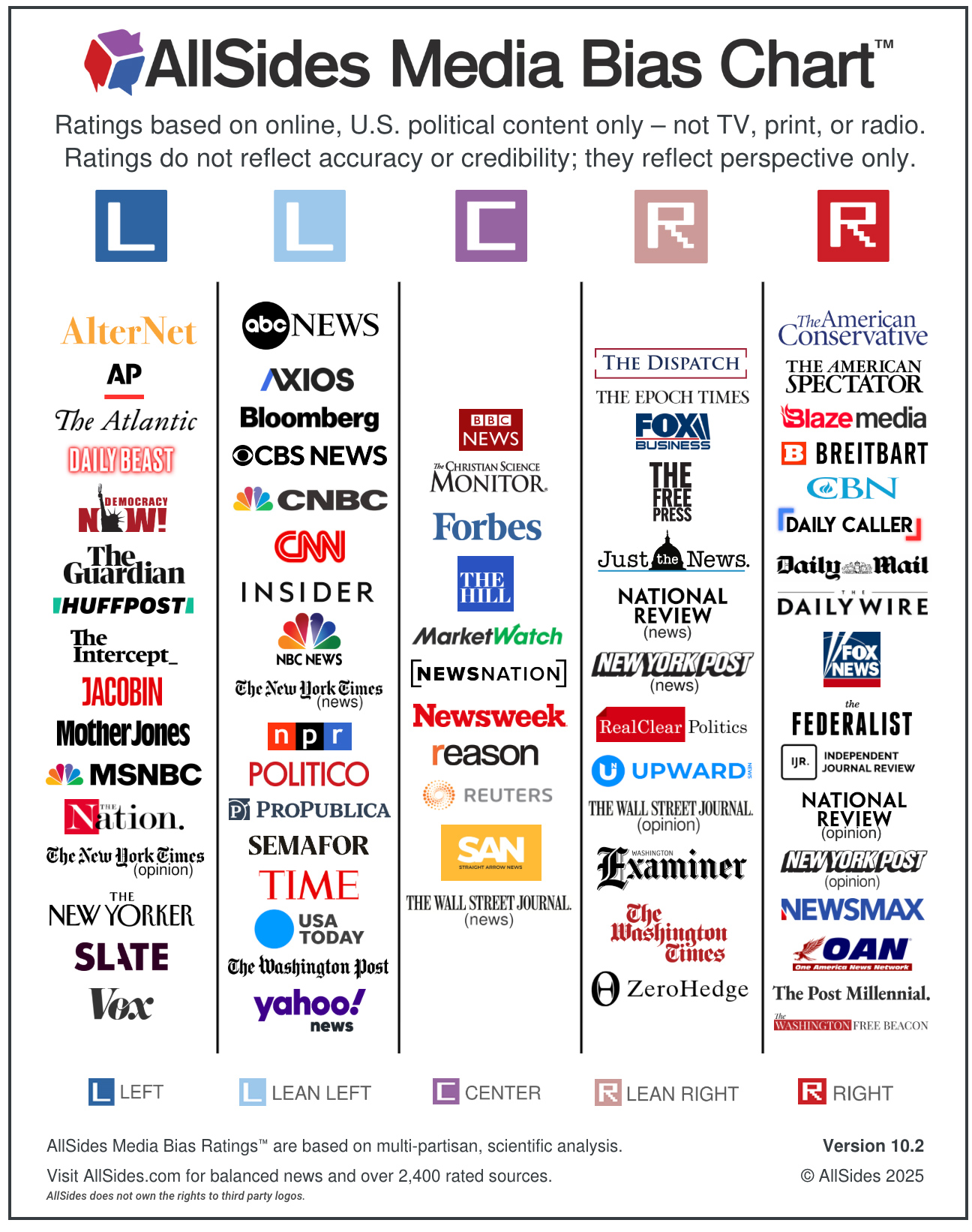
AllSides Media Bias Chart


Eye implant and high-tech glasses restore vision lost to age — from newscientist.com by Chris Simms
Age-related macular degeneration is a common cause of vision loss, with existing treatments only able to slow its progression. But now an implant in the back of the eye and a pair of high-tech glasses have enabled people with the condition to read again

People with severe vision loss have been able to read again, thanks to a tiny wireless chip implanted in one of their eyes and a pair of high-tech glasses.

“This is an exciting and significant study,” says Francesca Cordeiro at Imperial College London. “It gives hope for providing vision in patients for whom this was more science fiction than reality.”


Amazon’s AWS outage on October 20 knocked services like Alexa, Snapchat, Fortnite, Venmo and more offline for hours — from engadget.com by Kris Holt
A massive outage highlights why relying on a few companies to power much of the internet is far from ideal.

It felt like half of the internet was dealing with a severe hangover on October 20. A severe Amazon Web Services outage took out many, many websites, apps, games and other services that rely on Amazon’s cloud division to stay up and running.

Sites and services that were affected by the AWS outage include:

  • Amazon
  • Amazon Alexa
  • Bank of America
  • Snapchat
  • Reddit
  • Lyft
  • Apple Music
  • Apple TV
  • Pinterest
  • Fortnite
  • Roblox
  • The New York Times
  • Disney+
  • Venmo
  • Doordash
  • Hulu
  • Grubhub
  • PlayStation
  • Zoom

From DSC:
Hmmm…doesn’t this put a bit of alarm in your mind? I can’t help but wonder…if another government wants to wreak havoc on another country — or even the world — that is an increasingly possible situation these days. In fact, its already happened with social media and with cybersecurity-related issues. But taking down banking, commerce, exchanges, utilities, and more is increasingly possible. Or at least that’s my mental image of the state of cyberwarfare. 


Goldman economists on the Gen Z hiring nightmare: ‘Jobless growth’ is probably the new normal — from fortune.com by Nick Lichtenberg (this article is behind a paywall)

The challenging U.S. labor market is entering a new normal, according to Goldman Sachs economists David Mericle and Pierfrancesco Mei, who tackled the phenomenon of “jobless growth” in an Oct. 13 note. It resonates with what Federal Reserve Chair Jerome Powell memorably described in September as a “low-hire, low-fire” labor market, in which, for some reason, “kids coming out of college and younger people, minorities, are having a hard time finding jobs.”

Some analysts blame the downturn in entry-level hiring on the impact of AI on the economy, others on macroeconomic uncertainty, especially the seesawing tariffs regime from the Trump administration. The takeaway is clear, though, that getting hired is really hard in the mid-2020s.

This shift is clear in data collated by the investment bank. Payroll growth by industry shows almost all sectors outside health care posting weak, zero, or even negative net job creation, despite otherwise solid macroeconomic indicators. Meanwhile, the share of executives who mention both AI and employment in the same context on earnings calls has reached historic highs.?

For now, Mericle’s “low-hire, low-fire” diagnosis serves as both warning and guide: Jobless growth may not mean mass layoffs, but it does mean fewer opportunities for job seekers and slower rebounds from economic shocks in the years to come.?


From siloed tools to intelligent journeys: Reimagining learning experience in the age of ‘Experience AI’ — from linkedin.com by Lev Gonick

Experience AI: A new architecture of learning
Experience AI represents a new architecture for learning — one that prioritizes continuity, agency and deep personalization. It fuses three dimensions into a new category of co-intelligent systems:

  • Agentic AI that evolves with the learner, not just serves them
  • Persona-based AI that adapts to individual goals, identities and motivations
  • Multimodal AI that engages across text, voice, video, simulation and interaction

Experience AI brings learning into context. It powers personalized, problem-based journeys where students explore ideas, reflect on progress and co-create meaning — with both human and machine collaborators.


The above posting on LinkedIn then links to this document


Designing Microsoft 365 Copilot to empower educators, students, and staff — from microsoft.com by Deirdre Quarnstrom

While over 80% of respondents in the 2025 AI in Education Report have already used AI for school, we believe there are significant opportunities to design AI that can better serve each of their needs and broaden access to the latest innovation.1

That’s why today [10/15/25], we’re announcing AI-powered experiences built for teaching and learning at no additional cost, new integrations in Microsoft 365 apps and Learning Management Systems, and an academic offering for Microsoft 365 Copilot.

Introducing AI-powered teaching and learning
Empowering educators with Teach

We’re introducing Teach to help streamline class prep and adapt AI to support educators’ teaching expertise with intuitive and customizable features. In one place, educators can easily access AI-powered teaching tools to create lesson plans, draft materials like quizzes and rubrics, and quickly make modifications to language, reading level, length, difficulty, alignment to relevant standards, and more.


Why Co-Teaching Will Be A Hot New Trend In Higher Education — from forbes.com by Brandon Busteed

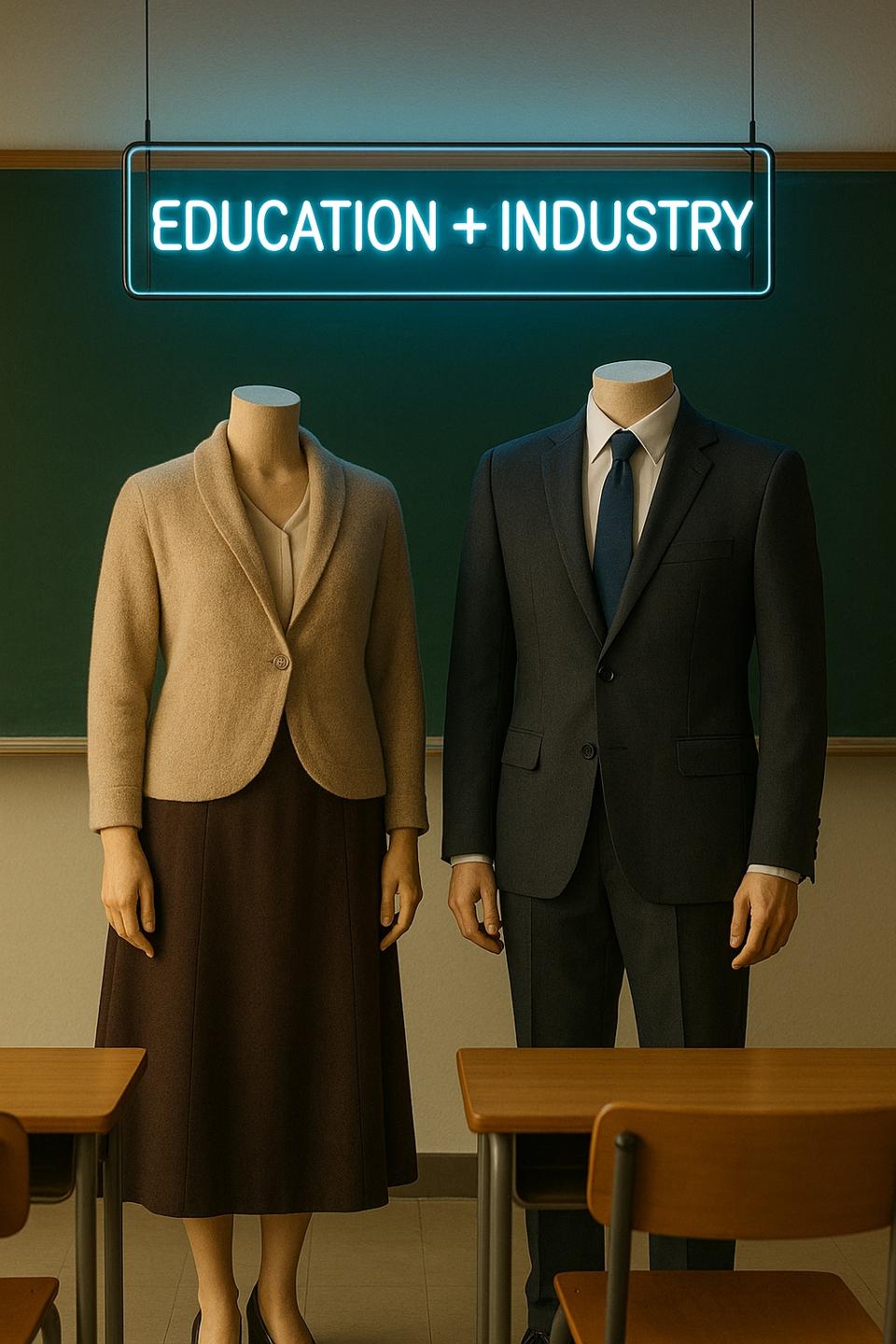
When it comes to innovation in higher education, most bets are being placed on technology platforms and AI. But the innovation students, faculty and industry need most can be found in a much more human dimension: co-teaching. And specifically, a certain kind of co-teaching – between industry experts and educators.

While higher education has largely embraced the value of interdisciplinary teaching across different majors or fields of study, it has yet to embrace the value of co-teaching between industry and academia. Examples of co-teaching through industry-education collaborations are rare and underutilized across today’s higher ed landscape. But they may be the most valuable and relevant way to prepare students for success. And leveraging these collaborations can help institutions struggling to satisfy unfulfilled student demand for immersive work experiences such as internships.


From DSC:
It’s along these lines that I think that ADJUNCT faculty members should be highly sought after and paid much better — as the up-to-date knowledge and experience they bring into the classroom is very valuable. They should have equal say in terms of curriculum/programs and in the way a college or university is run.

 
© 2025 | Daniel Christian