Step Into Beguiling Bygone Eras in Jeff Bartels’s ‘Urban Glitch’ Series — from thisiscolossal.com by Jeff Bartels and Kate Mothes

Step Into Beguiling Bygone Eras in Jeff Bartels’s ‘Urban Glitch’ Series — from thisiscolossal.com by Jeff Bartels and Kate Mothes

Understanding behavior as communication: A teacher’s guide — from understood.org by Amanda Morin
Figuring out the function of, or the reasons behind, a behavior is critical for finding an appropriate response or support. Knowing the function can also help you find ways to prevent behavior issues in the future.
Think of the last time a student called out in class, pushed in line, or withdrew by putting their head down on their desk. What was their behavior telling you?
In most cases, behavior is a sign they may not have the skills to tell you what they need. Sometimes, students may not even know what they need. What are your students trying to communicate? What do they need, and how can you help?
One way to reframe your thinking is to respond to the student, not the behavior. Start by considering the life experiences that students bring to the classroom.
Some students who learn and think differently have negative past experiences with teachers and school. Others may come from cultures in which speaking up for their needs in front of the whole class isn’t appropriate.
Also relevant/see:
Exclusive: Watchdog finds Black girls face more frequent, severe discipline in school— from npr.org by Claudia Grisales
Black girls face more discipline and more severe punishments in public schools than girls from other racial backgrounds, according to a groundbreaking new report set for release Thursday by a congressional watchdog.
The report, shared exclusively with NPR, took nearly a year-and-a-half to complete and comes after several Democratic congressional members requested the study.
Giving ELA Lessons a Little Edtech Boost — from edutopia.org by Julia Torres
Common activities in English language arts classes such as annotation and note-taking can be improved through technology.
6 ELA Practices That Can Be Enhanced by EdTech
Using Edtech Tools to Differentiate Learning— from edutopia.org by Katie Novak and Mary E. Pettit
Teachers can use tech tools to make it easier to give students choice about their learning, increasing engagement.
3 UDL-Aligned EdTech Tools
Why Jensen Huang and Marc Benioff see ‘gigantic’ opportunity for agentic AI — from venturebeat.com by Taryn Plumb
Going forward, the opportunity for AI agents will be “gigantic,” according to Nvidia founder and CEO Jensen Huang.
Already, progress is “spectacular and surprising,” with AI development moving faster and faster and the industry getting into the “flywheel zone” that technology needs to advance, Huang said in a fireside chat at Salesforce’s flagship event Dreamforce this week.
“This is an extraordinary time,” Huang said while on stage with Marc Benioff, Salesforce chair, CEO and co-founder. “In no time in history has technology moved faster than Moore’s Law. We’re moving way faster than Moore’s Law, are arguably reasonably Moore’s Law squared.”
“We’ll have agents working with agents, agents working with us,” said Huang.
One left
byu/jim_andr inOpenAI
From DSC:
I’m not trying to gossip here. I post this because Sam Altman is the head of arguably one of the most powerful companies in the world today — at least in terms of introducing change to a variety of societies throughout the globe (both positive and negative). So when we’ve now seen almost the entire leadership team head out the door, this certainly gives me major pause. I don’t like it. Items like the ones below begin to capture some of why I’m troubled and suspicious about these troubling moves.
So. hear me out. it’s natural for leadership to change. but if we look at Apple, leadership changes over decades if not more.
Why, if everything is so fast paced, hyper growth oriented and groundbreaking. Do people choose to leave?
I think I and many others are baffled
— Linus @ Meta Connect (@LinusEkenstam) September 26, 2024
Has the cost of college reached a tipping point for a significant number of middle-class students? — from edsurge.com by Jeffrey R. Young
Has the cost of college reached a tipping point for a significant number of middle-class students?
I’m seeing more signs of just that, and it’s happening at the undergrad and graduate levels.
Just this week, for instance, a new survey of 1,500 high school counselors conducted by the education consulting firm EAB found 63 percent reported that fewer students at public schools plan to attend college than four years ago. And 53 percent of those counselors said cost was the primary reason.
Meanwhile, a new study released this week by Georgetown University’s Center on Education and the Workforce found that the cost of graduate education has risen to the point where a significant number of degrees will not pay off. The center says that 41 percent of master’s degree programs and 67 percent of professional degree programs for which data was available would not pass their “debt-to-earnings test,” meaning they would not bring enough earnings to cover the cost plus interest from typical student loans.
Also see:
Democrats and Republicans Agree Teacher Prep Needs to Change. But How? — from edweek.org by Libby Stanford
The programs have been designed “essentially to mass-produce identical educators,” a teachers college dean told lawmakers
The core problem, witnesses at the hearing said, is that teacher-preparation programs treat all teachers—and, by extension, students—the same, asking teachers to be “everything to everybody.”
“The current model of teaching where one teacher works individually with a group of learners in a classroom—or a small box inside of a larger box that we call school—promotes unrealistic expectations by assuming individual teachers working in isolation can meet the needs of all students,” said Greg Mendez, the principal of Skyline High School in Mesa, Ariz.
From DSC:
I’ve long thought teacher education programs could and should evolve (that’s why I have a “student teacher/teacher education” category on this blog). For example, they should inform their future teachers about the science of learning and how to leverage edtech/emerging technologies into their teaching methods.
But regardless of what happens in our teacher prep programs, the issues about the current PreK-12 learning ecosystem remain — and THOSE things are what we need to address. Or we will continue to see teachers leave the profession.
Also, I highlighted the above excerpt because we can’t expect a teacher to do it all. They can’t be everything to everybody. It’s a recipe for burnout and depression. There are too many agendas coming at them.
We need to empower our current teachers and listen very carefully to the changes that they recommend. We should also listen very carefully to what our STUDENTS are recommending as well!
This article….
Artificial Intelligence and Schools: When Tech Makers and Educators Collaborate, AI Doesn’t Have to be Scary — from the74million.org by Edward Montalvo
AI is already showing us how to make education more individualized and equitable.
The XQ Institute shares this mindset as part of our mission to reimagine the high school learning experience so it’s more relevant and engaging for today’s learners, while better preparing them for the future. We see AI as a tool with transformative potential for educators and makers to leverage — but only if it’s developed and implemented with ethics, transparency and equity at the forefront. That’s why we’re building partnerships between educators and AI developers to ensure that products are shaped by the real needs and challenges of students, teachers and schools. Here’s how we believe all stakeholders can embrace the Department’s recommendations through ongoing collaborations with tech leaders, educators and students alike.
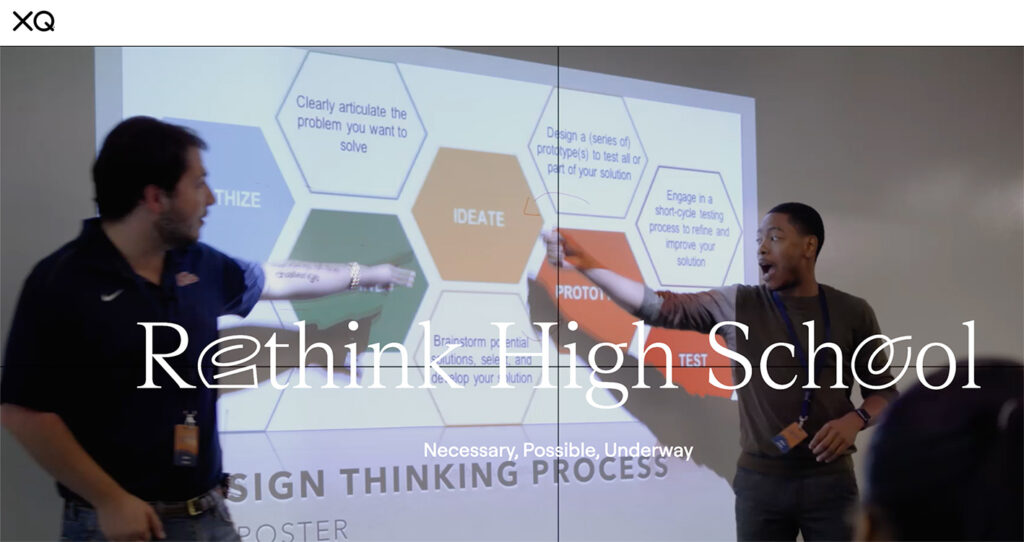
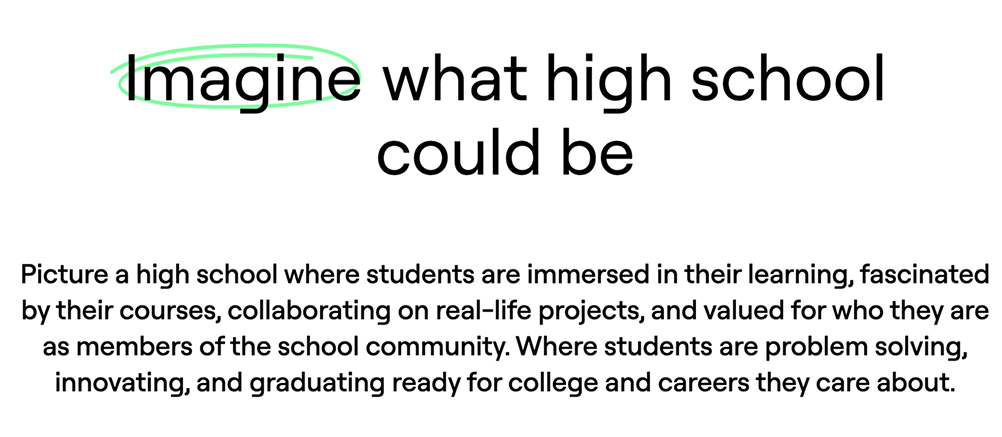
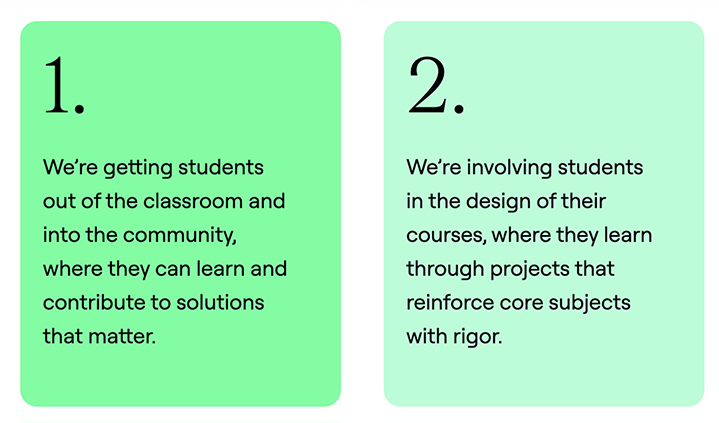
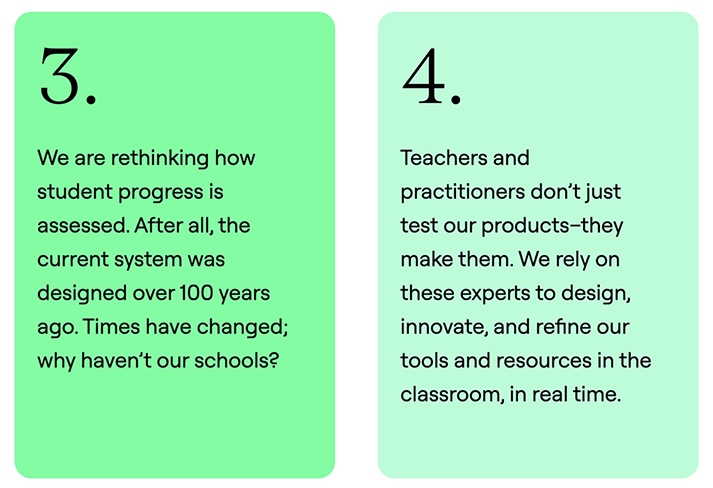
…lead me to the XQ Institute, and I very much like what I’m initially seeing! Here are some excerpts from their website:
Transforming high school isn’t easy, but it is possible. ? Educator @nwallacecxh from XQ’s @CrosstownHigh shares real-world strategies to make learning relevant and meaningful. Ready to see how it’s done? ? https://t.co/xD8hkP33TH
— XQ (@XQAmerica) September 26, 2024
FlexOS’ Stay Ahead Edition #43 — from flexos.work
People started discussing what they could do with Notebook LM after Google launched the audio overview, where you can listen to 2 hosts talking in-depth about the documents you upload. Here are what it can do:
The posting also lists several ideas to try with NotebookLM such as:
Idea 2: Study Companion
Google’s NotebookLM: A Game-Changer for Education and Beyond — from ai-supremacy.com by Michael Spencer and Nick Potkalitsky
AI Tools: Breaking down Google’s latest AI tool and its implications for education.
“Google’s AI note-taking app NotebookLM can now explain complex topics to you out loud”
With more immersive text-to-video and audio products soon available and the rise of apps like Suno AI, how we “experience” Generative AI is also changing from a chatbot of 2 years ago, to a more multi-modal educational journey. The AI tools on the research and curation side are also starting to reflect these advancements.
Meet Google NotebookLM: 10 things to know for educators — from ditchthattextbook.com by Matt Miller
1. Upload a variety of sources for NotebookLM to use.
You can use …
You can’t link it to YouTube videos, but you can copy/paste the transcript (and maybe type a little context about the YouTube video before pasting the transcript).
2. Ask it to create resources.
3. Create an audio summary.
4. Chat with your sources.
5. Save (almost) everything.
NotebookLM summarizes my dissertation — from darcynorman.net by D’Arcy Norman, PhD
I finally tried out Google’s newly-announced NotebookLM generative AI application. It provides a set of LLM-powered tools to summarize documents. I fed it my dissertation, and am surprised at how useful the output would be.
The most impressive tool creates a podcast episode, complete with dual hosts in conversation about the document. First – these are AI-generated hosts. Synthetic voices, speaking for synthetic hosts. And holy moly is it effective. Second – although I’d initially thought the conversational summary would be a dumb gimmick, it is surprisingly powerful.
4 Tips for Designing AI-Resistant Assessments — from techlearning.com by Steve Baule and Erin Carter
As AI continues to evolve, instructors must modify their approach by designing meaningful, rigorous assessments.
As instructors work through revising assessments to be resistant to generation by AI tools with little student input, they should consider the following principles:
Google CEO Sundar Pichai announces $120M fund for global AI education — from techcrunch.com by Anthony Ha
He added that he wants to avoid a global “AI divide” and that Google is creating a $120 million Global AI Opportunity Fund through which it will “make AI education and training available in communities around the world” in partnership with local nonprofits and NGOs.
Educators discuss the state of creativity in an AI world — from gettingsmart.com by Joe & Kristin Merrill, LaKeshia Brooks, Dominique’ Harbour, Erika Sandstrom
Key Points
Addendum on 9/27/24:
Google’s NotebookLM enhances AI note-taking with YouTube, audio file sources, sharable audio discussions — from techcrunch.com by Jagmeet Singh
Google on Thursday announced new updates to its AI note-taking and research assistant, NotebookLM, allowing users to get summaries of YouTube videos and audio files and even create sharable AI-generated audio discussions…
NotebookLM adds audio and YouTube support, plus easier sharing of Audio Overviews — from blog.google
AI researcher Jim Fan has had a charmed career. He was OpenAI’s first intern before he did his PhD at Stanford with “godmother of AI,” Fei-Fei Li. He graduated into a research scientist position at Nvidia and now leads its Embodied AI “GEAR” group. The lab’s current work spans foundation models for humanoid robots to agents for virtual worlds. Jim describes a three-pronged data strategy for robotics, combining internet-scale data, simulation data and real world robot data. He believes that in the next few years it will be possible to create a “foundation agent” that can generalize across skills, embodiments and realities—both physical and virtual. He also supports Jensen Huang’s idea that “Everything that moves will eventually be autonomous.”
Runway Partners with Lionsgate — from runwayml.com via The Rundown AI
Runway and Lionsgate are partnering to explore the use of AI in film production.
Lionsgate and Runway have entered into a first-of-its-kind partnership centered around the creation and training of a new AI model, customized on Lionsgate’s proprietary catalog. Fundamentally designed to help Lionsgate Studios, its filmmakers, directors and other creative talent augment their work, the model generates cinematic video that can be further iterated using Runway’s suite of controllable tools.
Per The Rundown: Lionsgate, the film company behind The Hunger Games, John Wick, and Saw, teamed up with AI video generation company Runway to create a custom AI model trained on Lionsgate’s film catalogue.
The details:
Why it matters: As many writers, actors, and filmmakers strike against ChatGPT, Lionsgate is diving head-first into the world of generative AI through its partnership with Runway. This is one of the first major collabs between an AI startup and a major Hollywood company — and its success or failure could set precedent for years to come.
A bottle of water per email: the hidden environmental costs of using AI chatbots — from washingtonpost.com by Pranshu Verma and Shelly Tan (behind paywall)
AI bots generate a lot of heat, and keeping their computer servers running exacts a toll.
Each prompt on ChatGPT flows through a server that runs thousands of calculations to determine the best words to use in a response.
In completing those calculations, these servers, typically housed in data centers, generate heat. Often, water systems are used to cool the equipment and keep it functioning. Water transports the heat generated in the data centers into cooling towers to help it escape the building, similar to how the human body uses sweat to keep cool, according to Shaolei Ren, an associate professor at UC Riverside.
Where electricity is cheaper, or water comparatively scarce, electricity is often used to cool these warehouses with large units resembling air-conditioners, he said. That means the amount of water and electricity an individual query requires can depend on a data center’s location and vary widely.
AI, Humans and Work: 10 Thoughts. — from rishad.substack.com by Rishad Tobaccowala
The Future Does Not Fit in the Containers of the Past. Edition 215.
10 thoughts about AI, Humans and Work in 10 minutes:
10 Ways I Use LLMs like ChatGPT as a Professor — from automatedteach.com by Graham Clay
ChatGPT-4o, Gemini 1.5 Pro, Claude 3.5 Sonnet, custom GPTs – you name it, I use it. Here’s how…
Excerpt:
From Caution to Calcification to Creativity: Reanimating Education with AI’s Frankenstein Potential — from nickpotkalitsky.substack.com by Nick Potkalitsky
A Critical Analysis of AI-Assisted Lesson Planning: Evaluating Efficacy and Pedagogical Implications
Excerpt (emphasis DSC):
As we navigate the rapidly evolving landscape of artificial intelligence in education, a troubling trend has emerged. What began as cautious skepticism has calcified into rigid opposition. The discourse surrounding AI in classrooms has shifted from empirical critique to categorical rejection, creating a chasm between the potential of AI and its practical implementation in education.
This hardening of attitudes comes at a significant cost. While educators and policymakers debate, students find themselves caught in the crossfire. They lack safe, guided access to AI tools that are increasingly ubiquitous in the world beyond school walls. In the absence of formal instruction, many are teaching themselves to use these tools, often in less than productive ways. Others live in a state of constant anxiety, fearing accusations of AI reliance in their work. These are just a few symptoms of an overarching educational culture that has become resistant to change, even as the world around it transforms at an unprecedented pace.
Yet, as this calcification sets in, I find myself in a curious position: the more I thoughtfully integrate AI into my teaching practice, the more I witness its potential to enhance and transform education
NotebookLM and Google’s Multimodal Vision for AI-Powered Learning Tools — from marcwatkins.substack.com by Marc Watkins
A Variety of Use Cases
Must-Have Competencies and Skills in Our New AI World: A Synthesis for Educational Reform — from er.educause.edu by Fawzi BenMessaoud
The transformative impact of artificial intelligence on educational systems calls for a comprehensive reform to prepare future generations for an AI-integrated world.
The urgency to integrate AI competencies into education is about preparing students not just to adapt to inevitable changes but to lead the charge in shaping an AI-augmented world. It’s about equipping them to ask the right questions, innovate responsibly, and navigate the ethical quandaries that come with such power.
AI in education should augment and complement their aptitude and expertise, to personalize and optimize the learning experience, and to support lifelong learning and development. AI in education should be a national priority and a collaborative effort among all stakeholders, to ensure that AI is designed and deployed in an ethical, equitable, and inclusive way that respects the diversity and dignity of all learners and educators and that promotes the common good and social justice. AI in education should be about the production of AI, not just the consumption of AI, meaning that learners and educators should have the opportunity to learn about AI, to participate in its creation and evaluation, and to shape its impact and direction.
3 Improvements, 3 Weeks In (I Think?) — from thebrokencopier.substack.com by Marcus Luther out at The Broken Copier
What I think I’m doing better this year as a teacher—plus reasons why I might be…wrong?
So here we go: three ways I think I’ve improved so far this year as a teacher—along with three potential downsides for these shifts in my practice.
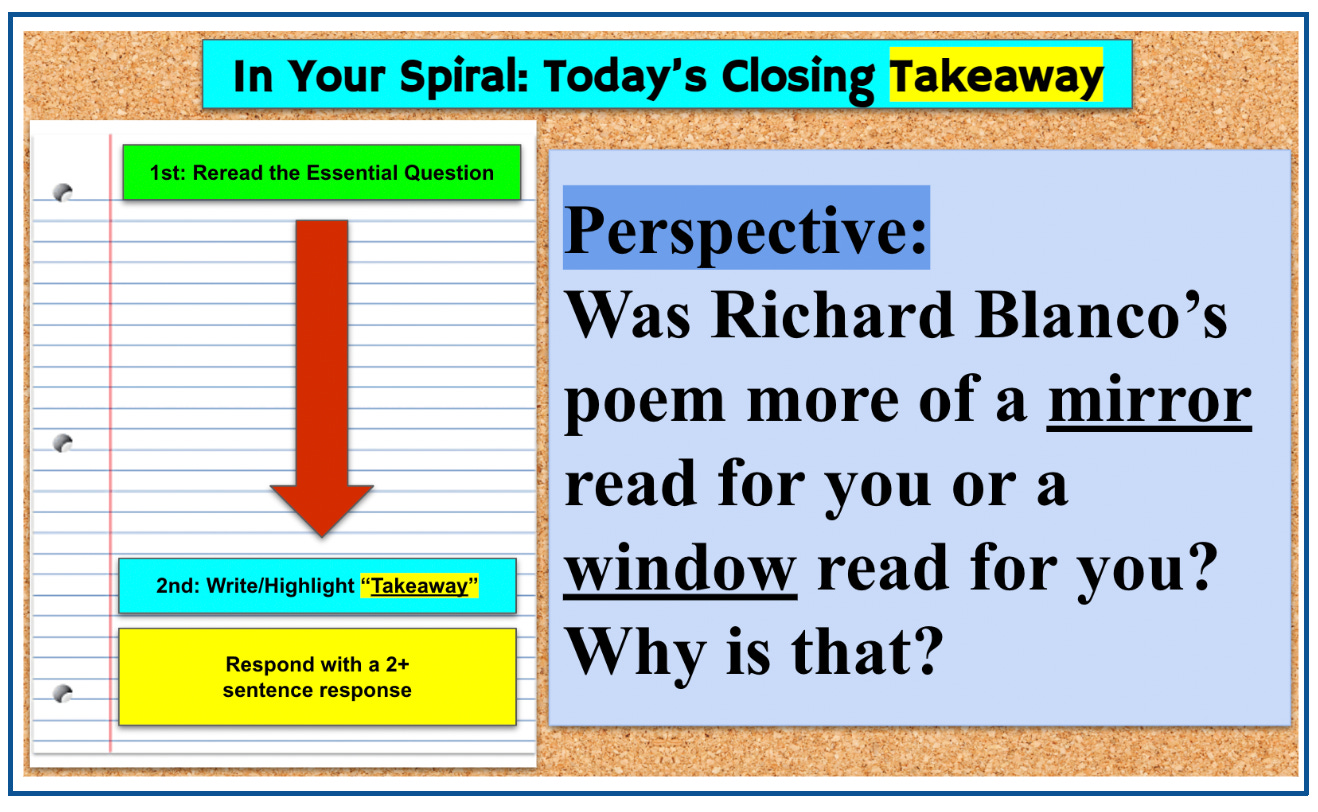
What this looks like: as I noted in my beginning-of-year goals, something I realized that I wanted to improve upon this year was consistently and intentionally protecting enough time at the end of each lesson to allow students to reflect on their learning. Along with creating a slide template I could consistently adapt from throughout the year, I knew this would mean creating and maintaining a system in our classroom of “closing with our takeaway”:
David Moreno’s Anthropomorphic Foundations Support Cascading Villages — from thisiscolossal.com by David Moreno and Kate Mothes
Open Campus is expanding incarcerated readers’ access to news about prison education — from opencampusmedia.org
Open Campus is expanding access to College Inside, its newsletter about prison education, to thousands of incarcerated readers through new partnerships with educational technology providers.
This will allow Open Campus to better serve those readers with curated content and service journalism that answers their questions about educational opportunities in prison and how to navigate barriers to accessing them. With no direct internet access, people in prison live in information deserts and often lack even basic information about higher education.
Question: Where Do You Need Guidance in Supporting Students With Learning Disabilities? — from edutopia.org
We want to better serve your needs. Tell us about the specific challenges you’re facing.
As an educator, you’re constantly adapting your teaching to meet the needs of your classroom, but it can be difficult to know everything necessary for effectively supporting your students, including those with learning disabilities.
We’re turning to you, our Edutopia community, to help us shape the content we create around this important topic. Where do you need more guidance in helping students with learning disabilities? Are there specific challenges you face, such as classroom accommodations, identifying learning disabilities early on, or navigating IEPs? Maybe you’re looking for help with differentiated instruction, inclusive teaching practices, or strategies for fostering social-emotional growth in these students.
..
More Guidance for Learning Disabilities
Are you looking for resources that have already been published? We maintain a page dedicated entirely to Special Education. This resource is updated continuously with our latest articles and videos, offering practical tips and insights from educators like you.
Thanks for dropping by my Learning Ecosystems blog!
My name is Daniel Christian and this blog seeks to cover the teaching and learning environments within the K-12 (including homeschooling, learning pods/micro-schools), collegiate, and corporate training spaces -- whether those environments be face-to-face, blended, hyflex, or 100% online.
Just as the organizations that we work for have their own learning ecosystems, each of us has our own learning ecosystem. We need to be very intentional about enhancing those learning ecosystems -- as we all need to be lifelong learners in order to remain marketable and employed. It's no longer about running sprints (i.e., getting a 4-year degree or going to a vocational school and then calling it quits), but rather, we are all running marathons now (i.e., we are into lifelong learning these days).
And feel free to add this stream of content into your other feeds.
