Being a College Athlete Now Means Constant Travel and Missed Classes — from nytimes.com by Billy Witz; via Ryan Craig
Players are dealing with far-flung travel, jet lag and the pressures of trying to balance the roles of student, athlete and entrepreneur more than ever before.

Playing football this season for the U.C.L.A. Bruins means being a frequent (and distant) flier. The team began the campaign in August with a win at the University of Hawaii. Their next road games sent the Bruins to Louisiana State, then Penn State, and back across the country to Rutgers. Then, a trip to Nebraska on Saturday and a jaunt up to Washington.

Such is the life of the modern-day college athlete, with U.C.L.A. moving into the Big Ten Conference, the erstwhile standard-bearer for Midwest football that now stretches from Piscataway to Puget Sound.

In all, the Bruins will travel 22,226 miles this season — nearly enough to circumnavigate the globe. It is the equivalent of 33 round trips to the Bay Area to play Stanford or U.C. Berkeley, U.C.L.A.’s former rivals that have moved to a newly bicoastal league of their own.

Longer trips for games, extra missed classes and the effects of jet lag are heaping additional pressure on young adults trying to balance the roles of student, athlete and — in an age when they can cash in on their fame — entrepreneur.

The U.S.C. women’s volleyball team, which has four midweek road games, is likely to miss at least 12 days of classes.


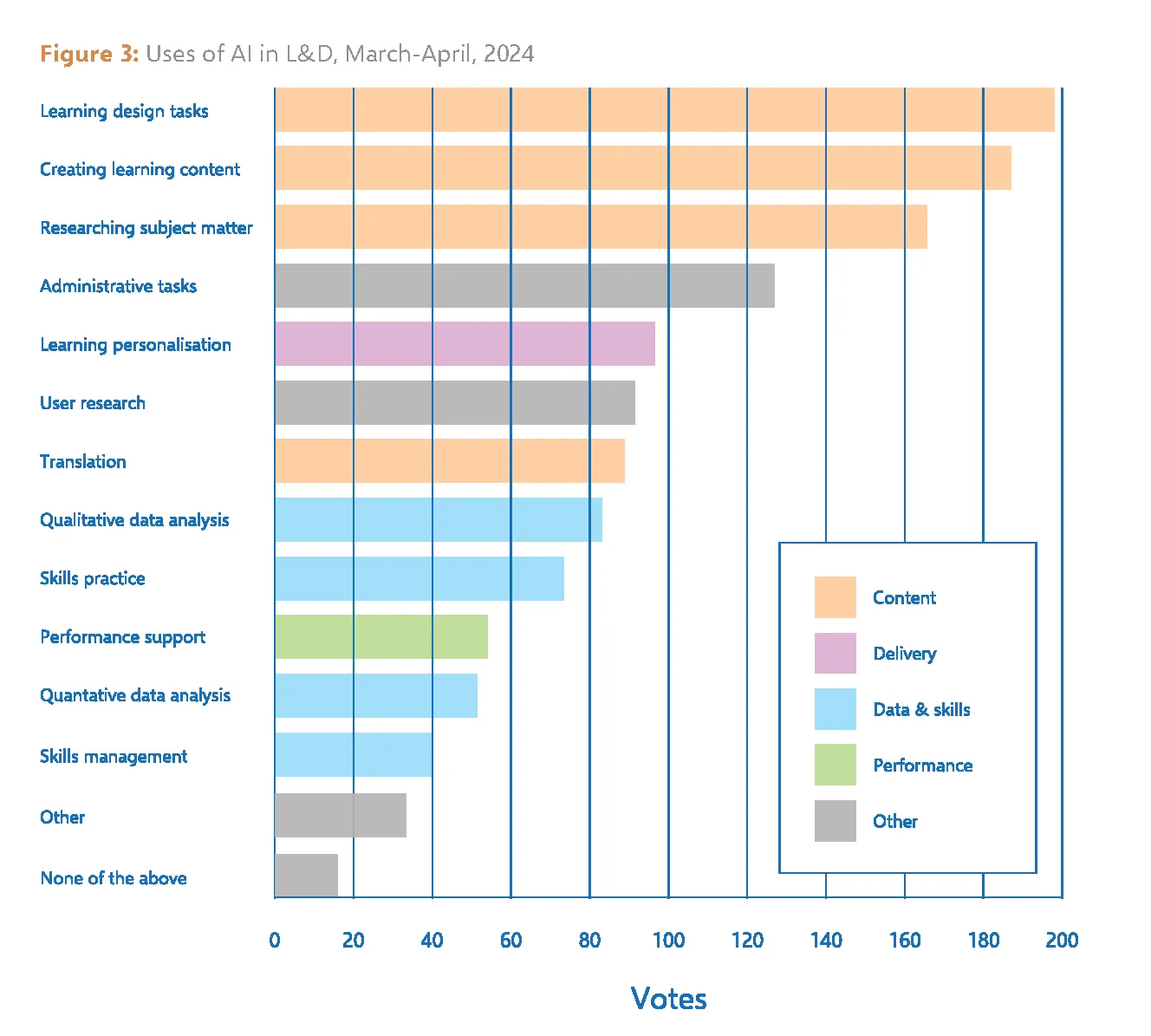
The State of Instructional Design, 2024 — from by Dr. Philippa Hardman
Four initial results from a global survey I ran with Synthesia

In September, I partnered with Synthesia to conduct a comprehensive survey exploring the evolving landscape of instructional design.

Our timing was deliberate: as we witness the rapid advancement of AI and increasing pressure on learning teams to drive mass re-skilling and deliver more with less, we wanted to understand how the role of instructional designers is changing.

Our survey focused on five key areas that we believed would help surface the most important data about the transformation of our field:

    1. Roles & Responsibilities: who’s designing learning experiences in 2024?
    2. Success Metrics: how do you and the organisations you work for measure the value of instructional design?
    3. Workload & Workflow: how much time do we spend on different aspects of our job, and why?
    4. Challenges & Barriers: what sorts of obstacles prevent us from producing optimal work?
    5. Tools & Technology: what tools do we use, and is the tooling landscape changing?
 

A Code-Red Leadership Crisis: A Wake-Up Call for Talent Development — from learningguild.com by Dr. Arika Pierce Williams

This company’s experience offers three crucial lessons for other organizational leaders who may be contemplating cutting or reducing talent development investments in their 2025 budgets to focus on “growth.”

  1. Leadership development isn’t a luxury – it’s a strategic imperative…
  2. Succession planning must be an ongoing process, not a reactive measure…
  3. The cost of developing leaders is far less than the cost of not having them when you need them most…

Also from The Learning Guild, see:

5 Key EdTech Innovations to Watch — from learningguild.com by Paige Yousey

  1. AI-driven course design
  2. Hyper-personalized content curation
  3. Immersive scenario-based training
  4. Smart chatbots
  5. Wearable devices
 

What’s a Special Education Aide Worth? A $9,607 Raise, to the Average Teacher — from educationnext.org by Virginia S. Lovison and Cecilia Hyunjung Mo
Survey evidence shows teachers would trade additional salary for expert support

Teachers’ preferences are clear: they want to work where they will have the support of full-time experts in special education and pediatric physical and mental health. An overwhelming majority describe these supports as “beneficial” or “extremely beneficial” when asked to rate special-education co-teachers (93 percent) and paraprofessionals (92 percent), as well as counselors (89 percent) and school nurses (88 percent).

These roles are so important that teachers are willing to forgo salary increases when asked to choose between the two. Our analysis shows the average teacher is willing to trade a 21 percent raise for the full-time support of a special-education co-teacher and an 18 percent raise for a full-time special-education aide.


Also from Education Next, see:

The Education Exchange: Hoover Institution Proposes Massive K–12 School Reform — from educationnext.org by Paul E. Peterson
Education Futures Council recommends putting teachers and principals in charge

Macke Raymond, a Distinguished Research Fellow at the Hoover Institution and director of the Center for Research on Education Outcomes (CREDO) at Stanford University, joins Paul E. Peterson to discuss a report from the Education Futures Council, which looks to identify and remove barriers to student success within the K-12 educational system.

From DSC:
I like the sound of putting teachers and principals in charge! As I just mentioned the other day, those on “the front line” (so to speak) know what’s working, what’s not working, and how best to fix things. Less legislators, more teachers.


33 Oh, the depth of the riches of the wisdom and[a] knowledge of God!
    How unsearchable his judgments,
    and his paths beyond tracing out!
34 “Who has known the mind of the Lord?
    Or who has been his counselor?”[b]
35 “Who has ever given to God,
    that God should repay them?”[c]
36 For from him and through him and for him are all things.
    To him be the glory forever! Amen.

Ephesians 2:8-9 

For it is by grace you have been saved, through faith—and this is not from yourselves, it is the gift of God— not by works, so that no one can boast.
.

19 I remember my affliction and my wandering,
    the bitterness and the gall.
20 I well remember them,
    and my soul is downcast within me.
21 Yet this I call to mind
    and therefore I have hope:
22 Because of the Lord’s great love we are not consumed,
    for his compassions never fail.
23 They are new every morning;
    great is your faithfulness.
24 I say to myself, “The Lord is my portion;
    therefore I will wait for him.”

For Christ also suffered once for sins, the righteous for the unrighteous, to bring you to God. He was put to death in the body but made alive in the Spirit.
 

How to File a Lawsuit by Yourself: A Simple Guide — from courtroom5.com by Debra Slone

I can say from personal experience that when you know how to file a lawsuit on your own, you’re more likely to assert your rights in all walks of life. Simply understanding the process of taking someone to court can change your life.

Introduction
Filing a civil lawsuit without a lawyer can be challenging, but many people do it to stand up for their rights. At Courtroom5, we understand the courage it takes to represent yourself, and we’re here to help. This guide will give you the essential knowledge and steps to file a civil lawsuit on your own. With clear instructions and practical tools, we aim to make the process easier and boost your confidence as you start your case.

Self-representation, or “pro se” litigation, requires more than basic knowledge of the law. It involves research, preparation, and understanding court rules. Our goal is to break down these tasks, making each step manageable from filing to finishing your case.


From DSC:
I haven’t used this site myself. But I post this item because we have a MAJOR issue here in the U.S. with Access To Justice (A2J) — the vast majority of CIVIL lawsuits are heavily tilted towards those who know how the game is played. The winners know what to do, they’ve been trained. But those without representation lose most of the time.

So I’m hoping that such online-based materials and services — including AI-based tools and platforms — can significantly alter this troublesome situation. So that’s why I’m posting this.


“The Value of Doing Things: What AI Agents Mean for Teachers” — from nickpotkalitsky.substack.com by guest author Jason Gulya, Professor of English and Applied Media at Berkeley College in New York City

AI Agents make me nervous. Really nervous.

I wish they didn’t.

I wish I could write that the last two years have made me more confident, more self-assured that AI is here to augment workers rather than replace them.

But I can’t.

I wish I could write that I know where schools and colleges will end up. I wish I could say that AI Agents will help us get where we need to be.

But I can’t.

At this point, today, I’m at a loss. I’m not sure where the rise of AI agents will take us, in terms of how we work and learn. I’m in the question-asking part of my journey. I have few answers.

So, let’s talk about where (I think) AI Agents will take education. And who knows? Maybe as I write I’ll come up with something more concrete.

It’s worth a shot, right?

From DSC: 
I completely agree with Jason’s following assertion:

A good portion of AI advancement will come down to employee replacement. And AI Agents push companies towards that. 

THAT’s where/what the ROI will be for corporations. They will make their investments up in the headcount area, and likely in other areas as well (product design, marketing campaigns, engineering-related items, and more). But how much time it takes to get there is a big question mark.

One last quote here…it’s too good not to include:

Behind these questions lies a more abstract, more philosophical one: what is the relationship between thinking and doing in a world of AI Agents and other kinds of automation?


How Good are Claude, ChatGPT & Gemini at Instructional Design? — from drphilippahardman.substack.com by Dr Philippa Hardman
A test of AI’s Instruction Design skills in theory & in practice

By examining models across three AI families—Claude, ChatGPT, and Gemini—I’ve started to identify each model’s strengths, limitations, and typical pitfalls.

Spoiler: my findings underscore that until we have specialised, fine-tuned AI copilots for instructional design, we should be cautious about relying on general-purpose models and ensure expert oversight in all ID tasks.


From DSC — I’m going to (have Nick) say this again:
I simply asked my students to use AI to brainstorm their own learning objectives. No restrictions. No predetermined pathways. Just pure exploration. The results? Astonishing.

Students began mapping out research directions I’d never considered. They created dialogue spaces with AI that looked more like intellectual partnerships than simple query-response patterns. 


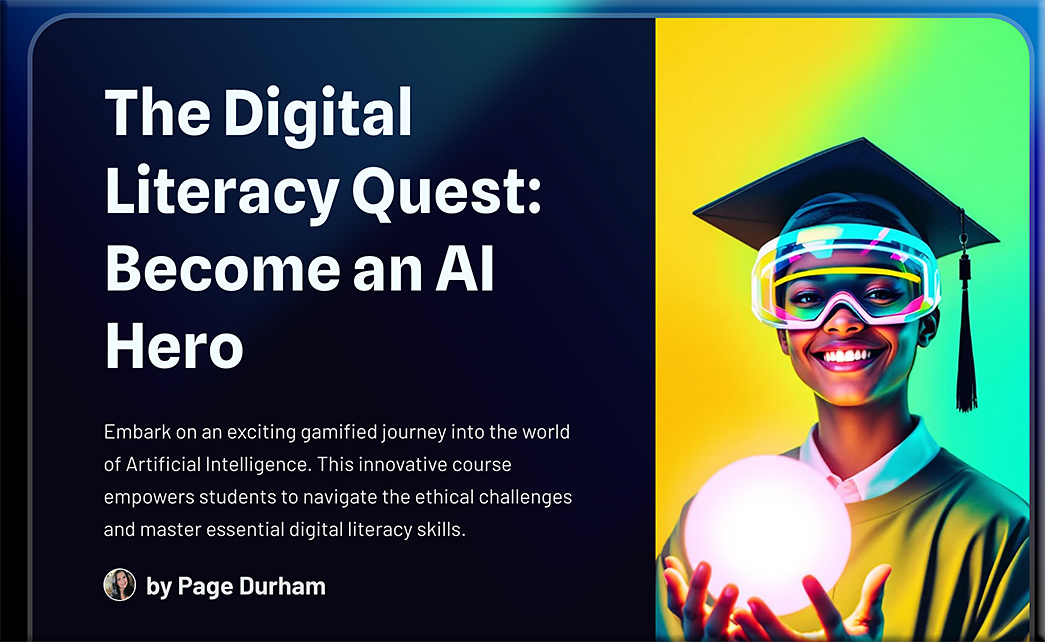
The Digital Literacy Quest: Become an AI Hero — from gamma.app

From DSC:
I have not gone through all of these online-based materials, but I like what they are trying to get at:

  • Confidence with AI
    Students gain practical skills and confidence in using AI tools effectively.
  • Ethical Navigation
    Learn to navigate the ethical landscape of AI with integrity and responsibility. Make informed decisions about AI usage.
  • Mastering Essential Skills
    Develop critical thinking and problem-solving skills in the context of AI.


Expanding access to the Gemini app for teen students in education — from workspaceupdates.googleblog.com

Google Workspace for Education admins can now turn on the Gemini app with added data protection as an additional service for their teen users (ages 13+ or the applicable age in your country) in the following languages and countries. With added data protection, chats are not reviewed by human reviewers or otherwise used to improve AI models. The Gemini app will be a core service in the coming weeks for Education Standard and Plus users, including teens,


5 Essential Questions Educators Have About AI  — from edsurge.com by Annie Ning

Recently, I spoke with several teachers regarding their primary questions and reflections on using AI in teaching and learning. Their thought-provoking responses challenge us to consider not only what AI can do but what it means for meaningful and equitable learning environments. Keeping in mind these reflections, we can better understand how we move forward toward meaningful AI integration in education.


FrontierMath: A Benchmark for Evaluating Advanced Mathematical Reasoning in AI — from epoch.ai
FrontierMath presents hundreds of unpublished, expert-level mathematics problems that specialists spend days solving. It offers an ongoing measure of AI complex mathematical reasoning progress.

We’re introducing FrontierMath, a benchmark of hundreds of original, expert-crafted mathematics problems designed to evaluate advanced reasoning capabilities in AI systems. These problems span major branches of modern mathematics—from computational number theory to abstract algebraic geometry—and typically require hours or days for expert mathematicians to solve.


Rising demand for AI courses in UK universities shows 453% growth as students adapt to an AI-driven job market — from edtechinnovationhub.com

The demand for artificial intelligence courses in UK universities has surged dramatically over the past five years, with enrollments increasing by 453%, according to a recent study by Currys, a UK tech retailer.

The study, which analyzed UK university admissions data and surveyed current students and recent graduates, reveals how the growing influence of AI is shaping students’ educational choices and career paths.

This growth reflects the broader trend of AI integration across industries, creating new opportunities while transforming traditional roles. With AI’s influence on career prospects rising, students and graduates are increasingly drawn to AI-related courses to stay competitive in a rapidly changing job market.


New Partnership Offers Online Tutoring in Michigan Schools — from govtech.com via GSV
The online education nonprofit Michigan Virtual has partnered with Stride Tutoring to offer remote academic support for students in 700 school districts as part of a statewide push to reverse pandemic learning loss.

Online education provider Michigan Virtual is working with a Virginia-based online tutoring company to increase access to personalized academic support for Michigan students, according to a news release last month. The partnership is in line with a statewide push to reverse pandemic learning loss through high-impact tutoring.


Speaking of education — but expanding the scope of this posting to a global scale:

Kids worldwide face huge educational challenges. Is better leadership a solution? — from hechingerreport.org by Liz Willen
Amid dismal data, educators from around the world gather in Brazil and say they can rise to the challenges

While the conversation clearly focused on a continuing worldwide crisis in education, the UNESCO conference I participated in was different. It emphasized a topic of huge importance to improving student outcomes, and coincided with the release of a report detailing how effective leaders can make a big difference in the lives of children.

From DSC:
Leadership is important, for sure. But being a leader in education is very difficult these days — there are many different (and high) expectations and agendas being thrown your way from a variety of shareholders. But I do appreciate those leaders who are trying to create effective learning ecosystems out there!


One more for high school students considering going to college…


Three items re: accessibility from boia.org


How Important Are Fonts for Digital Accessibility?

With that said, simple sans-serif fonts are generally easier to read and understand. That includes popular fonts like:

    • Times New Roman
    • Arial
    • Tahoma
    • Helvetica
    • Calibri
    • Verdana

If you decide to use serif fonts, use them sparingly. For most body text, you should use a sans serif font with appropriate spacing and weight.

Follow these tips:


Why Web Accessibility Frustrates Developers (And How to Fix It) 

When developers view accessibility as an integral part of their work, the process of building inclusive websites becomes less of a chore and more of a rewarding challenge. By embracing tools like semantic HTML and incorporating user feedback from people with disabilities, developers can create solutions that enhance real user experiences while conforming with WCAG.

Starting with accessibility in mind from day one streamlines workflows, reduces the need for extensive remediation later on, and ultimately leads to more robust and inclusive digital products. To learn more, download our free eBook: Developing the Accessibility Mindset.


How to Respond to an ADA Web Accessibility Demand Letter

An excerpt from the “Learn the basics of digital accessibility” section:

We realize that we just threw a bunch of information at you — but we promise, the principles of WCAG aren’t too complicated. Here are some resources to help you learn the basics:

As you learn about digital accessibility, you’ll feel more comfortable reviewing your own content for potential barriers. The W3C’s Understanding WCAG 2.2 documents are an extremely useful resource for learning about specific barriers (and techniques for fixing them).


7 Urgent Changes to Stop the Teacher Shortage Crisis — from teachingexpertise.com by Natalie Cates

In the past few years, the teacher shortage has reached critical levels. According to recent surveys, about 30% of teachers plan to leave their jobs in the next year, and 40% of those are considering leaving education altogether. Even more shocking is that only 16% of educators would strongly recommend the profession to others. This isn’t just a temporary problem; it’s a crisis that threatens the future of education. Teachers are burned out, undervalued, and overwhelmed by growing demands.

The question is: What needs to change? What will it take to stop the mass exodus from education and create an environment where teachers want to stay and thrive?

Below are the key areas that need urgent reform if we want to stop the teacher shortage and rebuild a sustainable, respected profession.

Micromanagement is a key contributor to teacher burnout. Teachers are bogged down with endless paperwork, restrictive policies, and constant oversight, leaving little room for creativity or autonomy in their classrooms. Instead of focusing on teaching, educators are often tied up with administrative tasks that serve little purpose in improving student outcomes.

“AMEN!! These are so accurate about what is needed in education.”, as what most teachers exclaimed. Teachers are professionals, and they deserve to be treated as such. Restoring autonomy is key to retaining talented educators.


From DSC:
I believe in giving those on the front lines — of anything (business, government, education, other) — as much control, autonomy, and power as possible. I hold this position because those are the folks who really know what’s going on, what’s working and what’s not working, and how best to fix things.

So I’m all in favor of trusting our teachers to tell us what they need and want to do. We need less input and control from legislators and more input and control from teachers.


For Teens Online, Conspiracy Theories Are Commonplace. Media Literacy Is Not. — from edsurge.com by Nadia Tamez-Robledo

If you’re a teen, you could be exposed to conspiracy theories and a host of other pieces of misinformation as frequently as every day while scrolling through your social media feeds.

That’s according to a new study by the News Literacy Project, which also found that teens struggle with identifying false information online. This comes at a time when media literacy education isn’t available to most students, the report finds, and their ability to distinguish between objective and biased information sources is weak. The findings are based on responses from more than 1,000 teens ages 13 to 18.

“News literacy is fundamental to preparing students to become active, critically thinking members of our civic life — which should be one of the primary goals of a public education,” Kim Bowman, News Literacy Project senior research manager and author of the report, said in an email interview. “If we don’t teach young people the skills they need to evaluate information, they will be left at a civic and personal disadvantage their entire lives. News literacy instruction is as important as core subjects like reading and math.”


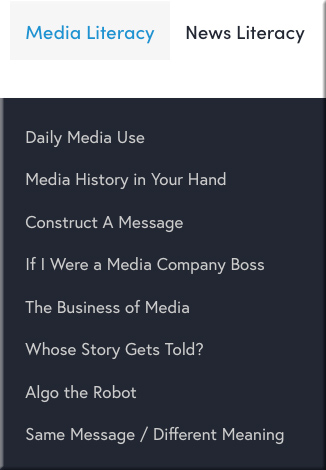
To help teach your students about news and media literacy, I highly recommend my sister Sue Ellen Christian’s work out at Wonder Media.

Wonder Media -- a site to teach your students about Media and News Literacy
.

.

.

There you will find numerous resources for libraries, schools, families and individuals. Suggestions of books, articles, other websites, and online materials to assist you in growing your media literacy and news media literacy are also included there.


It’s The End Of The Legal Industry As We Know It — from artificiallawyer.com by Richard Tromans

It’s the end of the legal industry as we know it and I feel fine. I really do.

The legal industry as we know it is already over. The seismic event that triggered this evolutionary shift happened in November 2022. There’s no going back to a pre-genAI world. Change, incremental or otherwise, will be unstoppable. The only question is: at what pace will this change happen?

It’s clear that substantive change at the heart of the legal economy may take a long time – and we should never underestimate the challenge of overturning decades of deeply embedded cultural practices – but, at least it has begun.


AI: The New Legal Powerhouse — Why Lawyers Should Befriend The Machine To Stay Ahead — from today.westlaw.com

(October 24, 2024) – Jeremy Glaser and Sharzaad Borna of Mintz discuss waves of change in the legal profession brought on by AI, in areas such as billing, the work of support staff and junior associates, and ethics.

The dual nature of AI — excitement and fear
AI is evolving at lightning speed, sparking both wonder and worry. As it transforms industries and our daily lives, we are caught between the thrill of innovation and the jitters of uncertainty. Will AI elevate the human experience or just leave us in the dust? How will it impact our careers, privacy and sense of security?

Just as we witnessed with the rise of the internet — and later, social media — AI is poised to redefine how we work and live, bringing a mix of optimism and apprehension. While we grapple with AI’s implications, our clients expect us to lead the charge in leveraging it for their benefit.

However, this shift also means more competition for fewer entry-level jobs. Law schools will play a key role in helping students become more marketable by offering courses on AI tools and technology. Graduates with AI literacy will have an edge over their peers, as firms increasingly value associates who can collaborate effectively with AI tools.


Will YOU use ChatGPT voice mode to lie to your family? Brainyacts #244 — from thebrainyacts.beehiiv.com by Sam Douthit, Aristotle Jones, and Derek Warzel.

Small Law’s Secret Weapon: AI Courtroom Mock Battles — this excerpt is by Brainacts author Josh Kubicki
As many of you know, this semester my law students have the opportunity to write the lead memo for this newsletter, each tackling issues that they believe are both timely and intriguing for our readers. This week’s essay presents a fascinating experiment conducted by three students who explored how small law firms might leverage ChatGPT in a safe, effective manner. They set up ChatGPT to simulate a mock courtroom, even assigning it the persona of a Seventh Circuit Court judge to stage a courtroom dialogue. It’s an insightful take on the how adaptable technology like ChatGPT can offer unique advantages to smaller practices. They share other ideas as well. Enjoy!

The following excerpt was written by Sam Douthit, Aristotle Jones, and Derek Warzel.

One exciting example is a “Courtroom Persona AI” tool, which could let solo practitioners simulate mock trials and practice arguments with AI that mimics specific judges, local courtroom customs, or procedural quirks. Small firms, with their deep understanding of local courts and judicial styles, could take full advantage of this tool to prepare more accurate and relevant arguments. Unlike big firms that have to spread resources across jurisdictions, solo and small firms could use this AI-driven feedback to tailor their strategies closely to local court dynamics, making their preparations sharper and more strategic. Plus, not all solo or small firms have someone to practice with or bounce their ideas off of. For these practitioners, it’s a chance to level up their trial preparation without needing large teams or costly mock trials, gaining a practical edge where it counts most.

Some lawyers have already started to test this out, like the mock trial tested out here. One oversimplified and quick way to try this out is using the ChatGPT app.


The Human in AI-Assisted Dispute Resolution — from jdsupra.com by Epiq

Accountability for Legal Outputs
AI is set to replace some of the dispute resolution work formerly done by lawyers. This work includes summarising documents, drafting legal contracts and filings, using generative AI to produce arbitration submissions for an oral hearing, and, in the not-too-distant future, ingesting transcripts from hearings and comparing them to the documentary record to spot inconsistencies.

As Pendell put it, “There’s quite a bit of lawyering going on there.” So, what’s left for humans?

The common feature in all those examples is that humans must make the judgement call. Lawyers won’t just turn over a first draft of an AI-generated contract or filing to another party or court. The driving factor is that law is still a regulated profession, and regulators will hold humans accountable.

The idea that young lawyers must do routine, menial work as a rite of passage needs to be updated. Today’s AI tools put lawyers at the top of an accountability chain, allowing them to practice law using judgement and strategy as they supervise the work of AI. 


Small law firms embracing AI as they move away from hourly billing — from legalfutures.co.uk by Neil Rose

Small law firms have embraced artificial intelligence (AI), with document drafting or automation the most popular application, according to new research.

The survey also found expectations of a continued move away from hourly billing to fixed fees.

Legal technology provider Clio commissioned UK-specific research from Censuswide as an adjunct to its annual US-focused Legal Trends report, polling 500 solicitors, 82% of whom worked at firms with 20 lawyers or fewer.

Some 96% of them reported that their firms have adopted AI into their processes in some way – 56% of them said it was widespread or universal – while 62% anticipated an increase in AI usage over the next 12 months.


Below are several items from edutopia.org:


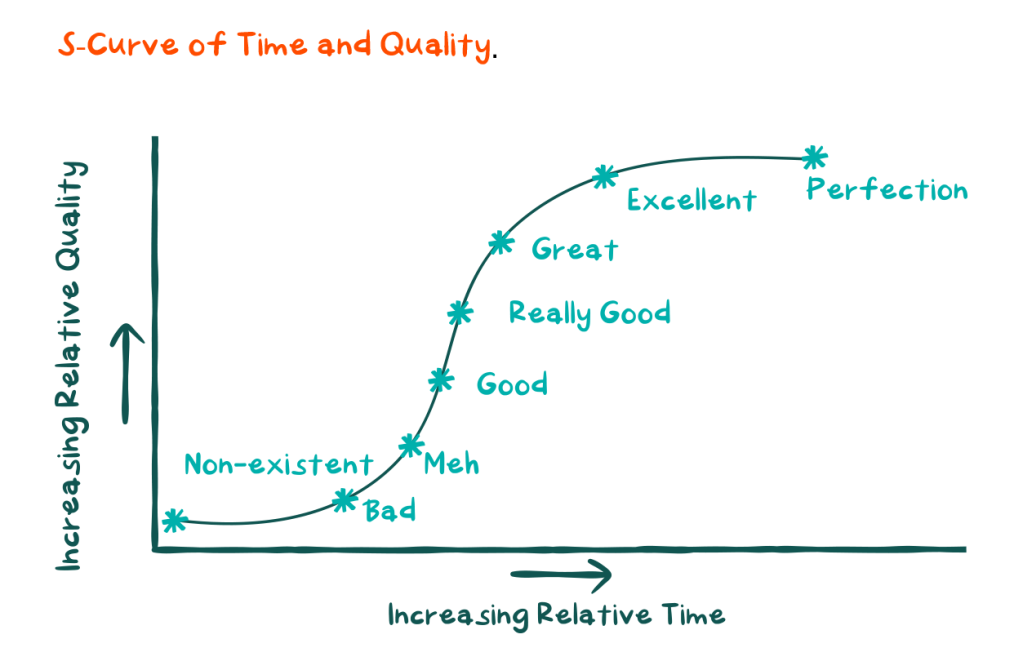
Doing the Best You Can With the Time You Have — by Jay Schauer
These strategies can help overwhelmed teachers prioritize tasks and find a balance between perfectionism and efficiency.
.


How to Support Teachers’ Emotional Health — by Hedreich Nichols
Emotional well-being plays a major role in teachers’ job satisfaction, and it’s essential that they have effective resources for support.

Teachers cannot be expected to teach SEL effectively without first being intentional about their own emotional health. If we want educators to guide students through emotional regulation, they must have the time, space, and support to do that work themselves. This goes beyond surface-level wellness initiatives—teachers need opportunities to reflect on their emotional triggers, manage their own stresses, and receive genuine support from their schools. Only when teachers are empowered to process their own emotional challenges can they truly foster a healthy social and emotional environment for their students.


In Praise of the Humble Document Camera — by Emily Rankin
Revisiting a simple edtech tool can help you introduce rigor and engage students more deeply in their lessons.

4 Ways to Use a Document Camera in Your Classroom— by Emily Rankin
If a document camera is gathering dust in a classroom, its lack of impact is probably linked to the user, not what the gadget is capable of. Case in point, I wasn’t using mine regularly because I didn’t know the value it could add to my teaching and learning. Here are some of the practices I now know are possible:

  1. Guided practice. …
  2. Assessment for learning. …
  3. Sharing materials. …
  4. Expanding teaching and learning possibilities.

Weighing Inquiry-Based Learning and Direct Instruction in Elementary Math — by Vivian Quan
Teachers can ask themselves three key questions in order to choose the most effective instructional approach to a topic.

One factor to consider is the subject. In math, students need opportunities to work on rich tasks and solve problems in ways that make sense to them. However, that doesn’t mean direct instruction is totally absent from math time. The questions below can guide you in deciding whether to use direct instruction, when it would be appropriate, and who else in the classroom you might involve.


Increasing Talk Time in World Language Classes — by Kate Good
Teachers can experiment with a variety of strategies to build and assess students’ ability to converse in the target language.

To capitalize on my students’ (seemingly inexhaustible) desire to chat, I work to increase student talk time in our Spanish immersion classes. I use several strategies to build and assess students’ oral language.


Is Generative AI and ChatGPT healthy for Students? — from ai-supremacy.com by Michael Spencer and Nick Potkalitsky
Beyond Text Generation: How AI Ignites Student Discovery and Deep Thinking, according to firsthand experiences of Teachers and AI researchers like Nick Potkalitsky.

After two years of intensive experimentation with AI in education, I am witnessing something amazing unfolding before my eyes. While much of the world fixates on AI’s generative capabilities—its ability to create essays, stories, and code—my students have discovered something far more powerful: exploratory AI, a dynamic partner in investigation and critique that’s transforming how they think.

They’ve moved beyond the initial fascination with AI-generated content to something far more sophisticated: using AI as an exploratory tool for investigation, interrogation, and intellectual discovery.

Instead of the much-feared “shutdown” of critical thinking, we’re witnessing something extraordinary: the emergence of what I call “generative thinking”—a dynamic process where students learn to expand, reshape, and evolve their ideas through meaningful exploration with AI tools. Here I consciously reposition the term “generative” as a process of human origination, although one ultimately spurred on by machine input.


A Road Map for Leveraging AI at a Smaller Institution — from er.educause.edu by Dave Weil and Jill Forrester
Smaller institutions and others may not have the staffing and resources needed to explore and take advantage of developments in artificial intelligence (AI) on their campuses. This article provides a roadmap to help institutions with more limited resources advance AI use on their campuses.

The following activities can help smaller institutions better understand AI and lay a solid foundation that will allow them to benefit from it.

  1. Understand the impact…
  2. Understand the different types of AI tools…
  3. Focus on institutional data and knowledge repositories…

Smaller institutions do not need to fear being left behind in the wake of rapid advancements in AI technologies and tools. By thinking intentionally about how AI will impact the institution, becoming familiar with the different types of AI tools, and establishing a strong data and analytics infrastructure, institutions can establish the groundwork for AI success. The five fundamental activities of coordinating, learning, planning and governing, implementing, and reviewing and refining can help smaller institutions make progress on their journey to use AI tools to gain efficiencies and improve students’ experiences and outcomes while keeping true to their institutional missions and values.

Also from Educause, see:


AI school opens – learners are not good or bad but fast and slow — from donaldclarkplanb.blogspot.com by Donald Clark

That is what they are doing here. Lesson plans focus on learners rather than the traditional teacher-centric model. Assessing prior strengths and weaknesses, personalising to focus more on weaknesses and less on things known or mastered. It’s adaptive, personalised learning. The idea that everyone should learn at the exactly same pace, within the same timescale is slightly ridiculous, ruled by the need for timetabling a one to many, classroom model.

For the first time in the history of our species we have technology that performs some of the tasks of teaching. We have reached a pivot point where this can be tried and tested. My feeling is that we’ll see a lot more of this, as parents and general teachers can delegate a lot of the exposition and teaching of the subject to the technology. We may just see a breakthrough that transforms education.


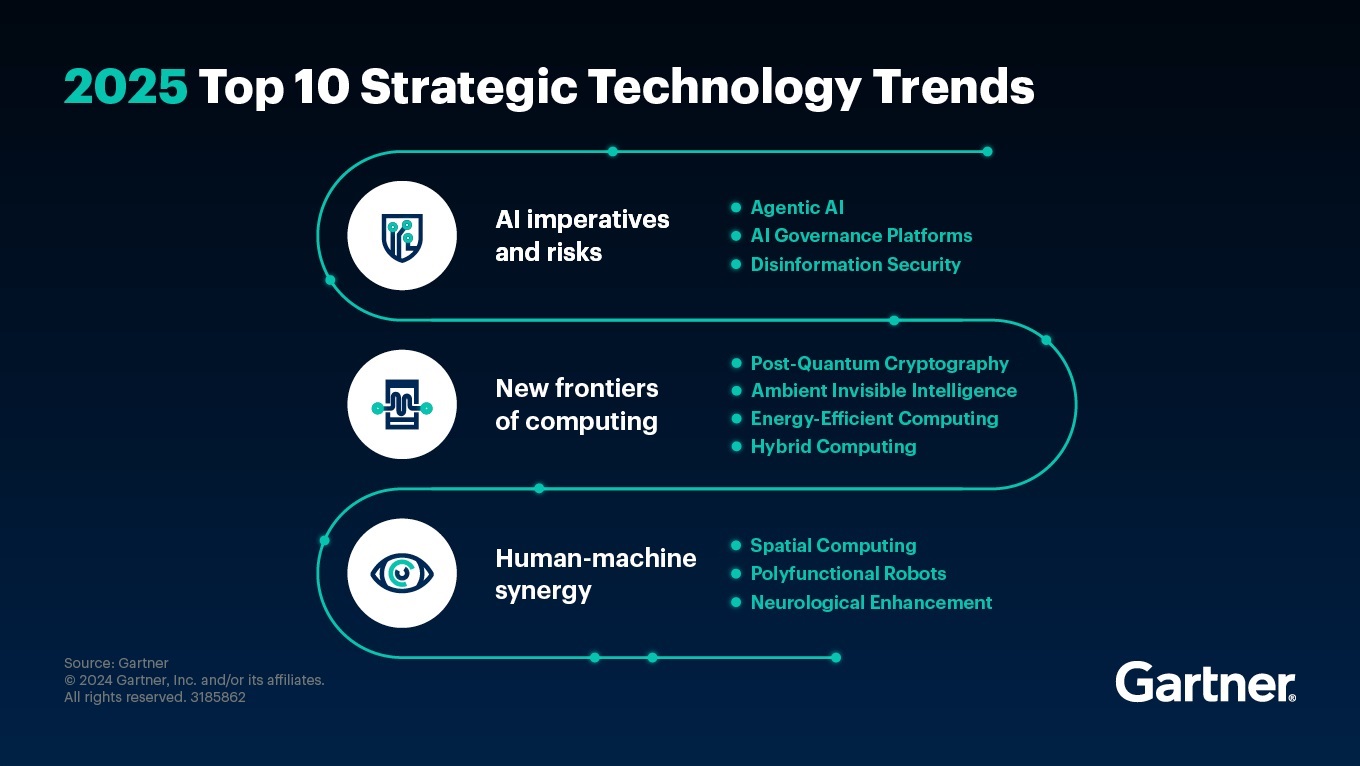
Agentic AI Named Top Tech Trend for 2025 — from campustechnology.com by David Ramel

Agentic AI will be the top tech trend for 2025, according to research firm Gartner. The term describes autonomous machine “agents” that move beyond query-and-response generative chatbots to do enterprise-related tasks without human guidance.

More realistic challenges that the firm has listed elsewhere include:

    • Agentic AI proliferating without governance or tracking;
    • Agentic AI making decisions that are not trustworthy;
    • Agentic AI relying on low-quality data;
    • Employee resistance; and
    • Agentic-AI-driven cyberattacks enabling “smart malware.”

Also from campustechnology.com, see:


Three items from edcircuit.com:


All or nothing at Educause24 — from onedtech.philhillaa.com by Kevin Kelly
Looking for specific solutions at the conference exhibit hall, with an educator focus

Here are some notable trends:

  • Alignment with campus policies: …
  • Choose your own AI adventure: …
  • Integrate AI throughout a workflow: …
  • Moving from prompt engineering to bot building: …
  • More complex problem-solving: …


Not all AI news is good news. In particular, AI has exacerbated the problem of fraudulent enrollment–i.e., rogue actors who use fake or stolen identities with the intent of stealing financial aid funding with no intention of completing coursework.

The consequences are very real, including financial aid funding going to criminal enterprises, enrollment estimates getting dramatically skewed, and legitimate students being blocked from registering for classes that appear “full” due to large numbers of fraudulent enrollments.


How Legal Education Must Evolve In The Age Of AI: Insights From An In-House Legal Innovator — from by abovethelaw.com Olga Mack
Traditional legal education has remained largely unchanged for decades, focusing heavily on theoretical knowledge and case law analysis.

As we stand on the brink of a new era defined by artificial intelligence (AI) and data-driven decision-making, the question arises: How should legal education adapt to prepare the next generation of lawyers for the challenges ahead?

Here are three unconventional, actionable insights from our conversation that highlight the need for a radical rethinking of legal education.

  1. Integrate AI Education Into Every Aspect Of Legal Training…
  2. Adopt A ‘Technology-Agnostic’ Approach To AI Training…
  3. Redefine Success In Legal Education To Include Technological Proficiency…
 
© 2025 | Daniel Christian