AI in K12: Today’s Breakthroughs and Tomorrow’s Possibilities (webinar)
How AI is Transforming Classrooms Today and What’s Next


Audio-Based Learning 4.0 — from drphilippahardman.substack.com by Dr. Philippa Hardman
A new & powerful way to leverage AI for learning?

At the end of all of this my reflection is that the research paints a pretty exciting picture – audio-based learning isn’t just effective, it’s got some unique superpowers when it comes to boosting comprehension, ramping up engagement, and delivering feedback that really connects with learners.

While audio has been massively under-used as a mode of learning, especially compared to video and text, we’re at an interesting turning point where AI tools are making it easier than ever to tap into audio’s potential as a pedagogical tool.

What’s super interesting is how the solid research backing audio’s effectiveness is and how well this is converging with these new AI capabilities.

From DSC:
I’ve noticed that I don’t learn as well via audio-only based events. It can help if visuals are also provided, but I have to watch the cognitive loads. My processing can start to get overloaded — to the point that I have to close my eyes and just listen sometimes. But there are people I know who love to listen to audiobooks and prefer to learn that way. They can devour content and process/remember it all. Audio is a nice change of pace at times, but I prefer visuals and reading often times. It needs to be absolutely quiet if I’m tackling some new information/learning. 


In Conversation With… Ashton Cousineau — from drphilippahardman.substack.com by Dr. Philippa Hardman
A new video series exploring how L&D professionals are working with AI on the ground

In Conversation With… Ashton Cousineau by Dr Philippa Hardman

A new video series exploring how L&D professionals are working with AI on the ground

Read on Substack


The Learning Research Digest vol. 28 — from learningsciencedigest.substack.com by Dr. Philippa Hardman

Hot Off the Research Press This Month:

  • AI-Infused Learning Design – A structured approach to AI-enhanced assignments using a three-step model for AI integration.
  • Mathematical Dance and Creativity in STEAM – Using AI-powered motion capture to translate dance movements into mathematical models.
  • AI-Generated Instructional Videos – How adaptive AI-powered video learning enhances problem-solving and knowledge retention.
  • Immersive Language Learning with XR & AI – A new framework for integrating AI-driven conversational agents with Extended Reality (XR) for task-based language learning.
  • Decision-Making in Learning Design – A scoping review on how instructional designers navigate complex instructional choices and make data-driven decisions.
  • Interactive E-Books and Engagement – Examining the impact of interactive digital books on student motivation, comprehension, and cognitive engagement.
  • Elevating Practitioner Voices in Instructional Design – A new initiative to amplify instructional designers’ contributions to research and innovation.

Deep Reasoning, Agentic AI & the Continued Rise of Specialised AI Research & Tools for Education — from learningfuturesdigest.substack.com by Dr. Philippa Hardman

Here’s a quick teaser of key developments in the world of AI & learning this month:

  • DeepSeek R-1, OpenAI’s Deep Seek & Perplexity’s ‘Deep Research’ are the latest additions to a growing number of “reasoning models” with interesting implications for evidence-based learning design & development.
  • The U.S. Education Dept release an AI Toolkit and a fresh policy roadmap enabling the adoption of AI use in schools.
  • Anthropic Release “Agentic Claude”, another AI agent that clicks, scrolls, and can even successfully complete e-learning courses…
  • Oxford University Announce the AIEOU Hub, a research-backed research lab to support research and implementation on AI in education.
  • “AI Agents Everywhere”: A Forbes peek at how agentic AI will handle the “boring bits” of classroom life.
  • [Bias klaxon!] Epiphany AI: My own research leads to the creation of a specialised, “pedagogy first” AI co-pilot for instructional design marking the continued growth of specialised AI tools designed for specific industries and workflows.

AI is the Perfect Teaching Assistant for Any Educator — from unite.ai by Navi Azaria, CPO at Kaltura

Through my work with leading educational institutions at Kaltura, I’ve seen firsthand how AI agents are rapidly becoming indispensable. These agents alleviate the mounting burdens on educators and provide new generations of tech-savvy students with accessible, personalized learning, giving teachers the support they need to give their students the personalized attention and engagement they deserve.


Learning HQ — from ai-disruptor-hq.notion.site

This HQ includes all of my AI guides, organized by tool/platform. This list is updated each time a new one is released, and outdated guides are removed/replaced over time.


How AI Is Reshaping Teachers’ Jobs — from edweek.org

Artificial intelligence is poised to fundamentally change the job of teaching. AI-powered tools can shave hours off the amount of time teachers spend grading, lesson-planning, and creating materials. AI can also enrich the lessons they deliver in the classroom and help them meet the varied needs of all students. And it can even help bolster teachers’ own professional growth and development.

Despite all the promise of AI, though, experts still urge caution as the technology continues to evolve. Ethical questions and practical concerns are bubbling to the surface, and not all teachers feel prepared to effectively and safely use AI.

In this special report, see how early-adopter teachers are using AI tools to transform their daily work, tackle some of the roadblocks to expanded use of the technology, and understand what’s on the horizon for the teaching profession in the age of artificial intelligence.


Like it or not, AI is learning how to influence you — from venturebeat.com by Louis Rosenberg

Unfortunately, without regulatory protections, we humans will likely become the objective that AI agents are tasked with optimizing.

I am most concerned about the conversational agents that will engage us in friendly dialog throughout our daily lives. They will speak to us through photorealistic avatars on our PCs and phones and soon, through AI-powered glasses that will guide us through our days. Unless there are clear restrictions, these agents will be designed to conversationally probe us for information so they can characterize our temperaments, tendencies, personalities and desires, and use those traits to maximize their persuasive impact when working to sell us products, pitch us services or convince us to believe misinformation.
.


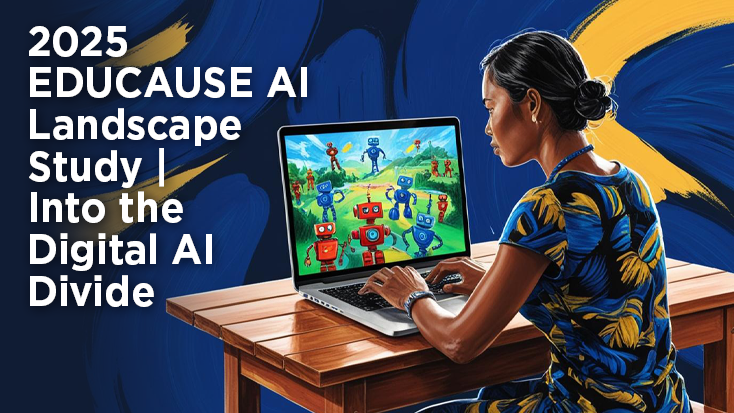
2025 EDUCAUSE AI Landscape Study: Into the Digital AI Divide — from library.educause.edu

The higher education community continues to grapple with questions related to using artificial intelligence (AI) in learning and work. In support of these efforts, we present the 2025 EDUCAUSE AI Landscape Study, summarizing our community’s sentiments and experiences related to strategy and leadership, policies and guidelines, use cases, the higher education workforce, and the institutional digital divide.


1 Corinthians 13:4-5 

Love is patient, love is kind. It does not envy, it does not boast, it is not proud. It does not dishonor others, it is not self-seeking, it is not easily angered, it keeps no record of wrongs.

John 3:16

16 For God so loved the world that he gave his one and only Son, that whoever believes in him shall not perish but have eternal life.

John 13:34-35

34 “A new command I give you: Love one another. As I have loved you, so you must love one another. 35 By this everyone will know that you are my disciples, if you love one another.”


The Anthropic Economic Index — from anthropic.com; via George Siemens

In the coming years, AI systems will have a major impact on the ways people work. For that reason, we’re launching the Anthropic Economic Index, an initiative aimed at understanding AI’s effects on labor markets and the economy over time.

The Index’s initial report provides first-of-its-kind data and analysis based on millions of anonymized conversations on Claude.ai, revealing the clearest picture yet of how AI is being incorporated into real-world tasks across the modern economy.

We’re also open sourcing the dataset used for this analysis, so researchers can build on and extend our findings.


An incredible musican/guitar player!


Law Prawfs Statement Regarding an Urgent Constitutional Crisis — from thefacultylounge.org
Over 400 law professors have signed the Call to Urgency below. The authors invite others to join in here.

A CALL TO URGENCY

The opening weeks of the second Trump administration convince us, as law professors who have spent years studying the American legal system, that we are beginning to see unfold the gravest threat to the rule of law and its constituent principles – the separation of governmental powers, the independence of prosecutorial authority, the inviolability of human rights, the transparency of government action, and the sanctity of constitutional accountability itself – ever presented in our lifetimes. The president’s and his associates’ actions, and threats of action, profoundly undermine the bedrock principle of our federal government system – that the Chief Executive and his agents are constrained by the United States Constitution. The fundamental guardrails of our constitutional democracy itself are threatened and notably battered. They are, as we write, at risk of complete collapse.


Half A Million Students Given ChatGPT As CSU System Makes AI History — from forbes.com by Dan Fitzpatrick

The California State University system has partnered with OpenAI to launch the largest deployment of AI in higher education to date.

The CSU system, which serves nearly 500,000 students across 23 campuses, has announced plans to integrate ChatGPT Edu, an education-focused version of OpenAI’s chatbot, into its curriculum and operations. The rollout, which includes tens of thousands of faculty and staff, represents the most significant AI deployment within a single educational institution globally.

We’re still in the early stages of AI adoption in education, and it is critical that the entire ecosystem—education systems, technologists, educators, and governments—work together to ensure that all students globally have access to AI and develop the skills to use it responsibly

Leah Belsky, VP and general manager of education at OpenAI.


HOW educators can use GenAI – where to start and how to progress — from aliciabankhofer.substack.com by Alicia Bankhofer
Part of 3 of my series: Teaching and Learning in the AI Age

As you read through these use cases, you’ll notice that each one addresses multiple tasks from our list above.

1. Researching a topic for a lesson
2. Creating Tasks For Practice
3. Creating Sample Answers
4. Generating Ideas
5. Designing Lesson Plans
6. Creating Tests
7. Using AI in Virtual Classrooms
8. Creating Images
9. Creating worksheets
10. Correcting and Feedback


What if students had the power to design their own learning journeys?

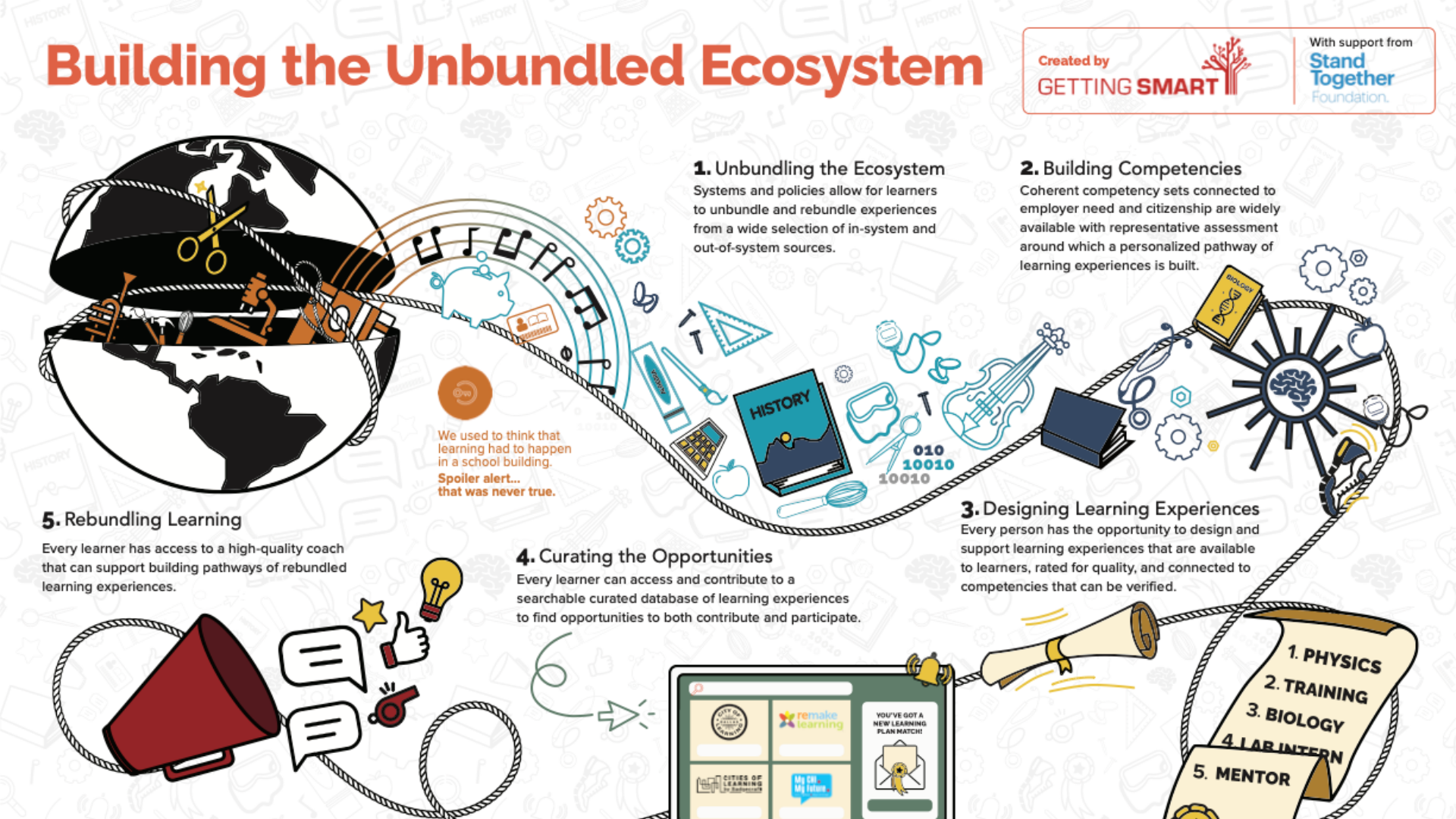
Across the U.S., states are moving beyond one-size-fits-all education and embracing unbundled learning, creating personalized pathways that equip students with the skills they need for the future. Getting Smart’s Unbundled Learning Podcast Series explores how Colorado, Arizona, and New Hampshire are leading the way—expanding real-world learning, shifting to competency-based models, empowering learner agency, and aligning education with workforce needs.

For policymakers, the newly released Policymaker’s Guide offers a roadmap for fostering unbundled systems. It highlights key priorities such as competency-driven accountability, flexible credentialing, and funding models that prioritize equity, helping state leaders create policies that expand opportunities for all learners.

Explore how unbundled learning is shaping the future of education and how states can build more personalized, future-ready systems.

New Pathways > Unbundled Learning — from gettingsmart.com
We used to think that learning had to happen in a school building. Spoiler alert…that was never true.

How might we create an ecosystem where learning doesn’t just happen at school? With Unbundled Learning, learners don’t need permission to have equitable experiences. Unbundled Learning removes all the barriers and allows learning to happen at school, after school, with industry partners and anywhere a learner can imagine. Unbundled Learning is the foundation for which new learning models are built, learners are supported and systems are scaled.

If we used to think that school was the only answer, now we know we have options.
.


Degree in hand, jobs out of reach: Why recent grads are struggling in a competitive market — from cnn.com by Nayeli Jaramillo-Plata; via Ryan Craig

Bellebuono’s story isn’t unique. A recent study from the Federal Reserve Bank of New York reported the widest unemployment gap between new graduates and experienced degree holders since the 1990s.

The struggle to find work
The unemployment gap is partly due to the increase in competition and changing employer expectations, said David Deming, professor of public policy at the Harvard Kennedy School.

Skill requirements for entry-level roles are higher today than a decade ago, he said. But the change has been gradual from year to year.


Wonder Tools: An investigative journalist’s favorites — from wondertools.substack.com by Jeremy Caplan and Madison Hopkins
A field guide to a reporter’s core digital tools

How do investigative journalists organize years of research, thousands of documents, and piles of notes? With toolkits like that of Madison Hopkins, whose Pulitzer Prize-winning reporting has exposed Chicago’s fatal fire safety failures and flawed surveillance programs.

Read on for Madison’s tools for managing long-term investigative projects — from her note-taking system to her workflow for tracking public records. Whether you’re a journalist or manage other kinds of projects, you’ll find multiple resources for your own work. – Jeremy


Also see:

Introducing deep research — from openai.com
An agent that uses reasoning to synthesize large amounts of online information and complete multi-step research tasks for you. Available to Pro users today, Plus and Team next.

[On 2/2/25 we launched] deep research in ChatGPT, a new agentic capability that conducts multi-step research on the internet for complex tasks. It accomplishes in tens of minutes what would take a human many hours.

Deep research is OpenAI’s next agent that can do work for you independently—you give it a prompt, and ChatGPT will find, analyze, and synthesize hundreds of online sources to create a comprehensive report at the level of a research analyst.

Comments/information per The Rundown AI:
The Rundown: OpenAI just launchedDeep Research, a new ChatGPT feature that conducts extensive web research on complex topics and delivers detailed reports with citations in under 30 minutes.

The details:

  • The system uses a specialized version of o3 to analyze text, images, and PDFs across multiple sources, producing comprehensive research summaries.
  • Initial access is limited to Pro subscribers ($200/mo) with 100 queries/month, but if safety metrics remain stable, it will expand to Plus and Team users within weeks.
  • Research tasks take between 5-30 minutes to complete, with users receiving a list of clarifying questions to start and notifications when results are ready.
  • Deep Research achieved a 26.6% on Humanity’s Last Exam, significantly outperforming other AI models like Gemini Thinking (6.2%) and GPT-4o (3.3%).

Why it matters: ChatGPT excels at quick, instant answers, but Deep Research represents the first major consumer attempt at tackling complex tasks that take humans days. Combined with the release of Operator, the landscape is shifting towards longer thinking with autonomous actions — and better results to show for it.

Also see:

The End of Search, The Beginning of OpenAI’s Deep Research — from theaivalley.com by Barsee

The quality of citations are also genuinely advance. Unlike traditional AI-generated sources prone to hallucinations, Deep Research provides legitimate academic references. Clicking a citation often takes users directly to the relevant highlighted text.

In a demo, the agent generated a comprehensive report on iOS and Android app market trends, showcasing its ability to tackle intricate subjects with accuracy.


Top 13 AI insights — from theneurondaily.com

Which links to and discusses Andrej Karpathy’s video at:

.

.

This is a general audience deep dive into the Large Language Model (LLM) AI technology that powers ChatGPT and related products. It is covers the full training stack of how the models are developed, along with mental models of how to think about their “psychology”, and how to get the best use them in practical applications. I have one “Intro to LLMs” video already from ~year ago, but that is just a re-recording of a random talk, so I wanted to loop around and do a lot more comprehensive version.


11 “‘Do not steal.
“‘Do not lie.
“‘Do not deceive one another.

Deuteronomy 6:4-5

4 Hear, O Israel: The Lord our God, the Lord is one. 5 Love the Lord your God with all your heart and with all your soul and with all your strength.

Romans 1:16

16 For I am not ashamed of the gospel, because it is the power of God that brings salvation to everyone who believes: first to the Jew, then to the Gentile.

Psalm 33:4-5

4 For the word of the Lord is right and true; he is faithful in all he does. 5 The Lord loves righteousness and justice; the earth is full of his unfailing love.

13 “‘Do not defraud or rob your neighbor.
“‘Do not hold back the wages of a hired worker overnight.

 
© 2025 | Daniel Christian