8 He has shown you, O mortal, what is good.
And what does the Lord require of you?
To act justly and to love mercy
and to walk humbly[a] with your God.
U.S. Businesses Potentially Spent Billions on Legal Fees for Inaccessible Websites in 2020 — from boia.org
Excerpt:
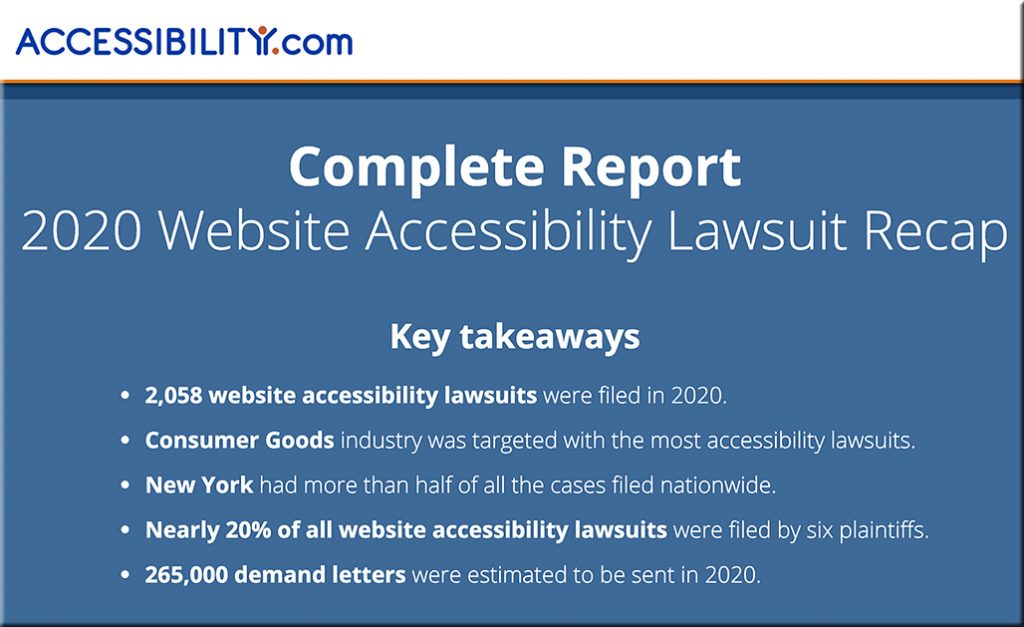
In a bombshell report published by Accessibility.com, the organization estimated that 265,000 website accessibility demand letters were sent to businesses last year. Astounding on its own, if the figure is correct or close to correct, U.S. companies could have spent billions of dollars in legal costs as a direct result of inaccessible websites in 2020 alone. Businesses looking for a wake-up call to make website accessibility a priority in 2021 and beyond might have just found it.
The above article linked to:
Also see:
Teaching: Giving Students Better Information Before They Sign Up for Class — from chronicle.com by Beth McMurtrie
Excerpt:
A New Tool for Course Transparency
The days when students flipped through course catalogues to determine what they wanted to study are long over. So why do so many colleges continue to provide students only brief course descriptions on which to base their enrollment decisions? Couldn’t those descriptions be much more expansive online, including course-material costs, a syllabus, and even a professor’s statement of their teaching philosophy?
Why?
Particularly now, students require information about classes as they plan their upcoming semester to find the best fit for their learning. Course descriptions rarely provide all the information students seek around class structure, attendance, cost, and more. Completing this not only serves as a communication mechanism for prospective students, it may reduce the number of emails and drop/adds to your course. (source)
Wonder Tools | The Best Data Viz Tool — from wondertools.substack.com by Jeremy Caplan
How and why to use Flourish to make impressive charts fast and for free
Excerpt:
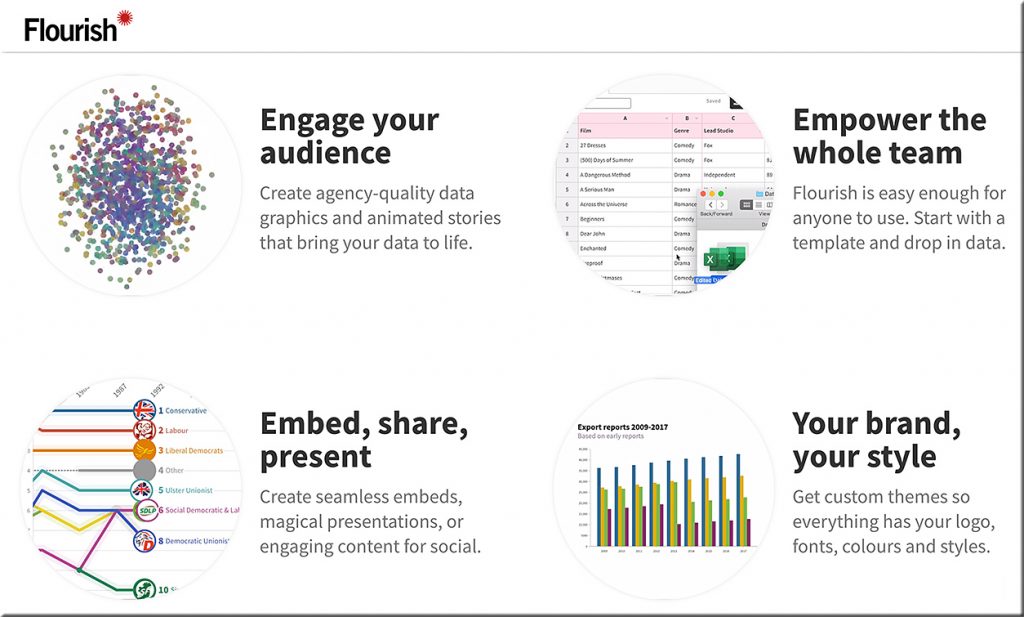
Flourish is a terrific tool for visualizing data. It’s easy to use and free. Unlike some complex tools aimed at data professionals, Flourish is simple enough for anyone to use. It’s also flexible and polished enough to use in professional newsroom projects. And it comes with a wide range of templates so you can create a strong interactive data visual to embed on any site within a couple of hours.
Best Headphones for Students in Remote Learning — from techlearning.com by Luke Edwards
Get the best headphones for students to hear and be heard in remote learning
Excerpts:
- Sony WH-1000XM4: Best headphones overall for students
- Plantronics BackBeat Go 810: Best affordable wireless headphones for students
Longtime Competitors Fastcase and Casemaker Merge, Reshaping the Legal Research Landscape — from lawsitesblog.com by Bob Ambrogi
Excerpt:
In news akin to a wedding announcement jointly issued by the Hatfields and the McCoys, two longtime competitors in the legal research market, Casemaker and Fastcase, have merged, creating a single company under the Fastcase brand that has an estimated subscriber base of more than three quarters of all lawyers in the United States.
Addendum on 1/6/21:
- Casemaker and Fastcase Merge to Become the Leader in Legal Research and Analytics — from fastcase.com
Leading state bar benefit providers create a powerful alternative for legal information
From DSC:
For me the Socratic method is still a question mark, in terms of effectiveness. (I suppose it depends on who is yielding the tool and how it’s being utilized/implemented.)
But you have one student — often standing up and/or in the spotlight — who is being drilled on something. That student could be calm and collected, and their cognitive processing could actually get a boost from the adrenaline.
But there are other students who dread being called upon in such a public — sometimes competitive — setting. Their cognitive processing could shut down or become greatly diminished.
Also, the professor is working with one student at a time — hopefully the other students are trying to address each subsequent question, but some students may tune out once they know it’s not their turn in the spotlight.
So I was wondering…could the Socratic method be used with each student at the same time? Could a polling-like tool be used in real-time to guide the discussion?
For example, a professor could start out with a pre-created poll and ask the question of all students. Then they could glance through the responses and even scan for some keywords (using their voice to drive the system and/or using a Ctrl+F / Command+F type of thing).
Then in real-time / on-the-fly, could the professor use their voice to create another poll/question — again for each student to answer — based on one of the responses? Again, each student must answer the follow up question(s).
Are there any vendors out there working on something like this? Or have you tested the effectiveness of something like this?
Vendors: Can you help us create a voice-driven interface to offer the Socratic method to everyone to see if and how it would work? (Like a Mentimeter type of product on steroids…er, rather, using an AI-driven backend.)
Teachers, trainers, pastors, presenters could also benefit from something like this — as it could engage numerous people at once.
#Participation #Engagement #Assessment #Reasoning #CriticalThinking #CommunicationSkills #ThinkingOnOnesFeet #OnlineLearning #Face-to-Face #BlendedLearning #HybridLearning
Could such a method be used in language-related classes as well? In online-based tutoring?
Big Changes in the Federal Student-Aid System Are Coming. Here’s Why They Matter. — from chronicle.com by Eric Hoover
Excerpt:
After all, a recent NCAN analysis led the organization to conclude that fewer than half of community colleges and only a quarter of public four-year institutions are affordable for the average Pell Grant recipient.
That’s why the group plans to push for a doubling of the maximum award in the months ahead. “Fafsa simplification and getting more students to apply for aid is a first step,” Warick said, “but we know there are not enough affordable options out there for families considering higher ed. We need a broad investment in the Pell Grant program.”
Also see:
Their Stories Helped Lift a 26-Year Ban on Pell Grants for Prisoners — from chronicle.com by Katherine Mangan
A college education transformed former inmates’ lives. But some critics fear low-quality programs will rush in.
Excerpts:
“Every time we sat before elected officials, sharing expertise and stories about the transformative power of education, we lived a paradox,” Nixon wrote in a statement after the ban was lifted. “The power of our testimony came with the stigma of incarceration. Yet, chins held high, we claimed that we are worthy of educational opportunity. And many educators stood with us — keeping hope alive by providing college behind bars when Pell was not an option.”
…
Expanding such opportunities has enjoyed growing bipartisan support as a way to reduce recidivism, save taxpayers money, and mitigate the discriminatory effects of mass incarceration and unequal schooling. But some fear that inmates might end up exhausting Pell eligibility on poor-quality programs that are rolled out too quickly, without the wraparound supports and face-to-face contact they say incarcerated students especially need.
From DSC:
After seeing the following two items, I wondered…should more professors, teachers, and staff members be on Substack?
Heather Cox Richardson Offers a Break From the Media Maelstrom. It’s Working. — from nytimes.com by Ben Smith
She is the breakout star of the newsletter platform Substack, doing the opposite of most media as she calmly situates the news of the day in the long sweep of American history.
Excerpt:
Last Wednesday, I broke the news to Heather Cox Richardson that she was the most successful individual author of a paid publication on the breakout newsletter platform Substack.
Early that morning, she had posted that day’s installment of “Letters From an American” to Facebook, quickly garnering more than 50,000 reactions and then, at 2:14 a.m., she emailed it to about 350,000 people.
…
The news of her ranking seemed to startle Dr. Richardson, who in her day job is a professor of 19th century American history at Boston College. The Substack leader board, a subject of fascination among media insiders, is a long way from her life on a Maine peninsula — particularly as the pandemic has ended her commute — that seems drawn from the era she studies.
Is Substack the Media Future We Want? — from newyorker.com by Anna Wiener
The newsletter service is a software company that, by mimicking some of the functions of newsrooms, has made itself difficult to categorize.
Excerpt:
…Substack, a service that enables writers to draft, edit, and send e-mail newsletters to subscribers. Writers can choose whether subscriptions are free or paid; the minimum charge for paid subscriptions is five dollars a month or thirty dollars a year, and Substack takes ten percent of all revenue.
Timnit Gebru’s Exit From Google Exposes a Crisis in AI — from wired.com by Alex Hanna and Meredith Whittaker
The situation has made clear that the field needs to change. Here’s where to start, according to a current and a former Googler.
Excerpt:
It was against this backdrop that Google fired Timnit Gebru, our dear friend and colleague, and a leader in the field of artificial intelligence. She is also one of the few Black women in AI research and an unflinching advocate for bringing more BIPOC, women, and non-Western people into the field. By any measure, she excelled at the job Google hired her to perform, including demonstrating racial and gender disparities in facial-analysis technologies and developing reporting guidelines for data sets and AI models. Ironically, this and her vocal advocacy for those underrepresented in AI research are also the reasons, she says, the company fired her. According to Gebru, after demanding that she and her colleagues withdraw a research paper critical of (profitable) large-scale AI systems, Google Research told her team that it had accepted her resignation, despite the fact that she hadn’t resigned. (Google declined to comment for this story.)
From DSC:
As we move into 2021, the blistering pace of emerging technologies will likely continue. Technologies such as:
- Artificial Intelligence (AI) — including technologies related to voice recognition
- Blockchain
- Augment Reality (AR)/Mixed Reality (MR)/Virtual Reality (VR) and/or other forms of Extended Reality (XR)
- Robotics
- Machine-to-Machine Communications (M2M) / The Internet of Things (IoT)
- Drones
- …and other things will likely make their way into how we do many things (for better or for worse).
Along the positive lines of this topic, I’ve been reflecting upon how we might be able to use AI in our learning experiences.
For example, when teaching in face-to-face-based classrooms — and when a lecture recording app like Panopto is being used — could teachers/professors/trainers audibly “insert” main points along the way? Similar to something like we do with Siri, Alexa, and other personal assistants (“Heh Siri, _____ or “Alexa, _____).
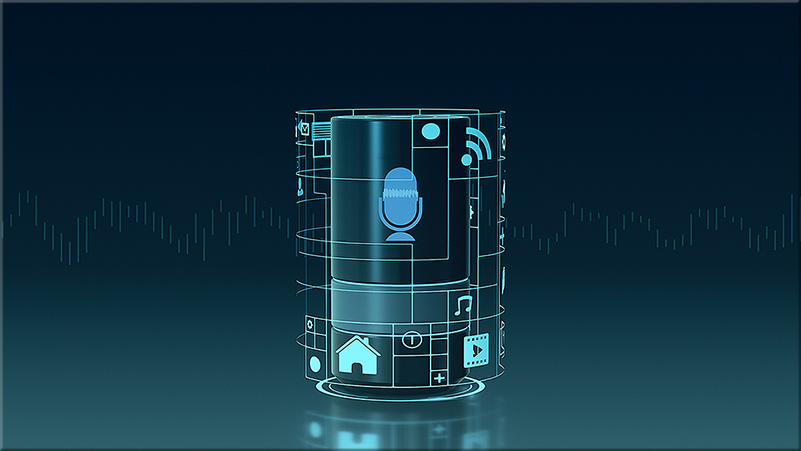
(Image purchased from iStockphoto)
.
Pretend a lecture, lesson, or a training session is moving right along. Then the professor, teacher, or trainer says:
- “Heh Smart Classroom, Begin Main Point.”
- Then speaks one of the main points.
- Then says, “Heh Smart Classroom, End Main Point.”
Like a verbal version of an HTML tag.
After the recording is done, the AI could locate and call out those “main points” — and create a table of contents for that lecture, lesson, training session, or presentation.
(Alternatively, one could insert a chime/bell/some other sound that the AI scans through later to build the table of contents.)
In the digital realm — say when recording something via Zoom, Cisco Webex, Teams, or another application — the same thing could apply.
Wouldn’t this be great for quickly scanning podcasts for the main points? Or for quickly scanning presentations and webinars for the main points?
Anyway, interesting times lie ahead!
12 Teach us to number our days,
that we may gain a heart of wisdom.

The 12/31/20 EIEIO from Michael Moe
Excerpts:
The 10 Megatrends Shaping Our World
- Knowledge Economy
- Global Silicon Valley
- Digitization
- Smart Everything
- HomeWork
The Office has become optional but the Zoom Room has become essential. 88% of companies encouraged or required employees to work from home during the pandemic. A near term problem that is rapidly being solved is that only 1 in 4 people are set up currently to work efficiently from home but 99% of employees say they like that option. Overall, due to reducing commutes, office distractions etc., productivity on average rose for most knowledge workers up to 20% greater.It is expected that many knowledge workers will continue to work from home even post the pandemic. - Winner Take All
- Data King
- Sustainability
- Everything is a Subscription
- Mission Corp
EdSurge Reflects On a Year of Pandemic-Era Education Journalism — from edsurge.com by Jeffrey Young, Rebecca Koenig and Tony Wan
Excerpts:
[Wan] It has never been a better time to be in education. It has also never been a worse time to be in education.
Which is it for you?
The answer depends on where you are in this ecosystem.
[Koenig] If I didn’t know before, I do now: Education is not merely the transmission of knowledge. It is experiences shared and relationships nurtured among people who have not only brains, but also bodies and spirits. Lungs vulnerable to viruses and eyes to screen fatigue. Hearts susceptible to fear and grief and doubt and loneliness.
[Young] There will probably be lessons from all the forced experimentation. But during 2020, there was little time for reflection, only a push to turn in something that looked as much like a college experience as possible.
My Favorite Wonder Tools of 2020 — from wondertools.substack.com by Jeremy Caplan
Excerpts:
Here are a few things I loved in 2020:
Math Tango
If you have a little one, this app is a grand slam. Recommended by her teacher, Math Tango was a surprise favorite for my younger daughter, who started kindergarten this fall. She rarely used a screen until remote school began. She loves the app’s creative puzzles and she’s enjoyed learning lots of basic math. It’s $8/month or $50/year, for ages 5-10.
Seek
Point the app at a plant, flower, bug or animal and it magically identifies it. Depending on how close you are, how much light there is, and how good your phone’s camera is, results vary, but I was impressed.