Two items for the engineers out there!

The World’s Most Powerful Tidal Turbine Is Almost Complete — from interestingengineering.com by Christopher McFadden
Allegedly the world’s most powerful turbine, the O2 is almost complete.

Picture of the Orbital 02, purportedly the world's most powerful tidal turbine

Excerpt:

Once operational, the turbine will kick out nearly 2 megawatts of power. That is enough to power at least 2,000 homes in the UK every year. The turbine will be connected to the European Marine Energy Centre off the Orkney Islands.


Genesis Breaks World Record by Flying 3,281 Drones Over Shanghai — from interestingengineering.com by Fabienne Lang
The impressive stunt now holds the record of Most Unmanned Aerial Vehicles (UAVs) Airborne Simultaneously in the Guinness World Record book.

Genesis' drones over Shanghai


From DSC:
I read an interesting article out at Inside Higher Ed from the other day:

Rejecting Remote Proctoring — from insidehighered.com by Elizabeth Redden
University of Michigan Dearborn made a universitywide decision to reject remote proctoring and invest in faculty development instead.

At the same time many other colleges were considering whether to employ the technologies, UM Dearborn’s leadership made the choice that eproctoring was unacceptably invasive, at least when it comes to students who hadn’t signed up for that kind of surveillance.

From DSC:
Lower stakes assessments offered with a greater variety of ways to check for mastery. That fits in with what I’m reading about re: the topic of Universal Design for Learning (UDL), which offers:

  • Multiple methods of engagement
  • Multiple methods of representation
  • Multiple methods of action & expression <– to demonstrate what they are learning

It also reduces anxiety — something that’s needed in this period of time.


Making VR a Reality in the Classroom — from er.educause.edu by Cat Flynn and Peter Frost
Faculty and staff at Southern New Hampshire University piloted virtual reality in an undergraduate psychology course to see if it can be an effective pedagogical tool.

Excerpt:

Meeting the Learning Needs of Gen Z and Beyond
While this study was conducted with current SNHU undergraduates, our team aimed to understand the implications of immersive learning for both today’s students and future learners.

Given Gen Z’s documented love for gaming and their desire for higher education to equip them with problem-solving and practical skills, VR provides a confluence of experiential learning and engagement.

From DSC:
Cost and COVID-19 are major issues here, but this is an interesting article nonetheless.

I think Virtual Reality (VR), Mixed Reality (MR), and Augmented Reality (AR) will play a significant role in the future of how we learn. It may take us some time to get there, but I believe that we will.


A reasonable robot in the eyes of the law — from innovationaus.com by Stuart Corner

Excerpts:

“But what happens when an autonomous vehicle kills someone? A robot is not subject to the law. So is the car manufacturer liable, or the developer of the software? And how do you pinpoint the cause of such an accident?”

You can’t tax a robot worker
“If my employer, the University of Surrey could get a robot to automate my job, which they will someday, they would save money doing that, even if we were both equally good, because they have to make National Insurance contributions [a UK earnings tax that funds state pensions and other benefits] for my work and a host of other reasons, but the machine is taxed more favourably.


All Eyes on Utah: Launching the ‘First Nonlawyer-Owned’ Law Firm — from law.com by Alaina Lancaster
Daniel Wilde, an attorney for Law On Call, which claims to be the first nonlawyer-owned law firm in the nation, says the entire country can benefit from the innovative business models coming out of Utah.

Excerpt:

[The week of April 5], a registered agent service provider announced that it launched the first nonlawyer-owned law firm in the United States.

The move comes after the Utah Supreme Court approved a pilot program that would allow nonlawyers to provide certain legal services—a proposition that’s been kicked around in California, Arizona, Illinois and the District of Columbia. Under Northwest Registered Agent’s Law On Call model, clients can pay a $9 monthly subscription, where they can ring up lawyers directly. They can also hire Law on Call’s attorneys for legal work at discounted rates.


3 Best Practices for Tackling Tech Trends in the Legal Field — from by Heather Thomas
Law firms cannot be idle and ignore technology; they must find ways to use tech that matters and be aware of tech that could be relevant.

Excerpt:

Despite some of the early advantages seen from recent legal technology adoption, most law firms prefer to tread cautiously. The key, then, is finding simple ways to keep up with trends and use technology, without creating unnecessary dependencies or unforeseen issues. Three best practices for law firms wanting to strategically incorporate tech trends into their practices include verifying compliance, augmenting processes and filling gaps, and outsourcing processes to legal vendors.

Also see:

Legal technology start-up JUSTLAW notches an impressive milestone — from einnews.com

Excerpts:

NEW YORK, NY, UNITED STATES, April 13, 2021 /EINPresswire.com/ — Launched in 2020 in the face of the worst pandemic in a century, legal tech startup JUSTLAW set out with the lofty vision to give ordinary Americans access to top attorneys on a 24/7 basis. It’s working. The number of small businesses enrolled in its small business legal protection plan just surpassed 1,000.

JUSTLAW’s proprietary “Peace of Mind 365” inverts the traditional practice of law. Instead of waiting to react to legal issues – just as we did with medical issues in the stone ages – JUSTLAW takes a tech-enabled, proactive approach to identifying, managing and mitigating potential risks. JUSTLAW lets companies connect with lawyers over the web, via SMS, video or phone. Their small business legal protection plans — which start at less than $10 a week – allow companies to match with a lawyer who is in their jurisdiction, has expertise in the problem they’re dealing with and has availability when the owner needs to talk. 


Penn students use digital platform Gather to imitate in-person office hours — from thedp.com by Isaac Lee; with thanks to Professor Sue Ellen Christian for this resource

Excerpt:

As students yearn for in-person interaction and the familiarity of their school buildings, platforms like Gather are filling the void — virtually.

Gather, also known as Gather.town, simulates buildings and classrooms on campus where students, professors, and teaching assistants can interact with one another through personal avatars during office hours. Its main feature, “Interaction Distance,” launches a video call between users whose avatars are within five steps from each other in the virtual space. As the users’ avatars walk away from each other, their video and audio quality decrease, simulating an in-person interaction.

Also see:

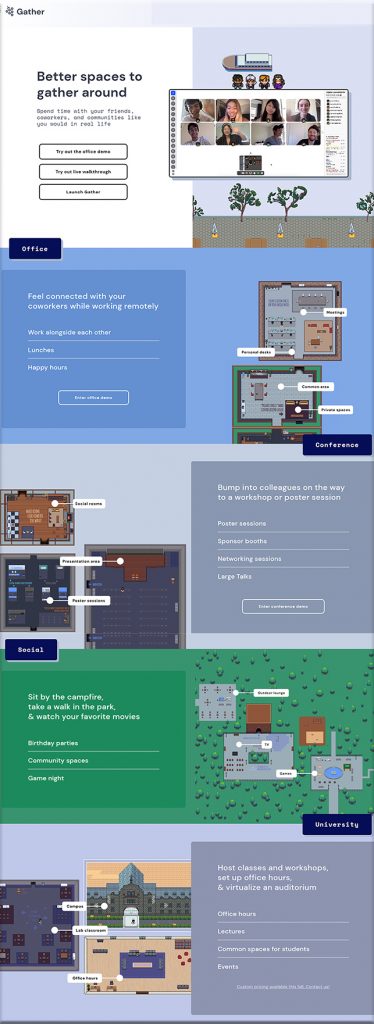
Image shows how people can gather around at the office, in a conference room, at a university, other -- https://gather.town/

From DSC:
Now picture this in VR.


This is an abstract picture of a person's head made of connections peering sideways -- it links to Artificial intelligence and the future of national security from ASU

Artificial intelligence and the future of national security — from news.asu.edu

Excerpt:

Artificial intelligence is a “world-altering” technology that represents “the most powerful tools in generations for expanding knowledge, increasing prosperity and enriching the human experience” and will be a source of enormous power for the companies and countries that harness them, according to the recently released Final Report of the National Security Commission on Artificial Intelligence.

This is not hyperbole or a fantastical version of AI’s potential impact. This is the assessment of a group of leading technologists and national security professionals charged with offering recommendations to Congress on how to ensure American leadership in AI for national security and defense. Concerningly, the group concluded that the U.S. is not currently prepared to defend American interests or compete in the era of AI.

Also see:

EU Set to Ban Surveillance, Start Fines Under New AI Rules — from bloomberg.com by Natalia Drozdiak

Excerpt:

The European Union is poised to ban artificial intelligence systems used for mass surveillance or for ranking social behavior, while companies developing AI could face fines as high as 4% of global revenue if they fail to comply with new rules governing the software applications.

Also see:

Wrongfully arrested man sues Detroit police over false facial recognition match — from washingtonpost.com by Drew Harwell
The case could fuel criticism of police investigators’ use of a controversial technology that has been shown to perform worse on people of color

Excerpts:

A Michigan man has sued Detroit police after he was wrongfully arrested and falsely identified as a shoplifting suspect by the department’s facial recognition software in one of the first lawsuits of its kind to call into question the controversial technology’s risk of throwing innocent people in jail.

Robert Williams, a 43-year-old father in the Detroit suburb of Farmington Hills, was arrested last year on charges he’d taken watches from a Shinola store after police investigators used a facial recognition search of the store’s surveillance-camera footage that identified him as the thief.

Prosecutors dropped the case less than two weeks later, arguing that officers had relied on insufficient evidence. Police Chief James Craig later apologized for what he called “shoddy” investigative work. Williams, who said he had been driving home from work when the 2018 theft had occurred, was interrogated by detectives and held in custody for 30 hours before his release.

Williams’s attorneys did not make him available for comment Tuesday. But Williams wrote in The Washington Post last year that the episode had left him deeply shaken, in part because his young daughters had watched him get handcuffed in his driveway and put into a police car after returning home from work.

“How does one explain to two little girls that a computer got it wrong, but the police listened to it anyway?” he wrote. “As any other black man would be, I had to consider what could happen if I asked too many questions or displayed my anger openly — even though I knew I had done nothing wrong.”

Addendum on 4/20/21:


AI in education: Features already adopted by companies, universities, and schools — from belitsoft.com by Dmitry Baraishuk

Excerpt:

AI use cases in education include such kinds of applications as: Artificial Intelligence in training, learning and development, AI in higher education and Artificial Intelligence in K-12 education. We’ve gathered and outlined real-life examples of AI in education for each of these three application areas. If you’re an L&D or HR pro, you will find insightful the section “AI in talent management and in Learning and development.” College and university leaders will discover helpful tools to significantly improve their educational process in the section “AI in Higher Education.” For school leaders, we’ve prepared the section “Artificial intelligence in K-12 education.”

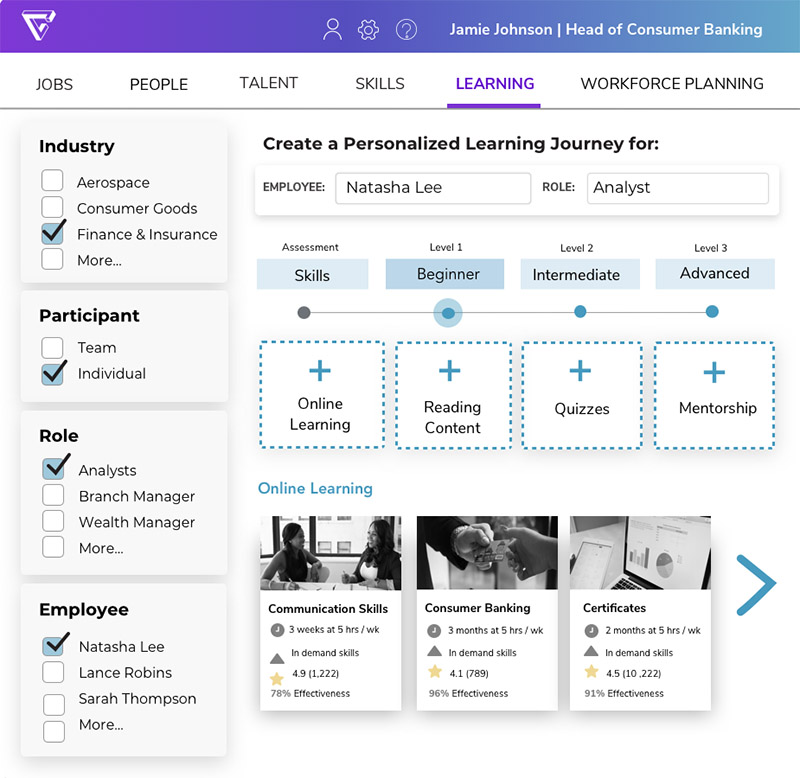
Screenshot of a software app showing what an interface might look like for creating a personalized learning journey for someone. You can select from industries, roles, employees, and more.

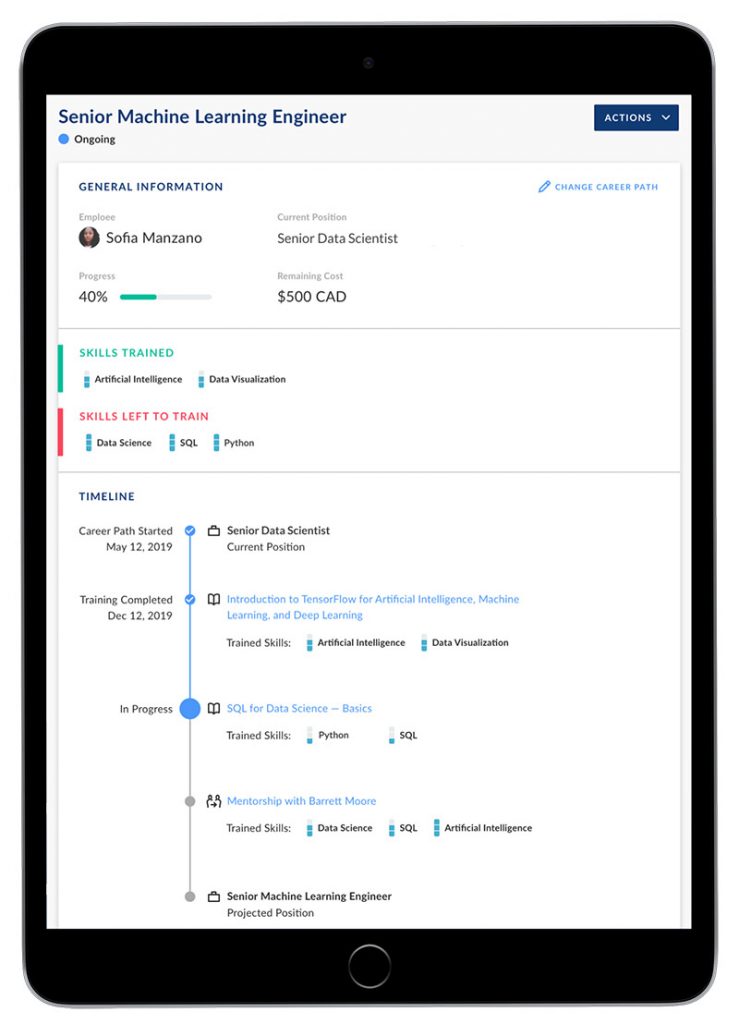
This screenshot of an app shows what type of skills-related information could be earned, tracked, gathered and displayed.

Addendum on 4/23/21:


Even as colleges pledge to improve, share of engineering and math graduates who are Black declines — from hechingerreport.org by Melba Newsome; with thanks to Ryan Craig for this resource
The supply of Black scientists, engineers and mathematicians is flat or falling even as demand goes up

Excerpt:

Black enrollment in STEM fields — science, technology, engineering and math — is among the issues that urgently demand attention, said Cato Laurencin, CEO of the Connecticut Institute for Clinical and Translational Science. “We need to move from talking about the issue of Blacks in STEM and systemic racism to making concrete changes,” Laurencin said.

The proportion of bachelor’s degrees in science awarded to Black graduates remained flat at about 9 percent from 2001 to 2016, according to the most recent available figures from the National Science Foundation; in engineering, it declined from 5 percent to 4 percent; and in math, it dropped from 7 percent to 4 percent.


Improving Digital Inclusion & Accessibility for Those With Learning Disabilities — from inclusionhub.com by Meredith Kreisa
Learning disabilities must be taken into account during the digital design process to ensure digital inclusion and accessibility for the community. This comprehensive guide outlines common learning disabilities, associated difficulties, accessibility barriers and best practices, and more.

“Learning shouldn’t be something only those without disabilities get to do,” explains Seren Davies, a full stack software engineer and accessibility advocate who is dyslexic. “It should be for everyone. By thinking about digital accessibility, we are making sure that everyone who wants to learn can.”

“Learning disability” is a broad term used to describe several specific diagnoses. Dyslexia, dyscalculia, dysgraphia, nonverbal learning disorder, and oral/written language disorder and specific reading comprehension deficit are among the most prevalent.

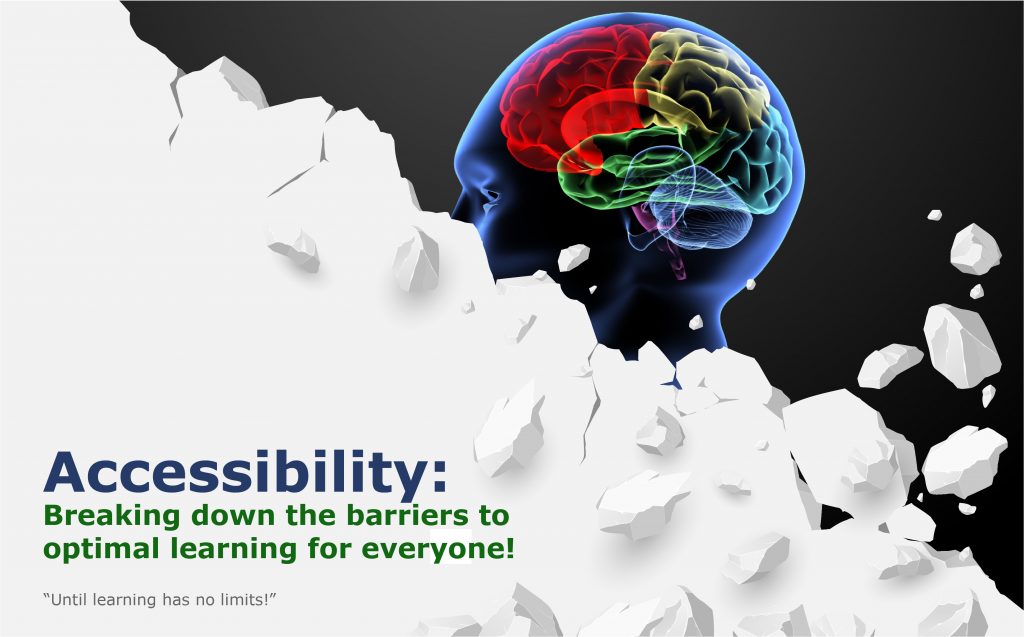
An image of a barrier being torn down -- revealing a human mind behind it. This signifies the need to tear down any existing barriers that might hinder someone's learning experience.


What If Students Didn’t Have to Leave Community Colleges to Earn Bachelor’s Degrees?
— from edsurge.com by Rebecca Koenig

Excerpt:

“The question I got most was, ‘When will Indian River offer baccalaureate-level programs?’” Massey says.

It’s a query fielded by community college leaders across the country. And over the past three decades, they’ve answered the call for increased access to bachelor’s-degree pathways by creating them on their own campuses. In fact, some community colleges in Florida have been offering bachelor’s programs for 20 years, and now nearly two dozen states permit so-called two-year colleges to offer four-year degrees.

And the pace of adoption is speeding up, with half a dozen states signing on since 2018, according to the Community College Baccalaureate Association.


Flipped Learning Can Be a Key to Transforming Teaching and Learning Post-Pandemic — from edsurge.com by Robert Talbert

Excerpt (emphasis DSC):

What is flipped learning? A common and oversimplified answer is that it is an approach that asks students to watch lecture videos at home before class so that class time can be used for more interactive activities.

But the best way to describe it is to contrast it with traditional teaching frameworks. In the traditional framework, students get first contact with new concepts in class (the “group space” as I call it in my book on flipped learning) and then higher-level interactions are all on the student side through homework and so on (in the “individual space”). Flipped learning puts first contact with new ideas before group space activities, then uses the group space for active learning on mid- and upper-level tasks.

It’s worthwhile to compare flipped and traditional frameworks by contrasting the assumptions that each framework makes…

We can no longer assume that a pure lecture pedagogy is an acceptable teaching model or that banning technology is an acceptable practice.


Blockchain 50 2021 — from forbes.com by Michael del Castillo
(From DSC: I missed this one…yet wanted to get this out there.)

Excerpt:

No longer dismissed as a haven for criminals and drug dealers, Bitcoin and blockchain have gone mainstream. Bitcoin’s 2020 surge grabbed the attention of C-suite executives worldwide; not only are companies employing the technology underlying Bitcoin to perform tasks such as reconciling invoices and verifying product provenance, but dozens are now holding Bitcoin as a treasury asset. Our third annual Blockchain 50 features companies that lead in employing distributed ledger technology and have revenue or a valuation of at least $1 billion. Twenty-one newcomers—including the world’s largest bank, the Industrial and Commercial Bank of China, and four others from Asia—make their debut. They take the spots of such U.S. companies as Facebook, Google, Amazon and Ripple, all of whom are still active in blockchain but kept lower profiles in the space over the past 12 months.

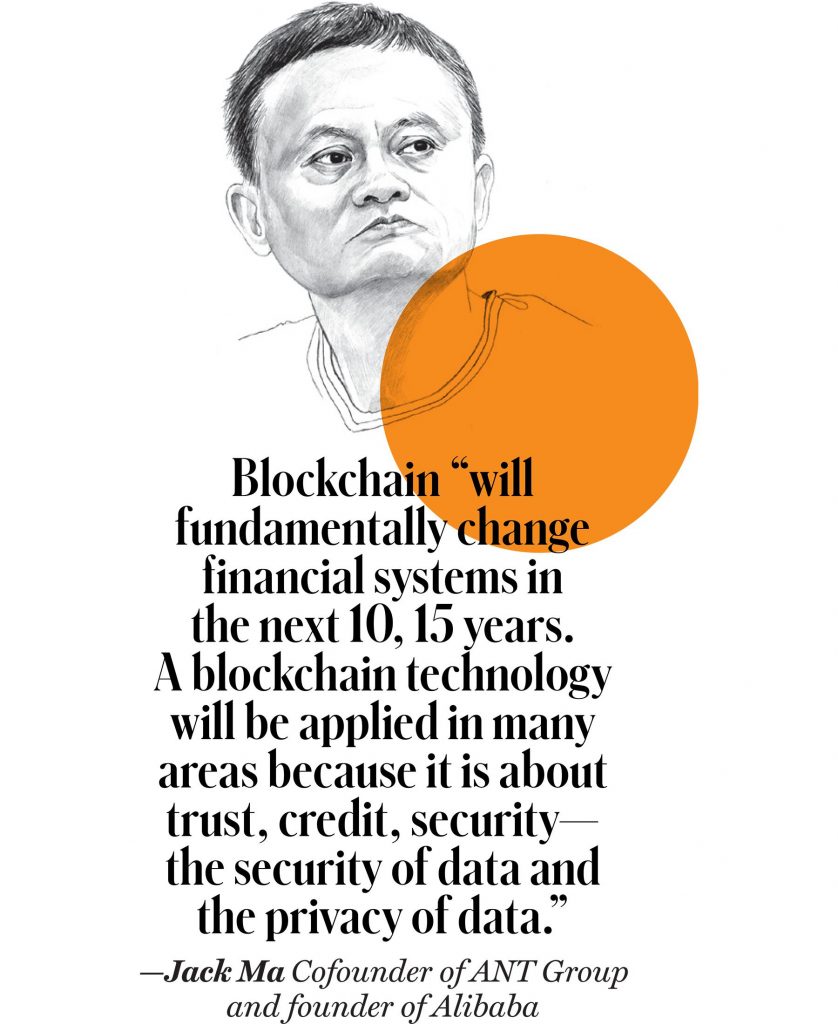
Quote from Jack Ma: Blockchain will fundamentally change financial systems in the next 10, 15 years.


Digital upskilling in legal: More than just new technology — from legalexecutiveinstitute.com by Bob Dolinsky; with thanks to Gabe Teninbaum for this resource

Excerpt:

How many law firms have digital upskilling programs for their lawyers and staff members? Based on what I hear and read, very few, if any.

Amazon, for example, recently announced a commitment of more than $700 million to its “Upskilling 2025” program, an internal training initiative designed to promote customer satisfaction and worker advancement. Another example is PwC, which has a digital upskilling program to develop its in-house talent pool called “New world. New skills.” In 2019, PwC announced that it would invest $3 billion into job training for its 275,000 employees around the world, enhancing its workforce and client service delivery to better address emerging digital needs.

The goals of these and similar initiatives is to help ensure that employees have the skills in the digital arena to be successful, to position these organizations as preferred employers, and to provide customer and client service excellence.

Also from Gabe:

“Virtual justice” (the preferred, if unsettling, term) is an emergency response to a dire situation. But it is also a vision some judicial innovators had long tried to realize. One leading booster, Michigan Chief Justice Bridget Mary McCormack, told me that going online can make courts not only safer but “more transparent, more accessible, and more convenient.” Witnesses, jurors, and litigants no longer need to miss hours of work and fight traffic. Attorneys with cases in multiple courts can jump from one to another by swiping on their phones.

 
© 2025 | Daniel Christian