The Great Education Unbundling and How Learning Will be Rebundled — from gettingsmart.com by Nate McClennen, Tom Vander Ark

Key Points

  • The pandemic accelerated the great unbundling of learning – at least for those with access, agency, and advocates.
  • While unbundling will expand, how learning is rebundled will emerge as the next innovation — accessible, personalized, accountable and massive.

Excerpts:

By removing the barrier of full credit/school offered, schools become more robust in terms of richness of offerings as well as more personalized to meet the needs of students and communities.

The majority of unbundled experiences still fall back on the course level as the smallest granular level of choice. Following the lead of industry, unbundling in schools should mean a reduction in grain size so that skills are the level of unbundling rather than courses.


Top 5 Language Learning Apps in 2021 — per Sinisa Sambolic DMM, 42matters, Zürich

  1. Duolingo: language lessons by Duolingo
    Downloads Over the Last 30 Days: 6,924,751
  2. Learn 33 Languages Free – Mondly by ATi Studios
    Downloads Over the Last 30 Days: 777,312
  3. ELSA Speak: Online English Speaking App for mobile by ELSA
    Downloads Over the Last 30 Days: 537,654
  4. Lingokids – kids playlearning™ by Lingokids – English Learning For Kids
    Downloads Over the Last 30 Days: 533,291
  5. Cake: Free expressions updated daily! by Cake Corp
    Downloads Over the Last 30 Days: 186,041

42matters is a leading provider of mobile app data and app store insights. 42matters facilitates a holistic overview of the mobile app market by leveraging its unique arsenal of machine learning algorithms to research every app and developer on the major app stores and connected TV channel stores. These include the Apple App Store, Google Play, Amazon App Store, Tencent Appstore, AppleTV App Store, Amazon Fire TV, and Roku Channel Store.


50 Sites & Apps for K-12 Education Games — from techlearning.com by Diana Restifo and David Kapuler
Game-based learning is a great way to integrate technology into the classroom while engaging kids with real learning.

Excerpt:

Game-based learning turns potentially tedious study time into an adventurous knowledge quest, complete with catchy soundtracks and digital rewards. It helps keep kids engaged with the subject matter and motivated to pursue greater expertise. Best of all, web- or app-based gameplay integrates easily into both online and in-person classes.

With the demise of Flash at the end of 2020, many favorite educational game sites went under. That’s why we decided to update our popular list below to include the latest and best sites and apps for K-12 education games. Many are free (or offer free basic accounts) and some provide progress tracking and analysis tools for teachers. All will help kids enjoy learning.

Also relevant/see the following resource and excerpt from Goldie Blumenstyk’s The Edge (from the Chronicle of Higher Education)

Creative Acts for Curious People: How to Think, Create, and Lead in Unconventional Ways — by Sarah Stein Greenberg

Excerpt:

Greenberg also makes a compelling case for the “playful and joyous” approaches the d.school has been championing, like the secret handshake or building several prototypes of an ideal chair using tools like cardboard, pipe cleaners, and chewing gum and toothpicks. After so many months of loss and social deprivation, she told me last week, “those elements are more important than ever.”


From DSC:
Perhaps folks might want to experiment with the teaching strategy as mentioned below from Dr. Barbi Honeycutt’s Lecture Breakers Weekly e-newsletter.


From The Scholarly Teacher blog — who just added a new section on the blog which includes teaching tip infographics.

This week, they shared variations of Think, Pair, Share. In this teaching strategy, you give the students a problem or question. Then, you ask them to think about the question, pair up with a partner to discuss it, and then share it with the rest of the class (hence the name “think, pair, share”).

In this adaption, you do the same process, but instead of asking them to share with the class, you ask them to post a tweet using a class hashtag. Then you can read the tweets aloud, integrate them into your lecture, and/or facilitate a class discussion. This teaching strategy works well for blended, in-person, and online course formats, so it’s very adaptable to any topic or lesson.


jobtensor.com/uk <– an AI job board from the UK — with thanks to Dr. Jakob Sidoruk for this resource.

From DSC:
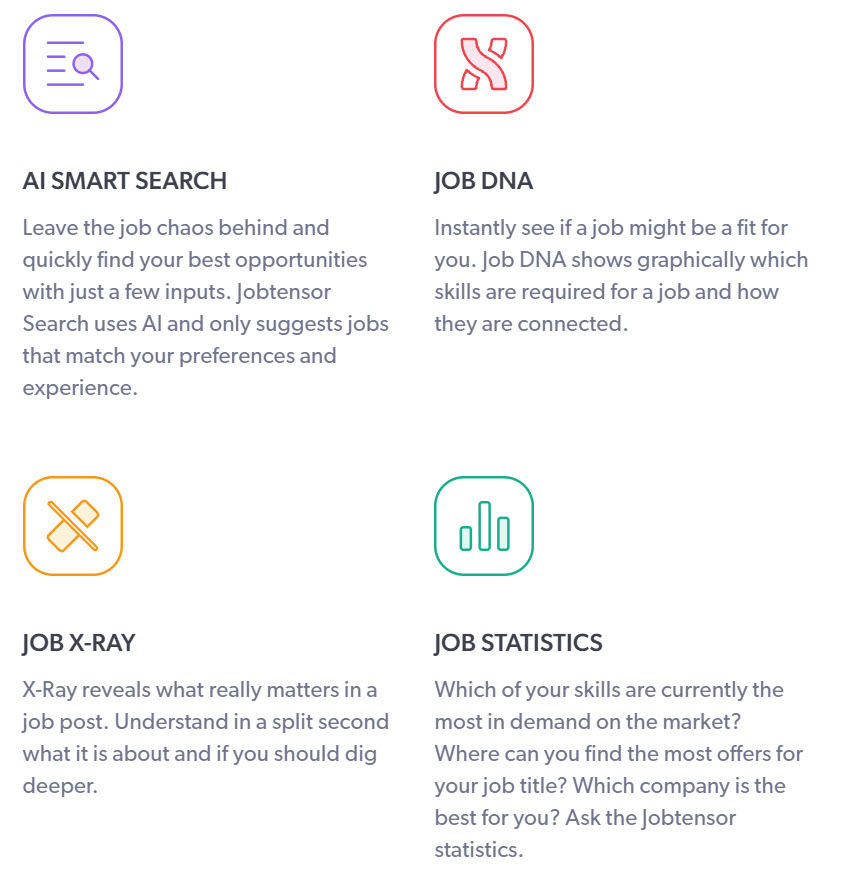
Jakob mentioned that Jobtensor has built a tool for jobs in tech, science and engineering and that the goal of this tool is to make job searches more fun and efficient for job seekers. I’m glad to see this from the other side of the table. That is, there have been plenty Applicant Tracking Systems (ATSs) out there that have essentially weeded people out time and again — while making many job searches long, expensive, and emotionally draining. 

jobtensor.com/uk -- an AI job board from the UK

jobtensor.com/uk -- an AI job board from the UK


From DSC:
It is exactly this kind of tool that could — and should — be integrated into a next-generation learning platform. Have an AI-enabled system of identifying the most current needs out in the workplace. Provide a mechanism/listing of those needs along with the existing courses, streams of content, podcasts, and more that could help someone learn those skills.

Learning from the living class room

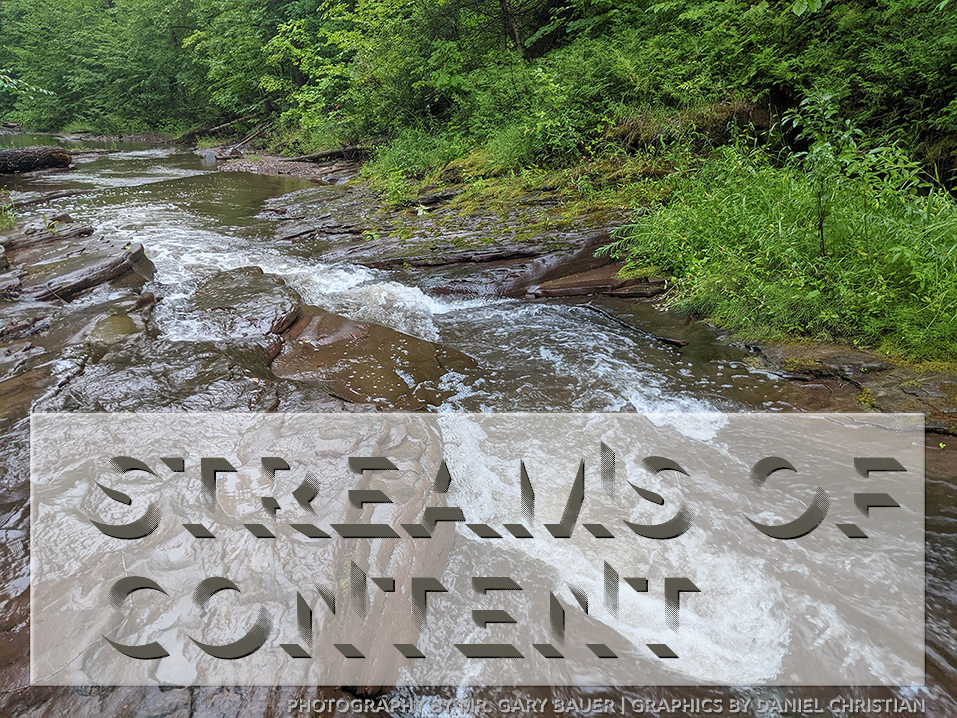
streams of content are ever flowing by -- we need to tap into them and contribute to them


Seek the Lord while he may be found;
    call on him while he is near.
Let the wicked forsake their ways
    and the unrighteous their thoughts.
Let them turn to the Lord, and he will have mercy on them,
    and to our God, for he will freely pardon.

“For my thoughts are not your thoughts,
    neither are your ways my ways,”
declares the Lord.
“As the heavens are higher than the earth,
    so are my ways higher than your ways
    and my thoughts than your thoughts.
10 As the rain and the snow
    come down from heaven,
and do not return to it
    without watering the earth
and making it bud and flourish,
    so that it yields seed for the sower and bread for the eater,
11 so is my word that goes out from my mouth:
    It will not return to me empty,
but will accomplish what I desire
    and achieve the purpose for which I sent it.


The college campus is the model for return to office — from by Jiani Zeng Honghao Deng
Using tech to map the spaces we need for the future of work

Excerpt:

Yet while the emergence of new variants continues to frustrate efforts to resume in-person work, the Delta variant alone does not explain why major employers continue to struggle to bring workers back in person. It seems that employees have lost faith in past models of working, which naturally prompts an examination of what a future “ebb and flow” will actually look like.

Well, it’s likely we already know what this new office environment will look like: the university campus.

College campuses have spaces that foster collaboration, community and culture — labs, open areas, cafes, not to mention auditoriums and arenas for events, sports and other rituals. But these are opt-in — no one forces you to go to the basketball game. You choose to go. So too companies will want to use their space to foster collaboration and culture for employees to opt into.


From DSC:
The articles below made me wonder…what will lawyers, judges, and legislators need to know about Bitcoin, Ethereum, and other cryptocurrencies? (#EmergingTechnologies)


Here’s an example of what an engaging and exciting online course might [look like]. 

You start with a short video that introduces the subject. It focuses on the course’s main ideas, and how they relate to one another, getting your learners interested in the topic and making them eager to learn more.


Education and Justice Departments Warn of Covid’s ‘Profound Toll’ on Student Mental Health — from chronicle.com by Sarah Brown

Excerpt:

As the pandemic drags on past 19 months in the United States, the Education Department and the Justice Department on Wednesday implored colleges and schools to be especially attentive to students who are showing signs of self-harm or suicide.

If institutions don’t adequately support students with mental-health diagnoses, as required by federal law, the departments warned that they could draw an investigation.

Suzanne B. Goldberg, a former senior administrator at Columbia University who’s now the Education Department’s acting assistant secretary for civil rights, wrote in a letter to educators that the Covid-19 era had “taken a profound toll” on students’ mental health.


Higher Education Needs to Move Toward Mass-Personalization — from fierceeducation.com by Susan Fourtané

Excerpt:

Every industry, from health sciences to marketing to manufacturing, is using Artificial Intelligence (AI) to facilitate the delivery of mass-personalization, yet education has been slow in its adoption. These smart systems create personalized solutions targeted to meet the unique needs of every individual.

Artificial Intelligence-based technologies have the potential of serving as tools for educators to provide personalized learning. However, for mass-personalization to work, institutions first need to align their leadership. In his feature session What Is It Going to Take to Move from Mass-Production to Mass-Personalization?, during the recent Online Learning Consortium virtual event, Dale Johnson, Director of Digital Innovation at Arizona State University, addressed the issue of mass personalization in higher education.

Johnson reinforced the idea that with mass-personalization professors can deliver the right lesson to the right student at the right time.

Mass-personalization software does not replace the professor. It makes the professor better, more focused on the students.

 
© 2025 | Daniel Christian