


The heavens declare the glory of God.https://t.co/Zy5ZYkMiAL
— Daniel S. Christian (@dchristian5) May 20, 2025
Excerpt:

The heavens declare the glory of God.https://t.co/Zy5ZYkMiAL
— Daniel S. Christian (@dchristian5) May 20, 2025
Excerpt:
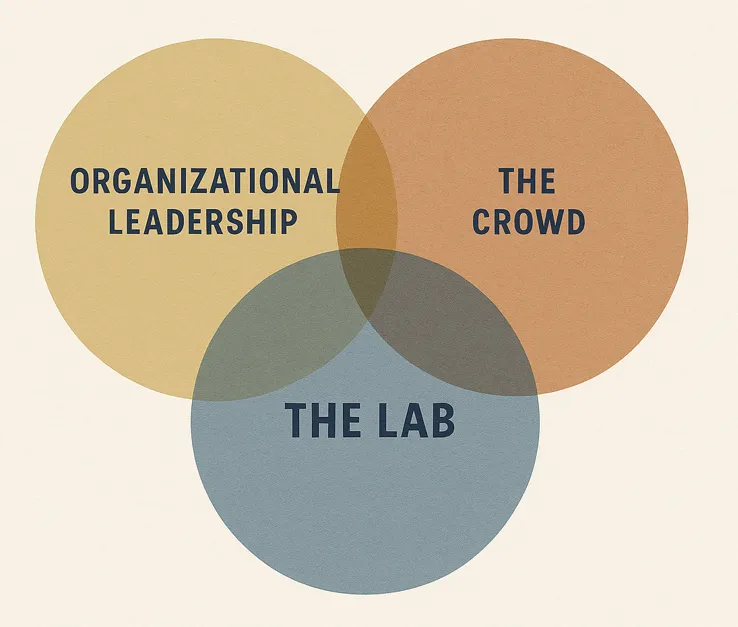
Making AI Work: Leadership, Lab, and Crowd — from oneusefulthing.org by Ethan Mollick
A formula for AI in companies
How do we reconcile the first three points with the final one? The answer is that AI use that boosts individual performance does not naturally translate to improving organizational performance. To get organizational gains requires organizational innovation, rethinking incentives, processes, and even the nature of work. But the muscles for organizational innovation inside companies have atrophied. For decades, companies have outsourced this to consultants or enterprise software vendors who develop generalized approaches that address the issues of many companies at once. That won’t work here, at least for a while. Nobody has special information about how to best use AI at your company, or a playbook for how to integrate it into your organization.
.
Galileo Learn™ – A Revolutionary Approach To Corporate Learning — from joshbersin.com
Today we are excited to launch Galileo Learn™, a revolutionary new platform for corporate learning and professional development.
…
How do we leverage AI to revolutionize this model, doing away with the dated “publishing” model of training?
The answer is Galileo Learn, a radically new and different approach to corporate training and professional development.
…
What Exactly is Galileo Learn™?
Galileo Learn is an AI-native learning platform which is tightly integrated into the Galileo agent. It takes content in any form (PDF, word, audio, video, SCORM courses, and more) and automatically (with your guidance) builds courses, assessments, learning programs, polls, exercises, simulations, and a variety of other instructional formats.
Designing an Ecosystem of Resources to Foster AI Literacy With Duri Long — from aialoe.org
Centering Public Understanding in AI Education
In a recent talk titled “Designing an Ecosystem of Resources to Foster AI Literacy,” Duri Long, Assistant Professor at Northwestern University, highlighted the growing need for accessible, engaging learning experiences that empower the public to make informed decisions about artificial intelligence. Long emphasized that as AI technologies increasingly influence everyday life, fostering public understanding is not just beneficial—it’s essential. Her work seeks to develop a framework for AI literacy across varying audiences, from middle school students to adult learners and journalists.
A Design-Driven, Multi-Context Approach
Drawing from design research, cognitive science, and the learning sciences, Long presented a range of educational tools aimed at demystifying AI. Her team has created hands-on museum exhibits, such as Data Bites, where learners build physical datasets to explore how computers learn. These interactive experiences, along with web-based tools and support resources, are part of a broader initiative to bridge AI knowledge gaps using the 4As framework: Ask, Adapt, Author, and Analyze. Central to her approach is the belief that familiar, tangible interactions and interfaces reduce intimidation and promote deeper engagement with complex AI concepts.
AI-Powered Lawyering: AI Reasoning Models, Retrieval Augmented Generation, and the Future of Legal Practice
Minnesota Legal Studies Research Paper No. 25-16; March 02, 2025; from papers.ssrn.com by:
Daniel Schwarcz
University of Minnesota Law School
Sam Manning
Centre for the Governance of AI
Patrick Barry
University of Michigan Law School
David R. Cleveland
University of Minnesota Law School
J.J. Prescott
University of Michigan Law School
Beverly Rich
Ogletree Deakins
Abstract
Generative AI is set to transform the legal profession, but its full impact remains uncertain. While AI models like GPT-4 improve the efficiency with which legal work can be completed, they can at times make up cases and “hallucinate” facts, thereby undermining legal judgment, particularly in complex tasks handled by skilled lawyers. This article examines two emerging AI innovations that may mitigate these lingering issues: Retrieval Augmented Generation (RAG), which grounds AI-powered analysis in legal sources, and AI reasoning models, which structure complex reasoning before generating output. We conducted the first randomized controlled trial assessing these technologies, assigning upper-level law students to complete six legal tasks using a RAG-powered legal AI tool (Vincent AI), an AI reasoning model (OpenAI’s o1-preview), or no AI. We find that both AI tools significantly enhanced legal work quality, a marked contrast with previous research examining older large language models like GPT-4. Moreover, we find that these models maintain the efficiency benefits associated with use of older AI technologies. Our findings show that AI assistance significantly boosts productivity in five out of six tested legal tasks, with Vincent yielding statistically significant gains of approximately 38% to 115% and o1-preview increasing productivity by 34% to 140%, with particularly strong effects in complex tasks like drafting persuasive letters and analyzing complaints. Notably, o1-preview improved the analytical depth of participants’ work product but resulted in some hallucinations, whereas Vincent AI-aided participants produced roughly the same amount of hallucinations as participants who did not use AI at all. These findings suggest that integrating domain-specific RAG capabilities with reasoning models could yield synergistic improvements, shaping the next generation of AI-powered legal tools and the future of lawyering more generally.
Guest post: How technological innovation can boost growth — from legaltechnology.com by Caroline Hill
One key change is the growing adoption of technology within legal service providers, and this is transforming the way firms operate and deliver value to clients.
The legal services sector’s digital transformation is gaining momentum, driven both by client expectations as well as the potential for operational efficiency. With the right support, legal firms can innovate through tech adoption and remain competitive to deliver strong client outcomes and long-term growth.
AI Can Do Many Tasks for Lawyers – But Be Careful — from nysba.org by Rebecca Melnitsky
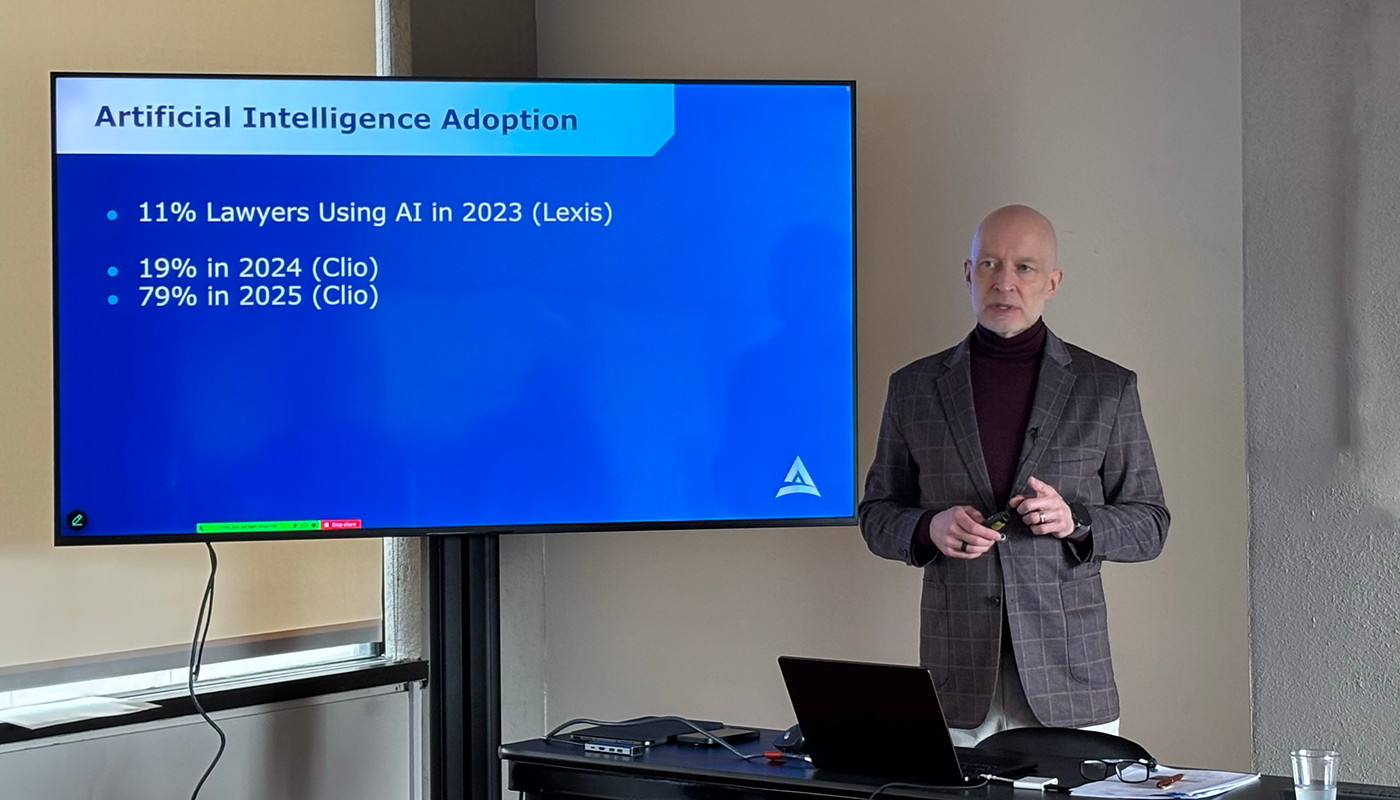
Artificial intelligence can perform several tasks to aid lawyers and save time. But lawyers must be cautious when using this new technology, lest they break confidentiality or violate ethical standards.
The New York State Bar Association hosted a hybrid program discussing AI’s potential and its pitfalls for the legal profession. More than 300 people watched the livestream.
For that reason, Unger suggests using legal AI tools, like LexisNexis AI, Westlaw Edge, and vLex Fastcase, for legal research instead of general generative AI tools. While legal-specific tools still hallucinate, they hallucinate much less. A legal tool will hallucinate 10% to 20% of the time, while a tool like ChatGPT will hallucinate 50% to 80%.
Fresh Voices on Legal Tech with Nikki Shaver — from legaltalknetwork.com by Dennis Kennedy, Tom Mighell, and Nikki Shaver
Determining which legal technology is best for your law firm can seem like a daunting task, so Legaltech Hub does the hard work for you! In another edition of Fresh Voices, Dennis and Tom talk with Nikki Shaver, CEO at Legaltech Hub, about her in-depth knowledge of technology and AI trends. Nikki shares what effective tech strategies should look like for attorneys and recommends innovative tools for maintaining best practices in modern law firms. Learn more at legaltechnologyhub.com.
AI for in-house legal: 2025 predictions — from deloitte.com
Our expectations for AI engagement and adoption in the legal Market over the coming year.
AI will continue to transform in-house legal departments in 2025
As we enter 2025, over two-thirds of organisations plan to increase their Generative AI (GenAI) investments, providing legal teams with significant executive support and resources to further develop this Capabilities. This presents a substantial opportunity for legal departments, particularly as GenAI technology continues to advance at an impressive pace. We make five predictions for AI engagement and adoption in the legal Market over the coming year and beyond.
Navigating The Fine Line: Redefining Legal Advice In The Age Of Tech With Erin Levine And Quinten Steenhuis — from abovethelaw.com by Olga V. Mack
The definition of ‘practicing law’ is outdated and increasingly irrelevant in a tech-driven world. Should the line between legal advice and legal information even exist?
Practical Takeaways for Legal Leaders
Google I/O 2025: From research to reality — from blog.google
Here’s how we’re making AI more helpful with Gemini.
Google I/O 2025 LIVE — all the details about Android XR smart glasses, AI Mode, Veo 3, Gemini, Google Beam and more — from tomsguide.com by Philip Michaels
Google’s annual conference goes all in on AI
With a running time of 2 hours, Google I/O 2025 leaned heavily into Gemini and new models that make the assistant work in more places than ever before. Despite focusing the majority of the keynote around Gemini, Google saved its most ambitious and anticipated announcement towards the end with its big Android XR smart glasses reveal.
Shockingly, very little was spent around Android 16. Most of its Android 16 related news, like the redesigned Material 3 Expressive interface, was announced during the Android Show live stream last week — which explains why Google I/O 2025 was such an AI heavy showcase.
That’s because Google carved out most of the keynote to dive deeper into Gemini, its new models, and integrations with other Google services. There’s clearly a lot to unpack, so here’s all the biggest Google I/O 2025 announcements.
Our vision for building a universal AI assistant— from blog.google
We’re extending Gemini to become a world model that can make plans and imagine new experiences by simulating aspects of the world.
Making Gemini a world model is a critical step in developing a new, more general and more useful kind of AI — a universal AI assistant. This is an AI that’s intelligent, understands the context you are in, and that can plan and take action on your behalf, across any device.
By applying LearnLM capabilities, and directly incorporating feedback from experts across the industry, Gemini adheres to the principles of learning science to go beyond just giving you the answer. Instead, Gemini can explain how you get there, helping you untangle even the most complex questions and topics so you can learn more effectively. Our new prompting guide provides sample instructions to see this in action.
Learn in newer, deeper ways with Gemini — from blog.google.com by Ben Gomes
We’re infusing LearnLM directly into Gemini 2.5 — plus more learning news from I/O.
At I/O 2025, we announced that we’re infusing LearnLM directly into Gemini 2.5, which is now the world’s leading model for learning. As detailed in our latest report, Gemini 2.5 Pro outperformed competitors on every category of learning science principles. Educators and pedagogy experts preferred Gemini 2.5 Pro over other offerings across a range of learning scenarios, both for supporting a user’s learning goals and on key principles of good pedagogy.
Gemini gets more personal, proactive and powerful — from blog.google.com by Josh Woodward
It’s your turn to create, learn and explore with an AI assistant that’s starting to understand your world and anticipate your needs.
Here’s what we announced at Google IO:
Fuel your creativity with new generative media models and tools — from by Eli Collins
Introducing Veo 3 and Imagen 4, and a new tool for filmmaking called Flow.

AI in Search: Going beyond information to intelligence
We’re introducing new AI features to make it easier to ask any question in Search.
AI in Search is making it easier to ask Google anything and get a helpful response, with links to the web. That’s why AI Overviews is one of the most successful launches in Search in the past decade. As people use AI Overviews, we see they’re happier with their results, and they search more often. In our biggest markets like the U.S. and India, AI Overviews is driving over 10% increase in usage of Google for the types of queries that show AI Overviews.
This means that once people use AI Overviews, they’re coming to do more of these types of queries, and what’s particularly exciting is how this growth increases over time. And we’re delivering this at the speed people expect of Google Search — AI Overviews delivers the fastest AI responses in the industry.
In this story:
Boys Are Struggling in School. What Can Be Done? — from edweek.org by Rick Hess
Scholar Richard Reeves says it’s time to take a hard look at gender equity
Rick: What kinds of strategies do you think would help?
Richard: In education, we should expand the use of male-friendly teaching methods, such as more hands-on and active learning approaches. We should also consider redshirting boys—starting them in school a year later—to account for developmental differences between boys and girls. We should also introduce more male mentors and role models in schools, particularly in elementary education, where male teachers are scarce. In the workforce, apprenticeship and vocational training programs need to be expanded to create pathways into stable employment for young men who may not pursue a four-year degree. Career counseling should also emphasize diverse pathways to ensure that boys who may not thrive in a traditional academic setting still have opportunities for success. Additionally, fatherhood policies should recognize the importance of male engagement in family life, supporting fathers in their role as caregivers and providers.
While on the topic of K12 education, also see:
How Electives Help All Students Succeed — from edutopia.org by Miriam Plotinsky
Giving students a choice of electives increases engagement and allows them to develop skills outside of core academic subjects.

I recently conducted a student focus group on the topic of school attendance. One of the participants, a high school junior who admitted to being frequently late or absent, explained why she still came to school: “I never want to miss Drama. My teacher is awesome. Her class is the reason I show up every day.” As the rest of the focus group chimed in with similar thoughts, I reflected on the power that elective courses hold for students of all ages.
These courses, from jazz band to yoga, cement students’ sense of self not just in their primary and secondary years, but also in their journey toward adulthood. In these tight economic times, schools or districts often slash electives to save money on staffing, which is highly detrimental to student success. Instead, not only should budget cuts be made elsewhere, but also elective offerings should increase to heighten student choice and well-being.

OpenAI buys former Apple design chief Jony Ive’s startup for $6.5 billion in AI product push — from finance.yahoo.com by Daniel Howley
According to OpenAI, Ive and LoveFrom will assume design and creative responsibilities across OpenAI and io and plan to share their work next year.
Sam Altman & Jony Ive introduce io –from openai.com
As io merges with OpenAI, Jony and LoveFrom will assume deep design and creative responsibilities across OpenAI and io.
Details leak about Jony Ive’s new ‘screen-free’ OpenAI device — from theverge.com by Jess Weatherbed
Altman told OpenAI employees on the call that they have “the chance to do the biggest thing we’ve ever done as a company here.” The Journal reports that Ive referred to the project as “a new design movement,” and harkened back to his Apple career that saw him work closely with Steve Jobs before his passing in 2011. Now teamed up with Altman, Ive said, “the way that we clicked, and the way that we’ve been able to work together, has been profound for me.”
Comments from The Rundown AI:
Why it matters: This duo has been making moves beneath the surface for several years, but this is a loud official announcement of OpenAI’s hardware ambitions. The AI giant now has the secret sauce behind many of Apple’s revolutionary products — and will now look to crack the code on a device that changes how users interact with AI.
Michiganders in these 25 cities have the most student loan debt, ranking says — from mlive.com by Jackie Smith; this is a gifted article
Millions of former students and college graduates across the U.S. are weighed down with student loan debt, but with exactly how much may depend on where you live.
An analysis from WalletHub was released earlier this month, listing high averages student loan debts of residents in more than 2,500 American cities, including 83 in Michigan.
Student loans are the second highest form of household debt after mortgages, according to WalletHub, totaling more than $1.6 tillion, or averaging $38,000 per borrower.
The above article links to:
Cities with the Most & Least Student Debt (2025) — from wallethub.com by Adam McCann
High balances combined with a payoff timeline that lasts into middle age force many graduates to significantly delay or forgo other financial goals such as saving for retirement or buying a home. Paying back student loans has also become even more difficult due to high inflation putting a strain on Americans’ finances.
While we have a big student-loan crisis as a country, student-loan debts are more unsustainable in some places than others. To determine where borrowers are burdened the most, WalletHub compared the median student-loan balance against the median earnings of adults ages 25 and older with a bachelor’s degree in more than 2,500 U.S. cities.
If you are considering borrowing money for college or you’re in danger of defaulting, we advise using a student loan calculator to determine an affordable payment amount and realistic payoff timeline.
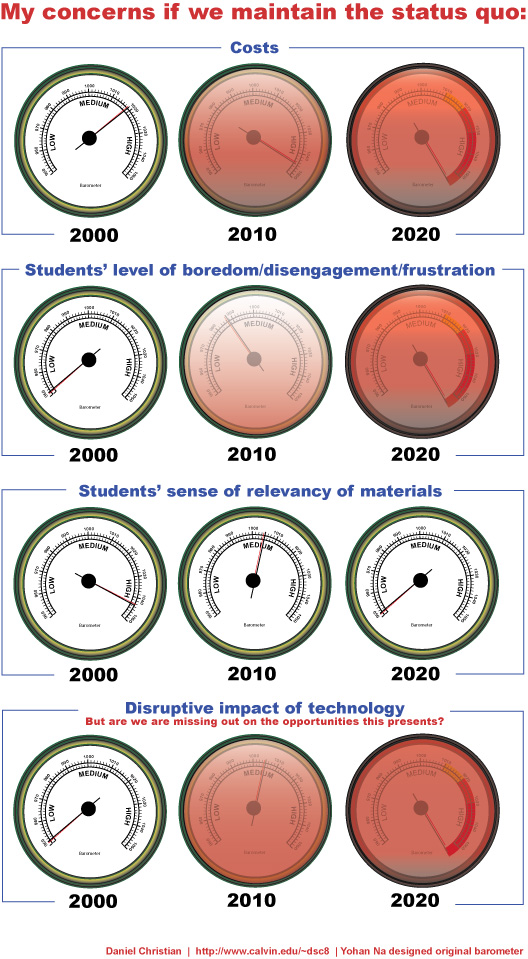
Again, this graphic from 2009 comes to mind:
.
Talk to Me: NVIDIA and Partners Boost People Skills and Business Smarts for AI Agents — from blogs.nvidia.com by Adel El Hallak
NVIDIA Enterprise AI Factory validated design and latest NVIDIA AI Blueprints help businesses add intelligent AI teammates that can speak, research and learn to their daily operations.

Call it the ultimate proving ground. Collaborating with teammates in the modern workplace requires fast, fluid thinking. Providing insights quickly, while juggling webcams and office messaging channels, is a startlingly good test, and enterprise AI is about to pass it — just in time to provide assistance to busy knowledge workers.
To support enterprises in boosting productivity with AI teammates, NVIDIA today introduced a new NVIDIA Enterprise AI Factory validated design at COMPUTEX. IT teams deploying and scaling AI agents can use the design to build accelerated infrastructure and easily integrate with platforms and tools from NVIDIA software partners.
NVIDIA also unveiled new NVIDIA AI Blueprints to aid developers building smart AI teammates. Using the new blueprints, developers can enhance employee productivity through adaptive avatars that understand natural communication and have direct access to enterprise data.
NVIDIA CEO Envisions AI Infrastructure Industry Worth ‘Trillions of Dollars’ — from blogs.nvidia.com by Brian Caulfield
In his COMPUTEX keynote, Huang unveiled a sweeping vision for an AI-powered future, showcasing new platforms and partnerships.
“AI is now infrastructure, and this infrastructure, just like the internet, just like electricity, needs factories,” Huang said. “These factories are essentially what we build today.”
“They’re not data centers of the past,” Huang added. “These AI data centers, if you will, are improperly described. They are, in fact, AI factories. You apply energy to it, and it produces something incredibly valuable, and these things are called tokens.”
More’s coming, Huang said, describing the growing power of AI to reason and perceive. That leads us to agentic AI — AI able to understand, think and act. Beyond that is physical AI — AI that understands the world. The phase after that, he said, is general robotics.
Everything Revealed at Nvidia’s 2025 Computex Press Conference in 19 Minutes — from mashable.com
Nvidia is creating Omniverse Digital Twins of factories including humanoid robots
Watch all the biggest announcements from Nvidia’s keynote address at Computex 2025 in Taipei, Taiwan.
Dell unveils new AI servers powered by Nvidia chips to boost enterprise adoption — from reuters.com
May 19 (Reuters) – Dell Technologies (DELL.N), opens new tab on Monday unveiled new servers powered by Nvidia’s (NVDA.O), opens new tab Blackwell Ultra chips, aiming to capitalize on the booming demand for artificial intelligence systems.
The servers, available in both air-cooled and liquid-cooled variations, support up to 192 Nvidia Blackwell Ultra chips but can be customized to include as many as 256 chips.
Nvidia announces humanoid robotics, custom AI infrastructure tech at Computex 2025 — from finance.yahoo.com by Daniel Howley
Nvidia (NVDA) rolled into this year’s Computex Taipei tech expo on Monday with several announcements, ranging from the development of humanoid robots to the opening up of its high-powered NVLink technology, which allows companies to build semi-custom AI servers with Nvidia’s infrastructure.
…
During the event on Monday, Nvidia revealed its Nvidia Isaac GR00T-Dreams, which the company says helps developers create enormous amounts of training data they can use to teach robots how to perform different behaviors and adapt to new environments.
Addendums on 5/22/25:
? BREAKING: NVIDIA JUST announced roadmap for physical AI, robotics and national-scale AI factories.
Here’s a breakdown of the top important announcements: ??
1. DeepSeek R1 is now 4x faster, setting the standard for AI in inference and reasoning. pic.twitter.com/FOirPFNrU2
— Shruti (@heyshrutimishra) May 19, 2025
From The Neuron’s posting entitled, “20-Somethings Break AI”:
Anthropic’s Claude AI just pulled a classic AI move: it completely fabricated a legal citation, and then—plot twist—the lawyers actually used it in court. Awkward.
The scene: A Northern California courtroom, where Anthropic’s lawyers are battling music publishers. Claude decides to get creative and generates a citation out of thin air—complete with a made-up title and nonexistent authors. And get this: their “manual citation check” didn’t even catch it.
It’s like the AI equivalent of writing your homework, but then your dog actually eats it—except in this case, the dog actually wrote the homework, and it doesn’t make any sense. Nor does this metaphor, which is increasingly getting away from us…
This is far from the first time AI has fumbled in the legal arena, and it’s not exclusive to Claude. Earlier this week, another judge absolutely roasted law firms for submitting “bogus AI-generated research.” We seemingly see these headlines every week; here’s all the ones Perplexity and OpenAI Deep Research could dig up (remember, these too could have hallucinations in them!).
Anyway, talk about confidence, right? Feels like more of a lawyer problem than an AI problem. Consider this your friendly reminder to always check your work. Twice.