The birds have fled from the bird feeders...

From DSC:
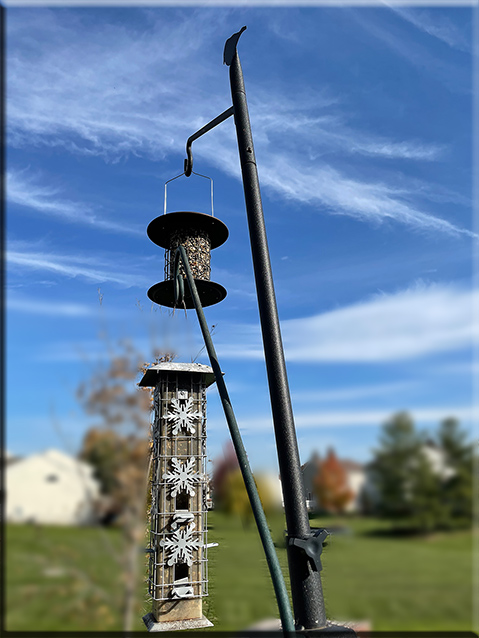
Each day, I try to ensure that there’s enough bird seed in the bird feeders. You see, I’m a bird watcher and I especially enjoy the different kinds of birds in our area as well as appreciating the variety of colors and designs of the birds. But it often perplexes me when the birds fly away when they see motion in our kitchen. They become afraid and in a spirit of looking out for #1, they fly away.

Hmmm. I’m setting out food to help you survive, yet you fly away in fear when I come close.

I wonder if that’s how the LORD feels with me/us sometimes. He provides so richly, deeply, and generously (waaaaayyy more than I do). Yet I can’t help but wonder if He senses our fears, doubts, and our “flying away” from Him at times…? He provides. We fly.

The situation is getting better. And my trying to be faithful helps the birds overcome their anxieties. They are staying on the bird feeder more often, even when they see me approach. It appears that the trust levels are growing. 


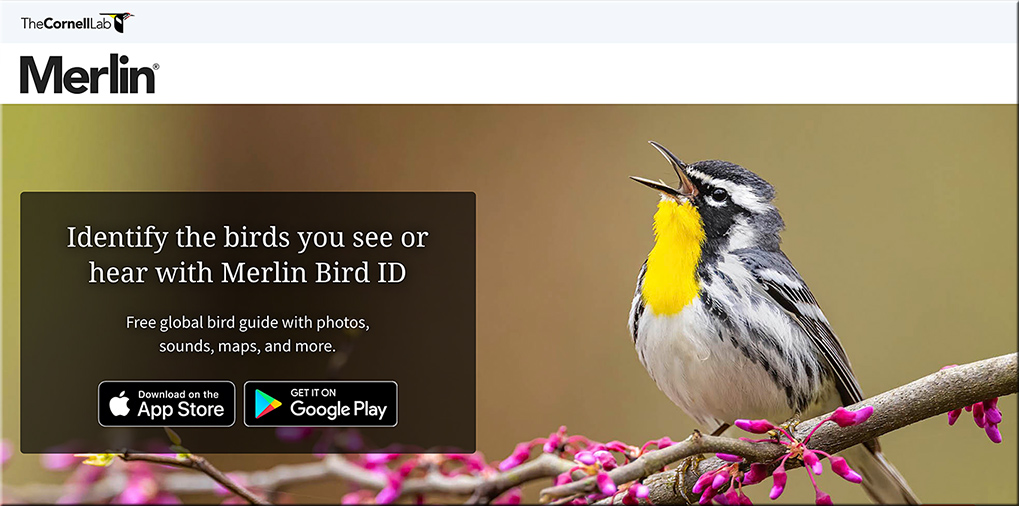
Along the lines of bird watching, below is a very cool app I just recently saw. I can use all the help I can get in this area (not to mention a ton of other areas)!

Identify the birds that you see of hear with Merlin Bird ID


Will Microcredentials be the Rx Needed to Fix Our Ailing Degree Systems? — from evolllution.com by David Leaser | Senior Program Executive of Innovation and Growth Initiatives, IBM
Amidst the dramatic social and economic upheaval caused by the pandemic, microcredentials are presenting themselves as the viable solution to getting learners prepared quickly and effectively for desperately needed jobs. 

Excerpts:

Pace of Change Accelerates Beyond Our Wildest Imagination 
But the world of work is changing at a pace that traditional education systems cannot match. Cloud computing, big data and AI technologies are replaced or improved monthly—and often faster than that.

The U.S. college system is organized around an all-or-none framework: You only get a credential after completing the entire learning path.  But when a large number of students cannot commit to a long-term commitment (the situation we have faced for decades), shouldn’t we break the learning down into credentials along the way?

The MicroBachelors: A Major Win for Credential As You Go
Today, most microcredentials provide the opposite of college degrees: high skill-signal strength but low social-signal strength.

MicroBachelors programs are a series of college classes that have been customized and grouped together to meet employers’ real-world needs. The programs typically take two to four months to complete and provide credentials and college credits.


No Textbooks, No Lectures, and No Right Answers. Is This What Higher Education Needs? — from chronicle.com by Beth McMurtrie
From DSC: Though this was back from 2/10/19, Beth recently linked to it on The Chronicle and it caught my eye due to it’s focus on solving real-world issues and problems.

Excerpts:

Tackling big problems is the point of JMU X-Labs, a four-year-old experiment in undergraduate education. Through a blend of interdisciplinary collaboration, project-based learning, and unscripted, open-ended research, each course takes students through the long and often aggravating process of developing new ways of thinking about complex problems.

They might design drones to help with environmental problems, tackle foreign-policy challenges, build autonomous vehicles, or develop medical innovations to help with the opioid crisis.


Got Teacher Burnout? Launch A Microschool — from forbes.com by Kerry McDonald

Rather than abandoning their passion for teaching, some educators are discovering that they can do what they love and avoid the bureaucracy and stress of a conventional classroom by starting their own microschools.

Microschools are modern twists on the quaint, one-room schoolhouse model, where small, multi-age groups of students learn together in more intimate educational settings, such as private homes, with individualized attention from adult educators and facilitators. Interest in microschools accelerated over the past year, as school shutdowns led parents to consider home-based “pandemic pods” to help their children learn in small, safe groups. 


Top Resources For Students To Discover Real World Problems and Issues

Top Resources For Students To Discover Real World Problems & Issues — from edtechreview.in by Saniya Khan

Are you looking for ways to help students learn about world issues: climate change, cultural diversity, biodiversity, education, water crisis, [homelessness] and more to build awareness about global issues and develop global competence?


Report Finds US Workers Lagging in Digital Skills — from technewsworld.com by John P. Mello Jr.

Excerpt:

Many Americans lack the digital skills needed to be productive members of the workforce in the 21st century, according to a report released Monday by a Washington, D.C. think tank.

One-third of U.S. workers lack digital skills, with 13 percent having no digital skills and 18 percent having, at best, limited digital skills, noted the report by the Information Technology & Innovation Foundation, a science and technology institute.

In essence, the ITIF reported, one in six working-age Americans are unable to use email, web search, or other basic online tools.

Also see:

Even though we may not be able to predict the jobs of the future, we can begin to crack the labor market code in today’s economy and home in on the hybrid, or human and technical skills that will help working-age adults prepare for the jobs of today and tomorrow.


VRJAM -- the metaverse platform for music

The VRJAM metaverse platform is coming to transform the world of live entertainment 

VRJAM, the UK’s leading creator of live music experiences in virtual reality, today teased the launch of the VRJAM platform, a revolutionary new metaverse events platform and NFT creation solution. 

To bring the VRJAM metaverse platform to life, VRJAM has partnered with market leading NFT software developer Enjin.io to launch a rich virtual reality world that offers a host of new solutions for artists to render and monetize their music and live shows in amazing new ways using NFT’s, blockchain and immersive technology.  

The VRJAM platform promises to open up completely new ways for both fans and artist to experience live music events and represents the next step in the evolution of live music. 

Ownership of this virtual world will be shared by a guild of globally recognised artists and record labels who will cooperate to create value and define new possibilities for music inside the metaverse. 

VRJAM’s metaverse platform offers solutions for true live performance using technology that is years ahead of other similar platforms. It provides unsurpassed user experience and offers fans, artists and labels an array of unique features:
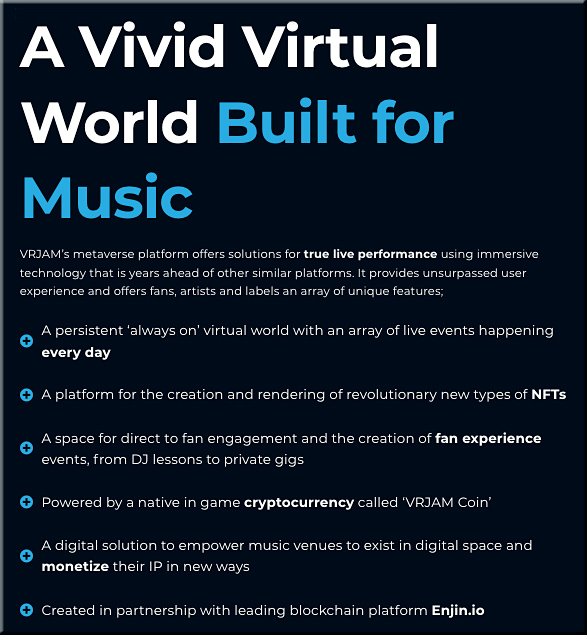
VRJAM's metaverse -- a vivid virtual world built for music

At the heart of the VRJAM metaverse platform is a blockchain based trading and finance system, VRJAM Coin. This revolutionary new cryptocurrency will create ways for both artists and fans to earn money inside the metaverse and promises to create entirely new business models for artists, venues and labels at a time when their traditional ways of making money have been turned upside down by the Covid 19 pandemic. 

The VRJAM cryptocurrency is backed by investment from 5 of the world’s leading blockchain specialist investment and venture capital firms, demonstrating the exciting potential of VRJAM’s tech.

The VRJAM platform is scheduled to go live in early 2022, follow on social media to stay up to date.


From DSC:
Hmmmmm….might this type of thing spill over into the worlds of teaching and learning? More direct-to-consumer (learner) types of offerings? Will this open up the doors for new methods of earning a living or for  those interested in building a teaching & learning-based brand?

Alternatively, will this impact what actors, actresses, and comedians will be able to do?


Addendum on 12/2/21:


EduMAX 2021 recap: Together for student success around the globe — from blog.adobe.com by Sebastian Distefano

Excerpt:

University CIOs, deans, provosts, faculty and staff from more than 100 institutions convened online for the Adobe EduMAX 2021 conference, where academic leaders shared how they are transforming teaching and learning practices across their campuses. Key discussion points included:

  • How digital literacy increases engagement to bring faculty and students together, whether they are in-person, online or in a hybrid environment.
  • How digital literacy closes the skills gap in higher education and industry by fostering critical essential skills that employers value.
  • How faculty can integrate digital literacy across the curriculum for all students.
 

Why AWS’s move into private 5G networking is game-changing — from zdnet.com by Zeus Kerravala
As the cost of SIM-connected devices decreases and eSIMs become more common, the industry could see a big move from Wi-Fi to 5G.

Excerpt:

One of the notable announcements at Amazon Web Services’ re:Invent 2021 conference [on 11/30/21] was the unveiling of AWS Private 5G, a fully-managed service enabling businesses to deploy their own high-capacity mobile networks. The service is designed to be used inside buildings as an augmentation of — and eventual replacement for — Wi-Fi.


Investing in Glorify– from a16z.com (andreesen horowitz) by Connie Chan

Excerpt:

Faith is inherently social. For example, there are 2.5 billion Christians globally and many congregate at church, Sunday school, fellowships, discipleships, and more.

Why then, when we have best-in-class, venture-backed social and content platforms dedicated to everyone from gamers, to fashionistas, to sports card enthusiasts, are Christians not able to complement their in-person worship with an equally sophisticated and engaging online experience? Why does the Christian community rely on digital experiences built almost exclusively by non-profits?

This is the question Glorify cofounders Henry Costa and Ed Beccle asked themselves in 2019 when they set out to build the world’s leading online platform to help Christians practice their faith and connect online. As former founders, they knew that it was possible to build something that was delightful to use, with intuitive social features.

From DSC:
I had not heard of this app; sounds interesting.


The State of Student Success & Engagement in Higher Education -- from Instructure

The State of Student Success & Engagement in Higher Education — from instructure.com (authors of the Canvas LMS)
Our 2021 Global Student engagement and success study uncovers vital stats and key trends to help education institutions thrive through today’s education challenges.

Excerpt:

  • Connect students with alumni and potential employers through virtual networking, internships/externships, mentorship programs, and strategic partnerships.
  • Align curriculum with workforce outcomes and offer opportunities for students to showcase skill sets.
  • Close the perceived awareness gap of work/career readiness programs on campus with alumni programming highlighting the success of campus career resources.
  • Embed career exploration throughout the higher education experience and provide actionable insights into employment trends.


8 tech and leadership podcasts to add to your playlist — from enterprisersproject.com by Stephanie Overby
Check out these podcasts to keep up to date on CIO lessons learned, emerging tech trends, leadership best practices, and more

From DSC:
This article does a great job of providing a description of each podcast, why you should listen to it, and a list of recent episodes so you can see some of the topics that they are talking about.


From the Paul Weiss Law Firm — back from 2019: A whitepaper re: cryptocurrency

Excerpt:

The development and growth of cryptocurrencies and blockchain technology has implications for many industries, including finance, media, and healthcare. In a series of papers, we will discuss the variety of ways in which cryptocurrencies and blockchains are being used in different fields. This paper, the first in our series of three papers, discusses cryptocurrencies, including how they operate in conjunction with the blockchain and how Bitcoin, the first major cryptocurrency, compares to traditional, fiat currencies.

Cash vs Bitcoin -- a comparison

From DSC:
How might the development of cryptocurrencies integrate in with a next-gen learning platform? Would teams and/or individuals get paid via a cryptocurrency? Hmmm…more learning to do.

It’s interesting to note what Bitcoin (BTC-USD) was trading at in 2017, 2018, and 2019 versus today:

  • In 2017 alone, Bitcoin’s price rose from $973 in January to $5,856 in October, and skyrocketed towards $20,000 by year end.
  • By February 2018, however, Bitcoin had fallen below $7,600.
  • In June 2019, Bitcoin’s price rose to approximately $10,000.

Today:

The huge price increase of Bitcoin -- BTC-USD -- in the last three years

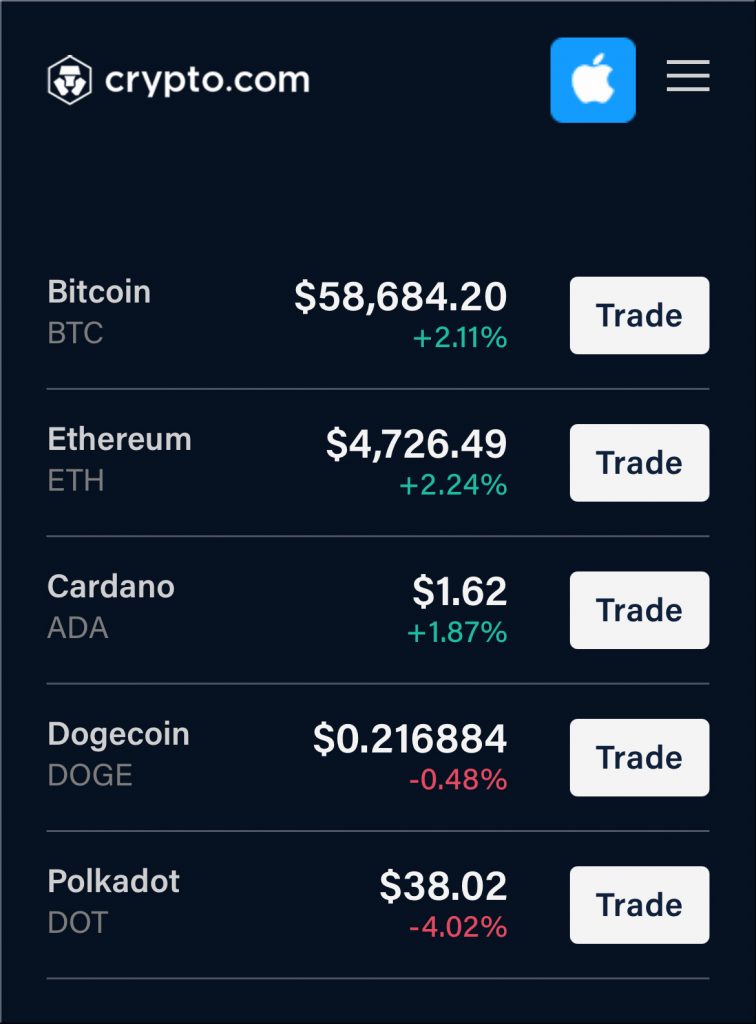
Here’s what some of the other cryptocurrencies were trading at today:


Understanding the Web Content Accessibility Guidelines (WCAG) for Learning Disabilities — from inclusionhub.com by Meredith Kreisa
Following the WCAG for learning disabilities can make your content more accessible to the millions of individuals with dyslexia, dyscalculia, and other conditions

Excerpt:

Advancements in digital technology have made disseminating information to the masses quick and easy. Unfortunately, your audience might not be as big as you think. For millions of people with learning disabilities, some content may be prohibitively challenging to read. This effectively renders information that many take for granted inaccessible to others.

Luckily, by using simple, common-sense methods, your content can be more approachable for those with learning and other types of disabilities. The World Wide Web Consortium (W3C) Web Accessibility Initiative (WAI) maintains Web Content Accessibility Guidelines (WCAG) to provide guidance on supportive techniques.

How Does WCAG Apply to Learning Disabilities?
While cognitive and learning disabilities are distinct conditions, they can lead to similar accessibility issues. Therefore, WCAG groups them together. WCAG’s cognitive and learning disability guidelines fall into eight main objectives:

 
© 2025 | Daniel Christian