A Crash Course in TAR: What Do You Really Need to Know? — from iltanet.org by Rachel McAdams, Andrew Lyons, and Kayode Okubanjo

Excerpt:

When embarking on a new project, the question of whether or not to use TAR is often near the top of the list, and most large projects won’t go ahead without some element of TAR to speed along the review. However, for those new to discovery or those not involved heavily in the technology of discovery, it can be difficult to work out exactly what is being proposed, or the difference between types of methods. This article will give a brief introduction of TAR and lay out the basics of what you really need to know to start taking advantage of TAR.


Do I Need to Write Podcast Transcripts for Accessibility? — from boia.org

Put simply, if you’re planning on hosting podcasts on your website, you should also provide transcripts. Below, we’ll explain why text alternatives for audio-only content are helpful — and provide some best practices for creating and publishing.

Other tips to keep in mind:

  • Transcripts should include descriptions of significant sounds that might help readers understand your content. For example, if your podcast contains sound effects or musical cues that affect the context, include them in your text.
  • Some people might search for the word “transcript” right away, so clearly label your scripts on your website to help users find them.
  • Provide links to your transcripts in the RSS feed that delivers your podcast. Include the links when promoting your show on social media.
  • For longer podcast transcripts, consider adding subheadings and semantic HTML markup to make your content more readable.
  • If your podcast pages include a media player, make sure the player’s controls are accessible. Users should be able to start and stop playback with a keyboard alone. For more guidance, read the W3C’s recommendations for media players.
 

2022 puts workers in the driving seat  — from adigaskell.org

Excerpt:

With skills shortages common across the world in the wake of the so-called “Great Resignation”, it is perhaps no surprise that recruitment firm Monster’s latest Future of Work Report highlights the strong state of recruiting, with practically every one of the 3,000 HR and hiring professionals surveyed saying they’re planning to hire in the year ahead.

“The 2022 hiring outlook is up, and much improved from last year,” the authors say. “In fact, 93% of employers plan to hire this year – including 51% to replace or backfill staff, and 41% who plan to hire for new positions.”

What is increasingly clear is that job seekers are largely in the driving seat, even if many don’t always realize it. Monster argues that this is an ideal opportunity for workers to find a role that really fits them rather than settle for second best.


Discovery Education Introduces Free Augmented Reality App for Students and Educators — from thejournal.com by Kristal Kuykendall
Sandbox AR Lets Users Create Virtual Worlds or Augment Their Own — All Linked to Real World Knowledge

Excerpt:

Once a user has their Sandbox AR scene built to their satisfaction, they can take photos or record a video walkthrough with their own voiceover, to introduce their classmates or their teacher to what they created or what they learned, for example.

To help educators leverage the power of AR wherever learning takes place, Discovery Education has made the Sandbox AR iPad app available for free in the Apple App Store.

See a demo here.


The biggest tech trends of 2022, according to over 40 experts — from fastcompany.com by Mark Sullivan
Startup founders, Big Tech execs, VCs, and tech scholars offer their predictions on how Web3, the metaverse, and other emerging ideas will shape the next year.

We asked startup founders, Big Tech execs, VCs, scholars, and other experts to speculate on the coming year within their field of interest. Altogether, we collected more than 40 predictions about 2022. Together, they offer a smart composite look at the things we’re likely to be talking about by this time next year.


From DSC:
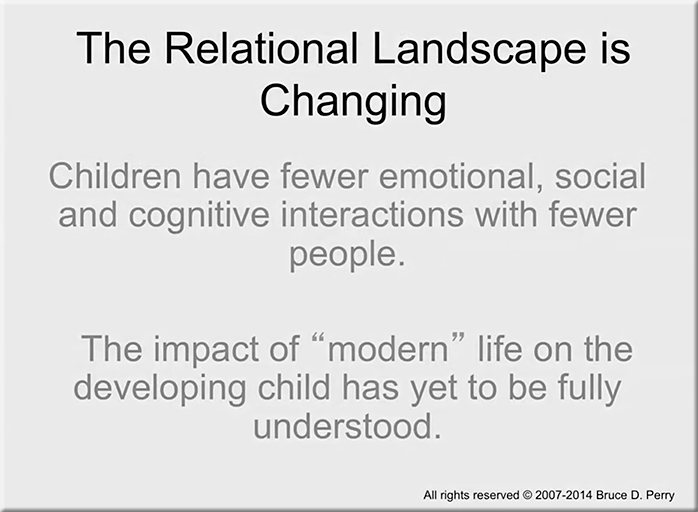
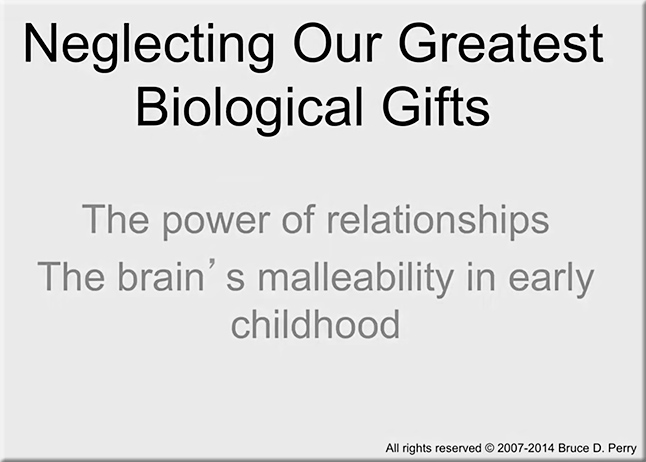
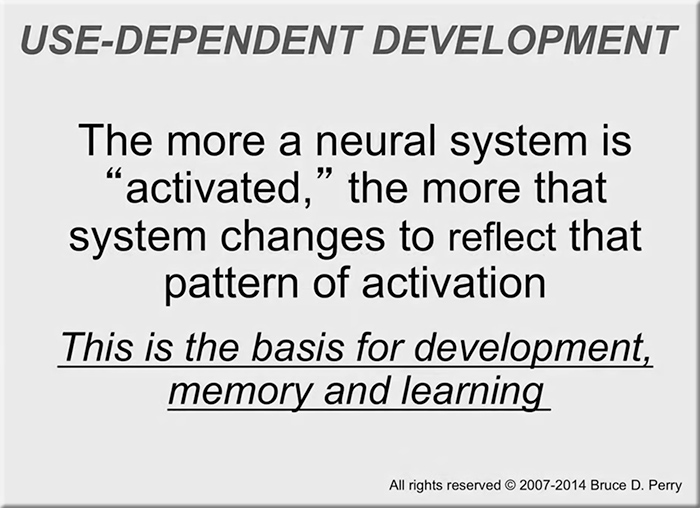
One of my sisters is a Professor of Psychology and she highly recommended that I check out the work of Dr. Bruce D. Perry. Below is an example video that was recorded on October 25, 2014 as part of the 25th Anniversary Chicago Humanities Festival, Journeys. I included some excerpted slides in this posting to give you a flavor of portions of this talk.

Description (emphasis DSC):

Each of us takes the same journey from birth to consciousness—but none of us recalls it. This early stage of life is crucial; Sigmund Freud famously obsessed over it, as do millions of parents every day. What goes on cognitively during that time, and what can parents—and other adults—do to further promote infant well-being? Join renowned psychiatrist Bruce D. Perry, recipient of the 2014 Dolores Kohl Education Prize, for this discussion of early-childhood brain development and its long-term importance.

Social & Emotional Development in Early Childhood [CC]


Shorter Training, Better Skills: Three Predictions For The Future Of Career And Technical Education — from forbes.com by Jeremy Wheaton; with thanks to Ryan Craig for this resource

But in the face of an entrenched and growing skills gap, young people are increasingly questioning the status quo and looking for shorter, less expensive, more direct-to-career options.

Excerpts:

Here [is the first of] three predictions for how the rest of the 2020s will continue to be defined by career education:

  1. The four-year degree will no longer be seen as the default postsecondary education option.
 

From DSC:
How can we better get the word out to our learners regarding how they can maximize their Return On Investment (ROI) from their studying time and efforts?

Two ideas come to mind here:

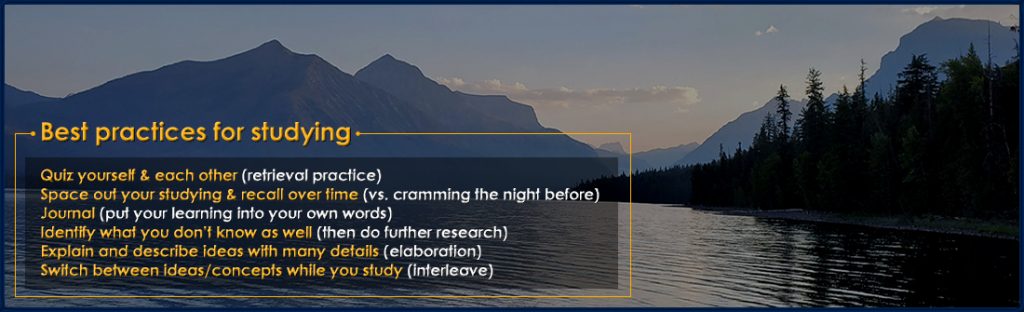
  1. Place learning-related tips directly into our banners within our CMS’s and LMS’s
    and/or
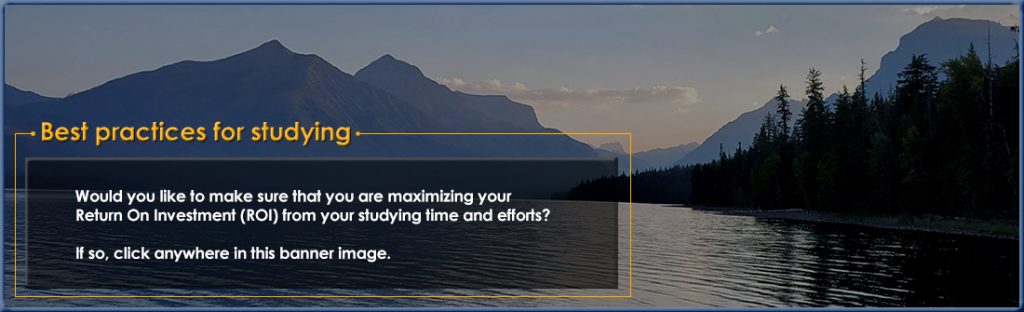
  2. Link our banners to some other web pages/resources that provide such best practices and tips for our learners 

Let's put best practices on studying directly within our LMSs banners!

Or we could link to resources regarding best practices in studying!

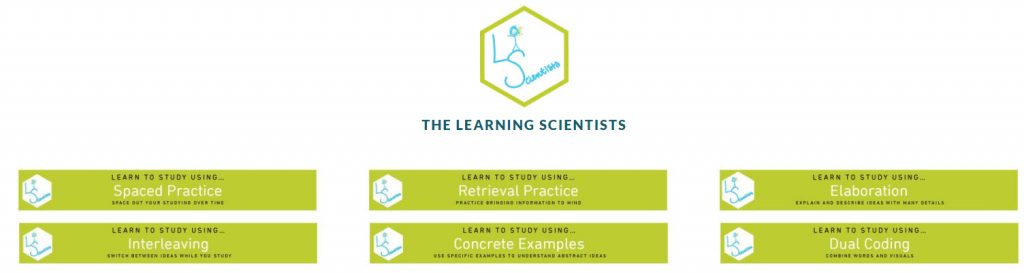
Along these lines, we should have 11″x17″ (or larger) posters like this plastered in every hallway of every learning space out there:

We should plaster these types of posters throughout our learning spaces!!!


Some would also add:

  • Active learning
  • Flipping the classroom
  • Providing individualized feedback
  • Metacognition (which was referenced in the first graphic above in regards to identifying gaps in one’s knowledge)


Tech & Learning Magazine Names the Winners of the Best of 2021 — from techlearning.com
Tech & Learning’s judges deemed these products as standouts for supporting teaching and learning in 2021

Excerpt:

Tech & Learning magazine has named the winners of the Awards of Excellence: Best of 2021 contest, which recognizes educational technology that exceptionally supported teachers and students last year.

 The contest focused on outstanding products that supported education this past year no matter the learning environment, whether face-to-face, remote, or anything in between. Eligible products included hardware, software, curriculum, and more, all divided by grade levels to make it easier to find the solutions you need.

 Each nominee answered the following questions: What specific problem does this product solve? How did your product exceptionally support teaching and learning in 2021? How does your product address the challenges facing education today?


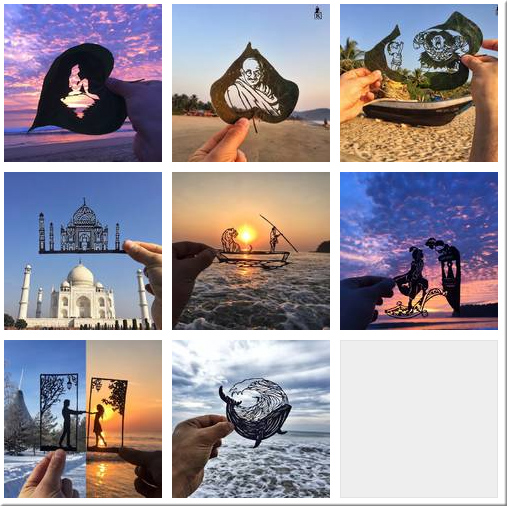
Poetic Artworks From Paper — from fubiz.net by Kanat Nurtazin

Beautiful mixed reality art by Kanat Nurtazin


The Surprising Impact of Meeting-Free Days — from sloanreview.mit.edu by Ben Laker, Vijay Pereira, Pawan Budhwar, and Ashish Malik
Many organizations are implementing no-meeting days, but finding the optimal weekly balance requires deliberation.

Excerpt:

Though building trust and achieving team cohesion rely on frequent, quality interactions, meetings are no longer the best way to accomplish this. As a result, many organizations…are taking a stand by adopting no-meeting days, during which people operate at their own rhythms and collaborate with others at a pace and on a schedule that is convenient, not forced.

The subsequent impact of introducing meeting-free days was profound, as outlined in the table below. When one no-meeting day per week was introduced, autonomy, communication, engagement, and satisfaction all improved, resulting in decreased micromanagement and stress, which caused productivity to rise.


6 Ed Tech Tools to Try in 2022 — from cultofpedagogy.com by Jennifer Gonzalez

Excerpts:

This year, for the very first time, I hired a team of ed tech experts to help me with the update. The task was becoming overwhelming and I knew if I was going to keep it up, I had to have some help. Here they are below: Marnie Diem, Brandie Wright, Lucia Hassell, and Kim Darche.

5. EVERFI
everfi.com/k-12

Originally a site that offered free financial literacy courses to students, EVERFI has expanded its course offerings to include career exploration (including one specific to STEM careers), social and emotional learning, diversity and inclusion, and health and wellness. Their newest additions are courses in healthcare literacy, data science and banking fraud, and compassion and empathy.


Tip of the week: Make websites more readable — from fastcompany.com by Jared Newman
How to easily hide ads, auto-play videos, and other clutter in every major browser.

Excerpt:

Ever get annoyed by the intolerable reading experience on certain websites? By activating your browser’s reader mode, you can make web pages more reader-friendly by hiding ads, menus, pop-ups, and other distractions. Some web browsers even let you switch to reader mode automatically on specific websites. Here’s how:

 
© 2025 | Daniel Christian