With Few Details But Big Ideas, Sec. Cardona Pushes Total Reimagining of Education — from edsurge.com by Emily Tate

Excerpt:

In the last two years, while schools experienced more disruption and strain than in almost any other time in recent memory, education leaders have been broadcasting one message, loud and clear and often: Education cannot go back to normal. This moment presents a chance to move forward, not go back. The upheaval of the pandemic can be an opportunity for positive change, if we let it.

As the weather warms and COVID cases plummet and classrooms return to full capacity, the moment of truth is near. And during a keynote panel at the SXSW EDU conference in Austin, Texas, on Wednesday, Education Secretary Miguel Cardona made sure to drill home the message to the hundreds of educators seated before him.
 

Best from the brightest: Key ideas & insights for L&P Professionals — from tier1performance.com by Will Thalheimer; with thanks to Christy Tucker for this resource
Gather your learning and performance team together, share conversations with your friends in the field—this trove of gold from 2021 is the bedrock for our evolving and improving work in 2022.

To help fight our FOMO (fear of missing out), I’ve asked 48 thought leaders in the L&P field to share their favorite content from 2021—stuff they created or were involved in, ideas they think are critically important to folks like you and me as L&P professionals. They shared articles, blog posts, podcast episodes, videos, and eLearnings. They also shared their recommendations for other thought leaders and other content—and the most important trends impacting our work for 2022.

I looked at every one of their recommendations and I am blown away by the insights you’ll find in the content shared below. This is a formidable treasure trove from some of the best minds in our field.

Will Thalheimer


Best Cameras for Vlogging in 2022 — from futurism.com

Excerpt:

Whether you’re looking for a camera to start your journey to internet stardom, or would just like to improve your video quality, this list of the best cameras for vlogging will not only capture you as you ham it up, but produce some seriously crisp content that you won’t have to patch up in editing.

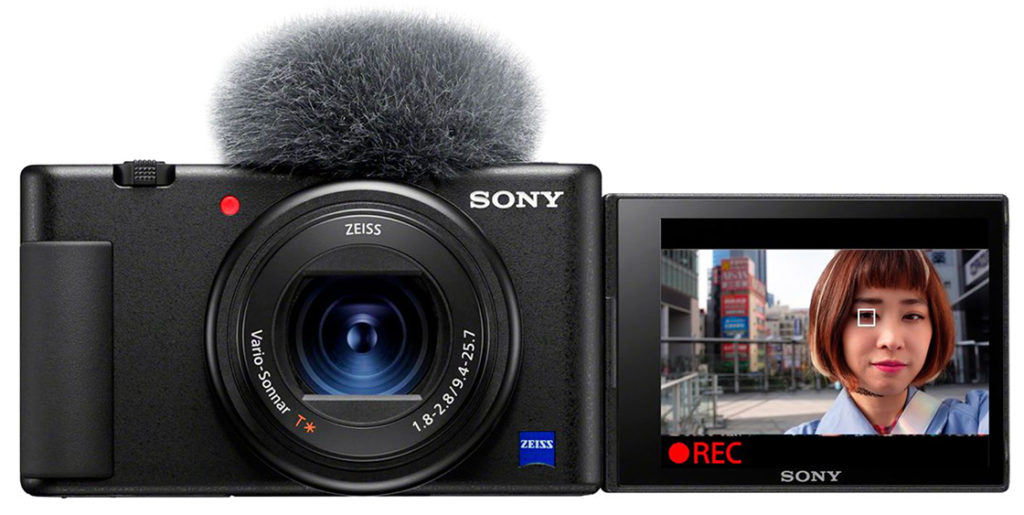
Sony - ZV-1 20.1-Megapixel Digital Camera for Content Creators and Vloggers - Black

Also see:

The Best Vlogging Cameras and Gear — updated in May 2021 — from nytimes.com (Wirecutter) by Geoffrey Morrison and Phil RyanU


How sponsorship can help women in tech advance — from mckinsey.com

Excerpt:

While women earn about half of science and engineering degrees, they make up less than 20 percent of people employed in these fields. And for many who choose this career path, they are commonly the only person of their gender in a room.

This International Women’s Day, we’re looking at one workplace element that can help reverse those trends for women in tech: connecting with a sponsor who creates opportunities for them and advocates for their advancement.

Women in Tech: Breaking Bias in the Workplace — from technative.io

Excerpt:

However, as important having a mentor is, it is imperative to have strong decision making power of your own. Future Processing’s Mleczko suggests women take control of their lives actively: “You are the only one who can decide about your life and your future. Do not let your dreams go just because other people say you are not capable of something. Some things need time, so be patient but do not resign. Everyone started at the very beginning.”

Inclusive Hiring in Tech: How to Write More Inclusive Job Descriptions — by Jill Bender


Addendums on 3/17/22:


Tapping the Potential of Learning Through Play in STEAM Programs — from techlearning.com by Ray Bendici
Encouraging purposeful play through tools such as LEGO Education to engage students and improve STEAM learning outcomes

Excerpt:

We know children thrive through play, but did you know that learning through play is a powerful research-backed strategy to boost student engagement in the classroom?

“When students are playing, they’re unlocking their natural curiosity and finding their joy in learning,” said Dr. Jenny Nash, Head of Education Impact, US, for LEGO Education, during a recent virtual Tech & Learning roundtable discussion. “And when students learn in a purposeful, hands-on way it builds their confidence, and lessons can really become more motivating and meaningful. Purposeful play is rooted in pedagogical approaches, such as project-based learning, and it’s really known to increase student learning outcomes.”


10 ways to improve students’ long-term learning — from ditchthattextbook.com

Research has a lot to say about improving students’ long-term memory. Here are 10 ideas you can use in class.

Also relevant/see:

Busting The Myth of Learning Styles — from techlearning.com by Erik Ofgang
The idea that different students have different learning styles pervades education, but cognitive scientists say there is no evidence learning styles exist.


Hybrid learning for hybrid jobs: Reskilling for the digital age — from chieflearningofficer.com by David Porcaro
Just as “hybrid jobs” have become “jobs,” the old definition of “hybrid learning” that mixes in-person and online experiences is fast becoming just “learning.” It’s incumbent on employers, training providers and learners themselves to ensure that as we navigate that shift, we’re building a more meaningful and productive learning experience in the process.

What would happen if we reimagined hybrid learning as “learning that equips workers for hybrid jobs,” and built a new approach from there? That’s the question we’ve been working to answer at General Assembly, where our work with employers across a range of fields — from the tech industry to retail and manufacturing — has helped us understand what it takes for learners to be successful in the digital age. Our learning philosophy focuses on four key goals, which could form the building blocks of a new definition of hybrid learning.

Also relevant/see:

Leveraging experiential learning in a hybrid world — from chieflearningofficer.com by George Hallenbeck
The disruption brought on by the shift to hybrid work provides excellent opportunities for experiential learning. By balancing intentionality with support and maximizing the quantity, quality and diversity of learning experiences, both organizations and individual leaders can adapt and thrive in this new era of work.


Isaiah 53:1-6 — from biblegateway.com

Who has believed our message
    and to whom has the arm of the Lord been revealed?
He grew up before him like a tender shoot,
    and like a root out of dry ground.
He had no beauty or majesty to attract us to him,
    nothing in his appearance that we should desire him.
He was despised and rejected by mankind,
    a man of suffering, and familiar with pain.
Like one from whom people hide their faces
    he was despised, and we held him in low esteem.

Surely he took up our pain
    and bore our suffering,
yet we considered him punished by God,
    stricken by him, and afflicted.
But he was pierced for our transgressions,
    he was crushed for our iniquities;
the punishment that brought us peace was on him,
    and by his wounds we are healed.
We all, like sheep, have gone astray,
    each of us has turned to our own way;
and the Lord has laid on him
    the iniquity of us all.


Sticky learning: Digital brain dumps with Flipgrid and Socrative — from ditchthattextbook.com

Excerpt:

Retrieval practice is powerful. It can be an easy practice to incorporate in class. Plus, there are some great digital tools that are made for this kind of practice.

In this post, you’ll learn …

  • What a “brain dump” is and how to do it
  • How to do video brain dumps with Flipgrid
  • How to do text brain dumps with Socrative
  • Why you don’t need tech to do brain dumps
  • Where you can find more info and research behind brain dumps
 

Resetting the learning function to a virtual-first approach — from chieflearningofficer.com by Stephanie Webb, Bob Tweedie

Excerpts:

We recommend embracing a “virtual-first” learning approach, supercharging the empathy in our proven learning toolkit with design thinking, and intentionally incorporating more human connection into learning through the direct involvement of learners’ managers.

“Just as some companies have adopted a “remote-first” employment model, learning teams need to move to a “virtual-first” approach to design to provide the level of predictability needed to produce high-quality work for learners and the business.”


This Hilarious AR App Teaches Kids Financial Responsibility — from vrscout.com by Bobby Carlton

Excerpts:

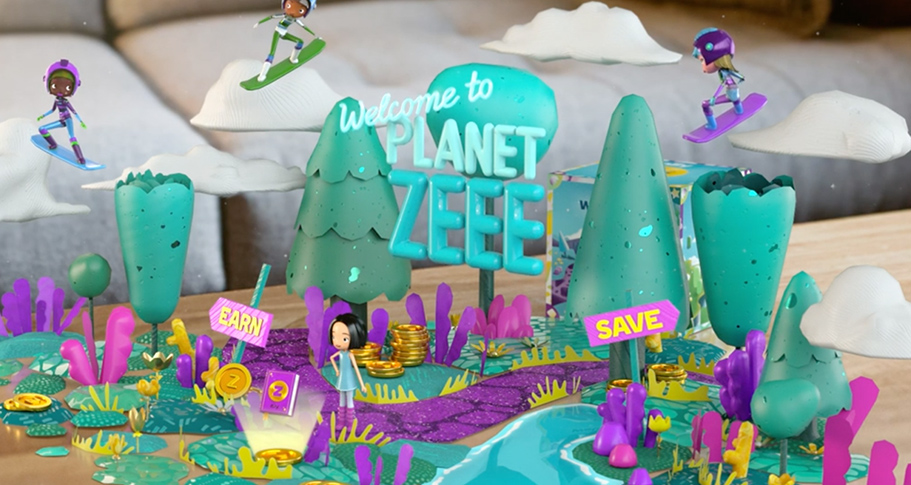
Adventures with Zeee Bucks is a mobile AR experience that is designed to help youngsters sharpen their financial skills by earning and saving Zeee bucks, and even help them save real money.

You can download the app today for free on the iOS and Android stores.


An Incomplete List of Women Writers Who Inspire — from blog.edmentum.com by Winnie O’Leary

Excerpt:

I don’t know about you, but I have been to dinner parties where we talk about creating a “desert island booklist,” but we never get to a consensus on how many should be on that list. I am pretty sure it would be my fault that if the boat sinks and we are forced onto that desert island, it would be because I brought too many books.

To avoid this scenario, and in recognition of National Reading Month and National Women’s History Month (both in March), I thought I would make a list. I am limiting it to female writers or strong female characters.

When looking at the Pulitzer Prize for Fiction, the National Book Awards, and the Booker Prize, you will notice that the female winners are densely packed into the last 30 years. This is a very incomplete list, but a carefully selected collection.


My thanks to Mr. Jack Uldrich for the following three items:


The Five-Day Workweek Is Dying — from theatlantic.com by Derek Thompson
And the implications for work and cities are going to be fascinating.

Excerpt:

According to data from Kastle Systems, which tracks building access across the country, office attendance is at just 33 percent of its pre-pandemic average. That’s lower than in-person attendance in just about any other industry for which we have good data. Even movie theaters—a business sometimes written off as “doomed”—have recovered almost twice as much.

What once seemed like a hot take is becoming a stone-cold reality: For tens of millions of knowledge-economy workers, the office is never coming all the way back. The implications—for work, cities, and the geography of labor—will be fascinating.

Panama – ENVIRONMENT: 175 countries sign plastic waste treaty — from menafn.com

Excerpt:

At a meeting of the UN Environment Assembly (UNEA) in Nairobi, Kenya, 175 countries on March 2 passed a resolution on the first treaty to directly tackle the 9 billion tonnes of plastic produced since the plastic age ramped up in the 1950s. Work now begins on how to implement the treaty by 2024.

Single DNA Test for Over 50 Genetic Diseases Will Cut Diagnosis From Decades to Days — from

Excerpt:

A new DNA test, developed by researchers at the Garvan Institute of Medical Research in Sydney and collaborators from Australia, UK and Israel, has been shown to identify a range of hard-to-diagnose neurological and neuromuscular genetic diseases quicker and more-accurately than existing tests.


Penn Law -- Law 2030 graphic

The Moment to Lead is Now — from law.upenn.edu

Excerpts:

Why Now?
If lawyers are leading every day, why am I making a call to action that the time to lead is now? Because the demands of legal work have changed and the attitude towards the workplace have shifted.

  • The demands of the profession have changed and increased
  • The shift in attitudes towards work has opened an opportunity to upgrade how we lead in the law

From these conversations, I took away some fundamentals of how lawyers can step up and lead more effectively from wherever they are.

Mike Avery on the Power of Human-Centered Design

Excerpt:

On this episode, Mike explains the concept of human-centered design, compares healthcare redesign with legal services redesign, and shares why he’s optimistic about the future of higher education.


The following is a brief excerpt from Beth McMurtrie’s weekly Teaching newsletter from The Chronicle of Higher Education — from the Breaking Bad Habits section:

In a recent Twitter thread, Lindsay Masland, interim director for faculty professional development at Appalachian State University, asked people to describe “pedagogical sins” that they no longer commit. “I’m wondering,” she wrote, “are there things you used to do in your teaching that now fill you with cringe?”

 
© 2025 | Daniel Christian