Largest-Ever Collection of Brain Maps Charts How the Brain Changes Over a Lifetime — from singularityhub.com by Shelly Fan

Excerpts:

Our brains are unique snowflakes that change shape throughout our lives. Yet buried underneath individual differences is a common throughline, with the brain growing rapidly during childhood then slowly declining with age.

But that’s just a crude sketch of an average brain’s lifetime. What are we missing?

A team of international scientists just gave us the first answers with a remarkable project called BrainChart. In a tour de force study published last week in Nature, they combined almost 125,000 brain scans covering the entire human lifespan, from before birth to death. The youngest sample was 15 weeks after conception; the oldest, a centenarian.

Even at this massive scale, the charts are just the first edition. The entire work is open sourced (you can check it out here), published with tools that allow other contributors to match up their brain scan data to the charts.

“You could imagine them being used to help evaluate patients screened for conditions such as Alzheimer’s, for example, allowing doctors to spot signs of neurodegeneration by comparing how rapidly a patient’s brain volume has changed compared to their peers,” said Bethlehem.

 

2021 Year End report ADA Digital Accessibility Lawsuits — from info.usablenet.com (need to complete form to get access to the report)

Excerpts:

The UsableNet data and research team reviews hundreds of website and app accessibility lawsuits in federal courts under ADA and in California state courts for our bi-annual lawsuit reports.

Highlights from the report include:

  • The top-line numbers in 2021
  • The trend of repeat digital lawsuits
  • Where key cases have brought some relief and re-focus on connecting to brick and mortar
  • A break-down of the impact on E-commerce
  • Top plaintiffs and plaintiff firms
  • The increase in lawsuits involving accessibility widgets and overlays

Also relevant/see:

Also relevant/see:


Google TalkBack: An Overview of Android’s Free Screen Reader — from boia.org

Excerpt:

TalkBack is Google’s free screen reader for Android devices. The software responds to familiar touch and swipe commands, allowing users to interact with websites and apps. When activated, TalkBack announces where the user’s focus is located, enabling people to control their phones, tablets, and other Android devices without using visual cues. In certain apps, users can input other touch and voice commands.

As part of our series of articles on assistive technologies, we’ll review some of TalkBack’s unique features — and provide tips for using the software to evaluate mobile accessibility.


Play-based learning in your homeschool: It’s more than just board games — from raisinglifelonglearners.com by Colleen Kessler

Excerpts:

Play-based learning doesn’t have to fit in a box!  There are many wonderful resources in the homeschool community to help you discover what works best for your family.

In addition to the various suggestions I have included in today’s episode of the podcast, you’ll find excellent recommendations from these sites, dedicated to creating out of the box approaches to learning:

In a nutshell, this means that kids learn best when they’re mentally active, engaged socially, and when they can make connections to their lives.

Also relevant/see:

Financial literacy games provide fun ways for students of all ages to learn about finances on various topics. Some websites have grade bands with interactive ways for students to explore creating a bank account, setting a budget, applying for a loan, and many others. Many of the options available include financial literacy games for the classroom.

From DSC:
Although the following resource isn’t about learning, it reminds me of the topic of “play”:


Some Colleges Are Ending Hybrid Learning. Students Are Pushing Back. — from chronicle.com by Adrienne Lu
Daily Briefing: Is the End of Hybrid Learning Leaving Disabled and High-Risk Students Behind?

Excerpt:

Some students, though, want their colleges to make hybrid learning permanent. They argue that scaling up remote learning during the pandemic made higher education more accessible — not only for students with disabilities and the immunocompromised, but also commuter students, those balancing schoolwork with jobs, and students with caregiving responsibilities — and helped to protect vulnerable faculty members.


10 Books Of Visual Ideas (from 2006 to 2012) — from theelearningcoach.com by Connie Malamed
Explanatory, Information and Data Visualization Graphics

Excerpt:

When the importance of visualization became popularized, an explosion of books were published for those who were hungry to understand and appreciate this graphic format. It was an obvious win for practitioners who were trying to improve communication and understanding. These books also served as inspiration for people who were needed visual ideas on demand, like instructional designers.

So that we don’t lose the value of these older books, I’m republishing this article listing ten compelling books from the early days of visualization: 2006 to 2012. The one exception, is Tufte’s book from 1990. I recommend these books for visual examples and for inspiring ways to visualize concepts, statistics and data. They are also a part of our graphic design history.

The list is organized into two categories. Books that feature explanatory graphics and those that portray information graphics and visualizations.


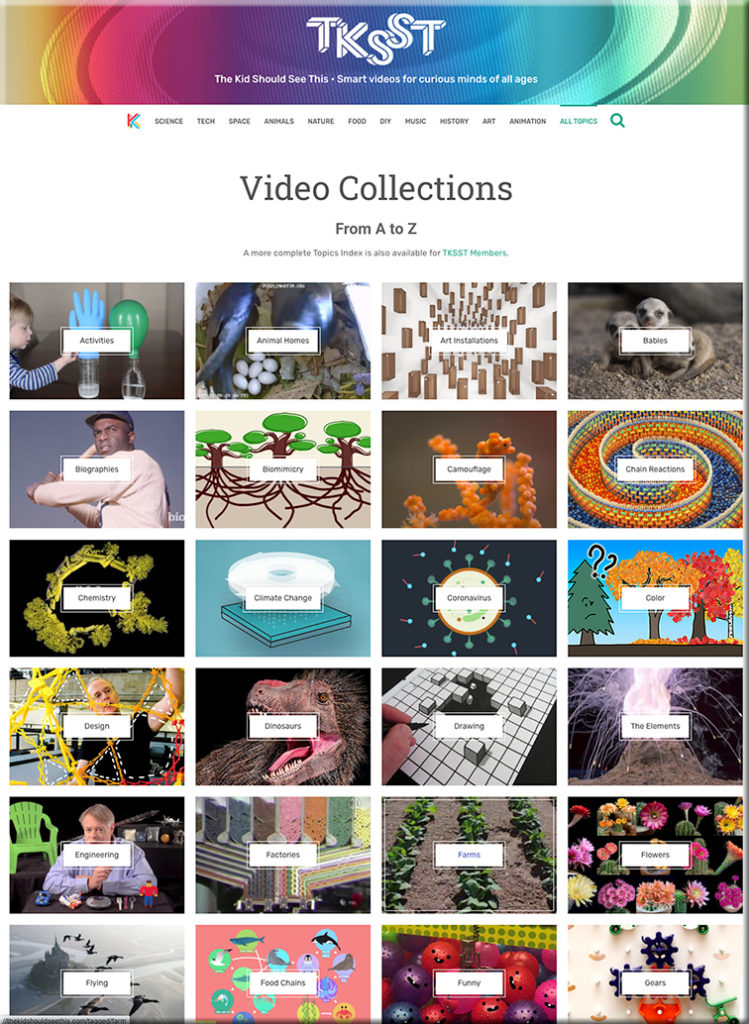
The Future Trends Forum Topics page — from forum.futureofeducation.us by Bryan Alexander

Excerpt:

The Future Trends Forum has explored higher education in depth and breadth. Over six years of regular live conversations we have addressed many aspects of academia.

On this page you’ll find a list of our topics.  Consider it a kind of table of contents, or, better yet, an index to the Forum’s themes.

Also see:

Since we launched in early February, 2016, the Forum has successfully published three hundred videos to YouTube.  Week after week, month by month, over more than six years we’ve held great conversations, then shared them with the world, free of charge.


The Pandemic Transitioned the Legal Industry Into the Digital Age — from by Yuri Vanetik
Covid-19 forced businesses and social interactions to rely on technology because of social distancing rules exacerbated by fear. The legal industry, being no exception, was forced to embrace technology, shedding unnecessary ritual and processes. The result became a more efficient industry, where client interests trump anachronistic conventions.

Excerpt:

Much has changed in the world of commerce since the onset of the Covid-19 pandemic. The legal industry, a notorious stalwart, made a substantial leap, foregoing antiquated ritual-driven practices for technology-driven efficiency.

Technology and focus on the client, rather than wasteful processes, has become the new benchmark for lawyers who understand their business clients’ result-oriented expectations. The vast implementation of technology is the driving force in this pandemic paradigm. This modernization isn’t a mere facelift, but a restructuring of legal practice, including a major shift from a lawyer-centric to client-centric business dynamic.

Also relevant/see:


K-12 schools around the world tackling social injustice — from thetechedvocate.org by Matthew Lynch

Excerpt:

Social justice is a broad term that includes the economic, social, political, and civic as well as the human rights aspects of society. The denial of these basic elements is what we call social injustice. Social injustice is the product of years of oppression and discrimination and often breeds resentment and anger towards certain groups in society. It is evident that social justice is a problem that is yet to be sufficiently addressed through the ever-increasing protests, boycotts, and even violence inflicted on certain groups.

Restorative Justice Solutions for Youth Are Growing Abroad, Can They Become Part of the Mix in the U.S. — from the74million.org by Elizabeth Thompson

Excerpt:

The underlying philosophy for Piedmont Mediation’s process is restorative justice, said Terri Masiello, Piedmont Mediation’s executive director and the coordinator of the Restoring Youth Coalition of North Carolina.

Restorative justice is the practice of bringing together affected parties of a crime to discuss what happened and what needs to happen to make things right.

Piedmont Mediation is a diversion program that serves as an alternative to juvenile court for some cases in the Piedmont area of North Carolina, serving Alexander, Iredell, Davie, Davidson and Randolph counties.


How a Statewide Entrepreneurship Contest Launched 3 Indianapolis High Schoolers into a Million-Dollar Business — from the74million.org by Tim Newcomb

Excerpt:

If not for a statewide pitch competition for entrepreneurial students, three Indianapolis high schoolers likely wouldn’t have started their business. And they certainly wouldn’t have seen that company, Find Ideal Applicants, earn $20,000 in early-stage investment that valued the company at $1.5 million.

State leaders “wanted to see if they could intersect students with entrepreneurship and innovation,” he says. Students learn how to see a problem as an opportunity and come up with a plan. Wettrick says the faster students understand the benefits of learning from their mistakes, the more success they will have sooner in their lives.


Teaching for uncertainty vs. teaching the basics — from davecormier.com by Dave Cormier

Excerpts:

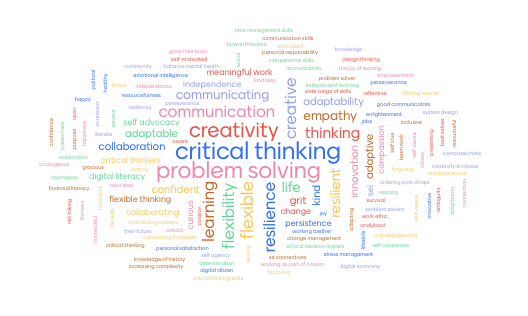
The first question I asked the crowd was what they thought students were learning for…

Q1. What do you think our students are learning for? What should they be good at when they’re done school?


The top 5 benefits of art programs for children — from thetechedvocate.org by Matthew Lynch

Excerpt:

Schools across the country are removing art programs and classes. Some do so due to a lack of funding; others just don’t believe it’s an essential subject for children. Unfortunately, many schools and learning institutes don’t realize the dangers of removing art. You wouldn’t question Math or English as core subjects, but many question the importance of art.

Art nurture’s a child’s inner creativity. So, what benefits does art bring to a child?


Romans 5:6-8

You see, at just the right time, when we were still powerless, Christ died for the ungodly. Very rarely will anyone die for a righteous person, though for a good person someone might possibly dare to die. But God demonstrates his own love for us in this: While we were still sinners, Christ died for us.


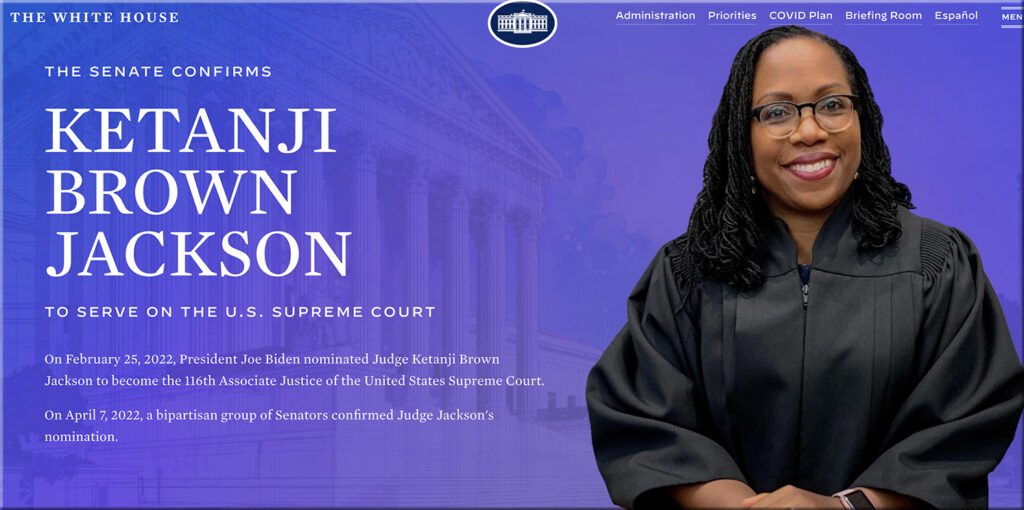
Ketanji Brown Jackson to serve on the U.S. Supreme Court

From DSC:
I realize I’m late with this, but I did insert it in my 4-7-22 posting and wanted to report it here as well. This is great news for the United States. I hope it is a major shot in the arm for diversifying the legal field.


© 2025 | Daniel Christian