EDUCAUSE QuickPoll Results: Learning Spaces Transformation — from er.educause.edu by Jenay Robert

Excerpts:

With an eye toward the future, IT units can help institutions create inclusive, flexible spaces that support a variety of learning activities and modalities. Appropriate technology infrastructure, strategic support from institutional leaders, and financial resources are among the most essential elements for transforming learning spaces.

.

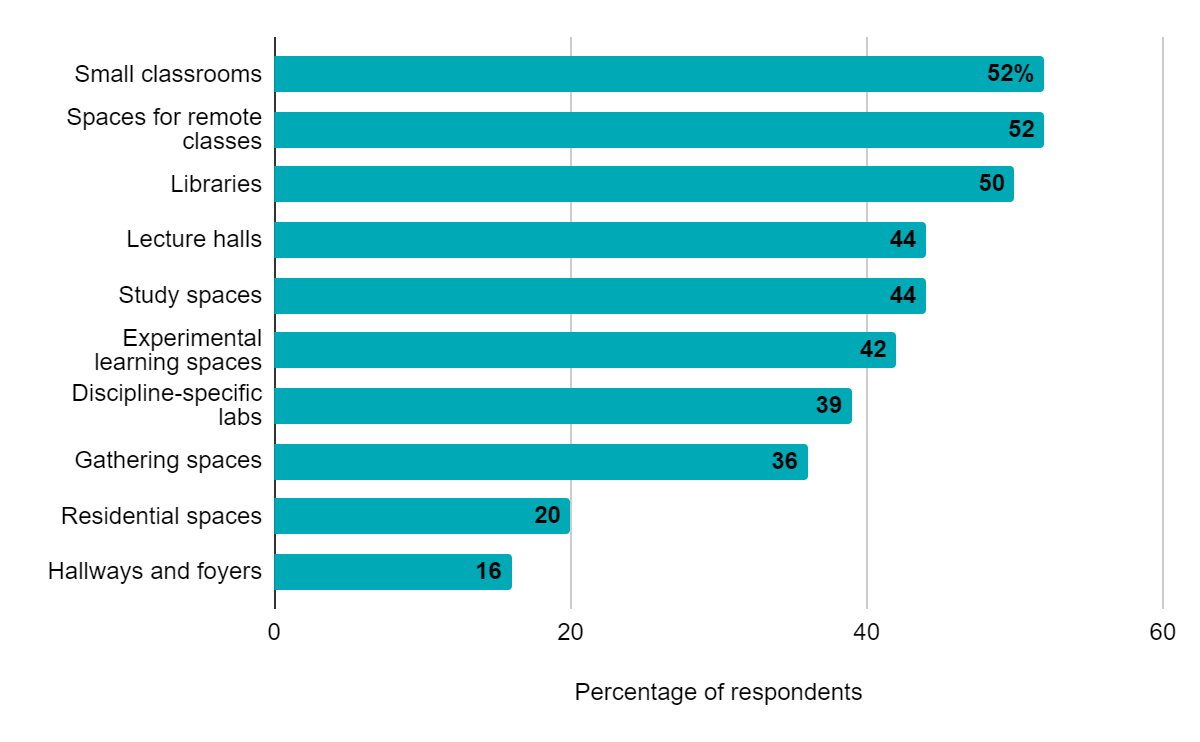
Figure 1. Types of Learning Spaces Being Transformedbar graph showing percentage of respondents who said each type of learning space was being transformed. Small classrooms 52%; Spaces for remote classes 52%; Libraries 50%; Lecture halls 44%; Study spaces 44%; Experimental learning spaces 42%; Discipline-specific labs 39%; Gathering spaces; 36%; Residential spaces 20%; Hallways and foyers 16%.


Seeing the possibilities, I finally took a chance. I studied English, political science and finite math, and each class I passed deepened my confidence and self-love.

This growing self-love was key to my academic development. Growing up, I didn’t experience much real love, outside of my mother and a few family members. I most often encountered the kind of false love expressed through violence and monetary possessions. College changed the way I thought about myself and others. I worked hand-in-hand with men from all backgrounds to complete assignments, and even taught other students. Before I knew it, I was getting A’s on my essays and solving quadratic equations in math class.

When people question why it’s important to educate prisoners, I remind them that to see change, we must support change. We must give individuals the opportunity to see themselves as more than the harm they’ve caused, more than what was once broken within them.

Christopher Blackwell

Also relevant/see:

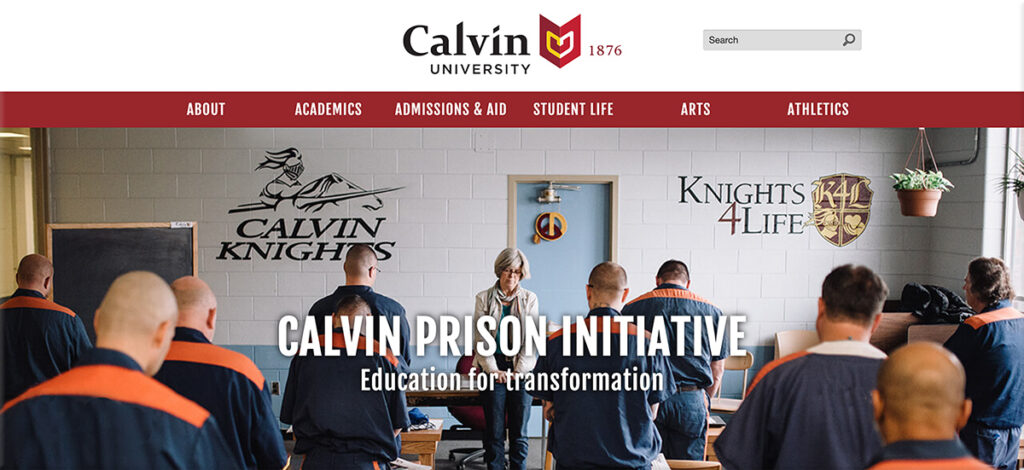
Calvin University's Prison Initiative


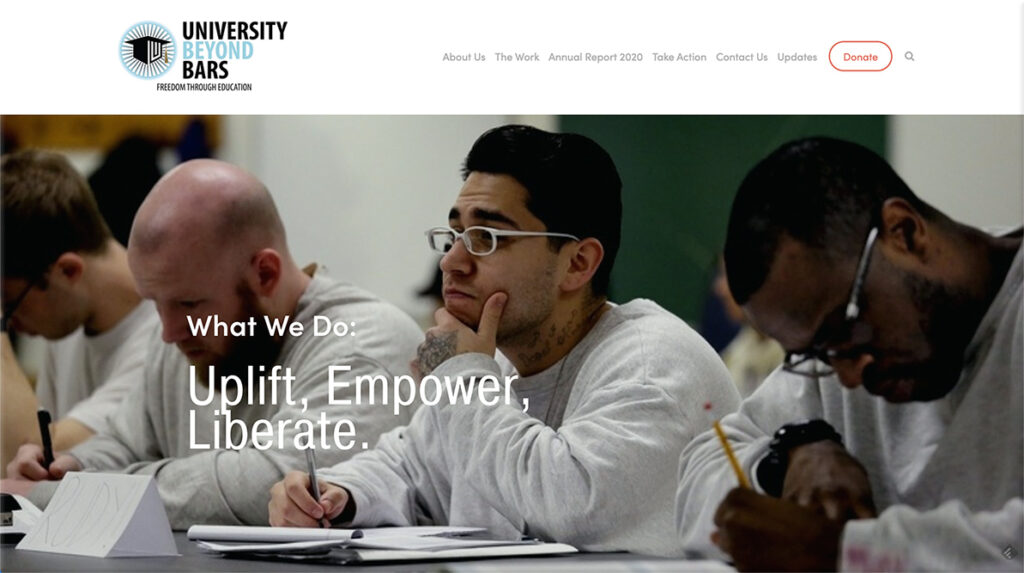
University Behind Bars


We need to use more tools — that go beyond screen sharing — where we can collaborate regardless of where we’re at. [Christian]

From DSC:
Seeing the functionality in Freehand — it makes me once again think that we need to use more tools where faculty/staff/students can collaborate with each other REGARDLESS of where they’re coming in to partake in a learning experience (i.e., remotely or physically/locally). This is also true for trainers and employees, teachers and students, as well as in virtual tutoring types of situations. We need tools that offer functionalities that go beyond screen sharing in order to collaborate, design, present, discuss, and create things.  (more…)


Teacher Job Satisfaction Hits an All-Time Low — from edweek.org by Madeline Will
Exclusive new data paints a picture of a profession in crisis

Excerpts:

Teachers’ job satisfaction levels appear to have hit an all-time low this year as the fallout from the COVID-19 pandemic continues to ravage schools.

That’s according to the Merrimack College Teacher Survey, a nationally representative poll of more than 1,300 teachers conducted by the EdWeek Research Center and commissioned by the Winston School of Education and Social Policy at Merrimack College.

In interviews, teachers say they still love teaching—but they’re fed up with everything else. They feel burdened by a constantly growing workload, especially with more students having greater academic and social-emotional needs than ever before. They don’t feel like they’re paid appropriately for all the work they do. And they don’t feel respected as professionals.

Also see:


From DSC:
But it’s not just in K12 where our learning ecosystems are malnourished:


  • Ep.77: Turnover, Burnout and Demoralization in Higher Ed — a podcast from insidehighered.com and hosted by Inside Higher Ed Editor Doug Lederman
    Excerpt: 
    Faculty and staff members are leaving colleges and universities in droves. Other employers are experiencing these trends, too, but are some issues unique to higher education? Employers of all kinds are struggling to hold on to their employees in the wake of the pandemic and amid a white-hot job market. Data recently released by the University of North Carolina system, for instance, shows that faculty and staff turnover in the first half of this academic year was about 40 percent higher than the average of the last four years. Are colleges and universities just dealing with the same issues other industries are facing? Or are there unique problems in higher ed that campus leaders need to acknowledge?

Also relevant/see:

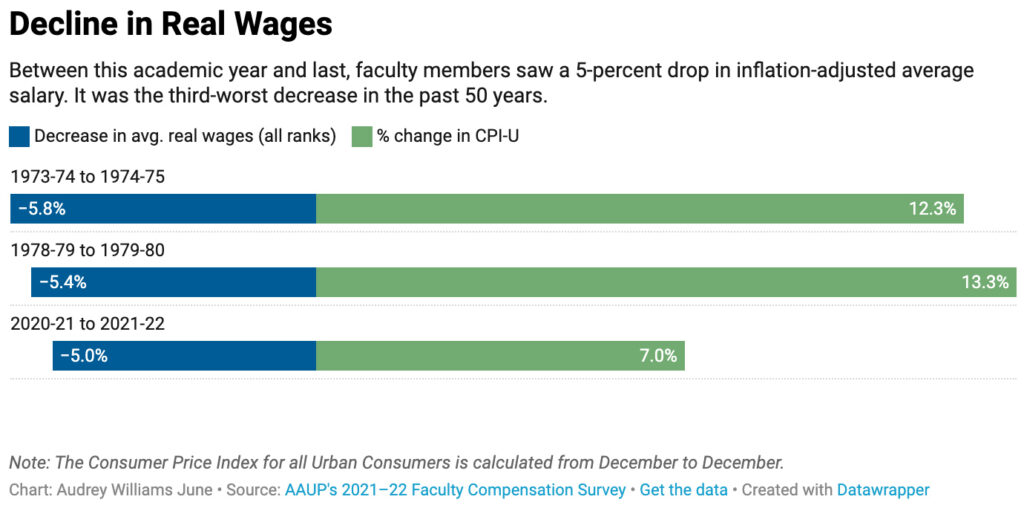
Between this academic year and last, faculty members aw a 5-percent drop in inflation-adjusted average salary.


From DSC:
Hmmm…many colleges and universities keep a close eye on their peers and often respond with similar strategies that their peers are pursuing. But who is an organization’s peer? The Chronicle of Higher Education‘s posting below — “How a College Decides Who Its Peers Are” — stated that “there is clearly no shared definition of what constitutes a peer institution.” 

Plus, I found this item especially interesting:

Harvard University selected only three peer institutions: Yale, Princeton, and Stanford. But 22 institutions, including Bowdoin, named Harvard as a peer. Bowdoin, a small, liberal-arts college with about 1,800 undergraduate students and no graduate programs, chose 98 “peers,” including the entire Ivy League and many large universities, some of which enroll more than 10,000 students. Bowdoin itself was picked by 35 institutions as a peer. All of them were small, liberal-arts colleges or universities that primarily serve undergraduates.

I have often thought that colleges and universities should care far less about what their peers are doing. Rather, they should move forward with their own solid visions, bold actions, and well-thought-through strategies — as there can be a great deal of danger and risk in the status quo.

Too many alternatives have been appearing — and will likely continue to appear — on the lifelong learning landscapes. Most likely, these new organizations will offer in-demand credentials/skills as well as the capabilities of helping people constantly reinvent themselves — with far less expensive price tags associated with these types of offerings.


How a College Decides Who Its Peers Are — from chronicle.com by Susan Poser
Questions of institutional identity are at the core of the process.

Excerpt (emphasis DSC):

The mismatch between whom an institution chose as peers, and the colleges that reciprocated, pervades the data set. It raises the question of how institutions designate peers, which is a mystery. In some cases it is likely to be decided by someone in the Office of Institutional Research or the provost’s office in response to the Ipeds survey, while in others perhaps some process leads to a consensus among administrators. Regardless, there is clearly no shared definition of what constitutes a peer institution.

Also relevant/see:


2022 EDUCAUSE Horizon Report | Teaching and Learning Edition


2022 EDUCAUSE Horizon Report | Teaching and Learning Edition — from library.educause.edu

Sections include:

  • Trends: Scanning the Horizon
  • Key Technologies & Practices
  • Scenarios
  • Implications: What Do We Do Now?

 Also relevant/see:


Also relevant/see:

2022 Educause Horizon Report Suggests Change Is Here to Stay; No Return to ‘Normal’ — from campustechnology.com by Rhea Kelly

Excerpt:

If the COVID-19 pandemic has been a time of unprecedented change in higher education — characterized by rapid pivots to remote work and learning and an explosion in the use of technology across the institution — the future is about reframing those changes into long-term realities, according to the 2022 Educause Horizon Report Teaching and Learning Edition, released this week. Colleges and universities are shifting their mindsets to “reflect an evolution from short-term ’emergency’ or ‘reactive’ modes of offering education during extraordinary circumstances to making strategic and sustainable investments in a future that will be very much unlike our past,” the report suggested.

6 Technologies and Practices Impacting the Future of Higher Education — from campustechnology.com by Rhea Kelly


The Digital versus Brick-and-Mortar Balancing Game — from educause.edu

Excerpt:

The blended campus required after two years of upheaval calls for out-of-the box thinking about what to keep and what to discard from both digital and physical work and learning spaces. Technology leaders face critical decisions regarding workplace culture, physical classroom design, and traditional campus spaces.

Making the move from fully in-person instruction to a learning environment that also accommodates remote students (and remote faculty) requires rethinking and redesigning physical learning spaces to provide an equitable experience for all learners. Technology leaders will need to overcome sizable obstacles to create inclusive classrooms that enable faculty and students to reap the many benefits of hybrid [hyflex] learning.

Also see some of the other most urgent issues in higher education here:

The EDUCAUSE showcase series spotlights the most urgent issues in higher education.


5 Tips for Educators From The Superintendent of the Year — from techlearning.com by Erik Ofgang
Superintendent of the Year Curtis Cain advises educators to keep alive the spirit of innovation that emerged during the pandemic and to remember how important the work they do is.

Superintendent of the Year Curtis Cain

Excerpt:

Keep Alive the Spirit of Innovation 
“The brain, once stretched, never returns to its initial size,” says Cain of the ways that schools have changed. His advice to staff in his district and beyond is to keep alive the spirit of innovation that was born in the pandemic.

“The needs of students have absolutely become more complex and more nuanced. And in many ways more urgent than they have been in the past,” he says. “So we’re going to have to keep having the ability to demonstrate a willingness to sit at the table, to problem solve.”


Developing childrens’ critical thinking skills through arts — from thetechedvocate.org by Matthew Lynch

Excerpt:

By nature, children are curious, and art seeks to exploit this positively so that the child can better express themselves. Art provides a practical learning experience, allowing the child to create solutions they see fit through their art projects. Children are able to create an ideal environment for themselves, determine what is ideal and what is not, and what is good and what is bad. Through this, children enhance their capacity to think critically and solve solutions to their hypothetical problems.

Through art, children are boundless and are free to make their own choices, unlike in a subject like math, where everything is pretty much definite and predetermined. They are allowed to make their observations and project them in the best way they know. Through teaching arts, learners have a better understanding and appreciation for art itself, the people that create as well as different cultures. Art also helps to instill values such as tolerance, discipline, and empathy. It allows for reflection, which is an important element of critical thinking.


Fun Math Games For Kids To Play At Home — from edtechreview.in by Saniya Khan

Excerpt:

Games in math learning can encourage students to explore these concepts, from number concepts, such as counting sequence, one-to-one correspondence, and computation strategies to number combinations, patterns, place value and other essential math concepts. They also offer students the opportunity to deepen their understanding of mathematics and reasoning. The teacher should provide repeated opportunities for students to play games and then allow mathematical ideas to emerge as students notice new models, relationships and strategies.


Podcasts For High School Students — from teachthought.com by Dennis Lee,

Categories covered include:

  • Academic Related Podcasts
  • General and Special Interest Podcasts
  • Entrepreneurship
  • Inspirational & Motivational
 

Instructure’s Acquisition of Concentric Sky Bringing Some Changes to Canvas LMS Users — from thejournal.com by Rhea Kelly
Badgr Digital Micro-Credentialing Platform to be Rebranded as Canvas Badges, Optional ‘Pro’ Upgrades Coming

Excerpts:

Instructure said today its acquisition of Concentric Sky, maker of the Badgr digital credentialing platform, is complete, and the basic Badgr functions will be integrated into Canvas and rebranded as Canvas Badges.

Canvas Credentials will enable institutions to “seamlessly award badges that verify and track academic achievements, including competency-based education,” the company explained in a news announcement. With the stackable, shareable credentials, students will be able to track their personalized learning journeys and carry proof of their competencies and skills development.


Zoom Announces New Education Features, Enhancing Hybrid [Hyflex] Learning Experience for Educators & Students — from edtechreview.in by Stephen Soulunii

Excerpt:

According to a news release, the features span Zoom’s Chat and Meeting offerings and are designed to support teachers who need to engage and manage students joining class remotely or submitting homework assignments.

Breakout Rooms Enhancements
Breakout rooms, a popular education feature, also received enhancements in this latest release. Program Audio allows meeting hosts to share content with audio to breakout rooms, adding the ability to share videos with audio. With the LTI Pro integration enhancement, educators can populate breakout rooms from the course roster. This can be used to assign breakout rooms in advance, and then automatically sort students into breakout rooms.

Anywhere Polls
Anywhere Polls will allow polling content to live in a central repository that can be accessed from any meeting on an account, instead of being associated with a particular meeting. This will make it easier for instructors to reuse polls and will also be beneficial for grading. This feature will be available this year.


Bridging the digital divide in online learning — from tonybates.ca by Tony Bates

Excerpt:

The problem
At the start of the pandemic, in Oakland, California, 40 miles north of Silicon Valley, only 12 percent of low-income students, and 25 percent of all students, in Oakland’s public schools had devices at home and a strong internet connection.

The outcome
Two years into the pandemic, Oakland has been able to connect 98 percent of the students in the district. As of February, the city had provided nearly 36,000 laptops and more than 11,500 hot spots to low-income public school students.

Also from Tony, see:

Getting into the online learning industry

Three years ago, I wrote a blog post called ‘So you want to be an educational technologist…’ in which gave some advice on how to get into and develop a career as an educational technologist. In that article, I noted that I didn’t have much experience to guide people going into the corporate training area, and this article by Matthew Lynch does exactly that. This article complements nicely what I wrote earlier.


Momentum builds behind a way to lower the cost of college: A degree in three years — from hechingerreport.org by Jon Marcus
Skepticism about the cost and duration of a higher education drives a need for speed

Excerpt:

A rare brand-new nonprofit university, NewU has a comparatively low $16,500-a-year price that’s locked in for a student’s entire education and majors with interchangeable requirements so students don’t fall behind if they switch.

But the feature that appears to be really winning over applicants is that NewU will offer bachelor’s degrees in three years instead of the customary four.

“We didn’t think the three-year bachelor’s degree was going to be the biggest draw,” said Stratsi Kulinski, president of the startup college. “But it has been, hands-down. Consumers are definitely ready for something different.”

 
© 2025 | Daniel Christian