Apple Starts Connecting the Dots for Its Next Big Thing — from nytimes.com by Tripp Mickle and Brian X. Chen
The company has enlisted Hollywood directors like Jon Favreau to help its effort to create products that blend the physical and virtual worlds.

Excerpt:

Nearly 15 years after the iPhone set off the smartphone revolution, Apple is assembling the pieces for what it hopes will become its next business-altering device: a headset that blends the digital world with the real one.

The company has enlisted Hollywood directors such as Jon Favreau to develop video content for a headset that it is expected to ship next year, according to three people familiar with that work. Mr. Favreau, an executive producer of “Prehistoric Planet” on Apple TV+, is working to bring that show’s dinosaurs to life on the headset, which looks like a pair of ski goggles and aims to offer virtual- and augmented-reality experiences, these people said.

Speaking of the future, here’s another item regarding what’s coming down the pike:


From DSC:
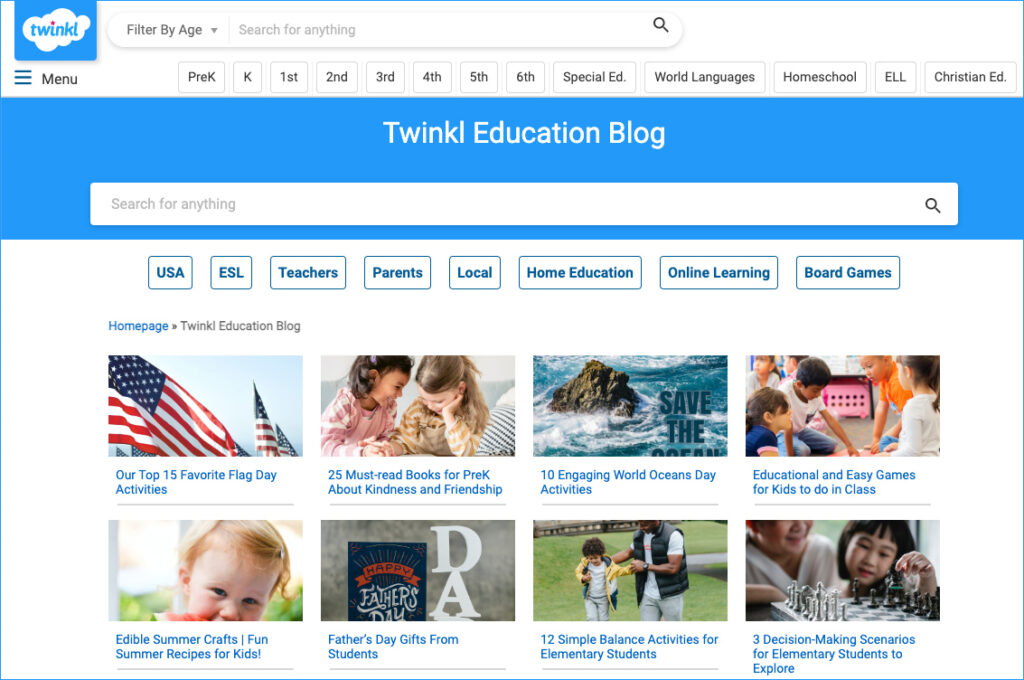
This looks like an interesting set of educational resources!

This is a screenshot of the Twinkl Education Blog


From DSC:
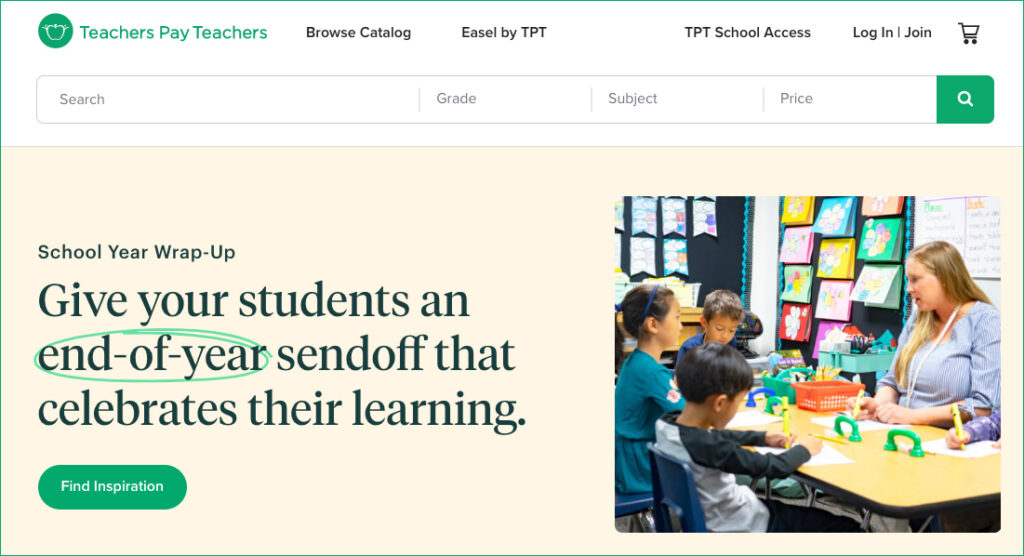
One of our daughters — the one who is going to be teaching third graders next year — said that the above siteand resources reminded her of Teachers Pay Teachers. So I thought I’d include that here as well.

This is a screenshot of the Teachers Pay Teachers website


What Is the Metaverse? A Beginner’s Guide to Tech’s Latest Obsession — from singularityhub.com by Aaron Frank; with thanks to Jack Aldrich for this resource
The metaverse is the internet, but it’s also a spatial (and often 3D), game-engine-driven collection of virtual environments.

Excerpts:

A couple months ago, friends and business contacts started asking me for a crash course on my professional research studying virtual environments. Their interest reflects an explosion—which you’ve probably noticed—of noise and hype surrounding something called the “metaverse.”

This article is an introduction for a complete or almost beginner. There’s plenty of mainstream coverage on the topic, but it often conflates concepts: virtual reality is not the metaverse (though it’s related), and crypto/Web3 by itself is not the metaverse (though also related). Confusing, I know. Whether you’re a businessperson or bystander, this is my best effort to lay everything out.

So if the metaverse is just the internet—what about the internet is about to change? To answer that question, I’ve broken this article into four parts:

    1. Spatial Computing (What is that?)
    2. Game Engines (What are those?)
    3. Virtual Environments (Is that the metaverse? …sort of)
    4. Virtual Economies (Please don’t tell me I have to learn about NFTs…you might)

Also see:


Small Business Website Accessibility Tips — from boia.org

Excerpt:

Many small business owners think of digital accessibility as a series of technical, complicated rules. If you have limited resources for web design and development, accessibility can seem like an expensive extra — but fortunately, that’s not the case.

Website accessibility is achievable on any budget, and it’s a savvy investment regardless of the size of your business. Even if you can’t afford professional testing and remediation, you can take immediate steps to remove barriers that affect people with disabilities. Here are a few tips for getting started.

Also relevant from boia.org, see:

One last accessibility-related item from equalentry.com:


7 best photography lighting kits for camera geeks — from by Atharva Gosavi
Setup the paradise for capturing the perfectness.


GreenLight Means Go: Where Learner and Employment Records Are Headed — from gettingsmart.com by Getting Smart Staff

Excerpt:

New solutions present a unique solution to these challenges by providing a user-controlled technology to store, share, search, and match acquired competency with opportunity. One of the key players in this space is GreenLight Credentials, a frictionless, user-controlled talent search and credential-communicator that addresses these issues. On the outbound side, institutions and their learners can store any type of verified record including transcripts, credentials, badges, or other documentation of learning. These learning experiences are then translated into data – competencies, skills, interests, and accomplishments that are then matched with scholarship, university and employment opportunities. Universities and employers can join the network to discover and connect with prospective students or employees.

The vast majority of students who graduate from high school in the United States typically have their learning diluted to a single one-page transcript that lists courses and grades – and often a GPA.

What young people need now are repetitions in design thinking – to repeatedly find, frame, address complex problems and deliver value to a community.

— Getting Smart Staff

Also relevant/see from Getting Smart:

Innovating Together: the Geopolitical and Educational Path Forward — by Tom Vander Ark

Key Points

  • The new mission of school is cultivating curiosity, purpose and problem solving by inviting learners into real world challenges in diverse teams using smart tools.
  • The path forward is innovating together.

The VUCA world (volatile, uncertain, complex, and ambiguous) is now hyper-connected (VUCAH).

Also relevant/see:


ED and ISTE Launch Initiative to Improve Tech Proficiency of New Teachers to Increase Digital Equity — from thejournal.com by Kristal Kuykendall

Excerpt:

The International Society for Technology in Education and the U.S. Department of Education today launched an initiative to help educator preparation programs update their curriculum and methods to ensure new teachers enter the workforce with the digital learning skills needed to lead equitable learning in modern tech-enabled classrooms, according to a news release.


Prioritizing Mental Health and Well-Being in the Workplace is Evolving and Driving Change in the Legal Profession — from law.upoenn.edu by Daniel T. Lukasik, Esq.; with thanks to PennLaw’s Future of the Profession Initiative (from 6/9/22) for this resource

Excerpt:

I now know I was never the only one with a mental health problem. Over the past five years, numerous surveys have confirmed what I and others suspected: anxiety, burnout, depression, and problems with alcohol are rampant throughout the legal profession. Compared to the general population, the magnitude of lawyer distress is deeply troubling.

In a confidential ABA survey of 13,000 lawyers, twenty-eight percent reported they had experienced a problem with depression within the past twelve months, a rate four times that found in the general population. Yet, given this sobering fact, there’s good cause to feel optimistic about the profession’s future.

Today, there is nothing short of a revolution in the law at all levels regarding mental health.

Two other relevant items from PennLaw’s Future of the Profession Initiative from 6/9/22:

From DSC:
I post this for:

  • Undergrad students within higher education — as you should go into a career in the legal profession with your eyes wide open.
  • For the rest of us in society — for a better understanding of others’ situations. If you know of a lawyer in the family or as a friend, you may want to check in with them as to how they are really doing.
 

From DSC:
The following items made me reflect upon the place of COVID-19 in causing the current ills within higher education — but also thinking about the ills that were present long before Covid hit us.

Key point:
We should be careful not to conveniently use COVID-19 as the scapegoat for all that’s wrong within higher education.


On the faculty/staff side of the house


The Season of Our Professorial Discontent — from chronicle.com by Paul Musgrave
The pandemic irrevocably changed the student-teacher relationship — and not for the better.

Excerpts:

As pandemic slides into endemic, it’s worth asking: Did the pandemic break something fundamental about academe? Was the spring of 2022 the end of pandemic disruptions, or the start of a new normal?

This time, as I delivered the lines to an audience of 30 in a course with 200 students enrolled, I was wondering whether I wanted to give a lecture ever again.

From DSC:
Regarding the first quote…several things were broken within academe long before COID-19. Re: the second quote, what should that tell us if only 30 students showed up in a class with 200 students in it?

Faculty autonomy and faculty satisfaction are being whittled away.

From DSC:
From what I can tell, that’s been happening for years within the K-12 learning ecosystem. It seems like this trend is now occurring within the higher ed learning ecosystem. (I could go off on a tangent about why we didn’t help our fellow educators within K-12 — whose “product” directly impacts those working within higher ed — but I better not. This posting is already packed with reflections.)

Below are some relevant quotes from Kevin McClure’s 5/27/22 article out at The Chronicle of Higher Education (emphasis DSC). I agree with much of what Kevin is saying here.

Don’t Blame the Pandemic for Worker Discontent
It hasn’t just been a tough two years. It’s been a tough two decades.

Excerpt:

The pandemic alone didn’t cause the low morale and turnover you might be seeing among your faculty and staff members just as the lack of personal protective equipment didn’t solely give rise to the Amazon Labor Union. Yes, today’s workers are re-evaluating their workplaces, seeking reassignment within their institutions, and in some cases resigning from jobs altogether. But they are doing so for many of the same reasons they did 20 years ago — poor working conditions.

So burnout isn’t just about people struggling to cope with stress; it’s about people struggling in workplaces where stress never subsides.

In my own interviews on morale, higher-education workers have talked about leaders who aren’t listening, low compensation, and understaffing.

We see our workplaces differently, and our tolerance of poor working conditions has evaporated.


On the student side of the house


“It hasn’t just been a tough two years. It’s been a tough two decades.” The same — and likely more — could be said for the student side of the house, especially in regards to the price of education and how relevant/up-to-date the content has been. As the prices of obtaining a degree have skyrocketed over the last several decades, students and parents now HAVE to ask, “What’s the Return On Investment (ROI) here? Am I gaining the skills in college that will get me hired after college?”

Again, the point I’m trying to make here is that we should be careful not to conveniently use COVID-19 as the scapegoat for all that’s wrong within higher education.

Along these lines, the following two quotes seem relevant to me from Beth McMurtrie’s (6/2/22) Teaching e-newsletter (also from The Chronicle):

I asked Walton to tell me more about the setup at his university. He said classes were fully in person but instructors were encouraged to record lectures and be highly flexible with due dates. The result: Most days he had less than 50-percent attendance, and he received a lot of last-minute emails from students who said they woke up that morning with a headache or otherwise not feeling well. A few filed documented absence requests, but not many, suggesting that these were not serious illnesses, like Covid.

I’ve never had more incompletes for courses than in the last two years, so signaling to students that their distribution courses are flexible and accommodating has only let them de-emphasize them even more.

There’s likely a variety of causes/possibilities here — and I’m sure that Covid-related reasons are among them. But it makes me really wonder if students don’t think that the content is all that valuable or relevant to begin with these days. Is college even worth it anymore? Why am I here in the first place? Where is the motivation coming from? Is it extrinsic or intrinsic motivation?

Perhaps it’s time to change the curriculum/content as well as the price.
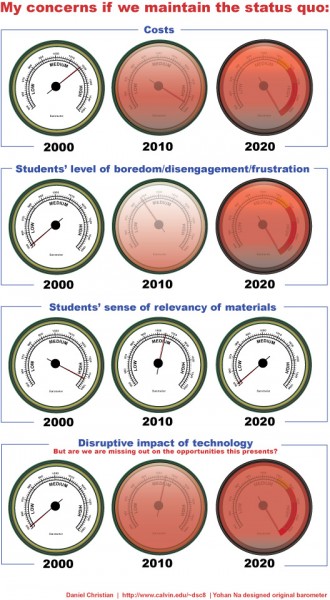

Daniel S. Christian: My concerns with just maintaining the status quo (from 2009).

A graphic I created back in 2009, with Yohan Na’s assistance.


Hebrews 9:28 — from biblegateway.com

28 so Christ was sacrificed once to take away the sins of many; and he will appear a second time, not to bear sin, but to bring salvation to those who are waiting for him.

11 Yours, Lord, is the greatness and the power
    and the glory and the majesty and the splendor,
    for everything in heaven and earth is yours.
Yours, Lord, is the kingdom;
    you are exalted as head over all.


Radar Trends to Watch: June 2022 — from oreilly.com

Excerpt:

The explosion of large models continues. Several developments are especially noteworthy. DeepMind’s Gato model is unique in that it’s a single model that’s trained for over 600 different tasks; whether or not it’s a step towards general intelligence (the ensuing debate may be more important than the model itself), it’s an impressive achievement. Google Brain’s Imagen creates photorealistic images that are impressive, even after you’ve seen what DALL-E 2 can do. And Allen AI’s Macaw (surely an allusion to Emily Bender and Timnit Gebru’s Stochastic Parrots paper) is open source, one tenth the size of GPT-3, and claims to be more accurate. Facebook/Meta is also releasing an open source large language model, including the model’s training log, which records in detail the work required to train it.


As Challenges in Education Persist, Our Coverage Will Elevate Educator Voices — from edsurge.com by EdSurge Staff

Excerpt:

Elevating the diverse voices of educators—particularly the perspectives of those traditionally marginalized—is critical for making change. That’s especially important at this moment, during what appears to be an inflection point in the history of American education.

During this period of upheaval, we’ve amplified the voices of educators as they navigate the fallout from the pandemic through our Voices of Change project, creating opportunities for educators to reflect, share and learn from one another through journalism, storytelling and research.

From DSC:
This is great to see, especially seeing as we are in a game-changing environment. These folks are on the front lines, so to speak. As such, we need to listen to them very carefully. Their voices should be the first to be considered and heard as we move forward into the future of education.


Also relevant/see:

Teachers of the Year Say Educators Deserve More Trust — — from edsurge.com by Rebecca Koenig

Excerpt:

“We have this idea that they’ve lost learning, but I really want to change that narrative into: Their learning has shifted,” she explains. “They learned a lot. It might not have been the science I wanted them to learn, but they learned how to learn online and in person; they learned how to change at a moment’s notice, they learned how to keep themselves and … their family safe. I’m pretty sure they all have graduate degrees in technology at this point.”

Rivera believes that education would improve if leaders at every level listened to teachers more, trusted them as experts and drew on their insight when making decisions.


Designing for Autism, ADHD, and More: Representing Neurodivergence — from learningsolutionsmag.com by Judy Katz

Excerpt:

Understanding inclusion from a neurodiversity perspective has both a DEI component (addressed in this article), and an accessibility component (addressed in the two articles to come in this series). As learning and development professionals, applying both is not just about accommodating impairment or staying compliant with the ADA. It’s about unlocking the talents that diverse neurotypes bring.

Positives of neurodivergence
One of the best things you can do to lead to greater acceptance of neurodivergence in the workplace is to learn and reinforce to others that neurodivergent brains are often different in positive ways, despite broad negative stereotypes. Here are some examples, but remember, not all traits apply to all individuals; if you know one neurodivergent, you know one neurodivergent.

#autistics #ADHD #Aspergers #neurodivergence #DEI


Also from learningsolutionsmag.com:

Automation, AI Will Advance—and Challenge—Learning Leadership — by Markus Bernhardt

Excerpt:

The current momentum of change, seen across all sectors and industries, is unparalleled in magnitude and speed; both are accelerating. The need for businesses to adapt has arguably never been more pressing, while challenges continue to grow at an increasing pace.

The digital revolution has arrived, and we already find ourselves in the thick of it. For learning and development (L&D), the time has come that deploying automation will be key. When we look at other departments within organizations, we can no longer imagine how marketing, sales, finance, or HR would fare without automation. Here, automation has celebrated some huge successes, gathering momentum as available technology is deployed more broadly. The results are increasing efficiencies, accuracy, and speed, and at scale.

This article introduces a short series on automation and AI and their impact on L&D.


The DNA of a strong learning culture — from chieflearningofficer.com by Stella Collins
How is the learning culture where you work now? What’s stayed the same? What’s changed?

Excerpt:

In this article, I will explore real stories through the lens of the DNA for an effective learning culture and discover practical examples you can apply in your own organization.

They recognized every single person in the business needs to learn, from the CEO to the most junior recruit. Everyone is a learner when “the times they are a-changin’.”

When people talk about changed behaviors, upskilling or knowledge acquisition, what they really mean, at a fundamental level, are changes to the structure, chemistry and function of our brain. These become our perceptions, memories, behaviors, habits and skills. When you don’t know any of the science, your training interventions are more likely to be hit and miss. Your training can become much more effective and armed with some proven tools to drive attention, build memories and create new habits.

 
© 2025 | Daniel Christian