From DSC:
For those of you college students who are trying to determine what you enjoy doing, I wanted to pass some items along that may be helpful if you are interested in game development, film, and/or TV-related production.

Some friends recommended knowing how to use the following tools, but I realize one could dive very deep with these tools:


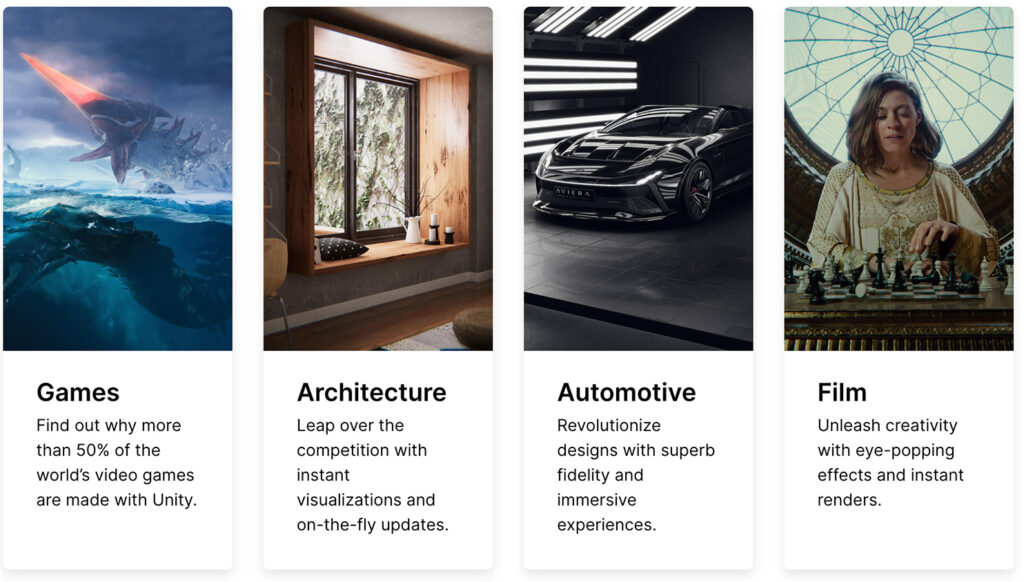
Excerpt from Unity.com
.
Unity can be used for games, in architecture, in automotive, and in film

Additional tip:

  • Stay within what your budget can provide. Making a film about five students on campus is doable. Making a Star Wars-type movie isn’t — unless you are making a spoof or presenting a knowingly-bad movie.

I just wanted to pass these items along.


Also relevant/see:


Addendums on 7/3/22:


From DSC:
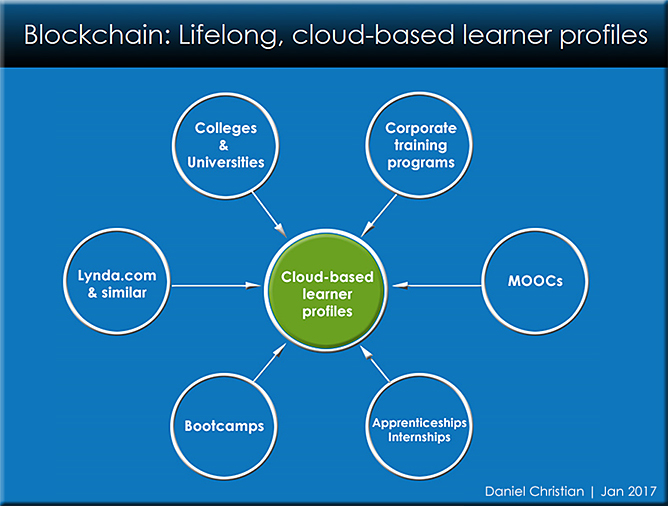
An AI-backed platform will constantly search all job postings and present the most desired skills in the marketplace and then how to get those skills. The providers will be individuals, organizations, training providers, traditional institutions of higher education, vendors and more.

Depending upon what happens with blockchain — and if a much more energy-efficient/environmentally-friendly solution can be implemented — blockchain may be a part of that equation.


Meet the metaverse: Creating real value in a virtual world — from mckinsey.com with Eric Hazan and Lareina Yee

Excerpt (emphasis DSC):

Welcome to the metaverse. Now, where exactly are we? Imagine for a moment the next iteration of the internet, seamlessly combining our physical and digital lives. It’s many things: a gaming platform, a virtual retail spot, a training tool, an advertising channel, a digital classroom, a gateway to entirely new virtual experiences. While the metaverse continues to be defined, its potential to unleash the next wave of digital disruption is clear. In the first five months of 2022, more than $120 billion have been invested in building out metaverse technology and infrastructure. That’s more than double the $57 billion invested in all of 2021.

How would you define the metaverse?
Lareina: What’s exciting is that the metaverse, like the internet, is the next platform on which we can work, live, connect, and collaborate. It’s going to be an immersive virtual environment that connects different worlds and communities. There are going to be creators and alternative currencies that you can buy and sell things with. It will have a lot of the components of Web3 and gaming and AR, but it will be much larger.

Also relevant/see:


Also relevant/see:


5 Questions Every Digital Learning Job Seeker Should Answer — from teamedforlearning.com
These questions help you find a job that fits your skills, work style, and career goals. Answer these before you start your digital learning jobs search.

Excerpt:

There are five questions you should ask yourself before you start looking for a job in digital learning. These aren’t your standard questions about salary and daily tasks. Instead, we’re focusing on what you need to know about yourself before you seek out a new role. The answers will help you find a job that’s the right fit for your skills, work style, and career goals.

Remember, when you’re looking for a job, you’re not just trying to find an organization that wants you to work for them. You’re also looking for a work environment that can help you advance your career and meet your needs. So, grab a notebook or open up a blank document and start brainstorming your answers to these questions.


Changing the narrative on degree requirements — from workshift.opencampusmedia.org by Paul Fain; with thanks to Ryan Craig (I believe) for this resource
An ad campaign from Opportunity@Work and the Ad Council will call on employers to drop the “paper ceiling” and hire more skilled workers without four-year degrees.

Excerpt:

A new national advertising campaign will seek to influence employers to look beyond the four-year degree in hiring, with the message that a “paper ceiling” holds back half the U.S. workforce.

The ads from Opportunity@Work and the Ad Council are slated to start running in September. With slick production and some big corporate partners, including Walmart and Google, the campaign is designed to nudge hiring managers across the country to make good on the growing number of pledges from company C-suites, state capitals, and the White House to drop barriers for skilled job seekers who lack bachelor’s degrees.

This group of more than 70M Americans includes community college graduates, experienced workers, veterans of the U.S. military, and completers of job training programs or alternatives to college, according to the nonprofit Opportunity@Work. The ads will celebrate these workers, which the group says are skilled through alternative routes (STARs).


Also relevant, see:

Americans support student loan forgiveness, but would rather rein in college costs — from npr.org by Cory Turner; with thanks to Bryan Alexander for posting this on LinkedIn

Excerpt (emphasis DSC):

Erasing old debts vs. fixing the system
In one of the poll’s most unexpected findings, respondents were asked to choose which sentence they agreed with more:

    1. “The government should prioritize making college more affordable for current and future students”
    2. “The government should prioritize forgiving some debt for those with existing student loans”

A whopping 82% said the government’s priority should be making college more affordable for current and future students. Just 16% believed forgiving student debts should take priority.

What that tells me is that, while student loan forgiveness for some is seen as a good proposal and a short-term fix, where we actually need to go from here is true, systematic change,” Newall says.


Top Sites for Educator Professional Development — from techlearning.com by Diana Restifo
These professional development sites for education will help teachers refresh and update their practice

Excerpt:

The learning never stops for teachers. Even if continuing education were not required by law, educators would still strive toward deepening their subject knowledge, keeping up with the latest research, sharpening their classroom skills, and learning to use education technology tools.

The following professional development sites for education will help teachers refresh and update their practice, connect with fellow educators and, in some cases, earn continuing education credits. All provide substantial free or modestly priced content.


And for you higher ed folks, see the Tweet below; my thanks to Becky Supiano for this resource out at The Chronicle of Higher Education


The Future of Education | By Futurist Gerd Leonhard | A Video for EduCanada — from futuristgerd.com

Per Gerd:

Recently, I was invited by the Embassy of Canada in Switzerland to create this special presentation and promotional video discussing the Future of Education and to explore how Canada might be leading the way. Here are some of the key points I spoke about in the video. Watch the whole thing here: the Future of Education.


…because by 2030, I believe, the traditional way of learning — just in case — you know storing, downloading information will be replaced by learning just in time, on-demand, learning to learn, unlearning, relearning, and the importance of being the right person. Character skills, personality skills, traits, they may very well rival the value of having the right degree.

If you learn like a robot…you’ll never have a job to begin with.

Gerd Leonhard


Also relevant/see:

The Next 10 Years: Rethinking Work and Revolutionising Education (Gerd Leonhard’s keynote in Riga) — from futuristgerd.com


Animated Series: What’s Up with the Metaverse — from joetechnologist.com by Joseph Raczynski with creative by Elise Harmening, Esq.

Video description (emphasis DSC):

What’s Up with the Metaverse, published on June 2, 2022, was written by Joseph Raczynski of Thomas Reuters, a member of the Governing Council for the Center for Innovation, and created by Elise Harmening, Esq., Project Specialist Manager at the Center for Innovation. Innovation and You is a production by The American Bar Association’s Center for Innovation to help lawyers and our members think about innovative legal technology and practices as the legal landscape continues to change. Join the conversation on Twitter @ABAInnovation.


Also see:

Animated Series: What is an API? — from joetechnologist.com by Joseph Raczynski with creative by Elise Harmening, Esq.


Second Chance Pell helps deliver degrees to over 9,000 incarcerated students — from highereddive.com by Laura Spitalniak

Excerpts:

“Some programs may start as a real passion of an individual faculty member,” she said. “But in order for them to be sustainable, programs need cross-college support. Students need things like academic advising and access to library services. We’re seeing more and more of that, which is terrific.”

The existence and funding of such programs benefits people both in and out of the prison system. Inmates who participate in correctional education programs are 28% less likely to return to prison after their release than those who don’t, according to a 2018 meta-analysis of research. And research suggests that offering postsecondary programs could reduce levels of violence in prison.


Majority Want Online Courts To Keep Going – Survey — from artificiallawyer.com

Excerpt:

A major survey by the Social Market Foundation (SMF) of 1,000 individuals, plus 1,000 businesses, has found that a majority want to keep the online court system going, despite the end of the worst of the pandemic in the UK.

The results were:

  • three-quarters of the British public are content with online hearings and other remote access arrangements. Just 27% of the public object to such innovations.
  • 64% of businesses support remote access to the civil courts…..although, that means that up to 36%, a notable minority, of companies are not that happy with remote court hearings.

And here’s a related item from here in the United States:


Research reveals the benefits of online tutoring — from adigaskell.org by Adi Gaskell

Excerpt:

The Covid pandemic resulted in considerable disruption to the education of pupils around the world, with many parents resorting to online tutoring in a bid to ensure their children didn’t fall behind. Research from the University of California San Diego highlights the effectiveness of such tutoring.

While there have long been suspicions around the effectiveness of such schemes, concerns have existed about both the high costs associated with them and the limited availability of tutors.

“Our program explores the possibilities of a low-cost model with volunteer tutors which has the potential to reach more students in need,” the researchers explain.


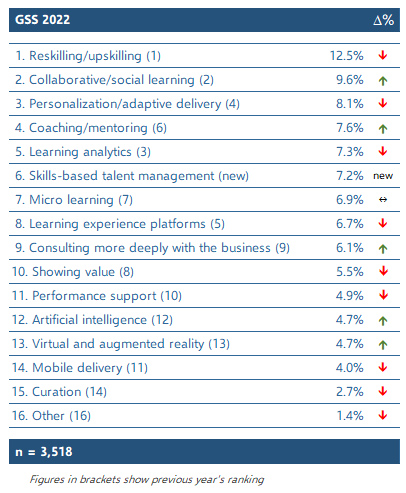
The 2022 L&D Global Sentiment Survey — from donaldtaylor.co.uk by Donald Taylor

Excerpt:

This year’s L&D Global Sentiment Survey, the ninth, shows L&D at a turning point, as the result of two forces. One is the demands of organisations, as they emerge from the pandemic, for more training delivery, very often with unchanged or reduced resources for L&D. The other is the need to deal with the emergency measures put in place in 2020 to deal with the immediate impact of COVID-19.

This sense of practitioners being under pressure is amply illustrated by responses to the free text question ‘What is your biggest L&D challenge in 2022?’ 40% of respondents answered, with the answers painting a picture of practitioners being asked to do more, in difficult circumstances, to support the learning of overworked employees and uninterested employers.

It is tempting to see this as a return to business-as-usual for L&D. Hasn‘t it always been the case that the department needed to fight for the attention of both executives and employees? Behind this undeniable reality, however, there are definite signs of longer-term trends emerging.


Facebook Seems to Be Adding Video-Course Features. For Edtech, That Raises Old Fears. — from edsurge.com by Daniel Mollenkamp

Excerpts:

The tech giant Meta, widely known under its previous name Facebook, seems to be eyeing a way to allow users to offer video classes.

Since at least last year, Meta has experimented with Facebook Classes, a program designed to make online instruction through its platform smoother. A consultant recently noticed a company announcement about the features in the U.K. version of the platform and shared a screenshot on Twitter.

The company did not respond to questions about the program. But recent reports have speculated that the company could “bootstrap an online course ecosystem.”

Meta’s learning offering could be most trouble for other tech behemoths like Google Classroom and Microsoft Teams, according to some speculations.

Either way, Meta’s possible entrance into the market plays into a long-standing fear of big tech in the edtech industry.


Demarginalizing Design: 3 powerful ways to get started — from ditchthattextbook.com by Dee Lanier

Excerpt:

Get proximate to the pain

  • Gather the people that are most affected by the problem.
  • Listen for pain. Emotions such as outrage and frustration are insights into the source of the problem.
  • Design with them, not for them. Your job is to facilitate the discussion that allows them to come up with their own solutions that affect their community.

From DSC:
You will notice some more postings regarding “Design Thinking” on this Learning Ecosystems blog from time to time. I’m continuing to do this because as we move more toward a reality of lifelong learning, we should probably rethink the entire cradle-to-grave design of our learning ecosystems.

 
© 2025 | Daniel Christian