Future of Higher Education: Fully Shift to Hybrid Model by 2025 — from fierceeducation.com by Susan Fourtané, with thanks to Ray Schroeder for this resource out on LinkedIn

Excerpt:

The full shift to a blended teaching and learning model for higher education will become effective by 2025, according to a new report.

The pandemic acted as a catalyst to change the higher education landscape accelerating online learning adoption. Chief Online Officers (COOs) who took part in the CHLOE 7: Tracking Online Learning from Mainstream Acceptance to Universal Adoption, The Changing Landscape of Online Education report indicated that student interest in online learning has increased substantially in the past two years. The majority of COOs predict that is a trend that will continue to grow in the next several years.


Democratizing Digital Transformation with Communities of Practice — from er.educause.edu by Faby Gagne, Anthony Siciliano, Jennifer Harris, Christine Souza, and Mandy Miller
Encouraging communities of practice may help higher education institutions democratize their digital transformation efforts. Working in a community of practice scales transformative work by diffusing learning across an institution.

Excerpts:

Leveraging ecosystems may be one possible way to help scale the impact needed for a digital transformation and inspire passion while minimizing the fears associated with change and progress. Ecosystems are composed of networks (informal and formal groups of individuals) and links between individuals in different networks. One type of network is a community of practice (CoP).


Writing Effective Learning Objectives — from facultyecommons.com

Excerpt:

When you are writing course- or module-level objectives or outcomes, remember to always be “SMART!” SMART stands for specific, measurable, attainable, relevant, and time-bound.
.


20 ways to build classroom community and relationships — from ditchthattextbook.com by Matt Miller

Excerpt:

Many of these were suggested by educators through EfficienTEACH, our FREE collaborative project to share research-based and best practice-based teaching ideas. The goal: help teachers teach better and save time for what matters most … so they can get home quicker AND they’ll want to stay in the teaching profession! Find all of our FREE resources at EfficienTEACH.com.


Add BookWidgets To Your Next Google Classroom Assignment! — from teachercast.net by Jeffrey Bradbury

Excerpt:

One of the Google Classroom Add-ons that you can now select and include in your Assignments section is BookWidgets and I’m extremely excited to share my latest video tutorial demonstrating how to easily create a Google Classroom Assignment using BookWidgets.

Regarding tools, also see:


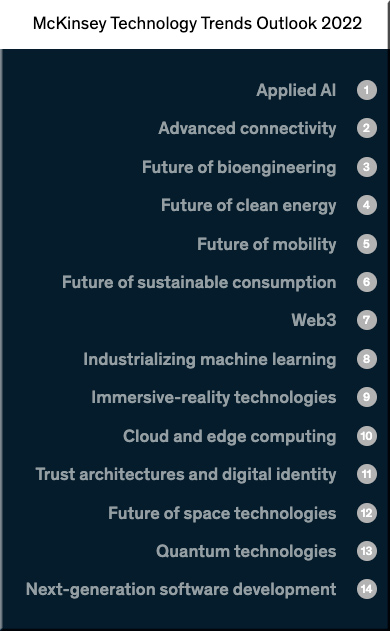
McKinsey Technology Trends Outlook 2022

Excerpt:

Which technology trends matter most for companies in 2022? New analysis by the McKinsey Technology Council highlights the development, possible uses, and industry effects of advanced technologies.

McKinsey Technology Trends Outlook 2022


#ILTACON22 Day One Roundup: News from DISCO, Docket Alarm, LexFusion, Relativity and Reveal — from legaltechmonitor.com by Bob Ambrogi

Excerpt:

[8/22/22] kicks off the first full day of ILTACON22, the annual conference of the International Legal Technology Association. Already, the day has brought a slew of news announcements from legal technology companies.

Here is a roundup of news announced this morning.


When a child’s anxiety looks like anger — from raisinglifelonglearners.com by Colleen Kessler

Excerpt:

Simply put, anxiety does not always look the way we think it does in children.

When we limit the experience of anxiety to only what can be seen and combine that with the limit of emotions children are aware of, it is a recipe for the perfect storm.

Generally, children don’t recognize anxiety when they’re experiencing it. Like learning primary colors first, children are only aware of a handful of emotions they can experience. Happy, sad, afraid, angry, excited. Their emotional experiences are painted with these primary feelings, leaving them with only a few options to choose from.

Simply recognizing that the vigilance and tension he’s feeling are actually anxiety have helped my son to let go of some of the anger and fear he’d been using in an attempt to cope with the overwhelming feelings he didn’t understand.


Trust in the Lord with all your heart
    and lean not on your own understanding;
in all your ways submit to him,
    and he will make your paths straight.


You just hired a deepfake. Get ready for the rise of imposter employees. — from protocol.com by Mike Elgan
New technology — plus the pandemic remote work trend — is helping fraudsters use someone else’s identity to get a job.

Excerpt:

Companies have been increasingly complaining to the FBI about prospective employees using real-time deepfake video and deepfake audio for remote interviews, along with personally identifiable information (PII), to land jobs at American companies.

One place they’re likely getting the PII is through posting fake job openings, which enables them to harvest job candidate information, resumes and more, according to the FBI.

The main drivers appear to be money, espionage, access to company systems and unearned career advancement.


From DSC:
I wanted to pass this along to the learning space designers out there in case it’s helpful to them.

“The sound absorbing Sola felt is made from 50% post-consumer recycled PET.”

Source


Acoustic Static Links lighting by LightArt — from dezeen.com


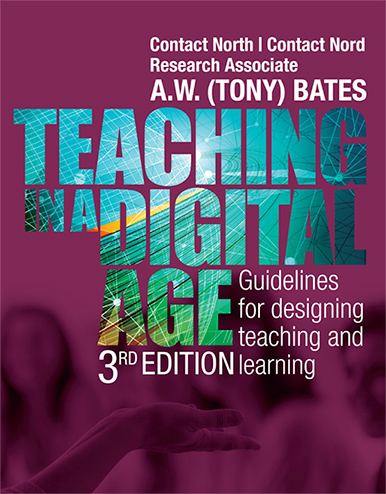
Third edition of Teaching at a Distance is now published — from tonybates.ca by Tony Bates

Excerpts:

The book has been up-dated to take account of the impact of the pandemic on teaching and learning, and with more emphasis for those in k-12 education to balance the post-secondary focus.
.

20 Things To Remember About Forgetting — from theelearningcoach.com by Connie Malamed
What Causes Us To Forget

Excerpt:

Even though we use it all day and night, we are usually not aware of our memory’s processes until they fail. Yet remembering and forgetting are crucial aspects of learning. In learning design, it’s important to know what causes us to forget. Here are some key facts about the forgetting process that relate to learning, instruction and creativity.

Jigsaw Explorer — Free Online Jigsaw Puzzles for Students — from educatorstechnology.com by Med Kharbach, PhD

Excerpt:

Jigsaw Explorer is a website that offers a wide variety of online jigsaw puzzles that you can use with kids and students in and out of class. Jigsaw Explorer also allows you to create your own puzzles based on your photos and you can share these puzzles with others via email or through social media websites.

Help All Students Be Seen: Five Tips for Stronger Connections — from blog.edmentum.com by Amy Collins

Excerpt:

I began to challenge myself to set aside my preconceived boxes for them and see each one as a person—complex, with parts they reveal to the world easily and parts they hide. As I did this more and more, I was amazed at how my strategies needed to change in order to truly see each student and make those strong connections that lead to more effective learning. In this blog post, I hope to share some thoughts on how to adjust your own thinking to see the true student within.

An excerpt from Eva Keiffenheim’s recent Learn Letter| learning science to make the most of your mind

Resources for Evidence-Based Teaching
Are you an educator who wants to improve teaching? This website can be a great help. You can access proven, practical and free educational articles on psychology, assessment, behavior, and social-emotional learning. One of my favorite articles include 6 high-impact teaching strategies.
.

This YouTube Star Says AI Will Become a Creative ‘Collaborator’ With Students — from soundcloud.com by Jeff Young and Taryn Southern

Description:

Taryn Southern is a pioneering YouTuber who these days experiments with how cutting edge tech might transform human expression. She’s recorded a pop album that she co-wrote with some AI code, for instance, and she’s created a digital clone of herself that she can use to make videos for her popular YouTube channel. Here’s what she sees coming for education.

#convergence #AR #VR #MR #AI #blockchain #HCI #Metaverse
.

Teacher shortage? Here’s one way around it — from edcircuit.com by EdCircuit Staff

Excerpt:

After seeing the teacher shortage first hand in China, Jessie Sullivan and Isla Iago launched an innovative new start-up that teaches children how to read and write through YouTube – without the need for adult expertise or attention. Since the release in July, the start-up called See Say Write is already being used by schools, homes, and children’s charities in seven different countries.

[Administrator Tips] Sharing the Benefits of Virtual Learning with Homeschooling Families — from blog.edmentum.com

Excerpt:

One of the long-lasting results of the pandemic is the number of ongoing virtual learning programs that have been created, allowing schools to retain students who found that they need or prefer to learn in a virtual environment. Another segment of students who have been increasingly turning to online learning is homeschoolers.

Virtual learning programs offered through the school district have a great deal of benefits to offer homeschooling families. Promoting these benefits and showing families that a district virtual program offers the best of both worlds can help bring families back from independent homeschooling.

While there certainly are differences between traditional homeschooling and online schooling, it is helpful to point out the similarities and benefits so that homeschooling families can make an educated decision about the options available to them.


Addendums on 8/22/22:


“Spectral” by Photographer Cody Cobb — from booooooom.com

Artist Spotlight: Soyeon Shin — from booooooom.com

Artist Spotlight: Justin Wheatley — from booooooom.com

Artist Spotlight: Wanda Comrie — from booooooom.com


Teaching Broke My Heart. That’s Why I Resigned. — from edsurge.com by Natalie Parmenter
After 10 mostly-good years in the classroom, the 2021-22 school year was enough to push Natalie Parmenter out.

Excerpts:

This is how the last year of teaching went for me. As I sized up each day, hardly anything on my to-do list involved nurturing and guiding my kindergarteners. I was always completing tasks for other people—school leadership, district leadership, state officials—at the expense of the students in my care.

School boards have kicked things into overdrive to make up for lost time. Teachers have been accosted with endless professional development training, increased testing, and frequent surveys. There’s always been a degree of this in education as the pendulum swings back and forth, but last year, it reached a boiling point.

They say teaching is “a work of the heart,” and indeed, it is. But it became increasingly difficult to love that work as my heart hardened last year, and as all the bits of joy I once felt from my job were chipped away.

PROOF POINTS: Researchers say cries of teacher shortages are overblown — from hechingerreport.org by Jill Barshay
Schools are going on pandemic hiring sprees and overstaffing may be the new problem

Excerpt:

The stories are scary. The teaching profession, according to CNN in early 2022, was “in crisis.” The Wall Street Journal reported in February 2022 that burned out teachers were exiting for jobs in the private sector. House lawmakers in Washington devoted an entire hearing to “Tackling Teacher Shortages” in May 2022. And on Aug. 3, 2022, the Washington Post printed this headline: “‘Never seen it this bad’: America faces catastrophic teacher shortage.”

But education researchers who study the teaching profession say the threat is exaggerated.

“Attrition is definitely up, but it’s not a mass exodus of teachers,” said Dan Goldhaber, a labor economist at the American Institutes for Research (AIR), a nonprofit research organization.

Are teachers leaving the classroom en masse? — from vox.com by
The chaotic debate over this year’s teacher shortages, explained.

Excerpts:

In Texas, teachers are deserting the classroom at high rates, with Houston alone reporting nearly 1,000 vacancies in early August. In Maryland, more than 5,500 teachers reportedly left the profession in 2022, leaving Baltimore with an estimated 600 to 700 vacancies going into the fall.

Department of Education officials in Pennsylvania are calling that state’s shortage a “crisis,” and experts there say the state will need “thousands” of new teachers by 2025.

Kansas is facing what has been called the most severe teacher shortage it has ever had: about 1,400 teaching jobs are unfilled. In Florida, there are about 8,000 teacher vacancies, up from 5,000 at the start of school last year. The shortage is reportedly also dire in other states, including Nevada, California, Illinois, Arizona, and Missouri. Some experts say that even school districts that don’t usually face shortages are struggling with vacancies, and it’s hard to hire teachers even for subjects that are typically easy to fill.

But is it actually happening? The US does not collect timely, detailed national data about teacher employment, so it’s difficult to definitively conclude whether there is a national teacher shortage going into the 2022-23 school year. That has led to practitioners, education policy experts, and union leaders talking past one another.

Three Ways to Prepare for and Successfully Land a Student Internship — from emergingedtech.com by Amy DiBello

Excerpt:

So how does one overcome those feelings in order to get the position and prepare for their future?  By taking the knowledge they’ve gained in their coursework along with a strong work ethic, great attitude and finally, displaying a very intentional desire to serve in order to be an asset to the organization. Interns who display these traits and show their commitment to carrying out an organization’s overall mission will no doubt prove to be an invaluable asset and find success in their first internship role. Following are three practical steps that will ensure you are fully prepared to find, secure and succeed in your first internship.

Burned-out employees are ‘quiet quitting’ their jobs: What to know about the trend — from goodmorningamerica.com

Excerpt:

With the pandemic blurring the lines between work and home, people like West are using quiet quitting as a way to set more boundaries between their professional and personal lives.

The new form of “quitting” sees people keeping their jobs, but mentally stepping back from the burdens of work — for example, working the bare minimum number of hours and not making their jobs an important center of their lives.

From DSC:
While I’m not advocating “quiet quitting” at all, it does relay an element of what’s happening in the workplace, at least in the United States.

Teacher shortage? Here’s one way around it — from edcircuit.com by EdCircuit Staff

Excerpt:

After seeing the teacher shortage first hand in China, Jessie Sullivan and Isla Iago launched an innovative new start-up that teaches children how to read and write through YouTube – without the need for adult expertise or attention. Since the release in July, the start-up called See Say Write is already being used by schools, homes, and children’s charities in seven different countries.


Addendum on 8/22/22:

Workforce: Evolve or Become Extinct — from educause.edu
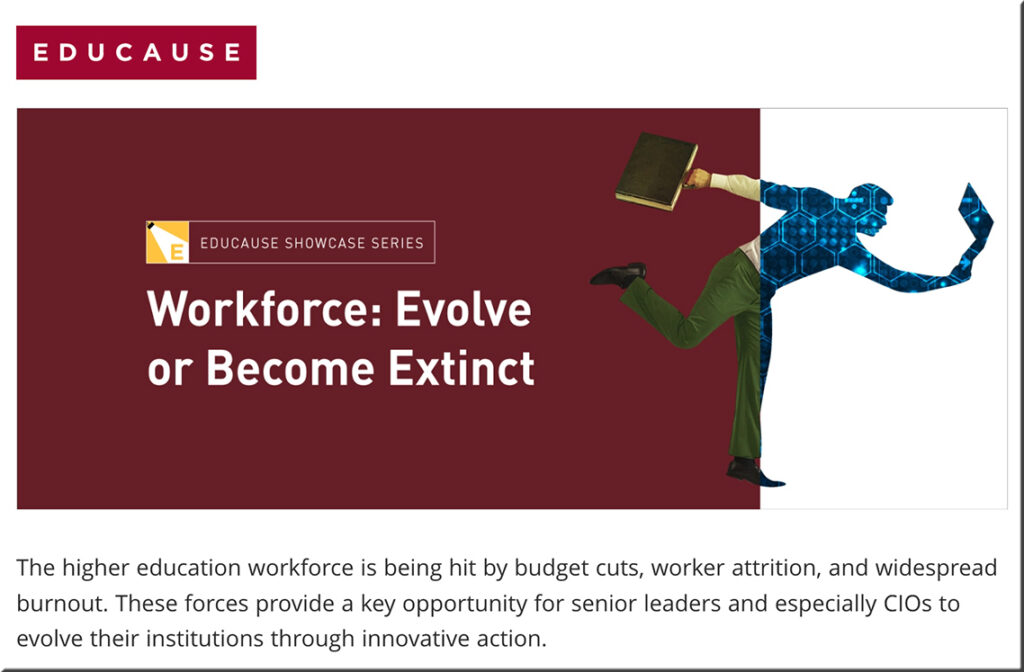
Workforce: Evolve or Become Extinct -- from educause.edu

Addendums on 8/23/22:

Lacking Bus Drivers, Schools Make Tough Calls on Transportation — from edweek.org by Evie Blad

Excerpt:

Eighty-six percent of respondents to a nationally representative survey of school and district administrators conducted by the EdWeek Research Center in July said they don’t have enough candidates to fill open bus driver positions.

Teacher Pay Penalty Reaches Record High. What’s at Stake? — from edsurge.com by Emily Tate Sullivan

Excerpts (emphasis DSC):

For decades—indeed, almost every year since the EPI first began documenting the teacher pay penalty in 1996—the pay of teachers has slipped further behind that of their non-teacher counterparts, adjusted for education, experience and demographics.

Teachers in the U.S. earn about 76.5 cents on the dollar compared to similar professionals who have bachelor’s degrees, according to an analysis by the Economic Policy Institute.


© 2025 | Daniel Christian